| Catalog No | Package | Original Price | Price | Inventory | Quantity | Operating |
|---|---|---|---|---|---|---|
| SBP02651-5mg | 5mg | $350.00 | Sign in |
|


Storage conditions:Short-term storage at 2~8℃, long-term storage at -20 ~ -80℃
110.3800
1.3000
.5000
Low
.7500
null
No
No
No
No
No
No
null
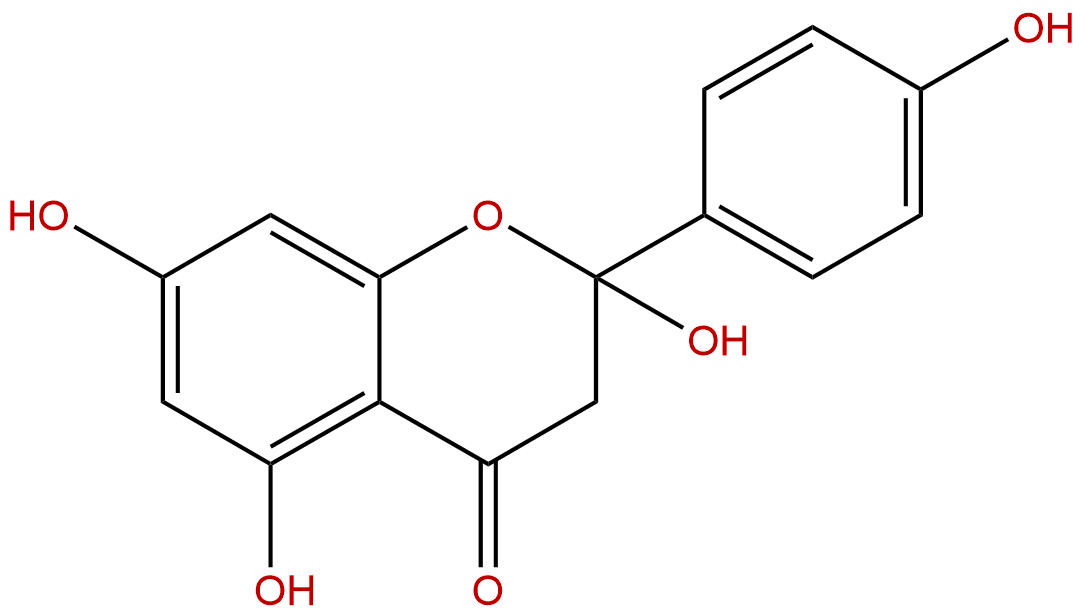
2-Hydroxynaringenin (CAS number: 58124-18-8), as an important natural flavonoid compound, has attracted widespread attention in the field of natural product pharmacology in recent years. Its unique structural characteristics and multi-target pharmacological activity make it show potential application value in many biomedical fields such as anti-oxidation, anti-inflammatory, anti diabetes, anti-tumor and neuroprotection. 2-Hydroxynaringin is mainly isolated from Paeonia lactiflora Pall. in Taiwan, and belongs to the group of 2-hydroxyflavanones and tetrahydroxyflavanones. It has a tetrahydroxyflavanone skeleton structure with hydroxyl groups at positions 2, 4 ', 5, and 7. This article provides a systematic review of the chemical structure and physicochemical properties, plant sources and extraction methods, pharmacological activity and mechanism of action, pharmacological evaluation, pharmacokinetic characteristics, and clinical application prospects of 2-hydroxynaringin. The aim is to provide scientific basis and theoretical support for its subsequent research and drug development.
The chemical name of 2-hydroxynaringenin is 2,5,7-trihydroxy-2- (4-hydroxyphenyl) -2,3-dihydro-4H-chromen-4-one, with a molecular formula of C15H12O6 and a molecular weight of 290.25. Its core structure is a flavanone skeleton with four hydroxyl sites (2, 4 ', 5, 7), endowing it with good hydrophilicity and biological activity. The LogP value of this compound is about 1.3, indicating moderate lipid solubility, which is beneficial for its distribution and cell membrane penetration ability in organisms. The topological polar surface area (TPSA) is 110.38 Å ², indicating strong polarity and hydrogen bonding ability. The number of hydrogen bond acceptors is 6, further demonstrating its binding potential with biomolecules such as enzymes and acceptors.
From the perspective of physicochemical properties, 2-hydroxynaringin has good water solubility and stability, and has no significant hepatotoxicity, cardiotoxicity, or hERG channel inhibition. The Ames test result is negative, indicating a low risk of genotoxicity. Its blood-brain barrier permeability is relatively low, indicating that its direct action in the central nervous system may be limited, but it still has the potential to exert neuroprotective effects through the peripheral nervous system or indirect mechanisms.
2-Hydroxynaringin is mainly present in Paeonia lactiflora Pall. and is one of the important flavonoid metabolites of this plant. As a traditional Chinese medicinal herb, Taiwan white peony has abundant flavonoids and phenylpropanoids. Although the content of 2-hydroxynaringenin is not as high as mainstream flavonoids, its unique structure and biological activity make it a research hotspot.
The common methods for extracting 2-hydroxynaringin include solvent extraction, chromatographic separation, and crystallization purification. Generally, ethanol or methanol is used as the extraction solvent, and the extraction efficiency is improved by ultrasound assisted extraction or reflux extraction. After concentration, the extract was separated and purified using techniques such as silica gel column chromatography and reverse phase high performance liquid chromatography (RP-HPLC). In recent years, the application of supercritical CO2 extraction and membrane separation technology has provided new ideas for improving the extraction purity and yield of 2-hydroxynaringin. In addition, enzyme assisted extraction technology has also been explored to improve its extraction efficiency and stability of active ingredients.
2-hydroxynaringin shows a variety of pharmacological activities, including antioxidant, anti-inflammatory, anti diabetes, anti-tumor, neuroprotective and other fields.
2-Hydroxynaringin activates the nuclear factor E2 related factor 2 (NRF2) signaling pathway, inducing the expression of downstream antioxidant enzymes such as catalase (CAT), glutathione peroxidase 1 (GPX1), heme oxygenase 1 (HMOX1), and superoxide dismutase 2 (SOD2), significantly enhancing cellular antioxidant defense capacity and reducing oxidative stress damage. Both in vitro and in vivo experiments have shown that it can effectively eliminate free radicals, delay the process of cellular aging, and has good anti-aging potential.
2-Hydroxynaringin can inhibit the production and release of inflammatory mediators, mainly by downregulating the expression of key inflammatory signaling molecules such as cyclooxygenase-2 (PTGS2), nuclear factor kappa B (NFKB1), tumor necrosis factor alpha (TNF), interleukin-6 (IL6), and mitogen activated protein kinase (MAPK1), thereby reducing the inflammatory response. It exhibits significant anti-inflammatory effects in inflammatory disease models, indicating its potential application in chronic inflammatory diseases such as arthritis and inflammatory bowel disease.
2-Hydroxynaringin promotes insulin signaling and glucose uptake, improves insulin resistance, and lowers blood glucose levels by regulating glucose metabolism related targets such as insulin receptor (INSR), glucose transporter 4 (SLC2A4), AMP activated protein kinase (PRKAA1), protein kinase B (AKT1), and peroxisome proliferator activated receptor gamma (PPARG). In addition, its antioxidant and anti-inflammatory effects help to alleviate the microvascular and neuropathy related to diabetes, showing the advantages of multi target comprehensive treatment.
2-Hydroxynaringin has shown inhibitory effects on proliferation, induction of apoptosis, and inhibition of metastasis in various tumor cell lines. Its mechanism of action involves the regulation of signaling pathways such as epidermal growth factor receptor (EGFR), B-cell lymphoma 2 protein (BCL2), tumor suppressor protein p53 (TP53), phosphatidylinositol 3-kinase (PIK3CA), and mitogen activated protein kinase (MAPK1). By regulating cell cycle and apoptosis related proteins, 2-hydroxynaringin can effectively induce tumor cell apoptosis, inhibit tumor growth and invasion.
The research on 2-hydroxynaringin in the field of neuroprotection is gradually increasing. It reduces oxidative stress and inflammatory response of nerve cells, inhibits abnormal accumulation of neurotoxic proteins, and delays the progression of neurodegenerative diseases such as Alzheimer's disease and Parkinson's disease by regulating targets such as beta amyloid precursor proteasome (BACE1), alpha synuclein (SNCA), superoxide dismutase (SOD1), nerve growth factor receptor (NGFR), and nuclear factor E2 related factor 2 (NFE2L2).
The multi-target mechanism of action of 2-hydroxynaringin is the basis for its broad pharmacological activity. It mainly regulates the activity of intracellular signal transduction pathways and transcription factors, affecting gene expression and protein function, thereby achieving multiple biological effects such as antioxidant, anti-inflammatory, metabolic regulation, and cell apoptosis.
Activation of NRF2 pathway 2-Hydroxynaringin promotes the translocation of NRF2 from the cytoplasm to the nucleus, enhances the transcription of antioxidant enzyme genes, and improves the cell's resistance to oxidative stress.
Inhibition of NF - κ B signaling By inhibiting the activation of NF - κ B, reducing the expression of pro-inflammatory factors, and alleviating inflammatory reactions.
Regulation of insulin signaling pathway Promote phosphorylation of INSR and AKT1, enhance insulin signaling, and promote glucose uptake and metabolism.
Regulation of PI3K/Akt and MAPK pathways In tumor cells, it regulates PIK3CA and MAPK1 signals, inhibits cell proliferation and promotes apoptosis.
Neuroprotective mechanism Regulating the expression of BACE1 and SNCA, reducing the accumulation of neurotoxic proteins, and promoting the survival of nerve cells.
2-Hydroxynaringin has ideal pharmacological parameters. Its molecular weight is moderate (290.25), and its LogP value (1.3) shows suitable lipid solubility, which is beneficial for cell membrane penetration. A higher TPSA (110.38) and hydrogen bond receptor count (6) suggest stronger polarity, which may limit its oral bioavailability but facilitate binding to target proteins.
Toxicological evaluation shows that 2-hydroxynaringin has no significant hepatotoxicity, cardiotoxicity, or hERG channel inhibition, and the Ames mutagenicity test is negative, indicating high safety. The low permeability of the blood-brain barrier suggests limited direct pharmacological effects on the central nervous system, but it can exert neuroprotective effects by improving the peripheral nervous environment.
In terms of pharmacokinetics, existing research is relatively limited. Preliminary data indicates that its oral absorption rate is moderate, and its metabolism in vivo is mainly carried out through the liver enzyme system. Metabolites still need further identification. In the future, it is necessary to strengthen systematic research on its distribution, metabolic pathways, and excretion mechanisms in the body, in order to optimize the dosing regimen and formulation design.
Based on the significant pharmacological activity of 2-hydroxynaringin in various disease models, its clinical application prospects are broad. Firstly, its antioxidant and anti-inflammatory properties make it a potential therapeutic agent for chronic inflammatory diseases and age-related diseases. Secondly, the multi-target regulatory effect on diabetes and its complications provides a possibility for the development of new adjuvant drugs for diabetes. Thirdly, its anti-tumor activity suggests that it can be used as a candidate molecule for adjuvant therapy of tumors, especially in combination chemotherapy or targeted therapy, which may exert synergistic effects. Finally, the neuroprotective effects of neurodegenerative diseases provide a theoretical basis for their clinical translation in fields such as Alzheimer's disease and Parkinson's disease.
Future research should focus on preclinical pharmacokinetic optimization, formulation development, and safety evaluation of 2-hydroxynaringin, while combining modern molecular biology and medicinal chemistry methods to deeply analyze its mechanism of action and promote its clinical application. In addition, utilizing structural modification and nanocarrier technology to enhance its bioavailability and targeting will also be an important research direction.
2-Hydroxynaringin, as a natural flavonoid compound with multiple pharmacological activities, has shown great potential for medicinal development and broad application prospects. Its unique chemical structure endows it with excellent antioxidant, anti-inflammatory, anti diabetes, anti-tumor, neuroprotective and other biological activities. Although the research on its pharmacokinetics and clinical applications is still in its infancy, with the deepening of research, 2-hydroxynaringin is expected to become an important candidate molecule in the development of natural product drugs. In the future, it is necessary to strengthen its mechanism research, pharmacokinetic optimization, and preclinical evaluation to lay a solid foundation for its clinical translation and promote its application in the prevention and treatment of various diseases.
