Introduction/Overview
Lymphoma, as a group of malignant tumors originating from the lymphatic hematopoietic system, has made significant progress in treatment strategies in recent years due to the rise of targeted therapy and immunotherapy. However, drug resistance, recurrence, and serious side effects caused by traditional chemotherapy remain serious challenges in clinical practice. Therefore, exploring lead compounds with novel structures and unique mechanisms of action from natural products has always been an important source for the development of anti-tumor drugs. Magnocaurine, an isoquinoline alkaloid isolated from the plant Tiliacora racemosa in the family Menispermaceae, is increasingly receiving attention from the pharmacological community due to its multi-target and multi pathway regulatory potential in the fight against lymphoma. This compound not only exhibits significant proliferation inhibitory activity against various lymphoma cell lines, but its unique mechanism of action involves cell cycle arrest, apoptosis induction, and regulation of key signaling pathways, providing a valuable molecular template for the development of novel anti lymphoma drugs. This article aims to systematically review the chemical properties, plant sources, anti lymphoma pharmacological activity, molecular mechanism of action, pharmacological characteristics, and clinical translation prospects of magnolol, in order to provide comprehensive academic references for the in-depth research and development of this natural product.
Chemical structure and physicochemical properties
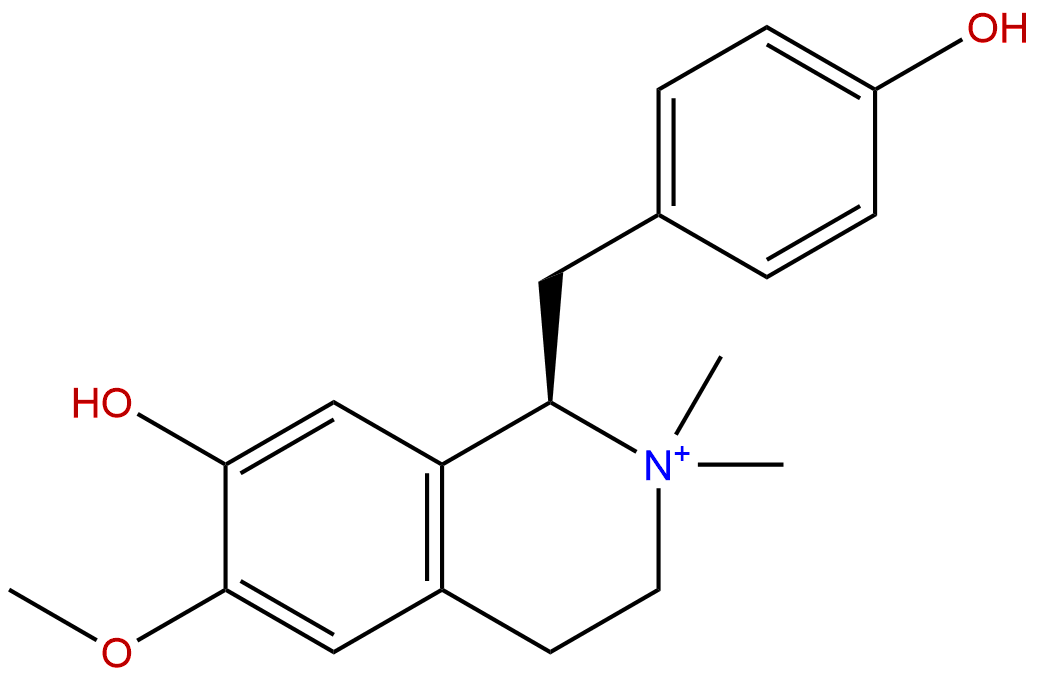
The chemical name of magnolol is (6,7-Dimethoxy-2-methyl-1,2,3,4-tetrahydroisoquinolin-1-yl) methanol, and its CAS registration number is 6801-40-7. Structurally, it is a tetrahydroisoquinoline alkaloid with a core skeleton composed of a benzene ring fused with a nitrogen-containing hexagonal ring (pyridine ring). Its structural features include: one methoxy group (- OCH3) attached to each of the 6th and 7th positions of the aromatic ring, one hydroxymethyl group (- CH2OH) attached to the 1st position, and one methyl group (- CH3) attached to the 2nd position. This structure endows it with certain polarity and hydrogen bonding ability.
According to the provided pharmacological parameters, the molecular weight of magnolol is 314.4050 g/mol, which belongs to small molecule compounds. The calculated lipid water partition coefficient (LogP) is -1.0937, indicating that the compound has hydrophilicity and tends to partition in the aqueous phase. The topological polar surface area (TPSA) is 49.69 Å ², which is relatively low, but combined with its LogP value, it suggests that its transmembrane permeability may be limited to some extent. The theoretically calculated water solubility is 0.2506 mg/mL, which belongs to the category of slight solubility, which is consistent with its hydrophilic characteristics. However, in practical applications, it may require pharmaceutical methods to improve its solubility. The key toxicology preliminary screening showed an Ames test result of 0.0, indicating no mutagenicity in this testing system, which is a positive early safety signal. In addition, it has no inhibitory activity on hERG potassium channels, reducing the potential risk of inducing QT interval prolongation and apical torsion type ventricular tachycardia, providing preliminary assurance for its cardiovascular safety. However, its blood-brain barrier permeability is predicted to be 'low', which means it may have difficulty entering the central nervous system, which may be a limitation for treating primary central nervous system lymphoma but may also reduce potential side effects on the central nervous system.
Plant sources and extraction methods
Magnolia alkaloids are mainly isolated from Tiliacora racemosa Colebr. plants in the Menispermaceae family. This plant has been applied in traditional medicine in Southeast Asia. As an alkaloid component, its content in plant bodies is usually low and coexists with multiple structurally similar alkaloids, so its extraction and purification require a systematic process.
The traditional extraction method begins with the crushing of plant dried materials. Alcohol solvents (such as methanol and ethanol) or acidic water (such as 1% hydrochloric acid or acetic acid) are often used for cold soaking or heating reflux extraction, utilizing the characteristic of alkaloids and acids forming salts and dissolving in water for preliminary enrichment. The acidic water extract is then subjected to alkalization (such as ammonia water, sodium hydroxide) to free precipitate the alkaloids, and then extracted with organic solvents (such as chloroform, dichloromethane) to obtain the crude extract of total alkaloids.
The separation and purification of magnolol from total alkaloids mainly rely on modern chromatographic techniques. Silica gel column chromatography is commonly used for preliminary separation, using solvent systems of different polarities (such as chloroform methanol gradient elution) for elution. Due to the presence of hydroxyl and methoxy groups in the structure of magnolol alkaloids, with moderate polarity, they usually appear in the elution sites with moderate polarity. Further purification may require repeated column chromatography or the use of more efficient methods such as preparative thin layer chromatography (PTLC) or high-performance liquid chromatography (HPLC), especially reverse phase HPLC (C18 column, using methanol water or acetonitrile water as mobile phase), which is a key step in obtaining high-purity monomers. During the entire separation process, thin layer chromatography (TLC) combined with specific alkaloid color reagents (such as Dragendorff reagent) can be used to track the target components. The structure of the final compound was confirmed by comparing spectroscopic data such as nuclear magnetic resonance (NMR, including 1H-NMR and 13C-NMR), mass spectrometry (MS), and specific rotation with literature reports.
Pharmacological activity research
The most notable pharmacological activity of magnolol is concentrated in its anti-tumor, especially anti lymphoma properties. Numerous in vitro studies have shown that it has significant anti proliferative effects on various human lymphoma cell lines.
Research has confirmed that magnolol can effectively inhibit the viability of various B and T cell lymphoma cells, such as Raji (Burkitt lymphoma) and Jurkat (T-cell leukemia lymphoma), in a dose-dependent and time-dependent manner. Its half maximal inhibitory concentration (IC50) is usually at the micromolar level, showing clear cytotoxic effects. In terms of mode of action, magnolol can not only directly cause tumor cell death, but also induce cell cycle arrest. Experiments have shown that this compound can block lymphoma cells in the G0/G1 or G2/M phases of the cell cycle (specific periods may vary depending on cell type and concentration), preventing cells from entering the DNA synthesis phase (S phase) or mitotic phase, thereby inhibiting the unlimited proliferation of tumor cells from the source.
Further research revealed the ability of magnolol to induce apoptosis in lymphoma cells. After treatment, typical apoptotic morphological changes such as cell shrinkage, chromatin condensation, and nuclear fragmentation can be observed in the cells. Flow cytometry analysis showed a significant increase in the proportion of Annexin V positive/PI negative early apoptotic cells and Annexin V/PI double positive late apoptotic cells. At the same time, the activity of key apoptosis executing proteins and initiating proteins such as Caspase-3, Caspase-8, and Caspase-9 in cells was significantly activated, indicating that they simultaneously triggered the exogenous apoptosis pathway mediated by death receptors and the endogenous apoptosis pathway mediated by mitochondria. In addition, some studies suggest that magnolol may induce autophagy or other forms of programmed cell death, collectively constituting its powerful anti-tumor effect.
In addition to its direct cytotoxic effect, magnolol has also been reported to inhibit the migration and invasion ability of lymphoma cells, suggesting its potential for anti metastasis. These solid in vitro pharmacological activity data have laid a solid foundation for further exploration of their molecular mechanisms.
Mechanism of action and molecular targets
The anti lymphoma effect of magnolol is not achieved through a single target, but exhibits the characteristics of multi-target and networked regulation. Its mechanism of action is closely related to a series of protein targets that are crucial in the occurrence and development of lymphoma.
-
Regulating Bcl-2 family proteins and inducing mitochondrial apoptosis pathway Bcl-2 and MCL1 are important anti apoptotic proteins that are often overexpressed in lymphoma, leading to impaired cell apoptosis. Research has shown that magnolol can downregulate the expression levels of Bcl-2 and MCL1, and may upregulate the expression of pro apoptotic proteins such as Bax, disrupt mitochondrial membrane potential, promote cytochrome C release, and activate Caspase-9 and Caspase-3, leading to endogenous apoptosis. This is one of the core pathways through which it induces cell apoptosis.
-
Inhibition of STAT3 signaling pathway Signal transducer and activator of transcription factor 3 (STAT3) is a key oncogenic protein that is continuously activated in lymphoma, regulating cell proliferation, survival, angiogenesis, and immune escape. Magnolia toxin alkaloids can effectively inhibit the phosphorylation (activated form) of STAT3, prevent its nuclear translocation and transcription of downstream target genes (such as Cyclin D1, Bcl-2, MCL1, etc.), thereby simultaneously inhibiting proliferation and promoting apoptosis.
-
Interference with cell cycle regulatory proteins By inhibiting the activator CDC25B phosphatase of cyclin dependent kinase (CDK), magnolol can lead to inhibition of CDK activity, activation of cell cycle checkpoints, and cell cycle arrest. Meanwhile, it may affect the function or expression of tumor suppressor proteins such as p53 (TP53) and p16 (CDKN2A), further consolidating the cycle arrest effect.
-
Regulating the NF - κ B signaling pathway Nuclear factor kappa B (NF - κ B) is another transcription factor highly active in inflammation and tumors. Magnolia toxin alkaloids may inhibit the nuclear translocation of NF - κ B (such as p50/p65 dimer) by suppressing I κ B kinase (IKK) or other upstream signals, downregulating the expression of pro survival and pro-inflammatory genes controlled by it, and weakening the survival advantage of tumor cells.
-
Affects other potential targets Magnolia toxin alkaloids may also interfere with the survival microenvironment of lymphoma cells in multiple dimensions by affecting protein tyrosine phosphatase PTPRC (CD45, a key regulator of immune cell activity), retinoic acid X receptor beta (RXRB, involved in cell differentiation and apoptosis), and microtubule associated protein tau (MAPT, associated with cytoskeletal stability and signal transduction). Its potential impact on MAPT, combined with its low blood-brain barrier permeability, deserves further exploration in specific lymphoma subtypes.
In summary, magnolol has constructed a complex anti-tumor network by synergistically acting on multiple key nodes such as apoptosis regulation (MCL1, BCL2, TP53), cell cycle (CDC25B, CDKN2A), and signal transduction (STAT3, NFKB1), which may be its advantage in overcoming the susceptibility of single target drugs to drug resistance.
Evaluation of drug properties and pharmacokinetics
The pharmacological evaluation based on calculations and preliminary experimental data shows that magnolol, as a drug lead compound, has both advantages and disadvantages in terms of its properties.
Advantage aspects Firstly, its molecular weight is moderate and meets the requirements of the "five rules" for small molecules in drug properties. Secondly, the key early safety indicators are relatively optimistic: a negative Ames test indicates a lower risk of genetic toxicity; The lack of hERG inhibitory activity greatly reduces its potential risk of inducing severe cardiac toxicity, which is an important reason for many drug development failures. These features have laid a good security foundation for its subsequent development.
Challenge aspect The main issue lies in its physical and chemical properties. A lower LogP value (hydrophilic) and only slightly soluble water solubility may result in poor oral bioavailability. Hydrophilicity may limit its passive diffusion across the intestinal epithelial cell membrane; Low solubility may affect its dissolution and absorption in gastrointestinal fluids. In addition, the predicted low blood-brain barrier permeability limits its therapeutic application for central nervous system lymphoma, but as previously mentioned, this may also be an off target safety feature. Its moderate TPSA suggests that its membrane permeability is not extremely poor, but requires comprehensive evaluation.
At present, there is still a lack of pharmacokinetic studies on the magnolol system (including absorption, distribution, metabolism, and excretion) in public literature, which is a key gap that must be filled in its drug conversion process. Future research needs to clarify key parameters such as oral absorption degree, in vivo distribution characteristics (especially tumor tissue targeting), major metabolic organs and pathways, metabolic product activity and toxicity, and elimination half-life. Developing suitable drug delivery systems is particularly important due to the challenges posed by their physicochemical properties. For example, it can be made into nanocrystals, liposomes, polymer micelles, or cyclodextrin inclusion complexes to improve its solubility and stability, and may passively target lymphoma tissue through enhanced permeability and retention (EPR) effects. Structural modification (such as preparing prodrugs) is also a potential strategy to improve their lipid solubility and bioavailability.
Clinical application prospects and prospects
Magnolia toxin alkaloids have shown unique application potential in the field of anti lymphoma, but their clinical application still faces a series of opportunities and challenges.
Potential application directions:
1. As a novel anti lymphoma lead compound Its multi-target mechanism of action helps to overcome or delay the resistance problem of single target drugs, especially suitable for lymphoma patients who are insensitive or resistant to existing targeted therapies such as BCL-2 inhibitors.
2. Combination therapy strategy The combination of magnolol alkaloids with existing chemotherapy drugs (such as those in the CHOP regimen), targeted drugs, or immune checkpoint inhibitors may produce synergistic effects, reduce their respective dosages and toxic side effects, and is a highly promising research and development direction. For example, its STAT3 and NF - κ B inhibitory activities may reverse immune suppression in the tumor microenvironment and enhance the efficacy of immunotherapy.
3. Targeting specific subtypes Further research is needed to investigate the differences in sensitivity to different subtypes of lymphoma, such as diffuse large B-cell lymphoma, follicular lymphoma, mantle cell lymphoma, etc., in order to accurately target their most effective indications.
challenges faced:
1. Pharmacokinetic and Formulation bottleneck As mentioned earlier, the issues of water solubility and bioavailability are urgent technical challenges that need to be addressed. The ADME research of the system must be carried out as soon as possible.
2. Deep analysis of the mechanism of action At present, the role of many targets (such as RXRB, MAPT, PTPRC) is only for association prediction, and direct target validation and binding mechanism elucidation need to be carried out using techniques such as gene knockout/knockdown, co crystallization, and surface plasmon resonance.
3. Comprehensive evaluation of in vivo drug efficacy and safety It is urgent to establish lymphoma animal models (such as xenograft tumor models) to verify their in vivo anti-tumor activity and dose-response relationship. At the same time, comprehensive preclinical toxicology studies are needed, including acute toxicity, chronic toxicity, reproductive toxicity, etc., to evaluate their therapeutic window.
4. Natural source restrictions Directly extracting from plants has low yield, high cost, and is limited by resources. In the future, it is necessary to achieve large-scale supply through fully synthetic or semi synthetic routes, or to heterologously express their biosynthetic pathways in microorganisms through synthetic biology methods.
Future Prospects The research on magnolol alkaloids is currently in a critical stage of transition from "activity discovery" to "pharmacological optimization". Future work should focus on: ① optimizing its solubility, metabolic stability, and targeting through reasonable structural modifications while retaining its core pharmacophore; ② Developing efficient delivery systems using modern nanotechnology; ③ Conduct in-depth research on systems biology based on multi omics techniques and comprehensively map its cellular and extracellular action networks; ④ Actively explore its potential application value in autoimmune or inflammatory diseases related to lymphoma. Only through continuous interdisciplinary efforts can this promising natural molecule be truly pushed into clinical practice and benefit patients.
Conclusion
Magnolia alkaloids, a tetrahydroisoquinoline alkaloid derived from traditional medicinal plants, have become a highlight in the research of natural anti-tumor drugs due to their clear proliferation inhibition, cycle arrest, and apoptosis induction activities on various lymphoma cell lines. The prominent feature of its mechanism of action lies in multi-target synergy, involving the regulation of key oncogenic signaling nodes such as MCL1, BCL2, STAT3, NF - κ B, etc., demonstrating the potential advantage of overcoming single target drug resistance. Although it faces challenges such as low water solubility and potential poor bioavailability in terms of drug efficacy, and the systematic pharmacokinetics and in vivo efficacy evaluation are still to be improved, its good early safety features (no mutagenicity, no hERG inhibition) provide a favorable starting point for its further development. Through the deep intervention of modern medicinal chemistry, pharmacy, and pharmacology methods, the structural optimization, delivery system innovation, and comprehensive analysis of the mechanism of action of magnolol are expected to successfully transform it from an active natural product into a candidate drug or lead compound for anti lymphoma with clinical application prospects, contributing new strength to enriching the arsenal of lymphoma treatment weapons.