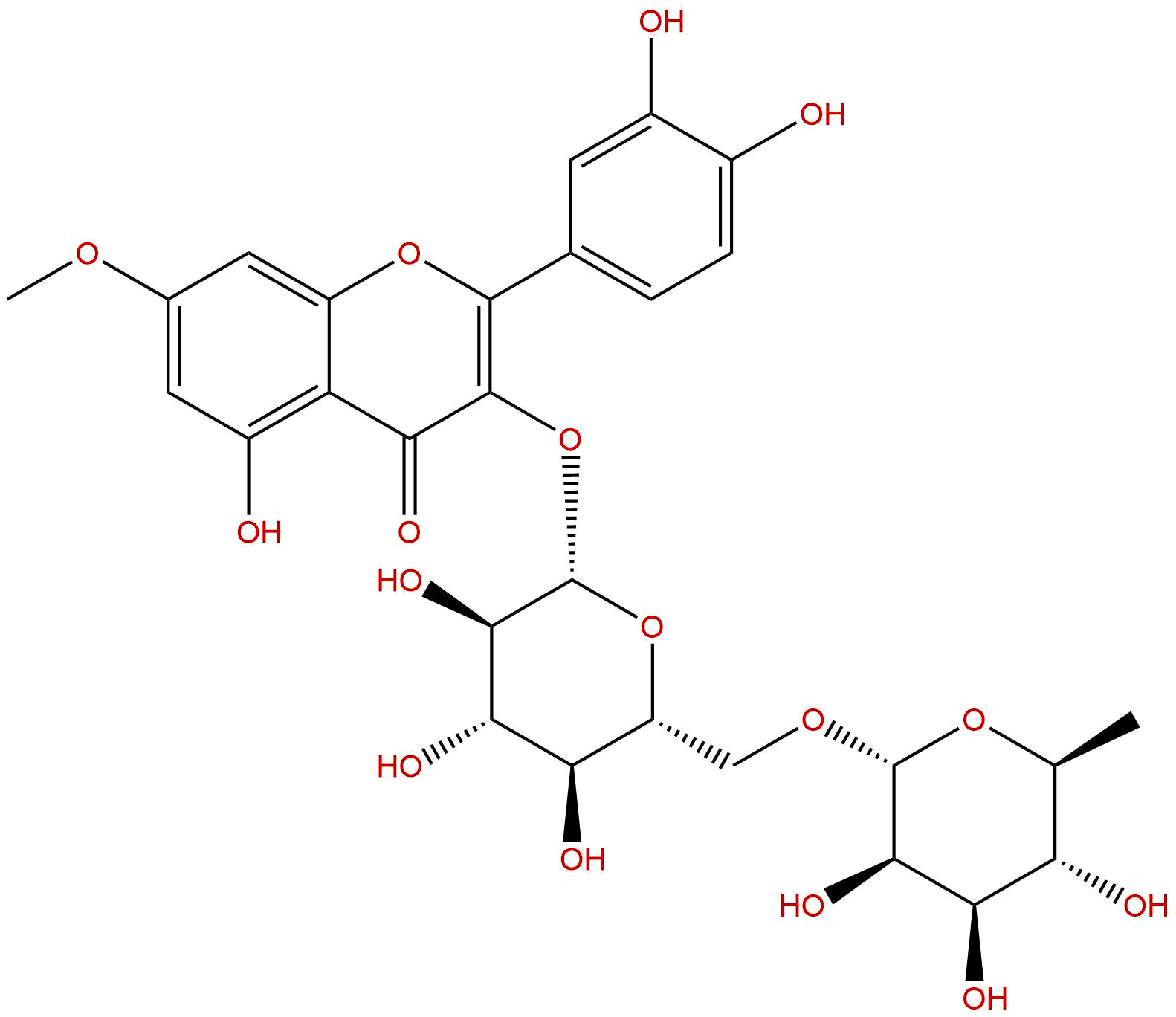


Product name: Rhamnetin 3-O-rutinoside
Synonym name: Rhamnetin-3-rutinoside;Rhamnetin 3-O-β-D-rutinoside
Catalogue No.: BP2255
Cas No.: 34202-83-0
Formula: C28H32O16
Mol Weight: 624.548
Botanical Source:
Type of Compound: Flavonoids
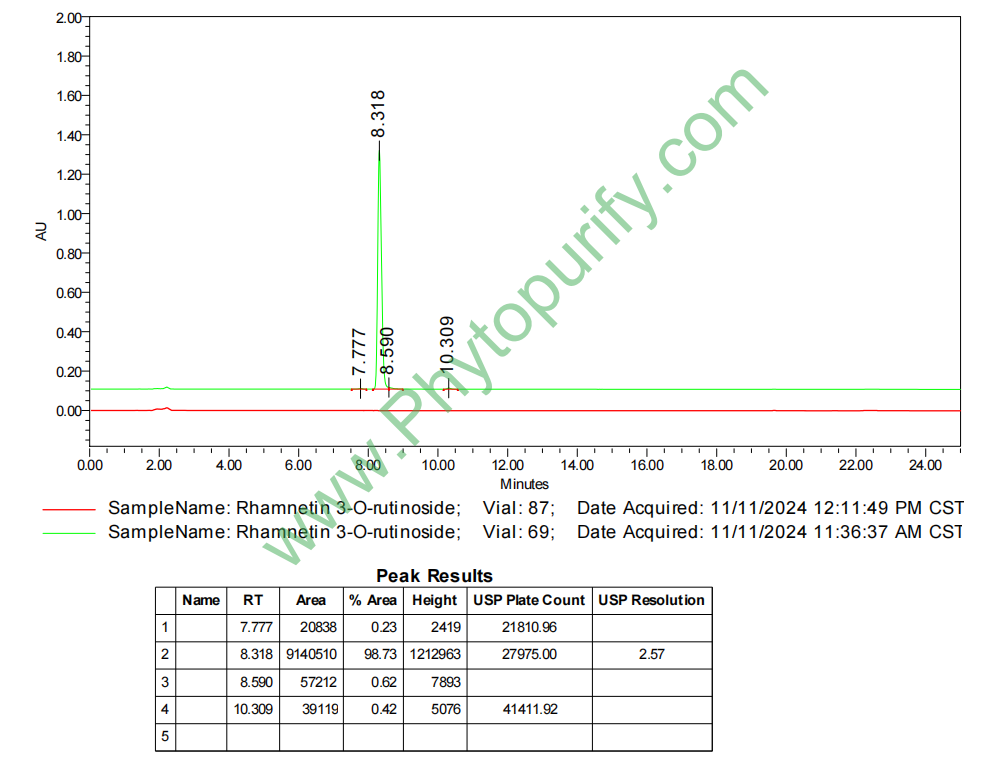
Purity: 95%~99%
Analysis Method: HPLC-DAD or/and HPLC-ELSD
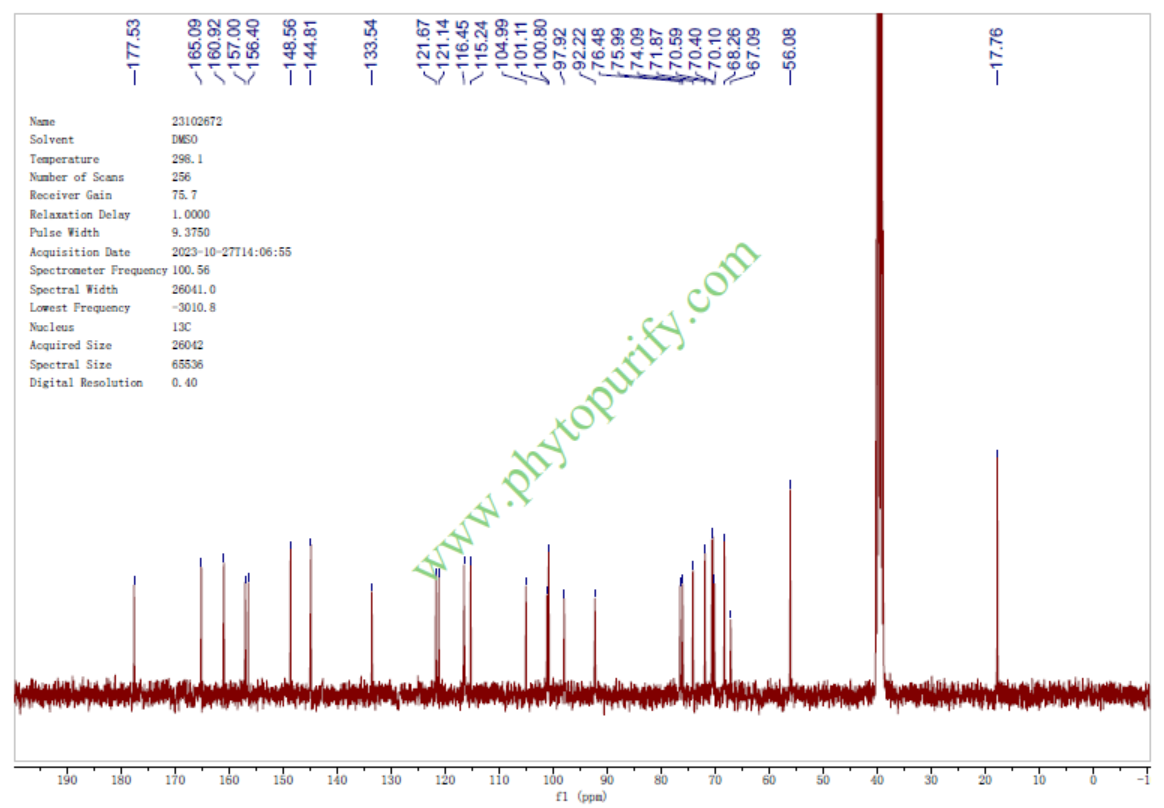
Identification Method: Mass, NMR
Packing: Brown vial or HDPE plastic bottle
Storage: Store in a well closed container, protected from air and light. Put into refrigerate or freeze for long term storage.
Whenever possible, you should prepare and use solutions on the same day. However, if you need to make up stock solutions in advance, we recommend that you store the solution as aliquots in tightly sealed vials at -20℃. Generally, these will be useable for up to two weeks.
The product could be supplied from milligrams to grams
Inquire for bulk scale.
For Reference Standard and R&D, Not for Human Use Directly.
HPLC of Rhamnetin 3-O-rutinoside
NMR of Rhamnetin 3-O-rutinoside
Storage conditions:Short-term storage at 2~8℃, long-term storage at -20 ~ -80℃
258.4300
.0260
.0031
2.5631
.4993
.2812
Low
75.4897
4.7512
Yes
No
Yes
No
Yes
No
0.6
Yes
No
Yes
Yes
Natural products have always been an important source of drug discovery and development, and their diverse chemical structures and unique biological activities have made indelible contributions to human health. Among numerous natural products with biological activity, flavonoids have attracted much attention due to their extensive pharmacological effects. Flavonoids are secondary metabolites of plants, widely present in vegetables, fruits, tea, and various medicinal plants, with various biological activities such as antioxidant, anti-inflammatory, anti-tumor, and cardiovascular protection. Among them, quercetin and its derivatives are the most extensively studied flavonoids, with a parent nucleus structure of 3,5,7,3 ', 4' - pentahydroxyflavone.
Rhamnetin-3-O-rutinoside, as a derivative of quercetin, has gradually entered the field of researchers in recent years. This compound is structurally composed of rhamnetin (7-methoxyquercetin) as the aglycone, with a rutinose (α - L-rhamnose - (1 → 6) - β - D-glucose) disaccharide group attached to the 3-hydroxyl group. This unique glycosylation modification not only affects its physicochemical properties, but also has a profound impact on its biological activity and pharmacokinetic behavior. This compound was first extracted from the parsley plant in the Umbelliferae family(Coriandrum sativum L. It was isolated and identified, and showed significant inhibitory activity against secretory phospholipase A2 (sPLA2) and histone deacetylase 2 (HDAC2).
Given its unique chemical structure and potential pharmacological activity, rhamnose-3-rutinoside has shown broad application prospects in the fields of anti-tumor, antioxidant, and anti-inflammatory effects. Especially by inhibiting HDAC2 and sPLA2, it may regulate multiple signaling pathways associated with inflammatory diseases such as asthma, making it a hot topic in natural product pharmacology research. This article aims to systematically review the chemical structure, plant origin, extraction methods, pharmacological activity, mechanism of action, pharmacological evaluation, and clinical application prospects of rhamnosus rutinoside, in order to provide comprehensive scientific basis for the in-depth research and development of this compound.
The chemical structure of rhamnose-3-rutinoside belongs to flavonol glycosides. Its glycoside is Rhamnetin, with a chemical name of 3,5,3 ', 4' - tetrahydroxy-7-methoxyflavone. Compared with quercetin, resveratrol undergoes methoxylation (- OCH ∝) modification on the 7th hydroxyl group. This structural modification significantly alters the electronic distribution and polarity of the molecule, thereby affecting its interaction with biological targets. A rutin sugar group is connected to the 3rd hydroxyl group of resveratrol through a glycosidic bond. Rutin is a disaccharide composed of one molecule of β - D-glucose and one molecule of α - L-rhamnose linked by an α (1 → 6) glycosidic bond. Therefore, the complete chemical name of the compound is 3- [(6-O - α - L-rhamnosyl - β - D-glucosyl) oxy] -5,7-dihydroxy-2- (4-hydroxy-3-methoxyphenyl) -4H-1-benzopyran-4-one, with a CAS number of 34202-83-0.
From the perspective of physical and chemical properties, the molecular formula of rhamnose-3-rutinoside is C ₂₈ H ∝₂ O ₁₆, with a molecular weight of 624.5480 g/mol. This molecule contains multiple phenolic hydroxyl groups and multiple hydroxyl groups on the sugar group, making it highly polar and hydrophilic. The calculated lipid water partition coefficient (LogP) is 0.0260, indicating that the distribution of the compound in the aqueous and lipid phases is roughly equivalent, but slightly inclined towards the aqueous phase, which is consistent with its structural feature of containing a large number of hydroxyl groups. The topologically polar surface area (TPSA) is as high as 258.4300 Å ², far exceeding the recommended upper limit of 140 Å ² for general oral medications, mainly due to its abundant hydroxyl and glycosidic bonds. A high TPSA value usually indicates that the compound is difficult to passively diffuse through biological membranes, especially the blood-brain barrier. Its water solubility (LogS) is 2.5631, indicating good solubility in water, which is beneficial for its dissolution and absorption in the gastrointestinal tract, but may also limit its transmembrane transport. In addition, the predicted results showed that the compound had a low risk of inhibiting hERG potassium channels (No), and the Ames test result was 0.6, indicating a relatively low risk of genetic toxicity. These physicochemical parameters provide important references for its subsequent formulation design and pharmacokinetic studies.
Muricin 3-rutinoside was originally derived from the parsley plant in the Umbelliferae family(Coriandrum sativum L. Separated from it. Coriander, commonly known as coriander, is a widely used seasoning vegetable and traditional medicinal plant. It is often used in folk medicine in Asia, Europe and Africa to treat indigestion, inflammation, pain, diabetes and other diseases. In addition to coriander, this compound has also been reported to exist in other plants, such as certain species of Rhamnus(Rhamnus)Plants and Yangmei genus(Myrica)Plants, but coriander is still their most abundant and primary source. In coriander, this compound is mainly distributed in the leaves and stems, and its content is affected by factors such as variety, growth environment, and harvesting period.
For the extraction of rhamnosus 3-rutinoside, classical phytochemical extraction methods are usually used, combined with modern separation and purification techniques. The extraction process generally includes the following steps:
As a natural flavonoid glycoside, rhamnose-3-rutinoside has demonstrated various pharmacological activities in vitro and in vivo studies, mainly focusing on anti-tumor, antioxidant, and anti-inflammatory aspects.
1. Antitumor activity
Research has shown that resveratrol 3-rutinoside has inhibitory effects on proliferation and induces apoptosis in various tumor cell lines. Its anti-tumor mechanism is multifaceted, including:
* Inducing cell cycle arrest By regulating the expression of cell cycle related proteins such as Cyclin D1, CDK4, p21, and p27, tumor cells are arrested in the G0/G1 or G2/M phase, thereby inhibiting their unlimited proliferation.
* Inducing cell apoptosis By activating the mitochondrial apoptosis pathway (endogenous pathway) and death receptor pathway (exogenous pathway). Specifically, it manifests as upregulating the expression of pro apoptotic protein Bax and downregulating the expression of anti apoptotic protein Bcl-2, leading to a decrease in mitochondrial membrane potential, release of cytochrome c, and activation of the cascade reaction of Caspase-9 and Caspase-3. Meanwhile, it is also possible to activate Caspase-8 by upregulating the Fas/FasL system.
* Inhibit angiogenesis In the tumor microenvironment, inhibiting the expression of vascular endothelial growth factor (VEGF) and its receptor (VEGFR) blocks the formation of tumor neovascularization, thereby limiting tumor growth and metastasis.
* Enhance chemotherapy sensitivity Some studies suggest that this compound may reverse tumor cell resistance to traditional chemotherapy drugs and exert chemotherapy sensitization by inhibiting certain resistance related proteins (such as P-glycoprotein) or regulating signaling pathways such as NF - κ B.
2. Antioxidant activity
Flavonoids are widely recognized as potent antioxidants, and rhamnose-3-rutinoside is no exception. Its antioxidant activity mainly comes from multiple phenolic hydroxyl groups in its molecular structure, which can effectively scavenge free radicals (such as hydroxyl radicals, superoxide anion radicals, DPPH radicals, etc.), chelate transition metal ions (such as Fe ² ⁺, Cu ² ⁺), thereby blocking free radical chain reactions and reducing oxidative stress damage to cells. In addition, it can upregulate the expression of endogenous antioxidant enzymes (such as superoxide dismutase (SOD), glutathione peroxidase (GPx), and catalase (CAT)) in cells by activating the nuclear factor E2 related factor 2 (Nrf2)/antioxidant response element (ARE) signaling pathway, enhancing the cell's own antioxidant defense ability.
3. Anti inflammatory activity
Inflammation is a common pathological basis for various diseases, including tumors, asthma, and cardiovascular diseases. Murin-3-glucoside exhibits significant anti-inflammatory activity, and its mechanism is related to the inhibition of multiple key inflammatory mediators and signaling pathways.
* Inhibition of phospholipase A2 (sPLA2) activity SPLA2 is a key enzyme in the arachidonic acid metabolism pathway, catalyzing the release of arachidonic acid from cell membrane phospholipids, thereby generating potent pro-inflammatory mediators such as prostaglandins and leukotrienes. Murin-3-glucoside can directly inhibit the activity of sPLA2, reducing the production of pro-inflammatory mediators from the source.
* Inhibition of histone deacetylase 2 (HDAC2) activity HDAC2 is a key enzyme involved in epigenetic regulation, regulating the expression of inflammation related genes. In chronic inflammatory diseases such as asthma and COPD, the activity or expression of HDAC2 is often reduced, leading to overexpression of inflammatory genes. The inhibitory effect of resveratrol 3-rutinoside on HDAC2 may be achieved by affecting chromatin remodeling, thereby regulating the activity of transcription factors such as NF - κ B and STAT3, ultimately inhibiting the production of pro-inflammatory cytokines (such as TNF - α, IL-6, IL-1 β) and chemokines.
* Regulating multiple inflammatory signaling pathways This compound can also exert broad-spectrum anti-inflammatory effects by inhibiting the phosphorylation activation of key inflammatory signaling pathways such as NF - κ B, STAT3, MAPK (such as p38, JNK, ERK).
The pharmacological activity of rutinoside is the result of its interaction with multiple molecular targets. Based on existing research, its core mechanism of action can be summarized as follows:
1. Direct targeted inhibition: sPLA2 and HDAC2
This is the most significant characteristic mechanism of action of the compound. Through molecular docking and enzyme activity assays, it has been confirmed that rhamnose-3-rutinoside can directly bind to and inhibit the activity of sPLA2 (especially PLA2G2A subtype) and HDAC2.
* Inhibition of sPLA2 SPLA2 plays a "trigger" role in the inflammatory response. Inhibiting its activity can effectively reduce the release of arachidonic acid, thereby reducing the synthesis of pro-inflammatory mediators such as prostaglandins (catalyzed by PTGS1/COX-1) and leukotrienes (catalyzed by ALOX5/5-LOX). This is closely related to the role of the compound in anti-inflammatory and potentially anti asthma effects.
* Inhibition of HDAC2 HDAC2 is a class I histone deacetylase that primarily regulates the expression of inflammatory genes. In diseases such as asthma, oxidative stress and inflammatory signals often lead to the inactivation or degradation of HDAC2, weakening the anti-inflammatory effect of glucocorticoids (i.e. hormone resistance). The inhibition of HDAC2 by rhamnose-3-rutinoside may seem contradictory, but its specific effect may depend on the cellular environment and concentration. On the one hand, inhibiting HDAC2 may directly lead to an increase in acetylation levels of certain pro-inflammatory genes (such as NF - κ B target genes), thereby activating them; On the other hand, it may also exert anti-inflammatory effects by affecting the acetylation status of other transcription factors (such as STAT3) or non histone proteins. In addition, inhibition of HDAC2 may affect other asthma related targets such as TRPV1, ADORA2B, RELA, etc. through epigenetic regulation.
2. Regulating key signaling pathways
* AMPK signaling pathway AMPK (encoded by the PRKAA1 gene) is a core regulatory hub for cellular energy metabolism and inflammatory response. Murine-3-rutinoside may exert anti proliferative and autophagic effects by activating AMPK, thereby inhibiting the downstream mTOR signaling pathway. Meanwhile, activation of AMPK can also inhibit NF - κ B and STAT3 signaling, enhancing anti-inflammatory effects.
* STAT3 signaling pathway STAT3 is a key transcription factor that connects inflammation and tumors. This compound can exert dual anti-tumor and anti-inflammatory effects by inhibiting the phosphorylation of the JAK/STAT3 pathway, reducing the nuclear translocation and transcriptional activity of STAT3, thereby downregulating the expression of its target genes (such as Cyclin D1, Bcl xL, VEGF, IL-6).
* NF - κ B signaling pathway NF - κ B (composed of subunits such as RELA) is the main switch of inflammatory response. Murin-3-glucoside can inhibit the phosphorylation and degradation of I κ B α, prevent the nuclear translocation of NF - κ B p65 subunit, and thus suppress the expression of various pro-inflammatory cytokines, chemokines, and adhesion molecules.
* Caspase-1 and cell pyroptosis Caspase-1 is a key effector molecule for inflammasome activation, involved in the maturation and secretion of IL-1 β and IL-18, and mediating cell apoptosis. This compound may alleviate inflammation and tissue damage by inhibiting the activation of Caspase-1.
* TRPV1 and ADORA2B TRPV1 is a transient receptor potential vanillic acid subtype 1, involved in pain transmission and neurogenic inflammation. ADORA2B is an adenosine A2B receptor that is upregulated in diseases such as asthma and is involved in airway remodeling and inflammation. Murine-3-rutinoside may exert its protective effect in asthma models by affecting these targets.
3. Multi target network regulation
Given its structural characteristics, rhamnose-3-rutinoside does not act on a single target, but exerts its overall pharmacological effects through a "multi-target, multi pathway" network regulation mode. For example, in the treatment of asthma, it may achieve comprehensive intervention in the complex pathological process of asthma by simultaneously inhibiting sPLA2 (reducing leukotriene production), inhibiting HDAC2 (affecting epigenetics), regulating the AMPK/STAT3/NF - κ B pathway (inhibiting inflammatory cascade reactions), and affecting TRPV1 and ADORA2B (regulating airway responsiveness).
Developing natural products into clinical drugs requires a systematic evaluation of their pharmacological properties. The pharmacological parameters of rhamnosus rutinoside, such as LogP, TPSA, water solubility, hERG inhibition, and Ames test, provide preliminary clues for its drug development.
Advantage aspects:
* Good water solubility The LogS is 2.5631, indicating that it has good solubility under physiological pH conditions, which is beneficial for the development of oral formulations and gastrointestinal absorption.
* Low toxicity risk The low risk of hERG inhibition suggests a lower risk of cardiac toxicity. The Ames test result (0.6) indicates a low risk of mutagenicity and preliminary acceptable safety.
* Clear pharmacological activity The inhibitory activity of sPLA2 and HDAC2 is clear, and it has multiple effects such as anti-tumor, anti-inflammatory, and antioxidant, with the potential to become a lead compound.
Challenges and Shortcomings:
* Oral bioavailability may be low High TPSA (258.43 Å ²) and molecular weight (624.55 Da) are the two major obstacles in the development of oral drugs. High polarity makes it difficult for it to passively diffuse through the intestinal epithelial cell membrane. In addition, as a glycoside, it may be hydrolyzed by glycosidase in the intestine into aglycones (rhamnosus) and sugars, resulting in low absorption of the prototype drug. Its oral bioavailability needs to be confirmed through in vivo pharmacokinetic experiments.
* Poor blood-brain barrier permeability Low blood-brain barrier permeability limits its application in central nervous system diseases such as brain tumors and neuroinflammation, but for the treatment of peripheral diseases such as asthma and peripheral inflammation, this may actually be an advantage in reducing central side effects.
* Metabolic stability Flavonoid glycosides are easily metabolized in phase II (glucuronidation, sulfation) by gut microbiota and liver metabolic enzymes (such as UDP glucuronosyltransferase and sulfotransferase) in the body, leading to their rapid clearance and possibly short half-life. Its metabolites, such as resveratrol, methylated or sulfated products, may also have biological activity and require further research.
Pharmacokinetic characteristics (prediction and preliminary study):
* absorb After oral administration, some prototype drugs may be absorbed through intestinal transporters (such as glucose transporters), but the main part may be hydrolyzed into glycoside rhamnosus under the action of intestinal microbiota and absorbed. Therefore, its absorption process is complex and its absolute bioavailability needs to be determined.
* distribution Due to its high polarity, it is mainly distributed in plasma and extracellular fluid, and its tissue distribution may be limited. The plasma protein binding rate is unknown, but flavonoids typically have a moderate degree of protein binding.
* Metabolism Mainly involved in phase II metabolism in the liver and intestines, producing glucuronic acid, sulfuric acid, or methylated complexes. Deglycosylation may also occur to produce resveratrol, which is further metabolized.
* excretion Metabolites are mainly excreted through bile and urine.
Based on its unique pharmacological activity and mechanism of action, rhamnose-3-rutinoside shows potential clinical application prospects in the following disease fields:
1. Asthma and Chronic Obstructive Pulmonary Disease (COPD)
This is the most promising field for the development of this compound. Asthma is a disease characterized by chronic airway inflammation, airway hyperresponsiveness, and reversible airflow limitation. Its pathological mechanism involves multiple inflammatory cells and mediators. Murine-3-rutinoside can intervene in the pathological process of asthma from multiple aspects by inhibiting sPLA2 and HDAC2, as well as regulating pathways such as AMPK, STAT3, NF - κ B. Especially its regulatory effect on HDAC2 may provide a new treatment strategy for glucocorticoid resistant asthma patients. In addition, its effects on TRPV1 and ADORA2B may also improve airway hyperresponsiveness and remodeling. Therefore, the development of derivatives based on rhamnose-3-rutinoside or its structural optimization for adjuvant therapy of asthma and COPD has important translational medicine value.
2. Inflammatory bowel disease (IBD)
IBD (including Crohn's disease and ulcerative colitis) is a chronic, recurrent inflammatory bowel disease. The anti-inflammatory activity of this compound, particularly its inhibition of sPLA2 and NF - κ B, may help alleviate the inflammatory response of intestinal mucosa. Its good water solubility makes it easy to make oral preparations (such as enemas or colon targeted preparations), directly acting on the lesion site, increasing local drug concentration and reducing systemic side effects.
3. Adjuvant therapy for tumors
Although its anti-tumor activity is not as good as some potent cytotoxic drugs, its multi-target nature makes it more suitable as an adjuvant therapy for tumors. For example, it can be used in combination with chemotherapy drugs to enhance chemotherapy sensitivity by inhibiting NF - κ B and STAT3, or to inhibit VEGF to resist angiogenesis, thereby improving the tumor microenvironment and enhancing overall treatment efficacy. In addition, its antioxidant activity helps alleviate normal tissue damage caused by radiotherapy and chemotherapy.
Future research directions:
* In depth mechanism research Using genomic techniques such as gene knockout/knock in animal models, ChIP seq, RNA seq, etc., systematically elucidate the precise molecular mechanisms by which it regulates HDAC2, sPLA2, and downstream signaling networks in vivo.
* Research on Structural Optimization and Structure Performance Relationship Using rhamnose-3-rutinoside as the lead compound, search for derivatives with stronger activity and better pharmacokinetic properties through chemical modification (such as changing the type and number of sugar groups, or modifying glycosides).
* Pharmacokinetic and Formulation Studies Conduct systematic pharmacokinetic studies in vivo to clarify its absorption, distribution, metabolism, excretion characteristics, and active metabolites. Develop novel drug delivery systems (such as nanoparticles, liposomes, phospholipid complexes) to enhance their oral bioavailability or achieve targeted delivery.
* Preclinical safety evaluation Conduct preclinical safety evaluations of acute and chronic toxicity, reproductive toxicity, genetic toxicity, and other aspects of the system to lay the foundation for its entry into clinical trials.
* Combination therapy research Explore its synergistic effects with existing clinical drugs such as glucocorticoids, beta 2 receptor agonists, chemotherapy drugs, immune checkpoint inhibitors, and search for the best combination therapy regimen.
As a flavonoid glycoside derived from the natural plant coriander, rhamnose-3-rutinoside has shown important research value and development potential in the fields of anti-inflammatory, anti-tumor, and antioxidant due to its unique chemical structure and multi-target pharmacological activity, especially its dual inhibitory effects on sPLA2 and HDAC2. Although it faces certain challenges in drug development, such as oral bioavailability and metabolic stability, these obstacles are expected to be overcome through in-depth structural optimization, advanced formulation technology, and a thorough understanding of its mechanism of action. In the future, with in-depth research on its pharmacological mechanisms, pharmacokinetic properties, and toxicological characteristics, rhamnose-3-rutinoside and its derivatives are highly likely to become new candidate drugs for the treatment of asthma, inflammatory diseases, and even tumors, contributing a natural wisdom to human health. The discovery of this active molecule from coriander, which shares the same origin as medicine and food, once again confirms that natural products are an inexhaustible source of innovative drug discovery.
