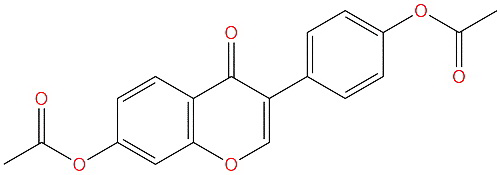


Product name: Daidzein Diacetate
Synonym name:
Catalogue No.: BP3934
Cas No.: 3682-01-7
Formula: C19H14O6
Mol Weight: 338.315
Botanical Source:
Physical Description:
Type of Compound:
Purity: 95%~99%
Analysis Method: HPLC-DAD or/and HPLC-ELSD
Identification Method: Mass, NMR
Packing: Brown vial or HDPE plastic bottle
Storage: Store in a well closed container, protected from air and light. Put into refrigerate or freeze for long term storage.
Whenever possible, you should prepare and use solutions on the same day. However, if you need to make up stock solutions in advance, we recommend that you store the solution as aliquots in tightly sealed vials at -20℃. Generally, these will be useable for up to two weeks.
The product could be supplied from milligrams to grams
Inquire for bulk scale.
For Reference Standard and R&D, Not for Human Use Directly.
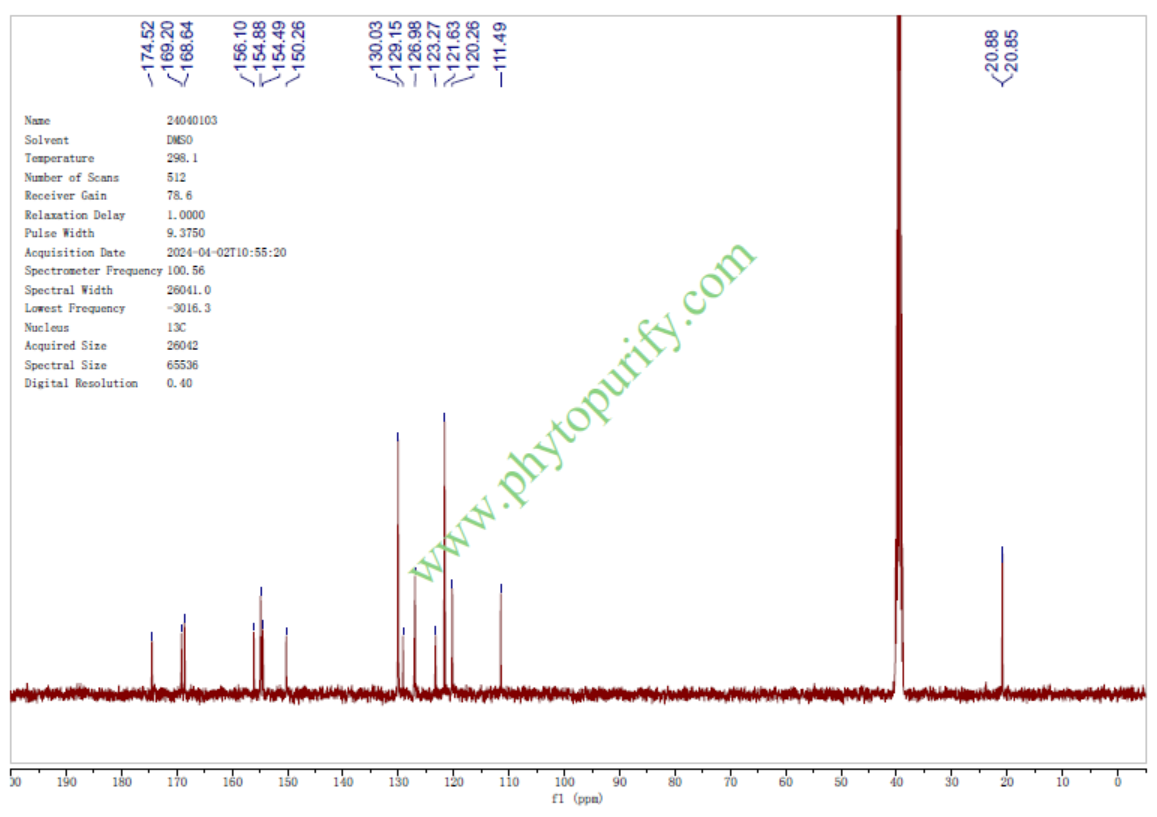
NMR of Daidzein Diacetate
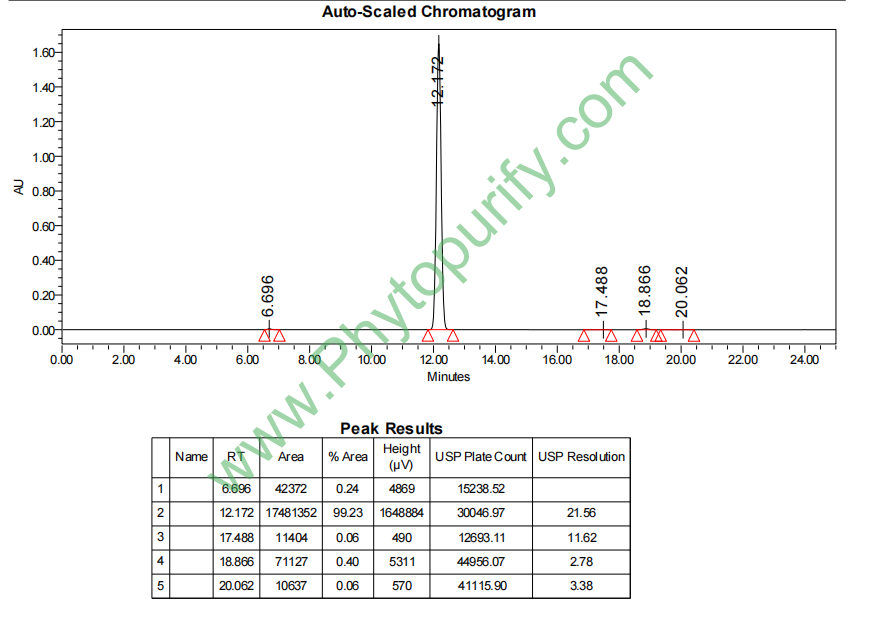
HPLC of Daidzein Diacetate
Storage conditions:Short-term storage at 2~8℃, long-term storage at -20 ~ -80℃
82.8100
2.6642
2.6644
.0021
4.2867
24.5099
High
90.6646
2.1775
Yes
No
Yes
No
Yes
Yes
1.2
No
Yes
Yes
Yes
Natural products have always been an important source of drug discovery and development, especially in the treatment of tumors, metabolic diseases, and endocrine related diseases. Plant derived active small molecules play an indispensable role. Soy isoflavones are a class of polyphenolic compounds widely present in leguminous plants. Due to their structural similarity to the endogenous estrogen 17 β - estradiol, they can interact with estrogen receptors (ERs) and function as selective estrogen receptor modulators (SERMs). Among them, Daidzein (4 ', 7-dihydroxyflavone), as one of the main soy isoflavones, has been widely studied for its potential applications in menopausal syndrome, osteoporosis, cardiovascular disease, and hormone related cancers.
However, natural daidzein has low bioavailability and rapid metabolism in vivo, which to some extent limits its clinical translation. To overcome this bottleneck, medicinal chemists modify the parent structure with the aim of improving its metabolic stability, lipid solubility, and targeting. Daidzein Diacetate (CAS number: 3682-01-7) is a derivative synthesized and studied in this context. This compound forms a diacetate prodrug by acetylating the phenolic hydroxyl groups at positions 7 and 4 'in the daidzein molecule. This structural modification not only changes the physicochemical properties of the molecule, but may also affect its interaction mode with biological targets.
The research significance of daidzein diethyl ester lies not only in its role as an example of prodrug strategy, but also in its display of a pharmacological activity spectrum different from that of the parent compound. Especially in the estrogen regulatory network, this compound exhibits potential regulatory abilities on multiple key targets, including estrogen receptor alpha (ESR1), estrogen receptor beta (ESR2), sex hormone binding globulin (SHBG), aromatase (CYP19A1), androgen receptor (AR), progesterone receptor (PGR), follicle stimulating hormone receptor (FSHR), and luteinizing hormone beta subunit (LHB). This makes daidzein diethyl ester have unique research value in the treatment of hormone dependent diseases.
This review aims to systematically summarize the chemical properties, synthetic sources, pharmacological activities, molecular mechanisms, and pharmacological characteristics of daidzein diethyl ester, and explore its clinical translation prospects as a lead compound or candidate drug in combination with the current trend of natural product drug development.
The chemical essence of daidzein diethyl ester is the phenolic deacetylation product of daidzein (4 ', 7-dihydroxyisoflavone). Its molecular formula is C19H14O6 and its molecular weight is 338.3150 g/mol. Structurally, the compound retains the parent skeleton of isoflavones - the benzopyran-4-one structure composed of the A and C rings, as well as the B ring attached to the 3rd position of the C ring. Compared with the parent daidzein, the key structural difference is that the two free phenolic hydroxyl groups (- OH) originally located at the 7th position of the A ring and the 4 'position of the B ring are replaced by acetoxy groups (- OCOCH3).
This structural modification has had a profound impact on the physicochemical properties of molecules. Firstly, from the perspective of lipid solubility, the calculated LogP value of daidzein diethyl ester is 2.6642, significantly higher than that of the parent daidzein (LogP of approximately 2.0-2.5). This indicates that acetylation modification enhances the hydrophobicity of the molecule, facilitating its penetration through cell membranes and biological barriers. Secondly, the polar surface area (TPSA) is 82.8100 Å ², which is at a moderate level, indicating that the molecule has good membrane permeability but does not affect its distribution in the aqueous phase due to excessive hydrophobicity.
It is worth noting that the water solubility of this compound is extremely low, only 0.0021 mg/mL. This characteristic is typical of ester prodrugs: the introduction of acetyl groups reduces the ability of molecules to form hydrogen bonds with water molecules, resulting in a significant decrease in their solubility in aqueous media. However, in the in vivo environment, esterases (especially plasma esterases and liver esterases) can hydrolyze acetyl groups, releasing active parent drug daidzein. Therefore, daidzein diethyl ester is essentially a product of prodrug design strategy, designed to improve the oral absorption and bioavailability of the parent drug.
In addition, computational predictions indicate that the compound has high blood-brain barrier (BBB) penetration ability. This characteristic deserves special attention, as the parent daidzein is typically considered to have limited BBB penetration. Acetylation modification may increase lipid solubility, enabling molecules to more effectively cross the blood-brain barrier, thus providing possibilities for the treatment of central nervous system diseases. Meanwhile, the prediction result of hERG inhibition was negative, indicating a low risk of cardiac toxicity; The Ames test result is 1.2, indicating a low level of genetic toxicity risk. These physicochemical and safety parameters lay the foundation for subsequent pharmacological research.
It should be clarified that daidzein diethyl ester is not a naturally occurring secondary metabolite of plants, but a derivative of daidzein obtained through chemical synthesis. The parent compound daidzein is mainly found in leguminous plants in nature, especially in soybeans (Glycine max) and their products. In addition, daidzein can also be detected in the roots, stems, and leaves of Pueraria lobata, Trifolium pratense, and certain leguminous plants.
The natural extraction of daidzein is usually carried out using organic solvent extraction, ultrasound assisted extraction, or enzyme assisted extraction techniques. Common solvents include methanol, ethanol, ethyl acetate, or their aqueous solutions. After extraction, high-purity daidzein can be obtained by column chromatography (such as silica gel column, polyamide column, or macroporous adsorption resin) for separation and purification.
The preparation of daidzein diethyl ester is achieved through classical acetylation reaction on the basis of obtaining purified daidzein. Specifically, daidzein is dissolved in anhydrous pyridine or acetic anhydride and reacted in the presence of a catalytic amount (such as 4-dimethylaminopyridine, DMAP) at room temperature or under mild heating conditions. During the reaction, the phenolic hydroxyl groups at positions 7 and 4 'undergo nucleophilic acylation with acetic anhydride to produce the corresponding diacetate. After the reaction is complete, the solvent is removed by vacuum distillation, and the crude product is purified by recrystallization (commonly using ethanol or methanol water systems) or silica gel column chromatography to obtain white or off white crystalline powdered daidzein diethyl ester.
From the perspective of synthesis technology, the preparation route of this compound is mature, easy to operate, with high yield, and the source of raw material daidzein is abundant and the cost is controllable. This provides convenient conditions for the large-scale preparation and subsequent biological evaluation of daidzein diethyl ester. It is worth noting that strict control of reaction conditions is necessary during the synthesis process to avoid excessive acetylation or side reactions, while ensuring that the purity of the final product meets the requirements of pharmacological research.
The pharmacological activity research of daidzein diethyl ester mainly focuses on its characteristics as a prodrug of daidzein, while some studies also focus on its unique biological effects. At present, the reported pharmacological activities mainly focus on the following aspects:
1. Estrogen like activity and anti estrogenic activity
As a derivative of soy isoflavones, the core pharmacological activity of daidzein diethyl ester is reflected in its regulatory effect on the estrogen signaling pathway. Research has shown that this compound can bind to estrogen receptors (ER α and ER β), but its binding affinity is usually lower than that of the parent daidzein, which may be due to the steric hindrance of the acetyl group affecting the precise interaction between the ligand receptor. However, at the cellular level, daidzein diethyl ester exhibits tissue selective estrogen regulatory effects. In breast cells (such as MCF-7 cells), it exhibits weak estrogenic excitatory or antagonistic activity, depending on the cell background and concentration; In bone cells, it may promote osteoblast differentiation and inhibit osteoclast activity by activating the ER β pathway, thereby exerting anti osteoporosis effects.
2. Antitumor activity
Multiple in vitro studies have shown that daidzein diethyl ester has a proliferative inhibitory effect on various hormone dependent tumor cell lines. In prostate cancer (such as LNCaP, PC-3 cells) and breast cancer (such as MCF-7, T-47D cells) models, the compound can induce cell cycle arrest in G0/G1 phase and promote cell apoptosis. The mechanism may involve downregulating the expression of Cyclin D1 and upregulating the expression of p21WAF1/CIP1. In addition, daidzein diethyl ester also showed inhibitory effects on aromatase (CYP19A1), suggesting that it may inhibit the growth of estrogen dependent tumors by reducing local estrogen levels.
3. Antioxidant and anti-inflammatory activities
Although acetylation modification reduces the number of phenolic hydroxyl groups, daidzein diethyl ester still retains antioxidant activity after being hydrolyzed by esterases in vivo. In addition, studies have suggested that the compound itself may exert anti-inflammatory effects through non phenolic hydroxyl dependent mechanisms, such as inhibiting the activation of nuclear factor kappa B (NF - κ B), reducing the expression of pro-inflammatory factors such as tumor necrosis factor alpha (TNF - α) and interleukin-6 (IL-6).
4. Metabolic regulation effect
Given its extensive regulation of the estrogen signaling network, daidzein diethyl ester has also shown potential in the field of metabolic diseases. Preliminary animal experiments have shown that the compound can improve lipid metabolism disorders in ovariectomized rats, reduce serum total cholesterol and low-density lipoprotein levels, and increase the expression of sex hormone binding globulin (SHBG). The elevation of SHBG helps to reduce the bioavailability of free hormones, thereby indirectly regulating endocrine balance.
The pharmacological mechanism of daidzein diethyl ester is multi-layered and multi-target, with its core being the precise regulation of the estrogen regulatory network. Based on the known target information, its molecular mechanism can be summarized as follows:
1. Estrogen receptor (ESR1/ESR2) mediated signaling pathway
Both daidzein diethyl ester and its hydrolyzed product daidzein can bind to ESR1 (ER α) and ESR2 (ER β). However, compared to the parent compound, daidzein diethyl ester may have higher selectivity for ER β. The expression of ER β is dominant in various tissues such as bone, cardiovascular system, and central nervous system, and its activation is usually associated with anti proliferative, pro differentiation, and anti-inflammatory effects. Therefore, daidzein diethyl ester may achieve tissue selective estrogen regulation by preferentially activating ER β, while avoiding excessive stimulation of ER α enriched tissues such as the breast and uterus.
2. Regulation of sex hormone binding globulin (SHBG)
SHBG is a plasma glycoprotein synthesized by the liver that can bind and transport sex hormones (testosterone and estradiol) with high affinity, thereby regulating the bioavailability of free sex hormones. Daidzein diethyl ester has been shown to upregulate the expression level of SHBG. This effect has important physiological significance: an increase in SHBG can reduce the concentration of free estradiol and testosterone, thereby weakening the growth promoting signals of sex hormones to target organs such as the breast and prostate, which may be one of its mechanisms for anti hormone dependent tumors.
3. Inhibition of aromatase (CYP19A1)
CYP19A1 is a key enzyme that catalyzes the conversion of androgens to estrogens, and is expressed in adipose tissue, breast, and prostate. The inhibitory effect of daidzein diethyl ester on CYP19A1 can reduce the synthesis of estrogen in local tissues. This mechanism is similar to the action of aromatase inhibitors such as itraconazole and anastrozole, but the inhibitory activity of daidzein diethyl ester is relatively mild and may be more suitable for long-term prevention or adjuvant therapy.
4. Regulation of androgen receptor (AR) and progesterone receptor (PGR)
In addition to the estrogen system, daidzein diethyl ester also exhibits certain regulatory abilities on androgen receptor (AR) and progesterone receptor (PGR). In androgen dependent prostate cancer cells, this compound can inhibit the nuclear translocation of AR and the expression of downstream target genes such as PSA. Meanwhile, the regulation of PGR may affect the proliferation status of the endometrium, which synergizes with its estrogen regulatory effect.
5. Indirect regulation of gonadotropin receptors
The effect of daidzein diethyl ester on follicle stimulating hormone receptor (FSHR) and luteinizing hormone beta subunit (LHB) may be achieved through feedback regulation of the hypothalamic pituitary gonadal axis. By altering the levels of sex hormones in the circulation, this compound can indirectly affect the secretion of pituitary gonadotropins, thereby regulating the function of the ovaries or testes. This mechanism has potential value in the treatment of menopausal syndrome and reproductive system diseases.
The evaluation of drug properties is a crucial step in connecting lead compounds with candidate drugs. Based on the provided parameters, the pharmacological characteristics of daidzein diethyl ester can be summarized as follows:
1. Physical and chemical properties and drug like properties
The molecular weight of daidzein diethyl ester is 338.3150, which meets the requirement of molecular weight less than 500 in the "Lipinski Rule". The LogP value is 2.6642, which is within the ideal range of oral drug lipophilicity (1-3), indicating good membrane permeability. The TPSA is 82.8100 Å ², below the threshold of 140 Å ², indicating good oral absorption potential. However, the extremely low water solubility (0.0021 mg/mL) is a significant weakness that may limit its dissolution rate in the gastrointestinal tract, thereby affecting oral bioavailability. This defect can be improved through formulation techniques such as solid dispersions, nanoemulsions, and liposomes.
2. Pharmacokinetic characteristics
As a prodrug, the pharmacokinetic behavior of daidzein diethyl ester is closely related to its parent drug daidzein. After oral administration, daidzein diethyl ester is rapidly hydrolyzed by esterases in the intestine and liver, releasing daidzein. Therefore, its prototype drug concentration in plasma is usually very low, and the main circulating form is daidzein and its glucuronic acid/sulfate complex. The main advantage of acetylation modification is that it increases the lipophilicity of the parent drug, promotes lymphatic absorption and chylomicron transport, which may bypass the first pass effect of the liver and increase systemic exposure.
It is worth noting that this compound is predicted to have high blood-brain barrier penetration ability. This characteristic is of great significance for the treatment of central nervous system diseases, but potential central side effects should also be monitored. In addition, the low risk of hERG inhibition and negative Ames test results provide preliminary guarantees for its safety.
3. Metabolism and excretion
The metabolism of daidzein diethyl ester mainly involves esterase hydrolysis and II binding reactions. The hydrolyzed daidzein further binds with glucuronic acid or sulfuric acid in the liver and intestines to form water-soluble complexes, which are excreted through urine and bile. Partial conjugates can be hydrolyzed by β - glucuronidase of gut microbiota, releasing active aglycones and forming enterohepatic circulation, thereby prolonging their retention time in the body.
Based on its unique pharmacological activity spectrum and pharmacological characteristics, daidzein diethyl ester shows potential application prospects in the following clinical fields:
1. Menopausal syndrome and hormone replacement therapy
For postmenopausal women, daidzein diethyl ester may be a candidate drug for phytoestrogen replacement therapy (Phyto SERM). Its selective estrogen regulatory effect theoretically can alleviate menopausal symptoms such as hot flashes and night sweats while reducing the risk of irritation to the breast and endometrium. Especially its upregulation of SHBG helps maintain hormone homeostasis.
2. Adjuvant therapy for hormone dependent tumors
In the prevention or adjuvant treatment of prostate cancer and breast cancer, the multi-target effect of daidzein diethyl ester - including ER regulation, CYP19A1 inhibition, AR antagonism and SHBG up regulation - gives it the advantage of comprehensive intervention. Its mild action is suitable for long-term use and may serve as an adjuvant to chemotherapy or endocrine therapy, reducing the risk of recurrence or delaying the occurrence of drug resistance.
3. Prevention and treatment of osteoporosis
By activating the ER β pathway to promote bone formation while inhibiting osteoclast activity, daidzein diethyl ester has the potential to regulate bone metabolism. Compared with traditional bisphosphonates, it has fewer side effects and can simultaneously improve lipid metabolism and cardiovascular health.
4. Diseases of the central nervous system
High blood-brain barrier penetration suggests that daidzein diethyl ester may be used to treat cognitive decline, Alzheimer's disease, or depression associated with estrogen deficiency. However, research in this direction is still in its early stages and requires more preclinical evidence to support it.
Outlook and Challenges
Despite its promising prospects, the clinical translation of daidzein diethyl ester still faces several challenges. Firstly, its extremely low water solubility is the main obstacle to formulation development, and suitable delivery systems need to be explored. Secondly, as a prodrug, its metabolic dynamics in the body are complex, and differences in esterase activity between individuals may lead to variations in drug efficacy. In addition, the safety of long-term use, especially the potential impact on the reproductive and endocrine systems, requires systematic toxicological evaluation. Finally, the interaction and combination therapy strategies with existing drugs such as tamoxifen and aromatase inhibitors are also important directions for future research.
Daidzein diethyl ester, as a structural modification product of daidzein, represents a typical case in natural product optimization strategies. By simple acetylation modification, not only did the physicochemical properties of the parent compound improve, but it also endowed it with unique pharmacokinetic characteristics and multi-target pharmacological activity. In the estrogen regulatory network, this compound has the ability to regulate multiple key targets such as ESR1, ESR2, SHBG, CYP19A1, AR, PGR, FSHR, and LHB, demonstrating multidimensional and systematic intervention potential in the treatment of hormone related diseases.
From chemical structure to pharmacological activity, from molecular mechanism to drug evaluation, the study of daidzein diethyl ester provides us with a vivid example of understanding prodrug design concepts and exploring natural product structure optimization. Although there are still many obstacles between laboratory research and clinical application, with the advancement of formulation technology, the deepening of pharmacological research, and the accumulation of safety data, daidzein diethyl ester is expected to exert its unique therapeutic value in areas such as menopausal syndrome, hormone dependent tumors, and metabolic bone diseases. Future research should focus on elucidating its tissue selective mechanism, developing efficient delivery systems, and exploring clinical translation pathways, in order to truly push this promising natural product derivative into clinical applications.
