5,7-dihydroxy-3- (4-hydroxybenzyl) chroman-4-one: Pharmacological research progress on a natural flavonoid product
Introduction/Overview
Natural products, as an important source of drug discovery, play an irreplaceable role in the long history of human fight against diseases. Flavonoids, as one of the most widely distributed polyphenolic secondary metabolites in nature, have attracted much attention due to their structural diversity and extensive biological activity. Among the vast family of flavonoids, homoflavonolids are a relatively special and less studied subclass, characterized by the addition of a methylene bridge (- CH ₂ -) between the B ring and the chromone nucleus, forming a unique C ₁ - skeleton. This structural difference endows flavonoids with unique physicochemical properties and biological activity spectra that distinguish them from classical flavonoids.
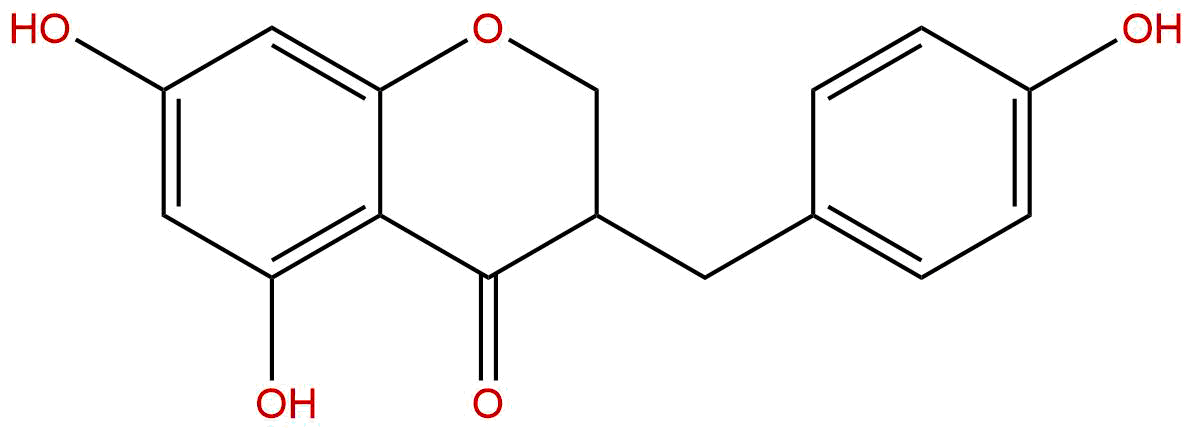
5,7-Dihydroxy-3- (4-hydroxybenzyl) chroman-4-one (CAS number 107585-77-3) is a typical flavonoid compound. The molecular formula of this compound is C ₁₆ H ₁₄ O ₅, with a molecular weight of 286.28. Its structure contains a chroman-4-ketone core, with one hydroxyl group substituted at positions 5 and 7, and a 4-hydroxybenzyl group connected to position 3 via a methylene group. This structural feature enables it to possess both the basic pharmacophore of flavonoids and the unique spatial configuration of flavonoids, laying the structural foundation for its multiple biological activities.
It is worth noting that this compound often appears in the literature as (-) -5,7-dihydroxy-3- (4-hydroxybenzyl) -4-benzodihydropyranone, indicating its optical activity. The naturally occurring compound is usually a left-handed enantiomer, and this stereochemical characteristic may be closely related to its specific interactions with biomolecules. In recent years, with the advancement of separation technology and the improvement of activity screening systems, this compound has shown potential application value in multiple fields such as anti-inflammatory, antioxidant, anti-tumor, neuroprotective, etc., attracting widespread attention from scholars at home and abroad.
This article will systematically review the research progress of 5,7-dihydroxy-3- (4-hydroxybenzyl) chroman-4-one from the aspects of chemical structure and physicochemical properties, plant sources and extraction methods, pharmacological activity research, mechanism of action and molecular targets, drug evaluation and pharmacokinetics, clinical application prospects and prospects, in order to provide reference for the in-depth research and development of this natural product.
Chemical structure and physicochemical properties
Chemical structural characteristics
The core skeleton of 5,7-dihydroxy-3- (4-hydroxybenzyl) chroman-4-one is chroman-4-one, which is a benzodihydropyran-4-one structure. The mother nucleus is composed of a fused A ring (benzene ring) and a C ring (oxygen-containing hexagonal heterocyclic ring), where the 4th position of the C ring is a carbonyl group (C=O), the 2nd position is an oxygen atom, and the 3rd position is a chiral carbon atom. There is a phenolic hydroxyl group (- OH) at positions C-5 and C-7, and the substitution pattern of these two hydroxyl groups is consistent with the A-ring hydroxyl substitution pattern of many classic flavonoids, such as apigenin and kaempferol, making them important active groups.
The most significant structural feature of this compound is that a 4-hydroxybenzyl group is connected to the C-3 position through a methylene bridge (- CH ₂ -). This structural unit distinguishes this compound from classical isoflavones, which have their B ring directly attached to the C-3 position. The structural feature of flavonoids gives their molecules greater flexibility and spatial extensibility, which may affect their binding mode with target proteins. In addition, the phenolic hydroxyl group (C-4 '' - OH) on 4-hydroxybenzyl further enhances the hydrogen bond donor/acceptor ability of the molecule, making an important contribution to its biological activity.
From the perspective of stereochemistry, the C-3 position is the chiral center, and naturally occurring compounds are mainly (-) - enantiomers. The absolute configuration of chiral centers has a decisive impact on their interactions with chiral biomolecules such as enzymes and receptors. Research has shown that different enantiomers may exhibit vastly different levels of biological activity intensity and selectivity.
Physical and chemical property parameters
According to computational chemistry and experimental measurement data, the key physicochemical property parameters of this compound are as follows:
- molecular weight:286.2800 g/mol
- Lipid water partition coefficient (LogP):2.0000
- Topological Polarity Surface Area (TPSA):92.8900 Ų
- Hbond donor: 3 (three phenolic hydroxyl groups)
- Number of hydrogen bond acceptors: 5 (three hydroxyl oxygen, one carbonyl oxygen, one ether oxygen)
- Number of rotatable keys: 2 (C-C bond and C-3 bond between methylene bridge and methylene group)
The LogP value of 2.0 indicates that the compound has moderate lipophilicity, meeting the requirement of LogP ≤ 5 in Lipinski's five rules, which is beneficial for oral absorption and transmembrane transport. The TPSA is 92.89 Å ², slightly higher than the recommended upper limit of 140 Å ² for oral medications, indicating that the compound may have some polarity, but still within an acceptable range. The presence of three phenolic hydroxyl groups gives it weak acidity (pKa of about 9-10), mainly existing in molecular form under neutral physiological conditions, but ionization can occur in alkaline environments.
This compound exhibits characteristic absorption in the ultraviolet region, mainly attributed to the benzoyl system of the A ring (approximately 280-300 nm) and the benzene ring system of 4-hydroxybenzyl (approximately 260-270 nm). Its fluorescence properties are weak, but can be quantitatively analyzed through derivatization or the use of specific detection methods. In terms of stability, this compound is sensitive to light, heat, and oxygen, especially the phenolic hydroxyl group is prone to oxidation. During storage and experimentation, attention should be paid to avoiding light, low temperature, and inert gas protection.
Plant sources and extraction methods
Main plant sources
5,7-dihydroxy-3- (4-hydroxybenzyl) chroman-4-one is mainly found in plants of the Liliaceae and Asparagaceae families, especially in the following genera and species with abundant content:
-
Ornithogalum genus This genus of plants is an important source of known flavonoids. For example, this compound has been isolated from species such as Ornithogalum saundersiae and Ornithogalum causality. Tiger eye evergreen plants are commonly used in traditional medicine to treat diseases such as inflammation and tumors, and their active ingredients may be closely related to flavonoids.
-
Scilla genus Plants such as Scilla scilloides and Scilla bifolia also contain this compound. Plants of the genus Ziziphus are widely used in traditional medicine in Asia and Europe, mainly for the treatment of cardiovascular diseases and inflammation.
-
Convallaria genus The same flavonoid component has also been detected in plants such as Convallaria majalis.
-
Other sources In recent years, the presence of this compound has also been found in certain species of the Zingiberaceae and Fabaceae families, but the levels are usually low.
It is worth noting that the content of this compound in different plants is influenced by various factors, including plant variety, growth stage, harvest season, geographical environment, etc. Usually, the content is higher in the roots, bulbs, and whole plant of plants, while it is relatively lower in the leaves and flowers.
Extraction and Separation Purification Methods
extraction method
The commonly used methods for extracting 5,7-dihydroxy-3- (4-hydroxybenzyl) chroman-4-one include:
-
Solvent extraction method The solubility of the compound in organic solvents is usually utilized for extraction using ethanol, methanol, or ethanol water mixed solvents. Considering the presence of phenolic hydroxyl groups, appropriately increasing the extraction temperature (40-60 ℃) and prolonging the extraction time (2-4 hours) can help improve the extraction efficiency. The commonly used extraction methods include immersion, percolation, and reflux extraction. Among them, 70% -80% ethanol aqueous solution reflux extraction is the most commonly used method, with high extraction rate and moderate cost.
-
Ultrasound assisted extraction By utilizing the cavitation effect and mechanical vibration of ultrasound, the extraction efficiency can be significantly improved and the extraction time can be shortened. The ultrasound power is usually between 200-500 W, and the extraction time is 20-40 minutes to achieve good extraction results. This method is particularly suitable for the extraction of thermosensitive components.
-
Microwave assisted extraction Microwave radiation can rapidly increase the internal temperature of plant cells, causing cell wall rupture and promoting the dissolution of target components. This method has the advantages of short extraction time (several minutes) and low solvent dosage, but attention should be paid to controlling microwave power and temperature to avoid degradation of active ingredients.
-
Supercritical fluid extraction Selective extraction can be achieved by using CO ₂ as the extraction medium and changing its solubility by adjusting pressure and temperature. This method is environmentally friendly, but the equipment cost is relatively high, and it is currently mainly used for laboratory research.
Separation and purification methods
The crude extract obtained from extraction needs to undergo a series of separation and purification steps to obtain high-purity target compounds:
-
Liquid-liquid extraction By utilizing the differences in solvent polarity, the crude extract can be sequentially extracted with solvents such as petroleum ether, ethyl acetate, and n-butanol to enrich the target compound in the extraction sites of moderately polar ethyl acetate or n-butanol.
-
Column chromatography separation: Common stationary phases include silica gel, reversed silica gel (C18), polyamide, dextran gel (Sephadex LH-20), etc. Silica gel column chromatography usually uses chloroform methanol or ethyl acetate methanol gradient elution; Reverse phase column chromatography uses methanol water or acetonitrile water systems. Polyamide column chromatography has a good separation effect on phenolic hydroxyl compounds.
-
Preparation type high-performance liquid chromatography For the separation of homologous compounds with similar structures, preparative HPLC is the most effective method. Usually, a C18 reverse phase column is used, with methanol water or acetonitrile water as the mobile phase, to purify the target compound through gradient elution.
-
Crystallization and Recrystallization After obtaining relatively pure components, the solubility difference of the compound in specific solvents can be utilized to obtain high-purity crystalline products through crystallization or recrystallization. Common crystallization solvents include methanol, ethanol, ethyl acetate, etc.
Pharmacological activity research
anti-inflammatory activity
Inflammation is a defense response of the body against injury and infection, but excessive or sustained inflammation can lead to tissue damage and the occurrence of various diseases. Research has shown that 5,7-dihydroxy-3- (4-hydroxybenzyl) chroman-4-one has significant anti-inflammatory activity.
In vitro experiments have shown that this compound can inhibit the production of nitric oxide (NO) in macrophages (such as RAW264.7 cells) stimulated by lipopolysaccharide (LPS), with an IC ₅₀ value at the micromolar level. At the same time, it can also reduce the levels of pro-inflammatory factors such as prostaglandin E ₂ (PGE ₂), tumor necrosis factor - α (TNF - α), interleukin-6 (IL-6), and interleukin-1 β (IL-1 β). At the molecular level, this compound exerts anti-inflammatory effects by inhibiting the activation of the nuclear factor kappa B (NF - κ B) signaling pathway, reducing the expression of inducible nitric oxide synthase (iNOS) and cyclooxygenase-2 (COX-2).
In animal models, the compound has inhibitory effects on acute inflammation models such as carrageenan induced rat toe swelling and xylene induced mouse ear swelling, and is dose-dependent. In addition, in chronic inflammation models such as adjuvant arthritis, this compound can also reduce joint swelling and pathological damage, suggesting its potential for treating chronic inflammatory diseases.
antioxidant activity
Oxidative stress is a common pathological mechanism in many diseases, including cardiovascular disease, neurodegenerative diseases, cancer, and aging. The 5,7-dihydroxy-3- (4-hydroxybenzyl) chroman-4-one molecule contains three phenolic hydroxyl groups, which endow it with strong free radical scavenging ability.
In chemical systems, this compound can effectively scavenge 1,1-diphenyl-2-trinitrophenylhydrazine (DPPH) free radicals, 2,2 '- bis (3-ethylbenzothiazoline-6-sulfonic acid) diammonium salt (ABTS ⁺) free radicals, and superoxide anion free radicals. Its antioxidant capacity is comparable to classical antioxidants such as vitamin C and quercetin. In cell models, this compound can reduce intracellular reactive oxygen species (ROS) levels induced by hydrogen peroxide (H ₂ O ₂) or tert butyl hydroperoxide (t-BHP), increase the activity of superoxide dismutase (SOD), glutathione peroxidase (GPx), and catalase (CAT), and increase the content of reduced glutathione (GSH).
Further mechanistic studies have shown that this compound not only directly scavenges free radicals, but also upregulates the expression of a series of antioxidant enzyme genes by activating the nuclear factor E2 related factor 2 (Nrf2)/antioxidant response element (ARE) signaling pathway, thereby enhancing the endogenous antioxidant defense ability of cells.
Antitumor activity
The research on flavonoids in anti-tumor effects has been a hot topic in recent years. 5,7-dihydroxy-3- (4-hydroxybenzyl) chroman-4-one has cytotoxic effects on many tumor cell lines, including breast cancer (MCF-7, MDA-MB-231), liver cancer (HepG2, Huh7), lung cancer (A549), colon cancer (HT-29, HCT116) and leukemia (HL-60, K562).
The IC ₅₀ value of this compound that inhibits tumor cell proliferation is usually in the range of 10-50 μ M, and its toxicity to normal cells (such as human normal liver cell L02 and human umbilical vein endothelial cell HUVEC) is low, showing a certain degree of selectivity. Cell cycle analysis showed that the compound can block tumor cells in either G0/G1 phase or G2/M phase, depending on the cell type. In addition, it can induce apoptosis of tumor cells, characterized by nuclear condensation, DNA fragmentation, decreased mitochondrial membrane potential, activation of caspase-3/9, and increased Bax/Bcl-2 ratio.
It is worth noting that the compound also exhibits certain activity against multidrug-resistant (MDR) tumor cells, suggesting its potential to overcome tumor resistance. In addition, in the in vivo xenograft tumor model, the compound was able to inhibit tumor growth and no significant weight loss or major organ toxicity was observed.
Neuroprotective activity
With the aging of the population, the incidence rate of neurodegenerative diseases (such as Alzheimer's disease, Parkinson's disease) is rising, and finding effective neuroprotective agents has become a research hotspot. 5,7-dihydroxy-3- (4-hydroxybenzyl) chroman-4-one exhibits good activity in neuroprotection.
In the neuronal injury model induced by glutamate or β - amyloid protein (A β), this compound can improve neuronal survival rate, reduce lactate dehydrogenase (LDH) release, decrease intracellular calcium ion concentration, inhibit caspase-3 activation and apoptosis. In addition, it can inhibit acetylcholinesterase (AChE) activity and increase the level of cholinergic neurotransmitters, which is of great significance for improving cognitive function in Alzheimer's disease patients.
In the model of cerebral ischemia-reperfusion injury, this compound can reduce the volume of cerebral infarction, improve neurological function scores, alleviate brain edema, and reduce blood-brain barrier permeability. The mechanism may be related to inhibiting oxidative stress, reducing inflammatory response, inhibiting neuronal apoptosis, and promoting the expression of neurotrophic factors (such as BDNF).
Other pharmacological activities
In addition to the main activities mentioned above, this compound also exhibits various other pharmacological effects:
-
Antibacterial activity It has a certain inhibitory effect on common pathogens such as Staphylococcus aureus, Escherichia coli, and Candida albicans, with a minimum inhibitory concentration (MIC) in the range of 50-200 μ g/mL.
-
Antidiabetic activity Can inhibit alpha glucosidase activity, delay carbohydrate absorption, and lower postprandial blood glucose levels. At the same time, it can also improve insulin resistance and promote glucose uptake.
-
Cardiovascular protective activity Inhibit the proliferation of vascular smooth muscle cells, dilate blood vessels, lower blood pressure, and protect myocardial cells from ischemia-reperfusion injury.
-
Liver protective activity It has a protective effect on liver injury induced by chemical substances such as carbon tetrachloride and acetaminophen, reduces serum transaminase levels, and alleviates liver cell necrosis and steatosis.
Mechanism of action and molecular targets
Anti inflammatory mechanism
The anti-inflammatory effect of 5,7-dihydroxy-3- (4-hydroxybenzyl) chroman-4-one is mainly achieved through the following molecular mechanisms:
-
Inhibition of NF - κ B signaling pathway This compound can inhibit the activity of I κ B kinase (IKK), prevent the phosphorylation and degradation of I κ B α, and thus inhibit the nuclear translocation and transcriptional activity of NF - κ B. The downregulation of NF - κ B leads to a decrease in the expression of pro-inflammatory genes such as iNOS, COX-2, TNF - α, IL-6, etc.
-
Inhibition of MAPK signaling pathway This compound can inhibit the phosphorylation of p38 MAPK, JNK, and ERK1/2, thereby blocking the cascade amplification of inflammatory signals.
-
Activate Nrf2/ARE pathway By promoting nuclear translocation of Nrf2, upregulating the expression of antioxidant enzymes such as HO-1 and NQO1, enhancing the antioxidant defense ability of cells, and indirectly inhibiting inflammatory responses.
-
Adjust STAT3 signal Inhibit the phosphorylation and dimerization of STAT3, and reduce the production of inflammatory factors such as IL-6.
Antitumor mechanism
The anti-tumor effect of this compound involves multiple signaling pathways and molecular targets:
-
Inducing cell cycle arrest By upregulating the expression of cell cycle dependent kinase inhibitors (CDKI) such as p21 and p27, and downregulating protein levels such as cyclin D1, cyclin E, CDK2, and CDK4, the cell cycle is arrested in the G0/G1 phase. In some studies, G2/M phase arrest was also observed, which is related to the activation of Chk1/Chk2 and the inhibition of Cdc2.
-
Inducing apoptosis Inducing apoptosis through mitochondrial pathway (endogenous pathway) and death receptor pathway (exogenous pathway). In the mitochondrial pathway, this compound promotes Bax translocation to mitochondria, leading to a decrease in mitochondrial membrane potential, release of cytochrome c, and activation of caspase-9 and caspase-3. In the death receptor pathway, this compound upregulates the expression of Fas, FasL, and DR5, activating caspase-8.
-
Inhibition of PI3K/Akt/mTOR pathway This compound can inhibit the activity of PI3K, reduce the phosphorylation level of Akt, thereby inhibiting the activity of mTOR and its downstream effector molecules p70S6K and 4E-BP1, thereby inhibiting tumor cell proliferation and promoting apoptosis.
-
Regulating Wnt/β - catenin signaling By inhibiting the nuclear translocation of β - catenin and the transcription activity of TCF/LEF, the expression of Wnt target genes such as c-Myc and cyclin D1 is downregulated.
-
Inhibit angiogenesis By downregulating the expression of VEGF and HIF-1 α, the formation of tumor neovascularization is inhibited, thereby limiting tumor growth and metastasis.
Neuroprotective mechanism
The neuroprotective effect of this compound mainly involves the following mechanisms:
-
anti-oxidative stress Directly eliminate free radicals and activate the Nrf2/ARE pathway, reducing oxidative damage.
-
Anti excitotoxicity Inhibit the overactivation of glutamate receptors (especially NMDA receptors), reduce calcium ion influx, and prevent neuronal damage caused by calcium overload.
-
Inhibition of A β aggregation Binding with A β monomer inhibits its aggregation to form toxic oligomers and fibers, while promoting the depolymerization of existing aggregates.
-
Regulating autophagy Activate autophagy through the AMPK/mTOR pathway, promote the clearance of misfolded proteins and damaged organelles, and maintain neuronal homeostasis.
-
Promote the expression of neurotrophic factors Upregulation of the expression of neurotrophic factors such as BDNF and NGF promotes neuronal survival and synaptic plasticity.
molecular target
Based on existing research, the molecular targets of 5,7-dihydroxy-3- (4-hydroxybenzyl) chroman-4-one include:
-
enzymes INOS, COX-2, AChE, α - glucosidase, PI3K, IKK, caspase-3/9, etc.
-
Receptors and transcription factors NF - κ B, Nrf2, STAT3, β - catenin, Akt, mTOR, AMPK, etc.
-
Ion channels and transporters NMDA receptors, calcium ion channels, etc.
It should be pointed out that the multi-target characteristic of this compound is the basis for its extensive pharmacological activity, but it also increases the complexity of mechanism research. In the future, it is necessary to use methods such as systems pharmacology, chemical biology, and structural biology to further clarify its key targets and modes of action.
Evaluation of drug properties and pharmacokinetics
Analysis of drug properties parameters
Based on the provided pharmacological parameters and the principles of medicinal chemistry, evaluate the pharmacological properties of the compound:
-
Molecular weight (286.28)Compliant with Lipinski's five rules (MW<500), it is beneficial for oral absorption and transmembrane transport.
-
LogP(2.00)Within the ideal range (1-3), it ensures sufficient lipophilicity to penetrate biological membranes while avoiding metabolic problems and toxicity caused by excessive lipid solubility.
-
TPSA(92.89 Ų)Slightly higher than the recommended upper limit of 140 Å ² for oral medications, but still within an acceptable range. A higher TPSA may limit its ability to pass through the blood-brain barrier, which is consistent with the prediction of 'blood-brain barrier: low'.
-
Number of hydrogen bond acceptors (5)Compliant with Lipinski's rule (HBA ≤ 10), it is conducive to forming hydrogen bonding interactions with target proteins.
-
Blood brain barrier (Low)Predict that the compound is not easily able to cross the blood-brain barrier, which limits its application in central nervous system diseases such as Alzheimer's disease and Parkinson's disease, but also reduces the risk of central nervous system toxicity.
-
Hepatotoxicity, cardiotoxicity, hERG inhibition, Ames test All are "Unknown", indicating a lack of relevant safety data and the need for further toxicological research.
Overall, the compound has good drug like properties and meets the basic requirements for oral medication, but its blood-brain barrier permeability is low and safety data is incomplete, requiring further evaluation.
Pharmacokinetic characteristics
At present, there is limited systematic research on the pharmacokinetics of 5,7-dihydroxy-3- (4-hydroxybenzyl) chroman-4-one. However, based on its structural characteristics and studies on related flavonoids, it can be inferred that its pharmacokinetic features are:
-
absorb The compound has moderate lipid solubility (LogP=2.0), indicating good oral absorption. But the presence of three phenolic hydroxyl groups may be influenced by intestinal first pass metabolism, including glucuronidation and sulfation. The bioavailability may vary by species and dosage form.
-
distribution The binding rate of this compound to plasma proteins is not yet clear, but the phenolic hydroxyl group may cause it to bind to albumin to some extent. Due to the low permeability of the blood-brain barrier, its distribution is limited and mainly distributed in tissues with abundant blood flow such as the liver, kidneys, and lungs.
-
Metabolism The metabolism of this compound mainly involves phase II metabolic reactions, including glucuronic acid binding, sulfate binding, and methylation. Phenolic hydroxyl groups are the main metabolic sites. In addition, the carbonyl group of the C ring may undergo a reduction reaction, generating corresponding alcohol metabolites. The phase I metabolism mediated by cytochrome P450 enzyme (CYP450) may not be its main metabolic pathway.
-
excretion Metabolites are mainly excreted through bile and urine. The unmetabolized prototype drug may be excreted through glomerular filtration and tubular secretion.
safety evaluation
At present, there is limited safety data on this compound, but based on its plant origin and traditional applications, it is speculated that its toxicity is relatively low. However, a systematic toxicological evaluation is still needed, including:
-
acute toxicity Determine the LD ₅₀ value and evaluate the safety of a single administration.
-
Subchronic and chronic toxicity Evaluate the effects of long-term administration on major organs (liver, kidney, heart, lungs, etc.).
-
Genotoxicity Ames test, micronucleus test, and chromosome aberration test are used to evaluate their mutagenicity.
-
Reproductive toxicity Evaluate the impact on fertility, embryonic development, and offspring.
-
cardiotoxicity HERG inhibition test and electrocardiogram monitoring to assess the risk of arrhythmia.
Clinical application prospects and prospects
Potential application areas
Based on existing pharmacological activity research, 5,7-dihydroxy-3- (4-hydroxybenzyl) chroman-4-one has potential clinical application prospects in the following disease fields:
-
Inflammatory diseases Such as rheumatoid arthritis, inflammatory bowel disease, dermatitis, etc. Its multi-target anti-inflammatory mechanism and low cytotoxicity make it a candidate compound for developing novel anti-inflammatory drugs.
-
tumor As a chemotherapy adjuvant or monotherapy, it is particularly suitable for tumors that are resistant to traditional chemotherapy drugs. The mechanism of inducing apoptosis and inhibiting proliferation, as well as the relatively low normal cytotoxicity, provide a basis for its clinical application.
-
Neurodegenerative diseases Although the permeability of the blood-brain barrier is low, structural modifications or nano delivery systems may enhance its central distribution for the treatment of diseases such as Alzheimer's and Parkinson's disease.
-
Metabolic diseases: such as type 2 diabetes and obesity. Its α - glucosidase inhibitory activity and the effect of improving insulin resistance make it have the potential to be developed as an anti diabetes drug.
-
cardiovascular disease: such as hypertension, atherosclerosis, myocardial ischemia-reperfusion injury, etc.
Challenges and Solutions Faced
Although the compound exhibits good pharmacological activity, its clinical translation still faces many challenges:
-
The issue of bioavailability Phase II metabolism of phenolic hydroxyl groups may lead to lower oral bioavailability. The solution strategy includes developing prodrugs (such as acetylated and phosphorylated derivatives), using absorption enhancers, designing nano formulations (such as liposomes, polymer nanoparticles), etc.
-
Low blood-brain barrier permeability Restricting the therapeutic application of central nervous system diseases. It can be improved by structural modification (such as introducing methyl, fluorine atoms, etc. to enhance lipid solubility) or by using targeted delivery systems (such as transferrin receptor targeted nanoparticles).
-
Insufficient security data Systematic preclinical toxicology studies are required, including acute and chronic toxicity, genetic toxicity, reproductive toxicity, etc., to provide a basis for clinical trials.
-
The mechanism of action is unclear Although multiple targets have been identified, further validation is needed for key targets and signaling pathways. The application of systems pharmacology and chemical biology methods helps to elucidate their mechanisms of action.
-
Source restrictions The content in natural plants is relatively low, making it difficult to meet large-scale production and clinical needs. It can be solved through methods such as chemical synthesis, biosynthesis (such as genetic engineering microbial production), or tissue culture.
Future research directions
-
Research on Structural Optimization and Structure Performance Relationship By synthesizing a series of derivatives and systematically studying the contribution of various functional groups to activity, we aim to find candidate compounds with stronger activity, higher selectivity, and better pharmacokinetic properties.
-
Pharmacodynamic study in vivo Validate its efficacy in various animal models, including pharmacological, pharmacokinetic, and toxicological evaluations.
-
Combination therapy research Explore the synergistic effect of this compound with existing clinical drugs, search for the optimal combination therapy, improve efficacy and reduce low toxicity.
-
Formulation development Develop dosage forms suitable for clinical applications, such as oral preparations, injections, transdermal patches, etc., to improve bioavailability and patient compliance.
-
Preclinical safety evaluation According to drug development standards, conduct systematic safety evaluations to provide data support for clinical trial applications.
Conclusion
5,7-dihydroxy-3- (4-hydroxybenzyl) chroman-4-one, as a typical natural flavonoid product, has attracted the attention of researchers due to its unique chemical structure and extensive biological activity. This compound has demonstrated excellent pharmacological activity in multiple fields such as anti-inflammatory, antioxidant, anti-tumor, and neuroprotective effects. Its mechanism of action involves multiple signaling pathways and molecular targets such as NF - κ B, MAPK, PI3K/Akt, Nrf2, etc. The drug efficacy evaluation shows that the compound has good drug like properties and meets the basic requirements of oral medication, but its main shortcomings are low blood-brain barrier permeability and incomplete safety data.
Although this compound still faces many challenges in clinical translation, its unique structural framework and diverse biological activities make it an important lead compound for drug discovery. Future research should focus on optimizing structure-activity relationships, elucidating mechanisms of action, improving pharmacokinetics, and evaluating safety, with the aim of developing this natural product or its derivatives into novel drugs for treating diseases such as inflammation, tumors, and neurodegenerative disorders. With the deepening of research and advances in technology, 5,7-dihydroxy-3- (4-hydroxybenzyl) chroman-4-one is expected to play a greater role in natural medicinal chemistry and clinical treatment.