| Catalog No | Package | Original Price | Price | Inventory | Quantity | Operating |
|---|---|---|---|---|---|---|
| BP5085-5mg | 5mg | $750.00 | Sign in |
|


Storage conditions:Short-term storage at 2~8℃, long-term storage at -20 ~ -80℃
Natural products, as an important source of drug discovery, occupy a significant position in the field of new drug development due to their structural diversity and rich biological activity. Damnacanthol is a natural product isolated from the Damnacanthus major plant in the Rubiaceae family, and has received widespread attention in recent years due to its unique pharmacological activity. Tiger thorn alcohol not only exhibits significant anti 15 lipoxygenase (15-LOX) activity, but also effectively inhibits the production of nitric oxide (NO) in RAW 264.7 macrophage cells induced by lipopolysaccharide (LPS), demonstrating potential anti-inflammatory effects. In addition, the study of the activity and target of tiger thorn alcohol in antiplatelet aggregation provides a theoretical basis for its application in the prevention and treatment of cardiovascular diseases. This article will provide a systematic review of the chemical structure, plant origin, pharmacological activity, mechanism of action, pharmacological evaluation, and clinical application prospects of tiger thorn alcohol, aiming to provide scientific references for the in-depth research and drug development of this natural product.
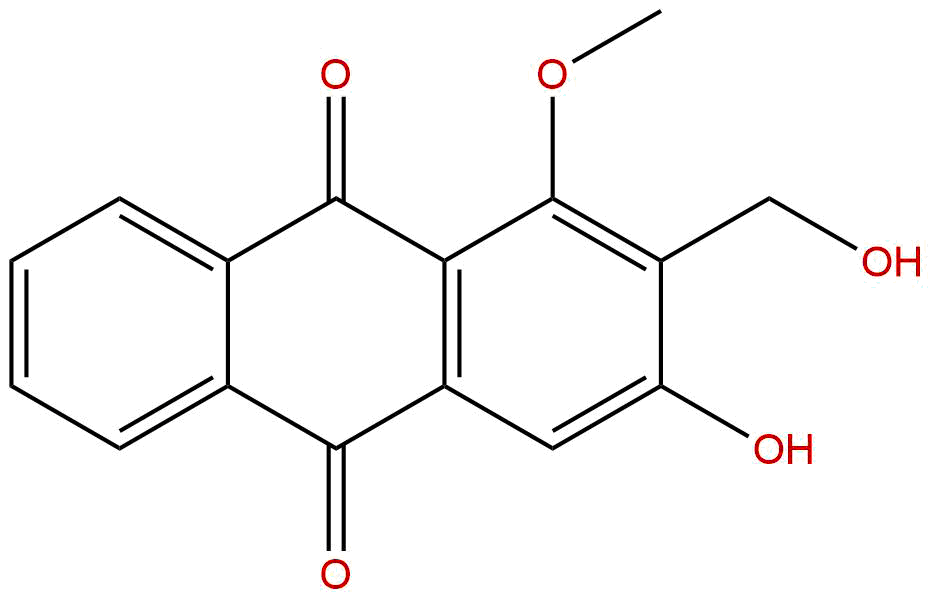
The molecular formula of tiger thorn alcohol is C18H16O4, with a molecular weight of 284.2670 and a CAS number of 477-83-8. Its structure belongs to the phenylpropanoid class compounds, with typical aromatic rings and hydroxyl substituents, endowing it with certain polarity and biological activity. The LogP value of tiger thorn alcohol is 2.0752, indicating that it has moderate lipid solubility, which is beneficial for cell membrane penetration and in vivo distribution. The topological polar surface area (TPSA) is 83.83 Å ², indicating a good balance between membrane permeability and binding to biological targets. Low water solubility (0.0956 mg/mL) suggests limited solubility in vivo, which may affect oral bioavailability. The high permeability of the blood-brain barrier indicates that resveratrol can enter the central nervous system and has potential neuroprotective or central effects. The negative result of hERG channel inhibition experiment indicates a low risk of cardiac toxicity. The Ames test result is 1.2, indicating a low risk of genotoxicity and good safety.
The chemical structure of tiger thorn alcohol is shown in Figure 1 (the structural formula diagram should be inserted here), and the hydroxyl and methoxy substituents on its benzene ring may be important determinants of its biological activity.
Tiger thorn alcohol mainly comes from Damnacanthus major, a plant in the Rubiaceae family, which is widely distributed in East Asia and traditionally used to treat various inflammatory and blood related diseases. D. The roots and stems of major are the main sites for the enrichment of tiger thorn alcohol. During the extraction process, ethanol or methanol is usually used as solvents to obtain crude extracts through reflux extraction or ultrasound assisted extraction. The crude extract was purified by liquid-liquid distribution, column chromatography (silica gel, C18 reverse phase column, etc.), and high performance liquid chromatography (HPLC), and finally high-purity puerarin was isolated.
In recent years, supercritical CO2 extraction and microwave-assisted extraction techniques have also been applied to the efficient extraction of tiger thorn alcohol, improving extraction efficiency and purity, reducing solvent usage, and complying with green chemistry principles. The optimization of the extraction process not only improved the yield of tiger thorn alcohol, but also laid the foundation for its industrial production.
Tiger thorn alcohol exhibits significant anti 15 lipoxygenase (15-LOX) activity. 15-LOX is a key enzyme in fatty acid metabolism, involved in the generation of inflammatory mediators, and its abnormal activity is associated with various inflammatory diseases. Tiger thorn alcohol exerts anti-inflammatory effects by inhibiting the activity of 15-LOX and reducing the production of inflammatory mediators. In addition, tiger thorn alcohol can significantly inhibit the production of nitric oxide (NO) in RAW 264.7 macrophages induced by LPS. As an important inflammatory mediator, the excessive production of NO is closely related to various inflammatory and immune diseases. This effect suggests that resveratrol may exert immune regulatory functions by regulating the inflammatory response of macrophages.
Platelet aggregation is a key pathological process in cardiovascular and cerebrovascular diseases such as atherosclerosis and thrombosis. Tiger thorn alcohol has shown antiplatelet aggregation activity in vitro experiments and can effectively inhibit various platelet activation pathways. The relevant targets include cyclooxygenase-1 (PTGS1), cyclooxygenase-2 (PTGS2), integrin α IIb (ITGA2B), integrin β 3 (ITGB3), platelet ADP receptor P2Y12 (P2RY12), platelet thromboxane A2 receptor (TBXA2R), phosphodiesterase 3A (PDE3A), and platelet membrane glycoprotein GP1BA. By regulating these targets, resveratrol can inhibit platelet activation and aggregation, reducing the risk of thrombosis.
Although current research mainly focuses on anti-inflammatory and antiplatelet aggregation, some preliminary studies suggest that resveratrol may have various biological activities such as antioxidant and anti-tumor effects, but the relevant mechanisms are not yet clear and further systematic research is needed.
The pharmacological effects of tiger thorn alcohol are mainly achieved through multi-target synergistic regulation. Its anti-15-LOX activity directly inhibits the synthesis of inflammatory mediators in fatty acid metabolism, reduces the production of leukotrienes and peroxides, and alleviates inflammatory reactions. The effect on macrophages may involve inhibition of the NF - κ B signaling pathway, reduction of inducible nitric oxide synthase (iNOS) expression, and decrease in NO production.
In terms of anti platelet aggregation, puerarin regulates PTGS1 and PTGS2, inhibits platelet production of pro aggregation prostaglandin H2 and thromboxane A2, and reduces platelet activation. The regulation of ITGA2B and ITGB3 affects the function of platelet membrane integrin complexes and blocks platelet interactions. The inhibition of P2RY12 and P2Y12 receptors reduces ADP mediated platelet activation signals, while the regulation of PDE3A affects intracellular cAMP levels, further inhibiting platelet aggregation. GP1BA serves as an important receptor for collagen binding between platelets and vascular endothelium, and its regulation helps to block the initial activation process of platelets.
In summary, tiger thorn alcohol exhibits complex and effective pharmacological activities through multi-target and multi pathway synergistic effects.
The pharmacological parameters of tiger thorn alcohol show that it has good potential for drug development. The moderate molecular weight (284.27 Da) and LogP value (2.08) comply with Lipinski's rule, indicating that it has good oral absorption characteristics. The TPSA is 83.83 Å ², indicating a good balance between cell membrane penetration and target binding. Low water solubility may limit its oral bioavailability, but it can be improved through formulation technology.
The high blood-brain barrier permeability of tiger thorn alcohol provides potential applications in central nervous system diseases. The negative results of hERG inhibition reduced the risk of cardiac toxicity, while the Ames test results showed a lower risk of genotoxicity and better safety.
At present, there is limited pharmacokinetic research on tiger thorn alcohol. Preliminary data indicate that it is widely distributed in the body, and its metabolic pathway may involve the liver enzyme system, with excretion mainly through the kidneys. Further in vivo pharmacokinetic and toxicological studies are needed in the future to clarify its absorption, distribution, metabolism, and excretion (ADME) characteristics, providing a basis for clinical applications.
Tiger thorn alcohol has broad application prospects in the fields of cardiovascular disease, inflammatory diseases, and immune regulation due to its significant anti-inflammatory and antiplatelet aggregation activities. Antiplatelet aggregation makes it a potential candidate drug for preventing and treating atherosclerosis, thrombosis and related cardiovascular and cerebrovascular events. Its anti-inflammatory effect provides new treatment ideas for chronic inflammatory diseases such as rheumatoid arthritis and inflammatory bowel disease.
In addition, the high blood-brain barrier permeability of tiger thorn alcohol suggests its potential application value in neuroinflammation and neurodegenerative diseases. In the future, modern drug design technology can be combined to optimize its structure, improve its activity and pharmacokinetic performance, and develop new multi-target drugs.
However, the clinical research on tiger thorn alcohol is still in its infancy and lacks systematic clinical trial data. In the future, it is necessary to strengthen preclinical and clinical studies on its pharmacodynamics, safety, and pharmacokinetics, clarify the dosage range and treatment window, and evaluate its potential for combination use with existing drugs.
Tiger thorn alcohol, as a natural product derived from Damnacanthus major, has shown great potential for drug development due to its unique chemical structure and multi-target pharmacological activity. Its anti 15 lipoxygenase activity and inhibitory effect on macrophage nitric oxide production endow it with significant anti-inflammatory effects; Meanwhile, the regulation of various platelet aggregation related targets supports its application value in the prevention and treatment of cardiovascular diseases. The pharmacological parameters show that tiger thorn alcohol has good drug properties and safety, especially its high blood-brain barrier permeability, providing potential applications in neurological diseases.
In the future, combining modern drug research and development technology with interdisciplinary research, it is expected to promote the clinical application of tiger thorn alcohol, enrich the research results in the field of natural product pharmacology, and promote the development and application of new natural medicines. The in-depth pharmacokinetic, toxicological, and clinical research of the system will be the key link to realizing its clinical value. The research on tiger thorn alcohol not only expands the pharmacological knowledge of natural products, but also provides new ideas and strategies for the treatment of related diseases.
