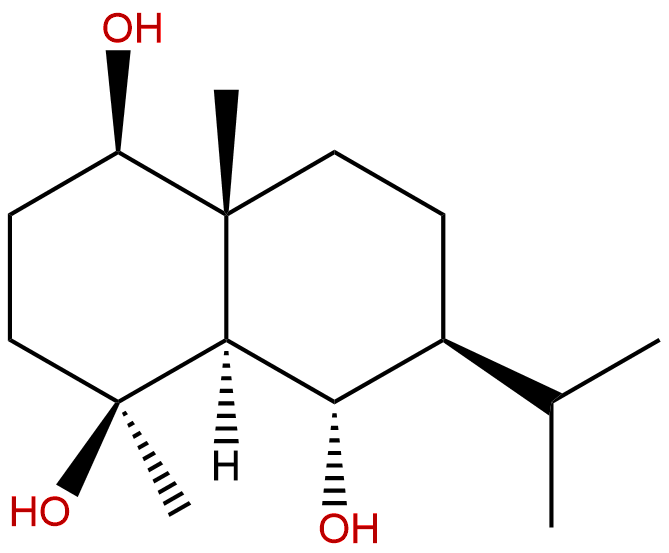


Product name: Mucrolidin
Synonym name:
Catalogue No.: SBP01049
Cas No.: 227471-20-7
Formula: C15H28O3
Mol Weight: 256.386
Botanical Source:
Physical Description: Powder
Type of Compound: Sesquiterpenoids
Purity: 95%~99%
Analysis Method: HPLC-DAD or/and HPLC-ELSD
Identification Method: Mass, NMR
Packing: Brown vial or HDPE plastic bottle
The product could be supplied from milligrams to grams. Inquire for bulk scale.
We provide solution to improve the water-solubility of compounds, thereby facilitating the variety of activity tests and clinic uses.
For Reference Standard and R&D, Not for Human Use Directly.
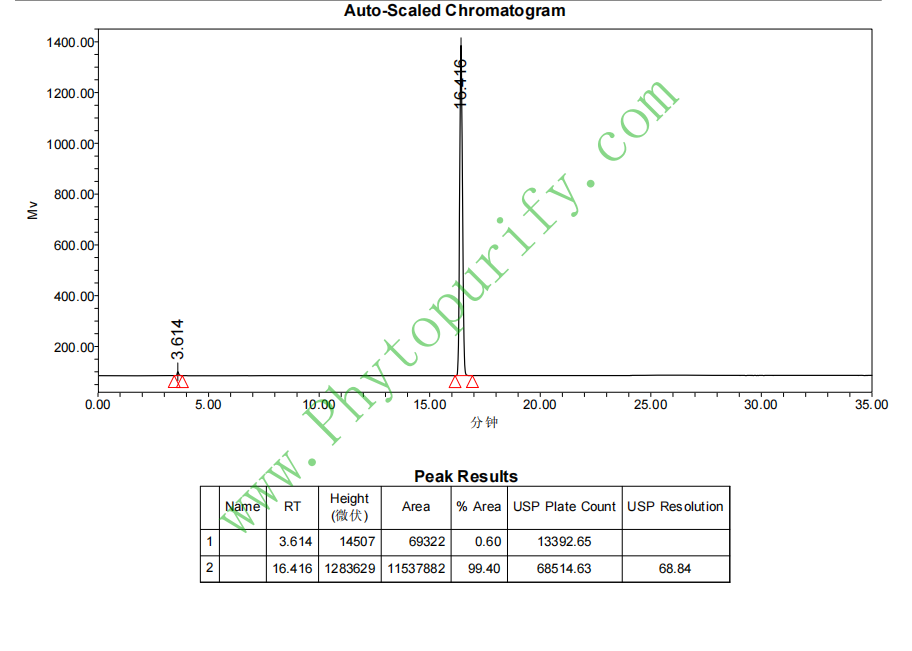
HPLC of Mucrolidin
 +
+
Storage conditions:Short-term storage at 2~8℃, long-term storage at -20 ~ -80℃
60.6900
1.9873
1.9873
.7931
2.8525
16.1897
Low
42.3874
4.2394
No
No
No
No
No
No
0.0
Yes
No
Yes
No
In the long history of discovery of natural product drugs, plant secondary metabolites have always been an important arsenal for human beings to fight against infectious diseases. With the increasingly severe problem of antibiotic resistance, the global demand for new antibacterial lead compounds has never been more urgent. The World Health Organization has listed antibiotic resistance as one of the top ten global public health threats, and it is estimated that by 2050, drug-resistant bacterial infections may cause 10 million deaths annually. In this context, searching for natural products with novel structures and unique mechanisms of action from traditional medicinal plants has become one of the important strategies for new drug development.
Mucrolidin is a plant species from the Araceae family Homalomena occulta The sesquiterpenes isolated from (Chinese name: Qian Nianjian). As a traditional Chinese medicinal herb, Qiannian Jian has a long history of application in Asian folk medicine, commonly used to treat diseases such as rheumatism, rheumatism, soreness, and stomach pain. However, the systematic study of its chemical composition was relatively late, and the discovery of Mucrolidin added a new chemical dimension to this traditional medicinal plant. It is worth noting that although Mucrolidin exhibits certain antibacterial activity, its efficacy is significantly weaker than the classical antibiotic rifampicin. This characteristic not only suggests its potential as a lead compound for structural optimization, but also prompts thinking about the uniqueness of its mechanism of action.
This article will provide a systematic review of Mucrolidin from multiple dimensions, including chemical structure, plant origin, pharmacological activity, mechanism of action, pharmacological evaluation, and clinical application prospects. The aim is to provide comprehensive academic references for the in-depth research and development of this compound.
Mucrolidin belongs to the sesquiterpene class of compounds, with its basic skeleton consisting of 15 carbon atoms, following the classical isoprene rules of sesquiterpenes (C ₁₅ H ₂₄). Sesquiterpenes are widely distributed in nature with extremely high structural diversity, with over 300 known sesquiterpene skeleton types. The specific structural characteristics of Mucrolidin are as follows: its molecular formula is C ₁₅ H ₂₀ O3, and its molecular weight is 256.3860 g/mol. Its structure contains a skeletal system consisting of a six membered ring and a five membered ring, which is more common in sesquiterpenes. However, Mucrolidin's unique functional group modification endows it with special biological activity.
From a stereochemical perspective, sesquiterpenes typically have a higher number of chiral centers, and the absolute configuration of Mucrolidin is crucial for its interaction with biological targets. Unfortunately, there are currently insufficient reports in the public literature on the complete stereochemical information of Mucrolidin, which to some extent limits a deeper understanding of its structure-activity relationship. In the future, determining its absolute configuration through X-ray single crystal diffraction or advanced spectroscopic techniques such as NOESY and ECD calculations will be an important direction for the study of this compound.
The physicochemical properties of Mucrolidin provide important basis for its pharmacological evaluation. Its lipid water partition coefficient (LogP) is 1.9873, which is within the ideal oral drug LogP range (0-3), indicating that the compound has moderate lipophilicity and is conducive to transmembrane transport. The topological polar surface area (TPSA) is 60.6900 Å ², which is lower than the recommended upper limit of 140 Å ² for oral medications, indicating its good intestinal absorption potential. The water solubility parameter is 0.7931mg/mL, which belongs to moderate water solubility. This characteristic is beneficial for formulation development and will not affect bioavailability due to poor water solubility.
It is worth noting that Mucrolidin's blood-brain barrier penetration has been evaluated as "low", which to some extent limits its application in the treatment of central nervous system diseases. However, for antibiotics, low blood-brain barrier penetration may actually reduce adverse reactions related to the central nervous system. In addition, the risk assessment of hERG inhibition is' no ', indicating that the compound has a low risk of causing QT interval prolongation in the heart, which is an important advantage in cardiovascular safety. The Ames test result was 0.0, indicating that Mucrolidin did not exhibit significant genetic toxicity in bacterial recovery mutation assays, providing a safety basis for its further development.
The natural source of Mucrolidin is a plant belonging to the Araceae family and the Millennium Health genus Homalomena occulta(Lour.)Schott。 Qiannian Jian is native to southern China (Yunnan, Guangxi, Guangdong, Hainan and other provinces) and Southeast Asia (Vietnam, Laos, Thailand, etc.). It is a perennial herbaceous plant that prefers to grow in shady and humid areas under forests. Its rhizome is used as a medicinal herb in traditional Chinese medicine, with the effects of dispelling wind and dampness, strengthening muscles and bones, and relieving pain. It is commonly used to treat rheumatism, rheumatism, weakness of the waist and knees, stomach pain, and other symptoms.
The study of the chemical composition of Qiannian Jian began in the 1980s, with early research mainly focused on the analysis of volatile oil components. With the advancement of separation technology, researchers have successively discovered various structural types of compounds from this plant, including sesquiterpenes, phenylpropanoids, flavonoids, steroids, etc. Among them, sesquiterpenes are a class of components with abundant content and high structural diversity in Millennium Health. Mucrolidin was isolated from the hollow structure of the stem or petiole of the millennium plant, and this unique plant site selection suggests the possible distribution specificity of the compound within the plant body.
The extraction of Mucrolidin is usually carried out using organic solvent extraction method. Considering the moderate polarity characteristics of sesquiterpenes, commonly used extraction solvents include ethanol, methanol, or ethanol water mixed solvents. Specifically, after crushing the dry hollow part of Qiannian Jian, it is repeatedly extracted with 95% ethanol at room temperature or heating conditions, and the extracted liquids are combined and concentrated under reduced pressure to obtain the total extract. After solvent distribution extraction of the total extract (such as extraction with petroleum ether, ethyl acetate, and n-butanol in sequence), the target compound is usually enriched in the ethyl acetate extraction site.
Further separation and purification require the combined application of multiple chromatographic techniques. Silica gel column chromatography is the most commonly used preliminary separation method, using petroleum ether ethyl acetate or chloroform methanol gradient elution systems. For sesquiterpenes with similar structures, reverse phase silica gel column chromatography (such as ODS column) and Sephadex LH-20 gel column chromatography can provide better separation results. High performance liquid chromatography (HPLC) is used for final purification, typically using a C18 reverse phase column with acetonitrile water or methanol water system as the mobile phase. During the purification process of Mucrolidin, its UV absorption characteristics (usually with terminal absorption at 210-230 nm) can be used as a detection basis.
It is worth noting that the content of sesquiterpenes in Millennium Health is usually low, and the yield of Mucrolidin may only be a few tens of thousands of the dry weight of the plant or even lower. This low content feature poses a challenge for large-scale preparation, and in the future, it may be necessary to solve the problem of raw material supply through methods such as plant tissue culture, biosynthetic pathway analysis, or chemical total synthesis.
The core pharmacological activity of Mucrolidin is reflected in its antibacterial properties. Existing studies have shown that this compound exhibits certain inhibitory effects on various bacterial strains, but its antibacterial efficacy is relatively weak. Specifically, compared with the first-line anti tuberculosis drug rifampicin (HY-B0272), Mucrolidin has a significantly higher minimum inhibitory concentration (MIC) value, indicating that its antibacterial activity is far inferior to rifampicin. This discovery not only reflects the limitations of Mucrolidin as a natural product, but also suggests that it may have a mechanism of action different from traditional antibiotics.
From the antibacterial spectrum, Mucrolidin may exhibit certain activity against both Gram positive and Gram negative bacteria, but specific activity data still needs further systematic research. It is worth noting that natural sesquiterpenes usually have broad-spectrum antibacterial activity, but there are significant individual differences. For example, artemisinin (a sesquiterpene lactone) is known for its antimalarial activity, while some sesquiterpene compounds exhibit significant antifungal or antibacterial activity. Although the antibacterial activity of Mucrolidin is weak, its unique chemical structure provides a good lead compound basis for subsequent structural optimization.
In addition to antibacterial activity, sesquiterpenes usually also have various biological activities such as anti-inflammatory, antioxidant, and anti-tumor. Considering that Millennium Health is used in traditional medicine to treat rheumatoid arthritis (an inflammation related disease), Mucrolidin may also have anti-inflammatory activity. However, there are currently very limited reports on the non antibacterial activity of Mucrolidin, which constitutes an important gap in the research of this compound. Future research should systematically evaluate the anti-inflammatory, antioxidant, and cytotoxic activities of Mucrolidin to comprehensively reveal its pharmacological spectrum.
In addition, sesquiterpenes also play important roles in insect refusal and plant defense. The ecological function of Mucrolidin in plants is also worthy of attention, which may provide clues for its application in the agricultural field.
The antibacterial mechanism of Mucrolidin is currently not fully understood, but based on its structural characteristics and known sesquiterpene antibacterial mechanisms, several possible hypotheses can be proposed. Sesquiterpenes typically exert antibacterial effects by disrupting the integrity of bacterial cell membranes, inhibiting key enzyme activity, or interfering with nucleic acid synthesis.
From the perspective of molecular targets, Mucrolidin may act on multiple essential bacterial proteins. According to existing information, its potential targets include DNA gyrase (GYRA/GYPB), cell division protein FTSZ, acyl ACP reductase (FABI), dihydrofolate reductase (DHFR), penicillin binding protein (MECA/PENA), and fungal related targets (ERG11/CYP51A1, CDR1). These targets cover multiple key biological processes, including bacterial DNA replication, cell division, fatty acid synthesis, folate metabolism, cell wall synthesis, and fungal ergosterol synthesis.
It is worth noting that the difference in activity between Mucrolidin and rifampicin may be due to different mechanisms of action. Rifampicin works by specifically inhibiting bacterial RNA polymerase, while Mucrolidin's targets may be more dispersed or have lower affinity. This multi-target mode of action may lead to weaker activity, but it may also reduce the risk of drug resistance, as bacteria need to mutate multiple targets simultaneously to develop complete resistance.
In modern medicinal chemistry research, molecular docking technology is widely used to predict the binding mode between natural products and target proteins. For Mucrolidin, molecular docking studies targeting the aforementioned potential targets can reveal its possible binding sites and interaction modes. For example, binding to GYRA may involve the active site of DNA gyrase A subunit, while binding to FTSZ may interfere with microtubule like polymerization processes.
The study of structure-activity relationship (SAR) is crucial for optimizing the antibacterial activity of Mucrolidin. The functional groups such as hydroxyl and carbonyl in its molecular structure may affect its activity by forming hydrogen bonds or hydrophobic interactions with the target protein. By synthesizing a series of structurally similar compounds and systematically examining the effects of different substituents on activity, guidance can be provided for designing derivatives with stronger activity. For example, introducing halogen atoms, increasing lipophilic groups, or optimizing stereochemical configurations may significantly enhance its antibacterial efficacy.
The overall performance of Mucrolidin's pharmacological parameters is good, in accordance with Lipinski's five rules (molecular weight<500, LogP<5, hydrogen bond donor<5, hydrogen bond acceptor<10). Its molecular weight of 256.3860 is far below the threshold of 500 Da, LogP 1.9873 is in the ideal range, and TPSA 60.6900 Å ² indicates that it has good membrane permeability potential. These parameters suggest that Mucrolidin has the preliminary conditions for oral drug development.
However, the evaluation of drug properties does not solely rely on physical and chemical properties. In terms of water solubility, although the solubility of 0.7931mg/mL is acceptable, it may still need to be improved for certain forms of formulations, such as injections. Although low blood-brain barrier penetration is advantageous in some cases, it also limits its application in the treatment of central nervous system infections. HERG inhibition negative is an important safety advantage, while Ames test negative reduces the risk of genetic toxicity.
At present, there is extremely limited experimental data on the pharmacokinetics of Mucrolidin, which constitutes a significant deficiency in the research of this compound. Based on its physicochemical properties, its pharmacokinetic characteristics can be preliminarily inferred: oral absorption may be good (moderate LogP, low TPSA), but the first pass effect may be significant; The distribution volume may be moderate, but the plasma protein binding rate needs to be determined; Metabolism may mainly involve the liver cytochrome P450 enzyme system, especially CYP3A4 and CYP2C9; The main excretion pathways may be bile and kidneys.
It is worth noting that sesquiterpenes are usually metabolized quickly and have a short half-life, which may be one of the reasons why their in vivo activity is weaker than their in vitro activity. In the future, systematic pharmacokinetic studies are needed, including oral and intravenous administration experiments in rats or mice, to determine key parameters such as plasma concentration time curves, bioavailability, half-life, and clearance rates. In addition, metabolite identification is also an important aspect, as certain metabolites may have stronger activity or toxicity.
In addition to negative Ames test results, more data is needed to support the safety evaluation of Mucrolidin. Acute toxicity experiments, subchronic toxicity experiments, reproductive toxicity experiments, etc. are basic requirements for drug development. Considering the cytotoxic potential of sesquiterpenes, the toxic effects of Mucrolidin on normal cells need to be carefully evaluated. In addition, its potential phototoxicity, skin sensitization, and other factors also need to be considered.
The development potential of Mucrolidin as an antibacterial lead compound mainly depends on the degree of activity enhancement after structural optimization. Although natural products have weak antibacterial activity, it is entirely possible to obtain derivatives with significantly enhanced activity through reasonable structural modifications. For example, the activity of paclitaxel (paclitaxel) is much stronger than its natural precursor, and semi synthetic derivatives of artemisinin (such as artemether) also exhibit better pharmacological properties.
The structural optimization strategy for Mucrolidin can include: introducing fluorine atoms or other halogens to enhance the interaction with the target protein; Increasing lipophilic groups to enhance membrane permeability; Optimize chiral centers to improve stereo matching with targets; Constructing hybrid molecules to exert multi-target synergistic effects. In addition, the combination therapy strategy with existing antibiotics is also worth exploring, which may reduce the effective dose and delay the development of drug resistance through synergistic effects.
As a traditional Chinese medicinal herb, Qiannian Jian has a clinical application history of hundreds of years. The discovery of Mucrolidin provides a new explanation for the pharmacological substance basis of Millennium Health. Future research can use the content of Mucrolidin as one of the indicators for quality control of millennium health medicinal materials, establish HPLC or LC-MS content determination methods, and ensure the stability and consistency of medicinal material quality. At the same time, based on the structure of Mucrolidin, modern preparations for specific infectious diseases can be developed, such as topical ointment, oral capsule or injection.
The development of Mucrolidin faces multiple challenges. Firstly, the low natural content leads to difficulties in raw material supply, which needs to be solved through synthetic biology or chemical total synthesis. Secondly, weak antibacterial activity requires structural optimization, which requires in-depth structure-activity relationship research and medicinal chemistry work. Thirdly, there is a lack of pharmacokinetic and toxicological data, which requires systematic preclinical studies. Fourthly, regarding the issue of intellectual property protection, it is necessary to evaluate the current patent situation and formulate patent strategies.
To address these challenges, it is recommended to adopt the following strategies: establish a standardized planting base for Millennium Health to ensure stable supply of raw materials; Utilizing genetic engineering technology to heterogeneously express the biosynthetic pathway of Mucrolidin in microorganisms; Carry out fragment based drug design and search for more active analogues; Collaborate with antibiotic research and development companies to accelerate the preclinical research process.
Mucrolidin, as a sesquiterpene compound discovered from the traditional medicinal plant Millennium Health, although its antibacterial activity is weaker than clinical antibiotics such as rifampicin, its unique chemical structure and good pharmacological parameters make it a potential lead compound. From a chemical perspective, its moderate molecular weight, reasonable lipid water partition coefficient, and low toxicity risk provide a good starting point for its structural optimization. From a biological perspective, its possible multi-target mechanism of action may result in weaker activity, but it may also confer a lower risk of drug resistance induction.
However, research on Mucrolidin is still in a very early stage. Future research should focus on the following key directions: firstly, determining its absolute configuration and establishing reliable stereochemical analysis methods; Secondly, the system evaluates its antibacterial spectrum, anti-inflammatory activity, and other potential pharmacological effects; Thirdly, the molecular targets can be identified through techniques such as molecular docking, surface plasmon resonance (SPR), or thermal displacement analysis (TSA); Fourth, conduct systematic pharmacokinetic and toxicological studies; Fifth, optimize the structure through medicinal chemical methods to obtain more active derivatives.
In today's increasingly severe antibiotic resistance, the discovery of new antibacterial lead compounds from traditional medicinal plants has important strategic significance. Although Mucrolidin does not currently appear to be a "blockbuster" candidate drug, its value as a lead compound should not be underestimated. Just as the discovery of artemisinin changed the pattern of antimalarial treatment, many important drugs are derived from seemingly ordinary natural products. We have reason to believe that with further research, Mucrolidin and its derivatives have the potential to find their own position in the field of antibacterial drugs and contribute to human health.
In short, the study of Mucrolidin not only enriches the chemical and pharmacological connotations of Millennium Health, but also provides new clues for the discovery of natural product drugs. From phytochemistry to pharmacology, from molecular mechanisms to drug evaluation, this compound connects the complete chain of natural product research. In the future, driven by interdisciplinary collaboration, the potential value of Mucrolidin will be more fully explored and utilized.
