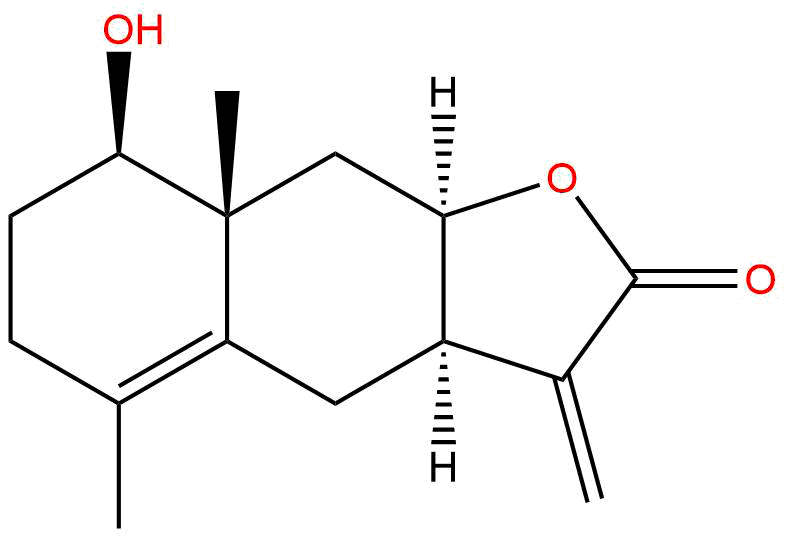


Product name: Ivangustin
Synonym name:
Catalogue No.: BP1870
Cas No.: 114164-59-1
Formula: C15H20O3
Mol Weight: 248.1
Botanical Source:
Type of Compound:
Purity: 95%~99%
Analysis Method: HPLC-DAD or/and HPLC-ELSD
Identification Method: Mass, NMR
Packing: Brown vial or HDPE plastic bottle
Storage: Store in a well closed container, protected from air and light. Put into refrigerate or freeze for long term storage.
Whenever possible, you should prepare and use solutions on the same day. However, if you need to make up stock solutions in advance, we recommend that you store the solution as aliquots in tightly sealed vials at -20℃. Generally, these will be useable for up to two weeks.
The product could be supplied from milligrams to grams
Inquire for bulk scale.
For Reference Standard and R&D, Not for Human Use Directly.
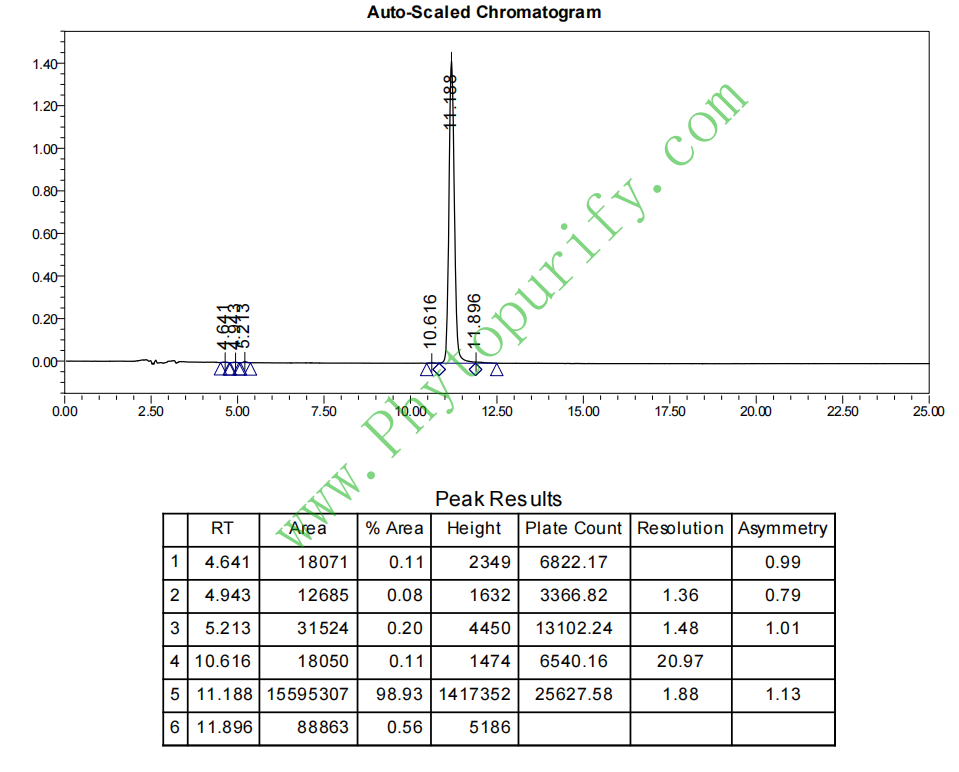
HPLC of Ivangustin
Storage conditions:Short-term storage at 2~8℃, long-term storage at -20 ~ -80℃
46.5300
1.8079
1.8079
.8128
4.1752
8.3321
High
59.3951
4.6905
No
No
No
No
Yes
No
0.0
Yes
No
Yes
Yes
Rheumatoid Arthritis (RA) is an autoimmune disease characterized by chronic, progressive, and symmetrical multi joint synovitis. Its pathological core involves abnormal activation of immune cells, imbalance of inflammatory cytokine networks, synovial tissue proliferation, and progressive destruction of bone and cartilage. The global incidence rate is about 0.5% -1%, and women are significantly higher than men. Although targeted therapies such as methotrexate, biologics (such as TNF - α inhibitors), and JAK inhibitors have significantly improved the prognosis of RA patients, the risk of infection, immune suppression, liver and kidney function damage, and high treatment costs associated with long-term medication remain urgent clinical challenges that need to be addressed. Therefore, the search for novel structures, unique mechanisms of action, and safe anti RA lead compounds from natural products has always been a hot topic in medicinal chemistry and pharmacology research.
Among numerous natural products, sesquiterpene lactones derived from Asteraceae plants have attracted much attention due to their significant anti-inflammatory, immunomodulatory, and anti-tumor activities. Ivangustin (CAS number: 14164-59-1) is one of the representative eudemane type sesquiterpene lactones. This compound was originally derived from the Eurasian spiral flower, a plant of the genus Convolvulus(Inula britannica)In recent years, it has also been found in various plants of the genus Convolvulaceae and the genus Cymbidium through isolation and identification. Xiayeyihuasu not only has the classic α - methylene - γ - lactone structural fragment, which is believed to be its pharmacophore group that undergoes Michael addition reaction with nucleophilic amino acid residues (such as cysteine thiol) in the body, thereby regulating the activity of key signaling proteins, but also exhibits multi-target and multi pathway pharmacological activity characteristics.
Regarding the complex disease of RA, the research on narrow leaved iridoid has gradually progressed from early screening of anti-inflammatory activity to analyzing the regulatory mechanisms of key targets such as AMPK, STAT3, TLR4, IDO1, BCL2, ALOX5, MMP1, and PRKCA. These targets cover multiple biological processes closely related to RA pathogenesis, including energy metabolism, inflammatory signal transduction, apoptosis regulation, oxidative stress, and matrix degradation. This article aims to provide a systematic review of the research progress on the chemical structure, plant origin, pharmacological activity, mechanism of action, and pharmacological evaluation of Quercus acutissima, and explore its potential value and future development direction as a candidate drug for anti RA.
The chemical structure of narrow leaved iridoid belongs to the eucalyptol type sesquiterpene lactone. Its core skeleton consists of 15 carbon atoms and contains a trans decalin ring system, forming a gamma lactone ring between positions C-6 and C-7. The molecular formula of this compound is C ₁₅ H ₂₀ O3, with a molecular weight of 248.3220 Da. The most characteristic pharmacophore in its structure is the α - methylene - γ - lactone structure located between positions C-11 and C-13. The extra cyclic double bonds in this conjugated system have high electrophilicity and can undergo reversible Michael addition reactions with the thiol (- SH) groups of cysteine residues in proteins, thereby covalently modifying key signal proteins and exerting biological activity. In addition, the C-1 and C-4 positions usually have hydroxyl or carbonyl substitutions, further enriching their hydrogen bonding interaction network with target proteins.
From the perspective of physical and chemical properties, Narrow leaved Yvonne exhibits typical natural product characteristics. Its lipid water partition coefficient (LogP) is 1.8079, indicating that the compound has moderate lipophilicity, which facilitates transmembrane transport and binding to intracellular targets. The topological polar surface area (TPSA) is 46.53 Å ², which is lower than the recommended upper limit of 140 Å ² for oral drugs, indicating its good oral absorption potential. The water solubility (LogS) is 0.8128, which belongs to moderate solubility. It may exhibit some solubility under physiological pH conditions, but formulation techniques such as cyclodextrin inclusion and liposome encapsulation may be needed to improve its bioavailability. It is worth noting that the computer prediction results show that kaempferol has a high blood-brain barrier penetration ability. This characteristic has a dual significance in RA treatment: on the one hand, the central nervous system plays a role in RA related fatigue, pain, and cognitive impairment, and penetrating the blood-brain barrier may help improve these central symptoms; On the other hand, we also need to be alert to potential neurotoxic risks. In addition, the hERG inhibition prediction was negative, and the Ames test result was 0.0, indicating that the compound has a low risk of cardiac toxicity and genetic toxicity, providing a safety basis for its subsequent development.
The main source of Narrow leaved Yvonne extract is from the Asteraceae spiral flower genus(Inula)Plants, including Eurasian spiral flowers(Inula britannica)The most typical. The Eurasian spiral flower is widely distributed in China, Japan, South Korea, and some parts of Europe. Its dry head shaped inflorescence is called "spiral flower" in traditional Chinese medicine and is traditionally used to relieve cough, phlegm, and nausea. Modern pharmacological studies have shown that this plant is rich in various sesquiterpene lactones, flavonoids, and phenolic acids, and has significant anti-inflammatory, anti-tumor, and hepatoprotective activities. In addition to Eurasian spiral flowers, narrow leaved ivy extract has also been derived from the woody plant(Inula helenium)Sheep's Eye Glance(Inula britannica var. chinensis)And Tianming Jing(Carpesium abrotanoides)When isolated from plants, it suggests that it has a certain distribution pattern in Asteraceae plants.
Extraction, separation, and purification are key steps in obtaining iridoid glycoside from narrow leaved chrysanthemums. Traditional methods typically use ethanol or methanol for cold soaking or hot reflux extraction of dried plant materials, followed by initial enrichment through liquid-liquid extraction (such as petroleum ether, ethyl acetate, n-butanol). Due to its moderate polarity as a sesquiterpene lactone, the ethyl acetate extraction site is usually its main enrichment site. Further separation and purification mainly rely on silica gel column chromatography, often using petroleum ether ethyl acetate or chloroform methanol gradient elution. In addition, reversed-phase silica gel (such as ODS), Sephadex LH-20 gel column chromatography and preparative high-performance liquid chromatography (Prep HPLC) are also commonly used for the preparation of high-purity samples. In recent years, high-speed counter current chromatography (HSCCC) has been successfully applied for the rapid separation of iridoid due to its high separation efficiency, low solvent consumption, and high sample recovery rate. It is worth noting that there are significant differences in the content of kaempferol in different regions, harvesting seasons, and plant parts (flowers, leaves, roots). Establishing a quantitative analysis method based on HPLC or UPLC-MS/MS is crucial for quality control.
The pharmacological activity research of Xiyeyihuasu mainly focuses on its anti-inflammatory, immune regulatory, anti-tumor, and antioxidant effects, among which the research on rheumatoid arthritis is particularly in-depth.
In terms of anti-inflammatory activity, multiple in vitro experiments have confirmed that kaempferol can significantly inhibit the production of pro-inflammatory factors such as nitric oxide (NO), prostaglandin E ₂ (PGE ₂), tumor necrosis factor - α (TNF - α), and interleukin-6 (IL-6) in macrophages (such as RAW264.7 cells) stimulated by lipopolysaccharide (LPS). Its mechanism of action is closely related to the inhibition of nuclear factor kappa B (NF - κ B) and mitogen activated protein kinase (MAPK) signaling pathways. In the fibroblast like synovial cell (FLS) model related to RA, kaempferol can inhibit FLS proliferation and migration induced by TNF - α or IL-1 β, and downregulate the expression of matrix metalloproteinases (such as MMP1, MMP9), thereby slowing down the erosion of articular cartilage and bone.
In terms of immune regulation, Quercus acutissima has shown potential for regulating adaptive immunity. Research has shown that this compound can inhibit T cell proliferation and Th17 cell differentiation, while promoting the generation of regulatory T cells (Tregs). This effect is related to the inhibition of STAT3 phosphorylation and downregulation of retinoic acid associated orphan receptor gamma t (ROR gamma t) expression. In addition, narrow leaved eudairin can also regulate the activity of indoleamine 2,3-dioxygenase 1 (IDO1), affect the tryptophan metabolism pathway, and thereby regulate the immune tolerance state in the immune microenvironment.
In terms of anti-tumor activity, Ivamycin showed cytotoxicity to a variety of cancer cell lines (such as liver cancer, lung cancer, breast cancer, leukemia cells). Its mechanism involves inducing cell cycle arrest (G ₂/M phase) and apoptosis, the latter of which is related to the mitochondrial pathway, including downregulation of anti apoptotic protein BCL2, upregulation of pro apoptotic protein BAX, activation of caspase-3/9, and release of cytochrome c. It is worth noting that its anti-tumor activity and anti-inflammatory activity intersect in mechanism, such as dual inhibition of STAT3 and NF - κ B, suggesting its potential value in the prevention of inflammation related tumors (such as increased lymphoma risk in RA patients).
The pharmacological activity of Xiyeyihuasu is rooted in its interactions with multiple molecular targets, exhibiting a regulatory characteristic of "multi-target, multi pathway". These targets cover key links in the pathogenesis of RA, including energy metabolism, inflammatory signaling, apoptosis regulation, oxidative stress, and tissue remodeling.
AMPK(PRKAA1)AMP activated protein kinase (AMPK) is a core sensor of cellular energy metabolism. In RA, synovial tissue is often in a state of metabolic stress, and decreased AMPK activity is associated with increased inflammation. Narrow leaved iridoid can reduce FLS abnormal proliferation and inflammatory cytokine secretion by activating AMPK and inhibiting downstream mTOR signaling. The activation of AMPK may also exert cellular protective effects by promoting autophagy, clearing damaged organelles and protein aggregates.
STAT3 Signal transducer and activator of transcription 3 (STAT3) is the core node of the IL-6/STAT3 inflammatory pathway. In the synovial tissue of RA patients, STAT3 is continuously phosphorylated and activated, driving Th17 cell differentiation, FLS proliferation, and osteoclast activation. Narrow leaved iridoid can directly or indirectly inhibit JAK2 mediated phosphorylation of STAT3 Tyr705 site, blocking its nuclear translocation and transcription of downstream target genes (such as IL-17, MMP3, BCL2). Molecular docking studies suggest that its α - methylene - γ - lactone structure may covalently bind to the Cys418 residue of STAT3 protein, leading to conformational changes and functional inhibition of the protein.
TLR4 Toll like receptor 4 (TLR4) is a key pattern recognition receptor that recognizes pathogen associated molecular patterns (such as LPS) and endogenous injury associated molecular patterns (such as HMGB1). In RA, excessive activation of TLR4 is an important mechanism driving innate immune inflammatory response. Narrow leaved iridoid can inhibit downstream NF - κ B and IRF3 signaling by directly binding to the extracellular domain of TLR4 or interfering with its interaction with the adapter protein MyD88, reducing the production of TNF - α, IL-6, and type I interferon.
IDO1 Indoleamine 2,3-dioxygenase 1 is the rate limiting enzyme in the tryptophan kynurenine metabolic pathway and plays a critical role in immune regulation. Excessive activation of IDO1 can lead to depletion of tryptophan and accumulation of kynurenine, promoting Treg differentiation and inhibiting effector T cell function, but it may also exacerbate inflammation through the kynurenine AhR pathway. The regulation of IDO1 by Xiyeyihuasu exhibits bidirectionality: at low concentrations, it may inhibit its activity and restore effector T cell function; At high concentrations, it may promote immune tolerance by inducing IDO1 expression. This concentration dependent regulatory mode provides the possibility of precise regulation for the immunotherapy of RA.
BCL2 BCL2 is a key anti apoptotic protein in the mitochondrial apoptosis pathway. In RA, FLS apoptosis resistance is an important cause of synovial hyperplasia. Narrow leaved ivy extract inhibits STAT3 and NF - κ B activity, downregulates BCL2 transcription levels, upregulates BAX expression, disrupts BCL2/BAX balance, promotes mitochondrial outer membrane permeabilization, releases cytochrome c, activates caspase cascade reaction, and ultimately induces FLS apoptosis.
ALOX5 Arachidonic acid 5-lipoxygenase (ALOX5) catalyzes the conversion of arachidonic acid into leukotriene pro-inflammatory mediators (such as LTB ₄), playing an important role in the inflammatory amplification and neutrophil chemotaxis of RA. Narrow leaved ivy extract can reduce leukotriene synthesis by directly inhibiting ALOX5 enzyme activity or interfering with its interaction with 5-lipoxygenase activating protein (FLAP), thereby inhibiting the inflammatory cascade reaction.
MMP1 Matrix metalloproteinase-1 (MMP1) is a key enzyme that degrades collagen fibers in articular cartilage. In RA, overexpression of MMP1 in FLS and chondrocytes leads to irreversible damage to articular cartilage. Narrow leaved ivy extract protects cartilage matrix by inhibiting the transcriptional activity of AP-1 and NF - κ B, downregulating the gene expression of MMP1.
PRKCA Protein kinase C alpha (PRKCA) is involved in cell proliferation, differentiation, and inflammatory signal transduction. In RA, abnormal activation of PRKCA is associated with the invasive phenotype of FLS. Narrow leaved iridoid can interfere with the membrane translocation of PRKCA or directly inhibit its kinase activity, block downstream MAPK/ERK signaling, and inhibit the migration and invasion ability of FLS.
The pharmacological evaluation of Xiyeyihuasu is based on its physicochemical properties, computer prediction, and preliminary pharmacokinetic experiments. As mentioned earlier, its molecular weight (248.32 Da), LogP (1.81), TPSA (46.53 Å ²), and water solubility (LogS 0.81) all conform to the Lipinski Five Rules (molecular weight<500, LogP<5, hydrogen bond donor<5, hydrogen bond acceptor<10), indicating that it possesses the basic chemical spatial characteristics of oral drugs. The negative results of hERG inhibition and Ames test further reduce the risk of cardiac toxicity and genetic toxicity.
However, sesquiterpene lactones generally suffer from poor metabolic stability and low bioavailability. Although the α - methylene - γ - lactone structure in the molecule of Quercus acutissima is essential for its activity, it is also highly susceptible to Michael addition reaction with glutathione (GSH) in the body, leading to rapid metabolic clearance. In addition, this structure may undergo hydrolysis or rearrangement in an acidic gastric environment, further affecting oral absorption. Preliminary pharmacokinetic studies (mostly animal experiments) have shown that after oral administration of kaempferol, the peak time of blood drug concentration is relatively short (Tmax about 0.5-1 hour), but the absolute bioavailability is usually less than 10%, and the half-life (t ₁/₂) is between 1-3 hours. Its distribution volume is relatively large, indicating widespread tissue distribution, which is consistent with the prediction of high blood-brain barrier penetration. The metabolic pathways mainly involve oxidative metabolism mediated by cytochrome P450 enzymes (such as CYP3A4) and GSH binding reactions. The main excretion pathways are bile and feces, and the prototype drug content in urine is extremely low.
Regarding the pharmacokinetic shortcomings mentioned above, structural modification is a key strategy to enhance drug efficacy. For example, reducing α - methylene - γ - lactone to saturated lactone or introducing methyl protecting groups may reduce activity, but can significantly improve metabolic stability. In addition, encapsulation through prodrug design (such as hydroxylation) or nanoformulation technology (such as liposomes, PLGA nanoparticles) can effectively improve its solubility and bioavailability. It is worth noting that the safety advantage of narrow leaved iridoid on hERG and Ames provides a broad window for its structural modification.
As a natural sesquiterpene lactone derived from the traditional anti-inflammatory plant Eucommia ulmoides, Quercus tinctorius has shown unique application prospects in the treatment of rheumatoid arthritis. Its multi-target action characteristics - simultaneously regulating AMPK, STAT3, TLR4, IDO1, BCL2, ALOX5, MMP1, and PRKCA - enable it to intervene in the pathological process of RA from multiple dimensions such as energy metabolism, inflammatory signaling, apoptosis, immune tolerance, and matrix degradation. This "multi-target, multi pathway" mode of action is highly compatible with the inherent needs of RA as a complex systemic disease, and may be superior to single target biologics, and is less likely to develop drug resistance.
However, the translation from laboratory to clinical still faces many challenges. Firstly, the metabolic instability and low bioavailability of Quercus acutissima are the key bottlenecks that constrain its medicinal development. In the future, it is necessary to optimize its pharmacokinetic characteristics through medicinal chemical methods (such as skeleton modification, prodrug design) or advanced drug delivery systems (such as targeted nanocarriers, phospholipid complexes). Secondly, although computer predictions indicate good safety, long-term toxicity, reproductive toxicity, and immune toxicity still need to be validated through systematic preclinical toxicology studies. Especially its high blood-brain barrier penetration ability needs to be evaluated for its potential impact on the central nervous system. Furthermore, the heterogeneity of RA requires precise treatment, and the efficacy differences of kaempferol in different subtypes (such as serum positive/negative) of RA patients, as well as its synergistic or antagonistic effects with other anti RA drugs (such as methotrexate and tocilizumab), all need to be further studied.
Looking ahead to the future, research on narrow leaved iridoid can be further explored in the following directions: firstly, based on its covalent binding mechanism with key targets such as STAT3 and TLR4, fragment based drug design (FBDD) can be developed to design derivatives with higher selectivity and metabolic stability; The second is to use systems pharmacology and network pharmacology methods to construct a complete action network of "compound target pathway disease", revealing its potential association with RA related comorbidities such as cardiovascular disease and osteoporosis; Thirdly, explore its therapeutic value in central symptoms such as RA related pain, fatigue, and depression, and fully utilize its blood-brain barrier penetration ability; The fourth is to combine traditional Chinese medicine theory to study the synergistic effect of Xiyeyihuasu in compound formulations, providing an example for the modernization of traditional Chinese medicine.
As an eucalyptol type sesquiterpene lactone isolated from Eurasian spiral flowers, narrow leaved eudaidzein exhibits regulatory ability on multiple key targets related to rheumatoid arthritis (AMPK, STAT3, TLR4, IDO1, BCL2, ALOX5, MMP1, PRKCA) due to its unique α - methylene - γ - lactone pharmacophore. Its pharmacological activities cover multiple aspects such as anti-inflammatory, immune regulation, induction of FLS apoptosis, and protection of cartilage matrix, reflecting the unique advantages of natural products with multiple targets and pathways. Although there are shortcomings in metabolic stability and bioavailability, its potential as a drug is expected to be significantly improved through reasonable structural modifications and formulation strategies. In the future, with the in-depth analysis of its mechanism of action and the continuous optimization of medicinal chemistry, the narrow leaved iridoid and its derivatives are expected to provide a novel, unique, and safe candidate drug for the treatment of rheumatoid arthritis, opening up new paths for the application of natural products in the field of autoimmune diseases.
