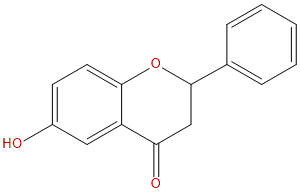


Storage conditions:Short-term storage at 2~8℃, long-term storage at -20 ~ -80℃
46.5300
2.7295
2.7285
.0909
4.4273
26.7106
High
89.9182
2.4749
No
No
No
No
Yes
No
0.0
Yes
Yes
Yes
Yes
Natural products have long been an important source of innovative drug discovery, among which flavonoids have attracted much attention due to their broad biological activity and low toxicity. 6-Hydroxyflavanone (CAS: 4250-77-5), as a structurally unique flavanone compound, has gradually shown great potential as a multi-target therapeutic molecule in recent years. This compound was originally derived from the folk medicinal plant Wending fruit(Muntingia calabura)It is isolated from the leaves and its core pharmacological value lies in its significant anti-inflammatory and analgesic activities, especially for intractable neuropathic pain. Research has shown that 6-hydroxyflavanone can simultaneously target key enzymes in the inflammatory pathway, such as cyclooxygenase-2 and 5-lipoxygenase, as well as opioid receptors and GABA-A receptors in the nervous system. This multi-target mode of action provides unique advantages for its treatment of complex diseases such as chronic pain and inflammation related diseases. In addition, its research in diabetes and its complications, especially in liver protection, has also emerged, suggesting a broader application prospect. This article aims to systematically review the chemical properties, plant sources, pharmacological activities, molecular mechanisms of action, pharmacological characteristics, and clinical application potential of 6-hydroxyflavanone, in order to provide comprehensive scientific references for the in-depth research and development of this natural product.
The chemical name of 6-hydroxyflavanone is 2,3-dihydro-6-hydroxy-2-phenyl-4H-1-benzopyran-4-one, with a molecular formula of C15H12O3 and a molecular weight of 240.2580 g/mol. Its basic skeleton is flavanone, also known as dihydroflavonoid. Its characteristic is that there is a single bond between the 2nd and 3rd positions of the C ring, and C2 is the chiral center. Therefore, there exists a pair of optically active isomers. Compared with the parent flavanone, 6-hydroxyflavanone introduces a phenolic hydroxyl group at position 6 of the A ring, which significantly affects its electronic distribution, physicochemical properties, and biological activity.
From the analysis of physical and chemical properties, the lipid water partition coefficient (LogP) of this compound is 2.7295, indicating that it has moderate lipophilicity and is conducive to transmembrane transport and absorption. Its topological polar surface area (TPSA) is 46.53 Å ², which is relatively small, consistent with its good membrane permeability. The water-soluble data (0.0909, usually measured in mg/mL or log mol/L) indicates that it belongs to the category of slightly soluble to poorly soluble compounds, which may require consideration of solubilization strategies in formulation development. The key pharmacological prediction parameters show that 6-hydroxyflavanone has a high blood-brain barrier (BBB) penetration ability, which is highly compatible with its targets on the central nervous system (such as opioid receptors and GABA-A receptors), laying a material foundation for its treatment of central diseases such as neuropathic pain. In addition, its hERG inhibition risk prediction is negative, and preliminary Ames test data (0.0) suggests that it may not be mutagenic, providing preliminary positive signals for its safety.
The main natural source of 6-hydroxyflavanone is Wending fruit(Muntingia calabura L.)This is a small tree widely distributed in tropical regions. In traditional medicine in Southeast Asia and Latin America, its leaves, bark, and roots are used to treat fever, headaches, stomach pain, and inflammatory diseases. This provides ethnic pharmacology basis for the chemical and pharmacological research of the plant.
The extraction and separation of 6-hydroxyflavanones from plant materials typically follow the conventional process of natural product chemistry. Firstly, the collected dried leaves of Wending fruit need to be crushed to increase the surface area. Common extraction solvents include methanol, ethanol, or acetone, which are polar solvents that can effectively extract flavonoids. The extraction methods can be cold impregnation, hot reflux, or more efficient ultrasound assisted extraction and microwave-assisted extraction to improve yield and shorten time. After obtaining the crude extract, it needs to be preliminarily enriched by solvent partitioning (such as gradient extraction using petroleum ether, ethyl acetate, n-butanol, and water), and 6-hydroxyflavanone is mostly concentrated in the ethyl acetate fraction.
Further purification relies on various chromatographic techniques. Silica gel column chromatography is commonly used, with gradient elution using different ratios of petroleum ether ethyl acetate or chloroform methanol mixed solvents. Thin layer chromatography (TLC) can be used to track target components. More precise separation can be achieved by preparative high-performance liquid chromatography (HPLC) using a reverse phase C18 column with methanol water or acetonitrile water as the mobile phase. The isolated compounds need to be structurally confirmed by nuclear magnetic resonance (NMR, including 1H-NMR and 13C-NMR), mass spectrometry (MS), and comparison with literature data or standards. With the increasing demand for activity, chemical synthesis or semi synthetic pathways may also become supplementary strategies for obtaining 6-hydroxyflavanones on a large scale.
A large number of in vitro and in vivo pharmacological studies have revealed the multifaceted biological activities of 6-hydroxyflavanone, which revolve around anti-inflammatory, analgesic, and organ protective effects.
1. Anti inflammatory and analgesic activity:
This is the most prominent activity of 6-hydroxyflavanone. In various acute (such as carrageenan induced) and chronic (such as Freund's complete adjuvant induced) inflammatory animal models, 6-hydroxyflavanone exhibits dose-dependent anti-inflammatory effects, significantly reducing paw swelling and inflammatory cell infiltration. More importantly, it has shown a strong analgesic effect in neuropathic pain models (such as chronic compressive injury of sciatic nerve, diabetes neuropathy models). The characteristic of its analgesic effect is that it not only works through peripheral anti-inflammatory, but also acts on the central nervous system to alleviate central sensitization, which is of great significance for neuropathic pain that is not effectively treated by traditional nonsteroidal anti-inflammatory drugs.
2. Anti diabetes and its complications activity:
The study suggests that 6-hydroxyflavanone can improve diabetes and its complications. In the animal model of diabetes, it shows a certain potential to reduce blood sugar and improve insulin resistance. What deserves more attention is its protective effect on diabetes complications, especially diabetes liver disease, which is closely related to its strong antioxidant and anti-inflammatory properties.
3. Liver protective activity:
The hepatoprotective effect is another important pharmacological dimension of 6-hydroxyflavanone. In chemical liver injury mouse or rat models induced by acetaminophen (APAP), carbon tetrachloride (CCl4), or alcohol, pre - or simultaneous administration of 6-hydroxyflavanone can significantly reduce serum transaminase (ALT, AST) levels, alleviate liver tissue pathological damage such as necrosis, ballooning, and inflammatory infiltration. Its hepatoprotective mechanism is mainly related to the activation of endogenous antioxidant defense system and inhibition of fibrosis pathways related to hepatic stellate cell activation.
4. Other activities:
Preliminary studies also suggest that 6-hydroxyflavanone may have certain antioxidant, antibacterial, and anti anxiety like activities, which are interrelated with its core anti-inflammatory and neuroregulatory effects, collectively constituting its pleiotropic pharmacological characteristics.
The pharmacological effects of 6-hydroxyflavanone stem from its regulation of multiple key molecular targets, forming a synergistic network.
1. Anti inflammatory and analgesic related targets:
* Double inhibition of pro-inflammatory mediator synthesis: 6-Hydroxyflavanone can simultaneously inhibit cyclooxygenase-2 (COX-2) and 5-lipoxygenase (5-LOX). COX-2 is the rate limiting enzyme for the synthesis of classic pain inducing and pro-inflammatory factors such as prostaglandin E2 (PGE2), while 5-LOX is responsible for the synthesis of leukotrienes. Dual inhibition can more comprehensively block inflammation and pain pathways, reducing the potential "leukotriene shift" side effects caused by inhibiting COX-2 alone.
* Regulating the neurotransmitter system: This compound has been shown to interact with central opioid receptors, especially the μ and δ subtypes, producing analgesic effects similar to opioid drugs, but may have a better safety profile. At the same time, its positive regulatory effect on GABA-A receptors can enhance central inhibitory neurotransmission, producing anti anxiety and adjuvant analgesic effects.
2. Liver protection related targets and pathways:
Its liver protective effect is mainly achieved by activating the Nrf2/ARE antioxidant pathway and inhibiting the TGF - β 1 pro fibrotic pathway.
* Activate Nrf2 pathway: 6-Hydroxyflavanone can stabilize and activate nuclear transcription factor Nrf2 (NF-E2-related factor 2). Activated Nrf2 translocates to the nucleus and binds to antioxidant response elements (ARE), initiating the transcriptional expression of a series of downstream phase II detoxifying enzymes and antioxidant proteins, including:
* Quinone oxidoreductase 1 (NQO1)Promote detoxification of quinone substances.
* Heme oxygenase-1 (HMOX1)Degradation of hemoglobin produces bilirubin and carbon monoxide, which have anti-inflammatory and antioxidant effects.
* Superoxide dismutase (SOD1, SOD2), catalase (CAT), glutathione peroxidase (GPX1)Composed of the core antioxidant enzyme system within cells, it synergistically clears reactive oxygen species (ROS) such as superoxide anions and hydrogen peroxide, reducing oxidative stress damage.
* Inhibition of fibrosis process: After liver injury, the activation of hepatic stellate cells (HSCs) is the core event of liver fibrosis. 6-Hydroxyflavanone can downregulate the expression of transforming growth factor - β 1 (TGFB1). TGFB1 is the strongest pro fibrotic factor, and its downregulation can inhibit the transformation of HSCs into myofibroblasts and reduce excessive deposition of extracellular matrix (such as collagen). At the same time, it can also reduce the expression of alpha smooth muscle actin (ACTA2, a marker of HSC activation) and matrix metalloproteinase-9 (MMP9, involved in extracellular matrix remodeling), thereby inhibiting fibrosis process in multiple stages.
Based on computational predictions and preliminary experimental data, 6-hydroxyflavanone has shown certain potential as a drug, but its comprehensive pharmacokinetic characteristics still need to be further explored.
Drug Evaluation:
As mentioned earlier, its moderate LogP value (2.73) and small TPSA (46.53 Å ²) comply with drug like rules (such as Lipinski's five rules), indicating good oral absorption potential. High blood-brain barrier penetration is a significant advantage in the treatment of central diseases. The lack of hERG inhibition reduces the risk of causing QT interval prolongation in the heart, and negative Ames test results provide preliminary support for genotoxicity safety. However, its poor water solubility (0.0909) may affect oral bioavailability, and future formulation development may require the use of solid dispersions, cyclodextrin inclusion, or nanocrystals to improve solubility.
Prospects of pharmacokinetics (PK):
At present, there is limited publicly available data on the PK study of the 6-hydroxyflavanone system. Based on the commonality of its flavonoid compounds, it can be inferred that its possible PK characteristics are that after oral administration, it may undergo varying degrees of II binding reactions (such as glucuronidation and sulfation) in the intestine. Its phenolic hydroxyl structure may make it a substrate for certain metabolic enzymes in the intestine or liver. Its distribution volume may be large, consistent with its lipophilicity and tissue permeability. High BBB penetration means that the drug can effectively distribute to the central site of action. The elimination pathway may mainly be through the kidneys (in the form of metabolites) and bile. Future research urgently needs to clarify its absolute bioavailability, plasma protein binding rate, major metabolic enzymes, metabolite structure, half-life, and main excretion pathways through in vitro and in vivo experiments. These data are key to promoting its clinical development.
The multi-target mechanism of action of 6-hydroxyflavanone has brought broad application prospects in multiple therapeutic fields, but also faces challenges.
Potential clinical application directions:
1. Chronic pain management, especially neuropathic pain: As a multifunctional molecule with both peripheral anti-inflammatory (inhibiting COX-2/5-LOX) and central analgesia (acting on opioid/GABA system), it is expected to become a new drug for the treatment of diabetes neuropathy, post chemotherapy neuralgia, sciatica and other refractory neuralgia, and may reduce dependence on traditional opioids and the risk of addiction.
2. Adjuvant treatment for inflammatory diseases: The dual inhibition of arachidonic acid metabolism pathway in conditions such as osteoarthritis and rheumatoid arthritis may have a better balance of efficacy and safety than selective COX-2 inhibitors.
3. Prevention and treatment of chemical liver injury: For acute liver injury caused by drugs (such as acetaminophen overdose), alcohol, or toxins, its powerful antioxidant and anti-inflammatory mechanisms make it potential for development as a hepatoprotective drug.
4. Prevention and treatment of complications of diabetes: On the basis of controlling blood sugar, use its antioxidant and anti-inflammatory properties to delay or improve the progress of complications such as diabetes, liver disease and kidney disease.
Challenges and Future Research Directions:
1. In depth mechanism research: Further clarification is needed on its selectivity, affinity, and whether it causes receptor desensitization with various subtypes of opioid receptors; Elucidate the specific molecular switches that activate the Nrf2 pathway (whether they act on Keap1, etc.).
2. Comprehensive preclinical development: It is necessary to systematically complete pharmacological (on models closer to the disease), pharmacokinetic, and toxicological (acute toxicity, long-term toxicity, reproductive toxicity, etc.) studies that comply with regulations, and clarify their treatment window.
3. Formulation optimization: To solve the problem of poor water solubility, develop suitable clinical dosage forms (such as oral tablets, capsules, or injections).
4. Structural optimization: Using it as a lead compound, structural modifications (such as introducing specific functional groups) aim to improve activity, selectivity, solubility, or metabolic stability, and discover better candidate drugs.
5. Exploring the potential of combination therapy: Study whether its combination with existing standard treatment drugs (such as hypoglycemic drugs and hepatoprotective drugs) produces synergistic effects.
As a natural flavanone compound derived from traditional medicinal plants, 6-hydroxyflavanone, with its unique chemical structure and multi-target mechanism of action, has demonstrated remarkable pharmacological activities in the fields of anti-inflammatory, analgesic (especially neuropathic pain), liver protection and diabetes complications intervention. Its mechanism of action covers multiple levels, from inhibiting peripheral inflammatory mediator synthase (COX-2/5-LOX), regulating the central nervous system (opioid/GABA receptors), activating endogenous antioxidant defense (Nrf2 pathway), and inhibiting tissue fibrosis (TGF - β 1 pathway), demonstrating the typical characteristics of natural product pleiotropy. The preliminary pharmacological prediction also provides positive signals for its further development. However, there is still a lot of systematic research work to be done from lead compounds to candidate drugs and even clinical drugs. In the future, through interdisciplinary collaboration, based on elucidating precise molecular mechanisms, optimizing pharmacokinetic properties, ensuring safety, and innovating formulations, 6-hydroxyflavanone is expected to develop from a promising natural molecule into a novel drug for treating complex diseases, providing new options for pain management, liver diseases, and metabolic disorders.
Batch can search by a CAS number,one per line
