Introduction/Overview
Natural products, as an important source of drug discovery, play an irreplaceable role in the long history of human struggle against diseases. Especially in the fields of anti-tumor and anti infection, secondary metabolites derived from plants, microorganisms, and marine organisms, with their unique chemical structures and diverse biological activities, provide a rich library of lead compounds for modern drug development. Among numerous natural product skeletons, Aporphine alkaloids have attracted much attention due to their significant physiological activity and structural diversity. This type of alkaloid is widely present in plants such as Annonaceae, Menispermaceae, Lauraceae, etc., exhibiting various pharmacological effects including anti-tumor, antiviral, antimalarial, analgesic, and antiplatelet aggregation.
Xylopine, as a typical aporphine alkaloid, is named after its originally isolated plant source - the genus Xylopine(Xylopia)Plants. Since its discovery, this compound has become a research hotspot due to its cytotoxic activity against various cancer cell lines. Preliminary studies have shown that lignans can induce intracellular oxidative stress, thereby disrupting cell cycle regulation, causing cancer cells to be arrested in the G2/M phase, and ultimately triggering the apoptosis program. This unique mode of action distinguishes it from many traditional chemotherapy drugs that directly act on DNA or microtubules, suggesting that it may have higher selectivity and lower potential for toxic side effects.
In addition to its anti-tumor activity, the antimalarial potential of lignans is also worth noting. Malaria, as a type of malaria caused by malaria parasites(Plasmodium The serious parasitic diseases caused by spp. and transmitted through mosquitoes remain a major public health challenge globally, especially in tropical and subtropical regions. With the continuous emergence and spread of resistance to traditional antimalarial drugs such as chloroquine and artemisinin, it is urgent to search for antimalarial lead compounds with novel mechanisms of action. Mufanlychee alkaloids have shown potential intervention effects on multiple key targets of malaria parasites, such as PfCRT (Plasmodium falciparum chloroquine resistance transporter) associated with chloroquine resistance, PfMDR1 (Plasmodium falciparum multidrug resistance protein 1) associated with multidrug resistance, PFDHFR (Plasmodium falciparum dihydrofolate reductase) associated with folate metabolism pathway, and PFK13 (Plasmodium falciparum Kelch protein 13) associated with artemisinin resistance. This provides important scientific evidence for its development as a novel antimalarial drug.
However, the journey from natural products to clinical drugs is a long and challenging one. Although lignans exhibit exciting in vitro activity, their pharmacological characteristics, such as moderate lipid solubility, poor water solubility, high blood-brain barrier penetration ability, and potential hERG (human ether - à - go related gene) potassium channel inhibition risk, all bring opportunities and challenges for their subsequent development. This article aims to provide a comprehensive and systematic review of the chemical structure, plant sources, pharmacological activity, mechanism of action, pharmacological evaluation, and clinical application prospects of lignans, in order to provide reference for the in-depth research and rational development of this natural product.
Chemical structure and physicochemical properties
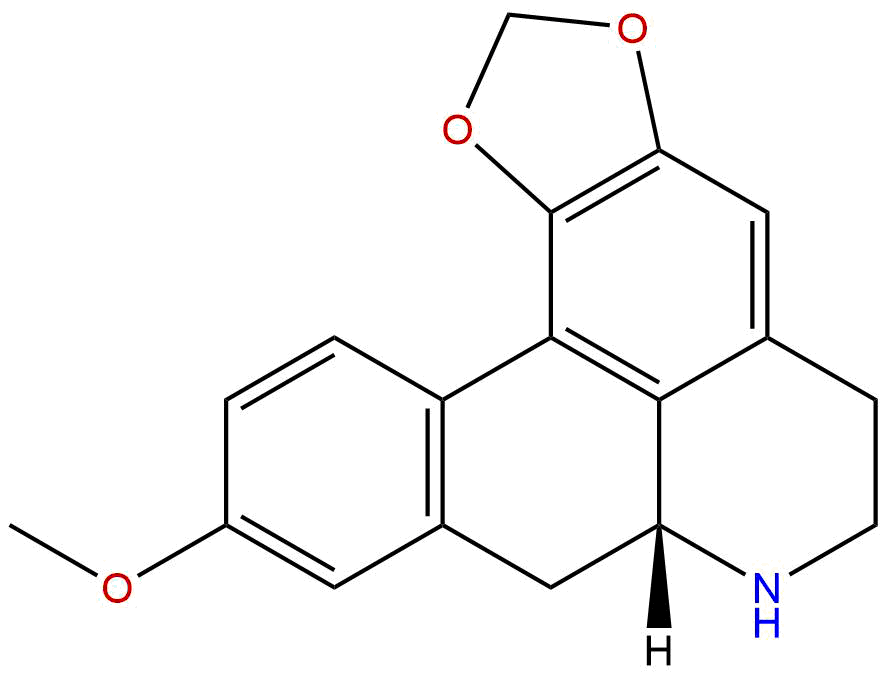
The chemical structure of Xylopine belongs to the typical representative of aporphine alkaloids. The aporphine skeleton is derived from benzylisoquinoline, and its core structure is a four ring system containing a biphenyl structural unit. Specifically, the parent nucleus of lignans is composed of a nitrogen heterocyclic ring (tetrahydroisoquinoline moiety) fused with a biphenyl system, forming a highly conjugated planar or nearly planar aromatic ring system. This rigid and planar structural feature is the structural basis for many aporphine alkaloids to interact with biomolecules such as DNA, enzymes, and receptors.
From the perspective of substituent patterns, lignans typically carry methoxy (- OCH ∝) and/or hydroxyl (- OH) substituents on the A and D rings. The types and positions of these substituents have a decisive impact on their biological activity, polarity, and hydrogen bonding ability. For example, the presence of phenolic hydroxyl groups not only imparts a certain acidity to the molecule, but also serves as a key site for its antioxidant or pro oxidative activity, as well as its participation in metabolic binding reactions such as glucuronidation and sulfation. Methoxy mainly affects the lipid solubility and electron cloud distribution of molecules.
In terms of physicochemical properties, the molecular weight of lignans is 295.3380 Da, which meets the molecular weight requirement of Lipinski's Rule of Five (<500 Da). Its lipid water partition coefficient (LogP) is 2.7437, indicating that the compound has moderate lipid solubility, which theoretically facilitates its penetration into biological membranes. However, its water solubility is only 0.1244 mg/mL, making it a poorly soluble compound. This characteristic is a common bottleneck faced by many natural products in drug development. Low water solubility can seriously affect the oral absorption and bioavailability of drugs, and may bring difficulties to the development of injectable formulations. The topological polar surface area (TPSA) is 39.7200 Å ², below the threshold of 60 Å ², which is consistent with its high blood-brain barrier (BBB) penetration ability (assessed as "high"). TPSA is an important parameter for predicting the ability of drugs to passively diffuse and penetrate the blood-brain barrier. It is generally believed that molecules with TPSA less than 60-70 Å ² are more likely to enter the central nervous system. This characteristic is advantageous for the development of drugs for central nervous system diseases, but may be a risk point that needs to be addressed for drugs targeting anti-tumor or antimalarial drugs that require avoidance of central side effects.
Plant sources and extraction methods
The lignan alkaloid was originally derived from the Annonaceae family and the genus Annonaceae(Xylopia)Separated from plants. This genus of plants is widely distributed in tropical and subtropical regions around the world, especially in rainforests in Africa, Asia, and the Americas where the species are abundant. many Xylopia Genus plants are used in folk medicine to treat diseases such as fever, pain, diarrhea, malaria, and tumors. Their chemical composition and pharmacological activity have always been the focus of research for natural product chemists.
Except for Xylopia Belonging to the genus, lignans are also present in other plants of the family Lychee, such as certain species Annona(Annona genus) and Guatteria Species of the genus (Cucurbitaceae). There may be significant differences in the content of lignans in different plant species, geographical distributions, harvest seasons, and plant parts such as bark, roots, stems, leaves, and fruits. Usually, bark and roots are considered to be the areas with higher levels of aporphine alkaloids.
The classic natural product chemical method is still effective for the extraction of lignan alkaloids. The basic process usually includes the following steps:
- Raw material pretreatment Crush the dried plant material to increase the contact area between the extraction solvent and the plant tissue.
- Extract Using the alkalinity of alkaloids, soaking or percolating extraction with acidic water (such as 0.5-2% sulfuric acid or hydrochloric acid solution) is usually used to make alkaloids salt and dissolve in the aqueous phase. Alternatively, polar organic solvents such as methanol and ethanol can be used for reflux extraction or cold soaking extraction to obtain the total extract.
- Purification and Enrichment After alkalization (such as adjusting pH 9-10 with ammonia or sodium hydroxide), the acidic water extract is subjected to liquid-liquid extraction using non-polar or moderately polar organic solvents (such as chloroform, dichloromethane, ethyl acetate) to transfer the free alkaloids into the organic phase. The crude extract of total alkaloids was obtained by concentrating the organic phase.
- Separation and identification The crude extract of total alkaloids needs to be further separated and purified through various chromatographic techniques. Common methods include silica gel column chromatography, alumina column chromatography, preparative thin layer chromatography (PTLC), and high-performance liquid chromatography (HPLC). By gradient elution, single compounds can be gradually separated. Finally, through spectroscopic methods such as nuclear magnetic resonance spectroscopy (NMR), mass spectrometry (MS), ultraviolet spectroscopy (UV), infrared spectroscopy (IR), and comparison with literature data, the isolated compounds were structurally identified and confirmed to be lignans.
In recent years, with the promotion of green chemistry concepts, some new extraction techniques such as supercritical fluid extraction (SFE), ultrasound assisted extraction (UAE), and microwave-assisted extraction (MAE) have also been attempted for the extraction of aporphine alkaloids, in order to improve extraction efficiency, shorten time, and reduce the use of organic solvents.
Pharmacological activity research
The pharmacological activity research of lignans mainly focuses on its anti-tumor and anti malaria effects. In addition, there are sporadic reports on its antibacterial, anti-inflammatory and other activities.
1. Antitumor activity
Mufanlychee alkaloids exhibit broad-spectrum cytotoxic activity against various human cancer cell lines. The types of cancer cells involved in the study include but are not limited to: liver cancer cells (such as HepG2), lung cancer cells (such as A549), breast cancer cells (such as MCF-7), colon cancer cells (such as HCT-116), cervical cancer cells (such as HeLa) and leukemia cells (such as HL-60). Its half maximal inhibitory concentration (IC ₅₀) is usually in the micromolar range, exhibiting moderate to strong cytotoxic potential.
It is worth noting that the toxicity of lignans to certain normal cell lines is relatively low, suggesting that they may have certain selectivity. The ability to selectively kill tumor cells is a key indicator for evaluating the value of an anti-tumor candidate compound. Preliminary mechanism studies indicate that the anti-tumor effect of lignans is not achieved through a single pathway, but involves the regulation of multiple cellular processes.
2. Anti malaria activity
Given the severe situation of resistance to traditional antimalarial drugs, searching for new antimalarial drugs from natural products has become a research hotspot. The antimalarial activity of lignans has been confirmed in vitro experiments, and it is effective against chloroquine sensitive and chloroquine resistant strains of Plasmodium falciparum(Plasmodium falciparum)All showed inhibitory activity. Its anti malaria mechanism is believed to be related to interfering with key physiological processes of malaria parasites, and specific targets will be described in the next chapter.
3. Other activities
Some studies have also found that lignans have certain antibacterial (especially against certain Gram positive bacteria), anti-inflammatory, and vasodilatory activities. However, there are relatively few reports in these fields, and their activity intensity and in vivo effectiveness still need further verification.
Mechanism of action and molecular targets
A deep understanding of the mechanism of action of lignans is the key to advancing it to preclinical research. The current research mainly reveals its molecular mechanisms in anti-tumor and anti malaria aspects.
1. Mechanism of anti-tumor action
The core mechanism of lignan induced cancer cell death can be summarized as the "oxidative stress cycle arrest apoptosis" pathway.
- Inducing oxidative stress Lychee alkaloids can significantly increase the levels of reactive oxygen species (ROS) in cancer cells. ROS is a class of chemically active oxygen-containing molecules, including superoxide anions (O ₂⁻·), hydrogen peroxide (H ₂ O ₂), and hydroxyl radicals (· OH). In normal cells, the production and clearance of ROS are in dynamic equilibrium. Lychee alkaloids may induce oxidative stress by interfering with the mitochondrial electron transport chain, inhibiting the activity of antioxidant enzymes such as superoxide dismutase (SOD) and glutathione peroxidase (GPx), or depleting the main antioxidant in cells - reduced glutathione (GSH), leading to a large accumulation of ROS.
- G2/M cell cycle arrest Excessive ROS can attack biomolecules such as DNA, proteins, and lipids, causing cellular damage. As a response to damage, cells activate a series of checkpoints to block the cell cycle process and buy time for repair. Research has shown that cancer cells treated with lignan alkaloids are significantly arrested in the G2/M phase of their cell cycle. This effect may be related to the downregulation of the expression or activity of Cyclin B1 and cyclin dependent kinase 1 (CDK1). The Cyclin B1/CDK1 complex (also known as the maturation promoting factor MPF) is a key regulatory factor that drives cells from the G2 phase to the M phase.
- Inducing cell apoptosis When the damage caused by oxidative stress is too severe to repair, cells will initiate programmed cell death - apoptosis. The apoptosis induced by lignans is mainly achieved through the mitochondrial pathway (endogenous pathway). ROS can induce the loss of mitochondrial membrane potential (Δ PSI m), leading to the opening of mitochondrial permeability transition pores (mPTP) and the release of pro apoptotic factors such as cytochrome c. After entering the cytoplasm, cytochrome c binds to Apaf-1, recruiting and activating Caspase-9, which in turn activates downstream executive Caspase-3 and Caspase-7, ultimately leading to cell disintegration. In addition, the expression balance of Bcl-2 family proteins (such as pro apoptotic proteins Bax, Bak and anti apoptotic proteins Bcl-2, Mcl-1) is also disrupted during this process, usually manifested as an increase in the Bax/Bcl-2 ratio, further promoting mitochondrial pathway apoptosis.
2. Mechanism and molecular targets of antimalarial action
The antimalarial activity of lignans involves multiple potential targets, exhibiting the characteristic of multi-target action, which may be its advantage in overcoming drug resistance.
- PfCRT (chloroquine resistant transporter protein of Plasmodium falciparum)PfCRT is a transporter protein located on the digestive vesicle membrane of malaria parasites, and its mutation is the main cause of chloroquine resistance. Mucorine may reverse or avoid chloroquine resistance by inhibiting the function of PfCRT.
- PfMDR1 (Plasmodium falciparum multidrug resistance protein 1)PfMDR1 is another ABC transporter protein associated with multidrug resistance in malaria parasites, responsible for pumping drugs out of digestive vesicles. Lychee alkaloids may act as inhibitors of PfMDR1, increasing the accumulation of drugs in digestive vesicles.
- PFDHFR (Plasmodium falciparum dihydrofolate reductase)PFDHFR is a key enzyme in the folate metabolism pathway of malaria parasites and a target of the classic antimalarial drug ethambutol. Mufanlychee alkaloids may interfere with the nucleic acid synthesis of malaria parasites by inhibiting PFDHFR activity.
- PFK13 (Kelch protein 13 of Plasmodium falciparum)The mutation of PFK13 is closely related to artemisinin resistance. The potential effect of lignans on PFK13 may provide new ideas for addressing artemisinin resistance.
- PfATP6 (malignant malaria parasite sarcoplasmic reticulum/endoplasmic reticulum calcium ATPase)PfATP6 is a known target of artemisinin based drugs. Mufanlychee alkaloids may exert antimalarial effects by affecting calcium ion homeostasis.
- PfATG8 (Autophagy related protein 8 of Plasmodium falciparum)Autophagy is a survival mechanism of malaria parasites to cope with stress. Mucorine may promote malaria parasite death by interfering with PfATG8 mediated autophagy process.
Evaluation of drug properties and pharmacokinetics
A systematic evaluation of the pharmacological properties of lignans from laboratory research to clinical application is necessary. Drug liking is a comprehensive concept that encompasses the physicochemical properties, pharmacokinetic (ADME: absorption, distribution, metabolism, excretion) characteristics, safety (toxicity), and synthesizability of compounds.
1. Physical and chemical properties and drug like properties
As mentioned earlier, the molecular weight (295.34 Da) and LogP (2.74) of lignan alkaloids are both within the ideal range, which conforms to the five rules of generic drugs. However, its water solubility (0.1244 mg/mL) is poor, which is a significant shortcoming. Low water solubility is one of the main reasons for the low oral bioavailability. Strategies to improve water solubility include preparing salts (such as hydrochloride and sulfate salts), using solid dispersion technology, nanocrystal technology, liposome encapsulation, or synthesizing water-soluble prodrugs.
2. Pharmacokinetic characteristics
- absorb Due to poor water solubility, the oral absorption of lignans may be incomplete and unstable. Although its higher LogP value is beneficial for transmembrane transport, it may also lead to precipitation or first pass effects in the complex pH environment and enzyme system of the gastrointestinal tract.
- distribution High blood-brain barrier penetration ability (BBB: High) suggests that lignans can easily enter the central nervous system. For anti-tumor (especially glioma) and anti malaria (malaria parasites can invade the brain), this may be an advantage. But this also means that it may bring central nervous system related side effects, such as neurotoxicity.
- Metabolism As an aporphine alkaloid, the phenolic hydroxyl and methoxy groups of lignans are the main sites for phase I metabolism (such as oxidation, demethylation) and phase II metabolism (such as glucuronidation, sulfation, methylation). The cytochrome P450 enzyme system in the liver (especially CYP3A4, CYP2D6, etc.) may be involved in its metabolism. Understanding its metabolic pathways and the activity/toxicity of metabolites is crucial for predicting drug interactions and individual differences.
- excretion Metabolites and small amounts of prototype drugs may be excreted through the kidneys (urine) and/or bile (feces).
3. Security assessment
- HERG inhibition The hERG (human ether - à - go related gene) potassium ion channel is crucial for cardiac repolarization. Inhibition of hERG channels can prolong the QT interval and increase the risk of fatal arrhythmias, such as apical torsion ventricular tachycardia. Mufanlychee alkaloids have been evaluated as' hERG inhibition: Yes', which is a very serious warning signal. In the early stages of drug development, it is necessary to confirm its inhibitory activity through in vitro hERG patch clamp experiments and evaluate its safety window. If the inhibitory activity is too strong, the project may be terminated. Structural modification to reduce hERG inhibitory activity is one of the key directions for future research.
- Ames test Ames test is a standard method for detecting the mutagenicity of compounds. The Ames test result for lignans is 1.5, and it is generally considered negative if the Ames test result is less than 0.5 and positive if it is greater than 2.0. The result of 1.5 is in a gray area, indicating that it may have weak mutagenicity or require further genetic toxicity studies such as in vivo micronucleus testing to confirm. Genetic toxicity risk is another major obstacle in drug development.
Clinical application prospects and prospects
As a natural product lead compound with a unique mechanism of action (oxidative stress induction) and multiple pharmacological activities (anti-tumor, anti malaria), lignans have broad clinical application prospects, but also face severe challenges.
1. Prospects for anti-tumor applications
The mode of action of lignan alkaloids in inducing oxidative stress to selectively kill tumor cells provides a new approach for the development of novel anticancer drugs. Compared to traditional cytotoxic drugs, this strategy may have a higher therapeutic index. Future research can focus on:
* combination therapy Explore the synergistic effects of lignans alkaloids with existing chemotherapy drugs (such as cisplatin, paclitaxel, doxorubicin) or targeted drugs (such as PARP inhibitors). By using combination therapy, it is possible to reduce the dosage of each drug, thereby reducing toxic side effects and overcoming drug resistance.
* structural optimization Conduct a systematic structure-activity relationship (SAR) study to address the two major deficiencies of poor water solubility and hERG inhibition. For example, introducing polar groups (such as amino, carboxyl, phosphate) into molecules to enhance water solubility; Reduce the affinity for hERG channels by adjusting substituents or altering the electron cloud distribution of the skeleton.
* New drug delivery system Using nanotechnology (such as liposomes, polymer micelles, mesoporous silica nanoparticles) to encapsulate lignans not only improves its water solubility and stability, but also enriches the drug in tumor tissues through passive targeting (EPR effect) or active targeting (surface modified ligands), thereby reducing toxicity to normal tissues.
2. Prospects for antimalarial applications
Given the spread of malaria parasite resistance to existing drugs, the multi-target mechanism of action of lignans makes it an attractive anti malaria lead.
* Overcoming drug resistance Due to the simultaneous action on multiple targets such as PfCRT, PfMDR1, PFDHFR, and PFK13, malaria parasites need to undergo multiple mutations simultaneously to develop complete resistance, greatly reducing the probability of drug resistance.
* Combined use with artemisinin based drugs Mufanlychee alkaloids may have a synergistic effect with artemisinin based drugs by inhibiting PFK13 or affecting autophagy, and are used to treat artemisinin resistant malaria.
* Simplification and optimization of structure The Aporphine skeleton is relatively complex, and the total synthesis cost is relatively high. In the future, efforts can be made to design and synthesize analogues based on the pharmacophore of lignans, which have simpler structures and are easier to prepare on a large scale.
3. Challenges and Future Directions Faced
Despite the promising prospects, there are numerous obstacles to the clinical translation of lignans.
* Primary issue: Security HERG inhibition and potential genotoxicity are two major "red light" signals. Resources must be invested in addressing these two issues at the earliest stages of drug discovery. If the hERG inhibitory activity cannot be effectively reduced through structural modification, the development prospects of this compound will be very bleak.
* bioavailability The low oral bioavailability caused by poor water solubility is another challenge that needs to be overcome. Developing appropriate dosage forms (such as injections) or prodrugs is a possible solution.
* In vivo efficacy verification Currently, the vast majority of research remains at the cellular level in vitro. In the future, it is necessary to establish multiple mouse tumor models and malaria infection models to systematically evaluate the in vivo efficacy, pharmacokinetic characteristics, and toxicity of lignans and their derivatives.
* In depth study of mechanisms Although it is known to induce oxidative stress, the specific molecular targets (such as which protein or enzyme it directly acts on) still need further clarification. A clearer mechanism will help guide structural optimization and discover new biomarkers.
Conclusion
Mufanlychee alkaloids, derived from plants in the family Annonaceae, occupy a place in the field of natural product drug research due to their unique chemical structure and mechanism of inducing oxidative stress to stimulate anti-tumor and antimalarial activities. It is not only the crystallization of traditional medical wisdom, but also a valuable lead compound for modern drug discovery. Its broad-spectrum anticancer activity, potential efficacy against drug-resistant malaria parasites, and multi-target effects all indicate its enormous potential for development.
However, the path of scientific research has never been smooth. The pharmacological defects of lignan alkaloids, especially the risk of hERG inhibition and low water solubility, are like two mountains on the road to clinical translation. The future research focus must shift from simple activity discovery to comprehensive research with "drug properties" as the core. This requires close collaboration among chemists, pharmacologists, pharmacokinetics, and toxicologists to overcome these obstacles through sophisticated structural modifications, advanced formulation techniques, and rigorous in vitro and in vivo evaluations.
The research process of lignans is a microcosm of the development of natural product drugs. It reminds us that an excellent natural product lead compound not only requires excellent biological activity, but also needs to have good "medicinal properties". The in-depth exploration of lignans may not only lead to the development of a new class of anti-tumor or antimalarial drugs, but more importantly, it provides valuable knowledge and experience for us to understand how natural products interact with living organisms and optimize their properties through chemical means. We have reason to believe that with the cross disciplinary integration and continuous technological progress, lignans and their derivatives will eventually shine in clinical applications.