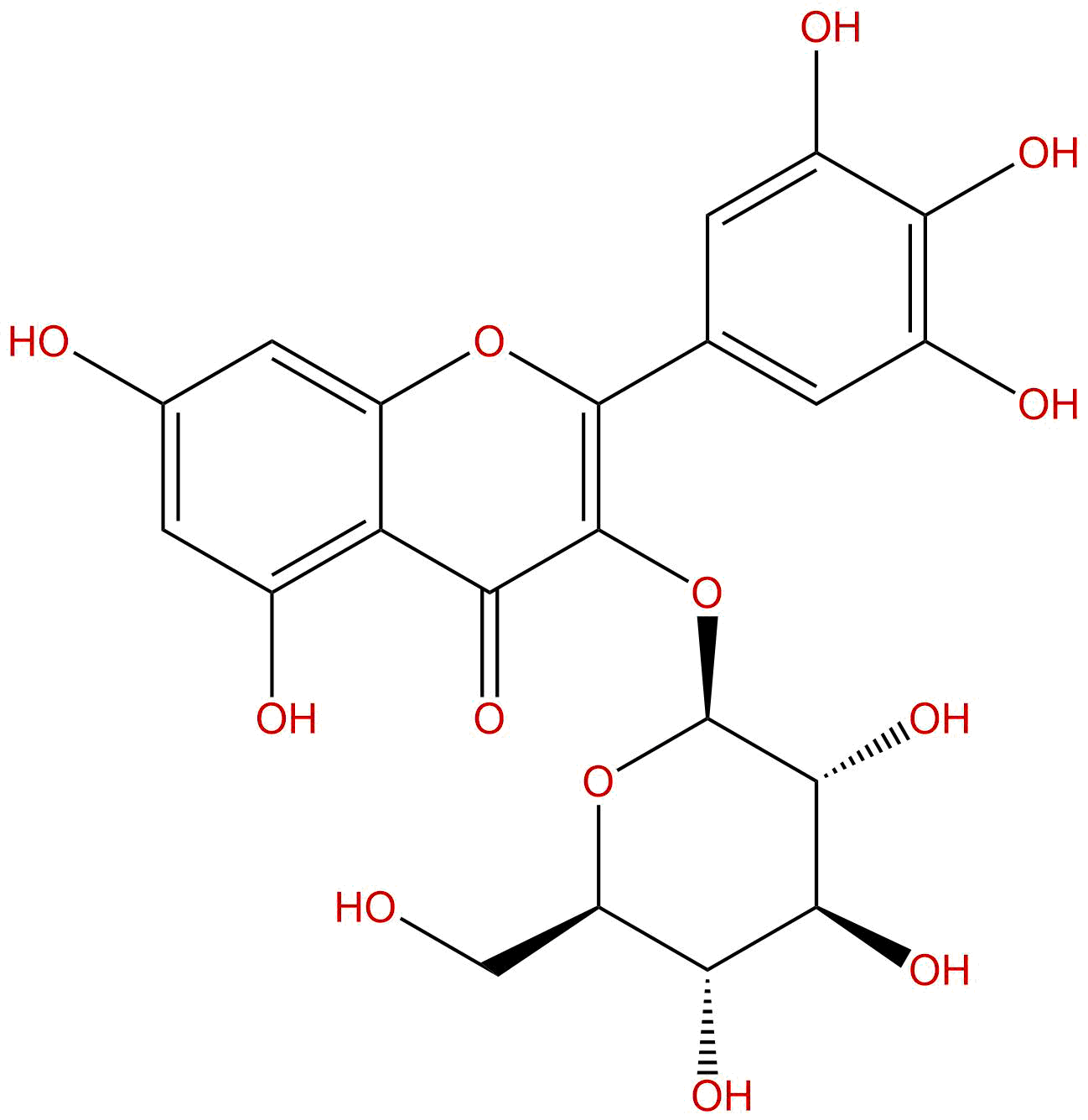


Product name: Myricetin 3-glucoside
Synonym name:Myricetin 3-O-β-D-glucopyranoside Isomyricitrin
Catalogue No.: BP4684
Cas No.: 19833-12-6
Formula: C21H20O13
Mol Weight: 480.378
Botanical Source:
Type of Compound: Flavonoids
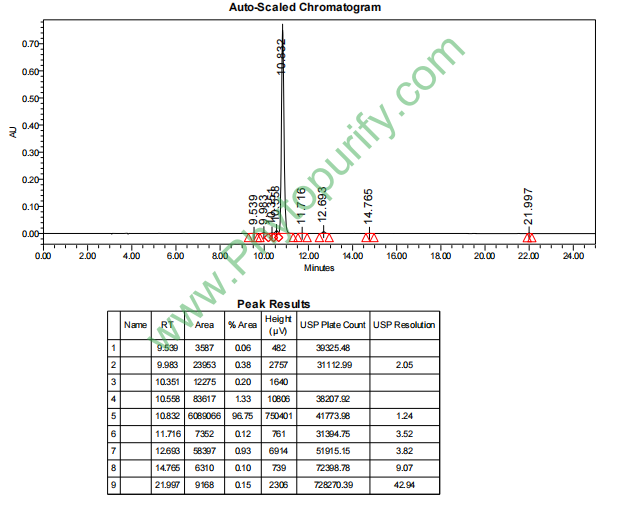
Purity: 95%~99%
Analysis Method: HPLC-DAD or/and HPLC-ELSD
Identification Method: Mass, NMR
Packing: Brown vial or HDPE plastic bottle
Storage: Store in a well closed container, protected from air and light. Put into refrigerate or freeze for long term storage.
Whenever possible, you should prepare and use solutions on the same day. However, if you need to make up stock solutions in advance, we recommend that you store the solution as aliquots in tightly sealed vials at -20℃. Generally, these will be useable for up to two weeks.
The product could be supplied from milligrams to grams
Inquire for bulk scale.
For Reference Standard and R&D, Not for Human Use Directly.
HPLC of Myricetin 3-glucoside
Storage conditions:Short-term storage at 2~8℃, long-term storage at -20 ~ -80℃
Myrcetin-3-O-glucoside (CAS number: 19833-12-6), as an important natural flavonoid glycoside, has received widespread attention in recent years due to its significant biological activity and potential medicinal value. This compound is a glycoside derivative of myricetin, which has excellent antioxidant, anti-inflammatory, and liver protective effects, especially showing significant protective effects in alcoholic liver injury models. With the increase of the incidence rate of alcoholic liver disease, finding safe and effective natural liver protective agents has become a research hotspot. Yangmeisin-3-O-glucoside has shown great clinical potential by regulating multiple molecular targets and reducing liver cell damage. This article will provide a systematic review of the chemical structure, plant origin, pharmacological activity, mechanism of action, and pharmacological evaluation of myricetin-3-O-glucoside, aiming to provide a theoretical basis for its subsequent research and clinical translation.
Yangmeisin-3-O-glucoside belongs to the flavonol glycosides in flavonoids, with a molecular formula of C21H20O13 and a molecular weight of 480.3780. Its chemical structure is composed of a core structure of myricetin and a glucose molecule connected by a glycosidic bond formed by a 3-hydroxyl group. Yangmei extract itself is a trihydroxyflavonol with multiple hydroxyl groups in its structure, endowing it with excellent antioxidant activity. The introduction of sugar groups not only improves its water solubility (1.4382), but also affects its bioavailability and metabolic stability.
In terms of physicochemical properties, the LogP value of myricetin-3-O-glucoside is -0.2991, indicating its strong hydrophilicity and high molecular polarity (TPSA 230.74 Å ²), which is beneficial for its dissolution and biological distribution in aqueous phase. It has good water solubility and is helpful for absorption after oral administration. The low permeability of the blood-brain barrier suggests that its main target is concentrated in peripheral tissues, especially the liver. The negative result of hERG channel inhibition experiment indicates a low risk of cardiac toxicity. The Ames mutagenicity test score is 1.2, indicating a low risk of genotoxicity and good safety.
Yangmeisin-3-O-glucoside is widely present in various plants, especially in Myrica rubra, red grapes, blueberries, tea, and various medicinal plants with higher content. Yangmei fruit and leaves are the main natural sources of this compound, as their mature fruits are rich in polyphenolic substances, making them important raw materials for extracting this component.
The extraction method usually uses water extraction or alcohol extraction combined with chromatographic separation technology. The conventional process includes:
In recent years, green extraction technologies such as supercritical CO2 extraction and microwave-assisted extraction have also been explored and applied to achieve efficient and environmentally friendly industrial production.
The pharmacological activity research of myricetin-3-O-glucoside mainly focuses on its antioxidant, anti-inflammatory, and liver protective effects, especially in the alcohol induced liver injury model.
Yangmeisin-3-O-glucoside can effectively eliminate free radicals and alleviate oxidative stress damage. In vitro experiments have shown that the compound can enhance the activity of antioxidant enzymes such as superoxide dismutase (SOD1, SOD2), catalase (CAT), and glutathione peroxidase (GPX1) in cells, reduce reactive oxygen species (ROS) levels, and protect cells from oxidative damage.
In the inflammatory model, myricetin-3-O-glucoside reduces tissue inflammation by inhibiting the expression of inflammatory factors. For example, it can downregulate pro-inflammatory cytokines such as tumor necrosis factor - α (TNF - α) and interleukin-6 (IL-6), reducing liver inflammatory cell infiltration.
Ethanol induced liver injury is the focus of research on myricetin-3-O-glucoside. In vivo experiments have shown that this compound can significantly reduce the activity of liver transaminase (ALT, AST) in HepG2 cells and animal models, and alleviate liver cell damage. It demonstrates potential therapeutic value for alcoholic liver disease by regulating oxidative stress and inflammatory response, preventing lipid degeneration and fibrosis processes.
In addition, myricetin-3-O-glucoside also exhibits certain anti-cancer, antibacterial, and neuroprotective effects, but related research is still in the preliminary stage and needs further verification.
The biological activity of myricetin-3-O-glucoside is closely related to its multi-target regulatory mechanism. Its main mechanism of action includes:
Yangmeisin-3-O-glucoside activates the NFE2L2/NRF2 signaling pathway, promotes the expression of downstream antioxidant enzyme genes (such as SOD1, SOD2, CAT, GPX1, HMOX1), and enhances cellular antioxidant defense capabilities. NRF2, as a key transcription factor, regulates cellular response to oxidative stress, and its activation helps alleviate liver cell damage.
Yangmeisin-3-O-glucoside can inhibit the expression and activity of MMP1 and MMP3, prevent extracellular matrix degradation, and slow down the process of liver fibrosis. MMPs play an important role in liver injury and repair processes, and their regulation helps maintain liver structural integrity.
By inhibiting the NF - κ B signaling pathway, myricetin-3-O-glucoside reduces the production of pro-inflammatory cytokines (such as TNF - α, IL-6), alleviates inflammatory responses, and protects liver cells from inflammation mediated damage.
Yangmeisin-3-O-glucoside may also participate in cellular metabolism and signal transduction by regulating the activity of enzymes such as tyrosinase (TYR), but the specific mechanism still needs further investigation.
The pharmacological parameters of myricetin-3-O-glucoside indicate that it has certain potential for drug development. Good water solubility, conducive to formulation development and oral absorption. A low LogP value indicates strong hydrophilicity, which may limit its transmembrane diffusion rate but contribute to stability in blood circulation.
The low permeability of the blood-brain barrier suggests that it mainly acts on peripheral tissues, reducing the risk of central nervous system side effects. HERG channel inhibition is negative, reducing the risk of cardiac toxicity. The Ames test results indicate that its genotoxicity risk is low and its safety is good.
In terms of pharmacokinetics, myricetin-3-O-glucoside is hydrolyzed in vivo to release myricetin, which is the active form. Its absorption, distribution, metabolism, and excretion (ADME) are influenced by glycosylation modifications, and the glycosidic structure helps to improve stability and bioavailability, but may also lead to first pass effects. In the future, in vivo pharmacokinetic studies are needed to clarify its half-life, biotransformation pathways, and the activity of metabolites.
Yangmeisin-3-O-glucoside has shown broad application prospects in the prevention and treatment of liver diseases such as alcoholic liver disease, non-alcoholic fatty liver disease, and liver fibrosis due to its significant antioxidant and liver protective effects. Its low toxicity and good safety provide favorable conditions for clinical translation.
Future research directions should focus on:
In addition, the potential of myricetin-3-O-glucoside in anti-inflammatory, anti-tumor, and neuroprotective fields is also worth further exploration.
Yangmeisin-3-O-glucoside, as a natural flavonoid glycoside with multiple biological activities, has become an important research object in the field of natural product pharmacology due to its excellent antioxidant and liver protective effects. It significantly reduces ethanol induced liver injury by regulating the NRF2 signaling pathway and various key enzymes, demonstrating good medicinal value and development potential. In the future, by combining modern medicinal chemistry, molecular biology, and clinical research methods, in-depth exploration of its mechanism of action and optimization of formulations will lay a solid foundation for its clinical application and promote the innovative development of natural products in the prevention and treatment of liver disease.
