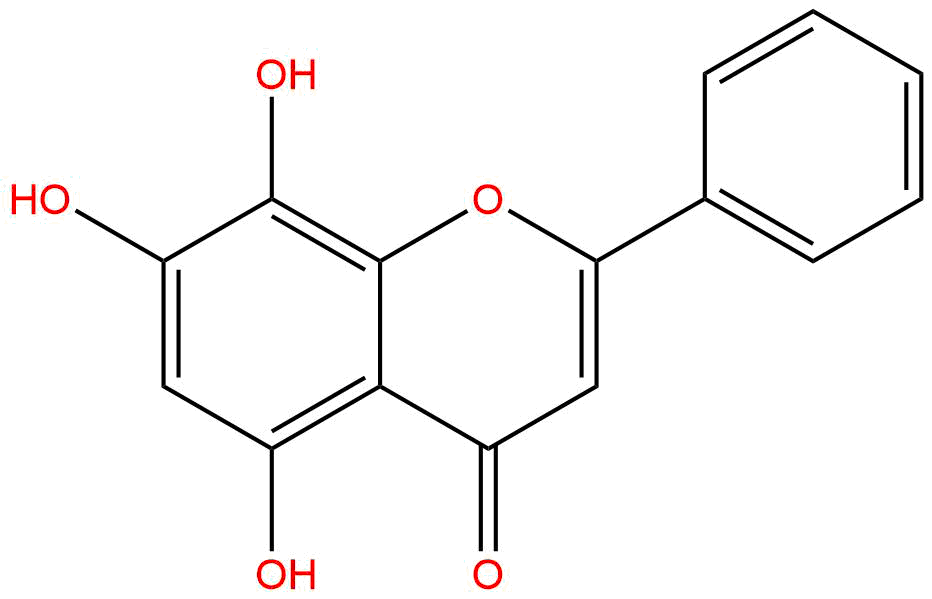
Research progress and prospects of baicalein: from natural flavonoids to multi-target anti-inflammatory drugs
Introduction/Overview
Natural products have always been an important source of drug discovery and development, especially demonstrating irreplaceable value in fields such as anti-inflammatory, antiviral, and anti-tumor. Flavonoids, as a major class of secondary metabolites in plants, have attracted much attention due to their structural diversity and wide range of biological activities. Among numerous flavonoids, Norwogonin (chemical name: 5,7,8-trihydroxyflavone) is a traditional Chinese medicine derived from Scutellaria baicalensis(Scutellaria baicalensis The active ingredients isolated from Georgi have gradually become one of the hotspots in natural product pharmacology research in recent years.
Scutellaria baicalensis, as a traditional Chinese medicine with a long history of application in clearing heat, drying dampness, purging fire, and detoxifying, has undergone extensive research on its chemical composition. Baicalin, baicalein, and baicalein are its main active ingredients, while demethylated baicalein, as a relatively low content but significantly active flavonoid component in Scutellaria baicalensis, is gradually revealing its unique chemical structure and multi-target pharmacological activity. It is worth noting that baicalein has significant anti enterovirus 71 (EV71) activity, with a half maximal inhibitory concentration (IC50) of 31.83 μ g/mL. This discovery provides important evidence for its application in the field of antiviral therapy. However, what is more noteworthy is that norbaicalein has shown a wider potential in the field of anti-inflammatory effects, with its targets covering multiple key molecules closely related to the inflammatory signaling pathway, such as IL-6, STAT3, CASP1, TRPV1, RELA, PTGS1, TNF, TRPA1, IKBKB, NOS2, etc.
This article aims to systematically review the chemical structure and physicochemical properties, plant sources and extraction methods, pharmacological activity research, mechanism of action and molecular targets, pharmacological evaluation and pharmacokinetic characteristics of baicalein, and prospects its clinical application prospects, in order to provide comprehensive academic references for the in-depth research and development of this natural product.
Chemical structure and physicochemical properties
The chemical structure of baicalein belongs to the typical flavonoid nucleus, and its systematic name is 5,7,8-trihydroxyflavone. From the perspective of structural characteristics, this compound has the basic skeleton of flavonoids, which is composed of A and B rings connected by a central C ring (γ - pyranone ring). Compared with common baicalein (5,6,7-trihydroxyflavone) and baicalein (5,7-dihydroxy-8-methoxyflavone), demethylbaicalein has a hydroxyl group attached to the C-5, C-7, and C-8 positions of the A ring, while there is no substituent at the C-6 position. This unique hydroxyl substitution pattern endows it with special chemical properties and biological activity.
From the perspective of physical and chemical properties, the molecular weight of demethylated baicalein is 270.2400 Da, belonging to the class of small molecule flavonoids. Its lipophilic water partition coefficient (LogP) is 2.4817, indicating that the compound has moderate lipophilicity, which is beneficial for its permeation through biofilm structures. The topological polar surface area (TPSA) is 90.9000 Å ², which is at a moderate level and suggests that it may have some oral absorption potential, but is also subject to certain limitations. The water solubility data is 0.0329 mg/mL, indicating its low solubility in water, which may affect its bioavailability and formulation development to some extent. It is worth noting that the blood-brain barrier permeability of baicalein is evaluated as "low", which means that the application of this compound in the treatment of central nervous system diseases may be limited, but it also reduces the potential risk of neurotoxicity. In addition, a negative evaluation of hERG inhibition indicates a low risk of cardiac toxicity, which is a favorable drug safety feature. The Ames test result is 0.6, indicating a low risk of genetic toxicity.
From the perspective of chemical stability, the three phenolic hydroxyl groups in the molecule of baicalein give it strong antioxidant activity, but also make it sensitive to oxidative conditions. In alkaline environments, phenolic hydroxyl groups are prone to ionization, leading to a decrease in compound stability. In addition, the γ - pyranone ring in its molecular structure may undergo ring opening reactions under strong acid or strong base conditions. These chemical properties need to be fully considered in the extraction, separation, storage, and formulation development processes.
Plant sources and extraction methods
The main plant source of baicalein is Scutellaria baicalensis in the family Lamiaceae(Scutellaria baicalensis Georgi), This plant is widely distributed in East Asia such as China, Japan, and South Korea, and is one of the most important heat clearing medicines in traditional Chinese medicine. Except for Scutellaria baicalensis, other plants in the Scutellaria genus include Scutellaria amoena、Scutellaria rehderiana It may also contain this ingredient, but the content is usually low. It is worth noting that the content of baicalein in Scutellaria baicalensis is much lower than that of baicalin and baicalein, and it is a trace active ingredient, which poses certain challenges for its large-scale preparation.
In terms of extraction methods, traditional solvent extraction is still the main means of obtaining baicalein. Due to its moderate lipophilicity, commonly used extraction solvents include organic solvents such as ethanol, methanol, ethyl acetate, or their aqueous solutions. Research has shown that using a 70% -80% ethanol aqueous solution for reflux extraction can achieve good extraction efficiency. The extraction temperature is usually controlled at 60-80 ℃, the extraction time is 1-3 hours, and the solid-liquid ratio is generally 1:10 to 1:20 (w/v). To improve the extraction efficiency, modern technologies such as ultrasound assisted extraction and microwave-assisted extraction have also been applied in the extraction process of baicalein, which can significantly shorten the extraction time and improve the yield.
The crude extract after extraction needs further separation and purification to obtain high-purity baicalein. Common separation methods include silica gel column chromatography, polyamide column chromatography, Sephadex LH-20 gel column chromatography, and high performance liquid chromatography (HPLC) preparation. Among them, silica gel column chromatography is the most commonly used preliminary separation method, which uses solvent systems such as chloroform methanol or petroleum ether acetone for gradient elution. Polyamide column chromatography has good selectivity for flavonoids and can effectively remove impurities. For research or applications requiring high purity, preparative HPLC is the preferred method for final purification, typically using a C18 reverse phase chromatography column with methanol water or acetonitrile water system as the mobile phase.
It is worth noting that due to the low content of baicalein in Scutellaria baicalensis, the cost of extracting it directly from natural plants is relatively high. In recent years, research on chemical synthesis and biosynthetic methods has provided new ideas for the large-scale preparation of baicalein. Chemical synthesis usually starts with simple compounds such as triphenylphenol, and constructs flavonoid mother nuclei through a series of condensation, oxidation, and other reactions. Biosynthesis utilizes genetically engineered microbial or plant cell culture systems to produce target products by regulating the biosynthetic pathways of flavonoids. These methods, although still in the research stage, have significant potential for development.
Pharmacological activity research
The pharmacological activity research of baicalein mainly focuses on anti-inflammatory, antiviral, antioxidant, and neuroprotective fields, among which anti-inflammatory activity is the most concerned research direction.
anti-inflammatory activity It is the most prominent pharmacological effect of baicalein. Numerous in vitro and in vivo studies have shown that this compound can effectively inhibit the production and release of various inflammatory mediators. In a macrophage model stimulated by lipopolysaccharide (LPS), demethylated baicalein significantly reduces the levels of pro-inflammatory cytokines such as tumor necrosis factor - α (TNF - α), interleukin-6 (IL-6), and interleukin-1 β (IL-1 β). In addition, it can inhibit the expression of inducible nitric oxide synthase (iNOS, encoded by NOS2 gene) and cyclooxygenase-2 (COX-2, encoded by PTGS1 gene), thereby reducing the production of inflammatory mediators such as nitric oxide (NO) and prostaglandin E ₂ (PGE ₂). In animal models, baicalein has shown inhibitory effects on both acute and chronic inflammation, including carrageenan induced toe swelling, acetic acid induced increased intra-abdominal capillary permeability, and adjuvant induced arthritis.
Antiviral activity It is another important pharmacological effect of baicalein. Research has confirmed that the compound has a significant inhibitory effect on enterovirus 71 (EV71), with an IC ₅₀ of 31.83 μ g/mL. EV71 is one of the main pathogens causing hand, foot, and mouth disease, and severe infection can lead to neurological complications and even death. The anti EV71 mechanism of baicalein may involve inhibiting multiple stages of the virus replication cycle, including virus adsorption, entry, and RNA replication. In addition, preliminary studies suggest that baicalein may have certain inhibitory effects on other enteroviruses and respiratory viruses, but relevant research is not yet sufficient.
antioxidant activity It is a common characteristic of flavonoids, and baicalein is no exception. The three phenolic hydroxyl groups in its molecule can effectively scavenge free radicals, including hydroxyl radicals, superoxide anion radicals, and DPPH radicals. In addition, it can chelate transition metal ions such as Fe ² ⁺ and Cu ² ⁺, reducing the reactive oxygen species (ROS) produced by the Fenton reaction. By activating the nuclear factor E2 related factor 2 (Nrf2) signaling pathway, demethylated baicalein can also upregulate the expression of antioxidant enzymes such as superoxide dismutase (SOD), glutathione peroxidase (GPx), and catalase (CAT), thereby enhancing the endogenous antioxidant defense ability of cells.
Neuroprotective activity This is a new direction in the research of baicalein in recent years. Research has shown that this compound can protect neurons from oxidative stress and excitotoxic damage, reduce neurotoxicity induced by β - amyloid protein (A β), and inhibit excessive activation of microglia. These findings suggest that baicalein may have potential therapeutic value for neurodegenerative diseases such as Alzheimer's disease and Parkinson's disease. However, due to the low blood-brain barrier permeability of the compound, its application in neurological diseases may require the use of novel formulation technologies such as nano delivery systems.
Mechanism of action and molecular targets
The pharmacological activity of baicalein is closely related to its regulation of multiple molecular targets. Based on existing research, its mechanism of action can be elucidated from the following aspects.
Regulation of inflammatory signaling pathways It is the core mechanism of the anti-inflammatory effect of baicalein. This compound can simultaneously act on multiple inflammatory signaling pathways, exhibiting the characteristic of multi-target regulation. Firstly, baicalein can inhibit the activation of the nuclear factor kappa B (NF - κ B) signaling pathway. In the resting state, NF - κ B (composed of subunits such as RELA) binds to the inhibitory protein I κ B and remains in the cytoplasm. When stimulated by inflammation, I κ B kinase (IKK, encoded by IKBKB) is activated, phosphorylates and degrades I κ B, and the released NF - κ B enters the nucleus to initiate transcription of inflammatory genes. Norkaempferol can inhibit the activity of IKK, reduce the phosphorylation and degradation of I κ B, thereby blocking the nuclear translocation and transcriptional activity of NF - κ B, and ultimately downregulating the expression of inflammatory factors such as TNF - α, IL-6, iNOS, and COX-2.
Secondly, baicalein also has a regulatory effect on the signal transduction and transcription activator 3 (STAT3) signaling pathway. STAT3 is a key member of the JAK/STAT signaling pathway and plays an important role in inflammation and tumor development. Research has shown that baicalein can inhibit the phosphorylation activation of STAT3, reduce its nuclear translocation and target gene transcription, thereby exerting anti-inflammatory and anti-tumor activities.
In addition, demethylated baicalein also affects the activation of inflammasomes. CASP1 (caspase-1) is a key effector molecule in the inflammasome signaling pathway, responsible for cleaving pro-IL-1 β and pro-IL-18 into mature inflammatory factors. Research suggests that baicalein may inhibit the assembly and activation of NLRP3 inflammasomes, reduce the activation of caspase-1, and thus decrease the maturation and secretion of IL-1 β and IL-18.
Regulation of Transient Receptor Potential Channels It is another important mechanism of the anti-inflammatory effect of baicalein. TRPV1 and TRPA1 are two important transient receptor potential channels highly expressed in sensory neurons, involved in the regulation of pain, itching, and neurogenic inflammation. Research has shown that baicalein can antagonize the activation of TRPV1 and TRPA1 channels, reduce calcium ion influx and neurotransmitter release, thereby exerting analgesic and anti-inflammatory effects. This discovery provides a new theoretical basis for the application of baicalein in pain and inflammation related diseases.
Activation of antioxidant signaling pathway It is an important mechanism by which demethylated baicalein exerts cell protective effects. This compound can activate the Nrf2/ARE signaling pathway, promote the expression of antioxidant enzymes and detoxifying enzymes. Nrf2 is a key transcription factor in cellular oxidative stress response, which binds to Keap1 under normal conditions and is in an inhibited state. When stimulated by oxidative stress or electrophilic agents, Nrf2 is released from Keap1 and translocated into the nucleus, binding to antioxidant response elements (ARE) and initiating transcription of downstream target genes. Through the redox activity of its phenolic hydroxyl group, demethylated baicalein can promote the nuclear translocation and transcriptional activity of Nrf2, thereby enhancing the antioxidant defense ability of cells.
Multi target synergistic effect It is a significant characteristic of the pharmacological activity of baicalein. Compared with single target drugs, this compound can comprehensively regulate the inflammatory response network and exert synergistic effects by simultaneously acting on multiple targets such as NF - κ B, STAT3, NLRP3 inflammasome, TRPV1, TRPA1, and Nrf2. This multi-target mode of action not only improves therapeutic efficacy, but may also reduce the risk of drug resistance, reflecting the unique advantages of natural products in drug development.
Evaluation of drug properties and pharmacokinetics
The pharmacological evaluation of baicalein involves multiple aspects, including physicochemical properties, pharmacokinetic characteristics, safety, and formulation feasibility.
From the perspective of physicochemical properties, the molecular weight of demethylated baicalein is 270.24 Da, which meets the basic requirements of small molecule drugs (usually<500 Da). Its LogP value is 2.48, which is within the ideal range of lipid solubility (1-3), which is beneficial for the membrane permeability and oral absorption of the drug. The TPSA is 90.90 Å ², slightly higher than the ideal upper limit for oral medication (usually<140 Å ²), indicating the possibility of some oral absorption disorders. Low water solubility (0.0329 mg/mL) is one of the main limiting factors for the pharmacological properties of baicalein. Low water solubility may lead to poor oral bioavailability and increase the difficulty of formulation development.
In terms of pharmacokinetics, there is currently insufficient systematic research on demethylated baicalein. Based on its physicochemical properties and pharmacokinetic characteristics of similar flavonoids, it can be inferred that after oral administration of baicalein, it may undergo first pass metabolism and its bioavailability may be low; It may be widely distributed in blood rich tissues such as the liver and kidneys in the body, but due to low blood-brain barrier permeability, its distribution in the brain is limited; Metabolic pathways may include glucuronidation and sulfation binding reactions, as well as cytochrome P450 enzyme mediated oxidative metabolism; The main excretion pathways may be bile and urine. It is worth noting that the metabolites of baicalein in vivo may have different pharmacological activities, which need to be further studied.
Safety evaluation is an important component of drug research. The hERG inhibition of baicalein was evaluated as' no ', indicating a low risk of cardiac toxicity, which is an important safety advantage. The Ames test result is 0.6, indicating a low risk of genetic toxicity. In addition, based on the long-term safe use history of Scutellaria baicalensis in traditional Chinese medicine, it can be inferred that baicalein may have good safety. However, systematic toxicology studies, including acute toxicity, chronic toxicity, reproductive toxicity, and carcinogenicity, are still necessary before the compound enters clinical practice.
The development of formulations is a key step in overcoming the limitations of the pharmacological properties of baicalein. To address the issue of low water solubility, various formulation strategies can be employed, including solid dispersion technology, cyclodextrin inclusion technology, liposome or nanoparticle delivery systems, etc. Among them, nano formulation technology can not only improve the solubility and bioavailability of drugs, but also achieve targeted delivery and slow controlled release, with broad application prospects. In addition, prodrug design is also an effective strategy to enhance the pharmacological properties of baicalein. By introducing phosphate esters, amino acid esters, and other functional groups, its water solubility and oral absorption can be improved.
Clinical application prospects and prospects
Based on the multi-target pharmacological activity of baicalein, it has potential clinical application value in the treatment of various diseases.
Inflammatory diseases It is the most promising application field for the development of baicalein. It can effectively regulate the inflammatory response network by inhibiting multiple inflammatory signaling pathways such as NF - κ B, STAT3, and NLRP3 inflammasomes. Therefore, it may have therapeutic effects on various inflammatory diseases such as rheumatoid arthritis, inflammatory bowel disease, acute lung injury, sepsis, etc. Especially its simultaneous action on TRPV1 and TRPA1 channels gives it a unique advantage in the treatment of inflammation related pain. Future research should focus on its pharmacological evaluation in animal models of inflammatory diseases, as well as comparative studies with existing anti-inflammatory drugs.
Viral infectious diseases It is another important application direction of baicalein. Its inhibitory effect on EV71 has been experimentally confirmed, suggesting that it may have therapeutic value for hand, foot and mouth disease. Considering the similarity in replication cycles and pathogenic mechanisms between enteroviruses and respiratory viruses, demethylated baicalein may also have inhibitory effects on other viral infections. Future research should expand the evaluation scope of its antiviral spectrum and explore in depth its antiviral mechanism, providing theoretical basis for the development of new antiviral drugs.
Neurodegenerative diseases Although limited by the blood-brain barrier permeability, the application of baicalein in diseases such as Alzheimer's and Parkinson's still has the potential through new formulation technologies such as nano delivery systems. Its antioxidant and anti-inflammatory activities can protect neurons from oxidative stress and neuroinflammation damage, while its inhibitory effect on microglial activation helps alleviate neuroinflammatory reactions in neurodegenerative diseases. Future research should focus on the development of brain targeted delivery systems to improve the bioavailability of baicalein in the brain.
Metabolic diseases Such as diabetes, obesity and nonalcoholic fatty liver disease, the pathogenesis of which is closely related to chronic low-grade inflammation. The anti-inflammatory and antioxidant activities of baicalein may have therapeutic effects on these metabolic diseases. Preliminary studies have shown that flavonoids can improve insulin sensitivity, regulate lipid metabolism, and alleviate liver steatosis. Further research is needed to determine whether demethylated baicalein has similar effects.
Combination therapy strategy It is an important way to exert the clinical value of baicalein. Its multi-target mechanism of action enables it to produce synergistic effects with existing drugs. For example, combined use with antibiotics may enhance anti infective efficacy and reduce the development of drug resistance; Combined use with nonsteroidal anti-inflammatory drugs may enhance anti-inflammatory effects and reduce gastrointestinal side effects; Combined use with antiviral drugs may improve antiviral efficacy and reduce drug dosage. Future research should systematically evaluate the interaction between baicalein and commonly used clinical drugs, providing scientific basis for the development of combination therapy plans.
Research on Structural Optimization and Structure Performance Relationship This is an important direction for promoting the development of baicalin drugs. By modifying its molecular structure, such as introducing different substituents, changing the position or quantity of hydroxyl groups, constructing derivative libraries, etc., its pharmacokinetic characteristics can be improved, target selectivity can be enhanced, and pharmacological activity can be strengthened. The in-depth study of structure-activity relationships will provide guidance for designing better candidate drugs.
Conclusion
As an important active flavonoid component in Scutellaria baicalensis, baicalein has shown significant research value in the field of natural product drug development due to its unique chemical structure and multi-target pharmacological activity. This article systematically reviews the chemical structure and physicochemical properties, plant sources and extraction methods, pharmacological activity research, mechanism of action and molecular targets, pharmacological evaluation and pharmacokinetic characteristics of the compound, and prospects its clinical application prospects.
From existing research, the most prominent pharmacological activities of baicalein are reflected in anti-inflammatory and antiviral aspects. Its mechanism of action involves multiple signaling pathways and molecular targets such as NF - κ B, STAT3, NLRP3 inflammasome, TRPV1, TRPA1, and Nrf2, exhibiting typical multi-target regulation characteristics. This multi-target mode of action not only reflects the unique advantages of natural products, but also provides new ideas for the treatment of complex diseases.
However, the research on baicalein still faces many challenges. Firstly, its content in Scutellaria baicalensis is relatively low, and the cost of large-scale preparation is high, requiring the development of efficient extraction and purification methods or chemical/biosynthetic pathways. Secondly, its low water solubility and poor oral bioavailability are the main bottlenecks restricting its drug development, which require the use of new formulation technologies to solve. Thirdly, there is still a lack of systematic pharmacokinetic and toxicological research, which is a necessary task before entering clinical practice. Fourthly, the molecular mechanisms underlying its pharmacological activity are not yet thoroughly studied, especially the interactions between various targets and the regulation of signal networks that need to be further elucidated.
Looking ahead to the future, research on baicalein should focus on the following aspects: firstly, conducting in-depth pharmacokinetic and toxicological studies to comprehensively evaluate its in vivo processes and safety; The second is to use modern medicinal chemistry methods to optimize the structure and improve its drug properties; The third is to develop new formulation technologies to improve their bioavailability and targeting; Fourth, expand the scope of pharmacological activity evaluation and explore its therapeutic effects in more disease models; The fifth is to strengthen preclinical research and lay the foundation for clinical trials.
In summary, baicalein, as a natural flavonoid compound with multi-target activity, has significant potential for development in the fields of anti-inflammatory, antiviral, and related disease treatment. With the continuous deepening of research and the continuous advancement of technology, it is believed that this natural product has the potential to play a greater role in future drug development and contribute to the cause of human health.