5-hydroxy-7-acetoxyflavone: research progress from natural antioxidants to multi-target drugs
Introduction/Overview
Natural products, as an important source of drug discovery, play an irreplaceable role in human health maintenance and disease treatment. Flavonoids are a class of secondary metabolites widely present in the plant kingdom, with their structural core being the 2-phenylchromenone skeleton. They have attracted much attention due to their diverse biological activities and low toxicity. Among numerous flavonoids, 5-hydroxy-7-acetoxyflavone (CAS number: 6674-40-4), as a structurally unique flavonoid derivative, has gradually entered the field of researchers in recent years.
The molecular structure of 5-hydroxy-7-acetoxyflavone retains both the 5-hydroxy and 7-acetoxy groups of the flavonoid nucleus, giving it unique physicochemical properties and biological activity due to this special substitution pattern. From a chemical classification perspective, this compound belongs to the acetylated flavonoid class. The presence of its acetoxy group not only affects the polarity and lipophilicity of the molecule, but may also alter its pharmacological activity spectrum by affecting the interaction between the molecule and biological targets. It is worth noting that 5-hydroxy-7-acetoxyflavone has particularly outstanding antioxidant activity, and its mechanism of action involves multiple key signaling pathways and target proteins, including tyrosinase (TYR), matrix metalloproteinases (MMP1, MMP3), nuclear factor E2 related factor 2 (NFE2L2/NRF2), superoxide dismutase (SOD1, SOD2), catalase (CAT), glutathione peroxidase 1 (GPX1), and heme oxygenase 1 (HMOX1).
With the continuous revelation of the key role of oxidative stress in the occurrence and development of various diseases (such as neurodegenerative diseases, cardiovascular diseases, diabetes complications, inflammatory diseases and tumors), searching for efficient and low toxic natural antioxidants has become a hot direction of drug research and development. 5-hydroxy-7-acetoxyflavone exhibits great potential as a lead compound or candidate drug due to its multi-target regulatory ability and good safety characteristics. This article will provide a systematic review of the compound from the aspects of chemical structure, plant origin, pharmacological activity, mechanism of action, pharmacological evaluation, and clinical application prospects, in order to provide reference for subsequent research and development.
Chemical structure and physicochemical properties
Chemical structural characteristics
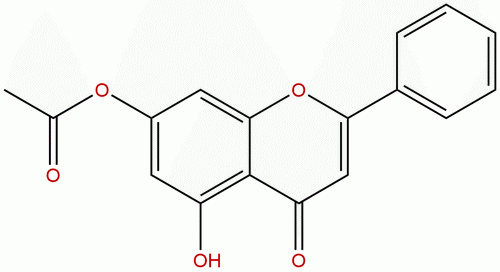
The chemical name of 5-hydroxy-7-acetoxyflavone is 5-hydroxy-7-acetoxy-2-phenyl-4H-chromene-4-one, with a molecular formula of C ₁₇ H ₁₂ O ₅ and a molecular weight of 296.2780 g/mol. Structurally, this compound belongs to the typical flavonoid skeleton, consisting of A ring, B ring, and C ring (chromone ring). Among them, the 5-position of ring A is connected to a hydroxyl group (- OH), the 7-position is connected to an acetoxy group (- OCOCH ∝), and ring B is an unsubstituted benzene ring. This substitution pattern is particularly unique in natural flavonoids, as the hydroxyl groups of most natural flavonoids often exist in free form, while acetylation modifications are relatively rare.
From the analysis of electronic effects, the 5-position hydroxyl group can form intramolecular hydrogen bonds with the 4-position carbonyl group of the C ring. This structural feature not only stabilizes the conformation of the molecule, but also affects its UV absorption spectrum and fluorescence properties. The introduction of the 7-position acetoxy group alters the electron cloud distribution of the A ring, which may affect the binding ability of the molecule to the target protein. In addition, as a hydrolyzable group, acetoxy may be hydrolyzed by esterases into free hydroxyl groups in vivo, thereby exerting different biological activities. This "prodrug" characteristic deserves attention.
Physical and chemical property parameters
According to the predicted results of computational chemistry, the lipid water partition coefficient (LogP) of 5-hydroxy-7-acetoxyflavone is 2.936, indicating that the compound has moderate lipid solubility, which is beneficial for transmembrane transport and improved bioavailability. Its topological polar surface area (TPSA) is 76.740 Å ², which is lower than the recommended upper limit of 140 Å ² for oral drugs, indicating its good oral absorption potential. However, the water solubility of the compound is relatively low, only 0.0326 mg/mL, which to some extent limits its formulation development and in vivo application.
In terms of drug safety, the predicted results show that 5-hydroxy-7-acetoxyflavone has a lower risk of inhibiting hERG potassium channels (hERG inhibition: no), indicating a lower risk of cardiac toxicity. The Ames test result is 0.6, indicating that the compound may have a low risk of genetic toxicity. In addition, the blood-brain barrier permeability is predicted to be "low", which may be a disadvantageous factor for drugs that require central nervous system action, but may reduce central nervous system side effects for antioxidant drugs that mainly act on peripheral tissues.
It is worth noting that the UV absorption characteristics of 5-hydroxy-7-acetoxyflavone are closely related to its structure. Due to the presence of conjugated systems in the molecule, the compound exhibits characteristic absorption peaks in the ultraviolet region (usually 240-400 nm), with band I (300-380 nm) corresponding to the absorption of the B-cyclic cinnamoyl system and band II (240-280 nm) corresponding to the absorption of the A-cyclic benzoyl system. This characteristic can be used for both qualitative and quantitative analysis.
Plant sources and extraction methods
natural source
The distribution of 5-hydroxy-7-acetoxyflavonoids in nature is relatively limited, mainly found in certain specific families and genera of plants. According to existing literature reports, this compound has been found in some plants of the Asteraceae, Fabaceae, and Lamiaceae families. For example, in Asteraceae plants Rat yeast grass(Gnaphalium affine)In the entire plant, researchers obtained the compound through systematic isolation and identification. In addition,marigold(Calendula officinalis)The petals Scutellaria baicalensis(Scutellaria baicalensis)Trace amounts were also detected in the roots and stems of the plant.
It is worth noting that the content of 5-hydroxy-7-acetoxyflavonoids in plants is usually low, and they often coexist with other flavonoids such as apigenin, luteolin, baicalein, etc., which poses certain challenges to their separation and purification. From the perspective of plant chemical taxonomy, the presence of this compound may be related to the adaptive response of plants to specific environmental stresses such as ultraviolet radiation and pathogen infection, as acetylated flavonoids often have stronger stability and antioxidant capacity.
Extraction and Separation Methods
For the extraction of 5-hydroxy-7-acetoxyflavonoids, organic solvent extraction combined with modern chromatographic separation techniques is currently mainly used. The specific process usually includes the following steps:
(1) Raw material pretreatment Crush the dried plant material to an appropriate particle size (usually 20-40 mesh) to increase the solvent contact area. For materials with high lipid content, petroleum ether or n-hexane can be used for degreasing treatment first.
(2) Solvent extraction Based on the polarity characteristics of the target compound, methanol, ethanol, or acetone are often used as extraction solvents. Research has shown that 70% -80% ethanol aqueous solution has a higher extraction efficiency for flavonoids. The extraction method can be cold soaking (room temperature soaking for 24-48 hours), hot reflux (60-80 ℃, 2-4 hours), or ultrasound assisted extraction (30-60 minutes). Ultrasound assisted extraction has been increasingly widely used in recent years due to its high efficiency and time-saving characteristics.
(3) Preliminary purification After vacuum concentration, the extraction solution can be sequentially extracted with petroleum ether, ethyl acetate, and n-butanol to enrich the target compound in the ethyl acetate or n-butanol fraction. In addition, macroporous adsorption resin (such as D101, AB-8 type) column chromatography is also commonly used for the preliminary separation of flavonoids. By using different concentrations of ethanol gradient elution, impurities such as sugars and tannins can be effectively removed.
(4) Fine separation: Silica gel column chromatography, Sephadex LH-20 gel column chromatography, preparative high performance liquid chromatography (Prep HPLC) and other technologies were used for further purification. In silica gel column chromatography, chloroform methanol (10:1 to 5:1) or petroleum ether acetone (3:1 to 1:1) are often used as eluents. Sephadex LH-20 column chromatography utilizes the molecular sieve effect to achieve good separation of flavonoids. Finally, monomer compounds with a purity of over 98% can be obtained through Prep HPLC.
(5) Structural identification The structures of the isolated compounds were confirmed using techniques such as nuclear magnetic resonance spectroscopy (¹ H-NMR, ¹ ³ C-NMR), mass spectrometry (MS), infrared spectroscopy (IR), and ultraviolet spectroscopy (UV). Among them, the intramolecular hydrogen bond formed by the 5-position hydroxyl group and the 4-position carbonyl group exhibits a characteristic signal at δ 12-13 ppm in ¹ H-NMR, which can serve as an important basis for structural identification.
Pharmacological activity research
antioxidant activity
Antioxidant activity is the most prominent pharmacological activity of 5-hydroxy-7-acetoxyflavone. Oxidative stress refers to the imbalance between the production of reactive oxygen species (ROS) and reactive nitrogen species (RNS) in the body and the antioxidant defense system, which is closely related to various pathological processes such as aging, inflammation, cardiovascular disease, neurodegenerative diseases, and tumors. Research has shown that 5-hydroxy-7-acetoxyflavone exhibits significant antioxidant effects in various in vitro and in vivo models.
At the chemical system level, this compound has the ability to scavenge 1,1-diphenyl-2-trinitrophenylhydrazine (DPPH) radicals, 2,2 '- bis (3-ethylbenzothiazoline-6-sulfonic acid) diammonium salt (ABTS ⁺) radicals, hydroxyl radicals (· OH), and superoxide anion radicals (O ₂⁻·). Its half maximal inhibitory concentration (IC ₅₀) values are in the range of 10-50 μ M, which is superior to some classical antioxidants such as vitamin C and butyl hydroxytoluene (BHT). In cell models, 5-hydroxy-7-acetoxyflavone can significantly reduce oxidative damage induced by hydrogen peroxide (H ₂ O ₂) or tert butyl hydroperoxide (t-BHP), decrease intracellular ROS levels, and improve cell survival rate.
It is worth noting that the antioxidant activity of this compound is closely related to the phenolic hydroxyl group in its structure. The 5-hydroxy group, as a hydrogen atom donor, can directly neutralize free radicals, while the 7-acetoxy group, although lacking direct antioxidant activity, may indirectly enhance its bioavailability by affecting the lipid solubility and cell membrane permeability of the molecule. In addition, acetoxy groups may be hydrolyzed into hydroxyl groups by esterases in the body, thereby increasing the antioxidant sites of the molecule.
anti-inflammatory activity
Inflammation is the body's defense response to harmful stimuli, but excessive or sustained inflammation can lead to tissue damage and disease. Research has shown that 5-hydroxy-7-acetoxyflavone can significantly inhibit the release of pro-inflammatory factors such as tumor necrosis factor - α (TNF - α), interleukin-6 (IL-6), and interleukin-1 β (IL-1 β) in a lipopolysaccharide (LPS) - induced macrophage inflammation model, while reducing the production of nitric oxide (NO) and prostaglandin E ₂ (PGE ₂). Its anti-inflammatory mechanism is related to the inhibition of nuclear factor kappa B (NF - κ B) signaling pathway and mitogen activated protein kinase (MAPK) pathway.
Tyrosinase inhibitory activity
Tyrosinase (TYR) is a key rate limiting enzyme in melanin synthesis, and its excessive activation can lead to pigmentation disorders such as melasma, freckles, and age spots. 5-hydroxy-7-acetoxyflavone has a significant inhibitory effect on tyrosinase, with an IC ₅₀ value of about 20-40 μ M, and is more active compared to the classic whitening agent arbutin (IC ₅₀ about 100 μ M). Molecular docking studies have shown that this compound can competitively inhibit the binding of substrate L-tyrosine by chelating with copper ions in the active center of tyrosinase. In addition, the compound can also inhibit the expression of tyrosinase related protein 1 (TRP-1) and TRP-2, thereby inhibiting melanin synthesis through multiple pathways.
Matrix metalloproteinases regulate activity
Matrix metalloproteinases (MMPs) are a class of zinc dependent endopeptidases that participate in the degradation and remodeling of the extracellular matrix. The abnormal expression of MMP1 (interstitial collagenase) and MMP3 (lysin-1) is closely related to skin photoaging, arthritis, tumor invasion and metastasis. Research has shown that 5-hydroxy-7-acetoxyflavone can significantly inhibit the expression and activity of MMP1 and MMP3 in human skin fibroblasts induced by ultraviolet B (UVB), while promoting collagen synthesis. This effect is related to its clearance of ROS and inhibition of the MAPK/AP-1 signaling pathway, indicating that this compound has potential application value in anti-aging of the skin.
Mechanism of action and molecular targets
Activation of NRF2/ARE signaling pathway
Nuclear factor E2 related factor 2 (NRF2, encoded by the NFE2L2 gene) is a core transcription factor in the cellular antioxidant defense system. Under normal physiological conditions, NRF2 binds to Kelch like ECH related protein 1 (KEAP1), remains inactive, and is degraded by ubiquitination. When cells are stimulated by oxidative stress or electrophilic agents, NRF2 dissociates from KEAP1, translocates into the nucleus, forms heterodimers with small Maf proteins, recognizes and binds to antioxidant response elements (ARE), and initiates transcription of downstream antioxidant enzyme genes.
5-hydroxy-7-acetoxyflavone can directly modify the cysteine residues of KEAP1 (such as Cys151, Cys273, Cys288), disrupt the KEAP1-NRF2 interaction, and promote the nuclear translocation and transcriptional activity of NRF2. Research has shown that treatment with this compound can significantly upregulate the expression of NRF2 target genes, including Superoxide dismutase 1 (SOD1)、Superoxide dismutase 2 (SOD2)、Catalase (CAT)、Glutathione peroxidase 1 (GPX1)and Heme oxygenase 1 (HMOX1)Among them, SOD1 and SOD2 catalyze the dismutation of superoxide anions into hydrogen peroxide and oxygen, CAT and GPX1 further decompose hydrogen peroxide into water, and HMOX1 catalyzes the degradation of hemoglobin into biliverdin, carbon monoxide, and iron ions, all of which have antioxidant and cell protective effects.
Direct regulation of antioxidant enzyme system
In addition to indirect regulation through the NRF2 pathway, 5-hydroxy-7-acetoxyflavonoids may also directly interact with antioxidant enzymes. For example, the compound can bind to the active site of SOD1 through hydrogen bonding and hydrophobic interactions, enhancing its enzymatic activity. Similarly, there have been reports of direct activation of CAT and GPX1. This dual regulatory mechanism (direct activation+transcriptional upregulation) enables the compound to rapidly and continuously enhance the antioxidant capacity of cells.
Molecular mechanism of tyrosinase inhibition
Tyrosinase (TYR) is an oxidase containing double copper ions, with two copper ions in its active center coordinating with six histidine residues. The 5-hydroxy-7-acetoxyflavone can form a chelating structure with its 5-hydroxy and 4-carbonyl groups, which can bind to the copper ion in the active center of tyrosinase and competitively inhibit the entry of substrates (L-tyrosine or L-dopa). Molecular docking and dynamic simulation studies have shown that the binding free energy of this compound with TYR is relatively low (about -8.5 kcal/mol), indicating a relatively stable binding. In addition, the compound can regulate the activity of TYR at multiple levels by inhibiting its transcription and promoting its degradation.
The signaling pathway regulated by MMPs
The expression of matrix metalloproteinases (MMP1, MMP3) is regulated by multiple signaling pathways, among which the MAPK/AP-1 pathway is one of the core regulatory mechanisms. Factors such as ultraviolet radiation and oxidative stress can activate c-Jun N-terminal kinase (JNK), extracellular signal regulated kinase (ERK), and p38 MAPK, which in turn phosphorylate and activate transcription factor AP-1 (c-Jun/c-Fos heterodimer). AP-1 binds to the TPA response element (TRE) in the MMP gene promoter region, initiating MMP transcription. 5-hydroxy-7-acetoxyflavone can downregulate the transcriptional activity of AP-1 and ultimately inhibit the expression of MMP1 and MMP3 by inhibiting ROS production and blocking the phosphorylation activation of the MAPK pathway. In addition, the compound can indirectly inhibit MMP activity by activating the NRF2 pathway, upregulating the expression of antioxidant enzymes.
Evaluation of drug properties and pharmacokinetics
Analysis of drug properties parameters
Based on Lipinski's "Rule of Five" for oral drug screening criteria, 5-hydroxy-7-acetoxyflavone exhibits good pharmacological characteristics: molecular weight 296.2780 (<500), LogP 2.936 (<5), hydrogen bond donor number 1 (<5), and hydrogen bond acceptor number 5 (<10). These parameters all meet the basic requirements for oral medication, indicating that the compound has good oral absorption potential.
However, its low water solubility (0.0326 mg/mL) is the main bottleneck restricting drug development. Low water solubility may lead to poor oral bioavailability and difficulties in formulation development. To address this deficiency, the following strategies can be adopted for improvement: (1) preparing in salt form, such as forming salts with alkali metals or organic bases; (2) Using solid dispersion, cyclodextrin inclusion complexes, liposomes or nanoparticles and other formulation technologies to improve solubility and dissolution rate; (3) Design prodrugs, such as phosphorylation or glycosylation of 5-hydroxy groups, and release the original drug through enzymatic interpretation in vivo.
Pharmacokinetic characteristics
At present, the pharmacokinetic research on 5-hydroxy-7-acetoxyflavone is not sufficient, but reasonable speculation can be made based on the metabolic characteristics of its structural analogues (such as baicalein and apigenin). The metabolism of flavonoids in the body mainly includes phase I metabolism (oxidation, reduction, hydrolysis) and phase II metabolism (glucuronidation, sulfation, methylation). The 7-position acetoxy group of 5-hydroxy-7-acetoxyflavone may be hydrolyzed by esterases in the intestine and liver to form a hydroxyl group, producing 5,7-dihydroxyflavone (i.e. chrysin), which further undergoes glucuronic acid or sulfuric acid binding reactions to form water-soluble metabolites that are excreted in urine or bile.
The blood-brain barrier permeability of this compound is predicted to be "low", which is related to its higher polar surface area (76.74 Å ²) and intramolecular hydrogen bonds. For antioxidant drugs that mainly act on peripheral tissues, this feature can reduce central nervous system side effects, but if used for brain diseases such as Alzheimer's disease and Parkinson's disease, structural modifications are needed to improve their brain permeability.
safety evaluation
The preliminary safety evaluation results show that 5-hydroxy-7-acetoxyflavone has a low toxicity risk. HERG inhibition prediction is' no ', indicating a lower risk of cardiac toxicity. The Ames test result was 0.6, indicating that the compound did not exhibit significant mutagenicity in the bacterial recovery mutation experiment. In cytotoxicity experiments, the half maximal toxic concentration (CC ₅₀) of the compound on normal cells (such as human skin fibroblasts and liver cells) is usually greater than 100 μ M, with a wide safety window. However, data on long-term toxicity, reproductive toxicity, and carcinogenicity are still lacking and require further systematic evaluation.
Clinical application prospects and prospects
Skin whitening and anti-aging
Based on the potent inhibitory activity of 5-hydroxy-7-acetoxyflavone on tyrosinase and its regulatory effects on MMP1 and MMP3, this compound has broad application prospects in the fields of cosmetics and dermatology. Its whitening activity is superior to traditional whitening agent arbutin, and it has both antioxidant and anti-inflammatory effects, which can simultaneously improve various skin problems such as pigmentation, skin sagging, and wrinkles. In the future, it can be developed as whitening cream, anti-aging essence or sunscreen repair product. In addition, the protective effect of this compound on UVB induced skin damage makes it a candidate ingredient for photoprotective agents.
Treatment of oxidative stress-related diseases
Oxidative stress plays a crucial role in the occurrence and development of various chronic diseases. 5-hydroxy-7-acetoxyflavone can enhance the overall antioxidant defense ability of the body by activating the NRF2/ARE pathway, upregulating the expression of antioxidant enzymes such as SOD, CAT, GPX1, HMOX1, etc. This mechanism makes it potentially therapeutic in the following disease areas:
- cardiovascular disease It can reduce the oxidation of low density lipoprotein (LDL) and improve atherosclerosis by inhibiting the oxidative damage of vascular endothelial cells.
- Neurodegenerative diseases Although the blood-brain barrier has low permeability, it may be used for the treatment of Alzheimer's disease and Parkinson's disease through structural modification or nano delivery systems.
- Complications of diabetes It can alleviate diabetes nephropathy, retinopathy and neuropathy by inhibiting oxidative stress and inflammatory reaction induced by high glucose.
- liver disease Protect liver cells from oxidative damage and inhibit the progression of liver fibrosis.
Anti inflammatory and immune regulation
The inhibitory effect of this compound on the NF - κ B and MAPK pathways makes it potentially applicable in inflammatory diseases such as arthritis, dermatitis, colitis, and other fields. In addition, its regulatory effect on macrophage polarization (promoting M2 anti-inflammatory macrophage polarization) may contribute to tissue repair and regeneration.
Future research directions
Although 5-hydroxy-7-acetoxyflavone exhibits various pharmacological activities, there is still a considerable distance from clinical application. Future research should focus on the following directions:
- Pharmacokinetic optimization Improve water solubility and oral bioavailability through structural modification or formulation techniques, elucidate its metabolic pathways and metabolite activities in vivo.
- Target validation and mechanism deepening Using gene knockout/knock in animal models, proteomics, and metabolomics techniques, systematically validate the contribution of key targets (NRF2, TYR, MMPs) in pharmacological effects.
- safety evaluation Conduct systematic research on acute and chronic toxicity, reproductive toxicity, carcinogenicity, and drug interactions.
- Clinical translational research On the basis of completing preclinical research, advance clinical trials to evaluate its efficacy and safety in humans.
- Research on Structure Activity Relationship By synthesizing a series of structurally similar compounds, this study explores the effects of 5-hydroxy, 7-acetoxy, and other substituents on the activity, providing a basis for optimizing lead compounds.
Conclusion
5-hydroxy-7-acetoxyflavone, as a structurally unique natural flavonoid derivative, has shown significant application potential in antioxidant, whitening, anti-aging, and anti-inflammatory fields due to its multi-target pharmacological activity, especially by activating the NRF2/ARE pathway to regulate antioxidant enzymes such as SOD1, SOD2, CAT, GPX1, HMOX1, and inhibiting key targets such as TYR, MMP1, MMP3. Its excellent pharmacokinetic parameters (molecular weight, LogP, low hERG inhibition risk, low genotoxicity) have laid a favorable foundation for drug development, but low water solubility and limited pharmacokinetic data remain urgent challenges to be addressed.
The journey from natural products to clinical drugs is a long and challenging one. The research on 5-hydroxy-7-acetoxyflavone is still in its early stages, but its unique chemical structure and clear pharmacological mechanism have made it a highly valuable lead compound for development. With the continuous advancement of modern pharmaceutical chemistry, pharmacology, and formulation technologies, especially the application of structure based drug design, nano delivery systems, and prodrug strategies, we have reason to believe that this natural product has the potential to be transformed into an effective drug for treating oxidative stress-related diseases in the future, contributing to human health. Meanwhile, in-depth research on this compound will also provide important references for the development and utilization of other acetylated flavonoid natural products.