

Storage conditions:Short-term storage at 2~8℃, long-term storage at -20 ~ -80℃
20.2300
3.3700
3.3700
Unknown
1.0000
No
No
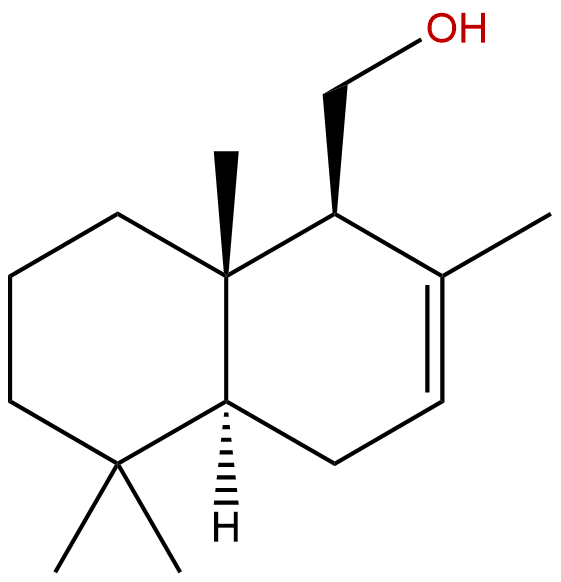
Natural products have long been an important treasure trove for drug discovery and development, with their structural diversity and extensive biological activity providing endless inspiration for treating human diseases. As an important member of the terpenoid family, sesquiterpenes have attracted much attention due to their complex carbon skeletons and significant pharmacological effects. Drimenol (CAS number: 468-68-8) is a typical steroid type (Drimane type) sesquiterpene primary alcohol, characterized by a high allyl alcohol functional group attached to the decalin backbone. Since its isolation and identification from plants such as Valeriana, Drimenol has not only become an important model molecule for organic synthesis chemists to study the total synthesis and derivatization of complex natural products due to its unique chemical structure, but also gradually entered the field of pharmacology researchers due to its various potential biological activities. Although its direct clinical application is not yet mature, as an important natural product lead compound, Drimenol and its derivatives are continuously being studied in the fields of anti-inflammatory, antimicrobial, antiparasitic, and potential anti-tumor effects. This article aims to systematically review the chemical properties, plant sources, pharmacological activities, mechanisms of action, and potential medicinal properties of Drimenol, in order to provide comprehensive scientific references for further research and development of this natural product.
The chemical name of Drimenol is (1S, 4aS, 8aS) -1- [(R) - hydroxymethyl] -1,4-dimethyl-6-methylundehydronaphthalene, with a molecular formula of C15H26O and a molecular weight of 222.37 g/mol. Its core skeleton is drimane, which is a sesquiterpene parent nucleus with a decahydronaphthalene structure and specific methyl substitution. The structural feature of Drimenol is the presence of a hydroxymethyl group (- CH2OH) at the C-1 position, making it a primary alcohol; Meanwhile, there is usually a methylene group (=CH2) present at the C-6 position, which constitutes a typical structural unit of high allyl alcohol. This high allyl alcohol structure is of great significance in chemical reactivity, and is prone to oxidation, esterification, cyclization, and other transformations. It is a precursor for many drimane type sesquiterpenes with stronger biological activity, such as anti fungal drimenin and insect repellent Warburganal.
From the analysis of physical and chemical properties, the calculated value of Drimenol's lipid water partition coefficient (LogP) is about 3.37, indicating that the molecule has moderate lipophilicity, which is beneficial for its penetration of cell membranes, but may also affect its water solubility. Its topological polar surface area (TPSA) is 20.23 Å ², which is relatively small and mainly contributed by a single hydroxyl oxygen atom, further confirming its low molecular polarity. The molecule contains only one hydrogen bond acceptor (hydroxyl oxygen) and a hydroxyl hydrogen that can serve as a hydrogen bond donor connected to it. These basic physicochemical parameters suggest that Drimenol itself may have good membrane permeability, but water solubility and dissolution rate may be important factors to consider in its formulation development. Its specific physical constants such as melting point, boiling point, and optical rotation depend on its stereochemical purity, and usually exist in the form of colorless crystals or oily liquids.
Drimenol is widely present in various higher plants, especially in the Valeriaceae, Piperaceae, and Asteraceae families as the main sources. Among them, plants of the Valeriana genus (such as Valeriana officinalis), as traditional calming herbs, are important species that were isolated early to obtain Drimenol. In addition, certain species in the Canellaceae and Winteraceae families, as well as lichens, have also been found. In plants, Drimenol is usually not present in high concentrations, but rather as a biosynthetic intermediate or coexisting component of other drimane type sesquiterpenes with higher oxidation levels, such as sesquiterpene aldehydes, lactones, etc.
Extracting Drimenol from plant materials typically follows the conventional process of natural product chemistry. Firstly, the dried plant roots, stems, or leaves are crushed and extracted using medium polarity organic solvents. Common solvents include dichloromethane, ethyl acetate, methanol, or mixed solvents of different proportions (such as methanol dichloromethane). Soxhlet extraction or room temperature leaching are commonly used methods. After the crude extract is concentrated under reduced pressure, it needs to be systematically separated and purified. Due to the low polarity of Drimenol, normal phase silica gel column chromatography is commonly used for preliminary separation, using gradient elution systems of petroleum ether ethyl acetate or hexane ethyl acetate. Further purification may require the use of reverse phase silica gel column chromatography (such as C18 packing, methanol water or acetonitrile water as mobile phase), preparative thin-layer chromatography, or high-performance liquid chromatography (HPLC). The separation process is often monitored by thin layer chromatography (TLC), and structural identification and purity confirmation are performed using nuclear magnetic resonance (NMR, especially 1H NMR and 13C NMR), mass spectrometry (MS), and specific rotation determination. Modern technologies such as high-speed countercurrent chromatography (HSCCC) can also be used for their efficient preparation and separation.
Although the direct biological activity research of Drimenol is somewhat limited compared to its oxidative derivatives such as Drimenol, Cinnamolite, etc., existing literature suggests that it has multifaceted pharmacological potential, mainly focused on antimicrobial, anti-inflammatory, and cytotoxic aspects.
1. Antimicrobial activity:
Drimenol exhibits inhibitory activity against various microorganisms. Research has shown that it has a moderate inhibitory effect on certain Gram positive bacteria (such as Staphylococcus aureus) and Gram negative bacteria (such as Escherichia coli). Its antifungal activity is more remarkable, showing growth inhibitory effects on plant pathogenic fungi (such as rice blast fungus Pyricularia oryzae) and human pathogenic fungi (such as Candida albicans). Its mechanism of action may involve disrupting the permeability of fungal cell membranes or interfering with their cell wall synthesis, but the specific target remains to be elucidated. It is worth noting that the structural modifications of Drimenol, especially the oxidation of the C-1 hydroxyl group to an aldehyde group (a precursor to the formation of polyglodial), typically significantly enhance their antimicrobial activity.
2. Anti inflammatory activity:
Inflammation is the common pathological basis of various chronic diseases. Preliminary in vitro studies have shown that Drimenol can inhibit the production of pro-inflammatory mediators (such as nitric oxide NO, prostaglandin E2 PGE2) in cell models, which are mainly released by macrophages (such as RAW 264.7 cells) activated by stimuli such as lipopolysaccharides (LPS). Its inhibitory effect shows a certain concentration dependence, suggesting that Drimenol may exert anti-inflammatory effects by intervening in classic inflammatory signaling pathways such as nuclear factor kappa B (NF - κ B) or mitogen activated protein kinases (MAPKs). However, there is currently a lack of systematic in vivo anti-inflammatory models (such as mouse ear swelling and paw swelling models) supported by data.
3. Cytotoxicity and anti-tumor potential:
Some studies have evaluated the cytotoxicity of Drimenol on different human tumor cell lines. The results show that it has selective growth inhibitory activity on some cancer cells (such as lung cancer A549 cells and breast cancer MCF-7 cells), but its IC50 value is usually in the micromolar level with moderate activity intensity. The mechanism of its cytotoxicity may be related to its induction of cell cycle arrest, promotion of reactive oxygen species (ROS) generation, or triggering of mitochondrial pathway apoptosis. As a lead compound, Drimenol's cytotoxicity provides a starting point for designing more effective anti-tumor derivatives. For example, converting it into alpha, beta unsaturated aldehydes or Michael reaction receptors can significantly enhance its killing power against cancer cells.
4. Other biological activities:
In addition, Drimenol has been reported to have insect repellent activity, which can prevent certain herbivorous insects from feeding, reflecting its ecological role in plant allelopathic defense. There are also sporadic studies mentioning its weak inhibitory activity on certain enzymes, such as acetylcholinesterase, but further verification is needed.
Compared with many naturally active molecules with clear structures, the precise molecular targets and detailed mechanism of action pathways of Drimenol are still in their infancy, which to some extent limits its deep development as a drug lead compound. At present, the understanding of its mechanism of action is mainly based on phenotype observation and preliminary mechanism exploration.
1. Reactivity speculation based on chemical structure:
The high allyl alcohol structure of Drimenol is the chemical basis for its potential biological activity. In biological systems, this structure may undergo transformation through enzymatic or non enzymatic means. For example, its hydroxyl group can be oxidized to the corresponding aldehyde, which is a more electrophilic molecule that can undergo Michael addition or Schiff base reactions with nucleophilic groups (such as thiol and amino groups) in biomolecules such as proteins and DNA, thereby covalently modifying and affecting the function of target proteins. Many drimane type sesquiterpenes with strong antimicrobial and cytotoxic properties, such as Warburganal and Polygonal, use alpha, beta unsaturated aldehydes as active groups. Therefore, Drimenol itself may be a "prodrug" form that functions by converting into more active aldehyde metabolites under specific biological environments or enzyme action.
2. Potential interference to membrane systems:
Given its lipophilicity (LogP~3.37), Drimenol may easily insert and interfere with the lipid bilayer of biofilms, affecting membrane fluidity and integrity. This can partially explain its antimicrobial (especially antifungal) activity, as fungal cell membranes are rich in ergosterol, and its structure may interact with Drimenol's steroid skeleton. The disturbance of membrane structure may lead to ion homeostasis imbalance, membrane potential collapse, and ultimately cell death.
3. Regulation of key signaling pathways:
In terms of anti-inflammatory activity, existing research suggests that Drimenol may act on upstream signaling nodes. For example, it may inhibit LPS induced degradation of I κ B α protein, thereby preventing the translocation of NF - κ B transcription factors to the nucleus and downregulating the expression of inflammatory genes such as inducible nitric oxide synthase (iNOS) and cyclooxygenase-2 (COX-2). The phosphorylation levels of MAPK pathways (such as p38, JNK, ERK) may also be regulated by them. However, these speculations require further proteomics, molecular docking, and target validation experiments (such as surface plasmon resonance SPR, isothermal titration calorimetry ITC) to confirm whether Drimenol directly binds to key kinases or receptors in these pathways.
4. Inducing oxidative stress and cell apoptosis:
The cytotoxicity observed in tumor cells may be related to Drimenol induced increase in intracellular ROS levels. Excessive ROS can disrupt mitochondrial function, leading to a decrease in mitochondrial membrane potential, release of cytochrome c, and activation of the caspase cascade reaction, triggering programmed cell death. In addition, it may affect the balance of Bcl-2 family proteins, upregulate pro apoptotic proteins (such as Bax), and downregulate anti apoptotic proteins (such as Bcl-2).
In summary, the exact molecular targets of Drimenol, such as specific receptors, enzymes, or ion channels, have not been clearly identified, which is a key direction for future research. The use of chemical biology methods, such as designing Drimenol probe molecules with reporting labels, for intracellular target fishing and identification, will greatly promote the elucidation of its mechanism of action.
Based on the provided pharmacological parameters and existing knowledge, a preliminary evaluation of the drug like properties of Drimenol can be conducted.
1. Physical, chemical, absorption, and distribution characteristics:
The molecular weight of 222.37 meets the Lipinski "Five Rules" requirement for oral drugs with a molecular weight of less than 500. The LogP value of 3.37 is within the ideal range (usually considered 1-5 to be optimal), indicating its good potential for passive transmembrane absorption. The smaller TPSA (20.23 Å ²) also supports its good membrane permeability, which is beneficial for its oral bioavailability (if solubility is not a limiting factor) and tissue distribution. However, its water solubility may be poor, which can affect its dissolution rate in gastrointestinal fluids and is a challenge that needs to be overcome in the development of oral drug formulations. Regarding it Blood-brain barrier (BBB)Penetration ability, currently data unknown. Considering its moderate lipid solubility and small polar surface area, there is theoretically a possibility of passive penetration through the BBB, but this requires specific in vivo or in vitro BBB model experiments to confirm. There is currently a lack of research data on key pharmacokinetic parameters such as distribution volume and plasma protein binding rate.
2. Preliminary prediction of metabolism and safety:
The primary alcohol groups in the Drimenol structure are potential metabolic sites that may undergo phase I metabolism (such as oxidation to corresponding aldehydes or carboxylic acids by cytochrome P450 enzymes) and phase II metabolism (such as binding with glucuronic acid to form more water-soluble glycosides, excreted in urine or bile) in vivo. The specific metabolic pathways, main metabolites, and major CYP subtypes involved in metabolism are still unknown, and in vitro liver microsomal or liver cell metabolic stability studies are needed.
Preliminary toxicity predictions indicate that, Drimenol No clear warning of hepatotoxicity, cardiotoxicity, or hERG potassium channel inhibition risk HERG inhibition is an important risk factor for drug-induced QT interval prolongation and apical torsion type ventricular tachycardia, and its negative prediction is a positive signal. However, this is only a preliminary judgment based on computational models or limited data, and a comprehensive safety evaluation still needs to be completed through standardized in vitro and in vivo toxicology experiments, including acute toxicity, subchronic toxicity, genetic toxicity, etc.
3. Current status of pharmacokinetic research:
As of now, there is almost no pharmacokinetic research on the Drimenol system, including its absorption, distribution, metabolism, and excretion processes in different species. There are no publicly available literature reporting core pharmacokinetic parameters such as oral bioavailability, half-life (t1/2), clearance rate (CL), and area under the drug time curve (AUC). This is a key information gap that must be filled in the development process from natural active molecules to candidate drugs. Future research requires the establishment of sensitive and specific biological analysis methods (such as LC-MS/MS) to conduct systematic pharmacokinetic studies in animal models.
Drimenol has not yet been directly applied as a drug in clinical practice, but its value as a natural lead compound cannot be ignored. Its future development may revolve around the following directions:
1. As a lead compound for structural optimization:
This is the most direct and promising development path. Based on the core drimane skeleton of Drimenol, medicinal chemists can perform systematic structural modifications aimed at improving its activity strength, selectivity, and drug properties. The modification strategy includes:
* Functional group modification: Oxidation of C-1 primary alcohols to aldehydes (enhances electrophilicity and antibacterial properties, cytotoxicity), reduction to alkanes (alters lipophilicity), esterification (improves transdermal absorption or serves as a prodrug), or attachment of other active groups.
* Skeleton derivatization: Create a structural diversity library by utilizing the C-6 methylene group or other positions of the skeleton for epoxidation, ring opening, introduction of heteroatoms, etc.
* Synthetic analogues: Design and synthesize novel molecular entities with drimane skeleton but different substitution modes.
Through structure-activity relationship (SAR) studies, advantageous derivatives with significantly better activity than the parent compound were screened in specific disease models, such as drug-resistant bacterial infections, chronic inflammation, and specific cancers.
2. Develop bioactive ingredients for agricultural or daily chemical use:
Given its antifungal and insect repellent activities, Drimenol and its derivatives are expected to be developed as green pesticides or agricultural antimicrobial agents for crop protection. Its natural source characteristics meet consumers' demands for environmental protection and health. In addition, there is also a certain potential for application in cosmetics or personal care products as natural preservatives or additives with anti-inflammatory and soothing effects.
3. Clarify the ecological significance and application of chemical ecology:
Studying the biosynthetic pathways and regulatory mechanisms of Drimenol in plant production, as well as its specific role in plant environment interactions such as defense against herbivores and resistance to pathogen infections, not only has important theoretical significance, but may also provide strategies for improving plant resistance or producing valuable sesquiterpene compounds through biotechnology.
4. Challenges and future research directions:
* Deep exploration of mechanisms: It is necessary to use modern chemical biology and multi omics techniques to clarify its direct target and precise signal regulatory network.
* Systematic pharmacodynamic evaluation: It is necessary to validate its in vivo effectiveness in more relevant animal models of diseases, such as infection models, inflammatory bowel disease models, and tumor transplant models.
* Comprehensive evaluation of drug properties: Conduct systematic ADMET (absorption, distribution, metabolism, excretion, and toxicity) research, particularly in pharmacokinetics and long-term toxicity assessment, to provide data support for candidate drug screening.
* Sustainable sources and synthesis: The low yield of plant extraction requires the development of efficient chemical synthesis or semi synthesis routes, or the use of synthetic biology techniques for heterologous synthesis in microorganisms, to meet the needs of in-depth research and large-scale applications.
Drimenol, as a structurally unique steroid sesquiterpene primary alcohol, is a key node molecule that connects simple terpenoid precursors with numerous highly active drimane type natural products. Despite its moderate biological activity and unclear mechanism of action and pharmacokinetic characteristics, its chemical diversity and clear pharmacological activity make it a highly valuable natural lead compound. Through continuous in-depth research on Drimenol, especially by combining multidisciplinary approaches such as medicinal chemistry, pharmacology, and chemical biology, it is expected not only to reveal its novel biological mechanism of action, but also to develop new anti infective, anti-inflammatory, or anti-tumor candidate drugs with independent intellectual property rights based on this. The road from natural products to clinical applications is long and challenging, but the type of structure represented by Drimenol undoubtedly provides important clues and starting points for future drug discovery. With the continuous advancement of research technology, Drimenol and its derivatives are expected to show broader application prospects in medicine, agriculture, and related fields.
Batch can search by a CAS number,one per line
