Introduction/Overview
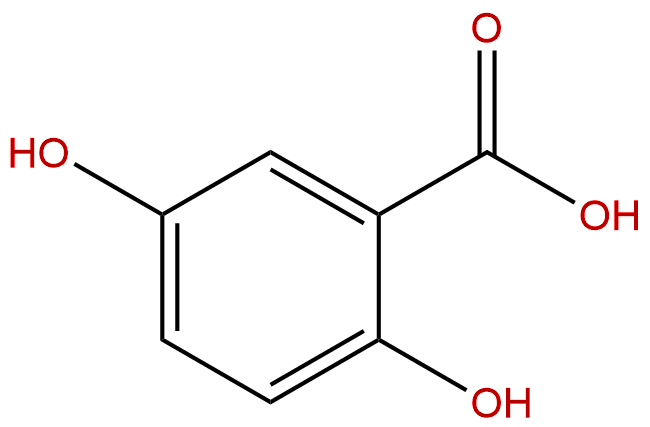
Gentisic acid (GA), also known as 2,5-dihydroxybenzoic acid, is a simple phenolic acid compound widely found in nature. Its CAS number is 490-79-9, which is not only a secondary metabolite of various plants and fungi, but also an important metabolite of salicylic acid and aspirin in the human body. Long term, gentian acid has been renowned in the field of analytical chemistry as an excellent matrix material for matrix assisted laser desorption ionization mass spectrometry (MALDI). However, with the deepening of modern pharmacological research, the multiple biological activities exhibited by gentian acid, especially its potential in anti-inflammatory, antioxidant, and immune regulation, are increasingly attracting the attention of researchers in natural product pharmacology and medicinal chemistry. Given its significant interactions with key targets associated with chronic inflammatory diseases such as arthritis, such as TNF, IL-6, COX-2, NF - κ B, etc., gentian acid is considered a highly valuable lead compound for development. This article aims to systematically review the chemical properties, natural sources, pharmacological activities, molecular mechanisms of action, pharmacological characteristics, and clinical application prospects of gentian acid, in order to provide comprehensive scientific references for the in-depth research and potential drug development of this natural product.
Chemical structure and physicochemical properties
Longdan acid is a derivative of dihydroxybenzoic acid, with a molecular formula of C7H6O4 and a molecular weight of 154.1210. Its structural feature is that there is a hydroxyl substitution at position 2 (ortho) and position 5 (para) of the benzoic acid parent nucleus. This unique substitution mode endows it with both the antioxidant activity of phenolic compounds and the structural framework of benzoic acid.
From the analysis of physical and chemical properties, gentian acid exhibits typical phenolic acid characteristics. The calculated lipid water partition coefficient (LogP) is approximately 1.47, indicating a certain degree of lipophilicity, but overall it still leans towards hydrophilicity. Its topological polar surface area (TPSA) is 77.76 Å ², reflecting the polarity brought by hydroxyl and carboxyl groups in the molecule. Its water solubility data (approximately 3.33 mg/mL) further confirms its moderate solubility in aqueous media. These basic physicochemical parameters (such as low molecular weight, moderate LogP, and reasonable TPSA) preliminarily meet the requirements of the Rule of Five for generic drugs, indicating that it has good oral absorption potential. In terms of crystal morphology, gentian acid is usually white to light yellow needle shaped or sheet-like crystals. The phenolic hydroxyl group in its structure gives it strong acidity and facilitates the formation of intramolecular hydrogen bonds, which is also one of the reasons why it can serve as an efficient MALDI matrix.
Plant sources and extraction methods
Longdan acid is widely distributed in nature and mainly exists in various medicinal and edible plants. Its name "gentian acid" comes from its early discovery in Gentiana plants. In addition, it is also a common phenolic acid component in citrus fruits, olives, tomatoes, wheat germ, and various vegetables. It also exists in fungal metabolites. In the human body, gentian acid is one of the main metabolites of the analgesic and anti-inflammatory drug aspirin (acetylsalicylic acid) after hydrolysis and hydroxylation, revealing its endogenous source and potential physiological significance.
The extraction of gentian acid from plant materials often uses classic natural product extraction and separation techniques. The solvent extraction method is the most commonly used preliminary method. According to the principle of similar solubility, methanol, ethanol, acetone or their mixed solvents with water are often used for extraction or reflux extraction. For example, using a 70% -80% ethanol aqueous solution for ultrasound assisted extraction of plant powder can effectively improve the yield of gentian acid. After the extraction solution is concentrated under reduced pressure, it needs to be further separated and purified by column chromatography technology. Common chromatographic fillers include silica gel, macroporous adsorption resins (such as AB-8, D101), and polyamide. By utilizing the characteristics of phenolic hydroxyl and carboxyl groups in gentian acid molecules, separation from other phenolic acid impurities can be achieved by adjusting the polarity and pH value of the elution solvent (such as using different ratios of chloroform methanol or water ethanol gradient elution). High performance liquid chromatography (HPLC) and preparative thin layer chromatography (PTLC) are key methods for obtaining high-purity gentian acid monomers. In recent years, some green extraction techniques such as supercritical fluid extraction (SFE) and microwave-assisted extraction (MAE) have also been explored and applied to the extraction of gentian acid due to their high efficiency and environmental friendliness.
Pharmacological activity research
A large number of in vitro and in vivo pharmacological studies have shown that gentian acid has various biological activities, with its core revolving around anti-inflammatory, antioxidant, and immune regulation.
1. Anti inflammatory activity: This is the pharmacological effect of gentian acid that has received the most attention. In various animal models of acute and chronic inflammation, gentian acid has shown significant anti-inflammatory effects. For example, in a rat paw swelling model induced by carrageenan or Freund's complete adjuvant, gentian acid can dose dependently reduce tissue edema and inflammatory cell infiltration. Its anti-inflammatory efficacy is considered equivalent or synergistic with classical nonsteroidal anti-inflammatory drugs (NSAIDs).
2. Antioxidant activity: The two phenolic hydroxyl groups in the structure of gentian acid are the chemical basis for its antioxidant capacity. It can effectively scavenge DPPH free radicals, ABTS free radical cations, superoxide anions, and hydroxyl free radicals, demonstrating strong free radical scavenging ability. In addition, it can also inhibit lipid peroxidation and protect cell membranes from oxidative damage. This antioxidant effect is closely related to its anti-inflammatory activity, as oxidative stress is a key driving factor in inflammatory responses.
3. Immune regulatory effect: Research has shown that gentian acid can regulate the function of immune cells. It can inhibit the overactivation of macrophages stimulated by lipopolysaccharide (LPS) and reduce the excessive secretion of pro-inflammatory cytokines. Meanwhile, it may also have a regulatory effect on adaptive immunity, affecting the proliferation and differentiation of T lymphocytes.
4. Other activities: In addition, studies have reported that gentian acid has certain analgesic effects, antibacterial activity, and potential to protect the cardiovascular and nervous systems. For example, in arthritis models, its analgesic effect is related to inhibiting the sensitization of pain receptors by inflammatory mediators.
Mechanism of action and molecular targets
The multiple pharmacological activities of gentian acid stem from its multi-target intervention in inflammation and immune response signaling pathways. Its mechanism of action is highly correlated with key pathological targets of diseases such as arthritis, mainly involving the following aspects:
1. Inhibit the production of pro-inflammatory cytokines: Longdan acid can significantly downregulate the expression and release of various core pro-inflammatory cytokines, including tumor necrosis factor - α (TNF - α), interleukin-1 β (IL-1 β), and interleukin-6 (IL-6). These cytokines are the core mediators that cause cartilage destruction and synovitis in autoimmune diseases such as arthritis. Longdan acid inhibits the inflammatory cascade from the source by intervening in their upstream signaling.
2. Regulating the nuclear factor kappa B (NF - κ B) signaling pathway: NF - κ B is a key transcription factor that regulates the expression of inflammatory genes. In the classical activation pathway, I κ B kinase (IKK) complex phosphorylates and degrades I κ B protein, allowing NF - κ B (such as p50/p65 dimer) to enter the nucleus and initiate transcription. Research has shown that gentian acid can inhibit the phosphorylation and degradation of I κ B α, thereby preventing nuclear translocation of NF - κ B, ultimately leading to reduced transcription of genes such as TNF - α, IL-6, IL-1 β, and cyclooxygenase-2 (COX-2).
3. Inhibit cyclooxygenase-2 (COX-2) and matrix metalloproteinases (MMPs): Longdan acid is an inhibitor of arachidonic acid 15 lipoxygenase (15-LOX) and also has an inhibitory effect on the expression and activity of COX-2. COX-2 is the rate limiting enzyme for the synthesis of prostaglandin inflammatory mediators. In addition, gentian acid can reduce the expression of matrix metalloproteinase-3 (MMP-3) and MMP-13. MMPs are key enzymes that degrade the extracellular matrix of articular cartilage cells, such as collagen and proteoglycans, and their overexpression is the direct cause of joint destruction in arthritis. Longdan acid indirectly downregulates the expression of MMPs and exerts cartilage protective effects by inhibiting pathways such as NF - κ B.
4. Regulating MAPK and other signaling pathways: In addition to the NF - κ B pathway, gentian acid may also affect the phosphorylation levels of members of the mitogen activated protein kinase (MAPK) family, such as p38, JNK, and ERK. These kinases play important roles in inflammation signal transduction and cellular stress response.
In summary, gentian acid forms a multi-target and multi-level anti-inflammatory network by acting on multiple targets closely related to arthritis pathology, such as TNF, IL-1 β, IL-6, COX-2, NF - κ B1, MMP3, MMP13, etc. This may be the molecular basis for its significant anti arthritis potential.
Evaluation of drug properties and pharmacokinetics
Based on the provided pharmacological parameters and existing research, a preliminary evaluation of the potential of gentian acid as a candidate drug is conducted
Pharmacokinetic characteristics: Longdan acid has a small molecular weight (154 Da) and a moderate LogP value (~1.47), indicating its good membrane permeability and potential for oral absorption. Its topological polar surface area (TPSA) is 77.76 Å ², which is within an acceptable range and conducive to cell infiltration. Moderate water solubility, beneficial for formulation development. Preliminary toxicity screening showed no significant inhibitory effect on hERG potassium channels (hERG inhibition: No), reducing the risk of causing QT interval prolongation in the heart. The Ames test result is negative (0.0), indicating that there is no mutagenicity in this testing system and the risk of genetic toxicity is low. It is worth noting that its blood-brain barrier permeability is predicted to be "low", which means that it may mainly act on the peripheral system and may be limited in the treatment of central nervous system related diseases, but also reduces potential central side effects.
The existing pharmacokinetic studies are relatively limited. As a metabolite of aspirin, it is known to be rapidly excreted through the kidneys in the human body. Animal studies have shown that oral administration of gentian acid is rapidly absorbed, but there may be a first pass effect, and its bioavailability needs to be accurately determined. Its distribution, metabolism (such as possible glucuronic acid binding or sulfation reactions), and excretion pathways in the body require more systematic research to clarify.
Advantages and Challenges:
* Advantage: Natural sources with relatively high safety; Multi target mechanism of action may have comprehensive therapeutic effects on complex diseases such as rheumatoid arthritis; Simple structure, easy to chemically synthesize or modify to optimize properties; The preliminary drug parameters are good.
* Challenge: The pharmacological activity intensity may be weaker than some highly effective synthetic drugs; Metabolism in the body may be rapid and have a short half-life, requiring optimization of dosage forms (such as sustained-release formulations) or structural modifications to improve stability and bioavailability; Comprehensive preclinical toxicology and long-term safety data still need to be improved.
Clinical application prospects and prospects
The clinical application prospects of gentian acid mainly focus on the prevention and treatment of chronic inflammatory diseases, especially osteoarthritis and rheumatoid arthritis. Its multi-target anti-inflammatory and cartilage protective properties make it promising for development as a novel disease modifying antirheumatic drug (DMARDs) or as a complementary or alternative therapy to existing NSAIDs to reduce their gastrointestinal and cardiovascular side effects.
Specific development directions may include:
1. Direct drug development: High purity gentian acid is developed into oral tablets, capsules or topical gel/patches for relieving joint pain and inflammation.
2. Combination therapy: Combined use with existing anti-inflammatory drugs such as low-dose methotrexate and COX-2 selective inhibitors may result in synergistic effects, reducing their respective dosages and side effects.
3. Structural modification and optimization: By using it as the parent nucleus for chemical structural modification, the aim is to enhance its activity intensity, metabolic stability, targeting, or bioavailability. For example, by esterification, etherification, or synthesis of prodrugs, their pharmacokinetic properties can be improved.
4. Functional foods and health products: Develop functional foods or dietary supplements rich in gentian acid or its plant extracts using its natural and safe properties for daily health care and primary prevention of inflammation.
5. Exploration of new dosage forms: Using nanotechnology (such as liposomes, nanoparticles) or novel delivery systems to encapsulate gentian acid can achieve targeted delivery to inflamed joints, increase local drug concentration, enhance efficacy, and reduce systemic exposure.
Future research should focus on conducting large-scale, rigorously designed preclinical pharmacological and safety evaluations; Thoroughly elucidate its precise in vivo metabolic profile and pharmacokinetic parameters; To explore its efficacy in different inflammatory disease models (such as inflammatory bowel disease, atherosclerosis); And utilizing computer-aided drug design and high-throughput screening techniques to conduct systematic structure-activity relationship studies, in order to discover better derivatives of gentian acid.
Conclusion
Longdan acid, as a widely sourced and structurally simple natural phenolic acid, has gradually demonstrated its important value in the field of natural product pharmacology from its initial analysis of chemical matrix materials. It intervenes in the NF - κ B signaling pathway to inhibit multiple key inflammatory targets such as TNF - α, IL-6, COX-2, MMPs, etc., forming a powerful anti-inflammatory, antioxidant, and immune regulatory network, especially with significant potential in the prevention and treatment of arthritis. Although its pharmacological parameters are generally optimistic and its initial toxicity is low, there are still challenges to successfully convert it into clinical drugs, such as rapid metabolism in vivo and optimization of activity intensity. Through the deep development and modification of modern medicinal chemistry, pharmacy, and pharmacology methods, gentian acid is highly likely to become a new generation of candidate drugs or lead compounds for the treatment of chronic inflammatory diseases. Continued in-depth research on it not only helps to reveal the complex mechanisms of multi-target effects of natural small molecules, but also provides new ideas and directions for the development of safe and effective anti-inflammatory drugs.