Introduction/Overview
Natural products, as an important source of drug discovery, play an indispensable role in the long history of human struggle against diseases. Flavonoids, as one of the most widely distributed and structurally diverse secondary metabolites in nature, have attracted much attention due to their extensive biological activities. Among numerous flavonoids, C-glycosylated flavonoids have gradually become a research hotspot due to their unique chemical stability and diverse pharmacological effects. Isosporin, as a typical C-glycosylated flavonoid, is attracting the attention of researchers in the fields of natural product chemistry and pharmacology due to its unique chemical structure and potential medicinal value.
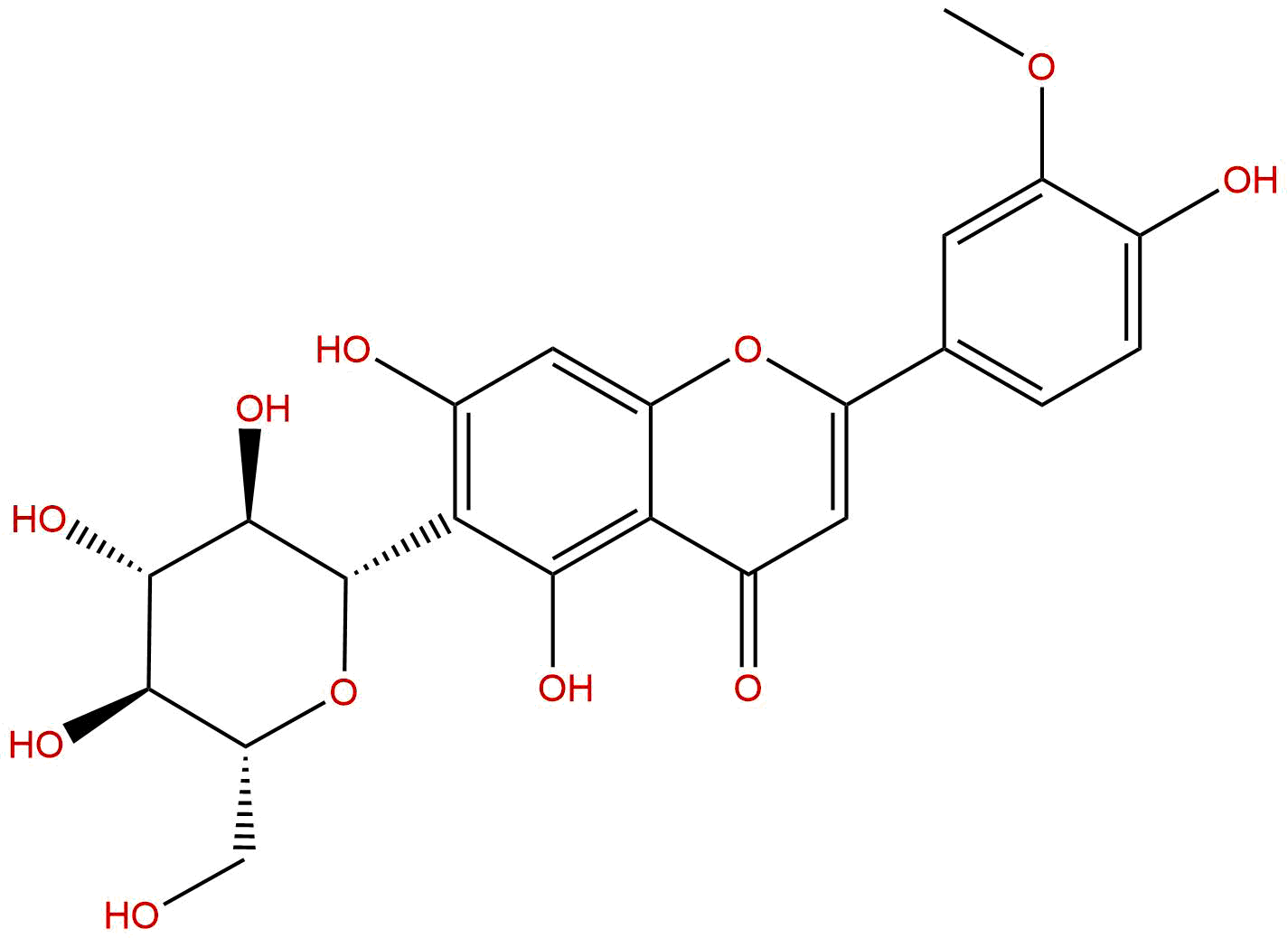
Isoquercetin, also known as 4 ', 5,7-trihydroxy-3' - methoxyflavone-6-C - β - D-glucopyranoside, is a compound derived from the alpine plant Gentiana diffusa(Gentiana algida Natural active ingredients isolated from Pall. White flowered gentian, as a traditional medicinal plant, is commonly used in folk medicine to treat fever, inflammation, and cardiovascular diseases, providing important ethnobotanical clues for the biological activity research of isoquercetin. As a C-glycosyl compound, the structural core of isoquercetin lies in the stable carbon carbon bond at position 6 of its flavonoid mother nucleus, which connects a 1,5-dehydrated D-glucosinol (i.e., glucosyl) moiety. This C-glycosidic bond has higher chemical and enzymatic stability compared to O-glycosidic bond, and is not easily hydrolyzed by acid or degraded by glycosidase in vivo, which may endow it with better in vivo metabolic stability and bioavailability.
From a chemical classification perspective, isoquercetin belongs to the derivatives of monomethoxyflavones and trihydroxyflavones. The methoxy group (- OCH ∝) and multiple phenolic hydroxyl groups (- OH) in its structure are key pharmacophores that exert various biological activities such as antioxidant and anti-inflammatory effects. In recent years, with the deepening of research, isoquercetin has been proven to have significant antioxidant activity, effectively clearing free radicals and protecting cells from oxidative stress damage. More importantly, research based on modern computational biology methods such as network pharmacology and molecular docking has revealed the enormous potential of isoquercetin in cardiovascular protection. Its target network covers multiple key proteins closely related to the occurrence and development of cardiovascular diseases, such as P-selectin (SELP), 3-hydroxy-3-methylglutaryl-CoA reductase (HMGCR), peroxisome proliferator activated receptor gamma (PPARG), angiotensin-converting enzyme (ACE), protein kinase B (AKT1), β 2-adrenergic receptor (ADRB2), potassium voltage-gated channel subfamily H member 2 (KCNH2), endothelial nitric oxide synthase (NOS3), intercellular adhesion molecule 1 (ICAM1), and vascular cell adhesion molecule 1 (VCAM1). These targets are involved in multiple physiological and pathological processes such as lipid metabolism regulation, vasomotor function, inflammatory response, cell apoptosis, and survival, suggesting that isoquercetin may exert its cardiovascular protective effect through multi-target and multi pathway synergistic effects.
This review aims to systematically review the research status of isoquercetin, comprehensively elaborating on its chemical structure and physicochemical properties, plant sources and extraction methods, pharmacological activity, mechanism of action and molecular targets, pharmacological evaluation and pharmacokinetic characteristics. Based on this, it explores its clinical application prospects and future research directions, in order to provide scientific basis for the in-depth development and utilization of this natural product.
Chemical structure and physicochemical properties
The chemical structure of isoquercetin is the basis for all its biological functions. Its core skeleton is Chrysoeriol, which is a 4 ', 5,7-trihydroxy-3' - methoxyflavonoid. Jin Sheng Cao Huang is a common methylated flavonoid, and its 3 'methoxy and 4' hydroxyl groups on the B ring, as well as the 5,7 hydroxyl groups on the A ring, constitute the ortho - or meta dihydroxy structures necessary for the antioxidant activity of typical flavonoids. The unique feature of isoquercetin is that it is connected to a β - D-glucopyranose group through a stable C-C bond at the C-6 position of genistein. This C-glycosylation modification not only increases the water solubility of the molecule, but more importantly, fundamentally changes its conformation and electron distribution, thereby affecting its interaction with biological targets.
From the perspective of chemical taxonomy, isoquercetin can be accurately described as a C-glycosyl compound composed of aureosin substituted at position 6 with 1,5-anhydro-D-glucosinol (i.e. pyranosyl). It possesses the structural characteristics of monomethoxyflavone (B-ring 3 '- OCH ∝), trihydroxyflavone (A-ring 5,7-OH and B-ring 4' - OH), and monosaccharide derivative (C-6 glucose group). In terms of chemical properties, it is a conjugated acid of isoquercetin 7-oxolate, which means that under alkaline conditions, its 7-position phenolic hydroxyl group can undergo ionization to form the corresponding anion.
In terms of physicochemical properties, the key parameters of isoquercetin provide important references for its pharmacological evaluation. Its molecular weight is 462.4070 g/mol, which falls within the typical molecular weight range of flavonoid glycosides. The lipid water partition coefficient (LogP) is 0.0584, which is a value very close to 0, indicating that the compound has excellent hydrophilic lipophilic balance, neither causing poor water solubility due to excessive lipophilicity nor making it difficult to penetrate biological membranes due to excessive hydrophilicity. Its polar surface area (TPSA) is as high as 190.2800 Å ², mainly attributed to the numerous oxygen atoms on the hydroxyl and sugar groups in its molecules. A higher TPSA usually means poorer passive transmembrane diffusion ability, especially difficulty in penetrating the blood-brain barrier. In fact, the predicted results show that the blood-brain barrier permeability of isoquercetin is "low", indicating that its pharmacological effects may be mainly concentrated in peripheral tissues, while the central nervous system effects may be weaker. The predicted value of water solubility is 0.9514 mg/mL, indicating that it has a certain degree of solubility in water, which is beneficial for the development and in vivo absorption of oral preparations. In addition, the hERG inhibition prediction is "no", and the Ames test prediction value is 0.6 (usually considered negative if less than 0.5 and suspicious positive if 0.5-0.8). These preliminary toxicity prediction results suggest that isoquercetin may have a low risk of arrhythmia and genetic toxicity, providing positive early signals for its safety evaluation.
Plant sources and extraction methods
Isoquercetin was originally derived from white gentian(Gentiana algida Pall. was isolated and identified, but subsequent research found that it is not unique to this plant, but widely exists in various plants, especially in the Gentiana genus(Gentiana)Yuanzhi belongs to(Polygala)It is also distributed in some grasses. For example, in traditional Chinese medicine, Yuanzhi(Polygala tenuifolia)The presence of isoquercetin has also been detected in certain herbs used to treat cardiovascular diseases. This wide distribution provides multiple possibilities for its resource acquisition.
White gentian, as one of the main sources of isoquercetin, mainly grows in high-altitude and cold climate regions such as western China, Central Asia, and Siberia. This plant can be used as medicine in its entirety, but the aboveground parts (stems, leaves, flowers) are usually considered the main sites of active ingredient enrichment. Due to limited wild resources and slow growth, relying solely on natural collection is difficult to meet the needs of large-scale research and development. Therefore, exploring artificial cultivation techniques, cell culture, or utilizing other plant resources rich in isoquercetin has become a key strategy to ensure the supply of raw materials.
The method of extracting isoquercetin usually follows the classic process of natural product chemistry and is optimized based on its structural characteristics. Due to the presence of multiple phenolic hydroxyl and sugar groups in the molecule of isoquercetin, it has a certain polarity and water solubility, so polar solvents are often used for extraction. Traditional extraction methods include:
1. Solvent extraction method The most commonly used method is to heat reflux or cold soak the dried plant powder using methanol, ethanol, or a mixture of methanol water and ethanol water solvents. High concentrations of alcohols (such as 70% -95% ethanol) can effectively penetrate plant cell walls and dissolve moderately polar flavonoid glycosides, including isoquercetin. The crude extract is obtained by filtering and concentrating the extract under reduced pressure.
2. Ultrasound assisted extraction The cavitation effect of ultrasound can accelerate the penetration of solvents into plant tissues, destroy cell wall structures, thereby improving extraction efficiency and shortening extraction time. This method has mild conditions and is suitable for thermally unstable components.
3. Modern extraction techniques In recent years, some green and efficient extraction techniques have also been applied to the extraction of isoquercetin, such as microwave-assisted extraction, enzyme assisted extraction, and supercritical fluid extraction. These methods demonstrate advantages in improving yield, reducing the use of organic solvents, and protecting the environment.
The crude extract obtained is complex in composition and requires further separation and purification to obtain high-purity isoquercetin. Common separation and purification techniques include:
1. Liquid-liquid extraction By using different solvents (such as petroleum ether, ethyl acetate, n-butanol, etc.) to extract the crude extract, isoquercetin can be enriched in the moderately polar ethyl acetate or n-butanol fractions.
2. Column chromatography method This is the most essential means of separation. Commonly used stationary phases include silica gel, polyamide, dextran gel (Sephadex LH-20) and inverted C18 silica gel. By selecting an appropriate elution system (such as chloroform methanol water, ethyl acetate methanol water gradient elution, etc.), isoquercetin can be separated from other flavonoid glycosides, phenolic acids, and other impurities. Polyamide column chromatography has a special adsorption effect on flavonoids and is a commonly used method for separating flavonoid glycosides.
3. High performance liquid chromatography (HPLC)For samples that require high purity (such as>98%), preparative HPLC is the final purification method. Efficient separation and purification of isoquercetin can be achieved using a C18 reverse phase column with methanol water or acetonitrile water system as the mobile phase. Its structure was ultimately confirmed by techniques such as nuclear magnetic resonance spectroscopy (NMR) and mass spectrometry (MS).
Pharmacological activity research
The pharmacological activity research of isoquercetin is still in the early exploration stage, but existing research results have shown its potential application value in multiple disease fields, especially cardiovascular diseases and oxidative stress-related diseases.
1. Antioxidant activity
This is the most widely reported biological activity of isoquercetin. The multiple phenolic hydroxyl groups in its molecular structure, especially the ortho dihydroxy groups (3 '- OCH ∝ and 4' - OH) on the B ring and the 5,7-dihydroxy group on the A ring, are excellent hydrogen atoms or electron donors that can effectively neutralize and scavenge various free radicals, such as 1,1-diphenyl-2-trinitrophenylhydrazine (DPPH) free radical, 2,2 '- diazo-bis-3-ethylbenzothiazoline-6-sulfonic acid (ABTS) free radical cation, hydroxyl free radical (· OH), and superoxide anion free radical (O ₂⁻ ·). Research has shown that the antioxidant capacity of isoquercetin is positively correlated with its concentration and exhibits significant clearance activity in an in vitro chemical model. In addition, in cell models, isoquercetin can alleviate cellular oxidative damage induced by hydrogen peroxide (H ₂ O ₂) or other oxidants, manifested by reducing intracellular reactive oxygen species (ROS) levels, inhibiting the production of lipid peroxidation product malondialdehyde (MDA), and enhancing the activity of endogenous antioxidant enzymes such as superoxide dismutase (SOD), glutathione peroxidase (GSH Px), and catalase (CAT) in cells. This direct antioxidant and indirect antioxidant enzyme regulatory ability is an important foundation for its other pharmacological effects, such as cardiovascular protection.
2. Cardiovascular protective effect
Based on its strong antioxidant activity and multi-target properties predicted by network pharmacology, the cardiovascular protective effect of isoquercetin has become the focus of current research. Its potential protection mechanisms may involve the following aspects:
* Anti atherosclerosis Oxidized low density lipoprotein (ox LDL) is a key promoter of atherosclerosis. Isogenin may play an anti atherosclerotic role by inhibiting the formation of ox LDL, or reducing the injury of endothelial cells and the formation of foam cells induced by ox LDL. The target prediction involves ICAM1 and VCAM1, two adhesion molecules that play a key role in the adhesion and migration of monocytes to endothelial cells. Isogenin may inhibit the infiltration of inflammatory cells by down regulating the expression of these adhesion molecules, thus delaying the formation of atherosclerotic plaque.
* Regulate blood lipids The target HMGCR is the rate limiting enzyme for cholesterol synthesis in the body and also the target of statin lipid-lowering drugs. Whether isoquercetin can inhibit HMGCR activity like statins, thereby reducing endogenous cholesterol synthesis, is a direction worthy of further exploration. Meanwhile, PPARG, as a key nuclear receptor regulating lipid metabolism and insulin sensitivity, is also a potential target of isoquercetin, suggesting that it may improve lipid metabolism disorders by activating PPARG.
* Protect endothelial function of blood vessels Endothelial dysfunction is an early event in cardiovascular disease. The NO produced by NOS3 (eNOS) is a key factor in maintaining vasodilation, inhibiting platelet aggregation, and leukocyte adhesion. Isoquercetin may improve endothelial function by activating the AKT1 signaling pathway, phosphorylating and activating eNOS, promoting NO production. In addition, its potential inhibitory effect on ACE suggests that it may have a blood pressure lowering effect similar to angiotensin-converting enzyme inhibitors (ACEIs), by inhibiting the production of angiotensin II to dilate blood vessels and lower blood pressure.
* Anti myocardial ischemia-reperfusion injury When blood flow is restored after myocardial ischemia, it can cause severe oxidative stress and inflammatory reactions, leading to further damage to myocardial cells. The antioxidant and anti-inflammatory properties of isoquercetin make it a potential candidate drug for alleviating myocardial ischemia-reperfusion injury. It may protect the myocardium by clearing ROS, inhibiting inflammatory signaling pathways such as NF - κ B, and reducing cardiomyocyte apoptosis.
3. Other potential activities
In addition to the aforementioned activities, isoquercetin may also have anti-inflammatory, anti-tumor, and hepatoprotective effects. Its anti-inflammatory activity may be related to its inhibition of inflammatory mediators (such as TNF - α, IL-6, IL-1 β) and the expression of inflammatory enzymes (such as COX-2, iNOS). In terms of anti-tumor effects, some C-glycosylated flavonoids have been reported to have inhibitory effects on tumor cell proliferation, induce apoptosis, and suppress angiogenesis. Further research is needed to determine whether isoquercetin has similar activities.
Mechanism of action and molecular targets
The pharmacological effects of isoquercetin are not mediated by a single target or pathway, but exhibit typical multi-target and multi pathway synergistic effects. Modern network pharmacology and molecular docking techniques provide powerful tools for revealing their complex mechanisms of action.
Based on the provided target information, we can summarize the cardiovascular protective mechanism of isoquercetin into the following core networks:
1. Lipid metabolism regulatory network
* Target: HMGCR HMGCR is the rate limiting enzyme of the mevalonate pathway, directly controlling the synthesis of cholesterol in the body. Isoquercetin may competitively inhibit the activity of HMGCR by binding to it, thereby reducing endogenous cholesterol production and exerting a lipid-lowering effect. This is one of the core mechanisms of its anti atherosclerosis.
* Target: PPARG PPARG is a key regulatory factor for adipocyte differentiation and lipid storage. Activation of PPARG can improve insulin sensitivity, promote the uptake and storage of fatty acids, and regulate the expression of various genes related to lipid metabolism. Isoquercetin may act as an agonist of PPARG, improving blood lipid profile, particularly reducing levels of free fatty acids and triglycerides.
2. Vascular function regulation network
* Target: ACE ACE is a key enzyme in the renin-angiotensin system (RAAS), catalyzing the conversion of angiotensin I into the potent vasoconstrictor angiotensin II. Inhibiting ACE activity can lower angiotensin II levels, thereby relaxing blood vessels, lowering blood pressure, and reducing its remodeling effects on the heart and blood vessels. The inhibitory effect of isoquercetin on ACE is its potential antihypertensive mechanism.
* Target: NOS3 (eNOS)ENOS catalyzes the production of NO from L-arginine, which is a key signaling molecule for maintaining vascular health. Isoquercetin may activate upstream signaling molecules such as AKT1 to phosphorylate the Ser1177 site of eNOS, thereby activating eNOS and increasing NO production. The increase of NO can dilate blood vessels, inhibit platelet aggregation, and suppress leukocyte adhesion, which is crucial for protecting endothelial function.
* Target: ADRB2β 2-adrenergic receptors are mainly distributed in vascular smooth muscle and bronchial smooth muscle, and can cause vasodilation when excited. The interaction between isoquercetin and ADRB2 may be involved in the regulation of its vasodilation effect.
3. Inflammation and immune regulatory network
* Target: SELP (P-selectin)P-selectin is mainly stored in platelet alpha granules and Weibel Palade bodies of endothelial cells, and rapidly expressed on the cell surface under inflammatory stimulation, mediating the rolling and adhesion of white blood cells on the vascular endothelium. Inhibiting SELP can block the initial steps of the inflammatory cascade.
* Target: ICAM1&VCAM1 These two adhesion molecules express on endothelial cells, bind to integrin on the surface of leukocytes, and mediate the firm adhesion and trans endothelial migration of leukocytes, which is a key step in the formation of atherosclerotic plaque. Isoquercetin may inhibit the activity of transcription factors such as NF - κ B, downregulate the expression of ICAM1 and VCAM1, and thus suppress the infiltration of inflammatory cells into the vascular wall.
4. Cell survival and apoptosis regulatory network
* Target: AKT1 AKT1 is a core member of the PI3K/AKT signaling pathway, regulating cell growth, proliferation, survival, and metabolism. Activation of AKT1 can phosphorylate and inhibit various pro apoptotic proteins (such as Bad and Caspase-9), while activating pro survival proteins such as eNOS and mTOR. Isoquercetin may protect cardiomyocytes and endothelial cells from oxidative stress and ischemia-reperfusion induced apoptosis by activating the AKT1 signaling pathway.
5. Safety related targets
* Target: KCNH2 (hERG)The hERG potassium channel is responsible for repolarization of action potentials in myocardial cells. Inhibition of hERG channels can lead to QT interval prolongation and increase the risk of developing apical torsion type ventricular tachycardia. The predicted results show that isoquercetin has no inhibitory effect on hERG, which is a positive pharmacological signal indicating a low risk of cardiac toxicity.
In summary, isoquercetin forms a synergistic network regulatory mechanism by simultaneously targeting multiple key links such as lipid metabolism, vasoconstriction, inflammatory response, and cell survival, thereby exerting its comprehensive cardiovascular protective effect. This multi-target mode of action is its unique advantage over single target chemical drugs, and it also conforms to the characteristics of multi-component and multi-target action in traditional Chinese medicine.
Evaluation of drug properties and pharmacokinetics
The evaluation of drug properties is a crucial step in transitioning natural products from laboratory research to clinical applications. Medicinal properties not only include the pharmacological activity of compounds, but also encompass their absorption, distribution, metabolism, excretion (ADME) characteristics and safety.
Based on the provided pharmacological parameters, we can conduct a preliminary evaluation of isoquercetin:
* Physicochemical properties The molecular weight is 462.4 Da, slightly higher than the limit of molecular weight<500 in the Lipinski Five Rules, but still within an acceptable range. The LogP is 0.0584, indicating a good balance of hydrophilicity and lipophilicity, which is beneficial for oral absorption and in vivo distribution. The TPSA is as high as 190.3 Å ², far above the threshold of 140 Å ², which usually indicates poor membrane permeability, especially difficulty in penetrating the blood-brain barrier, consistent with the predicted 'low blood-brain barrier permeability'. High TPSA also means that its oral absorption may mainly rely on active transport or paracellular pathways rather than passive diffusion.
* Water solubility The predicted water solubility is 0.9514 mg/mL, which belongs to moderate solubility. For oral administration, good water solubility is a prerequisite for ensuring the dissolution and absorption of drugs in the gastrointestinal tract. This solubility level suggests that it may have acceptable oral bioavailability, but it still needs to be validated through in vivo experiments.
* safety HERG inhibition is predicted as' no ', which is a very favorable safety indicator that greatly reduces its risk of causing cardiac toxicity. The predicted value of Ames test is 0.6, which is in the suspicious positive range, indicating a slight genetic toxicity risk. This requires special attention in subsequent toxicology studies, confirmed through more comprehensive in vitro and in vivo genetic toxicity tests (such as chromosome aberration tests, micronucleus tests).
There are currently few reports on the in vivo ADME research of isoquercetin regarding pharmacokinetics. However, based on its structural characteristics and research on similar C-glycosylated flavonoids (such as isovitexin and isocoumarin), some reasonable inferences can be made:
* absorb The stability of C-glycosidic bonds makes isoquercetin less susceptible to acid hydrolysis or degradation by glycosidase in the gastrointestinal tract, and therefore may be absorbed in its intact glycosidic form. However, its high polarity and high TPSA limit its passive diffusion through small intestinal epithelial cells. Its absorption may depend on the mediation of transporters such as glucose transporters (such as SGLT1) or organic anion transporters (OATP) on intestinal epithelial cells. Therefore, its oral absorption may be incomplete and subject to individual differences.
* distribution After absorption into the bloodstream, isoquercetin mainly binds to plasma proteins, especially albumin. Due to its high polarity, it is not easy to enter cells and is mainly distributed in the extracellular fluid. Low blood-brain barrier permeability limits its distribution in the central nervous system.
* Metabolism The metabolism of isoquercetin may mainly occur in the liver and intestines. The metabolic pathways include: 1) Phase II metabolism: Its phenolic hydroxyl group is a good substrate for glucuronosyltransferase (UGT) and sulfotransferase (SULT), which can undergo glucuronidation and sulfation binding reactions, generating more water-soluble metabolites that are easier to excrete from urine and bile. 2) Phase I metabolism: Its methoxy group may be demethylated by cytochrome P450 enzyme (CYP450) to generate corresponding hydroxylation products. The C-glycosidic bond itself is very stable and not easily broken by metabolism.
* excretion Isoquercetin and its II bound metabolites are mainly excreted into the intestine through bile, and some can be hydrolyzed by gut microbiota before being reabsorbed (enterohepatic circulation), thereby prolonging their retention time in the body. The other part is excreted from the urine in its original form or metabolite form through the kidneys.
Overall, isoquercetin has a certain pharmacological basis, especially its good water solubility, lipophilicity balance, and low hERG inhibition risk. However, the low membrane permeability and potential genetic toxicity risks caused by its high polarity are the main obstacles that need to be overcome in its development process. Future research should focus on how to improve its oral bioavailability (such as using new technologies such as nano formulations and phospholipid complexes), and conduct systematic and comprehensive pharmacokinetic and toxicological evaluations.
Clinical application prospects and prospects
Based on the existing research foundation, isoquercetin has shown promising clinical application prospects in the field of cardiovascular disease prevention and treatment. Its multi target and multi pathway action mode may have better comprehensive efficacy and lower side effects than single target drugs when dealing with complex cardiovascular diseases (such as atherosclerosis, hypertension, coronary heart disease, heart failure).
Potential application directions:
1. As an adjuvant therapy for cardiovascular protection agents Isoquercetin can be used as an adjuvant therapy for standard treatment regimens such as statins, ACEI/ARBs, and antiplatelet drugs. Through its multiple effects of antioxidant, anti-inflammatory, improvement of endothelial function, and regulation of blood lipids, it may further enhance therapeutic efficacy, delay disease progression, and reduce the dosage of standard drugs, thereby reducing their side effects.
2. Functional foods or dietary supplements: Since it comes from edible plants (e.g. gentian plants are used as herbal tea in some regions), genistein has the potential to be developed into functional food or dietary supplement for the primary prevention of cardiovascular disease, that is, early intervention for high-risk groups (such as hyperlipidemia, hypertension, diabetes patients) to reduce their risk of disease.
3. lead optimization Isoquercetin itself can serve as a lead compound, and through structural modifications (such as prodrug modification of its phenolic hydroxyl group to improve bioavailability, or modification of its sugar moiety to improve pharmacokinetic properties), new cardiovascular drugs with better drug properties can be developed.
Challenges and future research directions:
Despite its broad prospects, the development of isoquercetin still faces many challenges, and future research should focus on the following aspects:
1. In depth pharmacological and mechanistic research Current research mostly focuses on in vitro and network prediction. In the future, a large number of in vivo animal model studies need to be carried out to verify its exact efficacy in classic animal models such as atherosclerosis, hypertension, myocardial ischemia reperfusion injury, etc. Meanwhile, by utilizing techniques such as gene knockout and RNA interference, the authenticity of its key targets (such as HMGCR, PPARG, ACE, eNOS) was confirmed at the cellular and animal levels.
2. Pharmacokinetic study of the system A comprehensive in vivo ADME study must be conducted, including oral bioavailability, tissue distribution, metabolic pathways, and excretion kinetics. Especially, it is necessary to clarify its absorption mechanism (whether it is mediated by transporters), the degree of first pass effect, and the activity of the main metabolites. This is the key to evaluating whether it can become an oral medication.
3. Comprehensive toxicological evaluation In addition to Ames testing, systematic toxicological studies are also needed to assess its safety, particularly to clarify its suspected genetic toxicity, including acute toxicity, long-term toxicity, reproductive toxicity, and cardiac toxicity (such as hERG channel current detection).
4. Pharmaceutical research To address the bottleneck of low oral bioavailability, it is necessary to develop new drug delivery systems, such as liposomes, nanoparticles, phospholipid complexes, self microemulsifying drug delivery systems, etc., to improve their solubility and membrane permeability, thereby enhancing oral absorption.
5. Research on Resource Sustainability Establish artificial cultivation techniques for Gentiana diffusa or utilize biotechnology such as hairy root culture and cell suspension culture to produce isoquercetin, in order to ensure a stable supply of raw materials. Meanwhile, explore the possibility of extracting isoquercetin from other more readily available plant resources.
Conclusion
As a C-glycosyl flavone derived from traditional medicinal plants, genistein occupies a place in the field of natural product drug research and development due to its unique chemical structure, significant antioxidant activity and the potential of multi target cardiovascular protection predicted based on network pharmacology. Its good initial pharmacological parameters, especially the low risk of hERG inhibition, provide a positive signal for its safety. However, there is still a long way to go from laboratory discoveries to clinical applications. The current research is still in its early stages and lacks systematic in vivo pharmacological, pharmacokinetic, and toxicological data. Future research must face key challenges such as low oral bioavailability and potential genetic toxicity, and gradually reveal its medicinal value through in-depth mechanism research, advanced formulation technology, and comprehensive safety evaluation. We have reason to believe that with the continuous deepening of research, isoquercetin has the potential to transform from a natural chemical "star molecule" into a potential new drug or functional ingredient that safeguards human cardiovascular health, providing new ideas and choices for the prevention and treatment of cardiovascular diseases.