

Storage conditions:Short-term storage at 2~8℃, long-term storage at -20 ~ -80℃
20.2300
4.9054
4.9051
.0074
6.6678
7.5086
High
89.2651
3.4524
Yes
Yes
No
No
No
No
0.0
No
Yes
Yes
Yes
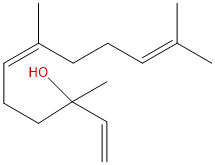
Trans Nerolinol (CAS number: 40716-66-3) is a naturally occurring sesquiterpene alcohol compound widely distributed in various aromatic plants, especially orange blossom, lemongrass, and other spice plants. As an important natural product, trans orange blossom tertiary alcohol has attracted widespread attention in the field of pharmacology research in recent years due to its unique chemical structure and diverse biological activities. It has shown significant potential in anti-tumor, anti anxiety, and neuroprotection, especially in enhancing the anti-cancer effect of chemotherapy drugs such as Doxorubicin (DOX) and regulating central nervous system function, demonstrating good application prospects.
This article aims to systematically review the chemical structure and physicochemical properties, plant sources and extraction methods, pharmacological activity and mechanism of action, pharmacological evaluation and pharmacokinetic characteristics of trans orange blossom tertiary alcohol. Combined with the latest research progress, it explores the potential for clinical application and future development directions, providing theoretical basis and reference for scientific research and drug development in related fields.
Trans orange blossom tertiary alcohol belongs to sesquiterpene alcohol compounds, with a molecular formula of C15H26O and a molecular weight of 222.3720. Its structural feature is a linear sesquiterpene skeleton containing three pairs of double bonds, with a tertiary alcohol hydroxyl group at the end. Its chemical name is 3,7,11-trimethyl-1,6,10-dodecen-3-ol. Its trans configuration endows the molecule with high spatial stability and specific stereochemical properties.
In terms of physicochemical properties, trans orange blossom tertiary alcohol exhibits high lipid solubility, with a LogP value of approximately 4.9054, indicating its good lipid affinity, which is beneficial for penetrating cell membranes and the blood-brain barrier (BBB). Its polar surface area (TPSA) is 20.2300, and its lower polarity facilitates its distribution and penetration in the body. Poor water solubility (0.0074 mg/mL) suggests limited solubility in aqueous media, which may affect oral bioavailability. Toxicological evaluation shows that trans orange blossom tertiary alcohol has no significant hERG channel inhibitory effect, and the Ames mutagenicity test is negative, indicating its high safety.
Trans orange blossom tertiary alcohol is widely present in the essential oils of various aromatic plants, especially lemongrass (Cymbopogon citratus), orange blossom (Citrus aurantium), lemongrass (Cymbopogon nardus), and certain pine plants. Its content varies depending on the plant species, growth environment, and extraction process.
The traditional extraction method mainly uses distillation (such as steam distillation) to separate essential oils from fresh leaves or flowers of plants, and then identifies and quantifies the content of trans orange blossom tertiary alcohol through gas chromatography-mass spectrometry (GC-MS) technology. In recent years, supercritical CO2 extraction technology has gradually become an advanced method for extracting trans orange blossom tertiary alcohol due to its advantages of low solvent residue and high extraction efficiency. In addition, solvent extraction and molecular distillation techniques have also been applied in the purification process of trans orange blossom tertiary alcohol to improve its purity and yield.
Numerous in vitro and in vivo studies have shown that trans orange blossom tertiary alcohol exhibits significant anti-tumor activity. Especially in colon cancer and breast cancer cell lines, trans nerolidol can enhance the anti proliferative effect of the chemotherapy drug doxorubicin (DOX). Mechanistically, trans orange blossom tertiary alcohol promotes the accumulation of DOX in cancer cells, overcomes the drug efflux mechanism of tumor cells, and thus enhances the cytotoxicity of the drug. In addition, in vivo experiments have shown that trans orange blossom tertiary alcohol can activate the apoptotic pathway of tumor cells, induce programmed cell death, and reduce tumor burden.
Trans orange blossom tertiary alcohol exhibits good anti anxiety activity in the central nervous system. Its targets include various neurotransmitter systems, including monoamine oxidase A (MAOA), serotonin transporter (SLC6A4), serotonin receptors (HTR2A, HTR1A), dopamine receptor D2 (DRD2), and gamma aminobutyric acid receptor subunits (GABRA1, GABRB2, GABRG2). In addition, trans orange blossom tertiary alcohol can regulate the expression of CREB1 and brain-derived neurotrophic factor (BDNF), promote neural plasticity and neuronal survival, further supporting its anti anxiety and neuroprotective effects.
In addition to anti-tumor and anti anxiety effects, trans orange blossom tertiary alcohol also exhibits multiple pharmacological effects such as anti-inflammatory, antioxidant, and antibacterial effects. Its anti-inflammatory effect is mainly achieved by inhibiting the release of pro-inflammatory factors and the activity of the NF - κ B signaling pathway, while its antioxidant activity is manifested by clearing free radicals and enhancing the function of the cellular antioxidant enzyme system.
The pharmacological effects of trans orange blossom tertiary alcohol involve multiple signaling pathways and molecular targets. The mechanism by which it enhances the anti-tumor effect of DOX includes:
In the nervous system, trans orange blossom tertiary alcohol exerts anti anxiety effects through multi-target synergistic effects:
In addition, the regulation of inflammation related signaling pathways (such as NF - κ B) and oxidative stress response by trans orange blossom tertiary alcohol provides a molecular basis for its multiple pharmacological effects.
Trans orange blossom tertiary alcohol has good medicinal properties. Its molecular weight is 222.3720, which meets the requirements of Lipinski rule. A high LogP value (4.9054) indicates strong lipid solubility, which facilitates cell membrane penetration and blood-brain barrier penetration, supporting central nervous system activity. A low TPSA value (20.2300) further facilitates its oral absorption and brain distribution.
Low water solubility (0.0074 mg/mL) may limit its oral bioavailability, and formulation optimization (such as nanocarriers, liposomes, etc.) is needed to improve solubility and stability. Toxicological evaluation shows that trans orange blossom tertiary alcohol has no hERG channel inhibitory effect and reduces the risk of cardiac toxicity. The Ames mutagenicity test was negative, indicating a low risk of genetic toxicity.
At present, the pharmacokinetic studies of trans orange blossom tertiary alcohol are not sufficient. Preliminary data suggests that its metabolism in the body is mainly carried out through the liver enzyme system, and the metabolites need further identification. The parameters such as half-life, distribution volume, and clearance rate in the body need to be further studied to guide clinical dose design and safety assessment.
As a natural product, trans orange blossom tertiary alcohol exhibits broad clinical application potential due to its multi-target and multi pathway pharmacological effects. Its application in anti-tumor adjuvant therapy is particularly prominent, which can enhance the efficacy of traditional chemotherapy drugs, reduce drug resistance, alleviate side effects, and has good clinical translational value.
In the field of neurological and psychiatric disorders, the anti anxiety and neuroprotective effects of trans orange blossom tertiary alcohol provide new ideas for the development of novel central nervous system drugs. It can regulate various neurotransmitter systems and neurotrophic factors, and may have potential therapeutic effects on anxiety disorders, depression, and neurodegenerative diseases.
Future research should focus on the following aspects:
Trans orange blossom tertiary alcohol, as a natural sesquiterpene alcohol with unique structure and multiple biological activities, has shown important scientific research value and application prospects due to its various pharmacological effects such as anti-tumor, anti anxiety, and neuroprotection. Its good pharmacological parameters and safety foundation have laid a solid foundation for subsequent drug development. With the continuous advancement of modern pharmacology and medicinal chemistry technology, trans orange blossom tertiary alcohol is expected to become an important candidate molecule in the development of natural product drugs, providing new treatment strategies and drug choices for tumor therapy and clinical management of neurological and psychiatric disorders. Future systematic research and clinical validation will further promote its clinical translation and benefit the vast number of patients.
