Introduction/Overview
Natural products, as an important source of drug discovery, play an irreplaceable role in human health maintenance and disease treatment. Flavonoids are one of the most widely distributed and structurally diverse phenolic secondary metabolites in nature. Their extensive biological activities, especially antioxidant, anti-inflammatory, anti-tumor, and cardiovascular protective effects, make them a hot topic in medicinal chemistry and pharmacology research. Among numerous flavonoids, myricetin and its glycoside derivatives have attracted much attention due to their unique pyran ring structure and multi hydroxyl substitution pattern. Myrcetin-3-O-galactoside (CAS number: 15648-86-9) is a natural glycoside formed by the glycosidic bond between myricetin and galactose, and belongs to the class of flavonols. This compound mainly exists in berries, tea leaves, and various medicinal plants in nature, and its chemical structural characteristics endow it with unique physicochemical properties and significant biological activity.
In recent years, as the core role of oxidative stress in the occurrence and development of a variety of chronic diseases (such as cardiovascular disease, neurodegenerative disease, diabetes and its complications, cancer, etc.) has been gradually clarified, searching for efficient and low toxic natural antioxidants has become an important direction of drug research and development. Yangmeisin-3-O-galactoside has attracted widespread attention from researchers due to its excellent free radical scavenging ability, inhibitory effect on xanthine oxidase (XO), and anti lipid peroxidation activity. Especially its IC50 value for inhibiting lipid peroxidation is as low as 160 μ g/mL, demonstrating strong antioxidant potential. In addition, the compound can regulate multiple key targets related to oxidative stress and inflammation at the molecular level, such as nuclear factor E2 related factor 2 (NFE2L2/NRF2), superoxide dismutase (SOD1, SOD2), catalase (CAT), glutathione peroxidase 1 (GPX1), and matrix metalloproteinases (MMP1, MMP3), suggesting that it may exert comprehensive pharmacological effects through multiple targets and pathways. This article will provide a systematic review of the research progress on myricetin-3-O-galactoside from the aspects of chemical structure, plant origin, pharmacological activity, mechanism of action, pharmacological evaluation, and clinical application prospects, in order to provide scientific basis for the in-depth development and utilization of this natural product.
Chemical structure and physicochemical properties
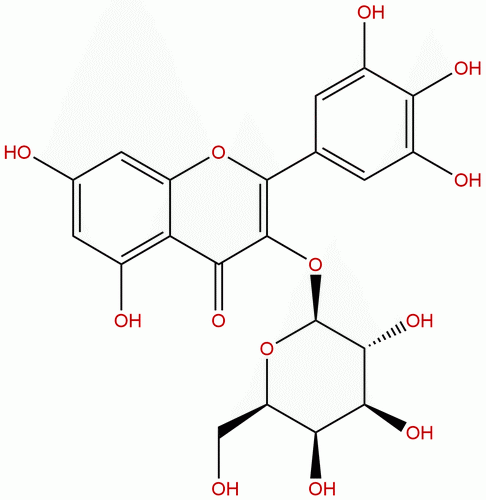
The chemical structure of myricetin-3-O-galactoside belongs to the flavonol-3-O-glycosides class. Its parent nucleus is myricetin (3,5,7,3 ', 4', 5 '- hexahydroxyflavone), which is connected to a molecule of D-galactose through a β - glycosidic bond on the C-3 hydroxyl group. This structural feature determines its unique physicochemical properties. From the molecular formula, the compound is C ₂₁ H ₂₀ O ₁ VNet, with a molecular weight of 480.3780 g/mol. There are a total of six phenolic hydroxyl groups (located at positions 5, 7 of the A ring and 3 ', 4', 5 'of the B ring) and multiple alcohol hydroxyl groups on the galactose group in its structure, which gives the molecule extremely high polarity and hydrogen bond donor/acceptor ability. The calculated topological polar surface area (TPSA) is as high as 230.7400 Å ², much higher than the threshold of traditional oral drugs (usually<140 Å ²), indicating good water solubility (calculated water solubility of 1.4309), but the transmembrane permeability may be weak.
The oil-water partition coefficient (LogP) is an important parameter for evaluating the lipophilicity of compounds. The LogP value of myricetin-3-O-galactoside is -0.3094, indicating that its hydrophilicity is stronger than its lipophilicity. This characteristic makes it easy to dissolve and disperse in aqueous environments, which is beneficial for its function in blood and extracellular fluid, but also limits its ability to passively diffuse through the cell membrane. It is worth noting that the blood-brain barrier (BBB) permeability of the compound was evaluated as "low", which is closely related to its high polarity, large molecular weight, and strong hydrogen bonding ability. Although this limits its application in the treatment of central nervous system diseases, from a safety perspective, lower brain permeability may imply lower risk of neurotoxicity.
In addition, toxicology data based on computer-aided prediction showed that the inhibitory risk of myricetin-3-O-galactoside on hERG potassium channels was "no", indicating a low potential risk of inducing QT interval prolongation and arrhythmia in the heart. The Ames test result is 1.2, indicating a low risk of genotoxicity. These preliminary pharmacological evaluation data provide positive safety signals for the further development of the compound. However, it should be pointed out that these parameters are mostly theoretical calculations based on structure, and the actual absorption, distribution, metabolism, and excretion (ADME) behavior in vivo still needs to be verified through systematic pharmacokinetic experiments.
Plant sources and extraction methods
Yangmeisin-3-O-galactoside is widely distributed in nature, mainly found in plants such as Rosaceae, Yangmei, Theaceae, and Myrtle Myrtle. Common plant sources rich in this compound include Yangmei(Myrica rubra)Fruits and bark, strawberries(Fragaria × ananassa)The fruit, blueberries(Vaccinium corymbosum)Fruits and tea(Camellia sinensis)The leaves and guava(Psidium guajava)Leaves and various medicinal plants such as golden peaches(Hypericum perforatum)Wait. Among them, Yangmei fruit and guava leaves are considered important natural sources of this compound. Different plant parts, growth environments, harvest seasons, and varieties can all affect the content of myricetin-3-O-galactoside.
For the extraction of this compound, solvent extraction method is currently mainly used, supplemented by modern separation and purification techniques. Due to the high polarity of the compound, commonly used extraction solvents are methanol, ethanol, acetone, or their aqueous solutions. To improve extraction efficiency, methods such as heating reflux, ultrasound assisted extraction, or microwave-assisted extraction are commonly used. For example, using 70% ethanol as the solvent, ultrasonic extraction of dried plant powder at 50-60 ℃ can achieve a high extraction rate. After vacuum concentration, the extract can be preliminarily enriched through liquid-liquid extraction (such as using ethyl acetate or n-butanol). Further separation and purification usually rely on various chromatographic techniques. Column chromatography with macroporous adsorption resins (such as HPD-100 and D101) is a commonly used preliminary purification method, which can effectively remove impurities such as sugars and proteins by gradient elution with ethanol water solutions of different concentrations. Subsequently, further separation was performed using polyamide column chromatography or silica gel column chromatography. For higher purity requirements, preparative high performance liquid chromatography (HPLC) is an effective method for obtaining high-purity myricetin-3-O-galactoside. It usually uses a reverse phase C18 chromatography column and uses methanol water or acetonitrile water systems (often containing small amounts of formic acid or acetic acid) as the mobile phase for isocratic or gradient elution. The structural identification of compounds mainly relies on nuclear magnetic resonance spectroscopy (NMR, including ¹ H-NMR, ¹ ³ C-NMR, HMBC, HSQC, etc.) and high-resolution mass spectrometry (HR-MS) techniques. By comparing with known literature data or standard standards, the chemical structure is finally confirmed.
Pharmacological activity research
The pharmacological activity research of myricetin-3-O-galactoside mainly focuses on its antioxidant, anti-inflammatory, anti gout, and potential anti-tumor and cardiovascular protective effects.
antioxidant activity It is the most core and extensively studied pharmacological action of this compound. Oxidative stress is the result of an imbalance between the production of reactive oxygen species (ROS) and reactive nitrogen species (RNS) in the body and the antioxidant defense system. The abundant phenolic hydroxyl groups in the molecule of myricetin-3-O-galactoside are the structural basis for its antioxidant activity. In vitro chemical experiments have shown that the compound can effectively scavenge various free radicals, including 1,1-diphenyl-2-trinitrophenylhydrazine (DPPH) free radical, 2,2 '- diazobis (3-ethylbenzothiazoline-6-sulfonic acid (ABTS) cationic free radical, superoxide anion free radical (O ₂⁻ ·), and hydroxyl free radical (· OH). Its clearing ability is usually stronger or equivalent to classical antioxidants such as vitamin C and vitamin E. Of particular note is that myricetin-3-O-galactoside has a significant inhibitory effect on xanthine oxidase (XO). XO is a key enzyme that catalyzes the conversion of hypoxanthine and xanthine into uric acid and produces superoxide anions. Inhibiting XO activity not only reduces uric acid production (anti gout effect), but also simultaneously lowers oxidative stress levels. In addition, the compound can significantly inhibit the process of lipid peroxidation, with an IC50 value of 160 μ g/mL. Lipid peroxidation is an important cause of cell membrane damage and dysfunction, and this compound protects the integrity of cell membrane structure by blocking the chain reaction of lipid free radicals. In cell models, myricetin-3-O-galactoside can alleviate oxidative damage induced by hydrogen peroxide (H ₂ O ₂) or tert butyl hydroperoxide (t-BHP), improve cell survival, and reduce intracellular ROS and malondialdehyde (MDA) levels.
anti-inflammatory activity Closely related to antioxidant activity. Research has shown that myricetin-3-O-galactoside can inhibit the production of nitric oxide (NO) and prostaglandin E2 (PGE2) in macrophages stimulated by lipopolysaccharide (LPS), which is related to its downregulation of inducible nitric oxide synthase (iNOS) and cyclooxygenase-2 (COX-2) expression. Meanwhile, it can also inhibit the release of pro-inflammatory cytokines such as tumor necrosis factor - α (TNF - α), interleukin-1 β (IL-1 β), and interleukin-6 (IL-6).
Anti gout activity Directly derived from its inhibitory effect on xanthine oxidase (XO). By inhibiting XO, myricetin-3-O-galactoside can effectively reduce uric acid levels in the body, thus having potential therapeutic value for hyperuricemia and gout. Compared to first-line clinical drugs allopurinol and febuxostat, this compound, as a natural product, may have lower toxicity and side effects.
Other activities Preliminary studies also suggest that myricetin-3-O-galactoside may have anti-tumor activity by inducing tumor cell apoptosis and cycle arrest; In the cardiovascular system, it may exert a protective effect by improving endothelial function, inhibiting vascular smooth muscle cell proliferation, and antiplatelet aggregation. However, research in these areas is still in its infancy and requires more experimental evidence to support it.
Mechanism of action and molecular targets
The pharmacological effects of myricetin-3-O-galactoside are not caused by a single mechanism, but are achieved through the synergistic regulation of multiple targets and signaling pathways. Its core mechanism of action revolves around antioxidant stress and anti-inflammatory effects, and involves multiple key molecular targets.
1. Direct free radical scavenging and metal ion chelation: This is its most direct antioxidant mechanism. The ortho dihydroxy group (3 ', 4' - dihydroxy group of ring B) and meta dihydroxy group (5,7-dihydroxy group of ring A) in the molecule are excellent hydrogen atom donors, which can directly neutralize free radicals and convert them into more stable semiquinone free radicals, thereby terminating the free radical chain reaction. In addition, these phenolic hydroxyl groups can chelate transition metal ions (such as Fe ² ⁺, Cu ² ⁺), inhibit Fenton reactions, and reduce the generation of highly reactive hydroxyl radicals.
2. Regulating the endogenous antioxidant enzyme system: Yangmeisin-3-O-galactoside can activate the nuclear factor E2 related factor 2 (NFE2L2, NRF2) signaling pathway. NRF2 is the core transcription factor that cells use to respond to oxidative stress. Under normal physiological conditions, NRF2 binds to Kelch like ECH associated protein 1 (KEAP1) and is degraded by ubiquitination. When subjected to oxidative stimulation or electrophilic agents (such as the oxidation product of myricetin-3-O-galactoside), NRF2 dissociates from KEAP1, translocates into the nucleus, binds to antioxidant response elements (ARE), and initiates the transcription of a series of downstream antioxidant enzyme genes. These target genes include: superoxide dismutase (SOD1, SOD2), which is responsible for dismutation of superoxide anions into H ₂ O ₂; Catalase (CAT) decomposes H ₂ O ₂ into water and oxygen; Glutathione peroxidase 1 (GPX1) reduces H ₂ O ₂ and organic peroxides using glutathione; And heme oxygenase 1 (HMOX1) catalyzes the degradation of heme into biliverdin, carbon monoxide, and iron ions, among which biliverdin and its reduced product bilirubin are potent endogenous antioxidants. By upregulating the expression of these key enzymes, myricetin-3-O-galactoside can significantly enhance the overall antioxidant defense ability of cells.
3. Inhibition of oxidase activity: As mentioned earlier, this compound can directly inhibit the activity of xanthine oxidase (XO), reducing the production of superoxide anions from the source. In addition, it may also inhibit the activity of NADPH oxidase (NOX), which is one of the main enzymatic sources of intracellular ROS.
4. Regulating inflammation related signaling pathways: Yangmeisin-3-O-galactoside can inhibit the activation of the nuclear factor kappa B (NF - κ B) signaling pathway. NF - κ B is a key transcription factor that regulates inflammatory responses. By inhibiting the activity of I κ B kinase (IKK) or preventing the phosphorylation and degradation of I κ B α, this compound can prevent the nuclear translocation of NF - κ B, thereby downregulating the expression of its downstream target genes, including pro-inflammatory cytokines (TNF - α, IL-1 β, IL-6), chemokines, adhesion molecules, as well as iNOS and COX-2. In addition, it may also exert anti-inflammatory effects by inhibiting the phosphorylation of the mitogen activated protein kinase (MAPK) pathway (such as p38, JNK, ERK).
5. Regulating matrix metalloproteinases (MMPs): Matrix metalloproteinases (such as MMP1 and MMP3) play a key role in the degradation and remodeling of extracellular matrix (ECM), and their overexpression is associated with tumor invasion, metastasis, atherosclerosis and other diseases. Yangmeisin-3-O-galactoside can inhibit the expression and activity of MMP1 and MMP3, which may be related to its inhibition of MAPK and NF - κ B pathways, thereby helping to maintain ECM homeostasis.
6. Regulating Tyrosinase (TYR): Tyrosinase is a key rate limiting enzyme in melanin synthesis. The inhibitory effect of myricetin-3-O-galactoside on TYR suggests its potential for whitening and anti pigmentation, which is closely related to its antioxidant activity.
In summary, myricetin-3-O-galactoside forms a networked pharmacological mechanism by directly scavenging free radicals, chelating metal ions, activating the NRF2-ARE antioxidant defense system, inhibiting the pro oxidant enzyme (XO) and pro-inflammatory signaling pathways (NF - κ B, MAPK), and regulating multiple molecular targets such as MMPs and TYR, thereby exerting its multiple biological activities such as antioxidant, anti-inflammatory, and anti gout.
Evaluation of drug properties and pharmacokinetics
Developing myricetin-3-O-galactoside from a natural product into a clinical drug requires a systematic evaluation of its pharmacological properties, with pharmacokinetic (ADME) characteristics being a key step.
Absorption: As mentioned earlier, the LogP of this compound is -0.3094, with a TPSA of up to 230.74 Å ² and good water solubility (1.4309), but poor lipid solubility. According to the Lipinski Five Rules, the molecular weight of the compound (480.38) is slightly over 500, the number of hydrogen bond donors (phenolic hydroxyl+alcohol hydroxyl) is much greater than 5, and the number of hydrogen bond acceptors is much greater than 10. Therefore, its oral bioavailability is expected to be low. The high polarity and high molecular weight limit its ability to cross the intestinal epithelial cell membrane through passive diffusion. Its absorption may mainly rely on active transport mediated by intestinal transporters such as glucose transporters GLUTs or sodium dependent glucose transporters SGLTs, as its galactose moiety may be recognized as a carbohydrate substrate. In addition, the gut microbiota may hydrolyze its glycosidic bonds, releasing the aglycone myricetin, which has increased lipid solubility and is more easily absorbed. Therefore, after oral administration, its exposure form in the body may be a mixture of the prototype drug and aglycones.
Distribution: Due to its hydrophilicity, myricetin-3-O-galactoside is mainly distributed in blood and extracellular fluid. The binding rate between it and plasma proteins (especially albumin) still needs to be experimentally determined. Low BBB permeability makes it difficult for it to enter the central nervous system, which is safe for treating peripheral oxidative stress-related diseases, but limits its application in brain diseases.
Metabolism: The metabolism of flavonoids usually occurs in the liver and intestines. Yangmeisin-3-O-galactoside may undergo phase II metabolic reactions, including glucuronidation, sulfation, and methylation. The phenolic hydroxyl group is the main site for these binding reactions. In addition, as mentioned earlier, its glycosidic bond may be hydrolyzed by β - glucosidase in the intestine or liver to produce myricetin. Yangmei extract itself also undergoes further phase II metabolism. These metabolites may still retain some biological activity.
Excretion: Due to its high molecular polarity, this compound and its metabolites are mainly excreted through bile and urine. The portion excreted through bile may enter the enterohepatic circulation, prolonging its retention time in the body.
Safety evaluation: Preliminary computer toxicology predictions indicate that the compound has no risk of hERG inhibition, and the Ames test results are also negative, suggesting a low risk of cardiac and genotoxicity. However, these are only predicted results. The actual safety assessment requires comprehensive evaluation through systematic in vitro and in vivo toxicology experiments, including acute toxicity, subchronic toxicity, genetic toxicity, reproductive toxicity, and other tests. Due to its polyphenol structure, high doses may cause gastrointestinal discomfort or interact with other drugs (such as affecting CYP450 enzyme activity).
Overall, the main challenge facing the pharmacological properties of myricetin-3-O-galactoside is its low oral bioavailability. Future drug development strategies can revolve around improving their bioavailability, such as designing prodrugs, using nanocarriers (such as liposomes, polymer nanoparticles, phospholipid complexes) for encapsulation, combining with absorption enhancers, or developing formulations for non oral delivery routes (such as transdermal or injection). In addition, in-depth research on its metabolites and their activities in the body, as well as clarifying its interaction with the gut microbiota, is crucial for a comprehensive understanding of its pharmacological substance basis.
Clinical application prospects and prospects
Based on the powerful antioxidant, anti-inflammatory, and XO inhibitory pharmacological effects of myricetin-3-O-galactoside, it has shown broad application prospects in the prevention and treatment of various oxidative stress-related diseases.
1. Hyperuricemia and Gout: This is the most promising application direction for this compound in terms of conversion potential. By inhibiting XO activity, it is expected to become a natural alternative or adjuvant drug for the treatment of hyperuricemia and gout. Compared with existing drugs, its potential advantage lies in having both antioxidant and anti-inflammatory effects, which may also have a relieving effect on acute attacks of gouty arthritis. Developing oral health products or functional food ingredients for daily management of high uric acid populations is a achievable goal in the near future.
2. Metabolic disorders: Oxidative stress and chronic low-grade inflammation are the common pathological basis of obesity, type 2 diabetes, non-alcoholic fatty liver disease (NAFLD) and other metabolic diseases. Yangmeisin-3-O-galactoside may have beneficial effects on these diseases by improving insulin resistance, regulating lipid metabolism, and reducing liver oxidative damage. Animal model studies have preliminarily shown its potential to lower blood sugar and blood lipids.
3. Cardiovascular diseases: Atherosclerosis is the main cause of cardiovascular disease, and its occurrence and development are closely related to endothelial cell injury, foam cell formation and vascular inflammation caused by oxidized low density lipoprotein (ox LDL). The antioxidant, anti-inflammatory and inhibiting MMPs activity of this compound make it have the potential of anti atherosclerosis. In addition, its protective effect on endothelial function is also worthy of further investigation.
4. Skin health and anti-aging: Given its ability to inhibit tyrosinase (TYR) activity and strong antioxidant capacity, myricetin-3-O-galactoside can be used as a cosmetic ingredient for developing whitening, anti wrinkle, and sunscreen products. It can effectively eliminate free radicals induced by ultraviolet radiation, inhibit melanin synthesis, and protect skin collagen from degradation.
5. Neurodegenerative diseases: Despite its low BBB permeability, it is still possible to play a role in diseases such as Alzheimer's disease and Parkinson's disease by designing nano formulations or prodrugs that can cross the BBB, or indirectly protecting nerves using its anti-inflammatory and antioxidant activities. In addition, its anti-inflammatory effect may also be beneficial for neuroinflammation.
Outlook: Despite its promising prospects, the clinical translation of myricetin-3-O-galactoside still faces many challenges. Firstly, more in-depth pharmacokinetic studies are needed to clarify its absorption, metabolism, and disposal processes in vivo, and to address the issue of low bioavailability. Secondly, a systematic toxicological evaluation is required to ensure the safety of long-term use. Third, it is necessary to use preclinical animal models (such as hyperuricemic rats, diabetes mice, atherosclerosis models, etc.) to verify its efficacy in vivo and clarify its mechanism of action. Finally, high-quality clinical trials are the gold standard for verifying its effectiveness and safety. Future research should also focus on its synergistic effects with other natural products or drugs, as well as optimizing its pharmacological activity and pharmacokinetic properties through structural modifications such as introducing specific functional groups or altering sugar groups. With the advancement of modern medicinal chemistry, pharmacy, and biotechnology, myricetin-3-O-galactoside is expected to move from the laboratory to clinical applications, making contributions to human health.
Conclusion
As a typical natural flavonol glycoside, myricetin-3-O-galactoside is endowed with excellent multiple pharmacological activities such as antioxidant, anti-inflammatory, and inhibition of xanthine oxidase due to its unique chemical structure - the combination of a phenolic hydroxyl rich myricetin core and a polar galactose group. Its mechanism of action involves direct clearance of free radicals, chelation of metal ions, activation of the NRF2-ARE antioxidant defense pathway, inhibition of pro-inflammatory signaling pathways such as NF - κ B and MAPK, as well as regulation of multiple molecular targets such as MMPs and TYR, reflecting the advantages of natural product multi-target and multi pathway synergistic effects. Although its low oral bioavailability is the main bottleneck restricting its clinical development, this problem is expected to be solved through modern formulation technology and structural modification strategies. Based on its clear pharmacological activity and preliminary safety evaluation, myricetin-3-O-galactoside has shown great potential for development in the prevention and treatment of hyperuricemia, gout, metabolic syndrome, cardiovascular disease, and as a functional cosmetic ingredient. In the future, it is necessary to integrate multidisciplinary forces such as pharmacology, medicinal chemistry, pharmacy, and clinical medicine, conduct in-depth systematic research, and promote the practical application of this natural product from laboratory research, so that it can play a greater value in maintaining human health.