Introduction/Overview
Natural products, as an important source of drug discovery, play an irreplaceable role in the long history of human struggle against diseases. Flavonoids, as the most widely distributed class of secondary metabolites in nature, have attracted much attention due to their structural diversity and extensive biological activity. Among numerous flavonoids, kaempferol and its glycoside derivatives have become a research hotspot due to their significant antioxidant, anti-inflammatory, anti-tumor, and cardiovascular protective effects. 6-Hydroxykaempferol 3-O - β - D-glucoside (6HK-3G), as a derivative of kaempferol hydroxylated at C-6 and glycosylated at C-3, has gradually entered the field of researchers in recent years and exhibited a unique pharmacological activity spectrum.
Diabetes retinopathy (DR) is one of the most common and serious microvascular complications of diabetes, and also the main cause of blindness in working age people. Its pathological mechanism is complex, involving multiple links such as activation of the polyol pathway, accumulation of advanced glycation end products (AGEs), activation of the protein kinase C (PKC) pathway, oxidative stress and inflammatory response, upregulation of vascular endothelial growth factor (VEGF), and cell apoptosis. At present, the treatment methods for DR mainly include strict control of blood sugar and blood pressure, laser photocoagulation, intravitreal injection of anti VEGF drugs, and vitrectomy surgery. However, these methods may have limitations or significant side effects. Therefore, finding safe, effective, and orally administered multi-target therapeutic drugs has become an urgent need for DR drug development. 6-Hydroxykaempferol-3-O - β - D-glucoside has shown great potential as a candidate compound for DR therapy due to its potential association with multiple key targets such as BCL2, PRKCA, AKR1B1, MMP2, NFE2L2, HIF1A, PRKCB, RELA, MAPK1, TNF, etc. This article aims to provide a systematic review of the chemical structure, plant origin, pharmacological activity, mechanism of action, and medicinal properties of 6-hydroxykaempferol-3-O - β - D-glucoside, in order to provide reference for further research and development of this compound.
Chemical structure and physicochemical properties
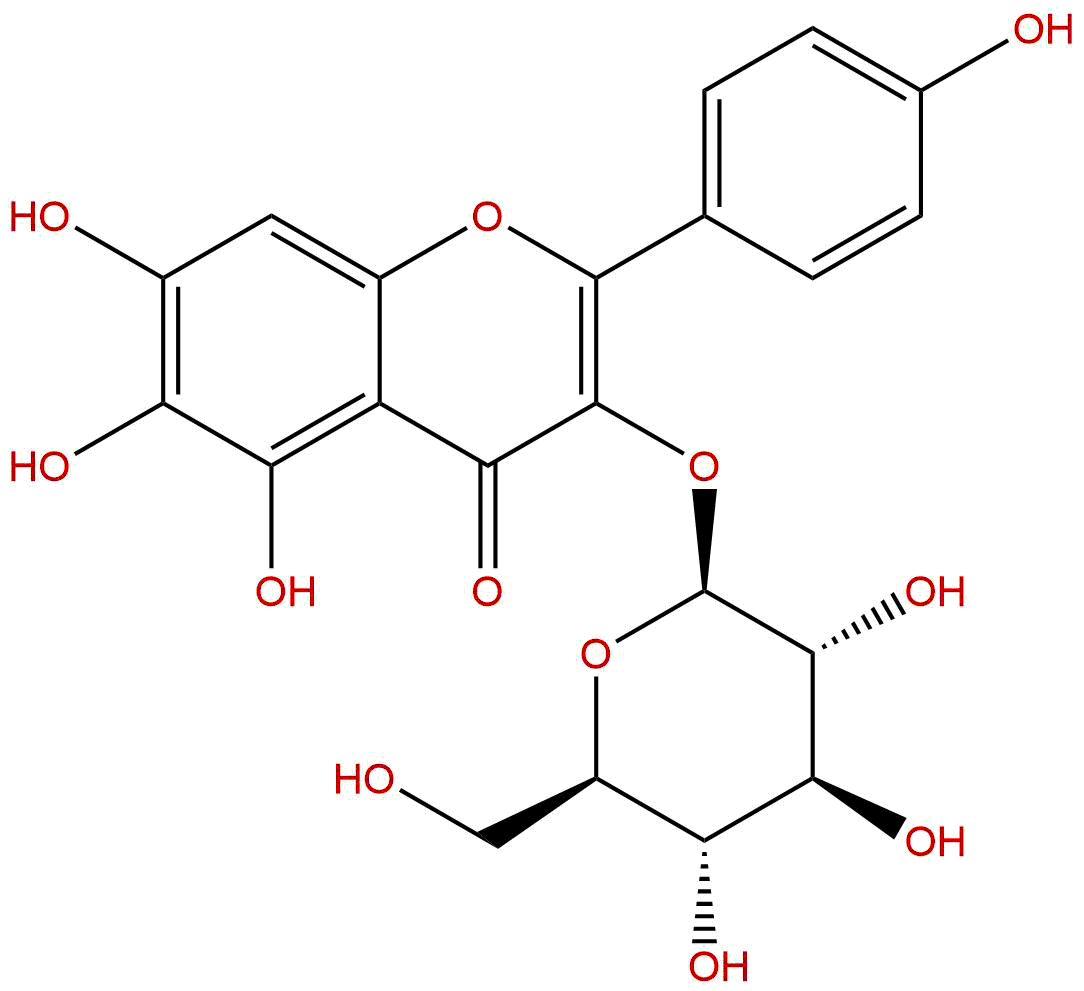
The chemical structure of 6-hydroxykaempferol-3-O - β - D-glucoside belongs to flavonol glycosides. Its glycoside is 6-Hydroxykaempferol, chemically known as 3,5,6,7,4 '- pentahydroxyflavone. Compared with the classic kaempferol (3,5,7,4 '- tetrahydroxyflavone), it has an additional hydroxyl substituent at the C-6 position. This structural modification significantly alters the electron distribution and hydrogen bond donor/acceptor ability of the molecule. On the hydroxyl group at position C-3, a molecule of D-glucose is connected through a β - glycosidic bond, forming the complete structure of the compound. Its system naming follows IUPAC rules, with CAS registration number 145134-61-8.
From the perspective of physical and chemical properties, the molecular formula of this compound is C ₂₁ H ₂₀ O ₁ ₂, with a molecular weight of 464.3790 g/mol. The LogP of its lipid water partition coefficient is -0.2768, indicating that the compound has high hydrophilicity, which is closely related to the presence of multiple phenolic hydroxyl and sugar moieties in the molecule. High hydrophilicity usually means good solubility in aqueous environments, with a predicted water solubility value of 1.0867 mg/mL, providing favorable conditions for its absorption and distribution in organisms. The topological polar surface area (TPSA) is as high as 210.5100 Å ², which is much higher than the recommended threshold for oral drugs (about 140 Å ²), indicating that the compound may be difficult to passively diffuse through the cell membrane, and its transmembrane transport may depend on specific transport proteins. In addition, high TPSA also indicates a lower ability to cross the blood-brain barrier (BBB), with a predicted result of "low", which to some extent limits its application in central nervous system diseases. However, for the treatment of peripheral tissue diseases such as retinopathy, low BBB permeability can reduce the side effects on the central nervous system. The prediction result of hERG inhibition is' no ', indicating a low risk of causing QT interval prolongation and arrhythmia in the heart, which is a favorable safety signal. The Ames test result is 1.2, indicating that it may have a weak genetic toxicity risk and needs to be given special attention in subsequent toxicological evaluations.
Plant sources and extraction methods
6-Hydroxykaempferol-3-O - β - D-glucoside is not a universally present flavonoid glycoside, and its distribution is relatively concentrated in specific plant families and genera. At present, literature reports that it mainly comes from Asteraceae plants, such as safflower(Carthamus tinctorius L. Separated from the petals. Red flower, as a traditional Chinese medicinal herb, has the effects of promoting blood circulation and meridian circulation, dispersing blood stasis and relieving pain. Its chemical composition is complex, including flavonoids, pigments (such as crocin), fatty acids, etc. 6-Hydroxykaempferol-3-O - β - D-glucoside is one of the bioactive flavonoids in safflower. In addition, certain plants in the Lamiaceae family, such as perilla(Perilla frutescens)It has also been discovered. Due to its typically low content, efficient extraction and purification techniques are key to obtaining this compound.
The traditional extraction method mainly uses solvent extraction, such as cold soaking, percolation or reflux extraction of dried plant materials using methanol, ethanol or acetone water mixed solvents. In order to improve extraction efficiency and selectivity, modern extraction techniques are widely used. For example, ultrasound assisted extraction (UAE) utilizes the cavitation effect of ultrasound to destroy plant cell walls, accelerate solvent penetration, and dissolve target components; Microwave assisted extraction (MAE) utilizes the body heating effect of microwaves to rapidly increase the system temperature and shorten the extraction time. After filtration and vacuum concentration of the extract, a series of separation and purification steps are usually required. Common methods include liquid-liquid extraction (such as fractional extraction using different polar solvents such as petroleum ether, ethyl acetate, n-butanol, etc.) to preliminarily enrich flavonoid glycosides; Column chromatography technologies, such as silica gel column chromatography, polyamide column chromatography, Sephadex LH-20 gel column chromatography, etc., can be separated according to the polarity, molecular size and hydrogen bonding force difference of compounds; High performance liquid chromatography (HPLC), especially preparative HPLC, is the ultimate means of obtaining high-purity monomeric compounds. By combining various chromatographic techniques, pure 6-hydroxykaempferol-3-O - β - D-glucoside can be efficiently isolated from complex plant extracts for subsequent structural identification and activity research.
Pharmacological activity research
In recent years, the research on the pharmacological activity of 6-hydroxykaempferol-3-O - β - D-glucoside has gradually deepened, mainly focusing on antioxidant, anti-inflammatory, anti apoptosis and anti diabetes complications, especially closely related to the therapeutic potential of diabetes retinopathy.
1. Antioxidant activity
Oxidative stress is one of the core driving factors for the occurrence and development of DR. The high blood sugar environment leads to leakage of mitochondrial electron transport chain, producing a large amount of reactive oxygen species (ROS), which in turn damages retinal capillary endothelial cells and pericytes. Research has shown that 6-hydroxykaempferol-3-O - β - D-glucoside has significant antioxidant capacity. The multiple phenolic hydroxyl groups in its molecular structure can effectively scavenge various free radicals, such as DPPH free radicals, ABTS cationic free radicals, and superoxide anion free radicals. In addition, it can also upregulate the expression of a series of antioxidant enzymes, such as heme oxygenase-1 (HO-1) and quinone oxidoreductase 1 (NQO1), by activating the nuclear factor E2 related factor 2 (NFE2L2, also known as NRF2) signaling pathway, thereby enhancing the intracellular antioxidant defense system. This dual mechanism of directly clearing free radicals and indirectly activating the endogenous antioxidant system gives it a unique advantage in combating oxidative damage in DR.
2. Anti inflammatory activity
Chronic low-grade inflammation is another important pathological feature of DR. The inflammatory response induced by hyperglycemia involves multiple inflammatory mediators and signaling pathways. Research has found that 6-hydroxykaempferol-3-O - β - D-glucoside can significantly inhibit inflammatory responses induced by lipopolysaccharide (LPS) or high glucose. Its mechanism of action includes inhibiting the activation of the nuclear factor kappa B (NF - κ B) pathway, specifically by suppressing the phosphorylation and degradation of I κ B α, thereby preventing nuclear translocation of the p65 (RELA) subunit, and ultimately downregulating the expression of downstream pro-inflammatory cytokines such as tumor necrosis factor - α (TNF - α), interleukin-6 (IL-6), and monocyte chemoattractant protein-1 (MCP-1). Given that TNF and RELA are key targets of DR, the anti-inflammatory activity of this compound is of great significance in delaying the progression of DR.
3. Anti apoptotic activity
The excessive apoptosis of retinal capillary cells is the cytological basis of early microvascular disease in diabetic retinopathy. BCL2 family proteins play a central role in regulating cell apoptosis. The downregulation of anti apoptotic protein BCL2 and upregulation of pro apoptotic protein BAX are typical features of cell apoptosis in DR. Research has shown that 6-hydroxykaempferol-3-O - β - D-glucoside can upregulate the expression of BCL2, while inhibiting the expression of BAX and the activation of Caspase-3, thereby protecting retinal endothelial cells and pericytes from high glucose induced apoptosis. This regulatory effect on BCL2 targets directly points to its potential mechanism of protecting retinal microvascular integrity.
4. Inhibition of polyol pathway
Aldose reductase (AKR1B1) is the first rate limiting enzyme in the polyol pathway. Under hyperglycemic conditions, AKR1B1 is overactivated, reducing glucose to sorbitol, leading to a large accumulation of sorbitol in cells, causing osmotic pressure imbalance, cell swelling, and oxidative stress. Inhibiting AKR1B1 activity is one of the important strategies for treating DR. Preliminary studies have shown that 6-hydroxykaempferol-3-O - β - D-glucoside has a certain inhibitory effect on AKR1B1, suggesting that it may alleviate the early pathological changes of DR by blocking the polyol pathway.
5. Regulation of angiogenesis and vascular leakage
VEGF is a key factor in DR that leads to pathological angiogenesis and disruption of the blood retinal barrier (BRB). HIF1A is the main regulatory factor of VEGF transcription under hypoxic conditions. The activation of PRKCA and PRKCB (subtypes of PKC) is also closely related to the expression of VEGF and increased vascular permeability. In addition, overexpression of matrix metalloproteinase 2 (MMP2) can degrade the basement membrane of retinal capillaries, promoting endothelial cell migration and neovascularization. Although the research on the regulation of VEGF/HIF1A/MMP2 pathway by 6-hydroxykaempferol-3-O - β - D-glucoside in DR model is not sufficient, based on its predictive correlation with these targets, and the inhibition of its antioxidant and anti-inflammatory activities on upstream signals, it is speculated that this compound can synergistically inhibit angiogenesis and leakage in DR through multiple channels. For example, by inhibiting the MAPK1 (ERK) and NF - κ B pathways, the expression of HIF1A and VEGF is indirectly downregulated.
Mechanism of action and molecular targets
Based on the existing research, the mechanism of 6-hydroxykaempferol-3-O - β - D-glucoside in diabetes retinopathy shows the characteristics of multi target and multi-channel network regulation. The core mechanism can be summarized as follows:
-
Activate NRF2/ARE antioxidant pathway This compound promotes the dissociation of NRF2 and Keap1, stabilizes and translocates them into the nucleus, binds to antioxidant response elements (ARE), and initiates the transcription of a series of downstream antioxidant enzymes (HO-1, NQO1, SOD, CAT, etc.). This is one of the core mechanisms by which it exerts cellular protective effects, directly combating high glucose induced oxidative stress.
-
Inhibition of NF - κ B-mediated inflammatory pathway By blocking the activation of I κ B kinase (IKK) and inhibiting the phosphorylation and degradation of I κ B α, the NF - κ B (p65/p50) complex is anchored in the cytoplasm. This leads to the inhibition of transcription of downstream pro-inflammatory genes (TNF, IL-6, MCP-1, COX-2, iNOS, etc.), thereby reducing the inflammatory microenvironment of the retina.
-
Regulating cell apoptosis signals By upregulating the anti apoptotic protein BCL2, downregulating the pro apoptotic protein BAX, and inhibiting the cleavage and activation of Caspase-3, the mitochondrial pathway of cell apoptosis is blocked. This mechanism is crucial for protecting retinal capillary endothelial cells and pericytes.
-
Inhibition of polyol pathway Directly or indirectly inhibit the activity of aldose reductase (AKR1B1), reduce the production of sorbitol, alleviate osmotic stress and related oxidative damage.
-
Potential inhibition of VEGF/HIF1A/MMP2 axis By inhibiting upstream signaling pathways such as MAPK1 (ERK1/2) and PI3K/Akt/mTOR, it is possible to downregulate the protein expression and transcriptional activity of HIF1A, thereby reducing the secretion of VEGF. Meanwhile, inhibition of MMP2 activity helps maintain the integrity of the basement membrane, suppress endothelial cell migration, and inhibit neovascularization. In addition, the regulation of PKC (especially PRKCA and PRKCB) activity may also be involved.
These targets and pathways do not exist in isolation, but intersect with each other to form a complex signaling network. For example, oxidative stress can activate NF - κ B and HIF1A, while inflammatory factors can induce the production of ROS. 6-Hydroxykaempferol-3-O - β - D-glucoside can effectively break this vicious cycle and achieve the therapeutic effect of "one stone, multiple birds" by acting on multiple key nodes such as NRF2, NF - κ B, BCL2, AKR1B1, etc. Its ten targets related to DR (BCL2, PRKCA, AKR1B1, MMP2, NFE2L2, HIF1A, PRKCB, RELA, MAPK1, TNF) are all covered by its action network, which strongly supports its potential as a multi-target therapeutic drug for DR.
Evaluation of drug properties and pharmacokinetics
Drug efficacy evaluation is a key bridge connecting active compounds with clinical candidate drugs. Based on the provided parameters, a preliminary analysis was conducted on the pharmacological properties of 6-hydroxykaempferol-3-O - β - D-glucoside.
1. Analysis of drug properties
According to the Lipinski Five Rules, the molecular weight of the compound (464.38) is slightly greater than 500, the LogP (-0.28) is much less than 5, the number of hydrogen bond donors (phenolic hydroxyl and sugar hydroxyl, a total of 8) exceeds 5, and the number of hydrogen bond acceptors (12 oxygen atoms) exceeds 10. Therefore, it violates two of Lipinski's rules (molecular weight>500, hydrogen bond donor>5), suggesting a possible issue of poor oral bioavailability. The high TPSA (210.51 Å ²) further confirms the prediction of poor membrane permeability. These properties suggest that the compound may not be an ideal traditional oral small molecule drug, and its oral absorption may be limited.
2. Absorption, distribution, metabolism, and excretion (ADME) prediction
- absorb High water solubility and low LogP facilitate its dissolution in the gastrointestinal tract, but high polarity and high molecular weight make it difficult to passively diffuse through intestinal epithelial cells. Its absorption may depend on the mediation of intestinal transporters such as glucose transporters GLUTs or organic anion transporters OATPs. Therefore, its oral bioavailability may be low.
- distribution Due to its strong hydrophilicity, its distribution volume may be small and mainly distributed in extracellular fluid. Low BBB permeability makes it difficult for it to enter the central nervous system, which is advantageous for treating peripheral diseases such as DR and can avoid central side effects.
- Metabolism As a flavonoid glycoside, it may undergo two metabolic steps in the body: firstly, under the action of intestinal microbiota or small intestine brush edge enzymes, the glycosidic bond is hydrolyzed, releasing the aglycone (6-hydroxykaempferol); Subsequently, the aglycone undergoes phase II metabolism (glucuronidation, sulfation, methylation) in the liver. Therefore, its active form in vivo may be the prototype drug, aglycone, or its metabolites.
- excretion Metabolites are mainly excreted through bile and urine.
3. Safety evaluation
The inhibition risk of hERG is' no ', which is an important safety advantage and reduces the risk of cardiac toxicity. However, the Ames test result was 1.2, indicating its potential genotoxicity. This requires verification and risk assessment through more comprehensive in vitro and in vivo genetic toxicity tests, such as chromosome aberration tests and micronucleus tests. If genetic toxicity is confirmed, it will seriously hinder its development as a long-term oral medication.
4. Pharmacokinetic challenges and strategies
The main pharmacokinetic challenge faced by 6-hydroxykaempferol-3-O - β - D-glucoside is its low oral bioavailability. To address this issue, the following strategies can be adopted:
- Prodrug design Esterification or etherification modification of multiple hydroxyl groups in its molecule to enhance lipid solubility and improve membrane permeability. In the body, these prodrugs can be hydrolyzed by esterases or enzymes to release the prototype drug.
- Optimization of administration route Given that DR is an ocular disease, the development of local drug delivery formulations, such as eye drops or intravitreal implants, can be considered to bypass oral absorption barriers, directly deliver drugs to target tissues, increase local drug concentrations, and reduce systemic exposure and side effects.
- Nanoformulation technology By using nanocarriers such as liposomes, polymer nanoparticles, and micelles to encapsulate the compound, its solubility, stability, and transmembrane transport ability can be improved, thereby enhancing its bioavailability for oral or ocular administration.
Clinical application prospects and prospects
6-hydroxykaempferol-3-O - β - D-glucoside, as a natural xanthone with multi target regulation potential, has shown an attractive application prospect in the treatment of diabetes retinopathy. Its unique pharmacological activity spectrum, especially its comprehensive regulatory ability on oxidative stress, inflammation, cell apoptosis, and polyol pathways, distinguishes it from current clinical drugs that mainly target a single target (such as VEGF), and is expected to provide a more comprehensive and fundamental treatment strategy for DR.
1. Potential as a comprehensive treatment drug for DR
DR is a multifactorial and multi-stage disease. The ideal therapeutic drug should be able to intervene in multiple key stages of its onset simultaneously. 6-Hydroxykaempferol-3-O - β - D-glucoside activates NRF2, inhibits NF - κ B, and regulates BCL2, which can inhibit oxidative stress and inflammation from the source, protect retinal microvascular cells, and delay the transformation of early DR lesions (such as background DR) to proliferative DR. For late stage DR, its potential anti angiogenic effect (by inhibiting the HIF1A/VEGF/MMP2 axis) may serve as a supplement or alternative to anti VEGF therapy.
2. Combination therapy strategy
Considering the complexity of DR, combination therapy may be a better option. For example, combining this compound with existing anti VEGF drugs such as ranibizumab and aflibercept may synergistically inhibit neovascularization through different mechanisms, while reducing side effects such as neurodegeneration caused by anti VEGF drugs. In addition, when used in combination with aldose reductase inhibitors (such as eprostat) or PKC inhibitors (such as Rubista), a synergistic effect may also occur.
3. Challenges faced and future research directions
Despite the bright prospects, there are still many challenges from laboratory discoveries to clinical applications.
- Pharmacokinetic bottleneck Low oral bioavailability is its main obstacle. Future research should focus on developing efficient ocular or systemic delivery systems, such as prodrugs, nanomaterials, or implants.
- Genetic toxicity risk The positive signal of Ames test needs to be highly valued. A systematic in vitro and in vivo genetic toxicity evaluation must be conducted to clarify its risk level and mechanism. If genetic toxicity does exist, structural modifications are needed to eliminate or reduce this risk.
- In depth elucidation of the mechanism of action Current research is mostly based on in vitro experiments and target prediction. It is necessary to build more clinical DR animal models (such as STZ induced diabetes rats, Akita mice, etc.), systematically evaluate the effect of this compound on pathological changes at various stages of DR in vivo (such as pericyte loss, acellular capillary formation, BRB destruction, neovascularization), and verify the in vivo correlation of its key targets (such as NRF2, NF - κ B) with gene knockout or pharmacological inhibitors.
- Study on Structure Activity Relationship The systematic study of the activity differences of 6-hydroxykaempferol-3-O - β - D-glucoside and its analogues (such as different glycosylation sites, different glycosylation types, and aglycones themselves) can help reveal their key pharmacophores and provide a basis for structural optimization and lead compound discovery.
- safety evaluation In addition to genetic toxicity, comprehensive preclinical safety evaluations such as acute and chronic toxicity, reproductive toxicity, and immune toxicity are also required.
Conclusion
6-Hydroxykaempferol-3-O - β - D-glucoside is a naturally occurring and structurally unique flavonol glycoside. Through the multi target and multi-channel network regulation mechanism, it has shown significant potential in the core pathological links such as oxidative stress, inflammation, apoptosis and angiogenesis in the fight against diabetes retinopathy. Although its low oral bioavailability and potential genetic toxicity risks are the main challenges facing current development, these obstacles are expected to be overcome through modern medicinal chemistry methods (such as prodrug design, structural modification) and advanced drug delivery technologies. Future research should focus on further elucidating its in vivo mechanism of action, optimizing its pharmacokinetic properties, and conducting comprehensive safety evaluations. With the deepening of research, 6-hydroxykaempferol-3-O - β - D-glucoside and its derivatives are expected to provide new and more effective treatment options for diabetes retinopathy, a global blinding eye disease, so as to promote the application and development of natural products in the treatment of complex diseases.