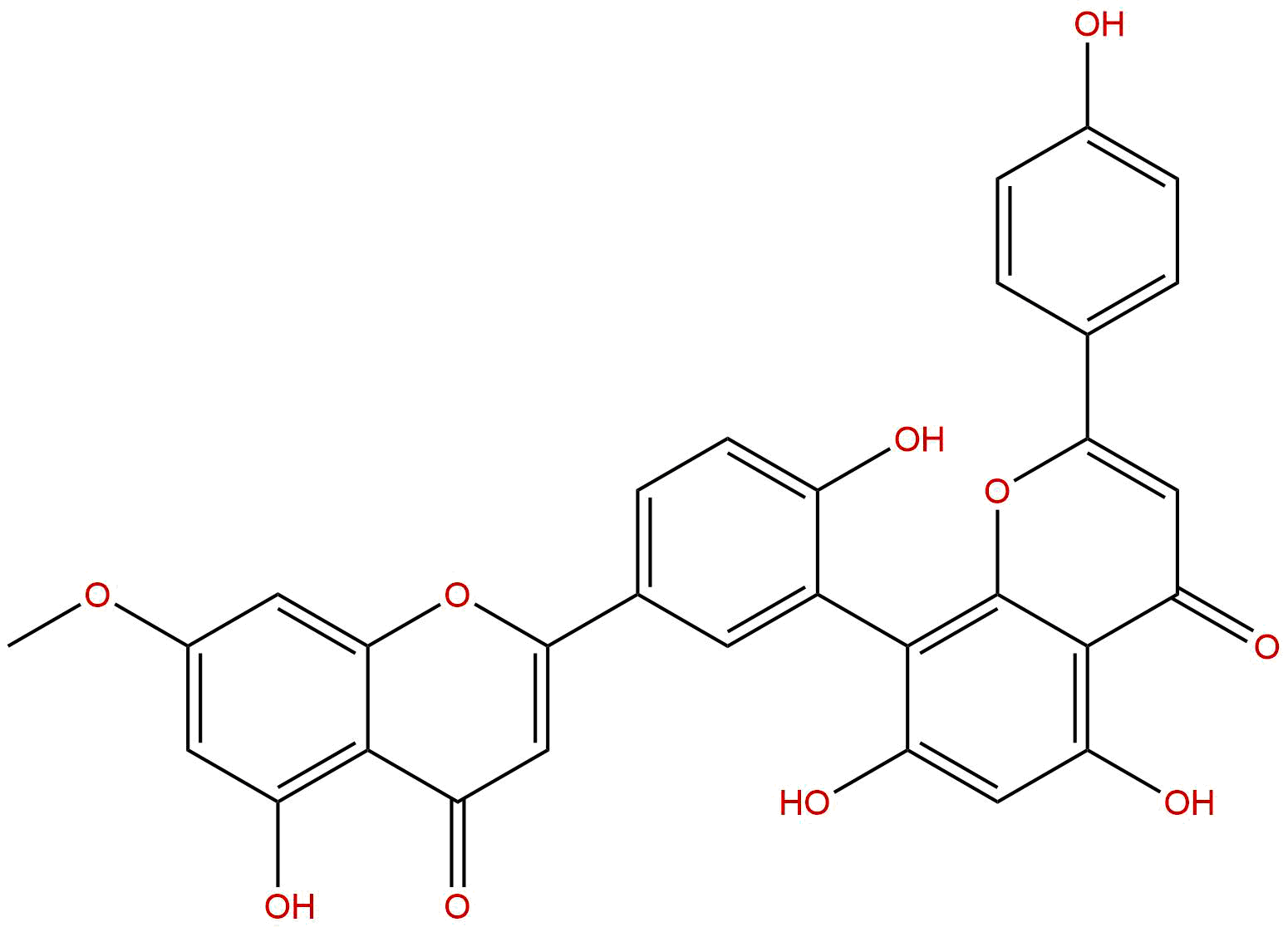


Product name: Sequoiaflavone
Synonym name: 7-O-Methylamentoflavone; Amentoflavone 7-methyl ether; Sequoiaflavone; Sequojaflavone
Catalogue No.: BP2326
Cas No.: 21763-71-3
Formula: C31H20O10
Mol Weight: 552.491
Botanical Source:
Type of Compound: Biflavones
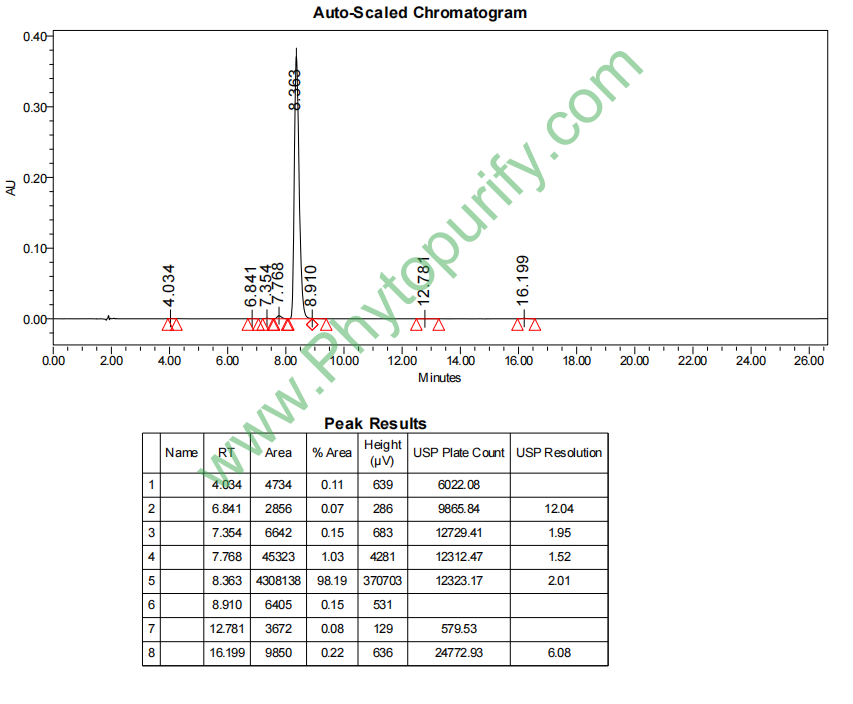
Purity: 95%~99%
Analysis Method: HPLC-DAD or/and HPLC-ELSD
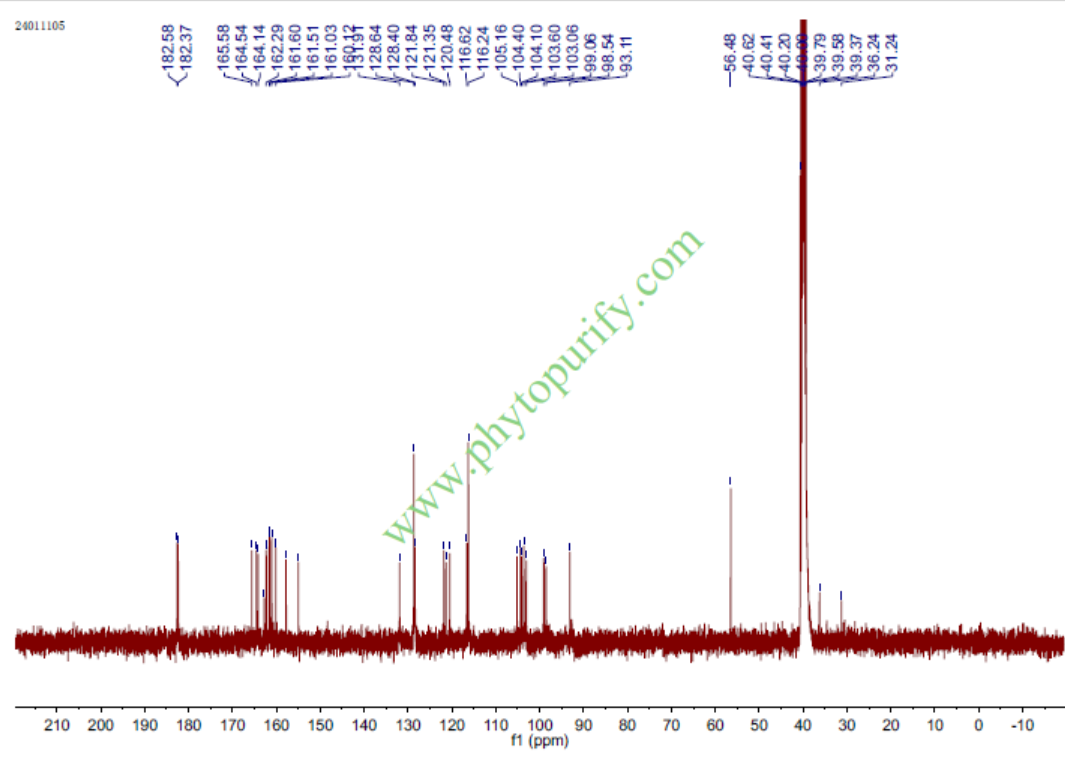
Identification Method: Mass, NMR
Packing: Brown vial or HDPE plastic bottle
Storage: Store in a well closed container, protected from air and light. Put into refrigerate or freeze for long term storage.
Whenever possible, you should prepare and use solutions on the same day. However, if you need to make up stock solutions in advance, we recommend that you store the solution as aliquots in tightly sealed vials at -20℃. Generally, these will be useable for up to two weeks.
The product could be supplied from milligrams to grams
Inquire for bulk scale.
For Reference Standard and R&D, Not for Human Use Directly.
NMR of Sequoiaflavone
HPLC of Sequoiaflavone
Storage conditions:Short-term storage at 2~8℃, long-term storage at -20 ~ -80℃
170.8000
3.7999
3.1854
.0029
1.6878
10.8407
Low
92.8505
3.0080
Yes
No
No
No
Yes
No
0.6
Yes
Yes
Yes
No
Natural products, as an important source of drug discovery, play an irreplaceable role in the long history of human fight against diseases. Among them, flavonoids have always been a hot topic in natural medicine chemistry and pharmacology research due to their unique chemical structure and extensive biological activity. Dual flavonoids are composed of two flavonoid units connected by C-C or C-O-C bonds, and their structural complexity endows them with diverse pharmacological activities beyond monomeric flavonoids, such as anti-inflammatory, antioxidant, anti-tumor, antiviral, and neuroprotective effects.
Sequoia flavanone (CAS number: 21763-71-3) is a naturally occurring flavonoid compound that originated from plants in the Taxaceae family, particularly giant sequoia trees(Sequoiadendron giganteum)And the North American Redwood(Sequoia sempervirens)Separation and identification in the middle. Its name is directly derived from its original plant origin. In recent years, with the deepening of screening for natural anti-tumor active ingredients, redwood flavonoids have received special attention for their potential in multi-target regulation related to glioma. Gliomas are the most common primary malignant tumors of the central nervous system, characterized by high invasiveness, easy recurrence, and poor prognosis. Despite advances in standard treatment regimens such as surgery, radiation therapy, and temozolomide chemotherapy, the median survival of patients is still less than 15 months. Therefore, finding new therapeutic drugs that can effectively penetrate the blood-brain barrier and target key signaling pathways in glioma is an urgent need in the field of neurooncology.
The molecular structure of redwood flavonoids gives them the potential to interact with multiple protein targets closely related to the occurrence and development of gliomas, such as IDH1, PIK3CA, EGFR, TP53, NFKB1, AKT1, CASP3, PTEN, PDGFRA, VEGFA. These targets cover multiple key biological processes, including metabolic reprogramming, growth factor signaling, cell cycle regulation, apoptosis execution, inflammatory pathways, and angiogenesis. This article aims to systematically review the chemical structure, plant origin, pharmacological activity, mechanism of action, pharmacological characteristics, and potential application prospects of redwood flavonoids in glioma treatment, in order to provide comprehensive scientific basis for the further development of this natural product.
Redwood flavonoids belong to the class of flavonoids, and their basic skeleton is composed of two flavonoid mother nuclei connected in a specific way. According to existing literature, the structure of redwood flavonoids is typically described as a dimer of apigenin, with two apigenin units connected by a C-C bond. Specifically, its structural feature is that the C-8 position of one apigenin unit is connected to the C-3 'position of another apigenin unit, forming an asymmetric dual flavonoid structure. This connection method endows molecules with unique spatial conformation and electronic distribution, which is the structural basis for their specific interactions with various biological targets.
From the perspective of physical and chemical properties, the molecular formula of redwood flavonoids is C ∝₀ H ₁₈ O ₁₀, with a molecular weight of 552.4910 g/mol. Its lipid water partition coefficient (LogP) is 3.7999, indicating that the compound has a moderate degree of lipophilicity, which helps it cross the phospholipid bilayer of the cell membrane, but may also affect its solubility in aqueous environments. Its topological polar surface area (TPSA) is 170.8000 Å ², which is a relatively high value, usually indicating that the molecule has more hydrogen bond donors and acceptors, which is conducive to forming hydrogen bond interactions with target proteins. However, it may also be one of the reasons why it is difficult to efficiently penetrate the blood-brain barrier (BBB). In fact, the existing pharmacological parameters clearly indicate that its blood-brain barrier penetration ability is "low", which poses a key challenge for its application in central nervous system diseases such as glioma.
In terms of water solubility, the predicted water solubility value of redwood flavonoids is only 0.0029 mg/mL, which belongs to insoluble compounds. This low water solubility is a common feature of many natural products of polycyclic polyphenols, and is also one of the main obstacles limiting their bioavailability and clinical development. In addition, the predicted result of hERG inhibition is' no ', indicating a low risk of inducing QT interval prolongation and arrhythmia in the heart, which is a positive pharmacological indicator. The predicted value of Ames test is 0.6, indicating that it may have a certain genetic toxicity risk and requires strict toxicological evaluation in subsequent development. Overall, redwood flavonoids have certain pharmacological characteristics, but their low water solubility and low blood-brain barrier penetration are the core issues that urgently need to be addressed.
Sequoia flavonoids were originally discovered from Taxodiaceae plants. Its main sources include giant sequoia trees(Sequoiadendron giganteum)And the North American Redwood(Sequoia sempervirens)Both of these plants are tall trees, native to the west coast of North America. Among these plants, redwood flavonoids are mainly present in leaves, bark, and heartwood. As a secondary metabolite of plants, they may participate in resisting environmental stresses such as pathogenic microorganisms and ultraviolet radiation. In addition, in some other plant genera rich in flavonoids, such as the Juniperus genus(Selaginella)And ginkgo biloba(Ginkgo biloba)In China, there have been occasional reports of the discovery of flavonoids with similar structures, but as a specific structural isomer, the most typical source of redwood flavonoids is still plants in the genus Sequoia.
The traditional method for extracting flavonoids from redwood trees mainly relies on organic solvent extraction. Usually, dried plant materials are crushed and subjected to cold soaking or hot reflux extraction using solvents of moderate polarity such as methanol, ethanol, or acetone. After concentration, the extraction solution is preliminarily separated by liquid-liquid extraction (such as fractional extraction with different polar solvents such as petroleum ether, chloroform, ethyl acetate, n-butanol, etc.). Due to the presence of multiple phenolic hydroxyl groups in flavonoids, they are more enriched in the ethyl acetate or n-butanol extraction sites.
Further purification requires the use of modern chromatographic techniques. Silica gel column chromatography is the most commonly used method, which can separate redwood flavonoids from other flavonoids, flavonoids, and impurities by adjusting the polarity gradient of the eluent (such as chloroform methanol or petroleum ether acetone system). In addition, polyamide column chromatography is commonly used for the purification of flavonoids due to its special adsorption effect on phenolic hydroxyl groups. High performance liquid chromatography (HPLC) or preparative liquid chromatography (Prep HPLC) can be used to obtain high-purity monomer compounds. In recent years, with the promotion of green chemistry concepts, some new extraction techniques such as ultrasound assisted extraction, microwave-assisted extraction, and supercritical fluid extraction have also been attempted for the extraction of flavonoids, aiming to improve extraction efficiency, shorten time, and reduce the use of organic solvents. However, due to the usually low content of redwood flavonoids in plants and the difficulty of their isolation and purification, obtaining sufficient amounts of high-purity compounds for systematic pharmacology research remains a challenging task.
Existing research has revealed that redwood flavonoids have multiple pharmacological activities, particularly demonstrating significant potential in the field of anti-tumor therapy.
Antitumor activity Redwood flavonoids exhibit inhibitory effects on the proliferation of various tumor cell lines. In glioma cells such as U87MG, U251, etc., redwood flavonoids can inhibit cell viability in a dose-dependent and time-dependent manner, induce cell cycle arrest and apoptosis. Research has shown that its anti glioma activity is related to the regulation of multiple key signaling pathways. In addition, Sequoia biflavone also showed certain cytotoxicity to solid tumor cells such as breast cancer, lung cancer and liver cancer, but its selectivity index and toxicity to normal cells need further evaluation.
Anti inflammatory and antioxidant activity As a polyphenolic compound, redwood flavonoids have strong free radical scavenging ability and can reduce intracellular reactive oxygen species (ROS) levels. In inflammation models, it can inhibit the production of nitric oxide (NO) and prostaglandin E2 (PGE2) in macrophages induced by lipopolysaccharide (LPS), and downregulate the expression of pro-inflammatory cytokines such as TNF - α, IL-6, and IL-1 β. Its anti-inflammatory mechanism is partially attributed to the inhibition of the NF - κ B signaling pathway.
Neuroprotective activity Given that its flavonoid skeleton is structurally similar to some known neuroprotective agents, redwood flavonoids have also been explored for use in neurodegenerative diseases. Preliminary research suggests that it may protect neurons from oxidative stress damage through antioxidant and anti apoptotic mechanisms. However, its low BBB penetration limits its actual concentration in the brain, so its neuroprotective effect in vivo still needs to be validated.
Other activities A few studies have also reported that redwood flavonoids have antiviral (such as anti influenza virus) and antibacterial activities, but the evidence in these fields is still insufficient.
The pharmacological activity of redwood flavonoids, especially their anti glioma effect, stems from their regulation of multiple molecular targets. These targets cover the core pathways involved in the occurrence and development of gliomas:
Growth factor receptors and downstream signaling pathways Gliomas often have overexpression or mutations of EGFR and PDGFRA. Redwood flavonoids may inhibit the phosphorylation activation of EGFR and PDGFRA by directly binding or interfering with receptor dimerization, thereby blocking downstream PI3K/AKT and RAS/MAPK signaling cascades. Mutations or amplifications of PIK3CA (encoding PI3K catalytic subunit alpha) are common in gliomas, and the inhibition of the PI3K/AKT pathway by redwood flavonoids is key to its anti proliferative effect. As the core node of this pathway, the inhibition of AKT1 activity leads to the inactivation of downstream effector molecules such as mTOR and GSK-3 β, thereby inhibiting protein synthesis and cell cycle progression.
Cell cycle and apoptosis regulation TP53 is an important tumor suppressor gene that often mutates in gliomas, leading to loss of function. Redwood flavonoids may induce cell cycle arrest in a p53 independent manner. At the same time, it can activate CASP3 (caspase 3), which is a key enzyme in the execution stage of apoptosis, thereby initiating apoptosis through the mitochondrial pathway or death receptor pathway. In addition, PTEN, as a negative regulator of the PI3K/AKT pathway, upregulation of its expression or activity also enhances the inhibitory effect of Sequoia flavonoids on AKT and promotes apoptosis.
Inflammation and metabolic pathways NFKB1 encodes the NF - κ B transcription factor and is a core regulator of inflammation and cell survival. Redwood flavonoids can inhibit the phosphorylation and degradation of I κ B α, prevent NF - κ B nuclear translocation, and downregulate the expression of its target genes such as anti apoptotic proteins Bcl-2, Bcl xL, and pro-inflammatory factors. IDH1 (isocitrate dehydrogenase 1) is frequently mutated in gliomas (such as R132H), leading to the accumulation of metabolite 2-hydroxyglutarate (2-HG), which in turn causes abnormal DNA and histone methylation and promotes tumorigenesis. Whether redwood flavonoids directly inhibit the activity of IDH1 mutants or exert their effects by affecting the levels of their metabolites is an interesting direction of current research.
angiogenesis VEGFA is the main driver of tumor angiogenesis. Redwood flavonoids may inhibit the stability of HIF-1 α or directly interfere with VEGF receptor signaling, reducing the expression and secretion of VEGFA, thereby inhibiting glioma induced angiogenesis, limiting tumor nutrition supply and growth.
In summary, redwood flavonoids exert anti glioma effects through a network regulation mode of "multi-target, multi pathway". It simultaneously acts on multiple key processes such as growth factor signaling, apoptosis, inflammation, metabolism, and angiogenesis. This multi-target characteristic makes it less prone to the common problem of resistance to single target drugs.
From the perspective of medicinal properties, redwood flavonoids have both advantages and significant challenges.
Advantage:
-Multi target mode of action is beneficial for addressing tumor heterogeneity and drug resistance.
-There is no risk of hERG inhibition and low cardiac toxicity.
-Although the molecular weight (552 Da) slightly exceeds the upper limit of 500 Da in the "Five Rules for Drugs", it is still within an acceptable range, and its LogP (3.8) meets the requirements.
challenge:
- Low water solubility The solubility of 0.0029 mg/mL severely limits its potential for oral absorption and intravenous administration. This requires the use of formulation techniques such as nanoparticles, liposomes, cyclodextrin inclusion complexes, phospholipid complexes, etc. to improve their dissolution and bioavailability.
- Low blood-brain barrier penetration This is the biggest obstacle for its use in glioma treatment. High TPSA and multiple polar phenolic hydroxyl groups make it difficult to passively diffuse through the BBB. Future research must explore how to achieve brain drug delivery through structural modifications (such as prodrug design, molecular encapsulation on targeted nanocarriers) or by utilizing transporters on the BBB (such as glucose transporters, amino acid transporters).
- Potential genetic toxicity A positive Ames test indicates the need for in-depth genetic toxicology studies to evaluate the safety of long-term use.
Pharmacokinetic characteristics Currently, there is very limited data on the pharmacokinetics of redwood flavonoids in vivo. Based on its physicochemical properties, it is speculated that its oral absorption is poor, and the first pass effect may be significant, resulting in low absolute bioavailability. In terms of distribution, due to its high binding rate with plasma proteins, its distribution volume may be relatively small. In terms of metabolism, multiple phenolic hydroxyl groups are prone to undergo phase II metabolism (glucuronidation, sulfation), leading to rapid clearance. The half-life may be short. All of these need to be elucidated through systematic animal experiments.
Despite the encouraging in vitro activity of redwood flavonoids in combating glioblastoma, the transition from laboratory to clinical applications still faces a long and arduous process.
Recent research directions:
1. Drug delivery system Developing a nano delivery system that can efficiently cross the BBB and target glioma cells is an urgent task. For example, encapsulating redwood flavonoids in nanoparticles that can be internalized by BBB receptors such as transferrin receptor and low-density lipoprotein receptor, or designing intelligent responsive carriers using the unique pH, enzyme, and other conditions of the glioma microenvironment.
2. Structural optimization and structure-activity relationship By selectively modifying the phenolic hydroxyl groups of redwood flavonoids (such as methylation, acetylation), or introducing specific functional groups, the aim is to improve their water solubility, BBB penetration, and metabolic stability, while maintaining or enhancing their pharmacological activity. Systematic structure-activity relationship studies will guide the discovery of lead compounds.
3. Combination therapy strategy Given its multi-target nature, the combination of redwood flavonoids with standard therapeutic drugs (such as temozolomide) or targeted drugs (such as EGFR inhibitors, PI3K inhibitors) may produce synergistic effects and reduce the dosage and toxicity of a single drug. The efficacy and mechanism of combination therapy in vivo need to be further explored.
4. In depth mechanism research Using CRISPR-Cas9 gene editing, proteomics, and metabolomics technologies, comprehensively elucidate the direct targets, binding modes, and effects of redwood flavonoids on glioma stem cells and tumor microenvironment (such as immune cells and blood vessels) in cells.
Long term outlook:
If the above problems can be effectively solved, redwood flavonoids or their derivatives are expected to develop into a new type of anti glioma candidate drug with independent intellectual property rights in China. Its unique dual flavonoid skeleton may also serve as a template for developing a new generation of multi-target anti-tumor drugs. In addition, its potential in other fields such as anti-inflammatory and neuroprotection is also worth exploring, especially in the adjuvant therapy of cognitive dysfunction and radiation-induced brain injury associated with glioma.
Redwood flavonoids, as a natural flavonoid derived from rare plants, have shown unique application potential in the field of glioma treatment due to their unique chemical structure and multi-target regulatory ability. It can simultaneously act on multiple key targets closely related to the malignant phenotype of gliomas, such as IDH1, EGFR, PI3K/AKT, NF - κ B, CASP3, VEGFA, etc., reflecting the advantage of the synergistic effect of natural products with multiple targets and pathways. However, its extremely low water solubility, poor bioavailability, and inherent limitations in penetrating the blood-brain barrier constitute the main bottlenecks for its clinical translation. Future research should focus on the development of innovative drug delivery systems, structural optimization based on structure-activity relationships, and exploration of combination therapy strategies. Only by overcoming these barriers to drug development can Sequoia flavonoids truly move from being a "potential molecule" in the laboratory to clinical practice, bringing new therapeutic hope to glioma patients. In depth research on such natural products not only helps to explore the medicinal value of traditional plants, but also provides valuable chemical space and biological inspiration for modern drug discovery.
