| Catalog No | Package | Original Price | Price | Inventory | Quantity | Operating |
|---|---|---|---|---|---|---|
| BP4943-5mg | 5mg | $590.00 | Sign in |
|


Storage conditions:Short-term storage at 2~8℃, long-term storage at -20 ~ -80℃
265.8900
1.9783
1.9784
.0150
1.0125
2.7752
Low
80.0415
7.7827
Yes
Yes
No
No
No
No
0.3
Yes
No
Yes
Yes
Natural products, as an important source of drug discovery, play an irreplaceable role in the long history of human fight against diseases. Especially in the field of antiviral therapy, the active ingredients isolated from traditional medicinal plants not only provide a unique chemical framework for modern drug development, but also reveal the intricate defense mechanisms of nature. Thunder God Vine(Tripterygium wilfordii Hook. f., as a traditional Chinese medicine with a long history, is renowned for its significant anti-inflammatory, immunosuppressive, and anti-tumor activities. The exploration of its chemical composition has always been a hot topic in natural product chemistry and pharmacology research. In Tripterygium wilfordii and its related plants, a series of complex and diverse triterpenoid compounds of the turpentine type, such as Triptolide and Triptolide, have been widely studied. However, in addition to these classic components, some more complex alkaloid compounds have gradually entered the field of researchers, including Hypoglanine D.
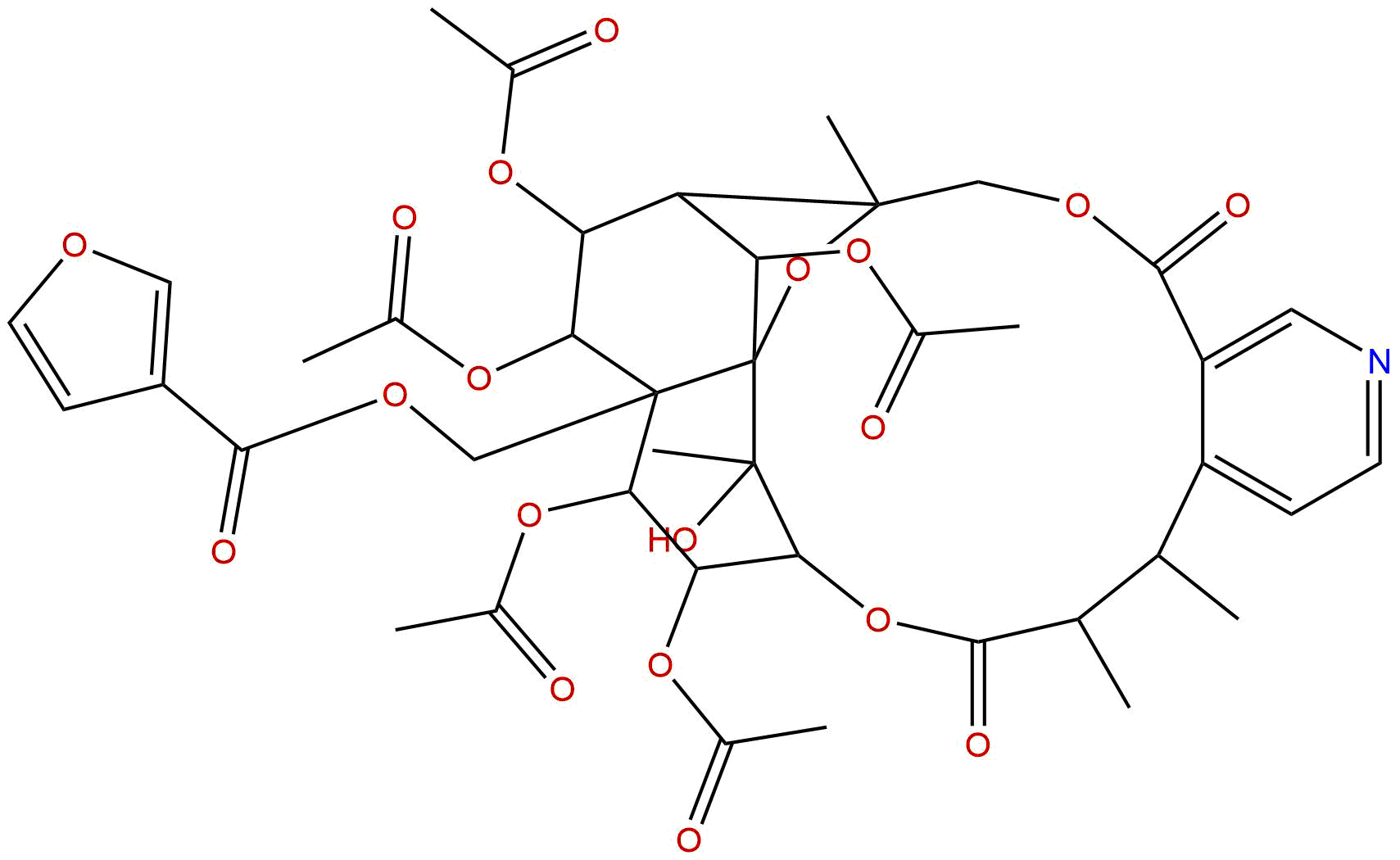
Hypoglaunine D (CAS number: 220751-00-8) is a structurally unique turpentine alkaloid isolated from plants of the Tripterygium genus. It has been identified as a structural analogue of Triptonine B, which expands the chemical diversity of alkaloid compounds in plants of the Triptoline genus. More importantly, the preliminary pharmacological screening revealed that Hypogalaunine D has anti human immunodeficiency virus (HIV) activity, which endows it with potential anti AIDS drug development value. Against the backdrop of HIV infection still posing a significant threat to global public health, finding anti HIV drugs with new mechanisms of action and low toxicity remains a top priority. The emergence of Hypoglanine D provides new clues for the discovery of novel anti HIV lead compounds from natural products.
This review aims to systematically review the research status of Hypoglaunine D, and conduct in-depth analysis from multiple dimensions such as its chemical structure and physicochemical properties, plant sources and extraction methods, pharmacological activity, mechanism of action, and drug evaluation. Combined with relevant disease target information, it explores its potential and challenges as an antiviral candidate molecule, in order to provide reference for further in-depth research and development.
Hypogalanine D belongs to the abietane type triterpenoid alkaloids, and its chemical structure is highly complex and unique. From a skeletal perspective, it is based on a typical turpentine triterpenoid core, but introduces nitrogen-containing groups on this core, thus forming the characteristics of alkaloids. Specifically, the structure of Hypoglaunine D may contain one or more nitrogen-containing heterocycles fused with the triterpenoid skeleton, such as pyridine or quinoline rings, which is the key distinguishing factor from ordinary triterpenoid compounds. As analogs of Triptonine B, the two have a high degree of similarity in core skeleton and substitution mode, but there are slight differences in the position or configuration of certain functional groups (such as hydroxyl, methoxy, acyl, etc.), which may have a significant impact on their biological activity. Accurate structural analysis typically relies on high-resolution mass spectrometry (HR-MS), one-dimensional and two-dimensional nuclear magnetic resonance spectroscopy (NMR) techniques, including ¹ H-NMR, ¹ ³ C-NMR, HMBC, HSQC, etc., to determine its planar structure and relative configuration.
In terms of physicochemical properties, Hypoglaunine D has a molecular weight of 857.8150 Da, which belongs to the category of high molecular weight natural products, consistent with its complex polycyclic structure. Its lipophilic water partition coefficient (LogP) is 1.9783, indicating that the compound has a certain degree of lipophilicity, but not extreme hydrophobicity. This characteristic allows it to cross membranes in organisms through passive diffusion or carrier mediated pathways. The topological polar surface area (TPSA) is as high as 265.8900 Å ², which is a very high value. TPSA is an important parameter for predicting drug oral absorption and blood-brain barrier penetration ability. It is generally believed that molecules with TPSA greater than 140 Å ² have poor oral absorption and are not easily able to penetrate the blood-brain barrier. The extremely high TPSA value of Hypoglaunine D suggests that its water solubility may be poor and its interaction with cell membranes or transporters may be limited. Its calculated water solubility is 0.0150 mg/mL, confirming its low water solubility characteristic, which may be one of the main challenges facing its medicinal properties. In addition, the predicted results show that its blood-brain barrier penetration ability is low, which may be a favorable feature for anti HIV drugs that mainly target the periphery, helping to reduce side effects in the central nervous system. The prediction of hERG inhibition as' no 'indicates a low potential risk of cardiac toxicity, which is a positive indication of drug efficacy. The Ames test result is 0.3, which is usually interpreted as having weak mutagenicity or being at a critical value, indicating the need for careful evaluation of its genetic toxicity in subsequent development.
Hypoglaunine D is mainly derived from the Celastraceae family of the Thunder God Vine genus(Tripterygium)Plants. Among the plants in this genus, Tripterygium wilfordii(T. wilfordii)Kunming Mountain Haitang(T. hypoglaucum)And Northeast Thunder God Vine(T. regelii)All of them have been reported to contain abundant triterpenoids of the turpentine type and their alkaloids. Hypoglanine D originally originated from Kunming Mountain Haitang(T. hypoglaucum)The name 'hypo glaucum' in the name of the separation and naming comes from this. Kunming camellia is often used in folk medicine to treat autoimmune diseases such as rheumatoid arthritis and lupus erythematosus, and its chemical diversity is the material basis for its pharmacological activity.
Extracting Hypoglanine D from plant materials typically follows the classic process of natural product chemistry. Firstly, the dried plant roots, stems, or whole plants are crushed and soaked or percolated using polar solvents such as methanol or ethanol to fully extract the polar and moderately polar components. After the extraction solution is concentrated under reduced pressure, the total extract is obtained. Due to the fact that Hypoglaunine D belongs to alkaloids, its alkaline properties can be utilized for preliminary enrichment. For example, the total extract is treated with acidic water (such as dilute hydrochloric acid or dilute sulfuric acid) to dissolve alkaloids into salts in the aqueous phase, and then extracted with organic solvents (such as ethyl acetate, chloroform) to remove neutral or acidic impurities. Subsequently, the aqueous phase is alkalized with alkaline solutions (such as ammonia water and sodium hydroxide) to free the alkaloids, and then extracted with organic solvents to obtain the total alkaloid fraction.
The total alkaloid fraction is a complex mixture that requires separation and purification using various chromatographic techniques. Common methods include silica gel column chromatography, alumina column chromatography, reverse phase silica gel column chromatography (such as C18), gel column chromatography (such as Sephadex LH-20) and high performance liquid chromatography (HPLC). During the separation process, TLC or HPLC is usually used for monitoring, combined with characteristic colorimetric reactions (such as Dragendorff reagent) or UV absorption for localization. Due to the similarity in structure between Hypoglanine D and Triptonine B analogues, separation is difficult and often requires a combination of multiple chromatographic methods for gradient elution and repeated purification to ultimately obtain the monomeric compound. The identification of its structure relies on the aforementioned spectroscopic techniques.
At present, research on the pharmacological activity of Hypoglaunine D mainly focuses on the field of antiviral activity, especially its anti HIV activity. According to existing literature reports, Hypoglaunine D has been described as an anti HIV compound with a clear target on the HIV virus itself and its infection process.
A key study has shown that Hypoglaunine D can effectively inhibit the replication of HIV virus in H9 lymphocytes. H9 cells are a commonly used human T lymphocyte line and a classic in vitro model of HIV virus infection. In this model, Hypoglaunine D exhibits dose-dependent antiviral effects, with a half effective concentration (EC ₅₀) of 22 μ g/mL. The EC ₅₀ value reflects the concentration required for a drug to inhibit 50% viral replication, which is 22 μ g/mL (approximately 25.6 μ M), indicating that Hypoglaunine D has some anti HIV activity, but its activity is relatively weak compared to clinically used anti HIV drugs such as zidovudine AZT, whose EC ₅₀ is usually in the nanomolar range. However, considering that natural products are usually used as lead compounds, their activity can be significantly enhanced through structural modification, so this discovery still has important implications.
In addition to its direct anti HIV activity, the target information related to Hypoglaunine D also suggests its potential broad-spectrum antiviral ability. The targets mentioned in the literature include MPO (possibly referring to macrophage myeloperoxidase, which is associated with inflammation), UL42, UL54, ICP27, TK, gD (these are essential enzymes or structural proteins for replication of herpesviruses such as herpes simplex virus HSV), CCR5, CXCR4 (co receptor for HIV entry into host cells), HIV1-PR (HIV protease), and INT (HIV integrase). The listing of these targets may be derived from large-scale target screening of Hypoglaunine D or its analogues, and may also reflect the multi-target characteristics of Tripterygium wilfordii compounds in the field of antiviral therapy. In particular, the potential effects on CCR5 and CXCR4 suggest that Hypoglaunine D may have a mechanism to block HIV entry into host cells, which is different from the classical drug mechanisms that act on reverse transcriptase or protease. The potential inhibition of HIV1-PR and INT points to other critical stages in the virus lifecycle.
However, it should be pointed out that there is currently relatively limited direct pharmacological research data on Hypoglanine D, and the target information mentioned above may be partially derived from research inferences on similar compounds (such as Triptonine B) or extracts of Tripterygium wilfordii. Therefore, systematic antiviral spectrum research, cytotoxicity testing (calculation of selectivity index SI), and activity evaluation of different virus strains (including drug-resistant strains) are urgent gaps that need to be filled in future research for Hypoglanine D.
Although the direct mechanism of action of Hypoglaunine D is not yet well studied, its potential molecular mechanism can be reasonably speculated based on its chemical structure (terpenoid alkaloids of the turpentine type) and reported target information.
Firstly, from a chemical structure perspective, Hypoglanine D has a large polycyclic skeleton and multiple polar functional groups, which gives it the potential to interact with various biomolecules such as proteins and nucleic acids. Its anti HIV activity may be achieved through the following mechanisms:
Inhibition of HIV reverse transcriptase or integrase This is the classic mechanism of action for many natural products against HIV. The target list of Hypoglaunine D includes HIV1-PR and INT, suggesting that it may directly bind to these viral enzymes, interfere with their active sites, and thus block the replication and integration process of the viral genome. For example, the phenolic hydroxyl or carbonyl groups in its structure may form hydrogen bonds or hydrophobic interactions with the amino acid residues in the enzyme's active center.
Block virus entry into host cells The target CCR5 and CXCR4 are the two main co receptors necessary for HIV to enter CD4+T cells. The gp120 protein of HIV first binds to the CD4 receptor, then undergoes conformational changes and binds to CCR5 (R5 tropic virus) or CXCR4 (X4 tropic virus), ultimately mediating the fusion of the viral envelope and cell membrane. Hypoglanine D may prevent virus entry by binding to these co receptors or interfering with the interaction between gp120 and receptors. This mechanism has attracted much attention in the development of anti HIV drugs, as acting on host targets can reduce the risk of the virus developing drug resistance.
Interference with viral gene expression and assembly ICP27 in the target is a regulatory protein of HSV-1, while UL42, UL54, TK, and gD are enzymes and structural proteins related to HSV replication. Although these targets are mainly associated with herpes virus, it suggests that Hypoglaunine D may have broad-spectrum antiviral activity, and its mechanism of action may involve interfering with the functions of viral DNA polymerase, thymidine kinase, or viral envelope glycoprotein. For HIV, similar mechanisms may act on its regulatory proteins (such as Tat, Rev) or assembly processes.
Regulating host immune or inflammatory response The target MPO (myeloperoxidase) is an enzyme released by neutrophils and macrophages, which participates in inflammatory responses and oxidative stress. HIV infection is often accompanied by chronic inflammation and immune activation. Hypoglanine D may indirectly inhibit viral replication by inhibiting MPO activity or regulating related signaling pathways, thereby reducing immunopathological damage caused by HIV infection.
Overall, Hypoglaunine D is likely a compound with multi-target effects. Its anti HIV activity may be achieved by simultaneously inhibiting multiple stages of the virus lifecycle (such as entry, reverse transcription, integration, protease maturation) and regulating the host microenvironment. This multi-target characteristic is one of the advantages of natural products, which helps overcome the problem of resistance to single target drugs. However, to confirm its exact mechanism of action, a series of molecular biology experiments are needed, such as surface plasmon resonance (SPR) or drug affinity reaction target stability (DARTS) experiments, to identify its direct binding protein, as well as to construct corresponding enzyme activity inhibition experiments and cellular level mechanism verification experiments.
To advance Hypoglanine D from a natural product lead compound to a clinical candidate drug, a systematic evaluation of its pharmacological properties is necessary. Based on existing information, its medicinal properties present both opportunities and challenges.
Advantages:
* Novel chemical framework As a triterpenoid alkaloid of the turpentine type, its structure is different from existing nucleoside, non nucleoside reverse transcriptase inhibitors or protease inhibitors, and it is expected to provide a new mechanism of action to combat drug resistance.
* Potential multi-target activity As mentioned earlier, multi-target action can help improve efficacy and reduce the incidence of drug resistance.
* Low risk of cardiac toxicity HERG inhibition is predicted as' no ', reducing the risk of fatal arrhythmias such as QT interval prolongation.
* Low blood-brain barrier penetration For drugs primarily used to treat peripheral HIV infection, this is an advantageous feature that can avoid side effects on the central nervous system.
Challenges and shortcomings:
* Relatively weak activity The EC ₅₀ is 22 μ g/mL, which is much lower than that of first-line clinical drugs. Structural optimization is needed to improve its antiviral efficacy.
* Extremely poor water solubility The water solubility is only 0.0150 mg/mL, which severely limits its oral bioavailability and the possibility of intravenous administration. Low water solubility is a common problem for many natural products with high molecular weight and high TPSA, and is one of the biggest obstacles to drug development.
* High molecular weight and high TPSA The molecular weight exceeds 500 Da and the TPSA exceeds 140 Å ², violating two of Lipinski's Rule of Five, indicating that its oral absorption may be extremely poor. This usually requires improvement through pharmaceutical methods such as prodrug design, nano formulations, liposome encapsulation, etc.
* Potential genetic toxicity The Ames test result is 0.3, which is weakly positive or at the critical value. Further in vivo and in vitro genetic toxicity tests (such as micronucleus test, chromosome aberration test) are needed to confirm its safety risk.
* Blank pharmacokinetic data Currently, there is a lack of data on the absorption, distribution, metabolism, and excretion (ADME) of Hypoglanine D in animal bodies. The key parameters such as metabolic stability, plasma protein binding rate, main metabolic pathways, half-life, etc. are unknown, which is the basis for evaluating its in vivo behavior.
Pharmacokinetic prediction and outlook:
Based on its physicochemical properties, it can be predicted that the oral bioavailability of Hypoglaunine D is extremely low. Its high TPSA and multiple hydrogen bond donors/acceptors make it difficult to penetrate the intestinal epithelial cell membrane. Even if absorbed, it may still be heavily metabolized due to first pass effects. Its metabolism may mainly occur in the liver, mediated by cytochrome P450 enzyme systems (such as CYP3A4), and may also undergo glucuronic acid or sulfate binding reactions. Due to its large molecular weight and complex structure, its metabolites may have diversity.
To overcome these barriers to drug development, future research directions should include:
1. Structural modification On the premise of retaining the core active groups, water solubility can be improved by introducing hydrophilic groups (such as phosphate groups, amino acids) or reducing molecular flexibility. You can also try simplifying the skeleton and reducing the molecular weight.
2. Prodrug design Esterify or phosphorylate the hydroxyl or carboxyl groups in the molecule to make prodrugs, which can be converted into active forms in the body after oral absorption.
3. New formulations Using nanotechnology such as lipid nanoparticles, polymer micelles, and self microemulsifying drug delivery systems to encapsulate Hypoglanine D, in order to enhance its solubility and bioavailability, and achieve targeted delivery.
4. route of administration Considering the difficulty of oral absorption, the development of injectable formulations (such as liposomal injections) or transdermal drug delivery preparations may be considered.
Although Hypoglanine D is still in a very early stage of research, its potential as an anti HIV lead compound cannot be ignored. Looking ahead to its clinical application prospects, it is necessary to analyze it from both short-term and long-term perspectives.
Short term prospects: Basic research and optimization of lead compounds
In the short term, the research focus should be on the following aspects:
1. Activity verification and lineage expansion Validate its antiviral activity in multiple HIV cell lines, including those with different affinities and drug resistance, and calculate the selectivity index (SI=CC ₅₀/EC ₅₀) to evaluate its safety window. At the same time, test its activity against other viruses such as HSV, HBV, HCV, influenza virus, etc., and explore its broad-spectrum antiviral potential.
2. In depth study of mechanisms Using biochemical and cellular biology methods to identify the virus or host protein targets it directly acts on. For example, by constructing an in vitro activity detection system for HIV-1 protease or integrase, their enzyme inhibitory activity can be verified; Detect whether it affects the expression of CCR5/CXCR4 or the binding of gp120 to receptors through flow cytometry.
3. Structure Activity Relationship (SAR) Study Using Hypoglanine D as a lead, more structurally similar compounds can be isolated from plants of the same genus, or a series of derivatives can be prepared through semi synthetic and total synthetic methods. The effects of different functional groups on HIV activity and toxicity can be systematically studied to find candidate molecules with stronger activity and lower toxicity.
4. Preliminary pharmacokinetic and toxicological evaluation Conduct preliminary pharmacokinetic experiments in rats or mice to understand their drug time curves, bioavailability, tissue distribution, and metabolic characteristics after oral and intravenous administration. At the same time, acute toxicity experiments and preliminary subchronic toxicity experiments were conducted to evaluate its safety.
Long term prospects: clinical translation and combination therapy
If a derivative with significantly improved activity, controllable toxicity, and improved pharmacokinetic properties can be obtained through the above research, its clinical translation prospects will be worth looking forward to.
1. As part of combination therapy Given its potential multi-target mechanism (such as entry inhibitors+integrase inhibitors), Hypoglaunine D derivatives are expected to be used in combination with existing nucleoside reverse transcriptase inhibitors (NRTIs), non nucleoside reverse transcriptase inhibitors (NNRTIs), or protease inhibitors (PIs) to form an efficient and low toxicity "cocktail" therapy, particularly effective against existing drug-resistant viral strains.
2. Targeting specific subgroups If its mechanism of action is confirmed to mainly block CCR5 co receptors, then it may be particularly suitable for treating patients with R5 tropic HIV-1 infection. This requires accompanying diagnosis to determine the patient's viral tropism.
3. Treating HIV related complications Compounds of the Thunder God Vine genus generally have anti-inflammatory and immunomodulatory activities. Hypoglanine D or its derivatives may have potential improvement effects on chronic inflammation, immune activation, and related complications (such as cardiovascular disease and neurocognitive disorders) caused by HIV infection while combating HIV, which will be its unique advantage compared to pure antiviral drugs.
4. Challenges and Risks It must be soberly recognized that the journey from natural products to marketed drugs is a long, expensive, and risky one. The complex chemical structure of Hypoglaunine D makes its full or semi synthetic cost expensive, which may limit its large-scale production. In addition, its potential genetic toxicity risks need to be thoroughly eliminated. The common hepatotoxicity, nephrotoxicity, and reproductive toxicity of compounds in the Thunder God Vine genus also require high attention and avoidance in derivative development.
Hypoglaunine D, as a unique terpenoid alkaloid of the turpentine type in plants of the Tripterygium genus, has attracted academic attention for its anti HIV activity. Although current research is still in its infancy, its novel chemical structure, potential multi-target antiviral mechanism, and preliminary demonstrated activity make it a natural product lead compound worthy of further exploration. This review systematically summarizes the information on its chemistry, origin, activity, mechanism, and drug properties, clearly revealing its potential as a candidate molecule for HIV resistance and the significant challenges it faces, especially its poor water solubility and potential genotoxicity issues.
Future research must focus on overcoming drug resistance barriers through medicinal chemical methods (structural modification, prodrug design) and modern formulation techniques, while verifying its mechanism of action and evaluating its safety through in-depth pharmacological and toxicological studies. The research process of Hypoglaunine D once again confirms the unique value of natural products in drug discovery, and reminds us that transforming a "chemical inspiration" from nature into clinically usable drugs requires interdisciplinary collaborative innovation and persistent efforts. With the progress of synthetic chemistry, molecular pharmacology and nanomedicine, Hygolaunine D and its analogues may eventually overcome many difficulties and contribute a force from nature to the fight against AIDS, a global disease.
Batch can search by a CAS number,one per line
