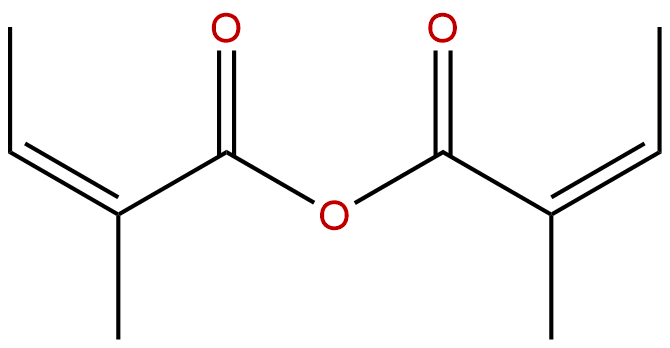


Product name: Angelic anhydride
Synonym name: (2Z)-2-Methylbut-2-enoic anhydride
Catalogue No.: BP1639
Cas No.: 94487-74-8
Formula: C10H14O3
Mol Weight: 182.219
Botanical Source: Synthesis
Physical Description: Liquid
Type of Compound: Aliphatics
Purity: 95%~99%
Analysis Method: HPLC-DAD or/and HPLC-ELSD
Identification Method: Mass, NMR
Packing: Brown vial or HDPE plastic bottle
The product could be supplied from milligrams to grams. Inquire for bulk scale.
We provide solution to improve the water-solubility of compounds, thereby facilitating the variety of activity tests and clinic uses.
For Reference Standard and R&D, Not for Human Use Directly.
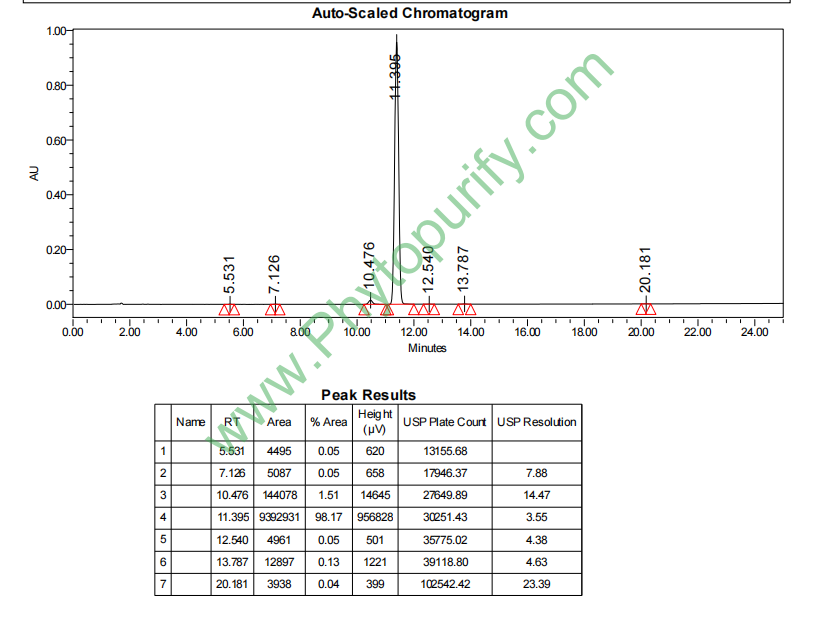
HPLC of Angelic anhydride
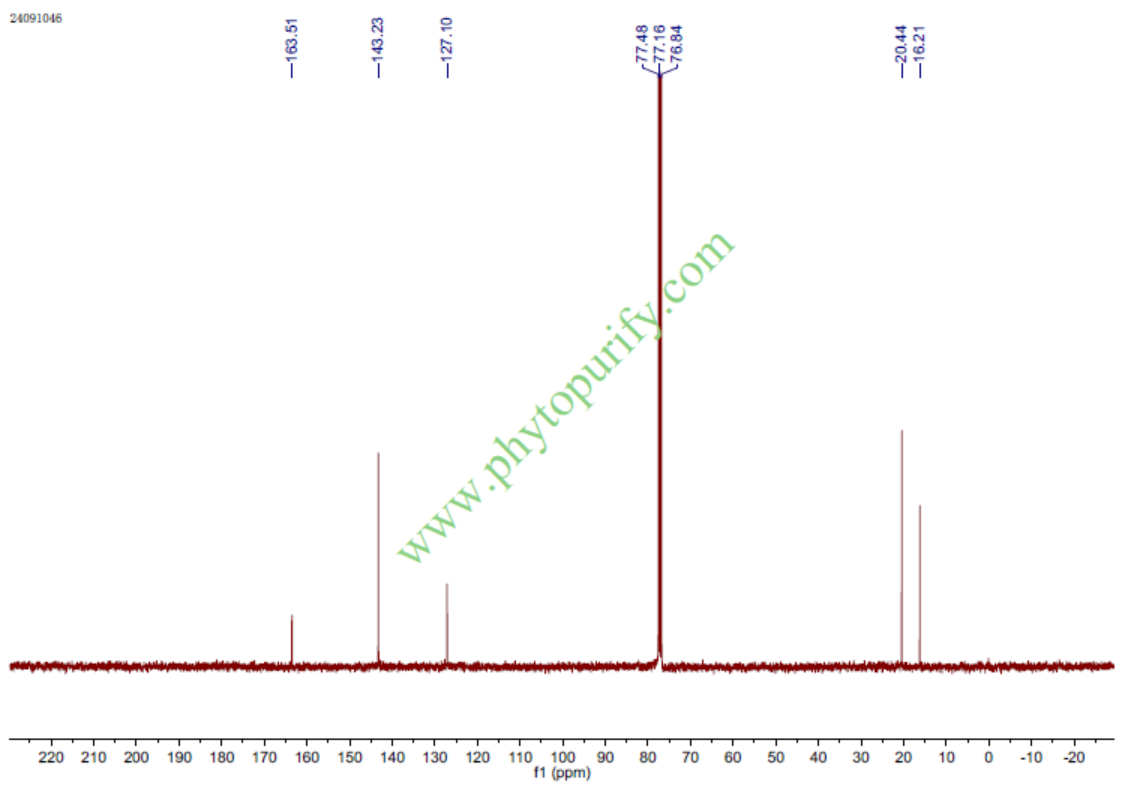
NMR of Angelic anhydride
Storage conditions:Short-term storage at 2~8℃, long-term storage at -20 ~ -80℃
43.3700
1.9118
1.9120
1.1379
4.2576
15.9622
High
59.6616
3.1339
Yes
Yes
No
No
Yes
No
0.3
No
Yes
Yes
Yes
As a common inflammatory skin disease, dermatitis has a complex pathogenesis involving abnormal activation of the immune system, impaired skin barrier function, and a cascade reaction of multiple inflammatory mediators. Although existing treatment methods such as glucocorticoids, calcineurin inhibitors, and biologics have achieved certain therapeutic effects, the side effects, drug resistance, and high costs associated with their long-term use have prompted researchers to continuously explore more promising candidate molecules from natural products. Angelica anhydride (CAS: 94487-74-8), as an anhydride compound derived from natural unsaturated fatty acids, has attracted much attention in recent years due to its significant anti-inflammatory activity in various inflammatory models, especially dermatitis related models. Its unique chemical structure enables it to interact with key proteins in various inflammatory signaling pathways, thereby regulating the expression of downstream inflammatory factors. This article aims to systematically review the chemical properties, plant sources, pharmacological activities, molecular mechanisms of action, pharmacological characteristics, and application prospects of Angelica sinensis anhydride in the field of dermatitis treatment, in order to provide comprehensive scientific references for the in-depth research and development of this natural product.
Angelica anhydride, chemically known as (Z) -2-methyl-2-butene anhydride, is an unsaturated fatty acid anhydride. Its molecular formula is C10H14O3 and its molecular weight is 182.2190 g/mol. Its core structure is formed by dehydration condensation of two Angelica sinensis acid (Z) -2-methyl-2-butenoic acid) molecules through an anhydride bond (- O - (C=O) -). The carbon carbon double bond in this structure is in a cis (Z-shaped) configuration, and this unsaturated site is the key to its chemical and biological reactivity.
In terms of physicochemical properties, the lipophilic water partition coefficient (LogP) of Angelica sinensis anhydride is 1.9118, indicating that it has a certain lipophilicity, which is conducive to penetrating cell membranes, but not excessively hydrophobic and affecting its distribution in aqueous biological environments. Its topological polar surface area (TPSA) is 43.37 Å ², which is relatively low, further supporting its good membrane permeability. The calculated water solubility is about 1.14 mg/mL, which belongs to the range of slightly soluble to soluble, providing some flexibility for its use in formulation development. It is worth noting that preliminary predictions of its pharmacological properties indicate that it has a high blood-brain barrier permeability, suggesting its potential central nervous system activity, although current research focuses on peripheral inflammation. In addition, preliminary toxicity screening showed no significant inhibitory effect on hERG potassium channels (hERG inhibition: no), reducing the risk of inducing QT interval prolongation in the heart; The Ames test result is 0.3, indicating a low risk of mutagenicity and providing preliminary positive signals for its safety assessment.
Angelica anhydride is not widely present in the plant kingdom, and its main natural precursor, Angelic acid, is relatively more distributed in certain Umbelliferae and Asteraceae plants. For example, the presence of Angelica sinensis or its ester derivatives has been detected in the roots of medicinal plants such as Angelica sinensis, Angelica dahurica, and certain types of lavender. Angelica acid anhydride usually does not exist in high abundance free form in plant bodies, but may be generated as a metabolic intermediate or through chemical transformations during extraction and processing (such as heating and dehydration) from precursor substances.
At present, literature reports on the extraction and preparation methods of Angelica sinensis anhydride mainly focus on chemical synthesis and semi synthetic pathways. The conventional strategy for obtaining from natural sources is to first extract from plant parts rich in Angelica sinensis acid, such as roots and stems. Common extraction methods include organic solvent extraction (such as methanol, ethanol, ethyl acetate), ultrasound assisted extraction, or supercritical CO2 fluid extraction to obtain crude extracts containing organic acids such as Angelica sinensis. Subsequently, high purity Angelica sinensis acid was isolated and purified by column chromatography (such as silica gel column, reverse phase C18 column) or preparative high-performance liquid chromatography (HPLC). Finally, purified Angelica sinensis acid undergoes intermolecular dehydration reaction in the presence of dehydrating agents such as acetic anhydride, dicyclohexylcarbodiimide, etc., to generate Angelica sinensis anhydride. This synthesis step has mild conditions and high yield, making it the main method for laboratory and potential large-scale production. In the future, exploring greener and more efficient biocatalytic methods for synthesizing Angelica sinensis anhydride, or directly discovering its natural form from specific plant metabolites, is a research direction worth paying attention to.
Numerous in vitro and in vivo pharmacological studies have confirmed that Angelica sinensis anhydride has broad and significant anti-inflammatory activity, particularly prominent in skin inflammation related disease models.
1. Anti inflammatory activity:
In various cellular inflammation models, Angelica sinensis anhydride exhibits strong anti-inflammatory effects. For example, in macrophages stimulated by lipopolysaccharide (LPS) or tumor necrosis factor alpha (TNF - α) (such as RAW 264.7 cells), human keratinocytes (HaCaT cells), and human peripheral blood monocytes, Angelica sinensis anhydride can dose dependently inhibit the production of key pro-inflammatory factors, including interleukin-6 (IL-6), interleukin-1 β (IL-1 β), TNF - α, and chemokine IL-8 (CXCL8). In animal models, local application or systemic administration of Angelica sinensis anhydride can effectively alleviate the symptoms of dermatitis induced by 12-oxo-tetradecanofobol-13-acetate (TPA), oxazolone or imiquimod in mice, manifested as significant reduction of ear swelling or skin thickening, decreased infiltration of inflammatory cells, and inhibition of epidermal proliferation.
2. Immune regulatory activity:
In addition to inhibiting classical pro-inflammatory factors, studies have also found that Angelica sinensis anhydride has a regulatory effect on helper T cell (Th) - related pathways. It can inhibit the expression of characteristic cytokines such as IL-17A and IL-22 in Th17 cells, and the Th17 pathway is crucial in the pathogenesis of diseases such as psoriasis and atopic dermatitis. In addition, it can upregulate the expression of the skin antimicrobial peptide human beta defentin-2 (DEFB4A), which not only enhances the innate immune defense of the skin, but also plays a complex role in inflammation regulation.
3. Other potential activities:
Based on its core chemical structure and inhibitory effects on pathways such as nuclear factor kappa B (NF - κ B), signal transduction and transcriptional activation factor 3 (STAT3), it is speculated that Angelica sinensis anhydride may have activity in other disease models associated with chronic inflammation and abnormal cell proliferation, such as colitis, arthritis, and certain tumors. However, this requires more experimental data to support.
The anti-inflammatory effect of Angelica sinensis anhydride is not achieved through a single target, but through the synergistic effect of multiple targets and pathways. Its mechanism of action is closely centered around the core signaling axis of dermatitis occurrence and development.
1. Inhibition of NF - κ B signaling pathway:
NF - κ B is the core transcription factor of inflammatory response. Research has shown that Angelica sinensis anhydride can effectively inhibit the phosphorylation and degradation of I κ B α, thereby preventing the translocation of NF - κ B p65 subunit to the nucleus. This directly leads to a decrease in transcription of downstream pro-inflammatory genes such as TNF, IL6, IL1B, CXCL8, PTGS2. Among them, inhibition of cyclooxygenase-2 (PTGS2/COX-2) means that it can reduce the production of prostaglandin inflammatory mediators.
2. Regulating the JAK/STAT signaling pathway:
The sustained activation of STAT3 is a key characteristic of many inflammatory and proliferative skin diseases. Angelica acid anhydride can inhibit tyrosine phosphorylation of STAT3 (such as Tyr705 site), block its dimerization and nuclear translocation, and thus inhibit the expression of STAT3 dependent genes (such as IL17A, IL22, BCL2, etc.). This may be an important mechanism for its inhibition of Th17 response and abnormal proliferation of epidermal cells.
3. Regulating other pathways such as MAPK:
There is evidence suggesting that Angelica sinensis anhydride may have a certain inhibitory effect on the activation of mitogen activated protein kinase (MAPK) pathways, such as p38 and JNK, which are also involved in the production of inflammatory factors and cellular stress responses.
4. Direct interaction and protein modification:
As an anhydride compound, Angelica sinensis anhydride has high electrophilicity. Its anhydride bond and α, β - unsaturated carbonyl structure (which may be formed after metabolism or hydrolysis) can undergo Michael addition or acylation reactions with nucleophilic groups in proteins, such as cysteine thiol groups and lysine amino groups. This covalent modification may directly inhibit the activity of key inflammatory signaling proteins such as IKK, JAK, STAT3, etc., or affect their protein stability and function. This mode of action makes it a potential covalent inhibitor, but also requires a more refined evaluation of its selectivity to avoid potential off target effects.
In summary, Angelica sinensis anhydride inhibits the two core inflammatory/immune signaling axes of NF - κ B and STAT3, and may regulate the function of key target proteins through covalent modification, forming a multi-level anti-inflammatory network, effectively suppressing the inflammatory cascade reaction, immune cell activation, and epidermal abnormal proliferation in the pathological process of dermatitis.
Based on computational predictions and preliminary experimental data, Angelica sinensis anhydride has shown certain potential as a drug, but its comprehensive pharmacokinetic (PK) and pharmacodynamic (PD) characteristics still need to be further explored.
1. Absorption, distribution, metabolism, and excretion (ADME):
* Absorption: Its moderate LogP value and lower TPSA indicate good oral bioavailability or transdermal absorption potential, especially for the local administration route required for dermatitis.
* Distribution: The predicted high blood-brain barrier permeability suggests a wide tissue distribution, but the specific degree of enrichment in the skin target tissue needs to be verified through experiments.
* Metabolism: As an acid anhydride, it is easily hydrolyzed by esterases or non enzymes in the body and rapidly converted into its active form - Angelica acid. Therefore, its in vivo activity may be partially attributed to its hydrolysis products. Both acid anhydrides and hydrolysis products may undergo further phase I (such as cytochrome P450 enzyme oxidation) and phase II (such as glucuronic acid binding, sulfuric acid binding) metabolism. It is crucial to clarify its main metabolites, metabolic enzymes, and metabolic rate.
* Excretion: It is expected that its metabolites will mainly be excreted from the body through the kidneys (urine) or bile (feces).
2. Analysis of pharmacological parameters:
* Advantage: Small molecular weight (<500), simple structure, easy to synthesize and modify; No hERG inhibition warning, preliminary positive for cardiac safety; Ames test negative, low risk of genetic toxicity; Has a clear multi-target anti-inflammatory mechanism.
* Challenges and uncertainties: ① Chemical stability: Anhydride bonds are sensitive to nucleophilic reagents such as water, alcohols, and amines, and may rapidly hydrolyze in formulations and in vivo environments, affecting the exposure and administration of the original drug (which may be more suitable for topical application rather than oral administration). ② Selective/off target effects: Its potential covalent modification properties are a double-edged sword. While enhancing efficacy and persistence, it may also bring unpredictable off target toxic side effects, requiring systematic selective screening and safety evaluation. ③ Lack of comprehensive PK/PD data: At present, there is still a blank space regarding key PK parameters such as half-life, absolute bioavailability, tissue distribution specificity, as well as the quantitative relationship between effective blood drug/tissue concentration and drug efficacy.
3. Preliminary toxicity: In addition to the Ames test, comprehensive preclinical toxicity studies are still needed, including acute toxicity, subchronic toxicity, reproductive toxicity, and evaluation of irritation and allergy to local skin application, especially to assess the long-term safety issues that may arise from its covalent modification properties.
Angelica anhydride has shown unique application prospects in the field of dermatitis treatment, but its transformation still faces opportunities and challenges.
1. Application prospects:
* Topical therapeutic agents for local use: In view of its significant local anti-inflammatory activity, good skin penetration potential and inhibition of modern dermatitis treatment targets such as the Th17/IL-23 axis, the development of angelic anhydride or its stable derivatives as topical cream, gel or ointment for the treatment of atopic dermatitis, psoriasis and contact dermatitis is the most direct and relatively low risk transformation path. Its multi-target effect may produce synergistic therapeutic effects on dermatitis with complex etiology, and may reduce the occurrence of resistance to single pathway inhibitors.
* New anti-inflammatory lead compounds: Its core structure can serve as an excellent starting point for pharmaceutical chemistry optimization. Through structural modifications such as introducing substituents to regulate reaction activity, improve stability, and enhance target selectivity, it is expected to develop the next generation of anti-inflammatory drugs with stronger activity, higher selectivity, and better pharmacokinetic properties. These drugs are not only used for dermatitis, but may also be extended to other chronic inflammatory diseases such as rheumatoid arthritis and inflammatory bowel disease.
* Combination therapy strategy: The combination of Angelica sinensis anhydride with existing standard therapeutic drugs (such as low valent glucocorticoids and calcineurin inhibitors) may produce a synergistic effect, allowing for a reduction in the dosage of each individual drug, a decrease in side effects, and an improvement in treatment index.
2. Challenges faced:
* Stability and delivery system: Resolving its in vitro and in vivo instability is the key to drug development. New drug delivery systems such as nanoparticles, liposomes, microemulsions, or prodrug strategies need to be developed to protect the anhydride structure, control its hydrolysis and release rate, and achieve specific delivery and sustained action at the target site.
* Deep analysis of mechanism of action and selectivity: It is necessary to use chemical biology methods (such as activity-based protein analysis probes) to accurately map the covalent modification targets at the whole proteome level, clarify the molecular basis of their therapeutic effects and potential toxicity, and guide the design of safe drugs.
* Preclinical and clinical research gaps: The system needs to complete preclinical pharmacodynamic, pharmacokinetic, and toxicological studies that comply with Good Clinical Practice (GLP), establish a reliable chain of evidence for disease animal models, and ultimately advance to clinical trials to verify their safety, tolerability, and efficacy in humans.
Angelica acid anhydride, as an anhydride compound derived from natural fatty acids, has shown remarkable potential in pharmacological interventions for dermatitis due to its unique chemical structure and multi-target anti-inflammatory mechanism. It effectively regulates various cytokine networks, including TNF, IL-6, IL-1 β, IL-17A, and IL-22, by synergistically inhibiting key inflammatory signaling pathways such as NF - κ B and STAT3, thereby suppressing the development of skin inflammation from multiple links. The preliminary pharmacological parameters provide a favorable basis for its further development. However, the chemical stability, potential covalent modification properties, and complete ADME/T characteristics that pose selective questions are scientific issues that must be addressed and resolved in the process of transforming from "active natural products" to "candidate drugs". Future research should focus on improving its stability and selectivity through rational drug design, optimizing its efficacy using advanced delivery technologies, and consolidating its safety and efficacy data through systematic preclinical evaluation. In summary, Angelica sinensis anhydride is not only a promising candidate molecule for dermatitis treatment, but also a valuable chemical tool and research template for exploring multi-target, covalent anti-inflammatory drug development models. Its subsequent development deserves continuous attention and in-depth exploration in the fields of natural product pharmacology and medicinal chemistry.
