| Catalog No | Package | Original Price | Price | Inventory | Quantity | Operating |
|---|---|---|---|---|---|---|
| BP4704-5mg | 5mg | $490.00 | Sign in |
|


Storage conditions:Short-term storage at 2~8℃, long-term storage at -20 ~ -80℃
Glycyrrhizide (CAS number: 125310-04-5) is a natural flavonoid glycoside isolated from the plant Glycyrrhiza eurycarpa P.C. Li in the genus Glycyrrhiza. As one of the components with unique structure and biological activity in the licorice family, glycyrrhizin has received widespread attention in recent years due to its significant pharmacological activity, especially its potential application in the field of anti ulcer. Ulcerative diseases, as a common digestive system disease in clinical practice, have complex etiology and involve multiple mechanisms such as gastric mucosal barrier disruption, abnormal gastric acid secretion, and inflammatory response. Although traditional therapeutic drugs are effective, they often come with certain side effects. Natural products have become important resources for new drug development due to their structural diversity and biological activity. This article will systematically review the chemical structure and physicochemical properties, plant sources and extraction methods, pharmacological activity and mechanism of action, pharmacological evaluation and pharmacokinetic characteristics of glycyrrhizin, and explore its clinical application prospects and future research directions.
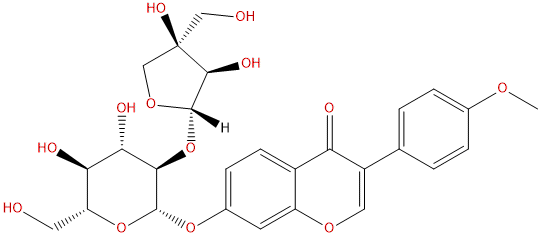
Huanglicorice glycoside is an isoflavone diglycoside with a molecular formula of C27H30O13 and a molecular weight of 562.5240. Its structural characteristics include a core structure of isoflavones connected to two glycosides through glycosidic bonds, giving it high polarity and water solubility. The LogP value is 0.0266, indicating strong hydrophilicity and a water solubility of 0.5457, suitable for dissolution and absorption in aqueous media. The total polar surface area (TPSA) is 197.7400 Å ², and larger polar surface areas are typically associated with lower cell membrane permeability. The low permeability of the blood-brain barrier suggests limited distribution in the central nervous system, which may reduce the risk of central side effects. The hERG inhibition experiment result was negative, indicating that glycyrrhizin has a weak inhibitory effect on cardiac potassium channels and a low risk of cardiac toxicity. The Ames test value is 1.5, indicating a low risk of genotoxicity and meeting safety requirements.
Huanglicorice glycoside is mainly derived from the plant Glycyrrhiza eurycarpa P.C. Li, which is widely used in traditional Chinese medicine and has the effects of harmonizing various medicines and relieving gastrointestinal discomfort. The root and stem parts of plants are the main accumulation sites of glycyrrhizin. The extraction method usually uses a mixed solvent of alcohols (such as ethanol, methanol) and water for extraction, combined with ultrasound assisted extraction or reflux extraction techniques to improve extraction efficiency. The extract was concentrated, liquid-liquid separated, and purified by column chromatography to obtain high-purity glycyrrhizin. Modern separation techniques such as high-performance liquid chromatography (HPLC) and mass spectrometry (LC-MS) are widely used for qualitative and quantitative analysis to ensure the quality and purity of extracts.
The pharmacological activity research of Huanglicorice glycoside mainly focuses on its anti ulcer effect. The experimental models include alcohol induced gastric mucosal injury, stress ulcers in rats, and gastric ulcer models induced by nonsteroidal anti-inflammatory drugs (NSAIDs). Research has shown that glycyrrhizin can significantly reduce gastric mucosal damage, promote ulcer healing, and exhibit good gastric mucosal protective effects. In addition, Huanglicorice glycoside also has anti-inflammatory, antioxidant, and regulatory functions of gastrointestinal hormone secretion, which synergistically promote gastric mucosal repair and functional recovery. Its anti-inflammatory effect is mainly achieved by inhibiting prostaglandin synthesis enzymes PTGS1 and PTGS2, reducing the production of inflammatory mediators. The regulatory effect of Huanglicorice glycoside on the gastric mucus secretion related protein MUC5AC helps to enhance the gastric mucosal barrier function. Relevant in vitro cell experiments and animal models have confirmed its good safety and effectiveness.
The anti ulcer effect of Huanglicorice glycoside involves multi-target and multi pathway regulation. The main targets include:
Overall, glycyrrhizin exerts its anti ulcer effect through multiple mechanisms, including anti-inflammatory effects, protection of the gastric mucosal barrier, regulation of gastric acid secretion, and promotion of tissue repair.
The pharmacological evaluation of Huanglicorice glycoside shows that it has good safety and drug properties. The molecular weight is 562.5240, slightly higher than the ideal range of traditional small molecule drugs, but its low LogP and high TPSA indicate good water solubility and suitability for the development of oral formulations. Low blood-brain barrier permeability reduces the risk of central toxicity. HERG channel inhibition is negative, reducing the risk of cardiac toxicity. The Ames test results show that its genotoxicity is low and its safety is high.
In terms of pharmacokinetics, Huanglicorice glycoside, due to the presence of sugar groups in its structure, may release active isoflavone components through enzymatic hydrolysis in the gastrointestinal tract, affecting its bioavailability. It has good water solubility, which is beneficial for gastrointestinal absorption, but its larger polar surface area may limit its cell membrane permeability and affect its distribution in the body. The metabolic pathways of the liver are not fully understood, and it is speculated that they are mainly metabolized through corresponding glycosidases and oxidases. Further systematic research is needed on key pharmacokinetic parameters such as half-life and clearance rate in vivo.
Given the significant activity of glycyrrhizin in anti ulcer and gastrointestinal protection, its potential as a candidate molecule for novel anti ulcer drugs is enormous. Currently, clinical treatment of gastric ulcers mainly relies on proton pump inhibitors (PPIs) and H2 receptor antagonists, but long-term use poses issues with drug tolerance and side effects. Huanglicorice glycoside, with its multi-target and multi mechanism advantages, is expected to become a safe and effective alternative or adjuvant therapy drug.
Future research should focus on its pharmacokinetic characteristics, dosage form optimization, and clinical safety evaluation. Meanwhile, by combining modern drug design techniques and utilizing structural modifications to enhance its bioavailability and targeting, oral sustained-release or gastric mucosal targeted formulations can be developed. In addition, the potential role of glycyrrhizin in other gastrointestinal diseases such as gastritis and enteritis is also worth further exploration. The development of multi center clinical trials will be the key to promoting its clinical translation.
Huanglicorice glycoside, as an isoflavone glycoside derived from Glycyrrhiza eurycarpa, exhibits significant pharmacological activity and multi-target mechanism of action in the field of anti ulcer due to its unique chemical structure and good physicochemical properties. Its good safety and drug properties provide a solid foundation for the development of new drugs. In the future, through in-depth pharmacokinetic studies and clinical validation, glycyrrhizin is expected to become an important natural drug resource in the treatment of gastrointestinal diseases. Continuous basic and clinical research will drive it from the laboratory to clinical applications, benefiting a wide range of patients.
