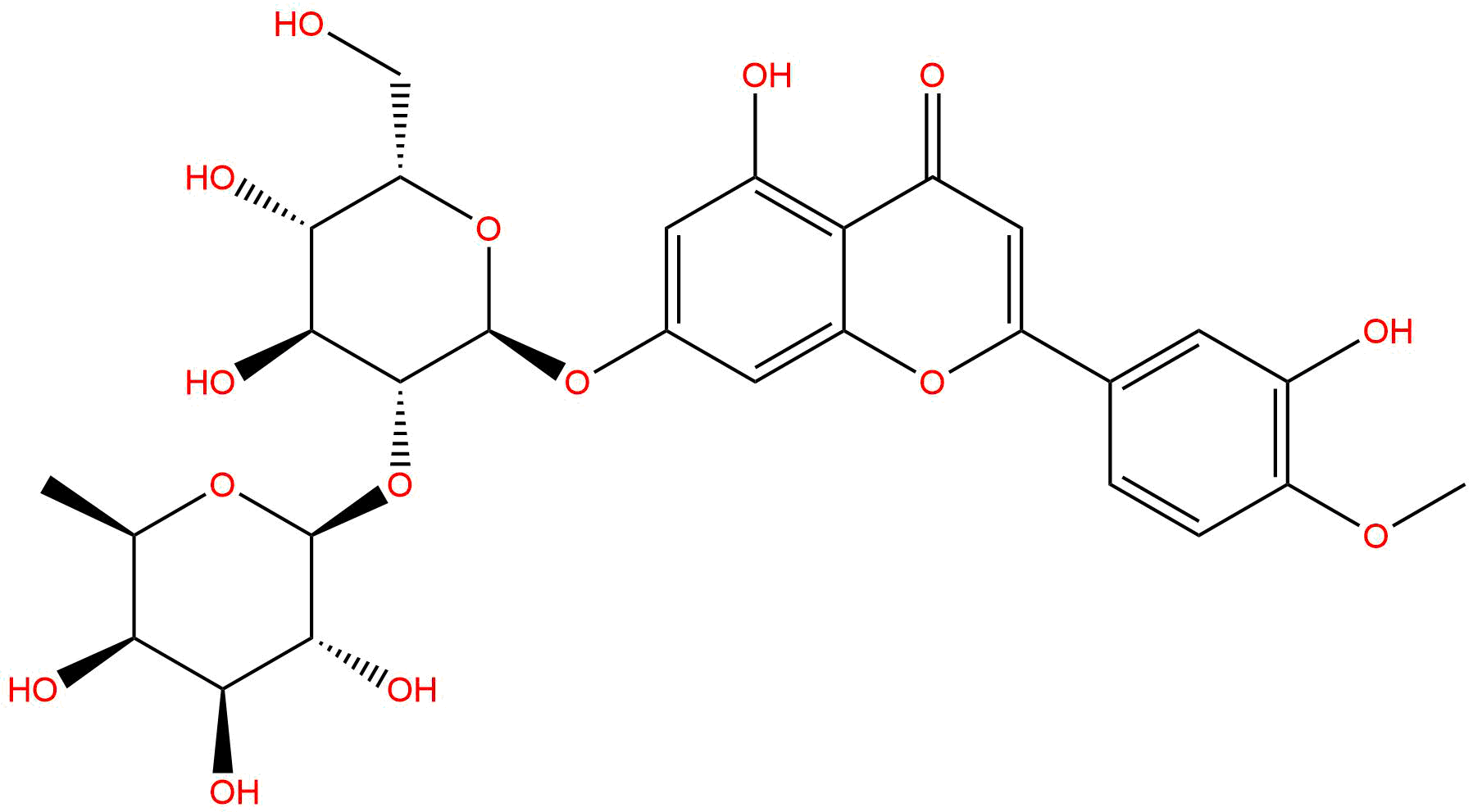


Product name: Neodiosmin
Synonym name: Diosmetin 7-neohesperidoside
Catalogue No.: BP3881
Cas No.: 38665-01-9
Formula: C28H32O15
Mol Weight: 608.549
Botanical Source: Citrus aurantium
Physical Description:
Type of Compound:
Purity: 95%~99%
Analysis Method: HPLC-DAD or/and HPLC-ELSD
Identification Method: Mass, NMR
Packing: Brown vial or HDPE plastic bottle
The product could be supplied from milligrams to grams
Inquire for bulk scale.
For Reference Standard and R&D, Not for Human Use Directly.
Description:
Neodiosmin has poor aqueous solubility but exerts a good debittering effect and is a strong antioxidant with potential applications in foods, beverages, and pharmaceutical preparations.
References:
J Agric Food Chem. 2013 Feb 27;61(8):1686-93.
HPLC-PDA-MS and NMR characterization of a hydroalcoholic extract of Citrus aurantium L. var. amara peel with antiedematogenic activity.
The phytochemical profile of a hydroalcoholic extract of Citrus aurantium var. amara L. peel, used as herbal medicine, was characterized by HPLC-PDA-MS.
METHODS AND RESULTS:
Two di-C-glycosyl flavones (vincenin II and diosmetin 6,8-di-C-glucoside), a series of flavones (luteolin 7-O-neohesperidoside, rhoifolin, and Neodiosmin), and flavanone (neoeriocitrin, naringin, and neohesperidin) 7-O-neohesperidosides and two methoxyflavones (nobiletin and tangeretin), commonly present in Citrus, were identified. Furthermore, brutieridin and melitidin, two 3-hydroxy-3-methylglutaryl flavanone glycosides, were also characterized along with rhoifolin 4'-glucoside and three coumarins (8,3'-β-D-glucopyranosyloxy-2'-hydroxy-3'-methylbutyl-7-methoxycoumarin, merazin hydrate, and isomerazin). A preparative isolation procedure followed by NMR spectroscopy confirmed the proposed structures of the major flavonoids and identified the coumarins.
CONCLUSIONS:
The phenolic content was found to be 14.8 mg mL(-1), and naringin and neohesperidin were the compounds present in the highest concentration (3.6 and 2.6 mg mL(-1)). The extract of C. aurantium peel inhibited significantly (p < 0.05) both histamine- and dextran-induced edema in rats in a concentration-dependent manner (IC(50) = 119.6 and 118.3 mg kg(-1), respectively), providing evidence for the therapeutic use of C. aurantium var. amara peel.
Starch -Stärke, 2016, 69(5-6):1-9.
Increased solubility and taste masking of a ternary system of neodiosmin with β -cyclodextrin and lysine: Ternary system for increasing solubility and masking bitter tastes
Neodiosmin has poor aqueous solubility but exerts a good debittering effect and is a strong antioxidant with potential applications in foods, beverages, and pharmaceutical preparations.
METHODS AND RESULTS:
The water solubility of Neodiosmin was greatly enhanced by forming a Neodiosmin/β-cyclodextrin/lysine ternary inclusion complex. The inclusion type is described in detail in terms of its structural aspects using a phase diagram of solubility. The Neodiosmin/β-cyclodextrin/lysine ternary inclusion complex was synthesized and characterized by thermal analysis and powder X-ray diffractometry (XRD). The molecular and fractal structures of the ternary complexes were investigated using 1H nuclear magnetic resonance (1H NMR) spectroscopy and Fourier transform infrared (FT-IR) spectroscopy. Additionally, scanning electron microscopy (SEM) revealed that Neodiosmin was embedded in a matrix of β-cyclodextrin with lysine.
CONCLUSIONS:
The results demonstrated that the inclusion complex was formed and that the solubility of Neodiosmin was greatly improved. Additionally, the bitterness-masking power of this system was evaluated by a panel test using a series of limonin concentrations as a reference scale. The Neodiosmin/β-cyclodextrin/lysine ternary inclusion complex showed the highest efficacy, and the bitterness attenuation was statistically significant.
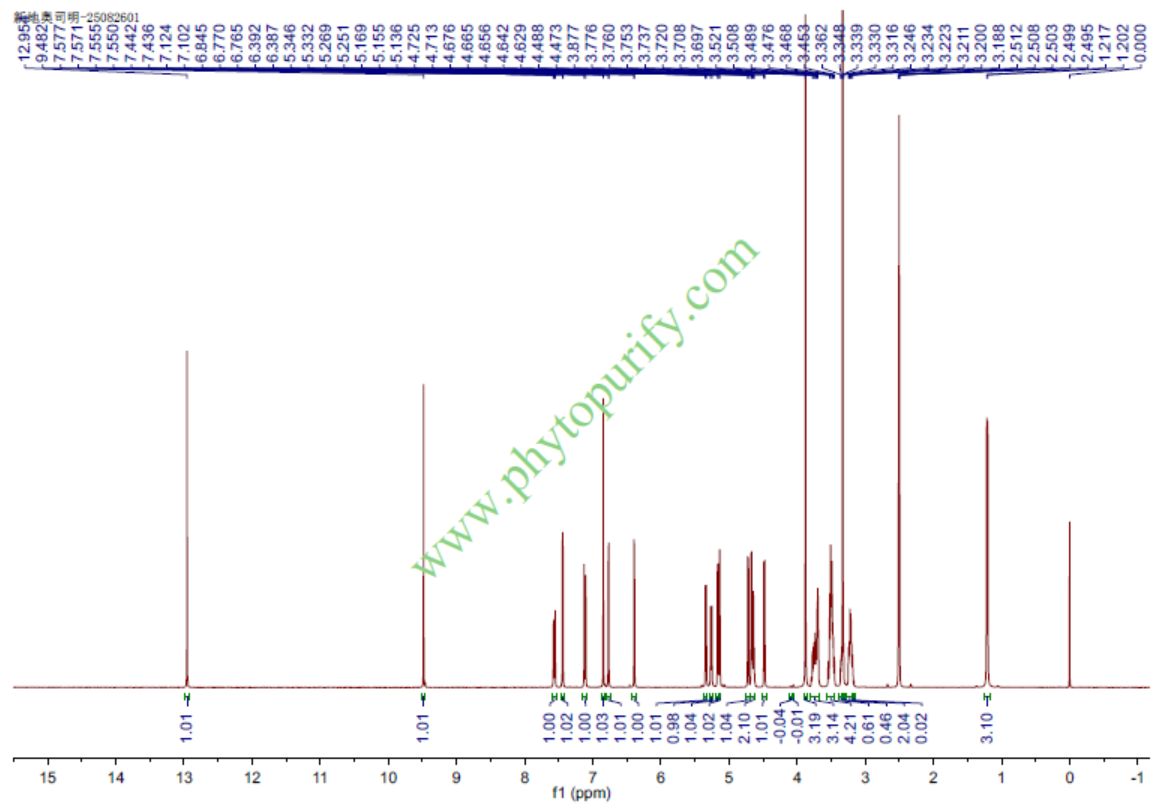
HNMR of Neodiosmin
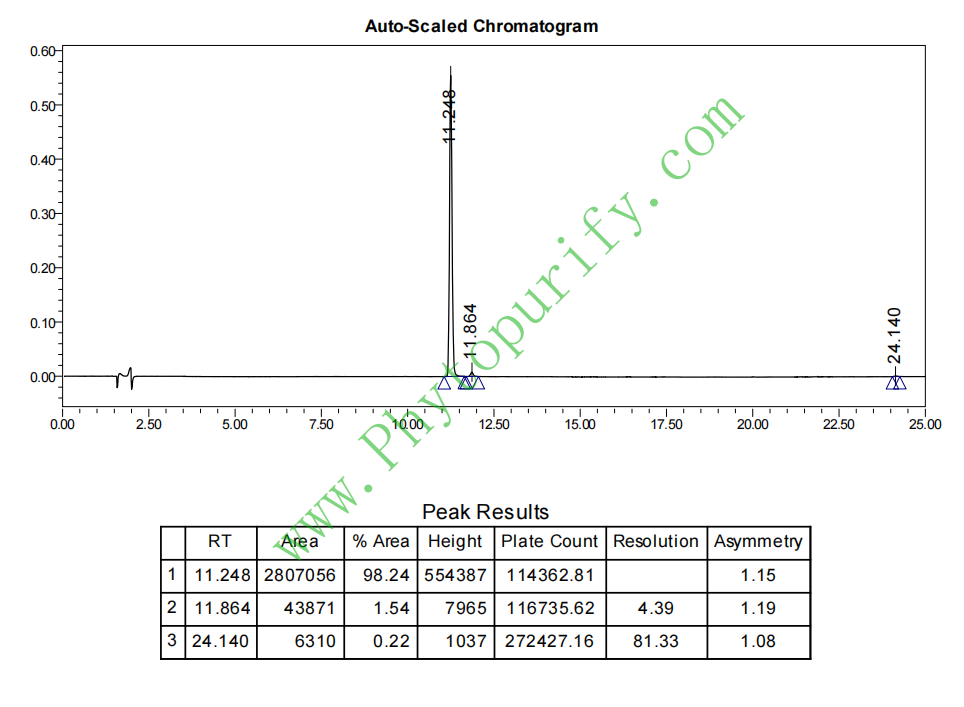
HPLC of Neodiosmin
Storage conditions:Short-term storage at 2~8℃, long-term storage at -20 ~ -80℃
238.2000
-.1109
-.1190
3.0187
.4928
.1696
Low
80.5746
4.6806
Yes
No
Yes
No
Yes
No
0.6
Yes
No
Yes
Yes
Chronic Venous Insufficiency (CVI) is a common and highly prevalent vascular disease in clinical practice. Its pathological and physiological mechanisms are complex, involving multiple links such as venous wall structural remodeling, valve dysfunction, inflammatory response, and microcirculation disorders. For a long time, flavonoids represented by Diosmin have played an important role as vascular protectants in the treatment of CVI and its complications such as venous edema, leg heaviness, pain, and skin nutritional disorders. However, with the deepening of research on the chemical diversity and pharmacological activity spectrum of natural products, researchers have found that citrus plants are not only rich in diosmin, but also coexist with a series of structurally similar flavonoid glycosides, among which Neodiosmin has gradually attracted the attention of the pharmacological community.
Neodiosmin, also known as 5,7-dihydroxy-2- (3-hydroxy-4-methoxyphenyl) -4H-1-benzopyran-4-one-7- [(6-deoxy - α - L-mannopyranosyl) - (1 → 2) - β - D-glucopyranoside], is a naturally occurring flavonoid glycoside. Compared with diosmin, neodiosmin has structural differences in the sugar moiety, and this subtle chemical structural change endows it with unique physicochemical properties and potential biological activity. Although the clinical application of neostigmine is far less extensive than that of dexmedetomidine, recent basic research has revealed its significant potential in regulating venous tone, inhibiting matrix metalloproteinases (MMPs) activity, anti-inflammatory effects, and improving endothelial function. Especially targeting multiple key targets related to venous insufficiency, such as MMP2, MMP9, endothelin receptor A (EDNRA), angiotensin-converting enzyme (ACE), and cell adhesion molecules (ICAM1, VCAM1), Neodexmedetomidine exhibits multi-target regulation, making it an important candidate molecule for the development of novel venous active drugs. This article aims to systematically review the chemical characteristics, plant sources, pharmacological activities, mechanisms of action, and pharmacological evaluation of Neostigmine, in order to provide comprehensive academic references for the in-depth research and clinical translation of this natural product.
The chemical structure of Neodiosmin belongs to a typical flavonoid glycoside compound, with its parent nucleus being flavonoids, and the substitution mode on the B ring being 3 ′ - hydroxy-4 ′ - methoxy, which is the glycoside part of Isorhoifolin. Compared with diosmin (whose aglycone is lignin, Diosmetin, i.e. 4 ′ - methoxy-3 ′, 5,7-trihydroxyflavone), neodiosmin retains a hydroxyl group at the 3 ′ position of the B ring, while diosmin is a hydroxyl group at this position. The two are isomers, but their glycosylation modes are different. The sugar chain of Neohesperidose is composed of two monosaccharides: β - D-glucopyranose on the inner side and α - L-rhamnopyranose on the outer side, which are connected by (1 → 2) glycosidic bonds to form the Neohesperidose structure and linked to the hydroxyl group at position 7 of the glycoside. This sugar group composition is completely different from that of diosmin (usually rutinose, also known as α - L-rhamnose - (1 → 6) - β - D-glucose), and is a key structural feature that distinguishes the two.
From the perspective of physical and chemical properties, the molecular formula of Neostigmine is C28H32O15, with a molecular weight of 608.5490 g/mol, which belongs to the category of natural products with medium molecular weight. Its lipophilic water partition coefficient (LogP) is -0.1109, indicating that the compound has strong hydrophilicity and good solubility in aqueous phase (water solubility parameter is 3.0187). This characteristic is closely related to the presence of multiple phenolic hydroxyl groups and disaccharide structures in its molecule. The Topological Polar Surface Area (TPSA) is as high as 238.2000 Å ², much higher than the threshold commonly believed to be able to pass through the blood-brain barrier (about 90 Å ²), indicating that neostigmine is difficult to enter the central nervous system through passive diffusion, and its pharmacological effects are mainly limited to peripheral tissues, especially the vascular system. In addition, the compound exhibits characteristic absorption under ultraviolet light, with maximum absorption wavelengths typically ranging from 250-270 nm (band II, A-ring benzoyl system) and 330-350 nm (band I, B-ring cinnamyl system). This spectral feature can be used for its qualitative and quantitative analysis. In terms of stability, flavonoid glycosides are usually sensitive to acids, bases, and high temperatures, and are prone to hydrolysis or degradation. Therefore, it is necessary to pay attention to the control of storage conditions and experimental environments in in vitro and in vivo studies.
The distribution of neostigmine in nature is relatively limited, mainly found in the leaves, fruits, and peels of citrus plants in the Rutaceae family. Among them, citrus leaves (Citrus reticulata Blanco or Citrus aurantium L.) are considered one of the main sources of neostigmine. Research has shown that neostigmine can be detected in leaf extracts of bergamot (Citrus medica L. var. sarcodactylis), lemon (Citrus limon), and lime (Citrus aurantium). It is worth noting that the content of neostigmine in plants is usually much lower than its homologs diosmin or hesperidin, and it is a minor flavonoid glycoside component. Its biosynthetic pathway is related to the flavonoid metabolic network commonly found in citrus plants, involving the phenylpropanoid metabolic pathway, flavonoid skeleton synthesis, and subsequent hydroxylation, methylation, and glycosylation modifications. The accumulation of Neostigmine may be influenced by factors such as plant variety, growth stage, harvest season, and environmental stress (such as light and drought).
For the extraction of Neostigmine, organic solvent extraction, ultrasound assisted extraction, and modern chromatographic separation techniques are currently mainly used. The traditional extraction method uses ethanol or methanol water mixed solvents (such as 70% methanol or 80% ethanol) as extraction agents to extract total flavonoids from dried citrus leaf powder through cold soaking, reflux, or percolation. Due to the high polarity of Neostigmine, increasing the proportion of water in the extraction solvent can help increase its dissolution rate. Ultrasound assisted extraction (UAE) can destroy plant cell walls through cavitation effect, significantly shorten extraction time and improve yield. After initial extraction, the crude extract contains various impurities such as flavonoid glycosides, coumarins, and volatile oils, which require further purification. Common purification methods include: macroporous adsorption resin column chromatography (such as HPD-100, AB-8 resin), which utilizes the differences in adsorption desorption characteristics of different flavones for preliminary separation; Polyamide column chromatography achieves selective enrichment of flavonoids through hydrogen bonding between amide groups and phenolic hydroxyl groups; As well as preparative high-performance liquid chromatography (Prep HPLC), using a reverse phase C18 column and gradient elution with acetonitrile water or methanol water (containing appropriate amounts of formic acid or acetic acid) as the mobile phase, high-purity (>98%) neostigmine monomers can be obtained. In addition, high-speed countercurrent chromatography (HSCCC), as a liquid-liquid distribution chromatography technique, has shown unique advantages in separating flavonoid glycosides with similar polarity, avoiding irreversible adsorption of the sample on the stationary phase.
The pharmacological activity research of Neostigmine mainly focuses on its protective effect on the vascular system, which is highly consistent with the functional positioning of traditional intravenous active drugs. Existing evidence suggests that neostigmine exerts biological effects at multiple levels, including improving venous tone, inhibiting inflammatory responses, regulating vascular remodeling, and protecting endothelial function.
Firstly, in terms of regulating venous tone, Neodexmedetomidine is believed to have a direct venous constriction effect. In vitro experiments using ex vivo venous rings (such as human saphenous vein or rat vena cava) models have shown that neostigmine can concentration dependently enhance the contractility of venous smooth muscle. Its mechanism of action may involve partial activation of alpha adrenergic receptors or regulation of calcium ion pathways. Similar to dexmedetomidine, neodexmedetomidine can prolong the duration of norepinephrine induced venous constriction, thereby reducing venous volume, improving venous valve function, and alleviating blood stasis.
Secondly, anti-inflammatory effects are an important component of the pharmacological activity of neostigmine. In the pathological process of venous insufficiency, the adhesion, infiltration, and activation of white blood cells (especially neutrophils and monocytes) in the venous wall are key steps in triggering the inflammatory cascade reaction. Research has found that neostigmine can significantly inhibit the expression of endothelial cell surface adhesion molecules ICAM-1 and VCAM-1 under stimulation by tumor necrosis factor - α (TNF - α) or lipopolysaccharide (LPS). These adhesion molecules mediate the rolling, firm adhesion, and transendothelial migration of white blood cells and endothelial cells. By downregulating ICAM-1/VCAM-1, neostigmine effectively reduces leukocyte adhesion and infiltration, thereby alleviating inflammation and damage to the venous wall. In addition, the compound can inhibit the expression of cyclooxygenase-2 (COX-2) and inducible nitric oxide synthase (iNOS), reduce the excessive production of prostaglandin E2 (PGE2) and nitric oxide (NO), and further exert anti-inflammatory effects.
Thirdly, the regulatory effect of neostigmine on matrix metalloproteinases (MMPs) is particularly prominent. MMP2 and MMP9 (gelatinases A and B) are key enzymes involved in extracellular matrix (ECM) degradation. In CVI patients, the activity of MMP2 and MMP9 is significantly increased in the venous wall, leading to excessive degradation of collagen and elastin, which in turn causes venous wall dilation, thinning, and valve structure damage. Research has shown that neostigmine can directly inhibit the enzymatic activity of MMP2 and MMP9, while downregulating their mRNA and protein expression levels. This inhibitory effect helps maintain the integrity of the venous wall ECM and delays the process of venous remodeling. It is worth noting that Neodexmedetomidine has selective inhibition of MMPs and has little effect on MMPs (such as MMP1) required for normal tissue repair, indicating its good therapeutic window.
The pharmacological effects of Neostigmine are not driven by a single target, but are achieved through coordinated regulation of multiple targets and pathways. Based on existing research and key target networks related to venous insufficiency, a rough outline of its mechanism of action can be drawn.
1. Mechanisms of vascular constriction and tension regulation
The effect of neostigmine on enhancing venous tone is closely related to its inhibition of phosphodiesterase 5A (PDE5A) activity. PDE5A is a specific hydrolase of cyclic guanosine monophosphate (cGMP) and is highly expressed in vascular smooth muscle cells. Inhibition of PDE5A can lead to an increase in intracellular cGMP levels, which in turn activates protein kinase G (PKG), ultimately causing smooth muscle relaxation. However, in the venous system, the inhibitory effect of PDE5A exhibits tissue specificity. Some studies suggest that neostigmine may indirectly regulate the activity of nitric oxide synthase 3 (NOS3, eNOS) and affect the bioavailability of NO by inhibiting PDE5A. In addition, neostigmine may also restore vascular balance by antagonizing endothelin receptor A (EDNRA) and blocking excessive or abnormal vasoconstriction induced by endothelin-1 (ET-1). Meanwhile, the inhibitory effect on angiotensin-converting enzyme (ACE) can reduce the production of angiotensin II (Ang II), which not only has a strong vasoconstrictive effect but also promotes inflammation and fibrosis. Therefore, ACE inhibition is also one of its vascular protective mechanisms.
2. Anti inflammatory and endothelial protective mechanisms
Neodexmedetomidine downregulates the expression of various inflammatory mediators by inhibiting the nuclear factor kappa B (NF - κ B) signaling pathway. NF - κ B is a key transcription factor that regulates the transcription of ICAM-1, VCAM-1, COX-2, and various cytokines such as IL-6 and IL-8. Neodiosmin can inhibit the phosphorylation and degradation of I κ B α, prevent the translocation of NF - κ B p65 subunit to the nucleus, and thus block the transcription of inflammatory genes. In addition, the compound can activate the nuclear factor E2 related factor 2 (Nrf2) pathway, induce the expression of antioxidant enzymes (such as heme oxygenase-1, HO-1), and alleviate oxidative stress damage to endothelial cells. The protection of endothelial cell function is also reflected in the regulation of NOS3. Neostigmine can activate NOS3 through phosphorylation, promote endothelial cell production of appropriate amounts of NO, maintain vasodilation function, inhibit platelet aggregation and leukocyte adhesion.
3. Matrix remodeling and anti fibrotic mechanism
As mentioned earlier, MMP2 and MMP9 are important targets of neostigmine. In addition to directly inhibiting enzyme activity, neostigmine can also upregulate the expression of tissue inhibitors of metalloproteinases (TIMPs) such as TIMP1 and TIMP2, thereby regulating the balance of MMPs/TIMPs at both transcriptional and post-translational levels. In addition, inhibition of neutrophil elastase (ELANE) can reduce the degradation of elastin and protect the elastic fiber network of the venous wall. These mechanisms work together to delay the pathological remodeling process of the venous wall.
In summary, Neostigmine forms a network regulatory pattern covering vascular constriction, inflammation, oxidative stress, and matrix metabolism by acting on multiple targets such as PDE5A, EDNRA, ACE, NOS3, ICAM1, VCAM1, MMP2, MMP9, and ELANE. This multi-target characteristic may result in better efficacy and lower risk of drug resistance compared to single target drugs in the treatment of complex diseases such as CVI.
The evaluation of drug properties is a crucial step in the transition of natural products from the laboratory to clinical practice. The physicochemical properties parameters of Neostigmine provide a preliminary evaluation basis for its pharmacological properties. Its molecular weight (608.55 Da) is slightly higher than the threshold of molecular weight less than 500 in Lipinski's Rule of Five, but considering that it is a natural flavonoid glycoside with the potential to improve oral bioavailability, this value is acceptable. LogP is -0.11, indicating strong hydrophilicity. Although this is beneficial for water solubility (water solubility score 3.02), it may lead to poor transmembrane absorption capacity. The TPSA reaches 238 Å ², far exceeding the threshold of 150 Å ², indicating that it is difficult for it to enter cells through passive diffusion after oral absorption, and may require active transport mechanisms (such as glucose transporters or organic anion transporters) to be taken up by intestinal epithelial cells.
In terms of safety, the predicted result of hERG inhibition is' no ', indicating a lower risk of cardiac QT interval prolongation and apical torsion ventricular tachycardia caused by neodexmedetomidine. The predicted value of Ames test is 0.6, indicating a low risk of genetic toxicity, but this result still needs to be validated through standard in vitro and in vivo genetic toxicity tests (such as Ames test, micronucleus test). Overall, Xindi Osmin has a good preliminary safety profile.
Regarding the pharmacokinetic (ADME) characteristics, there is currently insufficient systematic research on the properties of Neodexmedetomidine, but reasonable inferences can be made based on the pharmacokinetic behavior of its structurally similar compound Neodexmedetomidine. After oral administration, flavonoid glycosides usually undergo a deglycosylation process in the intestine: first, under the action of β - glucosidase and rhamnosidase produced by the intestinal microbiota, glycosidic bonds are hydrolyzed, releasing aglycones (isoquercetin). Glycosides have a small molecular weight and relatively enhanced lipid solubility, and can be absorbed by intestinal epithelial cells. Subsequently, the aglycone undergoes phase II metabolism (glucuronidation, sulfation, or methylation) in the intestinal wall and liver, forming bound metabolites that enter the bloodstream. These binding metabolites may act as prodrugs and be reactivated by unbound enzymes in target tissues. Due to the presence of neohesperidose structure, the hydrolysis rate of neohesperidin may be different from that of rutinoside, thereby affecting its bioavailability. Due to its strong hydrophilicity and high molecular weight, the oral bioavailability of the prototype of Neostigmine may be low, but its metabolites (aglycones and conjugates) may have better distribution characteristics. Low blood-brain barrier permeability (BBB score low) means that the risk of central nervous system side effects is low, making it suitable for the treatment of peripheral vascular diseases.
Based on the unique pharmacological activity spectrum of Neostigmine, its potential clinical applications mainly focus on the treatment of chronic venous insufficiency and its related complications. At present, the micronized purified flavonoid component (MPFF) mainly composed of diosmin has been approved for the treatment of CVI and hemorrhoids in multiple countries around the world. As a natural component of citrus flavonoids, neostigmine may enhance the overall efficacy of MPFF through synergistic effects. In the future, if neostigmine can be developed as a single active ingredient drug, its advantages may be reflected in stronger inhibitory activity against MMP2/9 and ELANE, thus having unique value in delaying the destruction of venous wall structure.
In addition, the anti-inflammatory and endothelial protective effects of Neostigmine also suggest its potential applications in other vascular related diseases. For example, in diabetes microvascular diseases (such as diabetes retinopathy and nephropathy), abnormal increase of MMP activity and endothelial dysfunction are the core pathological links. The regulation of these targets by Neostigmine may bring therapeutic benefits. Similarly, in the early stage of atherosclerosis, vascular endothelial inflammation and leukocyte adhesion are the key events to initiate plaque formation. The down-regulation of ICAM-1/VCAM-1 by neodiosmin may help to inhibit the progression of atherosclerosis. However, these applications are still in the stage of theoretical speculation and require extensive preclinical and clinical research validation.
Looking ahead to the future, research on Neostigmine should focus on the following directions: firstly, conducting systematic pharmacokinetic studies to clarify its oral absorption, metabolic pathways, tissue distribution, and excretion characteristics, especially identifying its active metabolites and evaluating its pharmacological contribution. Secondly, by utilizing gene knockout or transgenic animal models, the functional relevance of key targets such as MMP2, EDNRA, and PDE5A in vivo can be further validated. Thirdly, explore the synergistic effects of neostigmine with other intravenous active drugs (such as diosmin and sodium aescinate) to provide a basis for the development of compound formulations. Fourthly, develop novel drug delivery systems such as liposomes, nanoemulsions, or phospholipid complexes to enhance their oral bioavailability. Fifth, conduct standardized randomized controlled clinical trials to evaluate its efficacy, safety, and tolerability in patients with CVI, and clarify its clinical positioning.
Neodiosmin, as a natural flavonoid glycoside isolated from citrus leaves, has shown significant research value in the field of natural product pharmacology due to its unique chemical structure (neohesperidin bond) and significant vascular protective activity. This article systematically reviews its chemical and physicochemical properties, plant origin, pharmacological activity, multi-target mechanism of action, and medicinal characteristics. Existing evidence suggests that neostigmine exerts a comprehensive pharmacological effect of improving venous tone, inhibiting inflammation, protecting endothelium, and delaying matrix remodeling by regulating multiple molecular targets closely related to venous insufficiency, such as PDE5A, EDNRA, ACE, NOS3, ICAM1, VCAM1, MMP2, MMP9, and ELANE. Although its oral bioavailability may be limited, its good safety and unique target selectivity give it the potential to become a novel intravenous active drug. In the future, with the deepening of pharmacokinetic research, the development of efficient drug delivery systems, and the accumulation of clinical evidence, Neostigmine is expected to move from the laboratory to clinical practice, providing new options for the treatment of chronic venous insufficiency and other vascular inflammatory diseases. The continuous exploration of such natural products not only enriches the pharmacological theory of flavonoids, but also provides important lead molecules for innovative drug development based on natural products.
