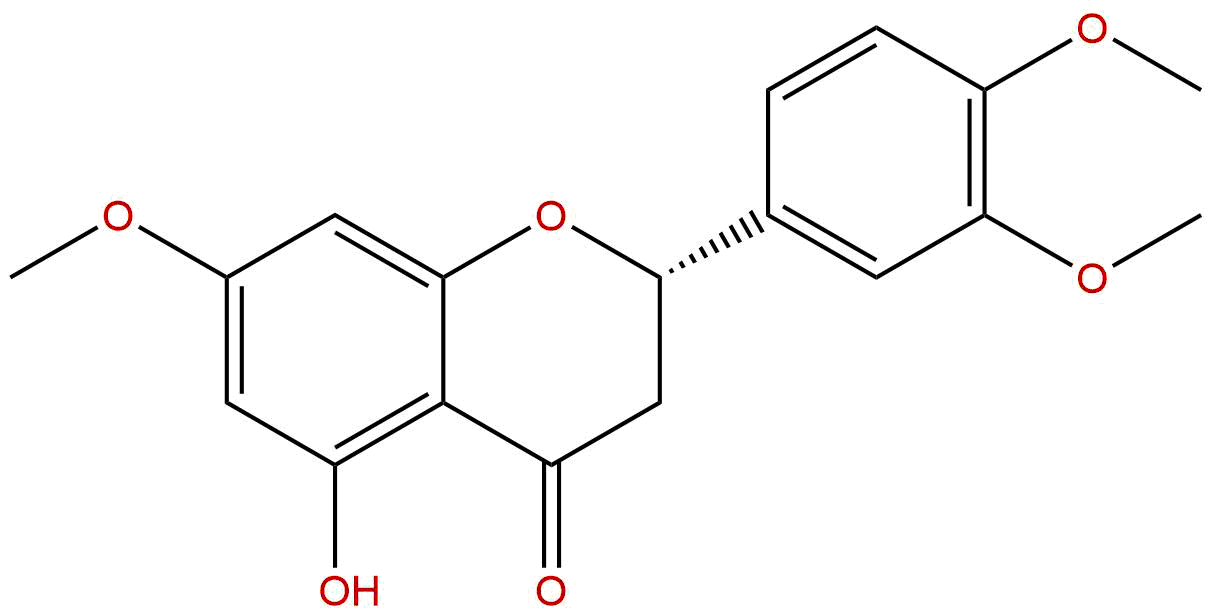


Product name: Eriodictyol 7,3',4'-trimethyl ether
Synonym name: 7,3'-Dimethoxyhesperetin; Eriodictyol 3',4',7-trimethyl ether;5-Hydroxy-7,3',4'-trimethoxyflavanone
Catalogue No.: BP5029
Cas No.: 70987-96-1
Formula: C18H18O6
Mol Weight: 330.336
Botanical Source:
Type of Compound: Flavonoids
Purity: 95%~99%
Analysis Method: HPLC-DAD or/and HPLC-ELSD
Identification Method: Mass, NMR
Packing: Brown vial or HDPE plastic bottle
Storage: Store in a well closed container, protected from air and light. Put into refrigerate or freeze for long term storage.
Whenever possible, you should prepare and use solutions on the same day. However, if you need to make up stock solutions in advance, we recommend that you store the solution as aliquots in tightly sealed vials at -20℃. Generally, these will be useable for up to two weeks.
The product could be supplied from milligrams to grams
Inquire for bulk scale.
For Reference Standard and R&D, Not for Human Use Directly.
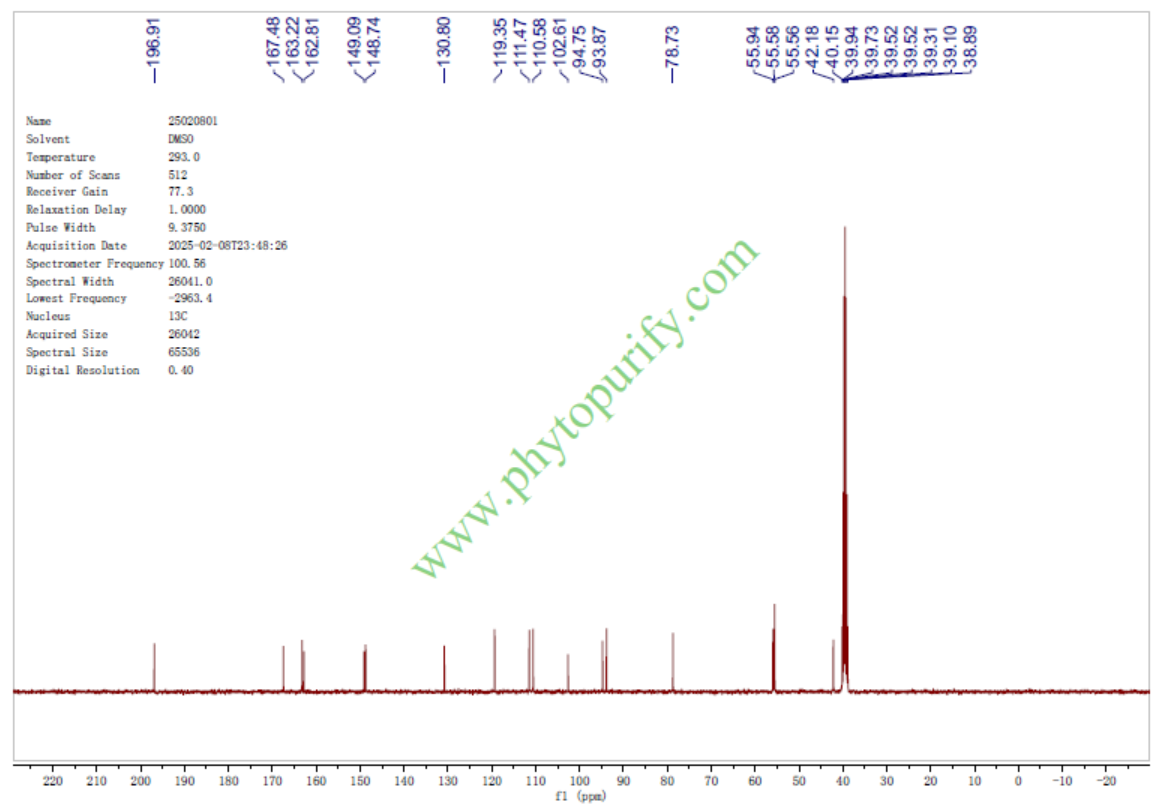
NMR of Eriodictyol 7,3',4'-trimethyl ether
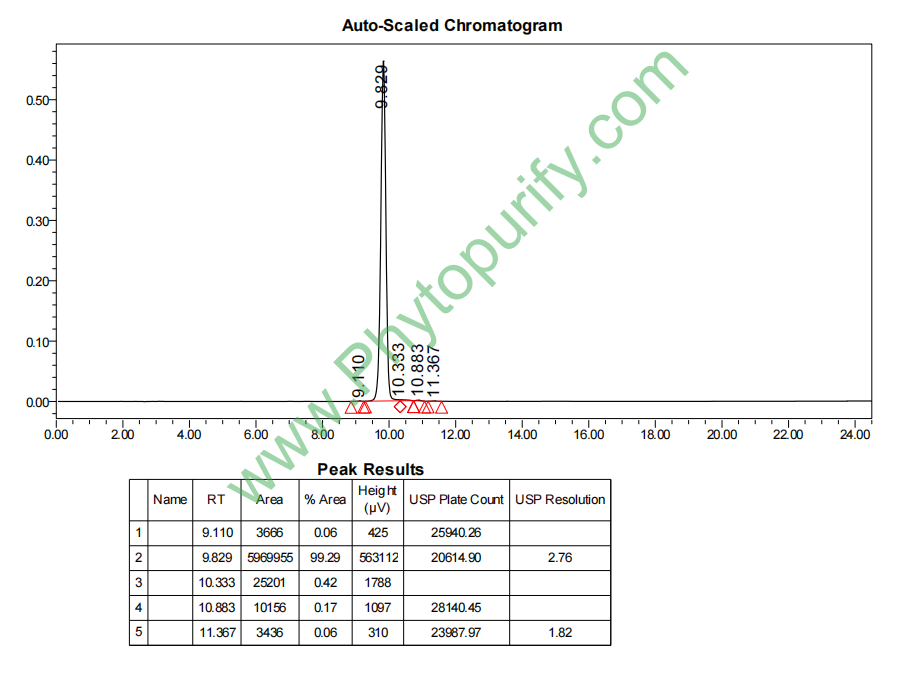
HPLC of Eriodictyol 7,3',4'-trimethyl ether
Storage conditions:Short-term storage at 2~8℃, long-term storage at -20 ~ -80℃
74.2200
2.9008
2.8110
.1531
5.5298
13.2792
High
88.5986
2.7003
No
No
Yes
No
Yes
No
0.6
Yes
No
No
No
Natural products, as an important source of drug discovery, play an irreplaceable role in the long history of human struggle against diseases. Flavonoids, as one of the most widely distributed polyphenolic secondary metabolites in nature, have attracted much attention due to their structural diversity and extensive biological activity. Eriodictyol is a typical dihydroflavonoid compound mainly found in plants such as lemons and tomatoes, known for its antioxidant, anti-inflammatory, and neuroprotective activities. However, natural flavonoids often suffer from metabolic instability and low bioavailability, which limits their direct clinical application. Structural modification, especially methylation, is one of the important strategies to improve the medicinal properties of natural products and enhance or alter their biological activity.
Eriodictyol 7,3 ', 4' - trimethyl ether, as a methylated derivative of resveratrol, is characterized by the methylation modification of all phenolic hydroxyl groups at the 7-position, 3 '- position, and 4' - position on the parent nucleus of resveratrol. This structural modification not only significantly changes the physicochemical properties of the molecule, such as lipid solubility and metabolic stability, but also endows it with a unique pharmacological activity spectrum. In recent years, research has gradually revealed the significant potential of trimethyl coumarin in antiplatelet aggregation, making it a candidate molecule worthy of further exploration in the field of cardiovascular disease prevention and treatment. Platelets play a central role in pathological processes such as hemostasis, thrombosis and atherosclerosis. Abnormal platelet aggregation is a key factor leading to thrombotic diseases such as myocardial infarction and ischemic stroke. Therefore, the search for efficient and low toxicity new antiplatelet aggregation drugs has important clinical significance.
This article aims to provide a comprehensive professional review of trimethyl salvianolic acid, starting from its chemical structure, physicochemical properties, and plant sources, systematically elaborating on its anti platelet aggregation and related pharmacological activities, deeply exploring its mechanism of action and molecular targets, and evaluating its potential as a drug lead compound based on pharmacological parameters. Finally, the clinical application prospects are discussed, in order to provide valuable references for the subsequent research and development of this natural product.
The chemical structure of trimethylcatechol is based on the framework of 2,3-dihydro-2-phenylchromenone (dihydroflavonoid). The chemical name of its parent nucleus, Eriodictyol, is (2S) -2- (3,4-dihydroxyphenyl) -5,7-dihydroxy-2,3-dihydro-4H-1-benzopyran-4-one. Trimethylcatechol is a product in which the hydrogen atoms of three phenolic hydroxyl groups in the catechol molecule are replaced by methyl (- CH3), specifically 7-hydroxyl, 3 '- hydroxyl, and 4' - hydroxyl groups are replaced by methoxy (- OCH). Therefore, its system is named 5-hydroxy-2- (3,4-dimethoxyphenyl) -7-methoxy-2,3-dihydro-4H-1-benzopyran-4-one. It is worth noting that the C2 position of salvianolic acid is a chiral carbon atom, and naturally occurring ones are mostly in the S configuration. However, the stereochemistry of trimethylsalvianolic acid may vary depending on the extraction or synthesis source, usually existing in racemic or specific configurations.
In terms of physical and chemical properties, the molecular formula of trimethylcatechol is C ₁₈ H ₁₈ O ₆, with a molecular weight of 330.3360 g/mol. Its lipophilic water partition coefficient (LogP) is 2.9008, indicating that the compound has moderate lipophilicity, which is closely related to the introduction of three methoxy groups in its molecule. As a hydrophobic group, methoxy significantly enhances the lipid solubility of the entire molecule, facilitating its penetration through biological membranes, including cell membranes and the blood-brain barrier. In fact, its blood-brain barrier permeability has been evaluated as' high ', indicating its potential to act on central nervous system targets. The polar surface area (TPSA) is 74.2200 Å ², which is within the acceptable range for oral medication (typically<140 Å ²), indicating good oral absorption potential. However, its water solubility (LogS) is only 0.1531, making it a poorly soluble compound, which may be one of the main challenges facing its oral bioavailability. In addition, pharmacological evaluation showed that the inhibitory risk of trimethylcarnitine on hERG potassium channels was "no" (i.e. no significant inhibitory effect), which reduced its risk of causing cardiac QT interval prolongation and fatal arrhythmias. The Ames test result is 0.6, and it is generally considered negative (non mutagenic) if the Ames test value is below 0.5. 0.6 is in a critical or weakly positive range, indicating a possible genetic toxicity risk and requiring further toxicological evaluation in subsequent development.
Trimethylcatechol is not a widely distributed common flavonoid, and its natural sources are relatively limited. It is mainly isolated from certain specific plants, especially reported in plants such as Rutaceae and Asteraceae. For example, there is research on the blood of the Flying Dragon Palm, a plant in the Rutaceae family(Toddalia asiatica)The compound was isolated from the root bark. In addition, in some traditional medicinal plants such as Scutellaria baicalensis(Pilocarpus Species and certain Salvia genera(Salvia Trimethylcatechol has also been found in plants. Due to its usually low content in plants, efficient separation techniques are required for large-scale extraction and purification.
Traditional extraction methods typically include solvent extraction, such as cold soaking or hot reflux extraction of dried plant powders using organic solvents such as methanol, ethanol, or acetone. After concentration, the extract is preliminarily separated by liquid-liquid extraction using different polar solvents such as petroleum ether, ethyl acetate, n-butanol, etc. Subsequently, further purification was carried out using various chromatographic techniques. Silica gel column chromatography is the most commonly used method, typically using gradient elution systems such as chloroform methanol or petroleum ether ethyl acetate. For flavonoids with similar structures, reverse phase column chromatography (such as ODS C18) and Sephadex LH-20 gel chromatography also showed excellent separation effects. High performance liquid chromatography (HPLC) is commonly used for final purification and purity identification. Given the strong lipophilicity of trimethylphenol, it is crucial to choose appropriate solvent systems and chromatographic conditions during the extraction and separation process. In recent years, with the promotion of green chemistry concepts, some new extraction techniques such as supercritical fluid extraction (SFE) and microwave-assisted extraction (MAE) have also been applied to the extraction of flavonoids. These methods have the advantages of high extraction efficiency, low solvent consumption, and environmental friendliness, and are expected to be applied to the large-scale preparation of trimethyl coumarin in the future. In addition, due to the abundance of resveratrol in nature, selective methylation of resveratrol through chemical semi synthetic methods is also an important and controllable way to obtain trimethylresveratrol.
The pharmacological activity research of trimethyl coumarin is still in its infancy, but existing evidence clearly points to its potential as an antiplatelet aggregation agent, and may also have other biological activities related to flavonoids.
Antiplatelet aggregation activity This is the most prominent pharmacological activity of trimethylphenol. Multiple in vitro experiments have shown that trimethoprim can significantly inhibit platelet aggregation activated by various inducers (such as adenosine diphosphate ADP, collagen, arachidonic acid AA, thrombin, etc.) in a concentration dependent manner. Its activity intensity is even better than the classic antiplatelet drug aspirin in some models. This broad-spectrum anti aggregation effect suggests that it may act on multiple key nodes in the platelet activation pathway, rather than a single target. Compared with the parent compound salvianolic acid, the antiplatelet activity of trimethylsalvianolic acid is significantly enhanced, which fully demonstrates the crucial role of methylation modification in enhancing its activity. Methylation may increase the lipophilicity of molecules, making them easier to enter platelet membranes or cells, thereby more effectively binding to targets.
antioxidant activity As a flavonoid compound, trimethyl coumarin should theoretically retain a certain antioxidant capacity. However, due to the methylation blocking of three phenolic hydroxyl groups, their ability to directly scavenge free radicals (such as DPPH, ABTS free radical scavenging experiments) is usually weaker than that of multi hydroxyl coumarin. However, it still retains a 5-position phenolic hydroxyl group in its molecule, which can form intramolecular hydrogen bonds with the 4-position carbonyl group, endowing it with the ability to chelate metal ions (such as Fe ² ⁺, Cu ² ⁺), thereby indirectly exerting antioxidant effects. In addition, its anti platelet aggregation activity itself is also related to the inhibition of oxidative stress-induced platelet activation.
anti-inflammatory activity Platelet activation is closely related to inflammatory response. Activated platelets can release various inflammatory mediators, such as CD40L, P-selectin, etc., and promote the adhesion of white blood cells to vascular endothelium. Trimethylphenol may indirectly exert anti-inflammatory effects by inhibiting platelet aggregation. In addition, studies have shown that certain methylated flavonoids can inhibit the activation of nuclear factor kappa B (NF - κ B), thereby downregulating the expression of pro-inflammatory factors such as cyclooxygenase-2 (COX-2) and inducible nitric oxide synthase (iNOS). Given that its target list includes PTGS2 (i.e. COX-2), trimethoprim may exert anti-inflammatory effects by directly inhibiting COX-2 activity or downregulating its expression.
Other potential activities Due to its ability to cross the blood-brain barrier, trimethyl sage also shows potential in neuroprotection. For example, it may improve the pathological process of neurodegenerative diseases such as Alzheimer's disease or Parkinson's disease by inhibiting the activation of microglia and reducing neuroinflammatory responses. In addition, some methylated flavonoids also exhibit anti-tumor, antibacterial, and vasodilatory activities, which require further research on trimethyl coumarin.
The mechanism of anti platelet aggregation effect of trimethyl coumarin is multi-target and multi pathway, which can be seen from its related target list. Its main mechanism of action can be summarized as follows:
Inhibition of arachidonic acid (AA) metabolic pathway This is the target of classic antiplatelet drugs such as aspirin. The target list of trimethyl coumarin includes PTGS1(COX-1) and PTGS2(COX-2)COX-1 is a key enzyme in platelets that synthesizes thromboxane A ₂ (TXA ₂), which is a powerful inducer of platelet aggregation and vasoconstrictor. Trimethylcatechol may inhibit platelet aggregation by directly suppressing the activity of COX-1, blocking the conversion of AA to TXA ₂. Meanwhile, its inhibitory effect on COX-2 may be related to its anti-inflammatory activity. Unlike aspirin's irreversible acetylation of COX-1, the inhibitory effect of trimethoprim may be reversible, which may reduce its risk of bleeding.
Antagonistic platelet membrane receptor There are multiple receptors on the surface of platelets that are responsible for recognizing and responding to different agonists.
Inhibit intracellular signal transduction Platelet activation involves a complex intracellular signaling network, including cAMP and cGMP signaling pathways.
In summary, trimethoprim forms a multi-target synergistic inhibitory network by simultaneously acting on AA metabolism, multiple platelet membrane receptors (P2Y12, TP, α IIb β 3, GP1b), and intracellular signaling molecules (PDE3A). This multi-target mode of action enables it to effectively combat platelet aggregation caused by multiple inducers, and theoretically may have better efficacy and lower resistance risk than single target drugs. However, the specific binding modes, binding affinities, and the existence of priority targets still need to be further elucidated through experiments such as molecular docking, surface plasmon resonance (SPR), and enzyme activity detection.
Based on the provided pharmacological parameters, a preliminary evaluation of the drug development potential of trimethyl coumarin can be conducted.
Analysis of drug properties The molecular weight (330.3 Da) and LogP (2.9) of trimethoprim comply with Lipinski's "Five Rules" (molecular weight<500, LogP<5), indicating its good oral drug potential. TPSA (74.2 Å ²) is also within the ideal range. However, its water solubility (LogS=0.15) is poor and it belongs to low solubility compounds, which may lead to incomplete oral absorption and be the main obstacle to overcome in development. A significant advantage of hERG inhibition risk being 'no' is that it reduces the risk of cardiac toxicity. The Ames test result is 0.6, indicating the possibility of weak mutagenicity, which requires high vigilance and must be rigorously validated in subsequent genetic toxicity studies (such as in vivo micronucleus test, chromosome aberration test).
Pharmacokinetic prediction Due to its high lipid solubility and blood-brain barrier permeability, oral administration of trimethoprim is expected to rapidly and widely distribute to various tissues throughout the body, including the brain. This provides the possibility for its treatment of central nervous system diseases. However, high lipid solubility also means that it may be widely metabolized by cytochrome P450 enzymes (CYPs) in the liver, particularly through demethylation reactions, producing coumarin or other mono/di methylated products. These metabolites may retain or have different biological activities. In addition, its metabolites may also bind with glucuronic acid or sulfuric acid and be excreted from the body through bile or urine. Therefore, its oral bioavailability may be lower due to first pass effects. To improve its bioavailability, strategies such as developing its prodrug, using nano formulations (such as liposomes, solid lipid nanoparticles), or combining with bioavailability enhancers (such as piperine) can be considered.
Comparison with clinical antiplatelet drugs Compared with single target drugs such as aspirin (which mainly inhibits COX-1) and clopidogrel (which mainly inhibits P2Y12), the multi-target properties of trimethoprim are its greatest advantage. It may provide more comprehensive antiplatelet protection, while potentially reducing the risk of drug resistance caused by single target mutations by acting on multiple pathways. In addition, as a natural product derivative, its toxicity spectrum may differ from synthetic drugs. However, its weak Ames test signal and potential metabolic instability are issues that require special attention. Compared with new antiplatelet drugs such as ticagrelor (a reversible P2Y12 inhibitor), the mode of action of trimethylsildenafil may be more complex, but its specific efficacy and safety still require a large amount of in vitro and in vivo experimental data to support.
Trimethylcatechol, as a natural methylated flavonoid with multi-target antiplatelet aggregation activity, has shown promising application prospects in the prevention and treatment of cardiovascular diseases.
Potential indications:
- Atherosclerotic cardiovascular disease Including coronary heart disease, myocardial infarction, ischemic stroke, etc. Its antiplatelet, anti-inflammatory, and potential antioxidant effects make it a potential candidate drug for the prevention and treatment of these diseases.
- Peripheral arterial disease For conditions such as lower limb arterial sclerosis and occlusion, antiplatelet therapy is the foundation. Trimethylphenol may provide a new therapeutic option.
- Post percutaneous coronary intervention (PCI)Strong dual antiplatelet therapy (DAPT) is required after PCI surgery. The multi-target properties of trimethyl coumarin make it possible to be used as a component in DAPT regimens or developed as a novel monotherapy to simplify treatment plans and reduce bleeding risks.
- Neurodegenerative diseases Given its ability to cross the blood-brain barrier and its association with neuroinflammation and Alzheimer's disease through platelet activation, trimethoprim may play a dual role in the treatment of these diseases: on the one hand, it improves brain microcirculation by inhibiting platelet aggregation, and on the other hand, it protects neurons through anti-inflammatory and antioxidant effects.
Challenges faced and future research directions:
Trimethylcatechol, as a natural methylated derivative of catechol, significantly enhances its anti platelet aggregation activity through structural modification and exhibits multi-target synergistic effects. Its mechanism of action involves inhibiting COX-1/2, antagonizing P2Y12, TXA ₂ receptors, integrin α IIb β 3, and inhibiting PDE3A, and theoretically has the advantages of comprehensive efficacy and low risk of drug resistance. The evaluation of drug properties shows that it has a good drug like basis, but poor water solubility and potential genetic toxicity are the main obstacles that need to be overcome.
Although research on trimethyl coumarin is still in its early stages, its unique pharmacological activity spectrum and clear molecular target network make it a highly valuable natural product lead compound for development. Future research should focus on pharmacokinetic optimization, in-depth toxicological evaluation, and in vivo pharmacological validation. Through modern medicinal chemistry and pharmaceutical methods, it is expected to transform this natural molecule into innovative drugs for treating thrombotic diseases, bringing new benefits to cardiovascular disease patients. The in-depth study of trimethyl coumarin not only contributes to the development of new antiplatelet drugs, but also provides valuable examples for mining and modifying active molecules from natural flavonoid libraries.
