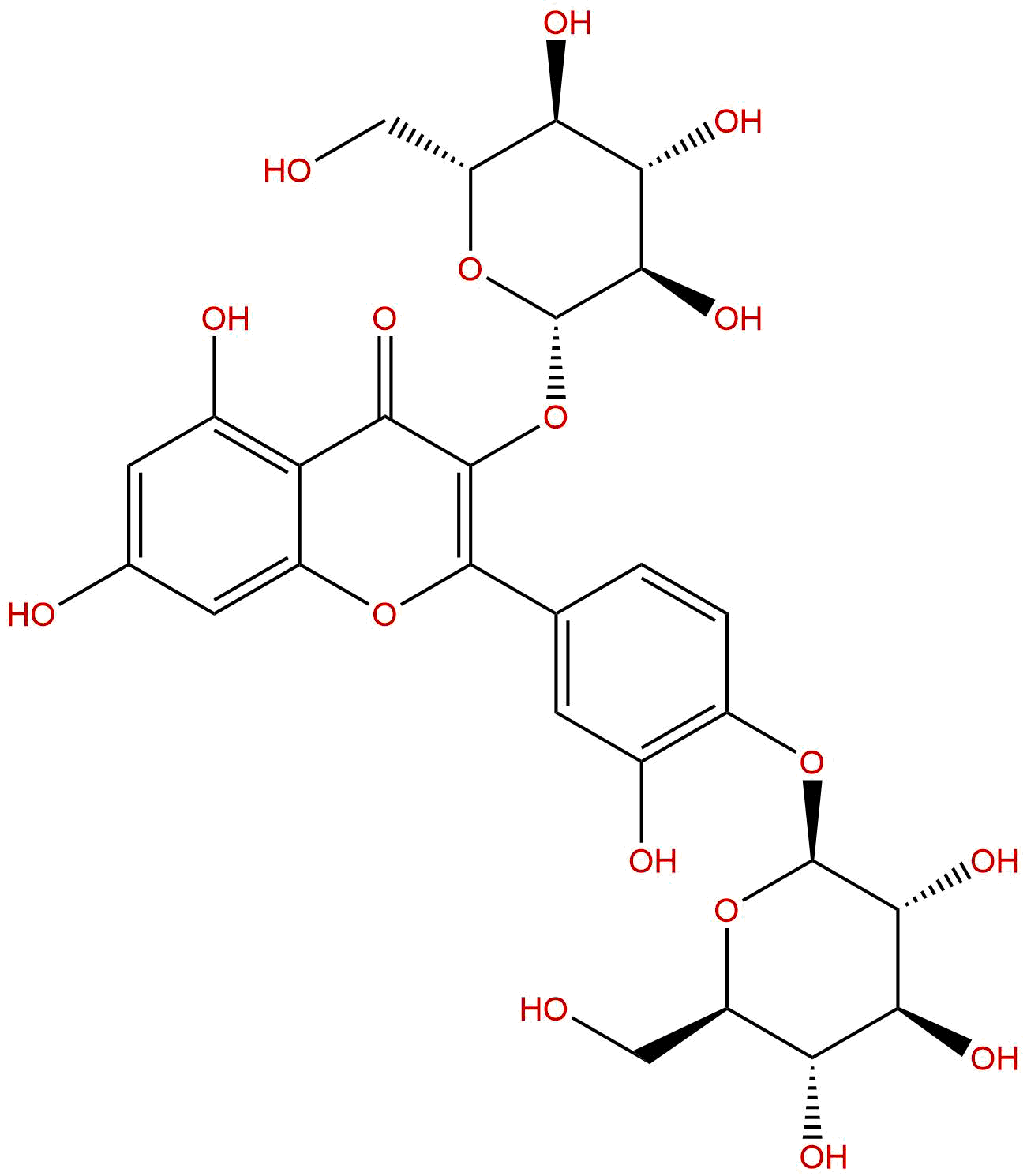


Product name: Quercetin 3,4'-O-β-diglucoside
Synonym name: Quercetin 3,4′-diglucoside; Quercetin 3,4'-O-β-diglucopyranoside
Catalogue No.: BP5252
Cas No.: 29125-80-2
Formula: C27H30O17
Mol Weight: 626.52
Botanical Source:
Type of Compound: Flavonoids
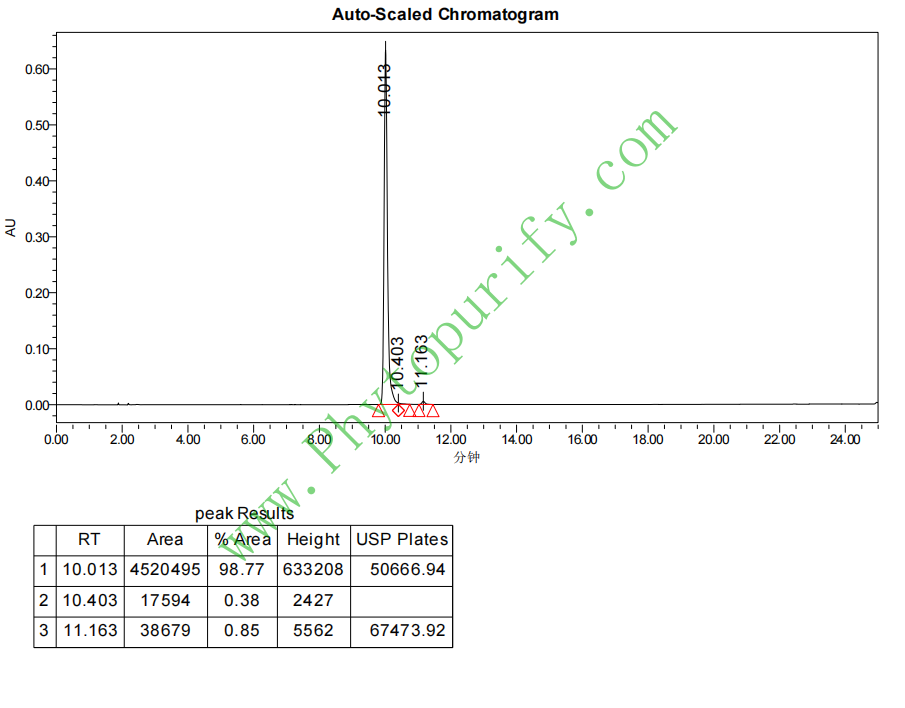
Purity: 95%~99%
Analysis Method: HPLC-DAD or/and HPLC-ELSD
Identification Method: Mass, NMR
Packing: Brown vial or HDPE plastic bottle
Storage: Store in a well closed container, protected from air and light. Put into refrigerate or freeze for long term storage.
Whenever possible, you should prepare and use solutions on the same day. However, if you need to make up stock solutions in advance, we recommend that you store the solution as aliquots in tightly sealed vials at -20℃. Generally, these will be useable for up to two weeks.
The product could be supplied from milligrams to grams
Inquire for bulk scale.
For Reference Standard and R&D, Not for Human Use Directly.
HPLC of Quercetin 3,4'-O-β-diglucoside
Storage conditions:Short-term storage at 2~8℃, long-term storage at -20 ~ -80℃
289.6600
-1.1112
-1.2046
3.8192
.4330
.1185
Low
73.4304
4.7749
Yes
No
No
No
Yes
No
0.6
Yes
No
Yes
Yes
Natural products, as an important source of drug discovery, play an indispensable role in the long struggle between humans and diseases. Flavonoids, as the most widely distributed class of secondary metabolites in nature, have attracted much attention due to their structural diversity and extensive biological activity. Quercetin is a typical representative of flavonoids, widely present in various vegetables, fruits, and Chinese medicinal materials. It has multiple pharmacological effects such as antioxidant, anti-inflammatory, anti-tumor, and cardiovascular protection. However, quercetin itself has poor water solubility and low bioavailability, which to some extent limits its clinical application. Glycosylation modification is one of the important strategies in nature to improve the physicochemical properties and biological activity of flavonoids. Quercetin 3,4 '- O - β - glucoside (CAS number: 29125-80-2) is a derivative of quercetin, which is linked to a β - D-glucose group at the 3rd and 4th positions of quercetin, respectively. This structural modification not only significantly changes the solubility and stability of quercetin, but also endows it with unique biological activity spectrum and pharmacokinetic characteristics. In recent years, with the deepening of research on the fine structure activity relationship of natural products, quercetin 3,4 '- diglucoside, as a natural glycoside with multiple pharmacological potentials, has gradually shown its application value in anti-tumor, cardiovascular protection and other fields, becoming a hot topic in the pharmacological research of natural products. This article will provide a systematic review of the compound from the aspects of chemical structure and physicochemical properties, plant sources and extraction methods, pharmacological activity, mechanism of action, evaluation of drug properties, and clinical application prospects, in order to provide reference for subsequent research and development.
The chemical essence of quercetin 3,4 '- diglucoside is a disaccharide formed by connecting the 3rd and 4th hydroxyl groups of quercetin (3,3', 4 ', 5,7-pentahydroxyflavone) with one molecule of β - D-glucose through glycosidic bonds. Its molecular formula is C ₂₇ H ∝₀ O ₁₇, and its molecular weight is 626.5200 Da. Structurally, the parent nucleus of quercetin is a 2-phenylchromenone structure, and multiple phenolic hydroxyl groups on the A and B rings endow it with strong antioxidant activity. Introducing two glucose groups at positions 3 and 4 'not only increases the hydrophilicity of the molecule, but also changes its spatial configuration, affecting its interaction mode with biological targets.
In terms of physicochemical properties, quercetin 3,4 '- diglucoside exhibits significantly different characteristics from quercetin. Its lipid water partition coefficient (LogP) is -1.1112, indicating strong hydrophilicity, which is closely related to the presence of two glucose groups. The high water solubility (3.8192) gives it good dispersibility in aqueous environments, which is beneficial for the development of oral formulations and in vivo absorption. Its polar surface area (TPSA) is as high as 289.6600 Å ², much higher than quercetin itself, indicating its weak transmembrane permeability, especially difficult to penetrate the blood-brain barrier (blood-brain barrier permeability evaluation is "low"). In addition, the molecular weight of this compound is relatively large (>500 Da), which complies with the molecular weight restrictions in the Lipinski Five Rules. However, due to its high polarity and a large number of hydrogen bond donors/acceptors, it is generally a natural product with high polarity. In terms of stability, the presence of glycosidic bonds makes it sensitive to acids and certain enzymes (such as β - glucosidase), which may undergo hydrolysis in the gastrointestinal tract or specific environments in the body, releasing the glycoside quercetin. This prodrug characteristic may be an important basis for its in vivo biological activity. It is worth noting that preliminary toxicity predictions show that the compound has a low risk of inhibiting hERG potassium channels ("no"), and the Ames test result is 0.6, indicating a low genetic toxicity risk. This provides a favorable safety prerequisite for its development as a candidate drug or dietary supplement.
Quercetin 3,4 '- diglucoside is not a rare or newly discovered compound, it is widely present in nature, especially abundant in some common medicinal plants and vegetables. Its main sources include:
1. Leguminous plants Like fava beans(Vicia faba)Peas(Pisum sativum)Wait, it is an important source of quercetin 3,4 '- diglucoside.
2. Cruciferous vegetables Like broccoli(Brassica oleracea var. italica)Cabbage, etc.
3. Rosaceae plants Like an apple(Malus domestica)In the skin and flesh of the fruit.
4. Chinese medicinal materials Like locust horns(Sophora japonica L.)、 Ginkgo biloba leaves(Ginkgo biloba L.)、 Rhodiola rosea(Rhodiola rosea L. Traditional Chinese medicinal herbs also contain this ingredient.
5. Other Onion(Allium cepa)Tea leaves(Camellia sinensis)Waiting is also a common source.
The choice of extraction method directly affects the yield and purity of quercetin 3,4 '- diglucoside. Due to its good water solubility, traditional solvent extraction methods usually use water or alcohol water mixed solvents with different ratios (such as methanol, ethanol) for extraction. In order to improve extraction efficiency and selectivity, modern extraction techniques have been widely applied:
* Ultrasound assisted extraction Utilizing the cavitation effect of ultrasound to destroy plant cell walls, accelerate solvent penetration and effective ingredient dissolution, has the advantages of short time, high efficiency, and low solvent dosage.
* Microwave assisted extraction By utilizing the dielectric heating effect of microwaves, the internal temperature and pressure of plant cells rapidly increase, leading to cell rupture and rapid release of target compounds.
* Enzyme assisted extraction The use of enzyme preparations such as cellulase and pectinase to degrade plant cell walls can significantly improve the extraction rate of quercetin 3,4 '- diglucoside, especially suitable for cellulose rich plant materials.
* Supercritical fluid extraction By using supercritical CO ₂ as a solvent and adjusting pressure and temperature, the target component can be selectively extracted. This method is environmentally friendly, but the equipment cost is relatively high.
The crude extract after extraction usually needs further separation and purification to obtain high-purity quercetin 3,4 '- diglucoside. Common purification techniques include macroporous adsorption resin column chromatography (such as HPD-100, D101, etc.), polyamide column chromatography, silica gel column chromatography, and preparative high-performance liquid chromatography. Among them, macroporous adsorption resin is widely used in industrial production due to its advantages of low cost, reusability, and easy operation. By gradient elution, quercetin 3,4 '- diglucoside can be effectively separated from other flavonoid glycosides.
The pharmacological activity research of quercetin 3,4 '- diglucoside mainly focuses on its antioxidant, anti-tumor, and cardiovascular protective effects, while there are also some reports on its anti-inflammatory, neuroprotective, and other activities.
As a glycoside derivative of quercetin, quercetin 3,4 '- diglucoside inherits the powerful free radical scavenging ability of quercetin. The multiple phenolic hydroxyl groups in its molecular structure (especially the ortho dihydroxy groups on the B ring) can effectively eliminate reactive oxygen species such as superoxide anions, hydrogen peroxide, and hydroxyl radicals, and can chelate transition metal ions (such as Fe ² ⁺, Cu ² ⁺), thereby inhibiting the Fenton reaction and reducing the generation of free radicals. Research has shown that its antioxidant activity is comparable to or slightly lower than quercetin, but due to its better water solubility, it may have more advantages in physiological conditions. In addition, it can upregulate the activity of antioxidant enzymes (such as superoxide dismutase and glutathione peroxidase) in the body, enhancing the body's endogenous antioxidant defense system.
Antitumor activity is one of the most promising pharmacological activities of quercetin 3,4 '- diglucoside. A large number of in vitro and in vivo experiments have confirmed that this compound has significant proliferation inhibition and apoptosis inducing effects on a variety of tumor cell lines (such as breast cancer MCF-7, liver cancer HepG2, colon cancer HT-29, lung cancer A549, etc.). Its anti-tumor mechanism involves multiple levels, including:
* Inducing cell apoptosis Inducing tumor cell apoptosis by activating mitochondrial pathways (upregulating Bax/Bcl-2 ratio, releasing cytochrome c, activating Caspase-3/9) or death receptor pathways (upregulating Fas/FasL expression).
* Inhibit cell proliferation By interfering with the expression of cell cycle regulatory proteins such as Cyclin D1 and CDK4, tumor cells are arrested in the G0/G1 or G2/M phase.
* Inhibit angiogenesis By downregulating the expression of hypoxia inducible factor-1 alpha (HIF1A) and vascular endothelial growth factor, the formation of tumor neovascularization is inhibited, thereby cutting off the nutritional supply to the tumor.
* Inhibit invasion and metastasis By inhibiting the activity of matrix metalloproteinases such as MMP2 and MMP9, the degradation of extracellular matrix is reduced, thereby inhibiting the migration and invasion of tumor cells.
Quercetin 3,4 '- diglucoside also exhibits multiple protective effects in the cardiovascular system. Its mechanism of action mainly includes:
* Anti atherosclerosis: Reduce the formation of foam cells by inhibiting the oxidative modification of low-density lipoprotein; At the same time, it inhibits the abnormal proliferation and migration of vascular smooth muscle cells and delays the formation of atherosclerotic plaque.
* Protecting myocardial cells By clearing excess free radicals generated during ischemia-reperfusion injury, inhibiting myocardial cell apoptosis, and reducing myocardial infarction area. Its cardioprotective effect is related to the activation of the PI3K/Akt signaling pathway and the inhibition of mitochondrial permeability transition pore opening.
* Vasodilation of blood vessels It can activate endothelial nitric oxide synthase to promote the release of nitric oxide, thereby causing vasodilation and lowering blood pressure.
* Antiplatelet aggregation By inhibiting the production of platelet activating factor and thromboxane A2, it exerts anti platelet aggregation effect and prevents thrombosis.
In addition to the above main activities, quercetin 3,4 '- diglucoside has also been reported to have anti-inflammatory (inhibiting NF - κ B pathway, reducing the levels of inflammatory factors such as TNF - α and IL-6), neuroprotective (fighting against beta amyloid induced neurotoxicity), anti diabetes (improving insulin resistance, promoting glucose uptake) and other pharmacological effects.
The pharmacological activity of quercetin 3,4 '- diglucoside is the result of its interaction with multiple molecular targets. Based on existing research, its mechanism of action can be summarized as follows:
This compound can directly bind to various proteins closely related to the occurrence and development of tumors, thereby regulating their functions. According to the provided target information, its main targets include:
* Anti apoptotic proteins (MCL1, BCL2)MCL1 and BCL2 are important anti apoptotic proteins in the Bcl-2 family, highly expressed in various tumors, and play a key role in tumor cells escaping apoptosis. Quercetin 3,4 '- diglucoside may inhibit the functions of MCL1 and BCL2 through direct binding or indirect regulation, thereby promoting tumor cell apoptosis.
* Signal Transduction and Transcription Activation Factor 3 (STAT3)STAT3 is a key oncogenic transcription factor involved in regulating cell proliferation, survival, angiogenesis, and immune escape. This compound may inhibit the phosphorylation and nuclear translocation of STAT3, blocking the expression of downstream target genes such as Cyclin D1, Bcl xL, VEGF.
* Matrix metalloproteinase 2 (MMP2)MMP2 is the main enzyme that degrades type IV collagen and plays a crucial role in tumor invasion and metastasis. Inhibition of MMP2 activity or expression is an important mechanism underlying the anti metastatic effect of quercetin 3,4 '- diglucoside.
* Topoisomerase I/II (TOP1, TOP2A)Topoisomerases are essential enzymes for DNA replication and transcription, and are also targets of various chemotherapy drugs such as camptothecin and etoposide. This compound may cause DNA damage by inhibiting the activity of TOP1 and TOP2A, thereby suppressing tumor cell proliferation.
* Hypoxia inducible factor-1 alpha (HIF1A)HIF1A is a key transcription factor for cells to adapt to low oxygen environments, and its stability and activity are regulated by multiple signaling pathways. Downregulation of HIF1A expression is an important mechanism by which quercetin 3,4 '- diglucoside inhibits angiogenesis.
* Mitogen activated protein kinase 1 (MAPK1/ERK2)The MAPK/ERK pathway is one of the core pathways regulating cell proliferation, differentiation, and survival. This compound may block the overactivation of the Ras Raf MEK ERK signaling pathway by inhibiting the phosphorylation of MAPK1.
* Estrogen receptor alpha (ESR1) and aromatase (CYP19A1)For hormone dependent breast cancer, quercetin 3,4 '- diglucoside may block the cancer promoting effect of estrogen by inhibiting ESR1 (anti estrogen effect) or CYP19A1 (aromatase inhibitor) activity.
In addition to directly targeting proteins, quercetin 3,4 '- diglucoside can also exert its pharmacological effects by affecting multiple signaling pathways. For example, it can activate the PI3K/Akt pathway (in cardiovascular protection) or inhibit pathways such as NF - κ B, Wnt/β - catenin, JAK/STAT (in anti-tumor and anti-inflammatory). This multi-target and multi pathway mode of action is the basis for its ability to produce a wide range of pharmacological activities, and also reflects the characteristic of natural products' "multi-directional pharmacology".
Recent studies have shown that flavonoids can also exert their biological activity by affecting epigenetic modifications such as DNA methylation, histone modifications, and non coding RNA regulation. Whether quercetin 3,4 '- diglucoside also has similar epigenetic regulatory effects is a direction worthy of further exploration.
To develop natural products into clinical drugs, a systematic evaluation of their pharmacological properties is necessary, with pharmacokinetic (ADME) properties being a key step.
Based on the provided pharmacological parameters, a preliminary evaluation of the pharmacological properties of the compound can be conducted
* Molecular weight and LogP The molecular weight of 626.52 Da is slightly higher than 500 Da, with a LogP of -1.11, indicating good water solubility but poor lipid solubility. This meets the requirements of the Lipinski Five Rules for molecular weight less than 500 and LogP less than 5, but due to its slightly larger molecular weight and extremely high polarity, it may affect its oral absorption.
* Water solubility The water solubility rating of 3.8192 is "high", which is beneficial for the preparation of the formulation and dissolution after oral administration.
* blood-brain barrier Low permeability is disadvantageous for drugs that need to act on the central nervous system, but for drugs that mainly act on the periphery (such as anti-tumor and cardiovascular), it can reduce the risk of central nervous system toxicity and side effects.
* HERG inhibition and Ames test The low risk of hERG inhibition and negative Ames test (0.6, usually considered negative for<0.5 and weakly positive for 0.5-1.0, where 0.6 can be considered negative or weakly positive and further confirmation is needed) are good safety signals, indicating a low risk of cardiac and genetic toxicity.
Overall, quercetin 3,4 '- diglucoside has a certain pharmacological basis, especially in terms of safety. The main challenge is how to improve its oral bioavailability.
The pharmacokinetic studies of quercetin 3,4 '- diglucoside are relatively limited, but inferences can be made based on its structural characteristics and knowledge of quercetin pharmacokinetics
* absorb After oral administration, due to its high molecular weight and polarity, its direct absorption in the small intestine may be poor. Most quercetin 3,4 '- diglucosides may reach the colon in their original form, and under the action of β - glucosidase produced by gut microbiota, hydrolysis releases the glycoside quercetin. Quercetin, as a glycoside element, has relatively good lipid solubility and can be absorbed by colonic epithelial cells. Therefore, quercetin 3,4 '- diglucoside may play a role as a' prodrug ', and its in vivo activity largely depends on the gut microbiota converting it into quercetin.
* distribution After absorption, quercetin and its metabolites (such as methylation, sulfation, and glucuronidation products) mainly bind to plasma albumin and distribute to various tissues throughout the body. Due to its high polarity, it is not easy to cross the blood-brain barrier.
* Metabolism Quercetin undergoes extensive phase II metabolism in the body, mainly occurring in the liver and intestines, including methylation, sulfation, and glucuronidation. These metabolites are usually more polar than the prototype and easier to eliminate from the body.
* excretion Quercetin and its metabolites are mainly excreted through bile and urine.
Quercetin 3,4 '- diglucoside has shown broad clinical application prospects in multiple disease fields due to its various pharmacological activities and good safety.
Given its ability to induce apoptosis, inhibit proliferation, inhibit angiogenesis, and prevent metastasis, quercetin 3,4 '- diglucoside is expected to serve as a potential anti-tumor adjuvant therapy. It can be used in combination with chemotherapy drugs such as doxorubicin and cisplatin to enhance treatment efficacy by synergistically increasing efficacy and reducing the toxic side effects of chemotherapy drugs. Especially its ability to target resistance related targets such as MCL1, BCL2, STAT3, may be of great significance in overcoming tumor drug resistance. In addition, as an aromatase inhibitor, it has potential value in the treatment of hormone dependent breast cancer.
Its antioxidant, anti-inflammatory, vasodilator, antiplatelet aggregation and myocardial protective effects make it a candidate compound for preventing and treating cardiovascular diseases such as atherosclerosis, hypertension, myocardial ischemia reperfusion injury, etc. Can be developed as functional foods or dietary supplements for primary and secondary prevention of cardiovascular diseases.
Its anti-inflammatory and neuroprotective effects suggest that it may also have potential in the treatment of inflammatory diseases (such as arthritis and colitis) and neurodegenerative diseases (such as Alzheimer's disease). However, its low blood-brain barrier permeability is the main obstacle for its application in central nervous system diseases, which may need to be improved through strategies such as nanomedicine and prodrug design.
Despite its promising prospects, the clinical translation of quercetin 3,4 '- diglucoside still faces some challenges:
* bioavailability How to improve its oral bioavailability is the primary issue. Future research directions include developing novel drug delivery systems (such as liposomes, nanoparticles, phospholipid complexes), designing prodrugs, and combining them with absorption enhancers.
* In depth analysis of the mechanism of action Although it is known to act on multiple targets, the specific binding modes, structure-activity relationships, and contributions of each target in different disease models still need to be further studied through methods such as structural biology, proteomics, and network pharmacology.
* The correlation between metabolism and drug efficacy in the body It is necessary to clarify whether its main active form in the body is the prototype or a metabolite (such as quercetin), and the key role of gut microbiota in it. This helps to more accurately predict its in vivo efficacy and individual differences.
* Large scale preparation and quality control We need to develop efficient, economical, and environmentally friendly extraction and purification processes, and establish strict quality control standards to meet the needs of drug development and commercial production.
Quercetin 3,4 '- diglucoside, as a naturally occurring quercetin diglucoside, cleverly improves the water solubility of quercetin through glycosylation modification while retaining its core pharmacological activity. It combines multiple biological functions such as antioxidant, anti-tumor, and cardiovascular protection, and its mechanism of action involves MCL1、BCL2、STAT3、MMP2、TOP1、HIF1A、MAPK1、ESR1、CYP19A1 The regulation of multiple key targets reflects the multi-target and multi pathway characteristics of natural products. Preliminary pharmacological evaluation shows that it has good safety and water solubility, but oral bioavailability is the main bottleneck for its clinical translation. In the future, with a deeper understanding of its pharmacokinetic characteristics, the development of novel drug delivery systems, and further elucidation of its mechanism of action, quercetin 3,4 '- diglucoside is expected to evolve from a promising natural product into a novel drug or functional food ingredient for treating complex diseases such as tumors and cardiovascular diseases. The systematic study of these natural glycosides not only enriches our understanding of the structure-activity relationship of flavonoids, but also provides valuable ideas and examples for exploring and developing innovative drugs from nature.
