| Catalog No | Package | Original Price | Price | Inventory | Quantity | Operating |
|---|---|---|---|---|---|---|
| BP4699-5mg | 5mg | $490.00 | Sign in |
|


Storage conditions:Short-term storage at 2~8℃, long-term storage at -20 ~ -80℃
8-Geranyldaidzein is a natural plant derived flavonoid compound, belonging to daidzein derivatives. As a functional natural product, 8-coumarin based daidzein has attracted widespread attention in pharmacology and natural product drug development in recent years due to its unique structural modifications and biological activities. Its main biological function involves estrogen regulation and can act on a variety of hormone receptors and related enzyme targets, showing potential therapeutic advantages, especially in hormone related diseases such as breast cancer, menopause syndrome and osteoporosis.
This article aims to systematically review the chemical structure and physicochemical properties, plant sources and extraction methods, pharmacological activity and mechanism of action, pharmacological evaluation and pharmacokinetic characteristics of 8-coumarin based daidzein, and finally explore its clinical application prospects and development trends, providing theoretical basis and reference for subsequent research and drug development.
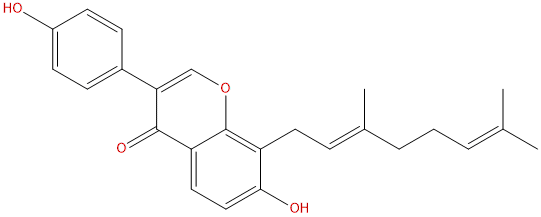
The molecular formula of 8-coumarin based daidzein is C25H30O4, with a molecular weight of 390.4790. Its structure is based on the core skeleton of daidzein, and a derivative with strong hydrophobicity is formed by introducing geranyl side chains at position 8. This structural modification not only increases the lipophilicity of the molecule (LogP value of 5.3445), but may also affect its binding affinity with biological targets and cell membrane permeability.
In terms of physical and chemical properties, the topological polar surface area (TPSA) of 8-coumarin based daidzein is 70.67 Å ², indicating its moderate polarity and favorable interaction with protein targets. Low water solubility (about 0.0115 mg/mL) suggests limited solubility in aqueous phase, which may affect its bioavailability. The low permeability of the blood-brain barrier suggests limited distribution in the central nervous system. The negative result of hERG channel inhibition experiment indicates a low risk of cardiac toxicity. The result of Ames mutagenicity test is 0, indicating that its genetic toxicity risk is relatively low.
In summary, the structural characteristics and physicochemical properties of 8-coumarin based daidzein provide a good basis for its use as a drug molecule, but its high hydrophobicity and low water solubility also suggest the need to optimize its bioavailability through pharmaceutical methods.
8-Xiangyecao based daidzein is mainly found in certain leguminous plants, especially in soybean (Glycine max) and its related varieties. As a derivative of daidzein, it is usually generated in plants through the biosynthesis pathway of isoflavones, and then introduced into the vanillin side chain through enzymatic reactions under specific conditions.
Traditional extraction methods often use organic solvent extraction techniques such as methanol, ethanol, or ethyl acetate, combined with ultrasound assisted extraction or reflux extraction to improve extraction efficiency. Subsequently, separation and purification were carried out through liquid-liquid distribution, column chromatography (silica gel column, C18 reverse phase column), and other methods. High performance liquid chromatography (HPLC) and mass spectrometry are widely used for qualitative and quantitative analysis.
In recent years, green extraction techniques such as supercritical CO2 extraction and microwave-assisted extraction have gradually been applied to the extraction of this compound, aiming to improve extraction efficiency, reduce solvent use, and environmental pollution. In addition, the development of biosynthetic and chemical synthesis routes has provided a new pathway for obtaining high-purity 8-vanillogenic daidzein.
The pharmacological activity research of 8-coumarin based daidzein mainly focuses on its regulatory effect on estrogen related diseases. As a natural isoflavone derivative, its structure has a certain similarity to estrogen in the human body and can bind to estrogen receptors (ER) to exert selective regulatory effects.
Multiple in vitro and in vivo studies have shown that 8-coumarin can regulate the expression and activity of ESR1 (estrogen receptor alpha) and ESR2 (estrogen receptor beta), exhibiting bidirectional regulatory properties similar to estrogen or anti estrogen. By regulating ER signaling pathway, 8-vanillin daidzein shows potential therapeutic effects in breast cancer cell proliferation, bone metabolism regulation and neuroprotection.
In addition, the compound also affects the level of SHBG (sex hormone binding globulin), regulates the concentration of free hormones in the body, and thus affects the biological activity of hormones. The inhibitory effect on CYP19A1 (aromatase) may reduce estrogen synthesis and has the potential to treat hormone dependent tumors.
8-Xiangyecao based daidzein also acts on various hormone receptors and related proteins such as AR (androgen receptor), PGR (progesterone receptor), FSHR (follicle stimulating hormone receptor), and LHB (luteinizing hormone beta subunit), demonstrating its multi-target effect in endocrine regulation. This multi-target regulation provides a theoretical basis for its treatment of various hormone imbalance related diseases, such as polycystic ovary syndrome, menopausal symptoms, prostate diseases, etc.
In addition to hormone regulation, 8-coumarin based daidzein also exhibits significant antioxidant and anti-inflammatory activities. It can eliminate free radicals, reduce oxidative stress levels, inhibit the expression of inflammatory factors, and alleviate tissue damage. These effects provide support for its potential applications in cardiovascular diseases, neurodegenerative diseases, and metabolic syndrome.
The mechanism of action of 8-coumarin based daidzein is mainly achieved through interactions with various hormone receptors and related enzyme targets.
Through molecular docking and cell experiments, it was found that 8-coumarin can selectively bind to ESR1 and ESR2, regulate receptor conformation, and activate or inhibit downstream signaling pathways. Its high affinity for ESR2 may lead to enhanced anti proliferative and anti-inflammatory signaling mediated by ER β.
Aromatase (CYP19A1) is a key enzyme in estrogen biosynthesis, and 8-vanilloid daidzein competitively inhibits its activity, reducing the synthesis of estrone and estradiol, thereby lowering estrogen levels in the body and exerting therapeutic effects on hormone dependent tumors.
This compound regulates receptors such as AR, PGR, FSHR, and LHB, involving receptor expression regulation, activation or inhibition of signal transduction pathways, affecting hormone synthesis, release, and target cell responses, demonstrating its complex endocrine regulatory functions.
8-Xiangyecao based daidzein enhances antioxidant enzyme expression by activating the Nrf2/ARE signaling pathway, inhibits the NF - κ B pathway, reduces inflammatory cytokine release, and alleviates cellular oxidative damage and inflammatory response.
According to existing data, the LogP value of 8-coumarin based daidzein is 5.3445, indicating its high lipid solubility and good cell membrane permeability. However, its low water solubility (0.0115 mg/mL) may limit its oral absorption and bioavailability. The TPSA is 70.67 Å ², which meets the requirements of Lipinski rule for polar surface area and is beneficial for the biological activity of the drug.
The low permeability of the blood-brain barrier suggests its limited distribution in the central nervous system, which may reduce central nervous system related side effects. HERG channel inhibition is negative, reducing the risk of cardiac toxicity. The Ames test is negative, indicating a low risk of genetic toxicity.
At present, there is limited systematic pharmacokinetic research on 8-coumarin based daidzein. Preliminary in vivo experiments have shown that the compound is absorbed slowly after oral administration, with a moderate plasma half-life. It is mainly metabolized through the liver, and the metabolites are yet to be systematically identified. Its high lipid solubility may lead to widespread tissue distribution, but its low water solubility limits its solubility and transport in the blood.
Further in vivo pharmacokinetic and toxicological studies are needed in the future to clarify its absorption, distribution, metabolism, and excretion (ADME) characteristics, providing a basis for clinical development.
8-Xiangyecao based daidzein has shown broad clinical application potential due to its multi-target regulation of hormone receptors and related enzymes. Its application in hormone related diseases is particularly prominent, including:
However, there is currently insufficient research on its clinical safety, effective dosage, and long-term efficacy, and systematic preclinical and clinical trials are needed. In addition, its low water solubility and bioavailability issues need to be addressed through modern pharmaceutical technologies such as nanocarriers and liposomes.
Future research should focus on:
8-Xiangyecao based daidzein, as a natural isoflavone derivative, has shown important pharmacological value in the prevention and treatment of hormone related diseases due to its unique chemical structure and multi-target regulatory effects. Its excellent safety indicators and multiple biological activities provide a solid foundation for the development of new natural medicines. Although still facing challenges such as water solubility and bioavailability, with the advancement of pharmaceutical and molecular biology technologies, 8-coumarin based daidzein is expected to become an important candidate molecule for future natural product drug development.
Future research should strengthen the combination of foundation and application, promote its clinical translation, fully tap its potential in the field of natural product pharmacology, and contribute new therapeutic strategies to human health.
