Introduction/Overview
Osteoporosis is a systemic bone disease characterized by low bone mass, destruction of bone microstructure, increased bone fragility, and susceptibility to fractures. With the acceleration of global population aging, osteoporosis and the resulting fractures have become a major public health issue that seriously threatens the quality of life of middle-aged and elderly people, especially postmenopausal women. At present, the drugs used in clinical practice to prevent and treat osteoporosis mainly include bone resorption inhibitors (such as bisphosphonates, calcitonin, estrogen receptor modulators) and bone formation promoters (such as parathyroid hormone analogues). However, long-term use of these drugs may be accompanied by certain side effects, such as bisphosphonate related mandibular necrosis, atypical femoral fracture, and increased cardiovascular events and breast cancer risk of estrogen replacement therapy. Therefore, finding safe and effective bone protectants has always been a hot topic in drug development.
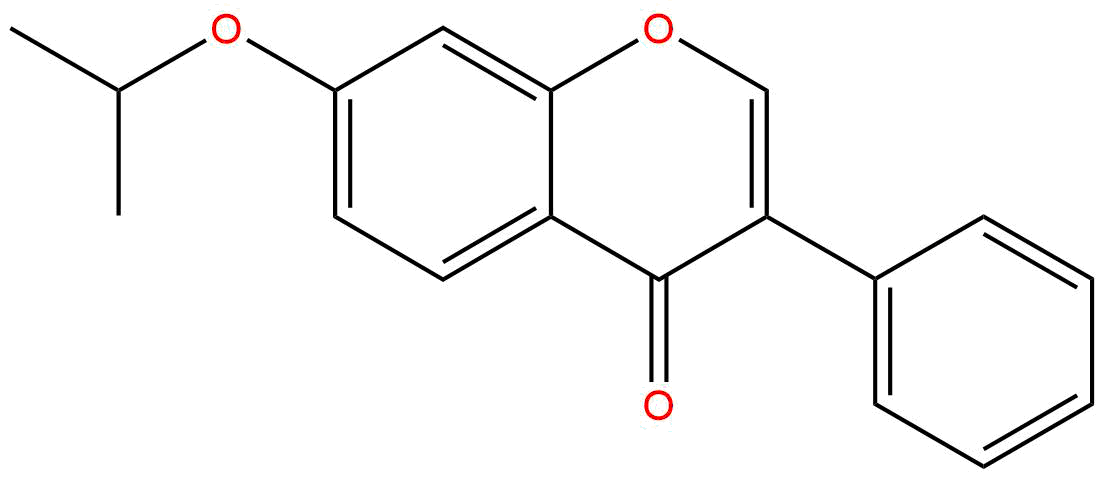
Ipriflavone (chemical name: 7-isopropoxy isoflavone) is a synthetic isoflavone derivative developed in this context. As a non hormonal bone metabolism regulator, empagliflozin has been used in Europe, Japan, and some Asian countries since the 1980s for the treatment and prevention of postmenopausal osteoporosis. Its structure is derived from natural isoflavones, but through chemical modification, isopropoxy groups are introduced, giving it unique pharmacological activity. Early basic research and clinical observations have shown that isoflavones can inhibit the bone resorption activity of osteoclasts, promote bone formation, and increase bone density. However, the subsequent results of multiple large-scale, randomized, double-blind, placebo-controlled clinical trials were controversial, and some studies failed to confirm its significant advantages in reducing fracture risk, leading to limitations in its application in mainstream markets in Europe and America. However, as a classic tool drug for studying the regulation mechanism of bone metabolism and a lead molecule for exploring the structure activity relationship of isoflavone compounds, Iproflavone still has important academic value and potential application prospects. This article will provide a systematic professional review of the chemical structure, physical and chemical properties, pharmacological activity, molecular mechanism, drug properties, and clinical application prospects of Yipu flavonoids.
Chemical structure and physicochemical properties
Yipu flavonoids belong to the flavonoid class of compounds, and their core skeleton is 3-phenylchromen-4-one. Compared with naturally occurring genistein or daidzein, the structural feature of epiflavones is that the hydroxyl group at position 7 of its A ring is replaced by isopropoxy (- OCH (CH3) ₂). This structural modification significantly alters the hydrophobicity and metabolic stability of the molecule, distinguishing it from natural isoflavones. Its chemical name is 7- (1-methylethoxy) -3-phenyl-4H-1-benzopyran-4-one, with a molecular formula of C ₁₈ H ₁₆ O3 and a molecular weight of 280.32 g/mol. The CAS registration number is 35212-22-7.
In terms of physical and chemical properties, Yipu flavonoids appear as white or off white crystalline powders with a melting point of approximately 116-118 ° C. They have strong lipid solubility and a calculated oil-water partition coefficient (LogP) of 3.88, indicating good membrane permeability. The topological polar surface area (TPSA) is 39.44 Å ², which is a relatively low value and meets the requirements for passive transport of oral drugs. However, its water solubility is extremely poor, with an experimentally determined water solubility of only 0.0012 mg/mL, which to some extent limits its oral bioavailability. In terms of acid-base stability, isoflavones are relatively stable under acidic conditions, but may undergo hydrolysis under strong alkaline conditions. It is worth noting that its blood-brain barrier penetration ability was evaluated as "high", suggesting that the compound may have central nervous system activity, which is both a potential advantage (such as possibly regulating bone metabolism through central mechanisms) and may bring unexpected central side effects. In addition, the hERG inhibition risk assessment was negative, indicating a low risk of cardiac toxicity; The Ames test result is 1.2, indicating a low risk of genetic toxicity, but it needs to be comprehensively judged based on more comprehensive toxicological data.
Plant sources and extraction methods
Although isoflavones themselves are synthetic compounds and not natural products, their design inspiration comes from widely existing isoflavone compounds in nature, such as daidzein and genistein. These natural isoflavones are mainly found in leguminous plants, especially in soybeans (Glycine max) and their products. In addition, plants such as Trifolium pratense and Pueraria lobata are also rich in isoflavones. The synthesis of isoflavones is usually started from natural isoflavones and obtained through chemical modification.
Extracting natural isoflavones from plants is an important step in the synthesis of isoproterenol precursors. Traditional extraction methods include:
1. Organic solvent extraction method Extract isoflavone glycosides and aglycones from defatted soybean flour or red clover using polar solvents such as methanol, ethanol, or acetone under heating reflux or Soxhlet extraction conditions. This method is simple to operate, but the extraction time is long and the solvent consumption is high.
2. Ultrasound assisted extraction Using the cavitation effect of ultrasound to destroy plant cell walls, accelerate solvent penetration, significantly improve extraction efficiency, shorten extraction time, and reduce solvent usage.
3. Enzyme assisted extraction Using cellulases, pectinases, and other enzymes to hydrolyze plant cell walls can help release bound isoflavone glycosides and increase yield.
4. Supercritical fluid extraction Using CO ₂ as the solvent, selectively extract lipophilic components by adjusting pressure and temperature. This method is green and environmentally friendly, but the equipment cost is high, mainly used for extracting high value-added products.
The crude extract after extraction needs to undergo purification steps, such as macroporous adsorption resin column chromatography, silica gel column chromatography, or high-performance liquid chromatography, to obtain high-purity natural isoflavone aglycones (such as daidzein). Subsequently, through the classic Williamson etherification reaction, under alkaline conditions, isopropylhalides (such as isopropylbromide) were used to react with the 7-position phenolic hydroxyl group of daidzein to synthesize epoxyflavone. The synthetic route is mature and the yield is high, making it the main approach for industrial production.
Pharmacological activity research
The pharmacological activity of isoflavones is mainly concentrated in the skeletal system, and its core function is to regulate bone metabolism balance, inhibit bone resorption, and promote bone formation.
1. Inhibit bone resorption
The most significant pharmacological activity of isoflavones is the inhibition of osteoclast activity. In vitro experiments have shown that isoflavones can directly inhibit the bone resorption function of mature osteoclasts and reduce the formation of bone resorption cavities. In the ovariectomy rat (OVX) model, a classic animal model that simulates postmenopausal osteoporosis, oral administration of empagliflozin significantly reduces the excretion level of deoxypyridinoline (a bone resorption marker) in urine, inhibits bone loss, and maintains the microstructure of bone trabeculae. Its strength in inhibiting bone resorption is weaker than that of estrogen, but due to its non hormonal structure, it avoids the reproductive system side effects associated with estrogen.
2. Promote bone formation
In addition to inhibiting bone resorption, empagliflozin has also been found to have a positive regulatory effect on osteoblasts. In the osteoblast culture system, empagliflozin can promote the proliferation and differentiation of osteoblasts, and increase the activity of alkaline phosphatase (ALP) and the secretion of osteocalcin (BGLAP). These effects indicate that isoflavones can stimulate bone formation. However, this promoting effect is usually considered indirect, mainly due to the bone turnover coupling changes caused by its inhibition of bone resorption, rather than directly activating the osteoblast signaling pathway.
3. Effects on bone density and bone strength
In animal experiments, isoflavones can effectively prevent the decrease in bone density in OVX rats and improve bone biomechanical properties such as maximum load and stiffness. In clinical studies, early small-scale, non randomized trials reported that empagliflozin can increase bone density in the lumbar spine and femoral neck. However, the results of subsequent larger and more rigorous randomized controlled trials (RCTs) were not consistent. For example, a 3-year multicenter randomized controlled trial (MIV) study found that empagliflozin (200 mg, three times a day) did not significantly reduce the risk of new vertebral fractures or increase bone density in postmenopausal women with osteoporosis compared to placebo. This negative result directly led to the delisting of Iprolidone in the European and American markets. However, some subgroup analyses or subsequent studies suggest that for specific populations with high bone turnover rates or sufficient calcium intake, isoflavones may still have bone protective effects.
4. Other pharmacological activities
Yipu flavonoids have also been reported to have other pharmacological activities, such as antioxidant, anti-inflammatory, and immune regulating functions. For example, it can inhibit lipopolysaccharide (LPS) - induced macrophage release of inflammatory factors (such as TNF - α, IL-6), which may overlap with its regulation of bone metabolism. In addition, due to its high blood-brain barrier penetration, studies have explored its effects on the central nervous system, but there is no clear clinical translation yet.
Mechanism of action and molecular targets
The mechanism of action of isoflavones is complex, involving multiple molecular targets and signaling pathways. Its core lies in the precise regulation of the coupling between bone resorption and bone formation.
1. Weak excitatory/antagonistic effects of estrogen receptor 1 (ESR1)
The structure of flavonoids is similar to natural estrogen, but their binding affinity to estrogen receptors (mainly ESR α) is extremely low, only one thousandth to one millionth of estradiol. Therefore, it is not considered a classic estrogen receptor agonist. However, at the cellular level, empagliflozin may exert weak estrogen like effects through non genomic pathways or interactions with ESR β, thereby regulating bone metabolism. This weak activity prevents it from the potent reproductive system stimulation of estrogen.
2. Inhibit osteoclast differentiation and activity
This is the core mechanism of the anti osteoporosis effect of Yipu flavonoids. Its specific targets include:
- Inhibition of the NF - κ B receptor activator ligand (RANKL) signaling pathway RANKL is a key cytokine for osteoclast differentiation, activation, and survival. Yipu flavonoids can inhibit the binding of RANKL to its receptor RANK, thereby blocking the activation of downstream NF - κ B and MAPK (such as JNK, p38) signaling pathways, thereby inhibiting the differentiation of osteoclast precursors into mature osteoclasts.
- Adjust the OPG/RANKL ratio Osteoprotegerin (OPG, encoded by the TNFRSF11B gene) is a bait receptor for RANKL that can block its action. Yipu flavonoids can upregulate the expression of OPG in osteoblasts and downregulate the expression of RANKL, thereby increasing the OPG/RANKL ratio and effectively inhibiting osteoclastogenesis.
- Inhibition of tissue protease K (CTSK) activity CTSK is the main collagenase secreted by osteoclasts, responsible for degrading type I collagen in the bone matrix. Yipu flavonoids can directly inhibit the enzymatic activity of CTSK, thereby reducing the depth of bone resorption cavities.
- Inhibition of Matrix Metalloproteinase 9 (MMP9)MMP9 is involved in the migration of osteoclasts and the degradation of bone matrix. Yipu flavonoids can inhibit the expression and activity of MMP9.
3. Regulating osteoblast function
The regulatory effect of isoflavones on osteoblasts is mainly achieved through the following mechanisms:
- Activate Wnt/β - catenin signaling pathway This pathway is a key driver of osteoblast differentiation and bone formation. Yipu flavonoids can inhibit the expression of sclerosing protein (SOST), which is a negative regulator of Wnt signaling. By reducing the level of SOST, empagliflozin alleviates the inhibition of Wnt signaling, promotes the accumulation of β - catenin in the nucleus, and activates downstream transcription factors such as RUNX2 and SP7 (Osterix), ultimately promoting osteoblast differentiation and the synthesis of bone matrix proteins (such as COL1A1, BGLAP).
- Regulating Vitamin D Receptor (VDR)Epiflavones may enhance the regulatory effect of 1,25-dihydroxyvitamin D3 on osteoblasts and intestinal calcium absorption by affecting the expression or activity of VDR.
4. Comprehensive regulation of bone stromal cells
Yipu flavonoids achieve precise regulation of bone remodeling units through the multi-target and multi pathway effects mentioned above: inhibiting the bone resorption activity of osteoclasts while maintaining or even promoting the bone formation function of osteoblasts, thereby adjusting bone turnover from a high turnover state (commonly seen in postmenopausal osteoporosis) to a low turnover or equilibrium state, protecting bone mass.
Evaluation of drug properties and pharmacokinetics
1. Evaluation of drug properties
From the perspective of medicinal chemistry, Iprolidone has certain medicinal properties. Its molecular weight (280 Da) and LogP (3.88) meet the requirements of Lipinski's "Five Rules" for oral medication (molecular weight<500, LogP<5). The TPSA (39.44 Å ²) is also well below the threshold of 140 Å ², indicating its good membrane permeability. However, its extremely low water solubility (0.0012 mg/mL) is the main weakness in its medicinal properties, which directly leads to poor oral absorption and low bioavailability. In addition, its high blood-brain barrier penetration is both a characteristic and a risk point, which requires attention to potential central nervous system side effects. The negative results of hERG inhibition and Ames test provide preliminary guarantees for its safety, but the safety of long-term use still needs to be confirmed through more extensive toxicological studies.
2. Pharmacodynamics
The pharmacokinetic characteristics of isoflavones are closely related to their physicochemical properties:
- absorb After oral administration, the absorption of ibuprofen in the gastrointestinal tract is slow and incomplete. Due to its poor water solubility, its absolute bioavailability is low and there are significant individual differences. Food, especially high-fat meals, may promote their absorption.
- distribution After absorption, isoflavones are widely distributed throughout the body tissues, including bones. Its high lipid solubility and blood-brain barrier penetration allow it to enter the central nervous system.
- Metabolism Yipu flavonoids undergo extensive first metabolism in the liver. Its main metabolic pathways include: O-dealkylation of isopropoxy to generate daidzein; And hydroxylation of the chromone ring. These metabolic reactions are mainly mediated by the cytochrome P450 enzyme system (CYP). It is worth noting that eplofloxacin itself is also an inhibitor of CYP enzymes, which may affect the metabolism of other drugs and pose potential risks of drug interactions.
- excretion Yipu flavonoids and their metabolites are mainly excreted through urine and bile. The half-life of plasma is about 5-10 hours, but due to its widespread tissue distribution, its retention time in bones may be longer.
Clinical application prospects and prospects
Despite the significant decline in the status of isoflavones in mainstream osteoporosis treatment guidelines, their unique pharmacological mechanisms and relatively good safety still leave room for future applications and research.
1. Limitations of existing clinical applications
As mentioned earlier, large-scale randomized controlled trials have failed to confirm the significant therapeutic effect of empagliflozin in reducing fracture risk, which is the fundamental reason for its limited clinical application. In addition, its low bioavailability and potential drug interactions (especially with CYP substrate drugs) also limit its use. At present, isoflavones are still used as second-line or adjuvant drugs in some countries (such as Japan and Italy) for the prevention of postmenopausal osteoporosis, especially for patients who cannot tolerate or do not want to use first-line drugs such as bisphosphonates and estrogen.
2. Future research directions and potential applications
- Structural optimization and development of new dosage forms Future research can focus on prodrug design (such as preparing phosphate or amino acid ester prodrugs) or the development of novel drug delivery systems (such as liposomes, nanocrystals, solid dispersions) to improve the oral absorption rate and targeting of Yipu flavonoids, in response to their poor water solubility and low bioavailability.
- Combination therapy strategy Given its multi-target mechanism of action, the combined use of eplofloxacin and other anti osteoporosis drugs (such as bisphosphonates, teriparatide, and denosumab) may produce synergistic effects, improve efficacy, and reduce the dosage and side effects of a single drug. For example, combining with calcium supplements and vitamin D is a classic approach.
- Explore new indications The anti-inflammatory, antioxidant, and immunomodulatory activities of isoflavones suggest that they may play a role in other bone related diseases (such as osteoarthritis, rheumatoid arthritis related bone erosion) or non bone diseases (such as certain inflammatory diseases). In addition, its high penetration into the central nervous system is also worth exploring its potential value in neurodegenerative diseases or pain management.
- Precision medicine perspective Future research should pay more attention to the predictive biomarkers of the therapeutic effect of eplofloxacin. For example, based on the patient's bone turnover level, vitamin D status, ESR or VDR gene polymorphism, specific populations that are most likely to benefit from treatment with iprofloxacin can be screened to achieve personalized medication.
Conclusion
Yipu flavonoids, as the first synthetic isoflavone derivative developed for the treatment of osteoporosis, have a milestone significance in the field of bone metabolism research. It exhibits unique bone protective effects through multi-target mechanisms such as inhibiting osteoclast activity, regulating OPG/RANKL ratio, and affecting Wnt signaling pathway. Although it has gradually been marginalized in clinical applications due to efficacy controversies, its non hormonal structure brings safety advantages, and as a classic tool molecule for studying bone metabolism regulation mechanisms, it still has important academic value. In the future, through structural optimization, development of new dosage forms, combination therapy strategies, and guidance from precision medicine, isoflavones or their derivatives may be revitalized, providing new options for the prevention and treatment of osteoporosis and other bone metabolism diseases. A deep understanding of its mechanism of action also provides valuable ideas and references for searching for new bone protectants from natural products.