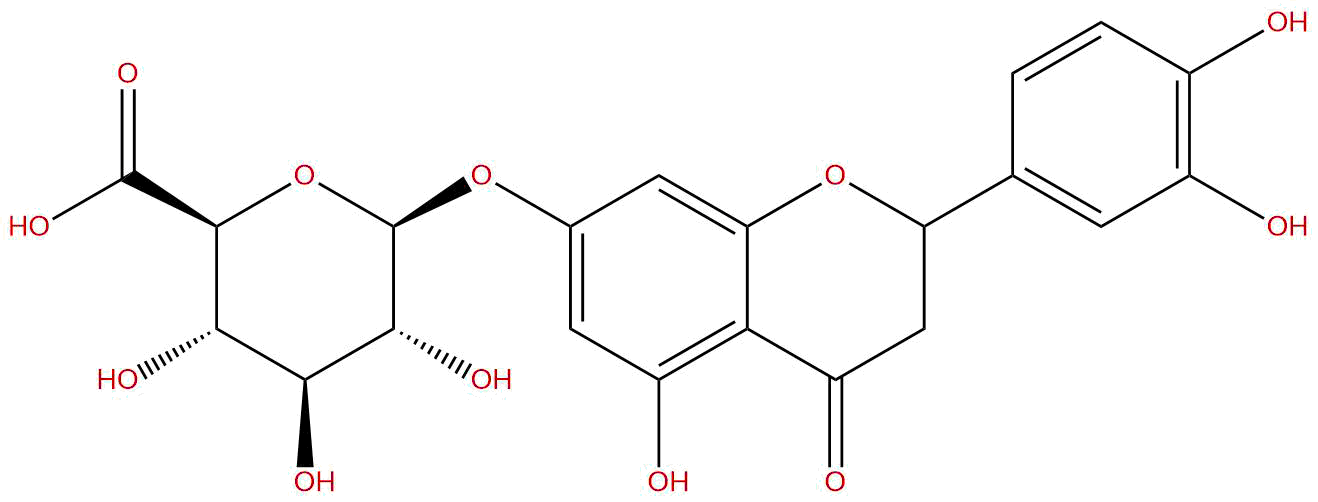


Product name: Eriodictyol 7-glucuronide
Synonym name: Eriodictyol 7-O-glucuronide
Catalogue No.: BP2426
Cas No.: 618910-88-6
Formula: C21H20O12
Mol Weight: 464.379
Botanical Source:
Type of Compound: Flavonoids
Purity: 95%~99%
Analysis Method: HPLC-DAD or/and HPLC-ELSD
Identification Method: Mass, NMR
Packing: Brown vial or HDPE plastic bottle
Storage: Store in a well closed container, protected from air and light. Put into refrigerate or freeze for long term storage.
Whenever possible, you should prepare and use solutions on the same day. However, if you need to make up stock solutions in advance, we recommend that you store the solution as aliquots in tightly sealed vials at -20℃. Generally, these will be useable for up to two weeks.
The product could be supplied from milligrams to grams
Inquire for bulk scale.
For Reference Standard and R&D, Not for Human Use Directly.
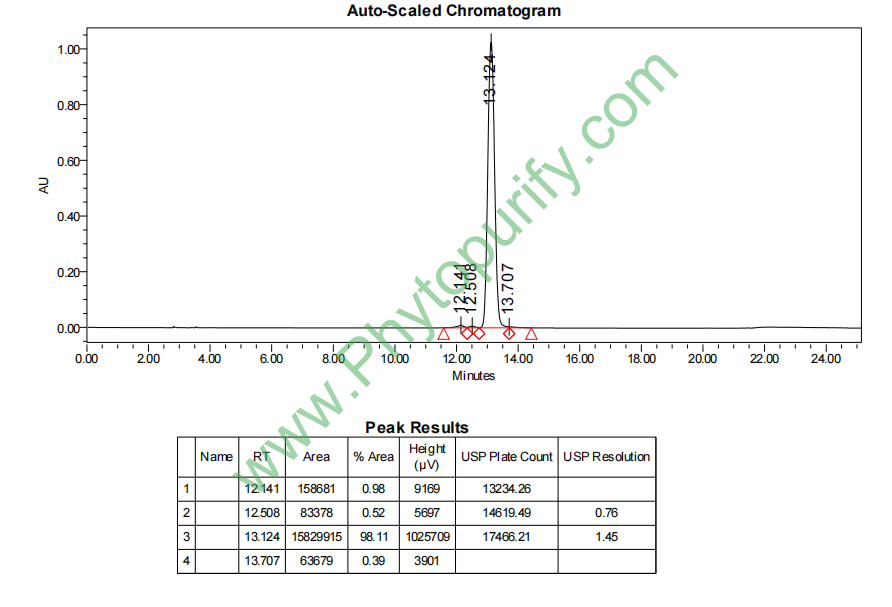
HPLC of Eriodictyol 7-glucuronide
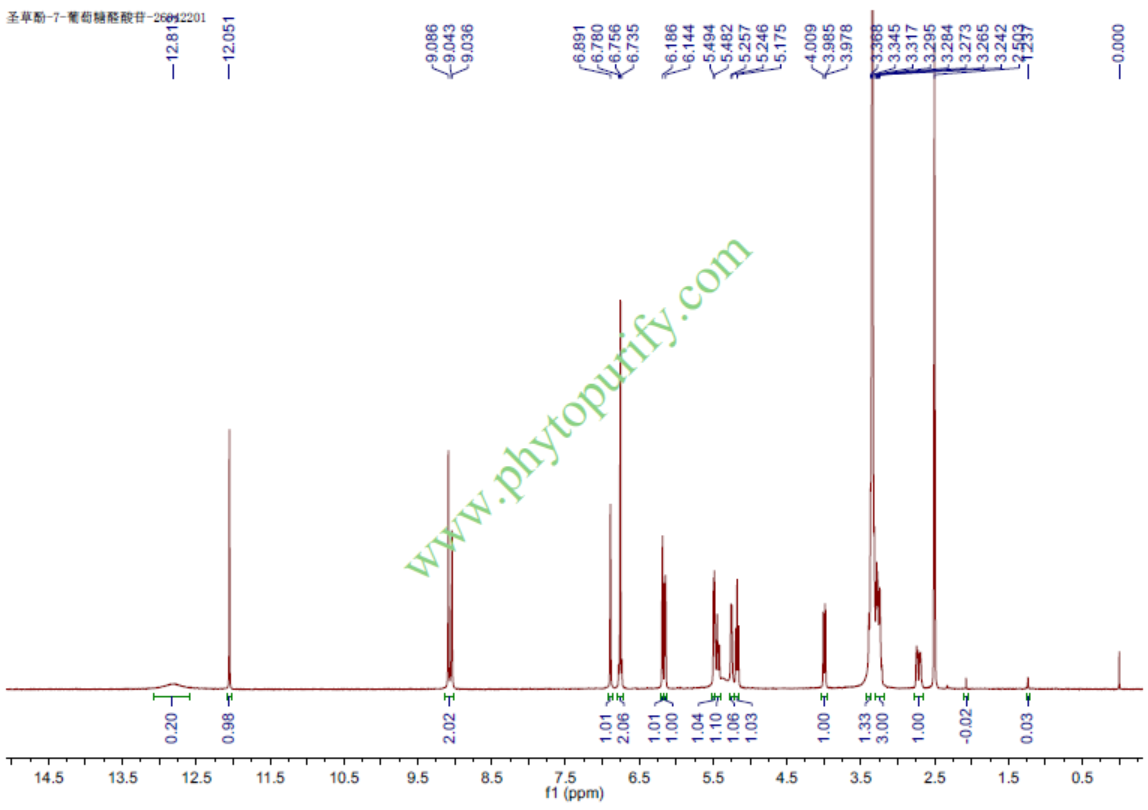
HNMR of Eriodictyol 7-glucuronide
Storage conditions:Short-term storage at 2~8℃, long-term storage at -20 ~ -80℃
226.7500
-2.0000
-2.0000
No
No
No
No
Unknown
No
Unknown
Natural products, as an important source of drug discovery, play an irreplaceable role in the long history of human struggle against diseases. Flavonoids, as the most widely distributed class of secondary metabolites in nature, have attracted much attention due to their structural diversity and extensive biological activity. Among numerous flavonoids, Eriodictyol 7-glucuronide, as a glycosylated flavonoid with unique structural modifications, has gradually entered the field of researchers in recent years. This compound not only inherits various pharmacological activities of its glycoside Eriodictyol, but also exhibits unique advantages in pharmacokinetic properties and bioavailability due to the introduction of glucuronic acid groups.
The discovery of Shengcao phenol-7-glucuronic acid glycoside originated from a systematic study of the active ingredients in traditional Chinese herbal medicine. Its chemical structure is formed by the connection of the parent nucleus of resveratrol and a molecule of glucuronic acid through a β - glycosidic bond. This structural modification is relatively rare in nature, endowing the molecule with unique chemical properties and biological activity spectrum. Preliminary studies have shown that the compound has significant antioxidant and anti-inflammatory activities, and can exert cell protective effects by inducing the nuclear factor E2 related factor 2 (Nrf2) signaling pathway. More notably, it has been discovered that salvianolic acid-7-glucuronic acid glycoside is an efficient RNA polymerase inhibitor for influenza dependent RNA, with a half maximal inhibitory concentration (IC50) as low as 18 nM. This discovery opens up new prospects for its application in the field of anti influenza virus.
From the perspective of medicinal chemistry, Shengcao phenol-7-glucuronic acid glycoside exhibits encouraging medicinal properties. Its molecular weight is 468.38 Da, with a topologically polar surface area (TPSA) of up to 226.75 Å ² and a LogP value of -2.0. These parameters collectively indicate that the compound has high polarity and good water solubility. The preliminary toxicity prediction results show that the compound does not have hepatotoxicity, cardiotoxicity, or inhibit hERG potassium channels, which lays a safety foundation for its subsequent drug development. However, the compound cannot penetrate the blood-brain barrier, which to some extent limits its application in the treatment of central nervous system diseases, but also avoids potential neurotoxic risks.
This article will provide a comprehensive and systematic review of the research progress of Shengcao phenol-7-glucuronic acid glycoside from multiple dimensions, including chemical structure and physicochemical properties, plant sources and extraction methods, pharmacological activity research, mechanism of action and molecular targets, pharmacological evaluation and pharmacokinetics, clinical application prospects and prospects, aiming to provide reference for the in-depth research and development of this compound.
The chemical name of salvianolic acid-7-glucuronic acid glycoside is (S) -2- (3,4-dihydroxyphenyl) -5,7-dihydroxy-4-oxochroman-7-yl - β - D-glucopyranosuronic acid glycoside. Its chemical structure consists of three parts: the flavonoid nucleus (salvianolic acid), the glucuronic acid group located at C-7, and the chiral center at C-2. The parent nucleus of Sophora flavescens belongs to the class of dihydroflavones, with a saturated pyranone structure in the C-ring and a single bond between C-2 and C-3 positions. There is a chiral carbon atom at C-2 position, and naturally occurring Sophora flavescens and its derivatives are usually in the S configuration. The C-5 and C-7 positions of the A ring each have a hydroxyl group, and the C-3 'and C-4' positions of the B ring each have an ortho dihydroxy group. The presence of these phenolic hydroxyl groups is the structural basis for the antioxidant activity of coumarin-7-glucuronic acid glycoside.
The glucuronic acid group is connected to the C-7 hydroxyl group of coumarin through a β - glycosidic bond, which significantly alters the physicochemical properties of the parent compound. Glucuronic acid is a type of uronic acid containing carboxyl groups, with a pKa value of approximately 3.2. It mainly exists in anionic form under physiological pH conditions. This structural feature endows the compound with high polarity and water solubility, with a calculated LogP value of -2.0, indicating strong hydrophilicity. The topological polar surface area (TPSA) is 226.75 Å ², which is much higher than the upper limit of 140 Å ² typically required for oral drugs, consistent with its structural characteristics of containing a large number of polar groups (12 hydrogen bond acceptors, 6 hydrogen bond donors).
From the perspective of spectroscopic characteristics, the UV absorption spectrum of coumarin-7-glucuronic acid glycoside exhibits two characteristic absorption peaks in the 280-290 nm and 320-340 nm regions, corresponding to the benzoyl system of the A ring and the cinnamoyl system of the B ring, respectively. In its infrared spectrum, a broad and strong hydroxyl stretching vibration absorption peak appears near 3400 cm ⁻¹, and a C=O stretching vibration absorption peak of glucuronic acid carboxyl group appears near 1720 cm ⁻¹. In the nuclear magnetic resonance hydrogen spectrum, the chemical shift of the sugar end proton (H-1 '') is usually in the range of δ 5.0-5.5 ppm, and the coupling constant (J value) is about 7-8 Hz, indicating that the glycosidic bond is in the β configuration.
The molecular formula of Shengcao phenol-7-glucuronic acid glycoside is C ₂₁ H ₂₀ O ₁ ₂, with a molecular weight of 468.38 Da. This compound is relatively stable under acidic conditions, but is prone to glycosidic bond hydrolysis under alkaline conditions, releasing the aglycone Shengcao phenol. It has high solubility in water and good solubility in polar organic solvents such as methanol, ethanol, and dimethyl sulfoxide. It is worth noting that due to the presence of multiple phenolic hydroxyl groups in the molecule, this compound is sensitive to light and heat, and should be stored away from light and at low temperatures during storage and experimentation.
Shengcao phenol-7-glucuronic acid glycoside, as a naturally occurring flavonoid glycoside, mainly exists in various medicinal and edible plants. Among them, the most well-known sources include plants in the Lamiaceae family (such as rosemary, sage, and thyme), plants in the Asteraceae family (such as chrysanthemum and mugwort), and plants in the Rutaceae family (such as Citrus aurantium and tangerine peel). In recent years, with the deepening of research on the active ingredients of traditional Chinese herbal medicine, the existence of Shengcao phenol-7-glucuronic acid glycoside in various traditional Chinese medicines has been discovered and reported one after another.
In the family Lamiaceae, Rosmarinus officinalis and Salvia officinalis are important sources of coumarin-7-glucuronic acid glycoside. Research has shown that the content of this compound in rosemary leaves can reach 0.5% -1.5% of dry weight, and its content fluctuates with the plant growth stage and harvest season. In the Asteraceae family, the petals and whole plant of chrysanthemums (Chrysanthemum morifolium) contain abundant amounts of coumarin-7-glucuronic acid, especially in medicinal chrysanthemum varieties such as white chrysanthemum and Gongju. In addition, the presence of this compound was also detected in the immature fruit of the Rutaceae plant Citrus aurantium, but its content was relatively low.
The extraction method of Shengcao phenol-7-glucuronic acid glycoside is mainly based on its high polarity, usually using solvent extraction method. The traditional extraction process uses ethanol water mixed solvent (usually 50% -80% ethanol) as the extraction agent to extract target compounds from plant materials through heating reflux or cold soaking extraction. In order to improve extraction efficiency and selectivity, various modern extraction techniques have been developed in recent years. Ultrasound assisted extraction (UAE) utilizes the cavitation effect of ultrasound to destroy plant cell walls, promote solvent permeation and solute release, and achieve high extraction rates in a short period of time. Microwave assisted extraction (MAE) utilizes the penetrability and selective heating properties of microwaves to accelerate the dissolution of target compounds. In addition, enzyme assisted extraction (EAE) degrades plant cell wall components through enzyme preparations such as cellulase and pectinase, which also helps to improve the extraction efficiency of coumarin-7-glucuronic acid glycoside.
The crude extract after extraction usually requires a series of purification steps to obtain high-purity sophorol-7-glucuronide. Common purification methods include liquid-liquid extraction, column chromatography, and preparative high-performance liquid chromatography (pre HPLC). Liquid liquid extraction utilizes the difference in distribution coefficients of the target compound in different solvents for preliminary separation. Typically, solvents such as n-hexane, ethyl acetate, and n-butanol are used for sequential extraction to enrich the coumarin-7-glucuronic acid glycoside in the n-butanol phase. Column chromatography methods include macroporous adsorption resin column chromatography, polyamide column chromatography, and silica gel column chromatography. Among them, macroporous adsorption resins (such as HPD-100, AB-8, etc.) are widely used for the enrichment and preliminary purification of flavonoid glycosides due to their large adsorption capacity, mild desorption conditions, and reusability. For the preparation of high-purity samples, preparative high-performance liquid chromatography is the most effective method, usually using a C18 reverse phase chromatography column with methanol water or acetonitrile water system as the mobile phase, and achieving the separation and purification of target compounds through gradient elution.
It is worth noting that the content of salvianolic acid-7-glucuronic acid glycoside in plants is usually low and often coexists with structurally similar flavonoid glycosides, which poses certain challenges for its isolation and purification. In recent years, the application of new separation methods such as high-speed counter current chromatography (HSCCC) and molecular imprinting technology has provided a new approach for the efficient preparation of glucuronide 7-glucuronide. In addition, with the development of biosynthetic technology, the use of genetically engineered microorganisms (such as engineered Escherichia coli or yeast) to produce glucuronide-7-glucoside has also shown potential application prospects.
The pharmacological activities of Shengcao phenol-7-glucuronic acid glycoside mainly focus on its antioxidant, anti-inflammatory, and antiviral aspects, which are closely related to its unique chemical structure and molecular targets.
In terms of antioxidant activity, salvianolic acid-7-glucuronic acid glycoside exhibits significant free radical scavenging ability. The B-ring ortho dihydroxy group (3 ', 4' - dihydroxy) in its molecular structure is a key functional group that exerts antioxidant effects. It can effectively eliminate various reactive oxygen species (ROS) and reactive nitrogen species (RNS) through hydrogen atom transfer (HAT) or single electron transfer (SET) mechanisms. In vitro experiments have shown that salvianolic acid-7-glucuronic acid glycoside has significant scavenging effects on 1,1-diphenyl-2-trinitrophenylhydrazine (DPPH) free radicals, 2,2 '- bis (3-ethylbenzothiazoline-6-sulfonic acid) (ABTS) free radicals, and hydroxyl free radicals, with a half maximal clearance concentration (EC50) at the micromolar level. In addition, the compound can chelate transition metal ions (such as Fe ² ⁺, Cu ² ⁺), inhibit hydroxyl radicals generated by Fenton reaction, and thereby alleviate metal ion mediated oxidative damage. In cell models, salvianolic acid-7-glucuronic acid glycoside can reduce oxidative stress levels induced by hydrogen peroxide (H ₂ O ₂) or tert butyl hydroperoxide (t-BHP), decrease intracellular ROS accumulation, and protect cells from oxidative damage.
In terms of anti-inflammatory activity, salvianolic acid-7-glucuronic acid glycoside can inhibit inflammatory reactions through various pathways. In a macrophage model stimulated by lipopolysaccharide (LPS), this compound can significantly reduce the secretion levels of pro-inflammatory cytokines such as tumor necrosis factor - α (TNF - α), interleukin-6 (IL-6), and interleukin-1 β (IL-1 β). Meanwhile, it can also inhibit the expression of inducible nitric oxide synthase (iNOS) and cyclooxygenase-2 (COX-2), reduce the production of nitric oxide (NO) and prostaglandin E ₂ (PGE ₂). In animal models, salvianolic acid-7-glucuronic acid glycoside can alleviate carrageenan induced toe swelling in rats and xylene induced ear swelling in mice, demonstrating good in vivo anti-inflammatory effects. It is worth noting that the anti-inflammatory activity of this compound is closely related to its antioxidant activity. By clearing excess ROS generated during the inflammatory process, it can effectively block the inflammatory cascade reaction driven by oxidative stress.
The most notable pharmacological activity of Shengcao phenol-7-glucuronic acid glycoside is its anti influenza virus effect. Research has found that this compound is an efficient inhibitor of influenza dependent RNA polymerase (RdRp), with an IC50 value as low as 18 nM. Influenza virus RdRp is a heterotrimeric complex composed of three subunits, PA, PB1, and PB2, responsible for the replication and transcription of the virus genome. Shengcao phenol-7-glucuronic acid glycoside can bind to the active site of RdRp, interfere with the recognition and polymerization reaction of nucleotide substrates, thereby inhibiting the synthesis of viral RNA. At the cellular level, the compound exhibits broad-spectrum antiviral activity against both influenza A virus (including H1N1, H3N2 subtypes) and influenza B virus, with a half effective concentration (EC50) in the nanomolar range. More importantly, Shengcao phenol-7-glucuronic acid glycoside also has inhibitory effects on influenza virus resistant strains (such as the H275Y mutant strain resistant to oseltamivir), indicating that its mechanism of action is different from existing anti influenza drugs and has the potential to overcome resistance.
In addition to the main activities mentioned above, Shengcao phenol-7-glucuronic acid glycoside has also been reported to have other pharmacological effects. For example, the compound can inhibit the activity of alpha glucosidase and has a certain hypoglycemic potential; It can inhibit the activity of acetylcholinesterase and may play a role in the treatment of Alzheimer's disease; It can also induce apoptosis of tumor cells and demonstrate certain anti-tumor activity. However, these studies are still in the preliminary stage, and their specific mechanisms and in vivo effectiveness need further verification.
The pharmacological activity of salvianolic acid-7-glucuronic acid glycoside originates from its interactions with multiple molecular targets, with the most central being the induction of the Nrf2 signaling pathway and the inhibition of influenza virus RdRp.
Nrf2 (nuclear factor E2 related factor 2) is the main transcription factor that cells use to respond to oxidative stress and electrophilic substances, regulating the expression of a range of antioxidant and detoxifying enzymes. Under normal physiological conditions, Nrf2 binds to Kelch like ECH related protein 1 (Keap1) and is rapidly degraded through the ubiquitin proteasome pathway, maintaining low intracellular levels. When cells are stimulated by oxidative stress or electrophilic substances, the cysteine residue of Keap1 is modified, causing Nrf2 to dissociate from Keap1 and translocate into the nucleus, forming heterodimers with small Maf proteins, binding to antioxidant response elements (ARE), and initiating transcription of downstream target genes.
Shengcao phenol-7-glucuronic acid glycoside can effectively activate the Nrf2 signaling pathway. Research has shown that this compound may achieve this effect through two mechanisms: firstly, the ortho dihydroxy structure in its molecule can be oxidized to form quinone intermediates, which can directly modify the cysteine residues of Keap1 (especially Cys151, Cys273, and Cys288), causing a conformational change in Keap1 and releasing Nrf2; Secondly, sage coumarin-7-glucuronic acid glycoside can activate upstream protein kinases such as phosphatidylinositol 3-kinase (PI3K)/protein kinase B (Akt) pathway and mitogen activated protein kinase (MAPK) pathway, promoting Nrf2 nuclear translocation by phosphorylating Nrf2 or Keap1. The activated Nrf2 signaling pathway can upregulate a series of antioxidant enzymes, such as heme oxygenase-1 and HO-1; Quinone oxidoreductase-1 NQO1; The expression of glutathione S-transferase, GST, and detoxifying enzymes (such as UDP glucuronosyltransferase, UGT) enhances the antioxidant and detoxifying abilities of cells.
In terms of anti influenza virus, the target of action of salvianolic acid-7-glucuronic acid glycoside is the RNA dependent RNA polymerase (RdRp) of influenza virus. RdRp is a key enzyme for influenza virus replication and transcription, with its active center located in the catalytic domain of PB1 subunit. Molecular docking and molecular dynamics simulations have shown that coumarin-7-glucuronic acid glycoside can bind to the active site of PB1 subunit, occupying the binding pocket of nucleotide substrates. Specifically, the parent nucleus of the compound forms π - π stacking and hydrogen bonding interactions with conserved amino acid residues of PB1 (such as Lys328, Arg329, Glu330, etc.), while the glucuronic acid group forms an additional hydrogen bonding network with polar amino acid residues near the active site (such as Ser331, Asn332, etc.). This multiple non covalent interaction enables the tight binding of coumarin-7-glucuronic acid glycoside to the active site of RdRp, competitively inhibiting the binding and polymerization reactions of nucleotide substrates, thereby blocking the extension of viral RNA.
It is worth noting that the inhibition of RdRp by salvianolic acid-7-glucuronic acid glycoside is highly selective. Compared with mammalian RNA polymerase, this compound has thousands of times higher inhibitory activity against influenza virus RdRp, providing a good selective basis for its development as an anti influenza drug. In addition, due to the highly conserved active site of RdRp in influenza virus, coumarin-7-glucuronic acid glycoside exhibits inhibitory activity against different subtypes of influenza virus and is not easily resistant to drug resistance.
In addition to the two main targets mentioned above, Shengcao phenol-7-glucuronic acid glycoside may also exert pharmacological effects through other mechanisms. For example, its anti-inflammatory activity is partially derived from inhibition of the nuclear factor kappa B (NF - κ B) signaling pathway. Research has shown that this compound can inhibit the activity of I κ B kinase (IKK), prevent the phosphorylation and degradation of I κ B α, thereby inhibiting the nuclear translocation of NF - κ B and the transcription of pro-inflammatory genes. In addition, salvianolic acid-7-glucuronic acid glycoside can directly bind to the active sites of certain inflammation related enzymes (such as COX-2, iNOS), inhibiting their enzymatic activity. The mechanism of action of these multiple targets together constitutes a complex pharmacological activity network of coumarin-7-glucuronic acid glycosides.
The pharmacological evaluation of salvianolic acid-7-glucuronic acid involves multiple dimensions, including physicochemical properties, pharmacokinetic (PK) characteristics, safety, etc. From the perspective of medicinal chemistry, this compound has some favorable pharmacological characteristics, but also faces some challenges.
In terms of physicochemical properties, the molecular weight of salvianolic acid-7-glucuronic acid glycoside is 468.38 Da, which is within the typical range of small molecule drugs (usually less than 500 Da). Its LogP value is -2.0, indicating that the compound has strong hydrophilicity, which is beneficial for its dissolution in aqueous media and formulation development. However, excessive hydrophilicity may also make it difficult for it to penetrate the cell membrane, affecting oral absorption and accessibility of intracellular targets. The TPSA is 226.75 Å ², which is much higher than the upper limit of 140 Å ² typically required for oral medications, consistent with its structural feature of containing 12 hydrogen bond receptors. High TPSA values are often associated with low oral bioavailability, as polar molecules are difficult to passively diffuse through the intestinal epithelial cell membrane.
In terms of absorption, the oral bioavailability of salvianolic acid-7-glucuronic acid glycoside may be low. Due to its high polarity and large molecular weight, this compound is difficult to be absorbed by the intestine through passive diffusion. However, as a glucuronide, it may be absorbed through active transport mediated by glucuronide transporters in the intestine, such as organic anion transporters (OATPs). In addition, β - glucuronidase in the gut microbiota may hydrolyze it into the aglycone coumarin, which has higher lipid solubility and is more easily absorbed. Therefore, the oral absorption of coumarin-7-glucuronic acid glycoside may be a complex process involving multiple transporters and metabolic enzymes.
In terms of distribution, the distribution volume of coumarin-7-glucuronic acid glycoside may be relatively small, mainly limited to extracellular fluid. Due to its high polarity and negative charge (carboxyl dissociation of glucuronic acid at physiological pH), this compound is difficult to penetrate the cell membrane and enter the cell. It is worth noting that the compound cannot cross the blood-brain barrier (BBB), which limits its application in the treatment of central nervous system diseases, but also avoids potential neurotoxic risks. In plasma, coumarin-7-glucuronic acid glycoside may bind to plasma proteins (especially albumin) with a high binding rate, which can affect its free drug concentration and efficacy.
In terms of metabolism, the metabolic pathway of Shengcao phenol-7-glucuronic acid glycoside mainly includes glycosidic bond hydrolysis and phase II metabolic reactions. The hydrolysis of glycosidic bonds can be catalyzed by β - glucuronidase in the gut microbiota or liver, releasing the aglycone coumarin. Shengcao phenol further undergoes phase II metabolic reactions such as methylation, sulfation, or glucuronidation, producing various metabolites. In addition, coumarin-7-glucuronic acid glycoside itself may also be taken up by transporters in the liver (such as organic anion transporters, OATs) as a substrate, and excreted through bile or secreted by renal tubules.
In terms of excretion, salvianolic acid-7-glucuronic acid glycoside is mainly excreted through two pathways: the kidneys and bile. Due to its high polarity and negative charge, glomerular filtration is its main renal excretion pathway. In addition, organic anion transporters (OATs) in the renal tubules may mediate their active secretion. In terms of bile excretion, multidrug resistance associated protein 2 (MRP2) in the liver may transport sophorol-7-glucuronide and its metabolites to bile, which may undergo enterohepatic circulation after entering the intestine.
In terms of safety, the preliminary toxicity prediction results show that Shengcao phenol-7-glucuronic acid glycoside has good safety characteristics. This compound does not have hepatotoxicity, does not inhibit hERG potassium channels, and does not have cardiotoxicity. The Ames test results are unknown and further genetic toxicity studies are needed to assess its mutagenic risk. In addition, due to the compound's inability to cross the blood-brain barrier, the risk of central nervous system toxicity is relatively low. However, these safety evaluations are mainly based on computer predictions and limited in vitro experiments, and systematic in vivo toxicology studies are still needed to comprehensively evaluate their safety.
Shengcao phenol-7-glucuronic acid glycoside, as a natural product with multiple pharmacological activities, has shown potential clinical application prospects in multiple therapeutic fields.
In the field of anti influenza virus, the clinical application prospects of salvianolic acid-7-glucuronic acid glycoside are the most remarkable. Influenza virus causes a large number of infections and deaths worldwide every year, and existing anti influenza drugs (such as neuraminidase inhibitor oseltamivir and M2 ion channel inhibitor amantadine) are facing increasingly serious resistance problems. As a novel RdRp inhibitor, Shengcao phenol-7-glucuronic acid glycoside has a completely different mechanism of action from existing drugs and is equally effective against drug-resistant strains, making it an ideal candidate compound for developing a new generation of anti influenza drugs. However, there are still a series of challenges to overcome from candidate compounds to clinical drugs. Firstly, it is necessary to optimize its pharmacokinetic properties and improve its oral bioavailability. This may be achieved through strategies such as prodrug design, nanomedicine, or structural modification. Secondly, it is necessary to establish reliable industrial production processes to ensure the quality and supply of drugs. In addition, systematic preclinical and clinical studies are needed to evaluate its safety, efficacy, and pharmacokinetic characteristics.
In the fields of antioxidant and anti-inflammatory, the clinical application prospects of salvianolic acid-7-glucuronic acid glycoside are also broad. Oxidative stress and chronic inflammation are the common pathological basis of many diseases (such as cardiovascular diseases, diabetes, neurodegenerative diseases, cancer, etc.). By activating the Nrf2 signaling pathway, salvianolic acid-7-glucuronic acid can enhance the antioxidant defense ability of cells, alleviate oxidative damage and inflammatory reactions. Therefore, this compound may be used as a dietary supplement or adjuvant therapy for the prevention or treatment of chronic diseases associated with oxidative stress and inflammation. However, the problem of low oral bioavailability also exists in this application field, which needs to be improved through appropriate formulation techniques or administration routes.
In terms of drug development strategies, the structural modification and derivative design of salvianolic acid-7-glucuronic acid glycoside are directions worth exploring. The pharmacological activity and pharmacokinetic properties of the compound can be optimized by chemical modification of its parent nucleus or glucuronic acid group. For example, replacing glucuronic acid groups with other sugar groups (such as glucose, galactose) or introducing lipophilic groups may improve their oral absorption and cell membrane permeability. In addition, the combined use of salvianolic acid-7-glucuronic acid glycoside with other drugs is also worth studying. For example, when used in combination with antioxidants (such as vitamin C, vitamin E) or anti-inflammatory drugs (such as nonsteroidal anti-inflammatory drugs), it may produce synergistic effects and improve treatment efficacy.
In terms of biotechnology applications, the biosynthesis and metabolic engineering research of salvianolic acid-7-glucuronic acid glycoside has important application value. By constructing engineered microorganisms such as Escherichia coli or yeast to produce glucuronide, sustainable and low-cost production can be achieved, reducing dependence on plant resources. In addition, using enzyme catalysis or whole cell biotransformation techniques, it is also possible to synthesize salvianolic acid-7-glucuronic acid glycosides from inexpensive substrates such as salvianolic acid or glucuronic acid.
Looking ahead to the future, the research on salvianolic acid-7-glucuronic acid glycoside will develop in the following directions: firstly, to further elucidate its mechanism of action, especially its interaction mode with the Nrf2 signaling pathway and influenza virus RdRp; The second is to optimize its pharmacokinetic properties, improve oral bioavailability and targeting; The third is to expand its clinical application scope and explore its application in other therapeutic fields besides antiviral, antioxidant, and anti-inflammatory; The fourth is to develop efficient and green preparation processes to achieve large-scale production. With the deepening of research and the advancement of technology, salvianolic acid-7-glucuronic acid glycoside is expected to become a candidate drug for the treatment of influenza virus infection and play an important role in the prevention and treatment of other oxidative stress and inflammation related diseases.
Shengcao phenol-7-glucuronic acid glycoside, as a natural flavonoid glycoside with unique structural characteristics, has attracted widespread attention in the field of natural product pharmacology due to its significant antioxidant, anti-inflammatory, and anti influenza virus activities. This article provides a systematic review of the research progress of this compound from multiple aspects, including chemical structure and physicochemical properties, plant sources and extraction methods, pharmacological activity research, mechanism of action and molecular targets, pharmacological evaluation and pharmacokinetics, clinical application prospects and prospects.
The chemical structure of salvianolic acid-7-glucuronic acid glycoside is composed of the salvianolic nucleus and the glucuronic acid group. This structural modification endows the compound with unique physicochemical properties and biological activity. Its high polarity and good water solubility are beneficial for formulation development, but they also bring the challenge of low oral bioavailability. This compound exerts antioxidant and anti-inflammatory effects by inducing the Nrf2 signaling pathway, and antiviral effects by inhibiting the influenza virus RdRp. Its multi-target mechanism of action lays the foundation for its application in the treatment of various diseases.
Despite the encouraging pharmacological activity and pharmacological characteristics exhibited by salvianolic acid-7-glucuronic acid glycoside, its translation from laboratory research to clinical application still faces many challenges. The optimization of oral bioavailability, establishment of industrial production technology, systematic safety evaluation, and clinical research are all challenges that need to be overcome. However, with the interdisciplinary integration of medicinal chemistry, pharmacology, pharmacy, and biotechnology, these challenges are expected to be gradually resolved.
In summary, Shengcao phenol-7-glucuronic acid glycoside is a natural product with significant research value and development potential. A deep understanding of its pharmacological mechanism of action, optimization of its pharmacokinetic properties, and expansion of its clinical application scope will help promote the transition of this compound from laboratory to clinical practice, and contribute to the cause of human health. In the future, with the continuous deepening of research and the continuous advancement of technology, sophorol-7-glucuronide is expected to play an important role in multiple therapeutic fields such as anti influenza virus, antioxidant, anti-inflammatory, etc., and become a successful example of natural product drug development.
