Storage conditions:Short-term storage at 2~8℃, long-term storage at -20 ~ -80℃
267.6600
-.0693
-.1921
3.1641
.4556
.1550
Low
75.3664
4.8253
Yes
No
Yes
No
Yes
No
0.6
Yes
No
Yes
Yes
Natural products, as an important source of drug discovery, play an irreplaceable role in the long history of human fight against diseases. Flavonoids, as one of the most widely distributed secondary metabolites in nature, have attracted much attention due to their structural diversity and extensive biological activity. Among numerous flavonoids, Syringetin-3-O-rutinoside, as a flavonol glycoside with unique structural characteristics, has gradually entered the field of researchers in recent years.
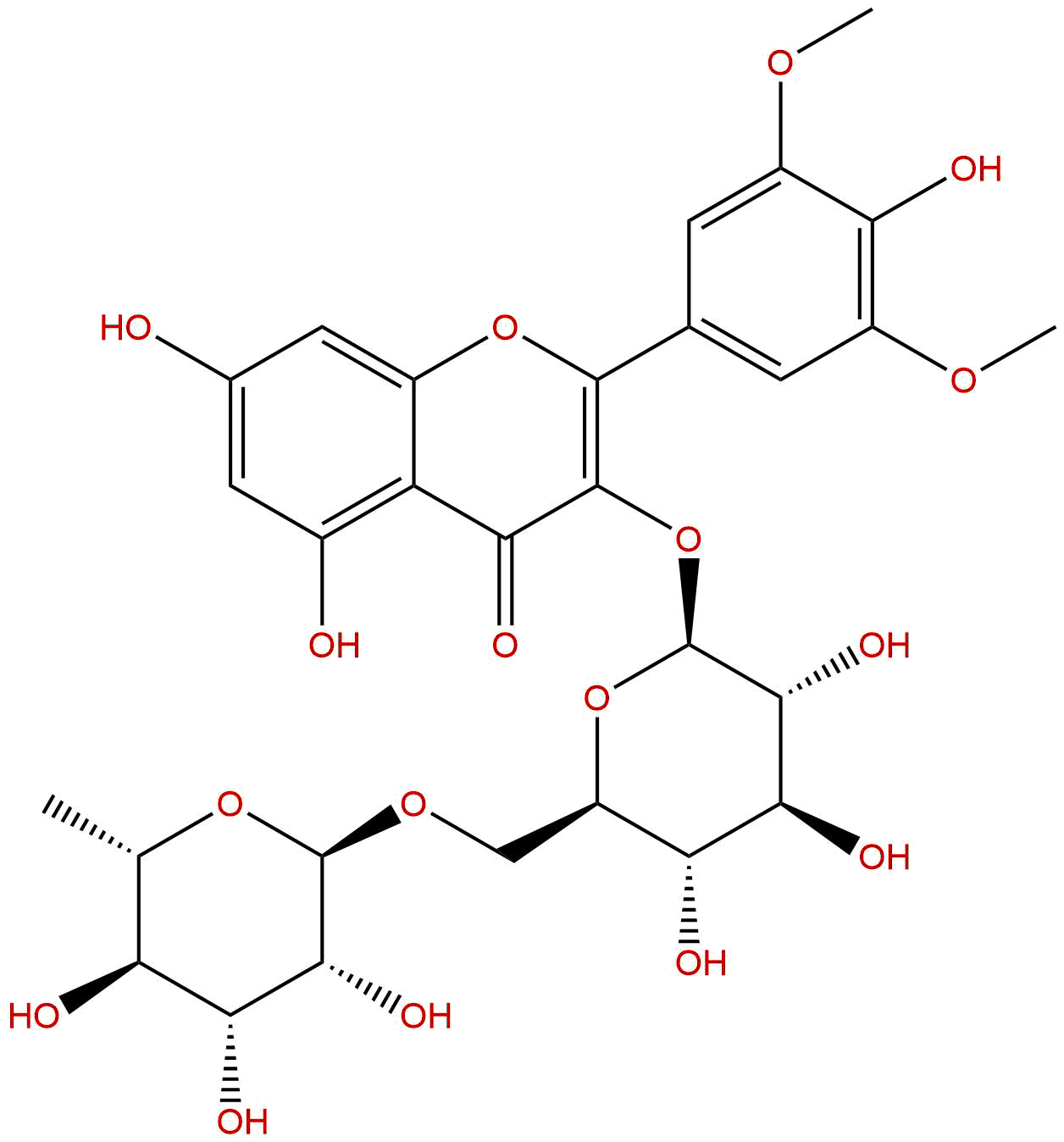
Dingxiangting-3-O-rutinoside belongs to the class of flavonol compounds, with its aglycone being Syringenin and its sugar moiety being rutinose, namely α - L-rhamnose - (1 → 6) - β - D-glucose. This compound was first isolated from certain medicinal plants and subsequently discovered in various plants, including grapes, berry fruits, and some traditional medicinal plants. It is worth noting that Dingxiangting-3-O-rutinoside is not only a natural antioxidant component in plants, but also exhibits various pharmacological activities, especially in the field of anti-tumor, showing remarkable potential.
With the continuous deepening of research on the anti-tumor mechanism of natural products, the characteristic of Dingxiangting-3-O-rutinoside exerting anti-tumor effects by regulating multiple key signaling pathways and molecular targets has gradually been revealed. Its targets include anti apoptotic proteins MCL1 and BCL2, transcription factor STAT3, matrix metalloproteinase MMP2, topoisomerases TOP1 and TOP2A, hypoxia inducible factor HIF1A, mitogen activated protein kinase MAPK1, estrogen receptor ESR1, and aromatase CYP19A1, exhibiting multi-target and multi pathway characteristics. This multi-target mode of action not only conforms to the concept of "multi-target therapy" in modern drug development, but also provides new ideas for overcoming tumor drug resistance.
In addition, the pharmacological parameters of Dingxiangting-3-O-rutinoside are also worth paying attention to. Its molecular weight is 654.5740 and LogP value is -0.0693, indicating that the compound has strong hydrophilicity; The topological polar surface area (TPSA) is 267.6600, the water solubility score is 3.1641, the blood-brain barrier permeability is low, the hERG inhibition risk is negative, and the Ames test results indicate a low risk of genetic toxicity. These parameters provide important reference for subsequent drug development.
This article will systematically review the research progress of Dingxiangting-3-O-rutinoside from the aspects of chemical structure and physicochemical properties, plant sources and extraction methods, pharmacological activity research, mechanism of action and molecular targets, drug evaluation and pharmacokinetics, clinical application prospects and prospects, in order to provide reference for the in-depth research and development of this natural product.
The chemical structure of Dingxiangting-3-O-rutinoside consists of a glycoside moiety and a sugar moiety. Its aglycone is Syringen, with a chemical name of 3,5,7-trihydroxy-3 ′, 4 ′, 5 ′ - trimethoxyflavone, belonging to flavonol compounds. The structural characteristic of Dingxiangting is that it has three substituents on the B ring, namely 3 '- methoxy, 4' - hydroxyl, and 5 '- methoxy. This special substitution pattern distinguishes it from other common flavonols such as quercetin and kaempferol.
The sugar moiety is rutinose, which is a disaccharide composed of α - L-rhamnose and β - D-glucose linked by a 1 → 6 glycosidic bond. Rutin is connected to the hydroxyl group at position 3 of syringating through a β - glycosidic bond, forming syringating-3-O-rutin glycoside. This glycosylation modification not only increases the water solubility of the compound, but may also affect its bioavailability and pharmacological activity.
From a chemical classification perspective, Dingxiangting-3-O-rutinoside belongs to the flavonol-3-O-glycoside class and is one of the common forms of flavonoid glycosides in nature. Its molecular formula is C29H34O17 and its molecular weight is 654.5740 g/mol.
The physicochemical properties of Dingxiangting-3-O-rutinoside have a significant impact on its pharmacological research and drug development. According to the analysis of existing pharmacological parameters, this compound exhibits the following characteristics:
Lipophilicity and water solubility The LogP value is -0.0693, indicating that the compound has slight hydrophilicity and a distribution coefficient close to equilibrium in both aqueous and lipid phases. This moderate lipophilicity facilitates its transport and distribution within the organism. The water solubility score is 3.1641, indicating good solubility in water, mainly due to the presence of multiple hydroxyl and sugar groups in the molecule.
Polar Surface Area The topological polar surface area (TPSA) is 267.6600 Å ², which is much higher than the recommended upper limit of 140 Å ² for oral medications. A high TPSA value indicates that the compound has strong polarity, which may affect its ability to pass through cell membranes and oral absorption efficiency. However, for drugs that require local action or absorption through specific transporters, high polarity may also bring advantages.
Blood-brain barrier permeability The blood-brain barrier permeability of this compound was evaluated as' low ', which is consistent with its high TPSA value and high molecular weight (>500 Da) characteristics. Low blood-brain barrier permeability means that the distribution of this compound in the central nervous system is limited, which to some extent reduces its neurotoxic risk, but also limits its potential application in the treatment of brain diseases.
HERG inhibition risk The evaluation result of hERG inhibition is' no ', indicating that the compound has a low risk of inhibiting cardiac potassium ion channels, which provides favorable evidence for its cardiovascular safety.
Genotoxicity The Ames test result is 0.6, indicating that the compound exhibits a low risk of mutagenicity in bacterial reverse mutation testing and has good genetic toxicity safety.
The identification of Dingxiangting-3-O-rutinoside usually relies on multiple spectroscopic techniques. In UV Vis spectroscopy, flavonol compounds typically exhibit two characteristic absorption peaks in the 240-280 nm (band II) and 300-380 nm (band I) regions. After glycosylation, there may be a slight shift in the absorption peak position. Infrared spectroscopy (IR) can provide characteristic absorption information of hydroxyl, carbonyl, and glycosidic bonds. Nuclear magnetic resonance spectroscopy (NMR) is a key means of structural identification, including ¹ H-NMR and ¹ ³ C-NMR, which can provide detailed structural information of aglycones and glycosides. Mass spectrometry (MS) technology, especially high-resolution mass spectrometry (HR-MS), can provide precise molecular weight and fragment information, which helps to confirm the molecular formula and structure of compounds.
Dingxiangting-3-O-rutinoside is relatively widely distributed in nature, but its content is usually low. Currently, the plants reported to contain this compound mainly include the following categories:
Grape family plants Vitis vinifera and its related varieties are important sources of syringating-3-O-rutinoside. This compound mainly exists in grape skins and seeds, and is one of the components of polyphenols in red wine. The content of grapes varies among different varieties, usually related to factors such as grape variety, growth environment, maturity, and processing technology.
Berry fruits Blueberries (Vaccinium corymbosum), cranberries (Vaccinium vitis idaea), and blackberries (Rubus fruticosus) also contain syringating-3-O-rutinoside. These fruits are known for their rich anthocyanin and flavonoid compounds, with syringating-3-O-rutinoside as a trace component that works together with other polyphenolic substances to exert antioxidant and health promoting effects.
medicinal plants Some traditional medicinal plants have also been reported to contain syringating-3-O-rutinoside. For example, the presence of this compound can be detected in certain plants of the Lamiaceae and Asteraceae families. These plants are often used in folk medicine to treat diseases such as inflammation, infections, and tumors, and their active ingredients may include syringating-3-O-rutinoside.
Other plant sources In addition, the presence of syringating-3-O-rutinoside has also been found in some leguminous plants, Rosaceae plants, and Salicaceae plants. With the advancement of analytical techniques, it is expected that more plants will be identified as the source of this compound.
The extraction of Dingxiangting-3-O-rutinoside usually adopts solvent extraction method, and suitable extraction solvents and conditions are selected according to the polarity of the target compound and the characteristics of the plant material.
Solvent selection Due to the strong polarity of Dingxiangting-3-O-rutinoside, commonly used extraction solvents include methanol, ethanol, acetone, and their aqueous solutions. Among them, ethanol water mixed solvents (such as 70% -80% ethanol) are widely used due to their good extraction efficiency and safety. For certain plant materials, medium polarity solvents such as ethyl acetate or n-butanol can also be used for fractionation extraction.
Optimization of extraction conditions Factors such as extraction temperature, time, solid-liquid ratio, and extraction times have a significant impact on extraction efficiency. Usually, heating reflux extraction or ultrasound assisted extraction can improve extraction efficiency. Ultrasound assisted extraction has been widely used in laboratory research due to its advantages of easy operation, short extraction time, and low solvent dosage. In recent years, new extraction techniques such as microwave-assisted extraction, pressurized solvent extraction, and supercritical fluid extraction have also been attempted for the extraction of flavonoids, but there are few reports on their application to syringating-3-O-rutinoside.
Purification and Separation The crude extract usually contains various flavonoids and other impurities, which require further purification steps. Common purification methods include:
Liquid-liquid extraction Preliminary separation of target compounds and impurities based on their solubility differences using different solvents. For example, first degreasing with petroleum ether or n-hexane, and then extracting flavonoids with ethyl acetate or n-butanol.
column chromatography: Silica gel column chromatography, polyamide column chromatography and Sephadex LH-20 gel column chromatography are common methods for the separation and purification of flavonoids. Polyamide has good selective adsorption ability for flavonoids and is suitable for preliminary separation. Sephadex LH-20 gel column chromatography can be separated according to the molecular size, which is good for removing pigment and carbohydrate impurities.
Preparation type high-performance liquid chromatography For the preparation of high-purity samples, preparative HPLC is one of the most effective methods. By selecting appropriate stationary phases (such as C18 reverse phase columns) and mobile phases (such as methanol water or acetonitrile water systems), efficient separation and purification of syringating-3-O-rutinoside can be achieved.
High-speed countercurrent chromatography As a liquid-liquid distribution chromatography technique, high-speed counter current chromatography has the advantages of high sample recovery and irreversible adsorption, demonstrating unique advantages in natural product separation.
The content determination of Dingxiangting-3-O-rutinoside is usually carried out by high performance liquid chromatography (HPLC) combined with ultraviolet detection or mass spectrometry detection. Reverse phase C18 column is a commonly used chromatographic column, with methanol water or acetonitrile water system as the mobile phase. A small amount of formic acid or acetic acid is often added to improve the peak shape. The UV detection wavelength is usually set around 254 nm or 280 nm, which is the characteristic absorption wavelength of flavonoids. For complex samples, liquid chromatography-mass spectrometry (LC-MS) technology can be used for qualitative and quantitative analysis to improve the sensitivity and specificity of detection.
Dingxiangting-3-O-rutinoside, as a flavonol glycoside, has antioxidant activity as one of its most fundamental and widely studied pharmacological effects. This compound exerts antioxidant effects through multiple mechanisms:
Free radical scavenging ability The Dingxiangting-3-O-rutinoside molecule contains multiple phenolic hydroxyl groups, which can provide hydrogen atoms or electrons and effectively scavenge various free radicals, including hydroxyl radicals (· OH), superoxide anion radicals (O ₂⁻ ·), peroxide radicals (ROO ·), and DPPH radicals. Its antioxidant activity is closely related to the number and position of phenolic hydroxyl groups in the molecule. Research has shown that the ortho dihydroxy structure (3 ′, 4 ′ - dihydroxy) on the B ring is a key structural unit for flavonoids to exert antioxidant activity, while the methoxy groups at the 3 ′ and 5 ′ positions on the B ring of Dingxiangting may enhance the hydrogen supply ability of the hydroxyl group through electronic effects, despite only having a 4 ′ - hydroxyl group.
Metal ion chelating ability Dingxiangting-3-O-rutinoside can chelate transition metal ions (such as Fe ² ⁺ and Cu ² ⁺), inhibit Fenton reaction and Haber Weiss reaction, thereby reducing the generation of free radicals catalyzed by metal ions. This metal chelating ability is mainly attributed to the 3-hydroxy-4-carbonyl structure and 5-hydroxy-4-carbonyl structure in the molecule.
Regulation of antioxidant enzyme activity In addition to directly scavenging free radicals and chelating metal ions, syringating-3-O-rutinoside may also exert indirect antioxidant effects by regulating the intracellular antioxidant enzyme system. Research has shown that flavonoids can upregulate the activity of antioxidant enzymes such as superoxide dismutase (SOD), glutathione peroxidase (GPx), and catalase (CAT), enhancing the antioxidant defense ability of cells.
The anti-tumor activity is the most concerned pharmacological effect in the research of Dingxiangting-3-O-rutinoside. Existing studies have shown that this compound has inhibitory effects on proliferation, induces apoptosis, and inhibits metastasis in various tumor cell lines.
Inhibit tumor cell proliferation: DXT-3-O-Rutin can inhibit the proliferation of a variety of tumor cells, including breast cancer cells, lung cancer cells, liver cancer cells and colon cancer cells. Its anti proliferative effect is usually dose-dependent and time-dependent. It is worth noting that the compound has relatively low toxicity to normal cells and exhibits certain selective anti-tumor activity.
Inducing cell apoptosis Inducing apoptosis is one of the important mechanisms by which Dingxiangting-3-O-rutinoside exerts anti-tumor effects. Research has shown that this compound can induce tumor cell apoptosis by regulating the expression of apoptosis related proteins. Specifically, Dingxiangting-3-O-rutinoside can downregulate the expression of anti apoptotic proteins MCL1 and BCL2, while upregulating the expression of pro apoptotic protein BAX, activating the caspase cascade reaction and ultimately leading to cell apoptosis.
Inhibit tumor cell migration and invasion Tumor metastasis is one of the main causes of death in malignant tumors. Dingxiangting-3-O-rutinoside can inhibit the migration and invasion ability of tumor cells, which is closely related to its inhibition of the expression and activity of matrix metalloproteinase MMP2. MMP2 can degrade the extracellular matrix and promote the invasion and metastasis of tumor cells. By inhibiting MMP2, Dingxiangting-3-O-rutinoside can effectively hinder the process of tumor cell metastasis.
Inhibit angiogenesis The growth and metastasis of tumors depend on the formation of new blood vessels. Dingxiangting-3-O-rutinoside can inhibit the expression and activity of hypoxia inducible factor HIF1A, thereby downregulating the expression of vascular endothelial growth factor (VEGF) and inhibiting tumor angiogenesis. This function helps to cut off the nutritional supply of tumors and inhibit tumor growth.
Topoisomerase inhibitory activity Topoisomerases are essential enzymes in DNA replication and transcription processes, and are also targets of various anti-tumor drugs. Research has shown that Dingxiangting-3-O-rutinoside can inhibit the activity of topoisomerases TOP1 and TOP2A, interfere with the topological structure of DNA, and lead to DNA damage and cell death. The inhibitory activity of this topoisomerase may be related to the planar aromatic ring structure in its molecule.
In addition to antioxidant and anti-tumor activities, Dingxiangting-3-O-rutinoside also exhibits various other pharmacological activities:
anti-inflammatory activity Flavonoids typically have anti-inflammatory effects, and syringating-3-O-rutinoside is no exception. Research has shown that this compound can inhibit the production of inflammatory mediators such as prostaglandin E2 (PGE2) and nitric oxide (NO), and downregulate the expression of pro-inflammatory cytokines such as tumor necrosis factor - α (TNF - α) and interleukin-6 (IL-6). Its anti-inflammatory mechanism may be related to the inhibition of nuclear factor kappa B (NF - κ B) and mitogen activated protein kinase (MAPK) signaling pathways.
Estrogen regulated activity Dingxiangting-3-O-rutinoside can bind to the estrogen receptor ESR1 and exert estrogen like or anti estrogen like effects, depending on the cellular environment and concentration. In addition, the compound can also inhibit the activity of aromatase CYP19A1, affecting the synthesis of estrogen. This estrogen regulatory activity has potential application value in the treatment of hormone dependent tumors such as breast cancer.
Cardiovascular protective effect Dingxiangting-3-O-rutinoside may exert cardiovascular protective effects through mechanisms such as antioxidant, anti-inflammatory, and regulation of lipid metabolism. Research has shown that flavonoids can improve endothelial function, inhibit platelet aggregation, and lower blood pressure and lipid levels.
The pharmacological activity of Dingxiangting-3-O-rutinoside, especially its anti-tumor effect, involves the regulation of multiple molecular targets and signaling pathways. A deep understanding of its mechanism of action is of great significance for the further development and clinical application of this compound.
MCL1 and BCL2 MCL1 (myeloid leukemia factor 1) and BCL2 (B-cell lymphoma factor 2) are important anti apoptotic proteins in the BCL2 family, overexpressed in various tumors and closely related to tumor occurrence, development, and drug resistance. Dingxiangting-3-O-rutinoside can downregulate the expression levels of MCL1 and BCL2, break the balance between pro apoptotic and anti apoptotic proteins in cells, promote mitochondrial outer membrane permeability, release cytochrome c, activate caspase-9 and caspase-3, and ultimately induce tumor cell apoptosis. This regulatory effect on MCL1 and BCL2 is one of the core mechanisms by which the compound induces apoptosis.
STAT3 Signal transducer and activator of transcription factor 3 (STAT3) is an important transcription factor involved in regulating various biological processes such as cell proliferation, differentiation, apoptosis, and immune response. STAT3 is continuously activated in various tumors, promoting the survival and proliferation of tumor cells. Dingxiangting-3-O-rutinoside can inhibit the phosphorylation activation of STAT3, reduce its transcriptional activity, and thereby downregulate the expression of its target genes such as MCL1, BCL2, and Cyclin D1, exerting anti-tumor effects.
MMP2 Matrix metalloproteinase-2 (MMP2) is a key enzyme that degrades the extracellular matrix and plays an important role in tumor invasion and metastasis. Dingxiangting-3-O-rutinoside can inhibit the expression and enzyme activity of MMP2, reduce the degradation of extracellular matrix, and thus inhibit the migration and invasion of tumor cells. This effect may be achieved by inhibiting signaling pathways such as MAPK/ERK and PI3K/Akt.
TOP1 and TOP2A Topoisomerase 1 (TOP1) and Topoisomerase 2A (TOP2A) are key enzymes that regulate DNA topology and are indispensable in DNA replication, transcription, and recombination processes. Dingxiangting-3-O-rutinoside can inhibit the activity of TOP1 and TOP2A, interfere with the topological state of DNA, lead to the accumulation of DNA damage, activate the DNA damage response pathway, and ultimately induce cell cycle arrest and apoptosis. This topoisomerase inhibitory activity is one of the important mechanisms by which the compound exerts anti-tumor effects.
HIF1A Hypoxia inducible factor 1 alpha (HIF1A) is a key transcription factor for cells to adapt to a hypoxic environment. It is stably expressed and activated in the tumor hypoxic microenvironment, promoting angiogenesis, glycolysis, and tumor invasion. Dingxiangting-3-O-rutinoside can inhibit the protein expression and transcriptional activity of HIF1A, downregulate the expression of its target genes such as VEGF and glucose transporter 1 (GLUT1), thereby inhibiting tumor angiogenesis and glucose metabolism reprogramming.
MAPK1 Mitogen activated protein kinase 1 (MAPK1, also known as ERK2) is a key member of the MAPK/ERK signaling pathway, involved in regulating cell proliferation, differentiation, and survival. Dingxiangting-3-O-rutinoside can regulate the phosphorylation level of MAPK1, affect downstream signaling, thereby inhibiting tumor cell proliferation and inducing apoptosis. It is worth noting that the regulation of the MAPK signaling pathway by this compound may exhibit bidirectionality, depending on the cell type and stimulation conditions.
ESR1 and CYP19A1 Estrogen receptor alpha (ESR1) and aromatase (CYP19A1) are important therapeutic targets for hormone dependent breast cancer. Dingxiangting-3-O-rutinoside can bind to ESR1 and exert a selective estrogen receptor modulator (SERM) like effect, while inhibiting the activity of CYP19A1 and reducing estrogen synthesis. This dual mechanism of action gives it a unique advantage in the treatment of hormone dependent tumors.
Dingxiangting-3-O-rutinoside exerts synergistic anti-tumor effects by simultaneously regulating multiple molecular targets. This multi-target mode of action has the following advantages: firstly, it can simultaneously interfere with multiple survival signaling pathways of tumor cells, improving anti-tumor efficacy; Secondly, reduce the risk of drug resistance caused by single target mutations; Finally, synergistic effects may be generated through interactions between different targets.
The pharmacological parameters of Dingxiangting-3-O-rutinoside provide important references for its drug development. According to Lipinski's "Rule of Five", the ideal properties of oral medication include: molecular weight less than 500 Da, LogP less than 5, number of hydrogen bond donors less than 5, and number of hydrogen bond acceptors less than 10. The molecular weight of Dingxiangting-3-O-rutinoside is 654.5740 Da, exceeding the limit of 500 Da; The number of hydrogen bond donors (phenolic hydroxyl and glycosyl hydroxyl) exceeds 5; The number of hydrogen bond acceptors (oxygen atoms) exceeds 10. These characteristics indicate that the compound does not conform to the classical "five rules" and may have a low oral bioavailability issue.
However, with the development of medicinal chemistry, more and more natural products and drug molecules have broken through the limitations of the "Five Rules". For compounds with high polarity such as Dingxiangting-3-O-rutinoside, their pharmacological properties can be improved through the following strategies: prodrug design, nanoformulation technology, structural modification, etc.
absorb The oral absorption of Dingxiangting-3-O-rutinoside may be limited by its high polarity and large molecular weight. The absorption of flavonoid glycosides in the intestine usually involves two pathways: one is direct absorption through intestinal transporters (such as sodium dependent glucose transporter SGLT1); Secondly, under the influence of gut microbiota, glycosidic bonds are hydrolyzed, releasing glycosides that are then absorbed. For syringating-3-O-rutinoside, its rutin glycosyl group may be gradually hydrolyzed by rhamnosidase and glucosidase in the gut microbiota, ultimately releasing syringating glycosides. Glycosides have good lipid solubility and are more easily absorbed by the intestine.
distribution The high polarity and low LogP value of this compound suggest that its plasma protein binding rate may be low and its distribution volume may be small. Low blood-brain barrier permeability indicates limited distribution of the central nervous system, mainly in the blood and extracellular fluid. High TPSA values also indicate poor cell membrane permeability, which may be mainly distributed in the extracellular space.
Metabolism The metabolism of Dingxiangting-3-O-rutinoside may involve multiple pathways, including hydrolysis of the sugar moiety, methylation, sulfation, glucuronidation, and oxidative metabolism of the aglycone. The liver and intestines are its main metabolic sites. The cytochrome P450 enzyme system may be involved in the oxidative metabolism of aglycones, while phase II metabolic enzymes such as UGT and SULT are involved in the binding reaction of aglycones.
excretion The compound and its metabolites are mainly excreted through bile and urine. Due to its high molecular weight, bile excretion may be its main clearance pathway. Renal excretion may also play a role, especially for metabolites with smaller molecular weights.
HERG inhibition risk The hERG inhibition evaluation result is negative, indicating that the compound has a low risk of affecting the cardiac repolarization process and a low risk of cardiac toxicity.
Genotoxicity The Ames test result was 0.6, indicating that the compound did not exhibit significant mutagenicity in bacterial reverse mutation testing and had a low risk of genetic toxicity. However, a more comprehensive genetic toxicity evaluation is still needed, including mammalian cell chromosome aberration testing and in vivo micronucleus testing.
Other toxicities At present, there is insufficient research on the systemic toxicity of Dingxiangting-3-O-rutinoside. Preliminary studies have shown that the compound has low toxicity to normal cells and exhibits a certain degree of selectivity. However, there is still a lack of data on long-term toxicity and reproductive toxicity, and further research is needed.
To improve the pharmacokinetic characteristics and bioavailability of Dingxiangting-3-O-rutinoside, the following formulation strategies can be considered:
nano-formulation Liposomes, nanoparticles, nanoemulsions and other nanocarriers can enhance the solubility and stability of the compound, improve its oral absorption and targeted delivery.
Prodrug design By chemical modification, Dingxiangting-3-O-rutinoside is converted into a prodrug to enhance its lipid solubility and membrane permeability. For example, esterification or etherification modification of phenolic hydroxyl groups can release active ingredients after enzymatic or chemical hydrolysis in vivo.
Phospholipid complex Forming complexes with phospholipids can enhance the lipid solubility and bioavailability of flavonoids, while improving their stability.
Cyclodextrin inclusion complex By utilizing the hydrophobic cavity of cyclodextrin to encapsulate syringating-3-O-rutinoside, its water solubility and stability can be improved.
Based on the multi-target anti-tumor activity of Dingxiangting-3-O-rutinoside, it has broad application prospects in tumor therapy. Especially for common malignant tumors such as breast cancer, lung cancer, liver cancer and colon cancer, the compound may play an important therapeutic role.
breast cancer treatment: DXT-3-O-Rutin has potential therapeutic value for hormone dependent breast cancer by regulating ESR1 and CYP19A1. At the same time, its inhibition of STAT3 and MAPK signaling pathway can enhance the therapeutic effect on triple negative breast cancer and other refractory breast cancer. In the future, the combination strategy of this compound with endocrine therapy drugs such as tamoxifen and aromatase inhibitors can be explored.
Overcoming tumor drug resistance The multi-target mechanism of action gives Dingxiangting-3-O-rutinoside a unique advantage in overcoming tumor drug resistance. By simultaneously inhibiting multiple signaling pathways, the possibility of tumor cells developing drug resistance through mutations in a single pathway can be reduced. In addition, the regulatory effect of this compound on MCL1 and BCL2 may enhance its killing effect on drug-resistant tumor cells.
The combination of Dingxiangting-3-O-rutinoside and other anti-tumor drugs may produce synergistic effects. For example, when used in combination with chemotherapy drugs such as paclitaxel, cisplatin, and 5-fluorouracil, it can enhance the anti-tumor effect of chemotherapy drugs while reducing their toxic side effects. Combined use with targeted drugs such as trastuzumab and gefitinib can overcome resistance to targeted drugs. Combined use with immune checkpoint inhibitors may enhance the efficacy of immunotherapy by regulating the tumor microenvironment.
In addition to anti-tumor applications, Dingxiangting-3-O-rutinoside also has potential application value in the treatment of the following diseases:
cardiovascular disease The compound may be used for the prevention and treatment of cardiovascular diseases such as atherosclerosis, hypertension and myocardial ischemia through antioxidant, anti-inflammatory and improving vascular endothelial function and other mechanisms.
Metabolic diseases Flavonoids have a positive effect on regulating glucose and lipid metabolism. DXT-3-O-Rutin may be used for the treatment of type 2 diabetes and non-alcoholic fatty liver disease by regulating insulin signaling pathway and lipid metabolism related enzymes.
Neurodegenerative diseases Although the compound has low blood-brain barrier permeability, it still has the potential to be used for the treatment of neurodegenerative diseases such as Alzheimer's disease and Parkinson's disease through appropriate formulation strategies (such as nanocarrier delivery), exerting its antioxidant and anti-inflammatory effects.
Although Dingxiangting-3-O-rutinoside exhibits various pharmacological activities and good safety, its research and development still face many challenges. Future research should focus on the following aspects:
In depth mechanism research Using omics techniques such as transcriptomics, proteomics, and metabolomics to systematically reveal the mechanism of action of the compound, clarify its key targets and signaling pathways.
Structural optimization and structure-activity relationship Through chemical synthesis and structural modification, a series of syringating-3-O-rutinoside derivatives were obtained, and their structure-activity relationships were studied to search for candidate compounds with stronger activity, higher selectivity, and better pharmacokinetic properties.
Pharmacokinetic study Conduct systematic pharmacokinetic studies in vivo to clarify the absorption, distribution, metabolism, and excretion characteristics of the compound, providing a basis for formulation design and clinical medication.
Formulation development Develop formulations suitable for clinical applications to improve the bioavailability and targeting of the compound.
safety evaluation Conduct comprehensive toxicology research, including acute toxicity, long-term toxicity, reproductive toxicity, and carcinogenicity, to ensure its clinical safety.
Preclinical and clinical research Validate its efficacy and safety in animal models, advance clinical trials, and evaluate its efficacy and safety in humans.
Dingxiangting-3-O-rutinoside, as a natural flavonol glycoside with unique structural characteristics, exhibits various pharmacological activities, especially in the field of anti-tumor, showing remarkable potential. This compound exerts multiple anti-tumor effects, including inhibiting tumor cell proliferation, inducing apoptosis, inhibiting metastasis, and angiogenesis, by regulating multiple molecular targets such as MCL1, BCL2, STAT3, MMP2, TOP1, TOP2A, HIF1A, MAPK1, ESR1, and CYP19A1. Its multi-target mode of action conforms to modern drug development concepts and has unique advantages in overcoming tumor drug resistance.
From the perspective of medicinal properties, although Dingxiangting-3-O-rutinoside has problems such as high molecular weight, high polarity, and possibly low oral bioavailability, its good water solubility, low hERG inhibition risk, and low genetic toxicity provide favorable conditions for its drug development. Through strategies such as prodrug design, nanoformulation, and structural modification, it is expected to improve its pharmacokinetic characteristics and enhance its bioavailability.
Looking ahead to the future, with the continuous deepening of research on Dingxiangting-3-O-rutinoside, especially the elucidation of its mechanism of action, structural optimization, and the promotion of formulation development, this compound is expected to become an important lead compound in the development of anti-tumor drugs. Meanwhile, its potential applications in cardiovascular diseases, metabolic diseases, and neurodegenerative diseases are also worth further exploration. I believe that in the near future, Dingxiangting-3-O-rutinoside and its derivatives will play an important role in human health.
Batch can search by a CAS number,one per line