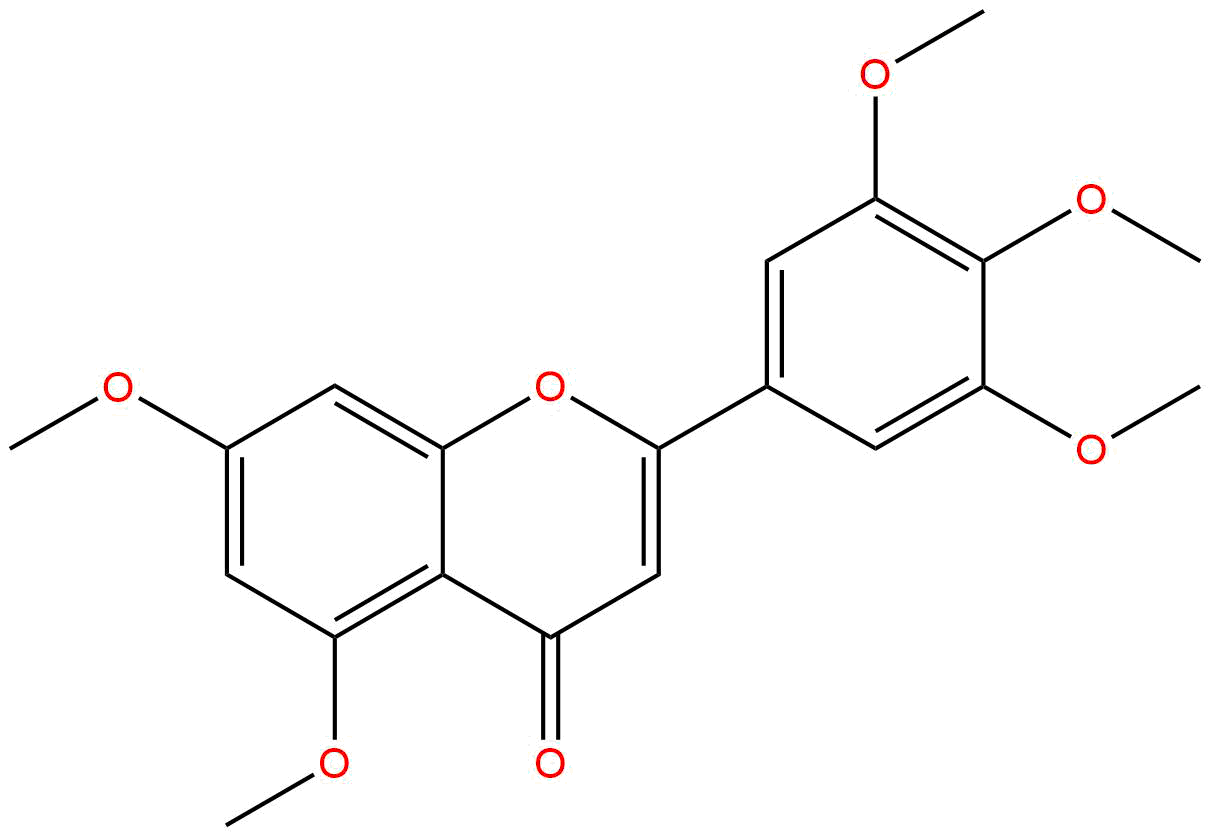


Product name: 5,7,3',4',5'-Pentamethoxyflavone
Synonym name:
Catalogue No.: BP4208
Cas No.: 53350-26-8
Formula: C20H20O7
Mol Weight: 372.373
Botanical Source:
Type of Compound: Flavonoids
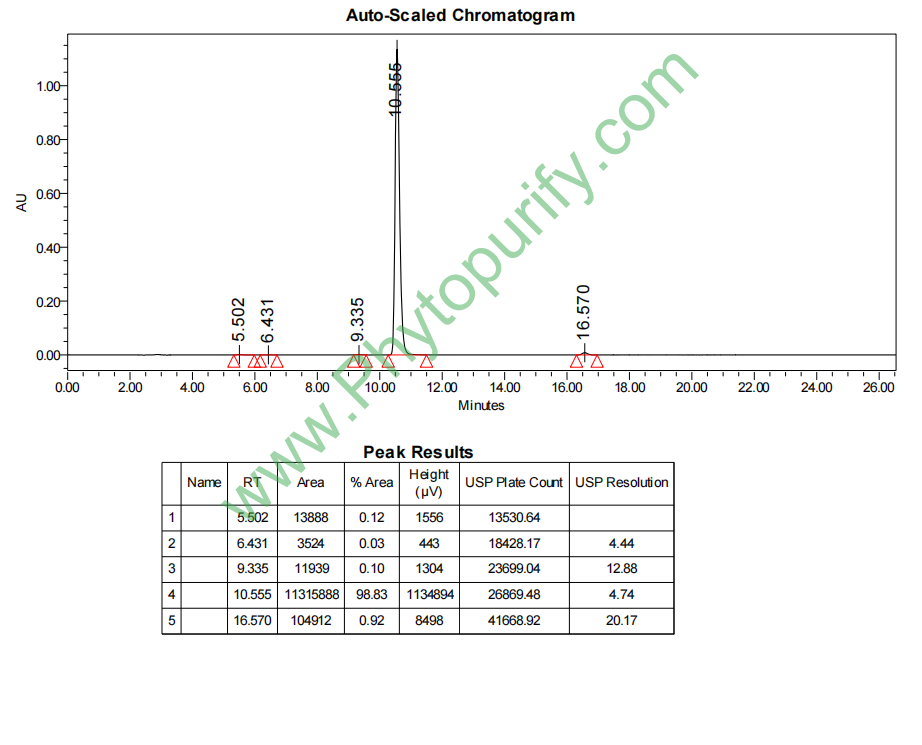
Purity: 95%~99%
Analysis Method: HPLC-DAD or/and HPLC-ELSD
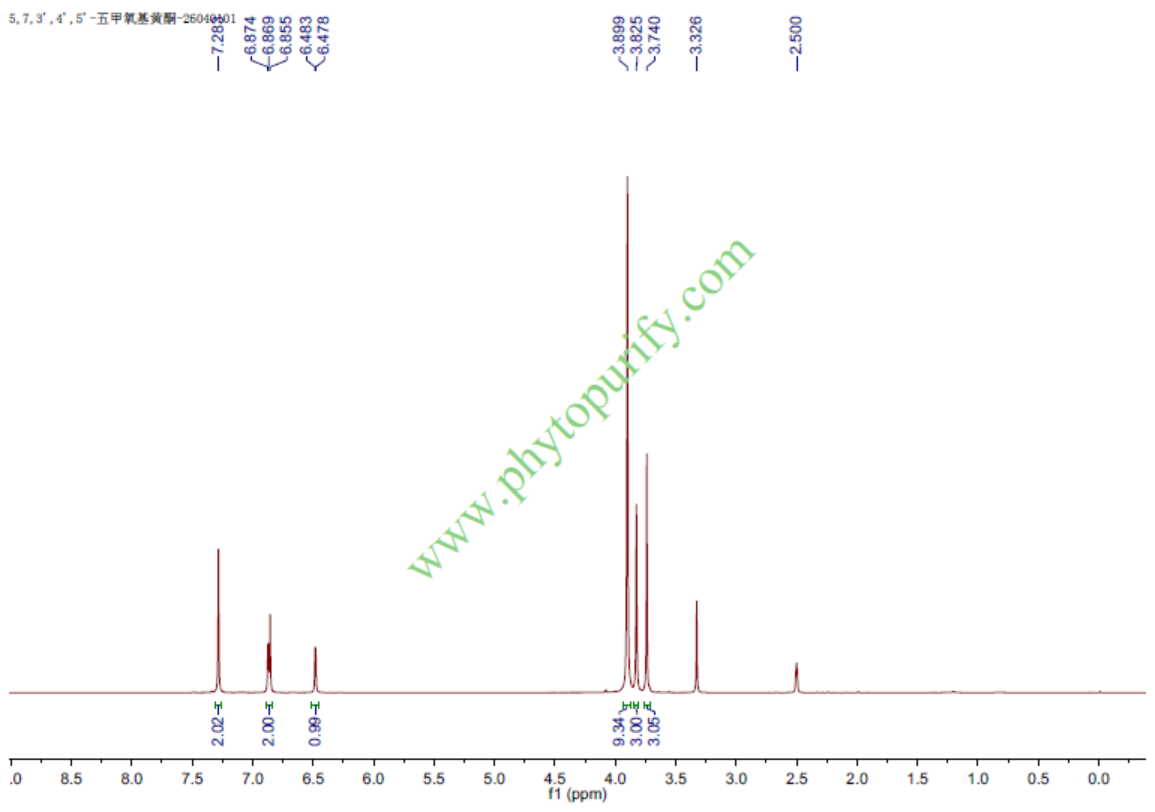
Identification Method: Mass, NMR
Packing: Brown vial or HDPE plastic bottle
Storage: Store in a well closed container, protected from air and light. Put into refrigerate or freeze for long term storage.
Whenever possible, you should prepare and use solutions on the same day. However, if you need to make up stock solutions in advance, we recommend that you store the solution as aliquots in tightly sealed vials at -20℃. Generally, these will be useable for up to two weeks.
The product could be supplied from milligrams to grams
Inquire for bulk scale.
For Reference Standard and R&D, Not for Human Use Directly.
HPLC of 5,7,3',4',5'-Pentamethoxyflavone
HNMR of 5,7,3',4',5'-Pentamethoxyflavone
Storage conditions:Short-term storage at 2~8℃, long-term storage at -20 ~ -80℃
76.3600
2.8527
2.8528
.0043
2.8484
39.7440
High
84.9932
2.2593
Yes
No
Yes
No
Yes
No
0.6
No
Yes
Yes
Yes
5,7,3 ', 4', 5 '- Pentamethoxyflavone (5,7,3', 4 ', 5' - Pentamethoxyflavone), as a multi methoxylated flavonoid natural product, has attracted widespread attention in the field of natural product pharmacology in recent years. Flavonoids have shown great potential in the prevention and treatment of various diseases such as antioxidant, anti-inflammatory, and anti-tumor due to their diverse biological activities and good safety. 5,7,3 ', 4', 5 '- pentamethoxyflavonoids have become a research hotspot due to their unique molecular structure and superior pharmacological properties, especially in the field of antioxidant activity. This article will systematically review the chemical structure, sources, pharmacological activity, mechanism of action, and pharmacological evaluation of the compound, aiming to provide theoretical basis and reference for its clinical development and related basic research.
5,7,3 ', 4', 5 '- pentamethoxyflavone is a multi methoxy derivative of flavonoids, with a molecular formula of C21H22O7 and a molecular weight of 372.3730. Its structural characteristics are that the basic skeleton of flavonoids is replaced by methoxy groups at positions 5, 7, and 3 ', 4', and 5 ', forming five methoxy groups that endow it with strong lipid solubility and stability. The LogP value of this compound is 2.8527, indicating its moderate lipophilicity, which is beneficial for cell membrane penetration and in vivo distribution.
Its topological polar surface area (TPSA) is 76.36 Å ², indicating that the molecule has certain polar groups that facilitate binding to biomolecule targets. Low water solubility (0.0043 mg/mL) suggests limited solubility in aqueous phase, which may affect its bioavailability. However, high lipid solubility helps to penetrate the blood-brain barrier, and experimental data supports its high blood-brain barrier permeability. In addition, the compound did not exhibit hERG channel inhibitory activity, indicating a low risk of cardiac toxicity; The Ames test result is 0.6, indicating a low risk of genetic toxicity and good safety.
5,7,3 ', 4', 5 '- pentamethoxyflavonoids are mainly found in various plants, especially in some traditional Chinese medicinal materials and flavonoid rich plants with medicinal value, such as Rutaceae and Lamiaceae plants. Specific plant species include but are not limited to certain citrus and peppermint plants. Although their content is not as high as common flavonoids, their unique methoxy substitution structure gives them special biological activity.
The extraction method often uses organic solvent extraction combined with chromatographic separation technology. Generally, ethanol or methanol is used for extraction, followed by liquid-liquid partitioning, silica gel column chromatography, or high-performance liquid chromatography (HPLC) purification to obtain high-purity 5,7,3 ', 4', 5 '- pentamethoxyflavonoids. In recent years, the application of ultrasound assisted extraction and microwave-assisted extraction technologies has improved extraction efficiency and purity, reduced solvent usage and extraction time, and is in line with the concept of green extraction.
5,7,3 ', 4', 5 '- pentamethoxyflavonoids exhibit significant antioxidant activity. In vitro experiments have shown that the compound can effectively scavenge free radicals, inhibit lipid peroxidation, and protect cells from oxidative stress damage. Its antioxidant mechanism mainly activates the endogenous antioxidant enzyme system, including superoxide dismutase (SOD1, SOD2), catalase (CAT), glutathione peroxidase (GPX1), and heme oxygenase 1 (HMOX1), to enhance the cell's antioxidant defense ability.
Although the anti-inflammatory and anti-tumor effects of 5,7,3 ', 4', 5 '- pentamethoxyflavones are still in the preliminary research stage, previous studies have shown that they have potential anti-inflammatory and anti-tumor activities by regulating the expression of matrix metalloproteinases (MMP1, MMP3), inhibiting the release of inflammatory mediators and the invasion and metastasis of tumor cells.
Given its excellent blood-brain barrier permeability, the application prospects of 5,7,3 ', 4', 5 '- pentamethoxyflavones in neurodegenerative diseases have attracted attention. It activates the nuclear factor erythroid 2-related factor 2 (NRF2/NFE2L2) signaling pathway, induces antioxidant enzyme expression, reduces neuronal oxidative damage, and exhibits neuroprotective effects.
The main mechanism of action of 5,7,3 ', 4', 5 '- pentamethoxyflavonoids involves multiple signaling pathways and key molecular targets:
NFE2L2/NRF2 signaling pathway activation
This compound can promote the translocation of NRF2 from the cytoplasm to the nucleus, activate the transcription of downstream antioxidant enzyme genes such as SOD1, SOD2, CAT, GPX1, and HMOX1, and enhance the cell's resistance to oxidative stress.
Matrix metalloproteinases (MMP1, MMP3) regulation
By inhibiting the expression of MMPs, reducing extracellular matrix degradation, preventing inflammatory response and tumor cell invasion, it exerts anti-inflammatory and anti-tumor effects.
Tyrosinase (TYR) regulation
The regulatory effect of 5,7,3 ', 4', 5 '- pentamethoxyflavonoids on TYR may affect melanin synthesis, indicating their potential applications in skin protection and whitening.
Free radical scavenging and enhanced antioxidant enzyme activity
Directly eliminate free radicals while enhancing endogenous antioxidant enzyme activity and reducing oxidative damage.
In summary, this compound exerts significant biological effects through multi-target and multi pathway synergistic effects.
The pharmacological evaluation of 5,7,3 ', 4', 5 '- pentamethoxyflavonoids shows that they have good potential for drug development. The molecular weight of 372.3730 conforms to Lipinski's rule, with a moderate LogP of 2.85, indicating good membrane permeability and oral absorption potential. The TPSA is 76.36 Å ², supporting its effective binding with biological targets.
Low water solubility is a major challenge in its drug development, which may limit its oral bioavailability. It is necessary to improve solubility through formulation technologies such as nanocarriers and solid dispersions. Its high blood-brain barrier permeability provides advantages for the treatment of neurological diseases.
In terms of safety, there is no hERG inhibitory effect, reducing the risk of cardiac toxicity; The Ames test result is 0.6, indicating low genetic toxicity risk and good safety.
Pharmacokinetic studies are not yet complete, and preliminary in vivo pharmacokinetic data show that this compound is mainly metabolized in the liver through the CYP450 enzyme system, and the metabolites need further identification. Its half-life is moderate and it has a certain degree of in vivo stability.
Based on its significant antioxidant and neuroprotective effects, 5,7,3 ', 4', 5 '- pentamethoxyflavonoids have broad application prospects in the prevention and treatment of neurodegenerative diseases such as Alzheimer's disease and Parkinson's disease. In addition, its anti-inflammatory and anti-tumor potential provides new ideas for adjuvant therapy of related diseases.
Future research should focus on:
Through interdisciplinary collaboration, 5,7,3 ', 4', 5 '- pentamethoxyflavonoids are expected to become a new star in the development of natural product drugs.
5,7,3 ', 4', 5 '- pentamethoxyflavone, as a structurally unique natural product of multi methoxyflavone, exhibits excellent antioxidant, anti-inflammatory, and neuroprotective activities. Its multi-target mechanism of action and excellent pharmacological characteristics have laid a solid foundation for its drug development. Although research on its pharmacokinetics and clinical applications is still in its infancy, with technological advancements and deeper research, this compound is expected to play an important role in the field of natural product pharmacology, promoting the prevention and treatment of related diseases and the development of new drugs. Future research should strengthen mechanism analysis and clinical translation, promoting its transition from laboratory to clinical application.
