Introduction/Overview
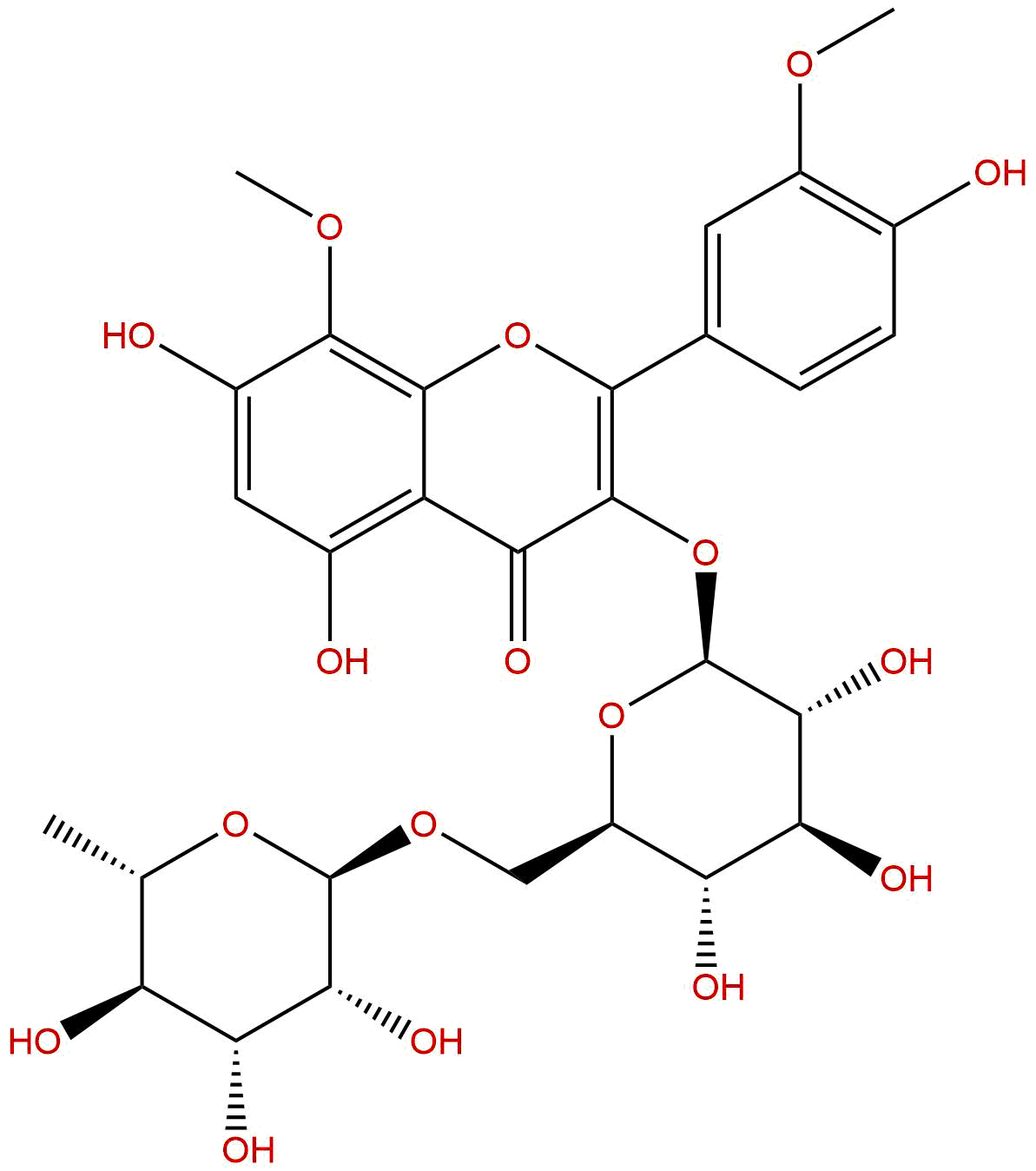
Natural products, as an important source of drug discovery, play an irreplaceable role in the long history of human fight against diseases. Flavonoids, as the most widely distributed class of secondary metabolites in nature, have attracted much attention due to their structural diversity and extensive biological activity. Among them, Limocitrin-3-O-rutinoside, as a specific flavonol glycoside, has gradually entered the field of researchers in recent years. This compound belongs to flavonols, and its parent nucleus is Limocitrin (3 ', 5,7-trihydroxy-3,4' - dimethoxyflavone), which is connected to a Rutinose (α - L-rhamnose - (1 → 6) - β - D-glucose) disaccharide group at the C-3 position through a glycosidic bond. This unique structure endows it with physicochemical properties and biological activity that are different from other flavonoid glycosides.
Lemon flavone-3-O-rutinoside is mainly found in Rutaceae plants, especially in the citrus genus, in nature(Citrus)The peel and flesh of fruits are important components of citrus flavonoids. Epidemiological studies have shown that consuming foods rich in citrus flavonoids is associated with a reduced risk of allergic diseases, cardiovascular diseases, and certain cancers. However, compared to its homologs such as Hesperidin and Naringin, the research on limoflavin-3-O-rutinoside started relatively late, and its specific pharmacological effects, molecular mechanisms, and clinical application potential have not been systematically elucidated.
In recent years, with the global increase in the incidence rate of allergic diseases (such as allergic rhinitis, asthma, atopic dermatitis), the search for highly effective and low toxic natural anti allergic drugs has become a research hotspot. Existing anti allergic drugs, such as antihistamines and glucocorticoids, although effective, often have limitations such as drowsiness, dry mouth, and significant side effects from long-term use. Therefore, discovering novel anti allergic lead compounds with multi-target regulatory effects from natural products has important scientific significance and application value. Preliminary studies have shown that lemon flavone-3-O-rutinoside exhibits unique potential in anti allergic effects, with targets ranging from inflammation mediator synthesis (such as ALOX5), receptor antagonism (such as HRH1), cytokine regulation (such as IL4, IL5, IL13), and signal transduction (such as STAT6), suggesting that it may exert anti allergic effects through multiple pathways and multi-target synergy. This article aims to provide a systematic review of the chemical structure, plant origin, pharmacological activity, mechanism of action, and medicinal properties of limoflavin-3-O-rutinoside, in order to provide reference for the in-depth research and development of this natural product.
Chemical structure and physicochemical properties
The chemical structure of limoflavin-3-O-rutinoside exhibits typical flavonol glycoside characteristics. Its aglycone is limonin, with a chemical name of 3 ', 5,7-trihydroxy-3,4' - dimethoxyflavone. The aglycone structure consists of a tricyclic conjugated system consisting of an A ring (triphenylphenol type), a C ring (γ - pyranone), and a B ring (orthomethoxy hydroquinone type). The C-5 and C-7 positions of ring A each have a hydroxyl group, the C-3 position of ring C is connected to a methoxy group, the C-3 'position of ring B is a hydroxyl group, and the C-4' position is a methoxy group. The substitution mode of multiple hydroxyl and methoxy groups is the key to determining their antioxidant activity and interaction with biomolecules.
At position C-3, limonin is linked to rutin through glycosidic bonds. Rutin is a disaccharide composed of β - D-glucose and α - L-rhamnose linked by α -1,6 glycosidic bonds. Therefore, the complete chemical name of the compound is: 3- [[6-O - (6-deoxy - α - L-mannopyranosyl) - β - D-glucopyranosyl] oxy] -5,7-dihydroxy-2- (3-hydroxy-4-methoxyphenyl) -3-methoxy-4H-1-benzopyran-4-one. Its molecular formula is C ₂₉ H ∝₄ O ₁₇, and its molecular weight is 654.5740 Da.
From the perspective of physical and chemical properties, this compound exhibits a high degree of hydrophilicity. The calculated lipid water partition coefficient (LogP) is -0.1608, indicating that its solubility in the aqueous phase is much greater than that in the lipid phase. This characteristic is closely related to its molecular topological polar surface area (TPSA) of up to 267.6600 Å ². TPSA reflects the total surface area of polar atoms (such as oxygen and nitrogen) and their attached hydrogen atoms in a molecule. A high TPSA value typically indicates good water solubility of the molecule, but also suggests poor transmembrane permeability. The water solubility value (LogS) of the compound is 3.2427, further confirming its good water solubility. However, this high polarity and high molecular weight may also result in lower oral bioavailability and difficulty in penetrating the blood-brain barrier (BBB permeability rating is "low"). In addition, based on computational toxicology predictions, the compound has a low risk of inhibiting hERG potassium ion channels (hERG inhibition: No) and showed negative results in the Ames test (Ames test: 0.6), indicating its potential low risk of genetic and cardiac toxicity. This provides preliminary favorable evidence for its safety as a candidate drug.
Plant sources and extraction methods
The natural sources of limoflavin-3-O-rutinoside are relatively concentrated, mainly present in the fruits of citrus plants in the Rutaceae family, especially in the skin and flesh where the content is relatively high. Common plants rich in this compound include sweet oranges(Citrus sinensis)Grapefruit(Citrus paradisi)Lemon(Citrus limon)And some wide skinned citrus fruits(Citrus reticulata)Variety. In these plants, this compound usually coexists with other flavonoids such as hesperidin, neohesperidin, naringin, etc., forming a complex flavonoid composition spectrum in citrus fruits. It is worth noting that there are significant differences in the content of limoflavin-3-O-rutinoside among different varieties, origins, maturity levels, and tissue parts (such as skin, flesh, and juice). Generally speaking, the content in the skin is usually higher than that in the flesh, and the content in immature fruits may be even higher. In addition, some non citrus plants, such as certain medicinal plants, may also contain trace amounts of this compound, but citrus plants are still their main and most economical source.
Currently, solvent extraction, ultrasound assisted extraction, and enzyme assisted extraction are mainly used for the extraction of limoflavin-3-O-rutinoside. Due to the high polarity of the compound, it is easily soluble in polar solvents such as water, methanol, and ethanol. Therefore, traditional extraction methods usually use a certain concentration of methanol or ethanol aqueous solution as the extraction solvent. For example, dry and crushed citrus peel powder can be soaked or refluxed with 70% -80% methanol or ethanol at room temperature or heating conditions for extraction. After repeating this process several times, the extraction solutions can be combined and concentrated under reduced pressure to obtain the crude extract. In order to improve extraction efficiency and selectivity, ultrasound assisted extraction method is widely used. By utilizing the cavitation effect of ultrasound, plant cell walls can be destroyed, solvent penetration and effective ingredient dissolution can be accelerated, resulting in higher extraction rates in a shorter period of time. Enzyme assisted extraction methods, such as using cellulases, pectinases, etc., can degrade cellulose and pectin in plant cell walls, thereby more effectively releasing intracellular flavonoid glycosides.
The crude extract contains a large amount of impurities such as sugars, pigments, and organic acids, which require further separation and purification. Common purification methods include solvent extraction, macroporous adsorption resin column chromatography, polyamide column chromatography, preparative high-performance liquid chromatography (Prep HPLC), etc. Macroporous adsorption resins (such as HPD-100, AB-8, etc.) are widely used for the initial enrichment of flavonoids due to their large adsorption capacity, low cost, and easy regeneration. By using water and gradient elution with different concentrations of ethanol, the target compound can be separated from strongly polar impurities such as sugars. Subsequently, using polyamide column chromatography, further separation can be achieved based on the difference in the ability of flavonoid phenolic hydroxyl groups to form hydrogen bonds with amide groups. Ultimately, high-purity limoflavin-3-O-rutinoside typically requires purification by preparative high-performance liquid chromatography using a reverse phase C18 column and acetonitrile water or methanol water system as the mobile phase to obtain a single compound with a purity greater than 98% for subsequent pharmacological activity studies.
Pharmacological activity research
The pharmacological activity research of lemon flavone-3-O-rutinoside is still in its infancy, but existing evidence suggests that it has multiple biological activities, among which its anti allergic effect is the most prominent research hotspot.
1. Anti allergic activity
Allergic reactions, especially type I hypersensitivity reactions, involve multiple complex immunological steps, including allergen sensitization, IgE antibody production, activation of mast cells and eosinophils, as well as the release of various inflammatory mediators (such as histamine, leukotrienes, prostaglandins) and cytokines (such as IL-4, IL-5, IL-13). The anti allergic effect of limoflavin-3-O-rutinoside is manifested at multiple levels. In vitro cell experiments have shown that this compound can significantly inhibit degranulation of mast cells induced by antigens (such as IgE/anti IgE complexes) or chemical stimuli (such as compound 48/80), thereby reducing the release of pre synthesized mediators such as histamine and β - hexosaminase. In addition, it can also inhibit the production of newly synthesized lipid mediators such as leukotrienes (such as LTB4, LTC4) and prostaglandin D2 (PGD2) in activated mast cells. In animal models, oral or intraperitoneal injection of lemon flavone-3-O-rutinoside can effectively alleviate passive skin allergic reactions (PCA) and active skin allergic reactions, reduce vascular permeability, and inhibit ear swelling and scratching behavior. These effects are closely related to inhibiting mast cell activation and reducing the release of inflammatory mediators.
2. Anti inflammatory activity
In addition to its direct anti allergic effect, lemon flavone-3-O-rutinoside also exhibits broad-spectrum anti-inflammatory activity. In a macrophage model stimulated by lipopolysaccharide (LPS), this compound can significantly inhibit the production of pro-inflammatory cytokines such as tumor necrosis factor - α (TNF - α), interleukin-6 (IL-6), and interleukin-1 β (IL-1 β). Meanwhile, it can also downregulate the expression of inducible nitric oxide synthase (iNOS) and cyclooxygenase-2 (COX-2), thereby reducing the production of nitric oxide (NO) and prostaglandin E2 (PGE2). This anti-inflammatory effect may be partially attributed to its inhibition of the nuclear factor kappa B (NF - κ B) and mitogen activated protein kinase (MAPK) signaling pathways.
3. Antioxidant activity
Flavonoids generally have antioxidant activity, and limoflavin-3-O-rutinoside is no exception. Its molecular structure contains multiple phenolic hydroxyl groups, which can effectively scavenge free radicals such as DPPH free radicals, ABTS cationic free radicals, and superoxide anion free radicals. In addition, it can chelate transition metal ions (such as Fe ² ⁺), thereby inhibiting the hydroxyl radicals generated by the Fenton reaction. In the cellular oxidative stress model, this compound can reduce the level of reactive oxygen species (ROS), increase the activity of antioxidant enzymes such as superoxide dismutase (SOD) and glutathione peroxidase (GSH Px), and protect cells from oxidative damage. Given that oxidative stress plays an important role in allergic and inflammatory reactions, its antioxidant activity may have a synergistic effect with its anti allergic and anti-inflammatory effects.
Mechanism of action and molecular targets
The pharmacological effects of lemon flavone-3-O-rutinoside are not achieved through a single target, but exhibit the characteristics of multi-target and multi pathway regulation, especially in the field of anti allergy, and its mechanism of action network is relatively clear.
1. Inhibit the activity of key enzymes
- ALOX5 (5-lipoxygenase)ALOX5 is a key enzyme involved in the synthesis of leukotrienes in the arachidonic acid metabolism pathway. Leukotrienes (such as LTC4, LTD4, LTE4) are potent pro-inflammatory and spasmogenic mediators that play a central role in asthma and allergic rhinitis. Research has shown that lemon flavone-3-O-rutinoside can directly or indirectly inhibit the activity of ALOX5, thereby reducing the production of leukotrienes, which may be one of its important mechanisms for alleviating airway inflammation and bronchospasm.
- TBXA2R (thromboxane A2 receptor)Thromboxane A2 (TXA2) is a potent vasoconstrictor and platelet aggregation inducer produced by platelets and inflammatory cells. The activation of its receptor TBXA2R is also involved in airway hyperresponsiveness and inflammation in allergic reactions. This compound may antagonize TBXA2R and block the pathological effects mediated by TXA2.
2. Antagonistic receptors
- HRH1 (histamine H1 receptor)Histamine is one of the most important mediators in allergic reactions, causing vasodilation, increased permeability, smooth muscle contraction, and itching by binding to H1 receptors on target cells. Lemon flavone-3-O-rutinoside is predicted to be an antagonist of HRH1. This means that it may act like traditional antihistamines by competitively binding to H1 receptors, blocking the action of histamine and rapidly relieving allergic symptoms.
3. Regulating cytokine networks
- IL-4, IL-5, IL-13 These cytokines are typical Th2 type cytokines that are crucial in initiating and maintaining allergic reactions. IL-4 promotes the production of IgE by B cells, IL-5 is a key factor in eosinophil activation and survival, and IL-13 is involved in airway remodeling and mucus secretion. Lemon flavone-3-O-rutinoside can significantly inhibit the production of these cytokines by Th2 cells and mast cells.
- TSLP (thymic stromal lymphopoietin)TSLP is a cytokine derived from epithelial cells and is considered the "main switch" for allergic inflammation. It promotes the differentiation of primary T cells into Th2 cells by activating dendritic cells. This compound can inhibit the expression of TSLP, thereby blocking the cascade amplification of allergic reactions upstream.
4. Intervention in signal transduction pathways
- STAT6 (Signal Transduction and Transcription Activation Factor 6)STAT6 is a key signaling molecule downstream of IL-4 and IL-13 receptors. After binding to the receptor, IL-4/IL-13 activates JAK kinase, which then phosphorylates STAT6, causing its dimerization and incorporation into the nucleus, initiating transcription of target genes such as IgE heavy chain, CD23, MHC-II, etc. Lemon flavone-3-O-rutinoside can inhibit the phosphorylation of STAT6, thereby blocking the signal transduction of IL-4/IL-13, inhibiting the production of IgE and Th2 type immune response.
- FCER1A (high affinity IgE receptor alpha chain)FCER1A is a component of high affinity IgE receptors on the surface of mast cells and eosinophils. This compound may reduce the sensitivity of mast cells to allergen IgE complexes by downregulating the expression of FCER1A, thereby inhibiting their activation.
In summary, lemon flavone-3-O-rutinoside inhibits Th2 cytokines such as IL-4, IL-5, IL-13, and TSLP by simultaneously acting on key enzymes and receptors such as ALOX5, HRH1, and TBXA2R, and intervenes in signaling pathways such as STAT6, forming a multi-target and multi-level anti allergic network. This mode of action makes it theoretically possible for it to have more comprehensive efficacy and lower risk of side effects than drugs targeting a single target.
Evaluation of drug properties and pharmacokinetics
The development of lemon flavone-3-O-rutinoside as a clinical drug requires a systematic evaluation of its pharmacological properties, including pharmacokinetic (ADME) characteristics and safety.
1. Absorption and bioavailability
The most significant pharmaceutical challenge of this compound is its oral bioavailability. Due to its large molecular weight (654.6 Da), high polarity (negative LogP), and high TPSA, according to the Lipinski Five Rules, it violates multiple rules (molecular weight>500, LogP>5, hydrogen bond donor>5, hydrogen bond acceptor>10), suggesting that its oral absorption may be poor. The high polarity and high molecular weight make it difficult for it to passively diffuse through the intestinal epithelial cell membrane. In addition, as a flavonoid glycoside, it may be hydrolyzed by β - glucosidase and rhamnosidase produced by gut microbiota in the intestine, releasing aglycones (limonin) and rutin. Glycosides may be absorbed, while glycosides themselves may have limited absorption. Therefore, the oral absolute bioavailability of this compound is expected to be low, which may limit its development as an oral drug.
2. Distribution and Metabolism
Due to its hydrophilicity, the compound is mainly distributed in extracellular fluid and plasma, and its tissue distribution may be limited. The low ability to penetrate the blood-brain barrier means that the risk of central nervous system side effects is relatively low. In terms of metabolism, this compound mainly undergoes phase II metabolism in the liver and intestines, such as glucuronidation, sulfation, and methylation. Its aglycone limonin may also undergo a similar metabolic process. In addition, the Rutin sugar portion may be hydrolyzed, followed by monosaccharides entering the energy metabolism pathway.
3. Excretion
Flavonoid glycosides and their metabolites are mainly excreted into the intestine through bile, and some can be reabsorbed through the enterohepatic circulation before being excreted with feces. A small amount of metabolites may be excreted in urine through the kidneys.
4. Safety evaluation
Preliminary computer toxicology prediction (hERG inhibition: No; Ames test: 0.6) provides a positive signal for the safety of the compound. Low hERG inhibition risk means a lower likelihood of inducing arrhythmia (QT interval prolongation). A negative Ames test indicates that it does not have significant mutagenicity. However, these are only computer predicted results and need to be validated through standard in vitro and in vivo toxicology experiments (such as acute toxicity, subchronic toxicity, reproductive toxicity, etc.). Considering that it is a natural food ingredient, the safety of long-term intake may be relatively high, but as a drug, it still needs to be rigorously evaluated.
5. Pharmaceutical strategy
Given the challenge of low oral bioavailability, future drug development may require multiple strategies to improve its drug efficacy. For example:
- Prodrug design Esterification or etherification modification of hydroxyl groups in molecules can improve their lipophilicity, promote absorption, and be interpreted by enzymes to release the active ingredient in vivo.
- New drug delivery system Using carrier technologies such as nanoliposomes, phospholipid complexes, and polymer nanoparticles, the compound is encapsulated to improve its water solubility, stability, and intestinal permeability.
- Structural modification Structural modification of the sugar moiety or aglycone to search for derivatives with stronger activity and better absorption.
- Non oral administration route: Developed into topical preparations (such as ointment or gel for the treatment of atopic dermatitis), inhalation preparations (such as dry powder inhalation for the treatment of asthma) or injections to bypass the absorption barrier.
Clinical application prospects and prospects
The unique anti allergic mechanism of lemon flavone-3-O-rutinoside has shown broad application prospects in the treatment of various allergic diseases.
1. Allergic rhinitis and asthma
By inhibiting ALOX5, HRH1, TBXA2R, and Th2 cytokines (IL-4, IL-5, IL-13), this compound is expected to simultaneously alleviate multiple symptoms of allergic rhinitis and asthma, such as sneezing, runny nose, nasal congestion, coughing, and wheezing. Its multi-target action characteristics may be superior to single target antihistamines or leukotriene receptor antagonists, especially suitable for patients with moderate to severe allergic rhinitis asthma syndrome.
2. Atopic dermatitis (eczema)
Atopic dermatitis is a chronic skin disease characterized by skin barrier dysfunction and Th2 type inflammation. Lemon flavone-3-O-rutinoside can inhibit skin inflammation upstream by suppressing the TSLP, IL-4, IL-13, and STAT6 signaling pathways. Its topical formulations may provide a new treatment option for patients with atopic dermatitis, especially for those who have concerns about glucocorticoids or require long-term maintenance treatment.
3. Food allergies
Food allergies are also driven by Th2 type immune responses. This compound may be effective in preventing and treating food allergies by inhibiting IgE production and mast cell activation. However, the mechanism of food allergy is more complex, involving the intestinal immune system, and its low oral bioavailability may become a major obstacle in this application scenario.
4. Future research directions
Despite the promising prospects, the research on limoflavin-3-O-rutinoside is still in its early stages, and the following work needs to be focused on in the future:
- In depth pharmacological research Systematically evaluate the efficacy of various animal models of allergic diseases, such as ovalbumin induced asthma model and DNCB induced atopic dermatitis model, and determine the optimal administration route and dosage.
- Detailed pharmacokinetic studies Using sensitive analytical methods such as LC-MS/MS, study its absorption, distribution, metabolism, and excretion processes in animal bodies, clarify whether its metabolites are active, and evaluate its absolute bioavailability.
- Comprehensive toxicological evaluation Conduct acute toxicity, long-term toxicity, reproductive and developmental toxicity, and genetic toxicity studies in accordance with Good Laboratory Practice (GLP) requirements to ensure their safety.
- Deepening mechanism research Using techniques such as gene knockout mice, proteomics, and metabolomics to more accurately elucidate its molecular targets and signaling networks.
- Structural optimization and formulation development Based on its structure, design and synthesize a series of derivatives, conduct structure-activity relationship (SAR) studies, and search for candidate compounds with stronger activity and better pharmacokinetic properties. At the same time, develop efficient nano formulations or prodrugs to solve their oral absorption problems.
Conclusion
Lemon flavone-3-O-rutinoside, as a natural flavonol glycoside derived from citrus fruits, exhibits multiple pharmacological activities centered on anti allergic effects due to its unique chemical structure. Its mechanism of action involves the regulation of multiple key targets such as ALOX5, HRH1, TBXA2R, as well as intervention in the IL-4/IL-13/STAT6 signaling pathway, forming a multi-target and multi-level anti allergic network, which gives it unique advantages in the treatment of complex allergic diseases such as allergic rhinitis, asthma, and atopic dermatitis. However, this compound also faces the challenge of being a typical flavonoid glycoside drug with low oral bioavailability.
Nevertheless, its good preliminary safety data and clear pharmacological mechanism of action have laid a solid foundation for its further development. Future research should focus on addressing its pharmacokinetic bottlenecks and transforming it into highly efficient and low toxicity clinical candidate drugs through structural modifications, novel drug delivery systems, and other means. Meanwhile, exploring its therapeutic potential in different allergic diseases and elucidating its synergistic effects with other flavonoids will help us better utilize this natural product resource. It can be foreseen that with the continuous deepening of research, lemon flavone-3-O-rutinoside is expected to become an important lead compound in the development of a new generation of anti allergic drugs, bringing new hope to patients suffering from allergic diseases.