Introduction/Overview
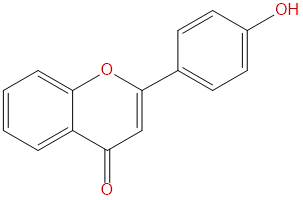
Flavonoids are a class of secondary metabolites widely present in the plant kingdom. Their basic skeleton is composed of two benzene rings (A ring and B ring) connected by a three carbon chain, forming a C6-C3-C6 structure. These compounds have long been a hot topic in natural product pharmacology research due to their diverse biological activities, such as antioxidant, anti-inflammatory, anti-tumor, neuroprotective, etc. 4 '- Hydroxyflavone (CAS number: 4143-63-9) is an important member of the flavonoid family, characterized by the presence of a hydroxyl substituent at the 4' position of the B ring. This seemingly minor structural modification significantly affects its physicochemical properties, interactions with biomolecules, and final pharmacological activity spectrum.
Compared to many more complex structures of polyhydroxy or methoxy substituted flavonoids, 4 '- hydroxyflavonoids have a relatively simple structure, making them an ideal model molecule for studying the structure-activity relationship (SAR) and basic mechanisms of action of flavonoids. In recent years, with the development of molecular biology and structural pharmacology techniques, research on 4 '- hydroxyflavonoids has progressed from early phenotype screening to systematic exploration of their molecular targets, signaling pathway regulation, and potential as drugs. Its potential application value in the fields of neurological diseases, metabolic diseases, and cancer is gradually being revealed. This article aims to systematically review the chemical properties, plant sources, pharmacological activities, mechanisms of action, pharmacological evaluation, and clinical application prospects of 4 '- hydroxyflavonoids, in order to provide comprehensive scientific references for the in-depth research and development of this compound.
Chemical structure and physicochemical properties
The chemical name of 4 '- hydroxyflavone is 2-phenyl-4H-1-benzopyran-4-one, with a molecular formula of C15H10O3 and a molecular weight of 238.2420. Its core structure is the flavonoid nucleus, which is connected to the B ring at position 2 by benzo [a] - γ - pyranone (A and C rings). Its specificity lies in the presence of a hydroxyl group (- OH) at the para (4 ') position of the B ring, which is an important pharmacophore for exerting many key biological activities.
From the analysis of physical and chemical properties, the calculated value of the lipid water partition coefficient (LogP) of 4 '- hydroxyflavone is about 2.83, indicating that the compound has moderate lipophilicity, which is beneficial for its penetration of cell membranes, but may also affect its water solubility. Its topological polar surface area (TPSA) is 50.44 Å ², which is relatively small and further supports its good membrane permeability. The water solubility measured in the experiment is relatively low (about 0.015 mg/mL), which may be a factor to consider in its oral absorption or formulation development. It is worth noting that based on its physicochemical properties, 4 '- hydroxyflavone has a high blood-brain barrier permeability, which provides an important material basis for its application in central nervous system diseases such as neurodegenerative diseases, anxiety, epilepsy, etc. In early safety screening, the compound did not show significant hERG potassium channel inhibitory activity (indicating a low potential risk of arrhythmia), and the Ames test result was 0.6 (usually considered negative if less than 2), indicating a low risk of mutagenicity and preliminary safety features for further development.
Plant sources and extraction methods
4 '- hydroxyflavone is not widely present in high levels in plants, but as a metabolite or precursor of flavonoid glycosides, it can be found in various plants. Common sources include some traditional medicinal plants, such as Scutellaria baicalensis(Scutellaria baicalensis)Although the roots of Scutellaria baicalensis are mainly composed of baicalein and baicalein, 4 '- hydroxyflavonoids and their derivatives can be detected in their metabolic pathways. In addition, in some citrus fruits The skin of plants celery、parsley And some Leguminous plants There are also sporadic reports.
Extracting 4 '- hydroxyflavonoids from plant materials usually follows the general extraction process for flavonoids.Solvent extraction method It is the most commonly used method, which often uses methanol, ethanol, acetone or their aqueous solutions as extraction solvents to extract flavonoids from plants using the principle of similar solubility. Due to the relatively low polarity of 4 '- hydroxyflavonoids, higher concentrations of alcohols or acetone may be more effective. Subsequently, the crude extract needs to undergo further separation and purification.Column chromatography technology As a key purification method, silica gel, polyamide or dextran gel (Sephadex LH-20) is often used as the stationary phase, and organic solvents with different polarity (such as petroleum ether ethyl acetate, chloroform methanol) are used for gradient elution. Effective separation can be achieved based on the polarity difference between the target compound and impurities.High performance liquid chromatography method(HPLC), Especially for preparative HPLC, it is the final step to obtain high-purity 4 '- hydroxyflavonoids, usually using a reverse phase C18 chromatography column with methanol water or acetonitrile water system as the mobile phase for elution and collection. In addition, with the development of synthetic chemistry, obtaining high-purity and high-yield 4 '- hydroxyflavonoids through chemical synthesis has become an important supplementary means for laboratory research and potential large-scale production, such as preparation through classic flavonoid synthesis routes such as Allan Robinson condensation or Baker Venkataraman rearrangement.
Pharmacological activity research
A large number of in vitro and in vivo pharmacological studies have shown that 4 '- hydroxyflavonoids exhibit various biological activities, and their spectrum of action covers multiple fields such as neuroprotection, anti-inflammatory, anti-tumor, and metabolic regulation.
1. Neuroprotection and neuroregulatory activity: This is one of the most in-depth areas of research on 4 '- hydroxyflavonoids. Research has shown that 4 '- hydroxyflavonoids are partial agonists or selective ligands of benzodiazepine receptors (BZD receptors, a conformational regulatory site of GABA_A receptors) in the central nervous system. Unlike classical benzodiazepines such as diazepam, it may have a certain selectivity towards GABA_A receptor subtypes, which may reduce side effects such as sedation, muscle relaxation, and memory impairment while producing anti anxiety and anticonvulsant effects. Animal experiments have confirmed that 4 '- hydroxyflavonoids can effectively alleviate anxiety like behavior in anxiety model mice and prolong the latency period of pentylenetetrazine induced seizures in mice. In addition, its antioxidant properties contribute to the clearance of reactive oxygen species (ROS) within nerve cells and have shown potential in some models to counteract neurotoxicity induced by β - amyloid protein (A β), suggesting its potential value in the prevention and treatment of Alzheimer's disease.
2. Anti inflammatory and immune regulatory activity: 4 '- hydroxyflavonoids can inhibit the excessive production of nitric oxide (NO), prostaglandin E2 (PGE2), and pro-inflammatory cytokines (such as TNF - α, IL-6, IL-1 β) in macrophages induced by stimuli such as lipopolysaccharide (LPS). Its function is related to the inhibition of the expression of inducible nitric oxide synthase (iNOS) and cyclooxygenase-2 (COX-2). In animal models of acute and chronic inflammation, 4 '- hydroxyflavonoids have shown effects in reducing edema and inflammatory cell infiltration.
3. Antitumor activity: Studies have shown that 4 '- hydroxyflavone can inhibit the growth of many cancer cell lines (such as breast cancer, liver cancer, colon cancer, lung cancer), and can induce cell cycle arrest (usually in G2/M phase) and apoptosis. The mechanism of promoting apoptosis involves the activation of mitochondrial pathways (such as reducing mitochondrial membrane potential, releasing cytochrome c) and death receptor pathways, as well as the expression regulation of related proteins (such as Bcl-2 family, caspases).
4. Metabolic regulatory activity: Preliminary studies suggest that 4 '- hydroxyflavone may improve insulin resistance and promote glucose uptake by activating AMP activated protein kinase (AMPK) and other pathways, which has potential application value in the prevention and treatment of type 2 diabetes and its complications. In addition, its regulatory effect on lipid metabolism also needs further exploration.
5. Antioxidant activity: As a flavonoid compound, the phenolic hydroxyl group of 4 '- hydroxyflavone can effectively scavenge DPPH radicals, ABTS radicals, and has the ability to reduce metal ions. Its antioxidant effect is the basis for many other pharmacological activities, such as neuroprotection and anti-inflammatory.
Mechanism of action and molecular targets
The multiple pharmacological activities of 4 '- hydroxyflavonoids stem from their interactions with multiple molecular targets and regulation of complex signaling pathways.
1. GABA_A/benzodiazepine receptor: This is the core target of its neural activity. 4 '- hydroxyflavone acts as a ligand for the BZD site and, upon binding to the GABA_A receptor, conformationally enhances the binding of GABA (gamma aminobutyric acid), a major inhibitory neurotransmitter, to the receptor, promoting the opening of chloride ion channels and leading to neuronal hyperpolarization, resulting in central inhibitory effects. The difference in affinity for GABA_A receptor subtypes composed of different alpha subtypes (such as alpha 1, alpha 2, alpha 3, alpha 5) may be the structural basis for its "selective" anti anxiety and anti seizure effects with fewer sedative side effects.
2. Transcription factors and inflammatory signaling pathways: The anti-inflammatory effect of 4 '- hydroxyflavonoids is mainly achieved by inhibiting the NF - κ B and MAPK signaling pathways. It can prevent the degradation of I κ B α, inhibit the nuclear translocation of NF - κ B p65 subunit, thereby downregulating the gene transcription of downstream iNOS, COX-2, and various inflammatory cytokines. Meanwhile, it can also inhibit LPS induced phosphorylation activation of p38 MAPK, JNK, and ERK.
3. Apoptosis and survival signaling pathways: In terms of anti-tumor effects, 4 '- hydroxyflavonoids can upregulate pro apoptotic proteins (such as Bax, Bad) and downregulate anti apoptotic proteins (such as Bcl-2, Bcl xL), leading to mitochondrial membrane potential collapse and cytochrome c release, thereby activating the caspase cascade reaction. It can also inhibit survival signaling pathways such as PI3K/Akt and STAT3, further promoting cancer cell apoptosis.
4. Kinases and metabolic regulatory targets: Research has shown that 4 '- hydroxyflavonoids can activate AMPK, which is a key sensor for cellular energy metabolism. Activation of AMPK can inhibit the mTOR pathway, promote fatty acid oxidation and membrane translocation of glucose transporters (such as GLUT4), thereby improving energy metabolism and insulin sensitivity.
5. Antioxidant related mechanisms: Its direct free radical scavenging ability is a chemical mechanism. In addition, it can activate the cell's own antioxidant defense system, such as upregulating nuclear factor E2 related factor 2 (Nrf2) and its downstream antioxidant enzymes (such as heme oxygenase-1, HO-1; The expression of quinone oxidoreductase 1 (NQO1) achieves indirect cell protection.
Evaluation of drug properties and pharmacokinetics
Although 4 '- hydroxyflavone exhibits broad pharmacological potential, its successful development as a drug depends on systematic pharmacological evaluation and pharmacokinetic characteristics.
Absorption, distribution, metabolism, excretion (ADME):
* Absorption: Its moderate LogP value and small TPSA are beneficial for its passive diffusion transmembrane absorption. However, lower water solubility may limit its dissolution rate in the gastrointestinal tract, thereby affecting oral bioavailability. Formulation technology, such as making nanocrystals, solid dispersions, or cyclodextrin inclusion complexes, is a potential strategy to improve their solubility and absorption.
* Distribution: As mentioned earlier, its high blood-brain barrier permeability prediction is a major advantage as a central nervous system drug, which is beneficial for achieving effective concentrations at central target sites. The binding rate with plasma proteins still requires specific experimental data.
* Metabolism: Flavonoids mainly undergo II binding reactions in the body, such as glucuronidation and sulfation. The hydroxyl group at position 4 'is the main site for these binding reactions. In addition, the liver cytochrome P450 enzyme system (CYP450) may also be involved in its phase I metabolism, such as hydroxylation and demethylation. Metabolism may reduce its activity or generate new activity, and its main metabolites and metabolic enzymes need to be identified through in vitro liver microsomal or in vivo experiments.
* Excretion: Metabolites are mainly excreted from the body through the kidneys (urine) and bile (feces).
Optimization direction for drug properties:
1. Solubility and bioavailability improvement: This is one of the main challenges facing its development. In addition to the above-mentioned formulation methods, moderate structural modifications (prodrug strategies or introduction of water-soluble functional groups) are also a chemical solution, but attention should be paid to maintaining or enhancing their pharmacological activity.
2. Metabolic stability: Evaluate its stability in liver microsomes, and if it is found to be metabolized too quickly, consider protecting the 4 'hydroxyl group (such as making ester prodrugs) or modifying other easily metabolized sites of the molecule to prolong its half-life in vivo.
3. Target selective optimization: Further investigate the selective effects of GABA_A receptors on various subtypes and develop novel anti anxiety or sedative hypnotic drugs with fewer side effects through structural modification.
4. In depth evaluation of security: Although the preliminary hERG and Ames test results are satisfactory, comprehensive preclinical toxicology studies are still needed, including acute toxicity, subchronic toxicity, reproductive toxicity, etc., to evaluate its safety window.
At present, there are insufficient reports on the systematic in vivo pharmacokinetic studies of 4 '- hydroxyflavonoids, such as absolute bioavailability, tissue distribution, half-life, etc. This is a data gap that must be filled for future applications.
Clinical application prospects and prospects
Based on existing pharmacological activity research, 4 '- hydroxyflavonoids have potential application prospects in multiple disease fields:
1. Neurological disorders:
* Anxiety disorder and insomnia: As a GABA_A receptor modulator with potential subtype selectivity, it is expected to be developed into a new type of anti anxiety or hypnotic drug, which may have less dependence and cognitive function impact compared to traditional benzodiazepines.
* Epilepsy: Its anticonvulsant activity suggests that it can be developed as a lead compound for antiepileptic drugs or used as an adjuvant therapy.
* Neurodegenerative diseases: Its antioxidant, anti-inflammatory, and potential anti A β toxicity effects make it worth exploring in the prevention or delay of diseases such as Alzheimer's disease and Parkinson's disease.
2. Inflammatory and autoimmune diseases: Its inhibition of NF - κ B and COX-2 has therapeutic potential for chronic inflammatory diseases such as rheumatoid arthritis and inflammatory bowel disease.
3. Metabolic disorders: By activating AMPK pathway, it shows its value in improving insulin resistance, regulating blood glucose and lipids, and may be used as an adjuvant treatment for type 2 diabetes and non-alcoholic fatty liver.
4. Cancer adjuvant therapy and chemoprevention: Its anti proliferative and pro apoptotic effects, combined with its lower cytotoxicity (to certain normal cells), make it a potential adjuvant therapy or chemopreventive agent for cancer, especially when combined with existing chemotherapy drugs to enhance efficacy or reduce side effects.
Outlook and Challenges:
Future research should focus on the following aspects:
* In depth study of the mechanism of action: Using chemical biology methods such as photoaffinity labeling and proteomics to identify new direct targets.
* Preclinical development of the system: Complete standardized pharmacological, pharmacokinetic, and toxicological evaluations, and clarify their therapeutic indices.
* Structural optimization and drug design: Using 4 '- hydroxyflavone as the lead compound, reasonable structural modifications are carried out to improve its solubility, metabolic stability, target selectivity, and efficacy, in order to obtain candidate drugs with greater development value.
* Exploring the potential of combination therapy: Study its synergistic effects with other drugs, especially its application strategies in complex diseases such as cancer and neurodegenerative diseases.
Conclusion
4 '- hydroxyflavone, as a relatively simple flavonoid compound, exhibits significant biological activity across multiple fields such as neurology, inflammation, tumors, and metabolism due to its unique 4' - hydroxy substitution. The study of its mechanism of action has extended from the receptor level to the intracellular signaling network, revealing its characteristics as a multi-target natural product. Although there are still challenges in drug formulation, especially in terms of water solubility and systemic pharmacokinetics, its good blood-brain barrier permeability and preliminary safety characteristics have laid a positive foundation for its subsequent development. With the continuous advancement of modern medicinal chemistry, pharmacy, and pharmacology technologies, through in-depth research and rational modification of 4 '- hydroxyflavonoids, it is expected to transform them from a potential natural active molecule into innovative drugs or lead compounds for treating diseases such as anxiety, epilepsy, chronic inflammation, and metabolic syndrome, contributing new solutions to human health. Future research needs to build a more solid bridge between basic science and translational applications to fully unleash the therapeutic potential of this natural small molecule.