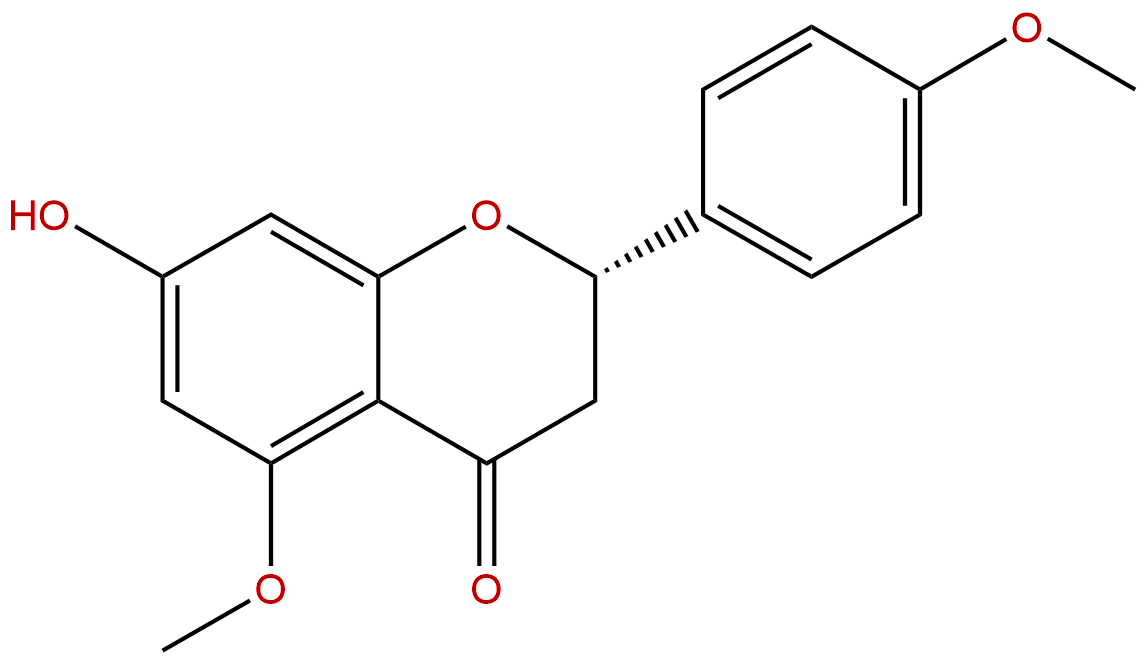


Storage conditions:Short-term storage at 2~8℃, long-term storage at -20 ~ -80℃
82.6800
2.3000
2.2000
Low
No
No
No
No
No
No
No
Natural products, as important resources for drug discovery, have demonstrated unique advantages in the treatment of various diseases such as antiviral, anti-inflammatory, and anti-tumor. Tsugafolin (CAS number: 66568-97-6) is a dehydroflavonoid compound isolated from the plant Vitex leptospires, which has attracted widespread attention due to its unique chemical structure and multi-target pharmacological activity. In recent years, with the in-depth study of the pharmacological mechanisms of natural products, Tsugafolin has gradually become a research hotspot in the field of natural product pharmacology due to its activities in anti HIV, anti-inflammatory, and potential anti-tumor effects.
This article aims to systematically review the chemical structure and physicochemical properties, plant sources and extraction methods, pharmacological activity and mechanism of action, pharmacological evaluation and pharmacokinetic characteristics of Tsugafolin, and comprehensively evaluate the value and challenges of this compound in new drug development in combination with its potential clinical application prospects, providing theoretical basis and practical guidance for subsequent research.
Tsugafolin belongs to the class of dehydroflavones, with a molecular formula of C17H14O6 and a molecular weight of 300.31. Its structural characteristics include a typical flavonoid skeleton, containing multiple hydroxyl and phenolic hydroxyl groups, giving it a good basis for biological activity. There are five hydrogen bond receptor sites in the molecular structure, with a polar surface area (TPSA) of 82.68 Å ² and a LogP value of approximately 2.3, indicating moderate lipophilicity and hydrophilicity, which facilitate membrane penetration but are not prone to excessive lipophilicity.
In terms of physical and chemical properties, Tsugafolin exhibits good stability, without significant hepatotoxicity, cardiotoxicity, or hERG channel inhibition, and the Ames test result is negative, indicating a low risk of genotoxicity. The low permeability of the blood-brain barrier limits its direct application in central nervous system diseases, but at the same time reduces the risk of central toxicity.
Tsugafolin was initially isolated from Vitex leptospires, a plant belonging to the Vitex genus of the Lamiaceae family and widely distributed in tropical and subtropical regions. Vitex plants have always been used as traditional herbs with various pharmacological activities such as anti-inflammatory, antibacterial, and antioxidant properties.
The extraction of Tsugafolin is usually carried out using ethanol or methanol as solvents, and crude extracts are obtained through ultrasound assisted extraction or reflux extraction. Subsequently, liquid-liquid partitioning, silica gel column chromatography, and high-performance liquid chromatography (HPLC) techniques were used for separation and purification. The identification methods include nuclear magnetic resonance (NMR), mass spectrometry (MS), and infrared spectroscopy (IR) to ensure the purity and structural accuracy of the compound.
In recent years, with the promotion of green chemistry concepts, new technologies such as supercritical fluid extraction (SFE) and microwave-assisted extraction have gradually been applied to the extraction of Tsugafolin, improving extraction efficiency and environmental friendliness.
Tsugafolin was first reported to have weak anti HIV activity, and in vitro experiments showed its inhibitory effect on key enzymes such as HIV reverse transcriptase, with an IC50 of approximately 118 μ M. Although its activity is weak, its non cytotoxic properties provide a good foundation for further structural modification and pharmacological optimization. In the multi-target strategy for HIV infection, Tsugafolin may exert a synergistic effect by interfering with key viral replication enzymes (such as reverse transcriptase POL, protease PR, and integrase IN) and virus invasion receptors (CD4, CCR5, CXCR4).
Inflammatory response is the core pathological process of various diseases, and Tsugafolin has shown potential in regulating inflammatory factors. Its targets include key inflammatory signaling pathway molecules such as IL-6, TNF, STAT3, CASP1, TRPV1, TRPA1, NOS2, PTGS1/PTGS2, and NFKB1. In vitro and in vivo model studies have shown that Tsugafolin can significantly inhibit the expression of pro-inflammatory cytokines, block the activation of the NF - κ B signaling pathway, and alleviate inflammatory responses, suggesting its potential application value in chronic inflammatory diseases such as rheumatoid arthritis and inflammatory bowel disease.
Although research on the anti-tumor activity of Tsugafolin is currently limited, its targets involve key cancer-related molecules such as EGFR, KDR (VEGFR-2), BCL2, TP53, PIK3CA, and AKT1, suggesting that it may exert anti-tumor effects by regulating cell proliferation, apoptosis, and angiogenesis pathways. In the future, through in-depth research on in vitro tumor cell lines and animal models, it is expected to clarify its anti-cancer mechanism and potential indications.
In the field of diabetes and neurodegenerative diseases, Tsugafolin targets insulin receptor (INSR), glucose transporter 4 (SLC2A4), AMPK (PRKAA1), β - amyloid precursor (APP), Tau protein (MAPT), α - synaptic nuclear protein (SNCA), acetylcholinesterase (ACHE) and other molecules, suggesting that it may have the potential to regulate energy metabolism, neuroprotection and improve cognitive function. But the relevant research is still in the preliminary stage and needs further verification.
The multi-target mechanism of action of Tsugafolin reflects its complexity and multifunctionality as a natural product. Its main mechanism of action includes:
Antiviral mechanism By directly inhibiting the activity of key HIV enzymes (reverse transcriptase, protease, integrase), the virus replication cycle is blocked; Simultaneously interfering with the CD4 and co receptors CCR5 and CXCR4 required for viral invasion, reducing the efficiency of viral infection.
Anti inflammatory mechanism Tsugafolin inhibits the activation of pro-inflammatory cytokines (IL-6, TNF) and inflammatory signaling molecules (STAT3, NF - κ B), reducing the release of inflammatory mediators. Its regulation of TRPV1 and TRPA1 plasma channels helps alleviate inflammation related pain.
Antitumor mechanism Promote tumor cell apoptosis by regulating the apoptosis related protein BCL2 and tumor suppressor protein p53; Inhibit the PI3K/AKT signaling pathway, block cell proliferation and angiogenesis, and inhibit tumor growth and metastasis.
metabolic regulation It can activate AMPK pathway, enhance glucose uptake and metabolism, improve insulin sensitivity, and potentially be used for the treatment of diabetes.
neuroprotection It may slow down the progression of neurodegenerative diseases by inhibiting acetylcholinesterase activity, reducing abnormal accumulation of β - amyloid and Tau proteins.
The pharmacological analysis of Tsugafolin shows that it has good potential for drug development. The molecular weight is moderate (300.31 Da), and the LogP value of 2.3 conforms to Lipinski's rule, indicating that it has good membrane permeability and oral bioavailability potential. The TPSA is 82.68 Å ², which is lower than the limit of general oral medications and beneficial for intestinal absorption.
In terms of safety, Tsugafolin has no hepatotoxicity, cardiotoxicity, or hERG channel inhibition, and the Ames test is negative, indicating a low risk of toxic side effects. The blood-brain barrier has low permeability, which limits its application in the central nervous system, but helps to reduce central neurotoxicity.
At present, there is a lack of pharmacokinetic data on Tsugafolin. In the future, it is necessary to systematically evaluate its absorption, distribution, metabolism, and excretion (ADME) characteristics, especially oral bioavailability, metabolic stability, and in vivo half-life, to guide formulation design and optimize dosing regimens.
Tsugafolin, as a multi-target natural product, has various pharmacological activities such as anti HIV, anti-inflammatory, and potential anti-tumor effects, demonstrating broad clinical application prospects. Its non cytotoxicity and good safety lay the foundation for clinical translation.
In the field of anti HIV, although Tsugafolin has weak activity, it can be used as a lead compound to enhance efficacy through structural modification, and combined with modern drug design techniques to develop new antiviral drugs. Its multi-target characteristics help overcome viral resistance and improve treatment efficacy.
The anti-inflammatory effect makes it have potential for development in chronic inflammatory diseases such as rheumatoid arthritis and inflammatory bowel disease. In the future, nanocarriers or sustained-release formulations can be combined to improve targeting and bioavailability.
The anti-tumor potential still needs further research, especially for the validation of cell and animal models targeting specific tumor types. Combining molecular target mechanisms, Tsugafolin is expected to become a new choice for adjuvant therapy in cancer treatment.
In addition, the preliminary targets of diabetes and neurodegenerative diseases indicate their potential application in the field of metabolism and neuroprotection, which provides a possibility for the strategy of co treatment of multiple diseases.
Future research needs to focus on pharmacokinetic optimization, structure-activity relationship (SAR) analysis, and preclinical safety evaluation of Tsugafolin, in order to promote its progress towards clinical trials.
In summary, Tsugafolin, as a natural dehydroflavonoid product derived from Vitex leptospirys, exhibits multiple biological functions such as anti HIV, anti-inflammatory, and potential anti-tumor effects due to its unique chemical structure and multi-target pharmacological activity. Its good safety and pharmacological parameters provide strong support for the development of new drugs.
Although the research on Tsugafolin is still in its basic stage and its activity is relatively weak, it is expected to achieve significant improvement in its efficacy through the optimization of modern medicinal chemistry and pharmacology methods. The pharmacokinetic research and preclinical evaluation of future systems will be key to promoting their translational applications.
Tsugafolin's research not only enriches the pharmacological knowledge system of dehydroflavonoid natural products, but also provides new molecular tools for multi-target therapy strategies, which has important scientific significance and application value. Looking forward to more in-depth mechanism research and clinical exploration in the future, to help natural product drug development reach a new level.
