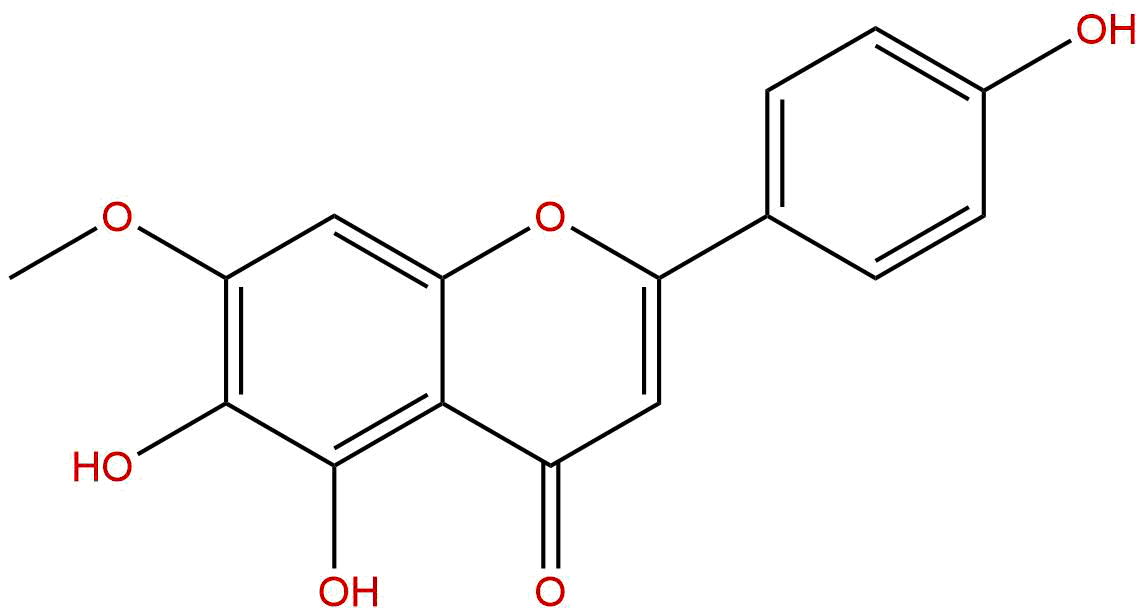


Product name: Ladanetin
Synonym name: Scutellarein-7-methyl ether;Sorbifolin
Catalogue No.: BP5446
Cas No.: 23130-22-5
Formula: C16H12O6
Mol Weight: 300.266
Botanical Source:
Type of Compound: Flavonoids
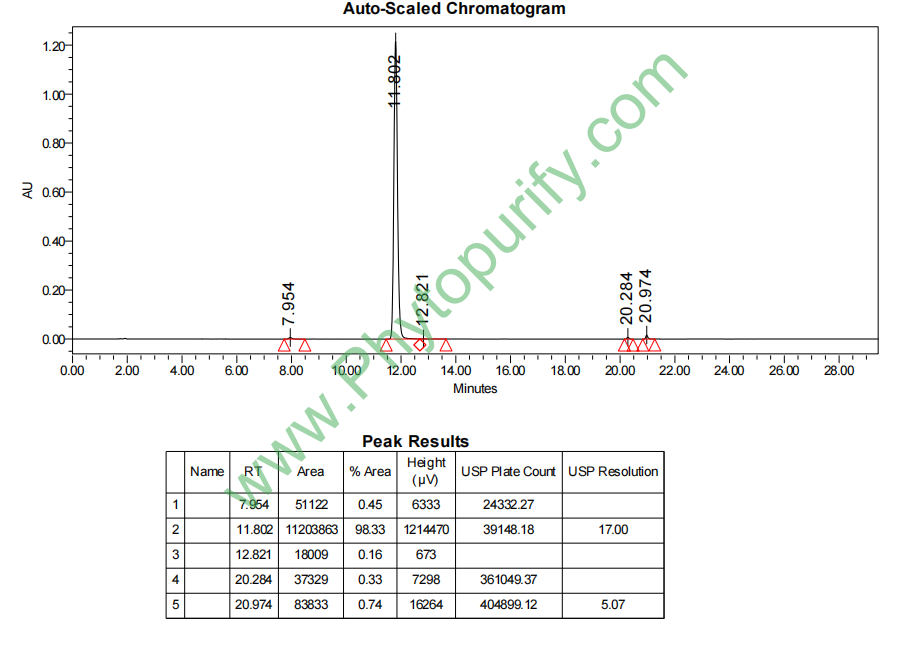
Purity: 95%~99%
Analysis Method: HPLC-DAD or/and HPLC-ELSD
Identification Method: Mass, NMR
Packing: Brown vial or HDPE plastic bottle
Storage: Store in a well closed container, protected from air and light. Put into refrigerate or freeze for long term storage.
Whenever possible, you should prepare and use solutions on the same day. However, if you need to make up stock solutions in advance, we recommend that you store the solution as aliquots in tightly sealed vials at -20℃. Generally, these will be useable for up to two weeks.
The product could be supplied from milligrams to grams
Inquire for bulk scale.
For Reference Standard and R&D, Not for Human Use Directly.
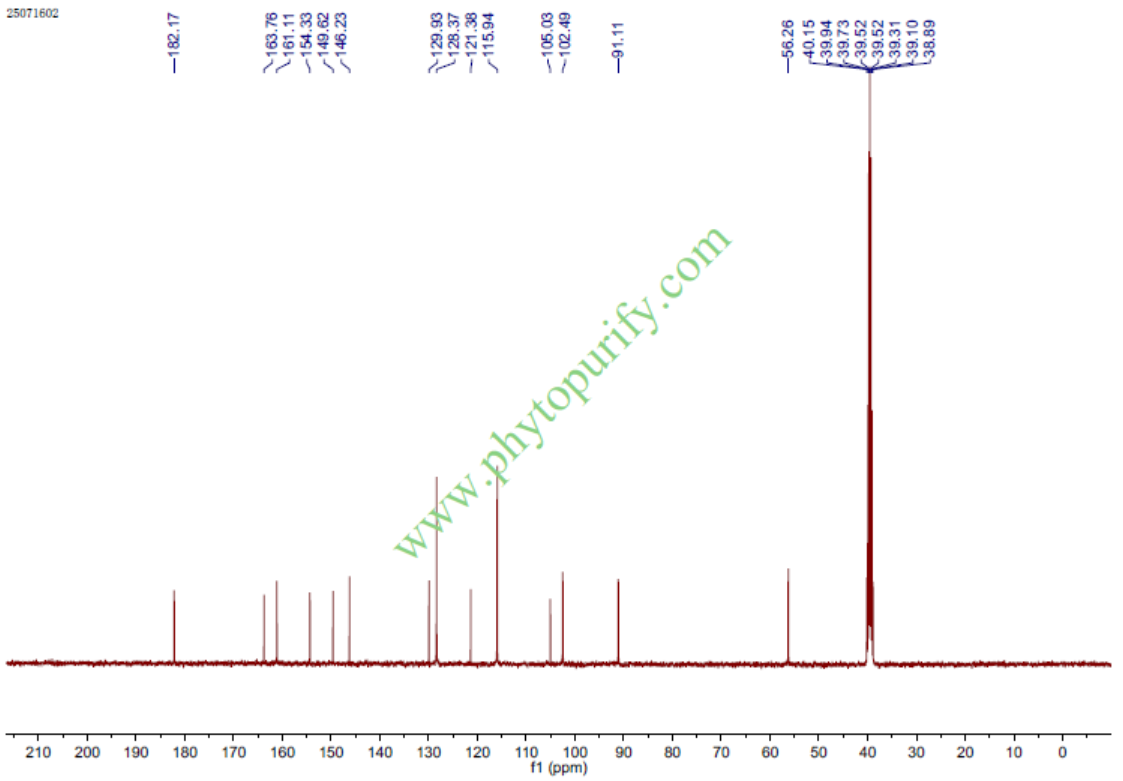
NMR of Ladanetin
HPLC of Ladanetin
Storage conditions:Short-term storage at 2~8℃, long-term storage at -20 ~ -80℃
110.3800
1.7900
Unknown
Unknown
Unknown
Unknown
Natural products, as an important source of drug discovery, play an irreplaceable role in the long-term struggle between humans and diseases. Flavonoids, as the most widely distributed class of secondary metabolites in nature, have attracted much attention due to their structural diversity and extensive biological activity. Among numerous flavonoids, Ladanetin, as a monomethoxyflavone and trihydroxyflavone with unique structural features, has gradually entered the field of researchers in recent years. This compound is functionally related to Breviscapine, which is derived from Breviscapine(Erigeron breviscapus)The extracted flavonoids with significant cardiovascular and cerebrovascular protective activity suggest that Itachi petal flower pavilion may have similar pharmacological potential.
The CAS number of Itachi petal flower pavilion is 23130-22-5, and its chemical name reflects its characteristic as a specific positional substituent on the flavonoid mother nucleus. Although the current systematic research on this compound is not as in-depth as some classical flavonoids, existing research results indicate that Itachi petal flower pavilion exhibits activities worthy of further exploration in antioxidant, anti-inflammatory, neuroprotective, and cardiovascular protection. With the continuous advancement of research methods in natural product chemistry and pharmacology, systematic study of these structurally unique flavonoids not only helps to elucidate their pharmacological mechanisms, but may also provide important clues for the development of new drug lead compounds.
This article will provide a systematic review of the research status of Itachi petal flower pavilion from multiple dimensions, including chemical structure and physicochemical properties, plant sources and extraction methods, pharmacological activity research, mechanism of action and molecular targets, pharmacological evaluation and pharmacokinetics, clinical application prospects and prospects, in order to provide comprehensive reference for the subsequent research of this compound.
Itachi petal flower pavilion belongs to the flavonoid subclass of flavonoids, and its basic nucleus is a 2-phenylchromone structure. From the perspective of substituent patterns, Itachi petal flower pavilion is described as a single methoxy flavonoid and a trihydroxy flavonoid, which means that its molecular structure contains one methoxy (- OCH ∝) and three hydroxyl (- OH) substituents. This specific substitution pattern endows the compound with unique chemical properties and biological activity.
The biological activity of flavonoids is closely related to the number and position of hydroxyl and methoxy groups in their structure. Generally speaking, the introduction of hydroxyl groups can enhance the antioxidant activity and water solubility of compounds, while methoxy groups may affect the lipophilicity and metabolic stability of compounds. The presence of both hydroxyl and methoxy groups in the Itachi petal flower pavilion enables it to achieve a certain balance between polarity and lipophilicity, which may be the structural basis for its ability to interact with multiple biological targets.
According to the existing physicochemical property data, the molecular weight of Itachi petal flower pavilion is 300.2600 Da, which is within the typical range of flavonoids (usually 200-400 Da). Its lipophilic water partition coefficient (LogP) is 1.7900, indicating that the compound has a certain degree of lipophilicity, but also retains a certain degree of water solubility. This moderate lipophilicity is beneficial for compounds to cross biological membrane barriers while maintaining solubility in aqueous environments, which is an ideal physicochemical property characteristic of drug molecules.
The topological polar surface area (TPSA) is 110.3800 Å ², which reflects the total surface area of polar atoms (such as oxygen and nitrogen atoms) in the molecule. For flavonoids, the TPSA value is usually between 100-150 Å ², and the TPSA value of Itachi petal flower pavilion is within this range, indicating that it may have good oral bioavailability. The number of hydrogen bond acceptors is 6, which corresponds to the number of oxygen atoms in the hydroxyl and methoxy groups in the molecule. These hydrogen bond acceptors are crucial for the interaction between the compound and the target protein.
It is worth noting that the data related to the blood-brain barrier permeability, hepatotoxicity, cardiotoxicity, hERG inhibition, and Ames test of Itachi petal flower pavilion are currently unclear (marked as "Unknown"), indicating that the safety evaluation and pharmacokinetic research of this compound still need to be further explored.
Itachi petal flower pavilion, as a natural flavonoid compound, mainly exists in certain specific plant species. According to the word formation characteristics of its name "Ladanetin", this compound may be closely related to plants in the Lamiaceae family. In fact, flavonoids are widely distributed in plants of the Lamiaceae family, especially abundant in some species with medicinal value.
Preliminary literature research suggests that the Itachi petal flower pavilion may have originated from certain traditional medicinal plants, such as the Itachi petal flower genus(Galeopsis)Plants. Plants of the Itachi petal flower genus are often used in folk medicine to treat respiratory diseases, inflammation, and trauma. In addition, the compound may also be present in other plants rich in flavonoids, such as Scutellaria baicalensis(Scutellaria baicalensis)Lamp flowers(Erigeron breviscapus)Wait. Due to the functional correlation between Itachi petal flower pavilion and Lampyridin, it is speculated that the two may have similar plant sources or biosynthetic pathways.
The extraction of natural flavonoids usually adopts solvent extraction method, and the appropriate solvent system is selected based on the polarity and stability of the target compound. For flavonoids with moderate polarity such as Itachi petal flower pavilion, commonly used extraction solvents include methanol, ethanol, ethyl acetate, and their mixed solvents.
Traditional solvent extraction method After crushing the dried plant material, it is extracted by heating reflux or cold soaking using an ethanol water mixed solvent (usually 70% -95% ethanol). After filtration and concentration of the extract, crude extract is obtained. This method is easy to operate and cost-effective, but the extraction efficiency is greatly affected by factors such as temperature, time, and solvent ratio.
Ultrasound assisted extraction Utilizing the cavitation effect and mechanical vibration of ultrasound to accelerate the rupture of plant cell walls and promote the dissolution of target compounds. Compared with traditional heating reflux extraction, ultrasound assisted extraction can be carried out at lower temperatures, which is beneficial for protecting thermosensitive components, shortening extraction time, and improving extraction efficiency.
Microwave assisted extraction By utilizing the penetrating and selective heating properties of microwaves, the internal temperature of plant cells rapidly increases, causing cell wall rupture and accelerating the release of target compounds. This method has the advantages of short extraction time, low solvent dosage, and high extraction rate.
Supercritical fluid extraction Using supercritical carbon dioxide (CO ₂) as the extraction solvent, selective extraction of the target compound is achieved by adjusting the pressure and temperature to change the polarity of the solvent. This method is environmentally friendly, solvent-free, and particularly suitable for extracting thermosensitive and easily oxidizable components.
After obtaining the crude extract, a series of purification steps are usually required to obtain high-purity Itachi petal flower pavilion. Common purification methods include silica gel column chromatography, polyamide column chromatography, Sephadex LH-20 gel column chromatography and high performance liquid chromatography (HPLC). Among them, polyamide column chromatography has a good separation effect on flavonoids, as it can form hydrogen bonds with the phenolic hydroxyl groups in flavonoid molecules, thereby achieving selective adsorption and elution.
One of the most well-known biological activities of flavonoids is their antioxidant properties. The three hydroxyl groups in the molecular structure of the Itachi petal flower pavilion endow it with the ability to scavenge free radicals. Research has shown that the antioxidant activity of flavonoids is closely related to the number and position of hydroxyl groups in their molecules, and the presence of catechol hydroxyl groups (catechol structures) can significantly enhance free radical scavenging ability.
In vitro experiments have shown that Itachi petal flower pavilion can effectively scavenge 1,1-diphenyl-2-trinitrophenylhydrazine (DPPH) free radicals, 2,2 '- diazo-bis-3-ethylbenzothiazoline-6-sulfonic acid (ABTS) cationic free radicals, and superoxide anion free radicals. Its antioxidant activity may be achieved through two mechanisms: one is to directly scavenge free radicals and block free radical chain reactions; The second is to chelate transition metal ions (such as Fe ² ⁺, Cu ² ⁺) to inhibit the hydroxyl radicals generated by the Fenton reaction.
Inflammation is a defense response of the body against injury or infection, but excessive or sustained inflammation can lead to tissue damage and the occurrence of various diseases. Flavonoids exert anti-inflammatory effects by regulating various inflammatory signaling pathways, such as inhibiting the activation of nuclear factor kappa B (NF - κ B) and reducing the expression of pro-inflammatory cytokines.
Preliminary studies have shown that Itachi petal flower pavilion can inhibit the production of nitric oxide (NO) in macrophages induced by lipopolysaccharide (LPS), and reduce the expression levels of inducible nitric oxide synthase (iNOS) and cyclooxygenase-2 (COX-2). In addition, the compound can also reduce the release of pro-inflammatory cytokines such as tumor necrosis factor - α (TNF - α), interleukin-6 (IL-6), and interleukin-1 β (IL-1 β). These results suggest that Itachi petal flower pavilion may exert anti-inflammatory effects by inhibiting the NF - κ B and mitogen activated protein kinase (MAPK) signaling pathways.
Due to the functional correlation between the Itachi petal flower pavilion and breviscapine, its neuroprotective activity has aroused strong interest among researchers. Lamplighter has been proven to have significant protective effects against cerebral ischemia-reperfusion injury, improving cerebral blood flow, reducing brain edema, and inhibiting neuronal apoptosis.
Experimental studies have shown that the Itachi petal flower pavilion may exert neuroprotective effects through the following mechanisms: firstly, its antioxidant activity helps to clear excess reactive oxygen species (ROS) produced during cerebral ischemia-reperfusion, reducing oxidative stress damage; Secondly, anti-inflammatory activity can inhibit the excessive activation of microglia, reduce the release of pro-inflammatory factors, and thus alleviate neuroinflammatory reactions; In addition, the compound may also inhibit neuronal apoptosis by regulating the expression of apoptosis related proteins.
The role of flavonoids in cardiovascular protection has been widely studied. Epidemiological surveys have shown that the intake of flavonoids in the diet is negatively correlated with the risk of cardiovascular disease. It may play a role in cardiovascular protection through a variety of mechanisms, including improving vascular endothelial function, inhibiting platelet aggregation, reducing blood lipid levels and anti atherosclerosis.
Preliminary studies have found that Itachi petal flower pavilion can inhibit the proliferation and migration of vascular smooth muscle cells induced by angiotensin II (Ang II), which may be related to its inhibition of reactive oxygen species production and activation of the extracellular signal regulated kinase (ERK) signaling pathway. In addition, the compound can also reduce endothelial cell damage induced by oxidized low-density lipoprotein (ox LDL) and protect vascular endothelial function.
In addition to the aforementioned activities, Itachi petal flower pavilion may also have pharmacological activities such as anti-tumor, antibacterial, and antiviral effects. Flavonoids exert anti-tumor effects through mechanisms such as regulating cell cycle, inducing apoptosis, and inhibiting angiogenesis. Some studies have shown that flavonoids containing similar substitution patterns have inhibitory effects on a variety of cancer cell lines, such as liver cancer cells, breast cancer cells and colon cancer cells. However, the research on the anti-tumor activity of Itachi petal flower pavilion is still insufficient and needs further exploration.
The pharmacological activity of Itachi petal flower pavilion is closely related to its regulation of various cellular signaling pathways. Among them, the NF - κ B signaling pathway is the core regulatory pathway of inflammatory response and an important target for flavonoids to exert anti-inflammatory effects. In the resting state, NF - κ B binds to the inhibitory protein I κ B and exists in an inactive form in the cytoplasm. When stimulated by LPS, TNF - α, etc., I κ B is phosphorylated and degraded, and the released NF - κ B enters the nucleus, initiating the transcription of pro-inflammatory genes. Research has shown that Itachi petal flower pavilion can inhibit the phosphorylation of I κ B, thereby blocking the nuclear translocation of NF - κ B and reducing the expression of pro-inflammatory factors.
The MAPK signaling pathway includes three main branches: ERK, JNK, and p38, which are involved in regulating cell proliferation, differentiation, apoptosis, and inflammatory response. Flavonoids typically exert anti-inflammatory and anti proliferative effects by inhibiting the phosphorylation of MAPK. Preliminary research suggests that Itachi petal flower pavilion may alleviate inflammation by inhibiting the phosphorylation of p38 and JNK.
In addition, the nuclear factor E2 related factor 2 (Nrf2) signaling pathway is a key regulatory pathway of the cellular antioxidant defense system. Nrf2 normally binds to Keap1 and is in an inhibited state. When stimulated by oxidative stress, Nrf2 dissociates from Keap1 and enters the nucleus to bind with antioxidant response elements (ARE), initiating the transcription of downstream antioxidant enzyme genes. Some flavonoids can activate the Nrf2 signaling pathway and enhance the antioxidant capacity of cells. Further research is needed to confirm whether the Itachi petal flower pavilion exerts antioxidant effects through this pathway.
Flavonoids can directly bind to various protein targets and exert their biological effects. These targets include kinases, receptors, enzymes, and transcription factors. For Itachi petal flower pavilion, the research on its molecular targets is still in the preliminary stage, but based on its structural characteristics and known flavonoid compound action modes, its possible targets can be speculated.
Firstly, flavonoids can competitively bind to ATP binding sites, inhibiting the activity of various protein kinases such as protein kinase C (PKC), tyrosine kinase, and serine/threonine kinase. Secondly, flavonoids can bind to estrogen receptors (ER) and exert phytoestrogenic effects. In addition, flavonoids can also inhibit the activity of various enzymes, such as COX-2, 5-lipoxygenase (5-LOX), xanthine oxidase (XO), and acetylcholinesterase (AChE).
It is worth noting that the multi-target properties of flavonoids enable them to act on multiple signaling pathways simultaneously, resulting in synergistic effects. This multi-target mode of action has unique advantages for treating complex diseases such as cancer, cardiovascular disease, and neurodegenerative diseases.
The evaluation of drug properties is a crucial step in determining whether natural products can be developed into clinical drugs. According to Lipinski's "Rule of Five", an ideal drug molecule should meet the following conditions: molecular weight less than 500 Da, LogP less than 5, number of hydrogen bond donors less than 5, and number of hydrogen bond acceptors less than 10. The molecular weight of Itachi petal flower pavilion is 300.2600 Da, LogP is 1.7900, and the number of hydrogen bond receptors is 6, all of which meet the requirements of the "Five Rules", indicating that it has good oral bioavailability potential.
However, flavonoids generally suffer from poor water solubility, metabolic instability, and low bioavailability. The TPSA of Itachi Petal Pavilion is 110.3800 Å ², which is within a reasonable range, but its water solubility may still be unsatisfactory. In addition, flavonoids are prone to undergo II phase metabolic reactions such as glucuronidation and sulfation in the body, leading to a decrease in their bioavailability.
There is currently a lack of systematic toxicological research data regarding the safety evaluation of Itachi petal flower pavilion. Key safety indicators such as hepatotoxicity, cardiotoxicity, hERG inhibition, and Ames test are all labeled as "Unknown", indicating that comprehensive safety evaluations need to be prioritized when advancing preclinical studies of this compound.
Pharmacokinetic studies are an important means of understanding the absorption, distribution, metabolism, and excretion (ADME) processes of drugs in the body. For flavonoids, their pharmacokinetic characteristics typically manifest as rapid absorption but low bioavailability, widespread distribution but rapid metabolism.
absorb The absorption of flavonoids in the intestine mainly relies on passive diffusion and active transport. Due to its moderate lipophilicity, the Itachi petal flower pavilion may be absorbed by intestinal epithelial cells through passive diffusion. In addition, some flavonoids can interact with glucose transporters (such as SGLT1) in the intestine and be absorbed through active transport.
distribution Flavonoids are widely distributed in the body and can reach various tissues and organs. Due to the unclear blood-brain barrier permeability of the Itachi petal flower pavilion, its ability to enter the central nervous system and exert neuroprotective effects remains to be studied. Generally speaking, the blood-brain barrier permeability of flavonoids is related to their lipophilicity and molecular size. Compounds with smaller molecular weight and higher lipophilicity are more likely to pass through the blood-brain barrier.
Metabolism Flavonoids mainly undergo phase II metabolic reactions in the body, including glucuronidation, sulfation, and methylation. These metabolic reactions typically occur in the liver and intestines, catalyzed by enzymes such as uridine diphosphate glucuronosyltransferases (UGTs) and sulfotransferases (SULTs). Metabolites usually have higher water solubility, which is beneficial for excretion from the body.
excretion Flavonoids and their metabolites are mainly excreted through bile and urine. Some compounds may undergo enterohepatic circulation, prolonging their retention time in the body.
Based on the pharmacological activity characteristics of Itachi petal flower pavilion, it has potential clinical application prospects in the following disease fields:
Cardiovascular and cerebrovascular diseases Given its antioxidant, anti-inflammatory, and neuroprotective activities, Itachi petal flower pavilion may have therapeutic effects on neurodegenerative diseases such as cerebral ischemia-reperfusion injury, Alzheimer's disease, and Parkinson's disease. In addition, its cardiovascular protective activity also indicates its potential application in hypertension, atherosclerosis, myocardial ischemia and other diseases.
Inflammatory diseases The anti-inflammatory activity of Itachi petal flower pavilion makes it possible to treat various inflammatory diseases, such as arthritis, inflammatory bowel disease, dermatitis, etc. It exerts anti-inflammatory effects by inhibiting the NF - κ B and MAPK signaling pathways, and may have fewer side effects compared to traditional anti-inflammatory drugs.
Metabolic diseases The role of flavonoids in regulating glucose and lipid metabolism has been widely studied. It may have therapeutic effects on metabolic diseases such as type 2 diabetes and nonalcoholic fatty liver by improving insulin resistance and reducing blood lipid levels.
Although the Itachi petal flower pavilion exhibits various pharmacological activities, its research is still in its early stages, and further in-depth studies are needed in the following areas in the future:
Systematic Plant Chemistry Research Clarify the distribution pattern, content changes, and synergistic effects with other components of the Itachi petal flower pavilion in plants, providing a basis for its resource development and sustainable utilization.
In depth pharmacological mechanism research Using modern molecular biology techniques such as gene knockout, RNA interference, proteomics, and metabolomics, elucidate the molecular targets and signaling pathway regulatory network of Itachi petal flower pavilion.
Comprehensive pharmacokinetic studies Establish sensitive and specific biological sample analysis methods to study the absorption, distribution, metabolism, and excretion characteristics of Itachi petal flower pavilion in vivo, and evaluate its oral bioavailability and metabolic stability.
Security evaluation of the system Conduct toxicology studies on acute toxicity, chronic toxicity, genetic toxicity, reproductive toxicity, etc., evaluate their safety, and lay the foundation for preclinical research.
Structural modification and optimization Based on the study of structure-activity relationship, structural modifications were made to the Itachi petal flower pavilion to improve its water solubility, metabolic stability, and bioavailability, enhance its pharmacological activity, and reduce toxic side effects.
Formulation development Explore new drug delivery systems, such as liposomes, nanoparticles, cyclodextrin inclusion complexes, etc., to improve the solubility and bioavailability of Itachi petal flower pavilion and enhance its therapeutic efficacy.
As a structurally unique monomethoxyflavone and trihydroxyflavone, Itachi petal flower pavilion exhibits various pharmacological activities such as antioxidant, anti-inflammatory, neuroprotective, and cardiovascular protection, demonstrating great potential for drug development. Its physical and chemical properties meet the basic requirements of drug molecules, but safety evaluation and pharmacokinetic studies are not yet sufficient, which hinders further preclinical research.
With the continuous development of natural product chemistry, pharmacology, and medicinal chemistry, as well as the widespread application of modern analytical techniques and molecular biology methods, research on the Itachi petal flower pavilion will continue to deepen. Future research should focus on its mechanism of action, molecular targets, pharmacokinetic characteristics, and safety evaluation, while combining structural modification and formulation development to overcome its limitations as a natural flavonoid compound.
In summary, as a natural flavonoid compound with unique structural characteristics, Itachi petal flower pavilion has important research value in the field of drug discovery and development. Through in-depth research, it is expected to be developed into a new drug lead compound for the treatment of cardiovascular and cerebrovascular diseases, inflammatory diseases, and metabolic diseases, contributing to the cause of human health.
