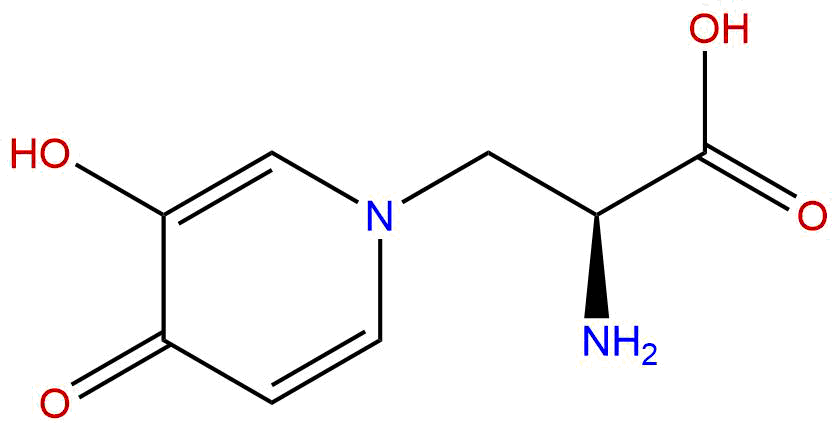


Product name: Mimosine
Synonym name: L-Mimosine
Catalogue No.: BP4806
Cas No.: 500-44-7
Formula: C8H10N2O4
Mol Weight: 198.178
Botanical Source:
Type of Compound: Alkaloids
Purity: 95%~99%
Analysis Method: HPLC-DAD or/and HPLC-ELSD
Identification Method: Mass, NMR
Packing: Brown vial or HDPE plastic bottle
Storage: Store in a well closed container, protected from air and light. Put into refrigerate or freeze for long term storage.
Whenever possible, you should prepare and use solutions on the same day. However, if you need to make up stock solutions in advance, we recommend that you store the solution as aliquots in tightly sealed vials at -20℃. Generally, these will be useable for up to two weeks.
The product could be supplied from milligrams to grams, upto kilograms.
Inquire for bulk scale.
References:
1, J. Phys. Chem. B 2022, 126, 2959−2967
Abstract:
Mimosine is a nonprotein amino acid derived from plants known for its ability to bind to divalent and trivalent metal cations such as Zn2+, Ni2+, Fe2+, or Al3+. This results in interesting antimicrobial and anticancer properties, which make mimosine a promising candidate for therapeutic applications. One possibility is to incorporate mimosine into synthetic short peptide drugs. However, how this amino acid affects the peptide structure is not well understood, reducing our ability to design effective therapeutic compounds. In this work, we used computer simulations to understand this question. We first built parameters for the mimosine residue to be used in combination with two classical force fields of the Amber family. Then, we used atomistic molecular dynamics simulations with the resulting parameter sets to evaluate the influence of mimosine in the structural propensities for this amino acid. We compared the results of these simulations with homologous peptides, where mimosine is replaced by either phenylalanine or tyrosine. We found that the strong dipole in mimosine induces a preference for conformations where the amino acid rings are stacked over more extended conformations. We validated our results using quantum mechanical calculations, which provide a robust foundation for the outcome of our classical simulations.
2, https://go.drugbank.com/drugs/DB01055
Pharmacodynamics
Mimosine inhibits DNA synthesis at the level of elongation of nascent chains by altering deoxyribonucleotide metabolism. It arrests the cell cycle in the late G(1) phase.
Mechanism of action
Mimosine causes inhibition of DNA replication, changes in the progression of the cells in the cell cycle, and apoptosis. Mimosine appears to introduce breaks into DNA. Mimosine is an iron/zinc chelator. Iron depletion induces DNA double-strand breaks in treated cells, and activates a DNA damage response that results in focal phosphorylation of histones. This leads to inhibition of DNA replication and/or DNA elongation. Some studies indicate that mimosine prevents the initiation of DNA replication, whereas other studies indicate that mimosine disrupts elongation of the replication fork by impairing deoxyribonucleotide synthesis by inhibiting the activity of the iron-dependent enzyme ribonucleotide reductase and the transcription of the cytoplasmic serine hydroxymethyltransferase gene (SHMT). Inhibition of serine hydroxymethyltransferase is moderated by a zinc responsive unit located in front of the SHMT gene.
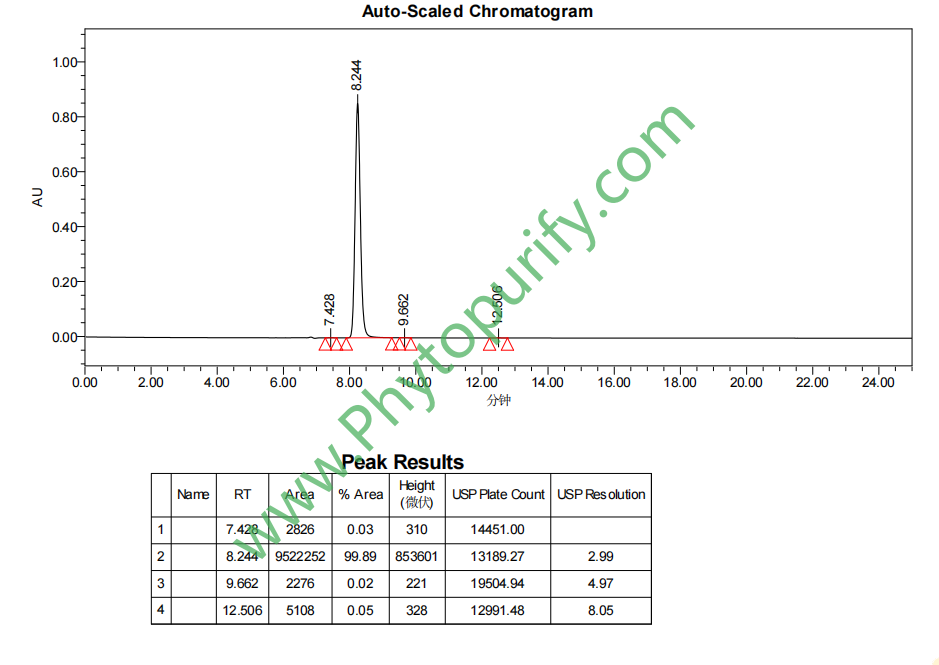
HPLC of Mimosine
Storage conditions:Short-term storage at 2~8℃, long-term storage at -20 ~ -80℃
105.5500
-2.9015
-2.9229
9.6861
.6286
1.6489
Low
18.6354
3.2071
Yes
Yes
No
No
No
No
0.0
No
No
No
No
Natural products, as an important source of drug discovery, have long contributed numerous lead compounds and clinical drugs to human health. Among numerous natural products with biological activity, Mimosine has attracted much attention due to its unique chemical structure and diverse pharmacological activities. Mimosa extract is a non protein amino acid originally derived from the tropical leguminous plant Mimosa pudica(Mimosa pudica)Separation and identification in the middle, followed by silver acacia(Leucaena leucocephala)Found in various plants. This natural product is known for its strong iron ion chelation ability, which can exert antioxidant effects by binding to Fe (III) ions, while exhibiting various pharmacological activities such as anti-cancer, anti-inflammatory, and antidepressant.
The chemical structure of mimosa extract is similar to tyrosine, which allows it to interact with various biological targets. In recent years, with the deepening of research on the pharmacological mechanisms of natural products, the mechanisms of action of mimosa extract in cell cycle regulation, apoptosis induction, neuroprotection, and other aspects have gradually been elucidated. Of particular note is that mimosa extract exhibits significant pro apoptotic effects on human leukemia cells through pathways such as metal ion chelation, mitochondrial function regulation, and reactive oxygen species (ROS) production, providing a theoretical basis for its application in tumor therapy.
In addition, the potential value of mimosa extract in antidepressant treatment has also aroused the interest of researchers. By acting on multiple targets related to the pathogenesis of depression, such as monoamine oxidase (MAO-A, MAO-B), glycogen synthase kinase-3 β (GSK3B), and serotonin transporter (SLC6A4), mimosa extract may provide new ideas for the development of novel antidepressant drugs. This article will provide a systematic review of the research progress of mimosa extract from the aspects of chemical structure, plant origin, pharmacological activity, mechanism of action, pharmacological evaluation, and clinical application prospects.
The chemical name of mimosa extract is β - [N - (3-hydroxy-4-pyridone)] - α - aminopropionic acid, with a molecular formula of C ₈ H ₁₀ N ₂ O ₄ and a molecular weight of 198.18 Da. Its structure consists of two main parts: a pyridone ring and an alanine side chain. Specifically, the molecule of mimosa contains a 3-hydroxy-4-pyridone structural unit, which is connected to the beta carbon atom of the alpha amino acid (alanine) through a methylene bridge. This unique structure makes it a structural analogue of tyrosine, as the phenyl ring of tyrosine is replaced by a pyridone ring.
There are multiple functional groups in the molecule of mimosa, including amino (- NH ₂), carboxyl (- COOH), hydroxyl (- OH), and carbonyl (C=O) on the pyridone ring. These functional groups endow mimosa extract with abundant chemical reactivity and biological activity. It is particularly important that the 3-hydroxy-4-pyridone structural unit has two adjacent oxygen atoms (hydroxyl oxygen and carbonyl oxygen), which can form a stable five membered chelating ring with metal ions, which is the structural basis for its use as an efficient iron chelating agent.
According to computational chemical analysis, the physicochemical properties of mimosa extract are as follows: the lipid water partition coefficient (LogP) is -2.9015, indicating that the compound has high hydrophilicity and good solubility in aqueous phase. The topological polar surface area (TPSA) is 105.55 Å ², which is higher than the recommended upper limit of 140 Å ² for oral medications, suggesting that it may have lower membrane permeability. The water solubility parameter is 9.6861, further confirming its excellent water solubility characteristics.
The acid-base properties of mimosa extract are determined by its amino (pKa approximately 9.0-10.0) and carboxyl (pKa approximately 2.0-3.0) groups, which make it mainly exist in the form of zwitterionic ions under physiological pH conditions. The hydroxyl group (pKa approximately 8.0-9.0) on the pyridone ring can undergo deprotonation under alkaline conditions, enhancing its coordination ability with metal ions.
The UV visible absorption spectrum of mimosa extract exhibits a characteristic absorption peak at approximately 280-300 nm, attributed to the π→π * transition of the pyridone ring. In the infrared spectrum, the strong absorption peak at approximately 1650 cm ⁻¹ corresponds to the stretching vibration of the carbonyl group (C=O), while the broad peak at approximately 3400 cm ⁻¹ is attributed to the stretching vibration of the hydroxyl and amino groups. In the nuclear magnetic resonance hydrogen spectrum (¹ H NMR), the proton signal on the pyridone ring appears in the δ 6.0-7.5 ppm region, while the proton signal on the alanine portion appears in the δ 3.0-4.5 ppm region.
Mimosa extract originally originated from mimosa(Mimosa pudica L. The plant was isolated from Fabaceae and belongs to the genus Fabaceae(Mimosa)Widely distributed in tropical and subtropical regions. However, the most abundant source of mimosa extract is from plants in the genus Leucaena, especially Leucaena(Leucaena leucocephala (Lam.) de Wit), The content in its seeds and leaves can reach 3-5% of dry weight. In addition, mimosa extract is also present in the following plants:
It is worth noting that there are differences in the distribution of mimosa extract in different plant tissues. In Acacia, the content is highest in seeds and young leaves, while it is lower in mature stems. The biosynthetic pathway of mimosa extract in plants involves the tyrosine metabolism pathway, in which the 3-hydroxy-4-pyridone structural unit is derived from the oxidative cyclization reaction of tyrosine.
The extraction of mimosa extract is usually based on its good water solubility and zwitterionic properties. The classic extraction process includes the following steps:
(1) Raw material pretreatment Crush fresh or dry plant materials (usually leaves or seeds) to appropriate particle size, degrease with petroleum ether or n-hexane, and remove fat soluble impurities.
(2) Solvent extraction Extract using acidic aqueous solution (such as 0.1 M HCl) or ethanol water mixed solvent (50-70% ethanol). Acidic conditions are conducive to the protonation of mimosa extract and increase its solubility in aqueous phase. Extraction is usually carried out at room temperature or 40-60 ° C, using methods such as soaking, percolation, or ultrasound assisted extraction.
(3) Preliminary purification: After centrifugation or filtration, adjust the pH of the extract to near the isoelectric point (about pH 5.0-6.0) to precipitate mimosin. Cation exchange resin (such as Dowex 50W) can also be used for adsorption, followed by elution with ammonia or dilute hydrochloric acid.
(4) Refined The crude extract can be further purified by recrystallization (using water or ethanol water mixed solvents) or preparative high-performance liquid chromatography (HPLC). HPLC purification often uses a C18 reverse phase chromatography column, with water methanol or water acetonitrile system as the mobile phase, and a detection wavelength of 280 nm.
(5) Identification and purity analysis The purified mimosa extract can be structurally confirmed and purity analyzed using techniques such as thin-layer chromatography (TLC), high-performance liquid chromatography, mass spectrometry (MS), and nuclear magnetic resonance (NMR).
In recent years, green extraction techniques such as microwave-assisted extraction, enzyme assisted extraction, and supercritical fluid extraction have also been applied to the extraction of mimosa extract. These methods have the advantages of high extraction efficiency, low solvent consumption, and environmental friendliness.
The anticancer activity of mimosa extract is one of its most widely studied pharmacological effects. Numerous in vitro and in vivo studies have shown that mimosa extract has growth inhibitory and pro apoptotic effects on various tumor cell lines.
(1) Leukemia cells Mimosa extract exhibits significant cytotoxicity towards human leukemia cells such as HL-60, K562, U937, etc. Research has shown that mimosa extract interferes with intracellular iron homeostasis through metal ion chelation, thereby activating the mitochondrial apoptosis pathway. Specifically, mimosa extract can induce a decrease in mitochondrial membrane potential, promote cytochrome c release, activate caspase-3 and caspase-9, and ultimately lead to cell apoptosis. It is worth noting that the production of reactive oxygen species (ROS) induced by mimosa extract plays a crucial role in this process, with ROS acting as signaling molecules involved in amplifying apoptotic signals.
(2) Solid tumor cells: In addition to leukemia, Mimosin also has inhibitory effect on breast cancer (MCF-7, MDA-MB-231), lung cancer (A549), liver cancer (HepG2), colon cancer (HT-29) and other solid tumor cells. Its mechanism of action involves cell cycle arrest (mainly in the G1/S phase), inhibition of DNA synthesis, and induction of apoptosis. Mimosa extract inhibits DNA replication and cell proliferation by suppressing the activity of ribonucleotide reductase, reducing the synthesis of deoxyribonucleotides (dNTPs).
(3) Anti metastatic activity Some studies have also found that mimosa extract can inhibit the migration and invasion ability of tumor cells, which may be related to its regulation of matrix metalloproteinases (MMPs) expression and activity.
Mimosa extract has also shown protective effects in inflammation related disease models. Research has shown that mimosa extract can inhibit lipopolysaccharide (LPS) - induced macrophage inflammatory response, reduce the production of pro-inflammatory cytokines such as TNF - α, IL-1 β, IL-6, and nitric oxide (NO). Its anti-inflammatory mechanism involves inhibition of the nuclear factor kappa B (NF - κ B) signaling pathway and regulation of the mitogen activated protein kinase (MAPK) pathway.
In addition, mimosa extract reduces iron mediated oxidative stress by chelating iron ions, thereby alleviating oxidative damage in inflammatory tissues. In animal models, mimosa extract has shown certain alleviating effects on acute inflammation (such as carrageenan induced toe swelling) and chronic inflammation (such as adjuvant arthritis).
In recent years, the potential of mimosa extract in the treatment of neurological disorders, especially depression, has attracted the attention of researchers. Depression is a complex mental illness, and its pathogenesis involves multiple aspects such as the monoamine neurotransmitter system, neurotrophic factors, and neuroplasticity. Mimosa extract exhibits potential antidepressant effects by acting on multiple targets associated with depression.
(1) Monoamine oxidase inhibition Mimosa extract has inhibitory effects on both monoamine oxidase A (MAO-A) and monoamine oxidase B (MAO-B). MAO is a key enzyme that degrades monoamine neurotransmitters such as serotonin, norepinephrine, and dopamine. Inhibiting its activity can increase the concentration of these neurotransmitters in synaptic cleft, thereby producing antidepressant effects.
(2) 5-hydroxytryptamine system regulation Mimosa extract can interact with serotonin transporter (SLC6A4) and serotonin 1A receptor (HTR1A) to regulate serotonin reuptake and signal transduction. The serotonin system plays a central role in emotion regulation and is the main target of most antidepressant drugs.
(3) Neurotrophic factors and signaling pathways Mimosa extract can upregulate the expression of brain-derived neurotrophic factor (BDNF) and activate the cAMP response element binding protein (CREB) signaling pathway. BDNF plays a crucial role in neuronal survival, synaptic plasticity, and neurogenesis, and its decreased expression is closely associated with the onset of depression.
(4) Other targets Mimosa extract also acts on targets such as glycogen synthase kinase-3 β (GSK3B), catechol-O-methyltransferase (COMT), and gamma aminobutyric acid type A receptor (GABRA1), which play important roles in emotion regulation and neuroprotection.
The antioxidant activity of mimosa extract mainly comes from its iron chelation ability. Iron ions are key catalysts in the Fenton reaction, which can promote the production of highly oxidative ROS such as hydroxyl radicals (· OH). By chelating Fe (III) ions, mimosa extract can inhibit Fenton reaction and reduce oxidative stress damage. In addition, mimosa extract itself also has certain free radical scavenging ability, which can directly neutralize ROS such as superoxide anion (O ₂⁻·) and hydrogen peroxide (H ₂ O ₂).
The iron chelation ability of mimosa extract is the basis for its various pharmacological activities. The 3-hydroxy-4-pyridone structural unit in the molecule can form a stable 1:2 (metal: ligand) complex with Fe (III) ions, with a coordination constant of log K ≈ 10-12. This chelation has the following characteristics:
By chelating intracellular free iron, mimosa extract can interfere with iron dependent enzymatic reactions, including the activity of ribonucleotide reductase (RR). RR is the rate limiting enzyme in DNA synthesis, and its activity depends on iron ions. Therefore, mimosa extract indirectly inhibits DNA synthesis through iron chelation, leading to cell cycle arrest.
The mechanism by which mimosa extract induces cell apoptosis involves multiple signaling pathways:
(1) Mitochondrial pathway Mimosa extract causes a decrease in mitochondrial iron content through iron chelation, affecting the activity of mitochondrial respiratory chain complexes and leading to a decrease in mitochondrial membrane potential (Δ PSI m). Mitochondrial dysfunction leads to the release of cytochrome c from mitochondria into the cytoplasm, which binds to apoptotic protease activator protein-1 (Apaf-1), activates caspase-9, and subsequently activates downstream caspase-3 and caspase-7, executing the apoptotic program.
(2) ROS mediated signaling The ROS production induced by mimosa extract plays a dual role in apoptosis signaling. On the one hand, ROS acts as a signaling molecule to activate stress response pathways such as JNK and p38 MAPK pathways, promoting apoptosis; On the other hand, excessive ROS directly damages mitochondrial membranes and DNA, accelerating cell death.
(3) P53 dependent pathway In some cell lines, mimosa extract can upregulate the expression of p53 protein. p53 acts as a transcription factor to activate the expression of pro apoptotic genes (such as Bax and PUMA), while inhibiting the expression of anti apoptotic genes (such as Bcl-2), promoting cell apoptosis.
The antidepressant effect of mimosa extract involves the synergistic regulation of multiple molecular targets:
(1) MAO-A/MAO-B inhibition Mimosa extract competitively inhibits the activity of MAO-A and MAO-B, reduces the degradation of serotonin, norepinephrine, and dopamine, and increases the concentration of these neurotransmitters in synaptic cleft. Molecular docking studies have shown that mimosa extract can bind to the active site of MAO and form stable interactions with FAD cofactors.
(2) GSK3B regulation Glycogen synthase kinase-3 β (GSK3B) is an important kinase involved in emotion regulation and neuroplasticity. Mimosa extract can inhibit the activity of GSK3B, promote nuclear translocation of β - catenin, activate the Wnt signaling pathway, and thus promote neurogenesis and synapse formation.
(3) SLC6A4 interaction The interaction between mimosa extract and serotonin transporter (SERT, encoded by SLC6A4 gene) is similar to selective serotonin reuptake inhibitors (SSRIs), which can reduce serotonin reuptake and prolong its action time in synaptic cleft.
(4) BDNF CREB pathway activation Mimosa extract upregulates the expression of BDNF by activating the cAMP/PKA/CREB signaling pathway. After binding to TrkB receptors, BDNF activates downstream PI3K/Akt and MAPK/ERK pathways, promoting neuronal survival and synaptic plasticity.
A systematic evaluation of the pharmacological properties of mimosa extract was conducted based on computational medicinal chemistry methods
(1) Drug like properties (Lipinski rule)The molecular weight of mimosa extract is 198.18 Da (<500), the LogP is -2.90 (<5), the number of hydrogen bond donors is 3 (<5), and the number of hydrogen bond acceptors is 5 (<10), which conforms to the Lipinski Five Rules, indicating that it has good oral drug potential. However, its high polarity (TPSA=105.55 Å ²) may affect intestinal absorption.
(2) Water solubility The water solubility of mimosa extract is good (9.69 mg/mL), which is beneficial for the development of drug formulations and in vivo absorption.
(3) Blood-brain barrier permeability The low blood-brain barrier (BBB) permeability of mimosa extract limits its application in the treatment of central nervous system diseases. However, for indications that require peripheral effects such as anti-cancer and anti-inflammatory, low BBB permeability may be advantageous.
(4) Safety evaluation The Ames test result is negative (0.0), indicating that mimosa extract does not have significant mutagenicity. The hERG inhibition test result is negative, indicating a low risk of cardiac toxicity. However, at high doses, mimosa extract may cause certain toxic reactions, including hair removal, thyroid function inhibition, etc., which are related to iron deficiency caused by its iron chelation effect.
At present, there is relatively limited systematic research on the pharmacokinetics of mimosa extract, but preliminary information has been provided by existing studies
(1) Absorption After oral administration, mimosa extract can be absorbed in the gastrointestinal tract, but due to its high polarity and zwitterionic properties, absorption may not be complete. Animal experiments have shown that the bioavailability of oral mimosa extract is approximately 20-40%.
(2) Distribution Mimosa extract is widely distributed in the body, mainly in the liver, kidneys, and blood. Due to its low BBB permeability, the concentration in brain tissue is relatively low.
(3) Metabolism The metabolic pathways of mimosa extract in the body mainly include: a) binding with glucuronic acid or sulfuric acid to form conjugates; b) Under the action of gut microbiota, decarboxylation or deamination reactions occur; c) Some mimosa plants are excreted in their original form.
(4) Excretion Mimosa extract is mainly excreted through the kidneys in its original form or metabolite form, with a small amount excreted through bile. Its half-life (t ₁/₂) is about 2-4 hours.
The iron chelation properties of mimosa extract may interact with other iron containing drugs or supplements. Simultaneously using iron containing preparations may reduce the bioavailability and efficacy of mimosa extract. In addition, mimosa extract may affect the metabolism of other metal ions such as zinc and copper, and its long-term use should be considered for its impact on trace element balance.
Mimosa extract, as a natural iron chelator, has unique advantages in tumor treatment. Compared with existing iron chelators such as deferoxamine and Deferasirox, mimosa extract has the following characteristics: 1) small molecular weight, easy synthesis and modification; 2) Has high selectivity for Fe (III); 3) Can induce ROS production and enhance anti-tumor effects. Future research directions include:
The multi-target antidepressant mechanism of mimosa extract provides new ideas for its application in the treatment of mental illnesses. Compared with traditional single target antidepressants such as SSRIs, mimosa extract may have the advantages of fast onset, comprehensive efficacy, and fewer side effects by acting on multiple targets such as MAO, SLC6A4, and GSK3B simultaneously. However, its low BBB permeability is the main obstacle limiting its application in central nervous system diseases. The future can be improved through the following strategies:
Although mimosa extract has various pharmacological activities and good medicinal properties, its clinical application still faces the following challenges:
As a natural product with a unique chemical structure, mimosa extract exhibits various pharmacological activities such as anti-cancer, anti-inflammatory, and antidepressant effects based on its strong iron chelation ability. Its mechanism of action involves multiple aspects such as iron homeostasis regulation, mitochondrial function regulation, ROS signaling transduction, and multi-target neurotransmitter system regulation. The evaluation of medicinal properties shows that mimosa extract conforms to the rules of drug likeness and has good safety characteristics, but its low BBB permeability and oral bioavailability are the main obstacles that need to be overcome.
In the future, with the deepening understanding of the pharmacological mechanism of mimosa extract and the development of drug chemical modification technology, mimosa extract and its derivatives are expected to play an important clinical value in fields such as tumor treatment, depression treatment, and iron overload disease through structural optimization, new formulation development, and combination therapy strategies. Meanwhile, the successful case of mimosa extract as a natural iron chelator also provides valuable insights for the discovery and development of novel multi-target drugs from natural products. On the long road of natural product drug research and development, the brilliant pearl of mimosa extract will surely shine even brighter.
