| Catalog No | Package | Original Price | Price | Inventory | Quantity | Operating |
|---|---|---|---|---|---|---|
| BPF2123-5mg | 5mg | $350.00 | Sign in |
|


Storage conditions:Short-term storage at 2~8℃, long-term storage at -20 ~ -80℃
54.9800
2.7575
2.7574
.0086
2.4564
31.2273
High
88.6919
2.0903
No
Yes
Yes
No
Yes
Yes
0.6
No
No
Yes
Yes
Natural products have always been an important source of drug discovery and development, especially in the fields of anti infection and anti-tumor. β - carboline alkaloids are a type of compound with an indolopyridine nucleus in their structure, widely distributed in nature, especially abundant in plants such as Rutaceae and Simaroubaceae. These compounds have long been closely monitored by medicinal chemists and pharmacologists due to their diverse biological activities, such as anti-tumor, antiviral, anti-inflammatory, sedative, and antimalarial effects. Among them, 1-Ethoxycarbonyl-beta-carboline, also known as camptothecin A, is a representative member of the β - carboline family. This compound was originally derived from bitter wood(Picrasma quassioides)Through isolation and identification from medicinal plants, its unique chemical structure - the introduction of an ethoxycarbonyl (- COOEt) substituent at position 1 of the β - carboline ring - endows it with physicochemical properties and biological activity spectrum that distinguish it from other simple β - carboline derivatives.
As a traditional Chinese medicine, bitter wood has the effects of clearing heat, drying dampness, detoxifying and killing insects. It is commonly used in folk medicine to treat diseases such as dysentery, boils, and malaria. Modern pharmacological research has confirmed that extracts of bitter wood and the β - carboline alkaloids they contain have significant anti malaria activity. 1-Ethoxycarbonyl - β - carboline, as one of the key active ingredients, has particularly outstanding inhibitory activity against malaria parasites. Given that malaria remains a major infectious disease that poses a serious threat to human health globally, especially in tropical and subtropical regions, and the continuous emergence of drug-resistant strains of malaria parasites poses challenges to the efficacy of existing antimalarial drugs such as artemisinin and its derivatives, it is particularly urgent to search for lead compounds with novel mechanisms of action. Therefore, in-depth study of the chemical properties, pharmacological activity, mechanism of action, and drug properties of 1-ethoxycarbonyl - β - carboline has important theoretical significance and potential application value for the development of new antimalarial drugs. This article will provide a comprehensive review of this natural product from the aspects of chemical structure, plant origin, pharmacological activity, mechanism of action, medicinal evaluation, and clinical application prospects.
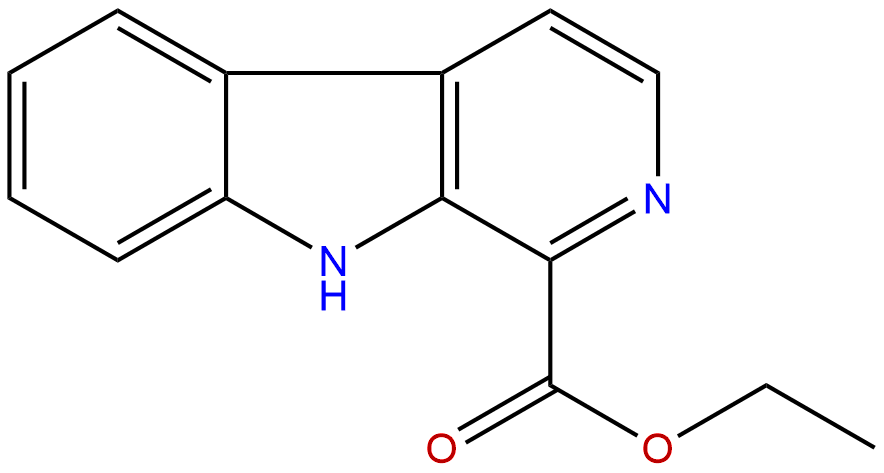
The chemical structure core of 1-ethoxycarbonyl - β - carboline (bitterne A) is the β - carboline skeleton, which is a tricyclic system formed by the fusion of an indole ring and a pyridine ring. The key structural feature is the presence of an ethoxycarbonyl (- COOCH ₂ CH ∝) group attached to the carbon atom at position 1 of the β - carboline ring system. The presence of this group not only increases the lipophilicity of the molecule, but also affects the electron cloud distribution of the entire conjugated system through its electron withdrawing effect, which may affect its interaction with biological targets. Its molecular formula is C ₁₄ H ₁₂ N ₂ O ₂, and its molecular weight is 240.2620 g/mol. From a chemical naming perspective, it belongs to the ethyl ester derivatives of β - carboline-1-carboxylic acid.
In terms of physicochemical properties, the compound exhibits typical alkaloid characteristics. Its oil-water partition coefficient (LogP) is 2.7575, indicating moderate lipophilicity, which facilitates its penetration through biological membranes, including cell membranes and the blood-brain barrier. In fact, the pharmacological parameters clearly indicate that its blood-brain barrier penetration ability is "high", which suggests that the compound may have central nervous system activity, but may also bring corresponding neurotoxic risks. Its topological polar surface area (TPSA) is 54.98 Å ², which is lower than the threshold commonly considered for good absorption of oral drugs (about 140 Å ²), indicating its good oral absorption potential. However, its water solubility parameter is only 0.0086 mg/mL, which is a poorly soluble compound, which may limit the development and in vivo bioavailability of its formulation. Therefore, in the subsequent optimization of medicinal chemistry, how to improve its water solubility through salt formation, prodrug design, or nanoformulation technology is one of the key directions to enhance its drug properties. In addition, the compound showed negative (No) results in the hERG inhibition assay, indicating a low risk of inducing QT interval prolongation and apical torsion type ventricular tachycardia, which is a favorable safety signal. The Ames test result is 0.6, usually a value less than 0.5 is negative, and 0.5-1.0 is suspected positive. Therefore, this result suggests that there may be a certain genetic toxicity risk, which needs to be given special attention and verification in subsequent toxicological evaluations.
1-Ethoxycarbonyl - β - carboline (bitter wood alkali A) mainly comes from plants in the bitter wood family, among which bitter wood(Picrasma quassioides)The most famous. Bitterwood is widely distributed in China, Japan, the Korean Peninsula, and India. Its dried branches and leaves are the source of traditional Chinese medicine "Bitterwood". In addition to bitter wood, this compound is also present in other Rutaceae plants, such as certain Evodia species(Evodia)In plants and some marine organisms (such as sponges), but the content is usually low. In bitter wood, 1-ethoxycarbonyl - β - carboline coexists with other β - carboline alkaloids (such as bitter alkaloids B, C, D, etc.) and bitter compounds.
The extraction of 1-ethoxycarbonyl - β - carboline from plants usually follows the classic extraction process of alkaloids. The basic strategy is to utilize the characteristic of alkaloids forming salts and dissolving in water under acidic conditions, while isolating and dissolving in organic solvents downstream under alkaline conditions. The specific steps are as follows: Firstly, the dried bitter wood branches or leaves are crushed and subjected to percolation or reflux extraction with polar solvents (such as methanol, ethanol, or their mixed solvents) to obtain the total extract. Then, dissolve the total extract in dilute acidic water (such as 1-2% hydrochloric acid or sulfuric acid) and filter to remove non alkaline lipid soluble impurities. The acidic aqueous solution is then extracted with organic solvents such as petroleum ether and ethyl acetate to remove neutral or acidic impurities. Subsequently, the pH of the acidic aqueous solution is adjusted to 9-10 using a base (such as ammonia or sodium hydroxide solution) to free the alkaloids, and then extracted with organic solvents such as chloroform, dichloromethane, or ethyl acetate to obtain the total alkaloid fraction. Finally, the total alkaloid fraction can be separated and purified using various chromatographic techniques, including silica gel column chromatography, alumina column chromatography, preparative thin-layer chromatography, and high-performance liquid chromatography (HPLC). Due to the certain UV absorption of 1-ethoxycarbonyl - β - carboline, UV detectors are often used for tracking during the separation process. High purity monomer compounds can be obtained through repeated column chromatography and recrystallization. In recent years, with the advancement of chromatographic technology, efficient and environmentally friendly separation techniques such as high-speed countercurrent chromatography (HSCCC) and supercritical fluid chromatography (SFC) have also been applied to the separation and preparation of such compounds.
The pharmacological activity research of 1-ethoxycarbonyl - β - carboline mainly focuses on anti malaria, which is also its most concerned biological activity. In addition, there are also studies involving its anti-tumor, anti-inflammatory, and neuropharmaceutical activities.
Antimalarial activity This is the core pharmacological activity of the compound. Multiple in vitro studies have shown that 1-ethoxycarbonyl - β - carboline exhibits significant inhibitory activity against various strains of malaria parasites, including chloroquine sensitive strains (such as 3D7) and resistant strains (such as Dd2, K1). Its half maximal inhibitory concentration (IC ₅₀) is usually at the micromolar level, or even lower, demonstrating strong antimalarial potential. For example, studies have reported that its IC ₅₀ value for chloroquine sensitive strain 3D7 is about 0.5-2 μ M, and its IC ₅₀ value for chloroquine resistant strain Dd2 is also at a similar level, indicating that there is no obvious cross resistance, which is crucial for the development of drugs against drug-resistant malaria. Its activity is even superior to some classic β - carboline alkaloids such as harmane and harmane, indicating that the introduction of a 1-position ethoxycarbonyl group significantly enhances antimalarial activity.
Antitumor activityβ - carboline compounds generally have anti-tumor activity, and 1-ethoxycarbonyl - β - carboline is no exception. It was found that the compound showed certain cytotoxicity to a variety of human cancer cell lines, such as liver cancer cells (HepG2), lung cancer cells (A549), breast cancer cells (MCF-7) and leukemia cells (K562). Its mechanism of action may be related to inducing cell apoptosis, inhibiting topoisomerase activity, or interfering with the cell cycle. However, its anti-tumor activity is usually weaker than its antimalarial activity, and its selectivity needs to be improved.
Other activities Preliminary studies have shown that 1-ethoxycarbonyl - β - carboline also has certain anti-inflammatory activity, which may be achieved by inhibiting the production of inflammatory mediators such as nitric oxide (NO) and prostaglandin E ₂ (PGE ₂). In addition, given its high blood-brain barrier penetration, its impact on the central nervous system is also worth paying attention to. Some β - carboline derivatives have monoamine oxidase (MAO) inhibitory activity, which affects neurotransmitter levels, but the specific activity of 1-ethoxycarbonyl - β - carboline in this regard remains to be further studied.
A deep understanding of the mechanism of action of 1-ethoxycarbonyl - β - carboline, especially its anti malarial mechanism, is the key to developing it into an anti malarial drug. Current research suggests that its anti malarial effect may involve multiple targets, exhibiting characteristics of multi-target action, which may be one of the reasons why it is less likely to develop drug resistance.
Main targets and mechanisms:
1. Inhibit the detoxification process of heme in the digestion vacuoles of malaria parasites This is the classic mechanism of action for many quinoline based antimalarial drugs, such as chloroquine. During the process of decomposing host hemoglobin, malaria parasites release a large amount of toxic heme. Malaria parasites detoxify by aggregating heme into non-toxic hemozoin. Research has shown that 1-ethoxycarbonyl - β - carboline can bind to free heme and inhibit the activity of heme polymerase, thereby preventing the formation of malaria pigments and leading to the accumulation of toxic heme in the malaria parasite, ultimately killing the parasite. The binding ability of this compound to hemoglobin may be stronger than that of chloroquine, which explains why it is equally effective against chloroquine resistant strains.
Targeting the mitochondrial function of malaria parasitesβ - carboline compounds have been found to affect the mitochondrial membrane potential and energy metabolism of malaria parasites. 1-Ethoxycarbonyl - β - carboline may cause energy depletion and death of malaria parasites by interfering with the mitochondrial electron transport chain or inhibiting the activity of key enzymes such as succinate dehydrogenase. Related targets such as PFATP6 (calcium ATPase) and PFCYTBC (cytochrome bc1 complex) may be involved. PFCYTBC is a core component of mitochondrial electron transport chain complex III, and inhibiting its function blocks ATP synthesis and the production of reactive oxygen species (ROS).
Interference with nucleic acid synthesis Some β - carboline derivatives have been shown to embed into DNA and inhibit the activity of topoisomerases or nucleic acid polymerases. 1-Ethoxycarbonyl - β - carboline may interfere with the DNA replication and transcription processes of malaria parasites through a similar mechanism. Targets such as PFDHFR (dihydrofolate reductase) are targets of the antimalarial drug ethambutol. Although there is currently no direct evidence to suggest that this compound is a potent inhibitor of PFDHFR, it cannot be ruled out that it affects the folate metabolism pathway through other means.
Affects resistance related proteins This compound is effective against chloroquine resistant strains, suggesting that it may not be a substrate for P-glycoprotein homolog PFMDR1 or chloroquine resistance transporter PFCRT, or its target is located downstream of the resistance mechanisms mediated by these proteins. In addition, studies suggest that β - carboline may affect the autophagy pathway, and targets such as PfATG8 (autophagy related protein 8) may become new targets of action.
Other potential targets The list also mentions PFPK (protein kinase) and PFCYT (cytochrome P450). Protein kinases play a crucial role in signal transduction and lifecycle regulation of malaria parasites, while cytochrome P450 is involved in drug metabolism and endogenous substance synthesis. More experimental evidence is needed to support the correlation of these targets.
In summary, the anti malarial mechanism of 1-ethoxycarbonyl - β - carboline is not single, but may work synergistically through multiple pathways such as inhibiting heme polymerization, interfering with mitochondrial function, and embedding into DNA. This multi-target mode of action is an important advantage in overcoming existing drug resistance, but it also makes the complete elucidation of the mechanism of action complex.
To advance 1-ethoxycarbonyl - β - carboline from an active natural product to a candidate drug, a comprehensive evaluation of its pharmacological properties is required. Based on existing physicochemical parameters and preliminary pharmacokinetic studies, a preliminary assessment of its pharmacological potential can be made.
Absorption and bioavailability As mentioned earlier, the LogP of this compound is 2.76 and the TPSA is 54.98, which conforms to the Lipinski five rules (molecular weight<500, LogP<5, hydrogen bond donor<5, hydrogen bond acceptor<10), indicating its good oral absorption potential. However, its extremely low water solubility (0.0086 mg/mL) is the main obstacle to oral absorption. Difficult to dissolve drugs dissolve slowly in the gastrointestinal tract, resulting in incomplete absorption and significant individual differences. Therefore, improving its water solubility is the key to improving oral bioavailability. Possible strategies include: preparing hydrochloride salts or other pharmaceutically acceptable salts; Designed as a prodrug and converted into an active parent drug in the body; Adopting formulation technologies such as solid dispersions, liposomes, or nanocrystals.
distribution High blood-brain barrier penetration indicates that the compound can enter the central nervous system. This may be advantageous for the treatment of cerebral malaria, as cerebral malaria is one of the most serious complications of malaria and requires drugs that can effectively enter the brain to kill malaria parasites that parasitize in cerebral microvessels. However, this also increases the risk of central nervous system toxicity, such as potential side effects such as dizziness, sedation, and even seizures. Therefore, strict neurotoxicity assessment must be conducted simultaneously with pharmacological evaluation.
Metabolism and excretion The specific metabolic pathways of 1-ethoxycarbonyl - β - carboline are not yet fully studied. As a derivative of β - carboline, its metabolism may involve hydrolysis of ester bonds (generating β - carboline-1-carboxylic acid); Oxidation of indole ring or pyridine ring (mediated by cytochrome P450 enzyme); And the binding reaction of glucuronic acid or sulfuric acid. The hydrolysis products of ester bonds (β - carboline-1-carboxylic acid) may have different pharmacological activities and toxicity. Its excretion pathway may be mainly through renal excretion and bile excretion. The critical positive result of Ames test suggests that its metabolites may have mutagenicity, and further genetic toxicity studies (such as in vivo micronucleus test, chromosome aberration test) are needed to confirm the risk.
safety evaluation HERG inhibition negativity is an important safety advantage that reduces the risk of cardiac toxicity. But the critical positive result of Ames test is a warning signal. In addition, comprehensive toxicological evaluations such as acute toxicity, subchronic toxicity, and reproductive toxicity are required. Due to its potential impact on the central nervous system, specialized neurobehavioral toxicity evaluation is required.
As a natural product with unique chemical structure and significant antimalarial activity, 1-ethoxycarbonyl - β - carboline (bitter wood alkali A) has the following clinical application prospects:
Lead compounds of novel antimalarial drugs Given that it is effective against both chloroquine sensitive and resistant strains, and its mechanism of action may differ from existing drugs, it has great potential to become a lead compound for the development of a new generation of antimalarial drugs. By studying the structure-activity relationship (SAR) of the system, its structure can be optimized, such as modifying the 1-position ester group (such as changing the alkyl chain length, introducing polar groups), modifying the β - carboline ring system (such as introducing substituents such as halogens and hydroxyl groups), in order to obtain derivatives with stronger activity, better water solubility, lower toxicity, and better pharmacokinetic properties.
Potential components of antimalarial combination therapy Given its multi-target mechanism of action, 1-ethoxycarbonyl - β - carboline or its optimized derivatives have the potential to form combination therapies with existing antimalarial drugs such as artemisinin and quinoline. This combination strategy can exert synergistic effects, enhance therapeutic efficacy, and delay or overcome the development of drug resistance. For example, when used in combination with artemisinin, it may kill malaria parasites through different mechanisms (artemisinin activates the production of free radicals, while the compound inhibits heme detoxification).
Candidate drugs for treating cerebral malaria Its high blood-brain barrier penetration gives it a unique advantage in treating cerebral malaria. Cerebral malaria is a dangerous condition with a high mortality rate, and existing drugs often have difficulty effectively entering the brain. If its neurotoxicity can be reduced through structural optimization or formulation methods, while maintaining or enhancing its antimalarial activity, it may become a specific drug for treating cerebral malaria.
Chemical probe tool As a natural product with clear anti malarial activity and potential multi-target effects, 1-ethoxycarbonyl - β - carboline and its derivatives can be used as chemical biology probes to study the biological processes of malaria parasites, such as heme detoxification mechanism, mitochondrial function, autophagy pathway, etc., in order to discover new drug targets.
Future research directions:
- In depth mechanism research Using omics techniques (such as proteomics and metabolomics) and gene knockout/knock in techniques, accurately identify its direct target and elucidate the molecular network of its multi-target effects.
- Research on the Structure Activity Relationship of the System Establish a structure-activity relationship model between activity, selectivity, and drug formation by systematically modifying the 1-position ester group and β - carboline parent nucleus.
- Comprehensive pharmacokinetic and toxicological evaluation Conduct pharmacokinetic studies in vivo to clarify its absorption, distribution, metabolism, and excretion characteristics. Conduct rigorous evaluations of genetic toxicity, neurotoxicity, and reproductive toxicity.
- Formulation development Develop suitable drug delivery systems, such as liposomes, nanocrystals, cyclodextrin inclusion complexes, etc., to address the issue of poor water solubility and improve their bioavailability.
- Pharmacodynamic validation in vivo In mouse malaria models (such as Plasmodium bergii)Plasmodium berghei Validate its in vivo antimalarial efficacy in infection models and evaluate its synergistic effect with existing drugs.
1-Ethoxycarbonyl - β - carboline (bitter wood alkaloid A), as a natural β - carboline alkaloid derived from traditional Chinese medicine bitter wood, has shown important value in the field of anti infective drug research due to its unique chemical structure and significant anti malarial activity. Its multi-target mechanism of action, especially its interference with heme detoxification and mitochondrial function, gives it strong inhibitory activity against various malaria parasites, including drug-resistant strains, providing new ideas for addressing the increasingly severe challenge of malaria drug resistance. Despite challenges such as poor water solubility, potential genetic toxicity, and neurotoxicity in drug development, these issues are expected to be resolved through modern medicinal chemistry methods (structural optimization, prodrug design) and advanced formulation technologies. In the future, in-depth research on this compound is expected to not only promote its own or its derivatives as new candidate antimalarial drugs, but also provide valuable experience and inspiration for the discovery of antimalarial drugs based on natural products. Extracting active molecules with novel mechanisms of action from the ancient treasure trove of traditional Chinese medicine and optimizing them with modern drug development concepts is an effective way to discover innovative drugs and solve global health problems. The exploration journey of Ku Mu Alkali A is a vivid practice of this concept.
Batch can search by a CAS number,one per line
