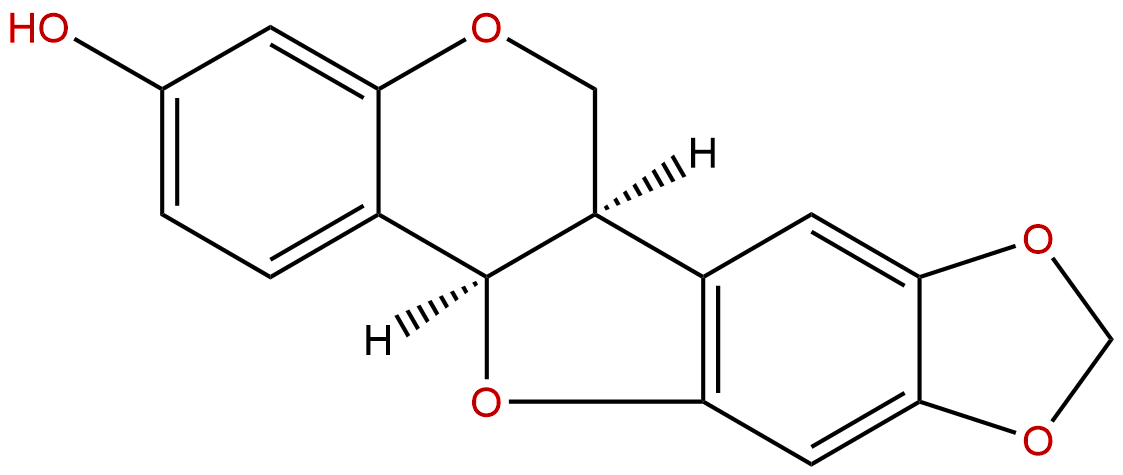


Synonym name: (-)-Maackiain
Catalogue No.: BP0907
Cas No.: 2035-15-6
Formula: C16H12O5
Mol Weight: 284.267
Botanical Source: Sophora japonica and Dalbergia spruceana
Purity: 95%~99%
Analysis Method: HPLC-DAD or/and HPLC-ELSD
Identification Method: Mass, NMR
Packing: Brown vial or HDPE plastic bottle
Can be supplied from milligrams to grams.
For Reference Standard and R&D, Not for Human Use Directly.
Inquire for bulk scale.
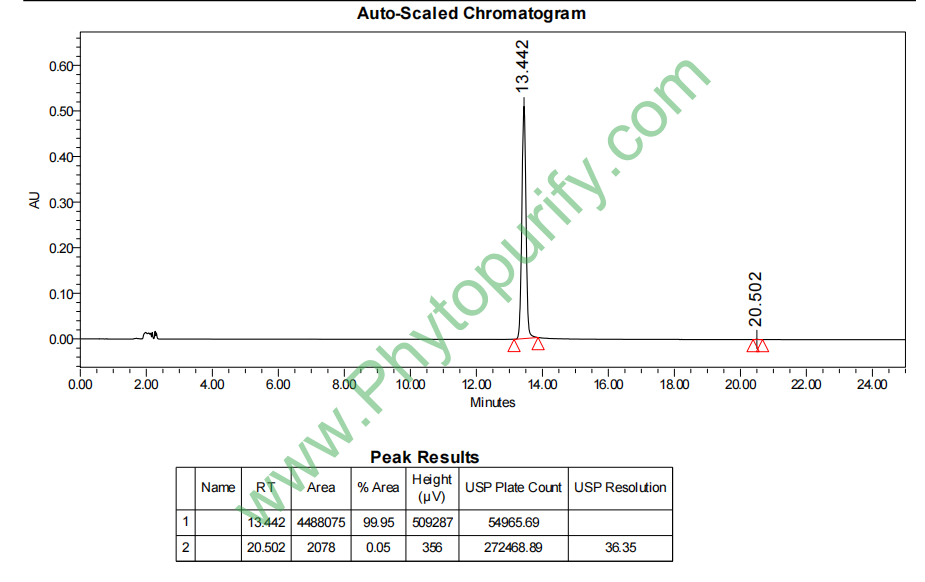
HPLC of Maackiain
Storage conditions:Short-term storage at 2~8℃, long-term storage at -20 ~ -80℃
57.1500
2.4502
2.4473
.0544
5.3520
6.9171
High
83.1871
3.3633
No
No
No
No
Yes
No
0.6
Yes
Yes
Yes
Yes
Natural products, as an important source of drug discovery, play an irreplaceable role in the long history of human fight against diseases. Pterocarpans are a class of isoflavone secondary metabolites with a unique four ring structure, widely present in leguminous plants, and have attracted attention for their significant antibacterial activity and diverse pharmacological effects. Maackiain, also known as (-) - Maackiain, is a typical anti toxin of the rosewood plant, originally derived from Sophora flavescens(Sophora flavescens)Separate and identify from leguminous plants. As a defensive secondary metabolite produced by plants under stress, sophocarpine not only endows host plants with the ability to resist fungal infections, but also exhibits multi-target biological activity in mammalian systems, including anti-inflammatory, immune regulatory, and antiplatelet aggregation effects. In recent years, with the deepening of research on the pharmacological mechanisms of natural products, berberine has gradually become a research hotspot in the field of natural product pharmacology due to its unique molecular structure and pleiotropic pharmacological activity. This article will provide a systematic review of the research progress of Sophora flavescens from the aspects of chemical structure, plant origin, pharmacological activity, mechanism of action, pharmacological evaluation, and clinical application prospects, in order to provide reference for the in-depth development and clinical translation of this natural product.
The chemical name of Gaolihuaisu is (-) -6a, 11a-dihydro-6H - [1] benzofurano [3,2-c] chromene-3,9-diol, with a molecular formula of C ₁₆ H ₁₂ O ₅ and a molecular weight of 284.2670. Its structure belongs to the class of rosewood compounds, with a four ring rosewood nucleus as the core skeleton, formed by the fusion of a benzofuran ring and a selene ring. The molecule of Sophora flavescens contains two phenolic hydroxyl groups (located at positions 3 and 9 respectively), which endow it with certain polarity and antioxidant activity. Its absolute configuration is (-) -6AR, 11aR, and this chiral feature has a significant impact on its biological activity.
In terms of physicochemical properties, the lipid water partition coefficient (LogP) of Sophora flavescens is 2.4502, indicating its moderate lipophilicity, which is conducive to transmembrane transport and interaction with biological targets. The topological polar surface area (TPSA) is 57.15 Å ², which meets the conventional requirements for oral medications (typically TPSA<140 Å ²). Low water solubility (0.0544 mg/mL) suggests that it may be limited by solubility and dissolution rate in vivo. It is worth noting that berberine has a high blood-brain barrier penetration ability, which provides the possibility for its application in central nervous system diseases. In addition, hERG inhibition prediction is negative, indicating a low risk of cardiac toxicity; The Ames test result is 0.6, indicating that its potential genetic toxicity risk needs further evaluation. These physicochemical parameters provide important reference for the drug development of berberine.
Gaoli Huaisu is mainly distributed in Fabaceae plants, especially in the genus Sophora(Sophora)Yellow sandalwood genus(Dalbergia)And the rosewood genus(Pterocarpus)Wait. Among them, Sophora flavescens(Sophora flavescens)It is the most extensively studied plant source of sophocarpine. As a traditional Chinese medicine, Sophora flavescens has the effects of clearing heat and dampness, killing insects and diuresis. Its roots and stems contain abundant flavonoids and alkaloids, among which Sophora flavescens is one of the important active ingredients. In addition, mountain bean roots(Sophora tonkinensis)Vietnamese locust tree(Sophora subprostrata)And the presence of sophocarpine has also been detected in the heartwood of some plants in the Pterocarpus genus.
The extraction method of Sophora flavescens mainly relies on organic solvent extraction and modern chromatographic separation techniques. The traditional extraction methods include ethanol or methanol reflux extraction, followed by liquid-liquid extraction (such as ethyl acetate extraction) to enrich flavonoid components. In recent years, green extraction techniques such as ultrasound assisted extraction and microwave-assisted extraction have been applied to the extraction of sophocarpine, improving extraction efficiency and yield. In terms of separation and purification, silica gel column chromatography, Sephadex LH-20 gel chromatography and preparative high-performance liquid chromatography (prep HPLC) are commonly used means. Due to its chiral center, chiral chromatography columns (such as the Chiralpak series) can be used to separate its optical isomers. It is worth noting that the content of sophocarpine in plants is usually low and is greatly influenced by growth environment, harvest season, and variety differences. Therefore, increasing the production of sophocarpine in plants through methods such as tissue culture, inducible processing (such as fungal elicitors, ultraviolet irradiation), or utilizing genetic engineering techniques in biosynthetic pathways to achieve heterologous synthesis, have become potential strategies to solve its source problem.
Gaolihuaisu was initially identified as a plant antitoxin, which plays a critical role in plant defense responses. Research has shown that berberine has significant inhibitory effects on various plant pathogenic fungi, including legume specific parasitic bacteria (such as...)Fusarium solani f. sp. phaseoli)And non leguminous plant pathogens. Its antifungal mechanism involves disrupting the integrity of fungal cell membranes, inhibiting hyphal growth, and spore germination. This activity makes Sophora flavescens have potential application value in the field of agricultural biological control.
The anti-inflammatory activity of Sophora flavescens is one of its most concerned pharmacological effects. Research has found that berberine can significantly inhibit lipopolysaccharide (LPS) - induced macrophage inflammatory response and reduce the production of pro-inflammatory cytokines such as TNF - α, IL-6, IL-1 β. It is worth noting that berberine has a dual regulatory effect on NLRP3 inflammasome: on the one hand, it can enhance the activation of NLRP3 inflammasome, promote the maturation and secretion of IL-1 β, and thus exert immune stimulatory effects; On the other hand, it reduces the transcriptional expression of inflammatory mediators by inhibiting the activation of the NF - κ B pathway. This seemingly contradictory effect may be related to its concentration dependence, cell type specificity, and microenvironment differences. In in vivo experiments, oral administration of Gao Li Huai Su can alleviate the inflammatory response in a mouse colitis model, reduce disease activity index and colon tissue damage.
The role of berberine in cardiovascular protection is particularly prominent, especially its antiplatelet aggregation activity. Platelet aggregation is the core process of thrombosis, and excessive activation can lead to thrombotic diseases such as myocardial infarction and stroke. Research has shown that berberine can concentration dependently inhibit platelet aggregation induced by various inducers such as ADP, collagen, and arachidonic acid. Its antiplatelet mechanism involves the synergistic action of multiple targets: by inhibiting the activity of cyclooxygenase-1 (PTGS1/COX-1) and cyclooxygenase-2 (PTGS2/COX-2), it reduces the production of thromboxane A ₂ (TXA ₂); Meanwhile, berberine can also interact with integrin α IIb β 3 (ITGA2B/ITGB3) on the surface of platelets, inhibiting the binding of fibrinogen to platelets and thus blocking the final pathway of platelet aggregation. In addition, the antagonistic effects of berberine on P2Y12 receptor (P2RY12) and thromboxane A ₂ receptor (TBXA2R), as well as the inhibition of phosphodiesterase 3A (PDE3A) activity and elevation of platelet cAMP levels, all contribute to its antiplatelet effect. This multi-target mode of action gives Gaolihuaisu a unique advantage in antiplatelet therapy, which may reduce the common bleeding risk of single target drugs.
In addition to the aforementioned activities, berberine also exhibits potential pharmacological effects such as antioxidant, neuroprotective, and anti-tumor effects. Its phenolic hydroxyl structure endows it with the ability to scavenge free radicals, which may play a protective role in oxidative stress-related diseases. In the nervous system, berberine can penetrate the blood-brain barrier, inhibit the activation of microglia, alleviate neuroinflammation, and has potential therapeutic value for neurodegenerative diseases such as Alzheimer's disease and Parkinson's disease. In terms of anti-tumor activity, berberine can induce cell cycle arrest and apoptosis, inhibit the proliferation of various cancer cells, but its mechanism of action still needs further clarification.
The pharmacological effects of berberine involve a complex network of multiple molecular targets and signaling pathways. The following provides an analysis of its mechanism of action from the perspective of its main targets.
The regulation of inflammatory response by berberine is mainly achieved through two key pathways. In terms of NLRP3 inflammasome, berberine can promote the assembly of NLRP3, ASC, and caspase-1, enhance the activation of caspase-1, and thus promote the maturation and secretion of IL-1 β and IL-18. This immunostimulatory effect may help enhance the host's defense against pathogens. However, excessive activation of NLRP3 inflammasomes may lead to inflammatory diseases, so the regulation of NLRP3 by berberine may be bidirectional, depending on the specific pathophysiological environment. On the other hand, berberine inhibits the phosphorylation of I κ B kinase (IKK) and prevents the degradation of I κ B α, thereby suppressing the nuclear translocation and transcriptional activity of NF - κ B. Inhibition of the NF - κ B pathway leads to downregulation of downstream pro-inflammatory genes (such as TNF - α, IL-6, iNOS, COX-2), exerting anti-inflammatory effects. This dual regulation of NLRP3 and NF - κ B results in a finely balanced ability of resveratrol in immune regulation.
The antiplatelet aggregation activity of Sophora flavescens is one of its most promising pharmacological effects, involving the following key targets:
Cyclooxygenases (PTGS1/COX-1 and PTGS2/COX-2)COX-1 is a key enzyme involved in the production of TXA ₂ in platelets, and COX-2 is upregulated under inflammatory conditions. Gaolihuaisu competitively inhibits the activity of COX-1 and COX-2, reduces the conversion of arachidonic acid to prostaglandin H ₂ (PGH ₂), and thus lowers the synthesis of TXA ₂. TXA ₂ is a potent inducer of platelet aggregation and vasoconstrictor, and its reduction can effectively inhibit platelet activation and aggregation.
Integrin α IIb β 3 (ITGA2B/ITGB3)Integrin α IIb β 3 is the ultimate common pathway for platelet aggregation, and its binding to fibrinogen is a key step in platelet cross-linking. Gaolihuaisu may block fibrinogen mediated platelet aggregation by directly binding to the ligand binding site of integrin α IIb β 3 or by modulating its activation conformation through conformational changes.
P2Y12 receptor (P2RY12)P2Y12 is a key receptor for ADP induced platelet aggregation and a target for clinical antiplatelet drugs such as clopidogrel. Gaolihuaisu may act as an antagonist of P2Y12 receptor, blocking ADP mediated Gi protein signaling, inhibiting the decrease of cAMP levels and granule release in platelets.
Thromboxane A ₂ receptor (TBXA2R)TBXA2R is a G protein coupled receptor for TXA ₂, and its activation leads to changes in platelet morphology and aggregation. The antagonistic effect of berberine on TBXA2R can further weaken the platelet activation effect of TXA ₂.
Phosphodiesterase 3A (PDE3A)PDE3A is the main cAMP hydrolase in platelets. Gaolihuaisu inhibits PDE3A activity, increases cAMP levels in platelets, activates protein kinase A (PKA), and subsequently phosphorylates various substrate proteins (such as VASP), inhibiting platelet activation.
GP1BA(GPIbα)GPIB-IX-V complex is the main von Willebrand factor (vWF) receptor on the surface of platelets, involved in platelet adhesion at the site of vascular injury. The regulation of GP1BA by berberine may affect the initial contact between platelets and vascular walls.
The synergistic effect of these targets enables Gao Li Huai Su to inhibit platelet activation, adhesion, and aggregation from multiple stages, exhibiting the characteristics of multi-target antiplatelet drugs. Compared with single target drugs such as aspirin inhibiting COX-1 and clopidogrel antagonizing P2Y12, the multi-target effect of berberine may provide a more comprehensive antithrombotic effect while reducing the risk of bleeding caused by complete blockage of a single pathway.
Based on Lipinski's Five Rules and Veber's Rules, the pharmacological parameters of berberine are as follows: molecular weight 284.27 (<500), LogP 2.45 (<5), number of hydrogen bond donors (phenolic hydroxyl groups) 2 (<5), number of hydrogen bond acceptors 5 (<10), and TPSA 57.15 Å ² (<140 Å ²). These parameters indicate that berberine meets the basic requirements of oral medication and has good drug like properties. However, its low water solubility (0.0544 mg/mL) may limit its oral bioavailability and needs to be improved through formulation techniques such as solid dispersions, nanoparticles, cyclodextrin inclusion complexes, etc.
In terms of safety, hERG inhibition prediction is negative, indicating a lower risk of cardiac QT interval prolongation caused by berberine. The Ames test result is 0.6, which is near the critical value, indicating that its potential genetic toxicity risk needs to be further validated through in vitro and in vivo experiments. In addition, the inhibitory effect of berberine on CYP450 enzymes, the potential for drug drug interactions, and long-term toxicity data are still insufficient, which are key issues that need to be focused on in future development.
At present, there is relatively limited systematic research on the pharmacokinetics of berberine, but some data have revealed its in vivo behavior. After oral administration, berberine can be absorbed by the gastrointestinal tract, but its absolute bioavailability may not be high due to its poor water solubility. Its high blood-brain barrier penetration ability suggests that the compound may reach effective concentrations in the central nervous system, which is of great significance for the treatment of neurodegenerative diseases and stroke. In terms of metabolism, berberine may undergo phase II metabolism (such as glucuronidation and sulfation), generating more water-soluble metabolites that are excreted through bile and urine. The key parameters such as half-life, distribution volume, and protein binding rate still need to be clarified through systematic pharmacokinetic studies.
It is worth noting that the multi-target action characteristics of Gao Li Huai Su mean that its pharmacological effects in vivo are the comprehensive result of multiple targets being simultaneously regulated. Therefore, the traditional "single target single effect" pharmacokinetic pharmacodynamic (PK-PD) model may not be sufficient to describe its functional characteristics, and an integrated model based on network pharmacology and systems biology is needed.
Based on its multi-target antiplatelet aggregation activity, berberine has broad application prospects in the prevention and treatment of thrombotic diseases. Compared with existing antiplatelet drugs such as aspirin and clopidogrel, the multi-target effect of berberine may provide a more balanced antithrombotic effect while reducing the risk of bleeding. Especially for patients who require long-term antiplatelet therapy (such as secondary prevention of coronary heart disease and stroke), berberine may become a safer alternative or adjuvant drug. In addition, its oral activity makes it suitable for chronic disease management. However, the transformation from natural products to clinical drugs still faces many challenges, including pharmacological optimization, formulation development, safety evaluation, and so on.
The dual regulation of NLRP3 inflammasome and NF - κ B pathway by Gaolihuaisu has potential therapeutic value in inflammatory diseases such as inflammatory bowel disease, rheumatoid arthritis, and sepsis. Its immunostimulatory effect may play a beneficial role in some infectious diseases or immunosuppression, while its anti-inflammatory effect helps to control excessive inflammatory reaction. The ability to balance immune regulation is an important characteristic that distinguishes resveratrol from traditional anti-inflammatory drugs.
Gaolihuaisu can penetrate the blood-brain barrier and has anti-inflammatory and antioxidant activities, making it a potential candidate drug for neurodegenerative diseases such as Alzheimer's disease and Parkinson's disease. By inhibiting neuroinflammation mediated by microglia and reducing oxidative stress damage, berberine may delay the progression of neurodegenerative diseases. In addition, its antiplatelet aggregation activity may have dual benefits for the prevention and treatment of stroke.
Despite exhibiting various pharmacological activities and good drug properties, the clinical translation of Sophora flavescens still faces the following challenges:
Source issue Natural plants have low content of sophocarpine and high extraction cost. Constructing microbial cell factories (such as yeast and Escherichia coli) through synthetic biology methods to achieve heterologous biosynthesis of sophocarpine is a feasible approach to solving the source problem.
Pharmacokinetic optimization Poor water solubility and potential low bioavailability need to be improved through prodrug design, nanoformulation, or structural modification. For example, introducing phosphate groups or amino acid residues can improve water solubility and release the active ingredient through enzymatic interpretation in vivo.
safety evaluation A systematic study is needed to investigate the acute toxicity, chronic toxicity, genetic toxicity, reproductive toxicity, and drug drug interactions of berberine, in order to provide a safety basis for its clinical application.
Target selectivity and off target effects Multi targeted effects are both advantages and challenges, which may lead to unpredictable off target effects. By using structural biology and computational chemistry methods, analyzing the binding mode of berberine with key targets can help design more selective derivatives.
Clinical trial validation At present, the pharmacological activity of Sophora flavescens is mainly based on in vitro and animal experiments, and there is a lack of high-quality clinical trial data. In the future, it is necessary to design a reasonable clinical trial plan to verify its effectiveness and safety in specific diseases such as thrombotic diseases and inflammatory bowel diseases.
Gaolihuaisu, as a typical anti toxin of rosewood plants, has gradually evolved from a fungal toxic substance to a natural product lead compound with multi-target pharmacological activity. Its unique chemical structure endows it with moderate lipophilicity and good blood-brain barrier penetration ability, while its multi-target mechanism of action, especially the regulation of NLRP3 inflammasome, NF - κ B pathway, and platelet aggregation related targets, demonstrates unique advantages in anti-inflammatory, immune regulation, and anti thrombotic therapy. However, the road from natural products to clinical drugs is still long and requires collaborative efforts from multiple disciplines such as chemistry, biology, pharmacology, and pharmacy. With the development of synthetic biology, medicinal chemistry, and systems pharmacology, berberine and its derivatives are expected to become new candidate drugs for the treatment of thrombotic diseases, inflammatory diseases, and neurodegenerative diseases, contributing to human health.
