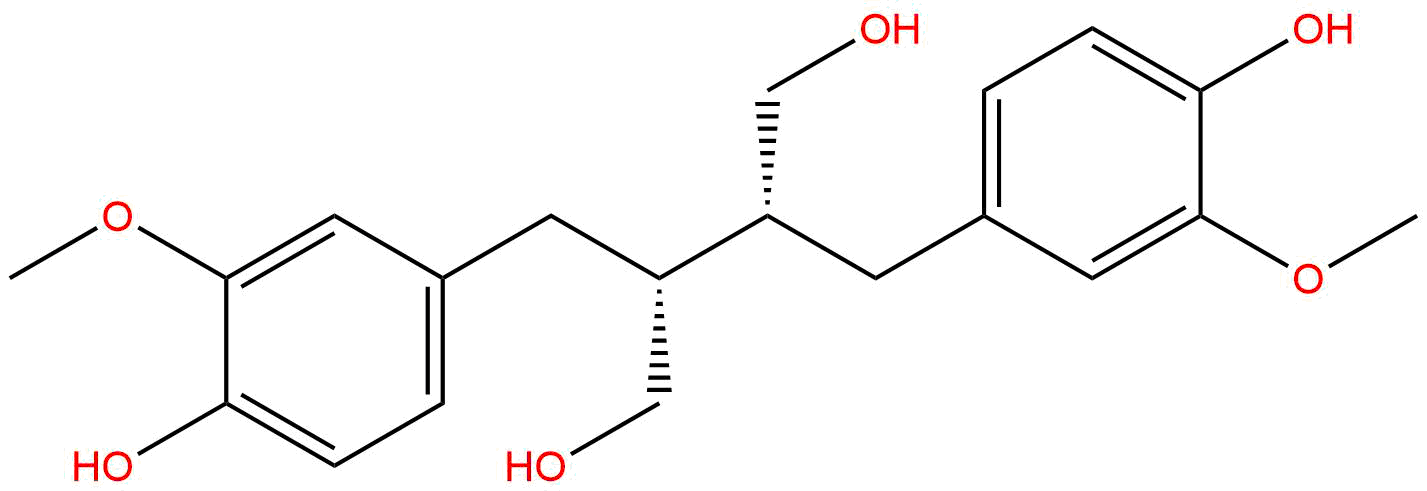


Synonym name:
Catalogue No.: BP1280
Cas No.: 29388-59-8
Formula: C20H26O6
Mol Weight: 362.422
Botanical Source: Heartwood Podocarpus spicata and Larix spp. Present in Taxus baccata, Araucaria angustifolia, and in Norway spruce (Picea abies) attacked by Fomes annosus. Also Simaba cuneata as an unseparated mixt. of 9 and 9'-esters with long-c
Purity: 95%~99%
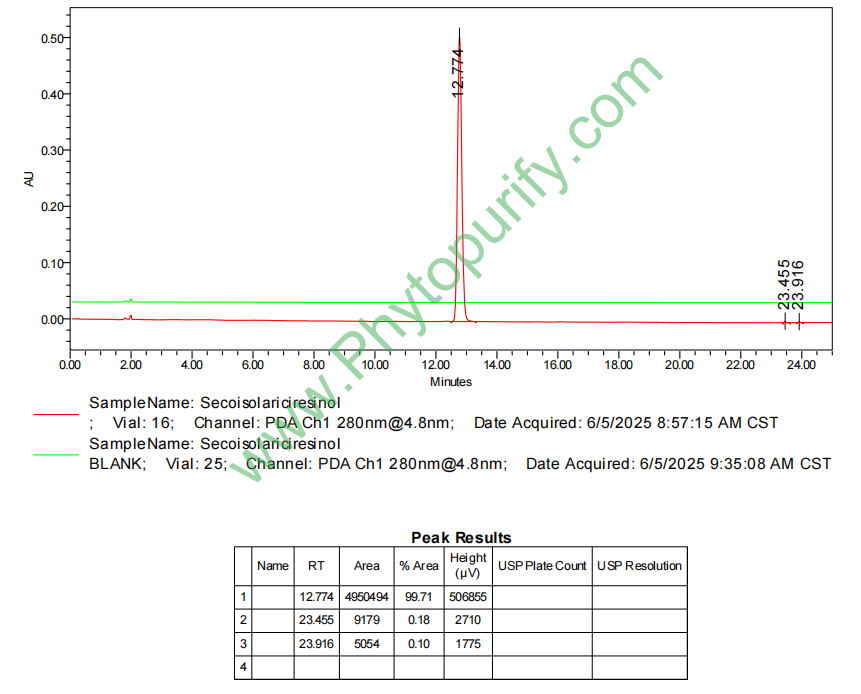
Analysis Method: HPLC-DAD or/and HPLC-ELSD
Identification Method: Mass, NMR
Packing: Brown vial or HDPE plastic bottle
Can be supplied from milligrams to grams.
For Reference Standard and R&D, Not for Human Use Directly.
Inquire for bulk scale.
HPLC of Secoisolariciresinol
Storage conditions:Short-term storage at 2~8℃, long-term storage at -20 ~ -80℃
99.3800
2.1229
2.1210
.3141
4.7248
4.1926
Low
87.4523
3.1122
No
No
No
No
No
No
0.0
Yes
No
No
No
Natural products, as an important treasure trove for drug discovery, play an irreplaceable role in the history of human disease prevention and treatment. Among them, lignans have attracted much attention due to their wide range of biological activities. Secoselariciresinol (SECO, CAS number: 29388-59-8) is an important plant-based lignan and a direct precursor to the major intestinal lignans, enterodiol (ED) and enterolactone (EL), in mammals. SECO itself and its gut microbiota metabolites are considered to have potential benefits in reducing the risk of cancer (especially hormone related cancers) and cardiovascular disease. One of its core biological activity foundations lies in its strong antioxidant damage resistance, which maintains cellular redox homeostasis by regulating a series of key antioxidant defense related targets such as NRF2, SOD, CAT, etc. The purpose of this article is to systematically review the chemical properties, sources, pharmacological activities, molecular mechanisms of action, pharmacological properties, and clinical application prospects of open-loop isoquercetin, in order to provide comprehensive scientific references for the in-depth research and development of this natural product.
Open ring isoquercetin, chemical name 2,3-bis [(4-hydroxy-3-methoxyphenyl) methyl] butane-1,4-diol, molecular formula C20H26O6, molecular weight 362.4220. Its structural feature is that two para hydroxy-methoxyphenylpropane units are connected by a C8-C8 'bond, and the side chain is a diol structure, which distinguishes it from other closed-loop lignans. This open-loop structure results in a relatively high polarity, with a theoretical topological polar surface area (TPSA) of 99.3800 Å ². Its calculated lipid water partition coefficient (LogP) is approximately 2.1229, indicating a certain degree of lipophilicity but not highly hydrophobic. The water solubility measured in the experiment is about 0.3141 mg/mL, which belongs to the category of slightly soluble to poorly soluble, which to some extent limits its direct bioavailability. SECO typically exists naturally in the form of (-) - enantiomers, and its stereoconfiguration affects its metabolic transformation and biological activity. In the preliminary evaluation of drug properties, SECO showed lower potential for crossing the blood-brain barrier, which is consistent with its higher TPSA and molecular polarity. Importantly, the preliminary toxicity prediction showed no significant risk of hERG potassium channel inhibition (hERG inhibition: No), and the Ames test predicted a value of 0.0, suggesting that it may not have direct genetic toxicity and providing preliminary positive signals for its safety.
Open ring isoquercetin is widely present in various plants and is an intermediate in the biosynthesis pathway of lignin in plant cell walls. Its most abundant and well-known source is flaxseed (Linum usitatissimum L.), especially the outer shell of flaxseed. In flaxseed, SECO does not exist in a free form, but is stored in a special oligomer complex in the form of diglucoside (SDG), which stabilizes its presence in plant tissues. In addition to flaxseed, sesame seeds, whole grains (such as rye, barley, oats), certain berries (such as cranberries, strawberries), cruciferous vegetables, and legumes also contain varying amounts of SECO or its glycosidic form.
Extracting SECO/SDG from plant materials typically involves solvent extraction, hydrolysis, and purification steps. Common extraction solvents include methanol, ethanol, or their aqueous solutions, sometimes combined with ultrasound or microwave-assisted extraction to improve efficiency. Due to the binding nature of naturally occurring SDGs, acid hydrolysis or enzymatic hydrolysis (such as β - glucosidase treatment) is usually required after extraction to release free SECO. Subsequently, it can be preliminarily purified by column chromatography (such as silica gel column, macroporous adsorption resin column, dextran gel column), and further refining may be performed by preparative high performance liquid chromatography (HPLC). In recent years, green technologies such as supercritical fluid extraction have also been explored for the extraction of SDGs. The optimization of extraction process aims to improve the yield and purity of SECO while maintaining its biological activity.
The pharmacological activity research of open-loop isoquercetin and its metabolites mainly focuses on antioxidant, anti-tumor, and cardiovascular protection.
1. Antioxidant damage activity: This is one of the core activities of SECO. Numerous in vitro studies have shown that SECO and its aglycone SDGs can effectively scavenge various free radicals, such as DPPH free radicals, ABTS ⁺ free radicals, superoxide anions, and hydroxyl radicals. In cell models, SECO can significantly alleviate oxidative stress induced by hydrogen peroxide (H ₂ O ₂), lipopolysaccharides (LPS), or chemical toxins, manifested by reducing intracellular reactive oxygen species (ROS) levels, inhibiting the production of lipid peroxidation products (such as MDA), and protecting cell membranes and DNA from oxidative damage. Its antioxidant efficacy is closely related to the phenolic hydroxyl structure on its benzene ring, which are effective hydrogen donors.
2. Antitumor activity: Epidemiological studies and experimental models support the chemopreventive effect of SECO (through its metabolite ED/EL), especially for breast cancer, prostate cancer and colon cancer. In vitro, SECO/SDG can inhibit the proliferation of various cancer cell lines, induce cell cycle arrest (such as G1 phase or G2/M phase), and induce cell apoptosis. In animal models, dietary supplementation with SDGs can significantly inhibit the formation and growth of chemically induced breast tumors and colonic aberrant crypt foci (ACF). Its anti-tumor mechanism involves multiple aspects, including antioxidant, anti proliferative, induction of apoptosis, inhibition of angiogenesis, and regulation of estrogen metabolism (manifested as selective estrogen receptor modulator SERM like activity).
3. Cardiovascular protective activity: SECO/SDGs have shown potential in the prevention of cardiovascular diseases. Animal experiments have shown that it can reduce serum total cholesterol, low-density lipoprotein cholesterol (LDL-C), and triglyceride levels in animals with hypercholesterolemia models, while increasing high-density lipoprotein cholesterol (HDL-C). In addition, it can improve the formation of atherosclerotic plaque and reduce aortic lipid deposition. Its cardiovascular benefits are not only derived from its lipid-lowering effect, but also related to its anti-inflammatory, antioxidant (preventing LDL oxidation), and possible antiplatelet aggregation effects.
4. Other activities: The study also suggests that SECO has potential activities such as anti-inflammatory, anti diabetes (improving insulin resistance), liver protection and neuroprotection, which are mostly intertwined with its ability to regulate oxidative stress and inflammatory pathways.
The biological effects of open-loop isoquercetin, especially its core role in antioxidant damage, are achieved by regulating a series of key molecular targets and signaling pathways.
1. Core regulation of NRF2/ARE pathway: NRF2 (encoded by NFE2L2 gene) is the main regulatory factor of cellular antioxidant stress response. At rest, NRF2 binds to Keap1 and is degraded by ubiquitination. When stimulated by electrophilic compounds such as SECO or oxidative stress, the conformation of Keap1 changes, leading to the dissociation, stabilization, and translocation of NRF2 to the nucleus. In the nucleus, NRF2 binds to antioxidant response elements (ARE), initiating the transcription of a series of downstream phase II detoxifying enzymes and antioxidant proteins. SECO has been shown to activate the NRF2 signaling pathway, resulting in significant upregulation:
* Heme oxygenase-1 (HMOX1): Catalyze the degradation of hemoglobin to produce biliverdin and carbon monoxide, which have antioxidant and anti-inflammatory effects.
* Superoxide dismutase (SOD1, SOD2): Catalytic dismutation of superoxide anions into H ₂ O ₂ and O ₂ is the first line of defense against superoxide radicals.
* Catalase (CAT): Decompose H ₂ O ₂ into water and oxygen to prevent the accumulation of toxic hydroxyl radicals.
* Glutathione peroxidase 1 (GPX1): Reduce H ₂ O ₂ and organic peroxides to harmless alcohols and water using reduced glutathione (GSH).
*Other enzymes include quinone oxidoreductase (NQO1), glutamic acid cysteine ligase catalytic subunit (GCLC), etc.
2. Direct radical scavenging and metal chelation: The phenolic hydroxyl groups on SECO molecules can directly serve as electron donors, neutralize free radicals, and terminate free radical chain reactions. In addition, it can chelate transition metal ions such as iron and copper, preventing them from catalyzing the production of highly active hydroxyl radicals through the Fenton reaction.
3. Regulating inflammation and apoptosis pathways: The antioxidant and anti-inflammatory effects of SECO are closely linked. By inhibiting the activation of pro-inflammatory transcription factors such as NF - κ B, the production of inflammatory factors such as tumor necrosis factor - α (TNF - α) and interleukin-6 (IL-6) is reduced. In terms of apoptosis, SECO can regulate the Bcl-2/Bax protein ratio, activate the caspase cascade reaction, or affect cell fate by modulating signaling pathways such as MAPK and PI3K/Akt.
4. Metabolic transformation of gut microbiota: The oral bioavailability of SECO itself is limited, and many of its systemic effects depend on the metabolism of gut microbiota. Intestinal anaerobic bacteria (such as Clostridium, Bacteroides, etc.) can remove the glycosylation of SECO (if SDG) and perform dehydroxylation and demethylation, ultimately converting it into enterodiol (ED) and intestinal lactone (EL). These intestinal lignans have higher lipophilicity and biological activity, and can be effectively absorbed into the bloodstream, distributed to various tissues throughout the body, exerting estrogen regulation and antioxidant effects. Therefore, the composition and activity of individual gut microbiota are key factors determining the ultimate health effects of SECO.
Based on its physical and chemical properties and existing research, a preliminary evaluation of the pharmacological properties of open-loop isoquercetin is conducted
1. Absorption, distribution, metabolism, and excretion (ADME):
* Absorption: Free SECO has poor oral absorption, mainly limited by its water solubility and possible first pass intestinal effects. But its precursor SDG is hydrolyzed by the gut microbiota into SECO, which is further converted into ED/EL, and the latter two are well absorbed. Therefore, SECO/SDG belongs to the category of "prodrugs", and its bioavailability depends on the metabolic capacity of the gut microbiota.
* Distribution: After absorption, intestinal lignans (ED/EL) bind to plasma proteins (mainly albumin) and are widely distributed throughout the body. Due to its moderate LogP value and high TPSA, it is predicted that its ability to penetrate the blood-brain barrier is low, which is consistent with observations of limited exposure to the central nervous system.
* Metabolism: The liver is the main site of intestinal lignan phase II metabolism, where extensive glucuronidation and sulfation binding reactions occur, resulting in increased water solubility and easy excretion of the binding compounds.
* Excretion: Mainly excreted through the kidneys with urine, some enter the intestine through bile, and there is enterohepatic circulation.
2. Challenges and optimization of drug formulation:
* Water solubility and bioavailability: The low water solubility and low permeability of free SECO are its main pharmaceutical bottlenecks. The strategy includes: developing prodrugs with better water solubility, such as phosphate esters and amino acid esters; Preparation of nano formulations (such as nanocrystals, liposomes, polymer micelles) to enhance solubility and intestinal absorption; Or directly use standardized plant extracts rich in SDGs as dietary supplements.
* Metabolic instability: Although gut microbiota metabolism is necessary for its activation, rapid liver binding metabolism may lead to a decrease in circulating concentration of active forms. The design of dosage forms (such as sustained-release formulations) or their combination with drugs that affect metabolic enzymes should be carefully evaluated.
* Security: Current predictions and extensive consumption history of flaxseed indicate that SECO/SDG is relatively safe. However, at high doses, its weak estrogen like activity needs to be monitored in specific populations, such as estrogen sensitive tumor patients. Long term toxicology research still needs to be improved.
As a natural active substance with multiple targets and functions, open-loop isoquercetin has broad clinical application prospects, but also faces challenges.
1. Application prospects:
* Functional foods and dietary supplements: This is currently the most direct form of application. Flaxseed powder and extract rich in SDGs have been widely used as functional ingredients for preventing chronic diseases such as cardiovascular disease and cancer. The standardized and high content SDG supplement market is growing.
* Cancer chemoprevention adjuvant: For high-risk groups of breast cancer and prostate cancer, SECO/SDG can be used as a part of nutrition intervention strategies, and its dual effects of antioxidant and hormone regulation have unique advantages.
* Cardiovascular disease prevention: As a natural lipid lowering and anti atherosclerosis supplement, it is especially suitable for mild dyslipidemia or as an auxiliary of statins.
* Developed as a plant-based drug: By improving its drug properties through structural modifications or advanced delivery systems, it is expected to develop new drugs for specific indications such as metabolic syndrome, non-alcoholic fatty liver disease, and chronic inflammatory diseases.
2. Future research directions and challenges:
* Individualized response research: Deeply explore the individual differences in gut microbiota on SECO metabolism and develop personalized nutritional recommendations based on microbiota characteristics.
* Elaborate on the precise mechanism of action: Using omics techniques (transcriptome, proteome, metabolome) to comprehensively analyze the network pharmacology mechanisms of SECO and its metabolites under specific pathological conditions.
* Obtaining high-level clinical evidence: At present, most of the evidence comes from epidemiology, in vitro and animal experiments. Rigorous, large-scale, long-term prospective randomized controlled clinical trials need to be designed to confirm their effectiveness and safety in specific disease prevention and treatment.
* Application of new formulation technology: Actively exploring nanotechnology, bioavailability enhancement technology, etc., overcoming their physical and chemical defects, and developing more efficient delivery systems.
* Structural optimization and derivative development: Based on the SECO parent nucleus structure, reasonable chemical modifications are carried out to obtain novel lead compounds with stronger activity, higher selectivity, and better pharmacokinetic properties.
As an important representative of plant lignans, open-loop isoquercetin occupies an important position in the field of natural product pharmacology due to its unique chemical structure, wide range of plant sources, and diverse biological activities. Its core antioxidant damage ability activates key pathways such as NRF2/ARE, upregulates endogenous defense systems such as SOD, CAT, GPX, HMOX1, etc., forming the molecular basis for its prevention of various chronic diseases such as cancer and cardiovascular disease. Although it faces challenges such as low water solubility and dependence on gut microbiota metabolism for direct drug formation, this does not prevent it from playing an important role as a functional food ingredient and dietary supplement in disease prevention. In the future, through interdisciplinary collaboration, the "microbiota host" interaction mechanism will be deeply revealed, and modern formulation technology and medicinal chemistry methods will be used for optimization, supplemented by high-quality clinical research verification. Open ring isoproterenol and its derivatives are expected to move from a promising natural compound to more targeted and effective health products and even drugs, providing new strategies and choices for the prevention and management of chronic diseases in humans.
