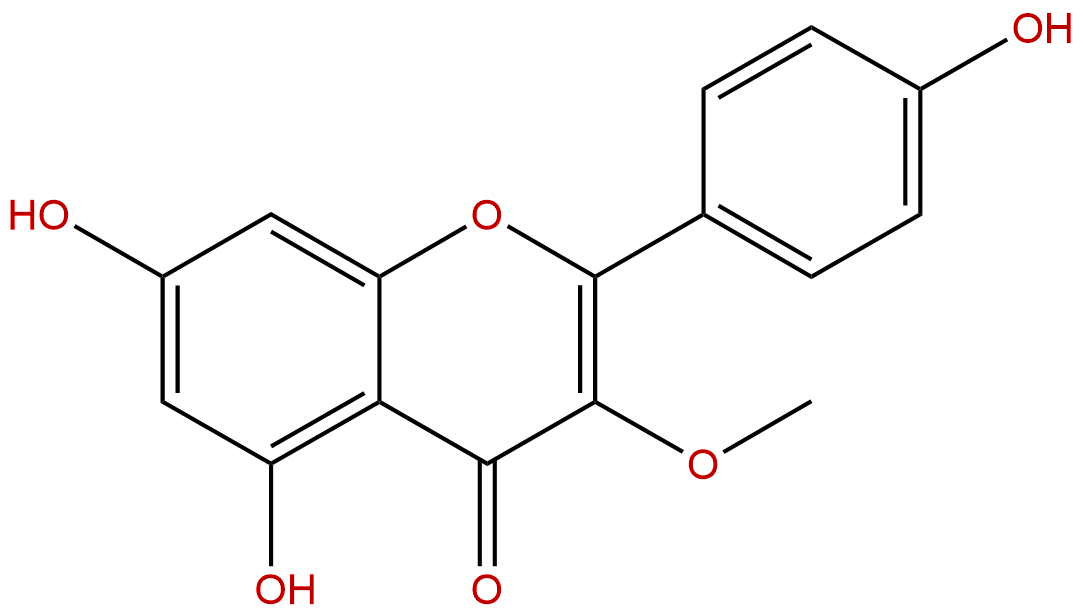


Product name: Isokaempferide
Synonym name: Kaempferol 3-methyl ether; Kaempferol 3-monomethyl ether; Kaempferol 3-O-methyl ether
Catalogue No.: SBP03382
Cas No.: 1592-70-7
Formula: C16H12O6
Mol Weight: 300.266
Botanical Source:
Physical Description: Yellow powder
Type of Compound: Flavonoids
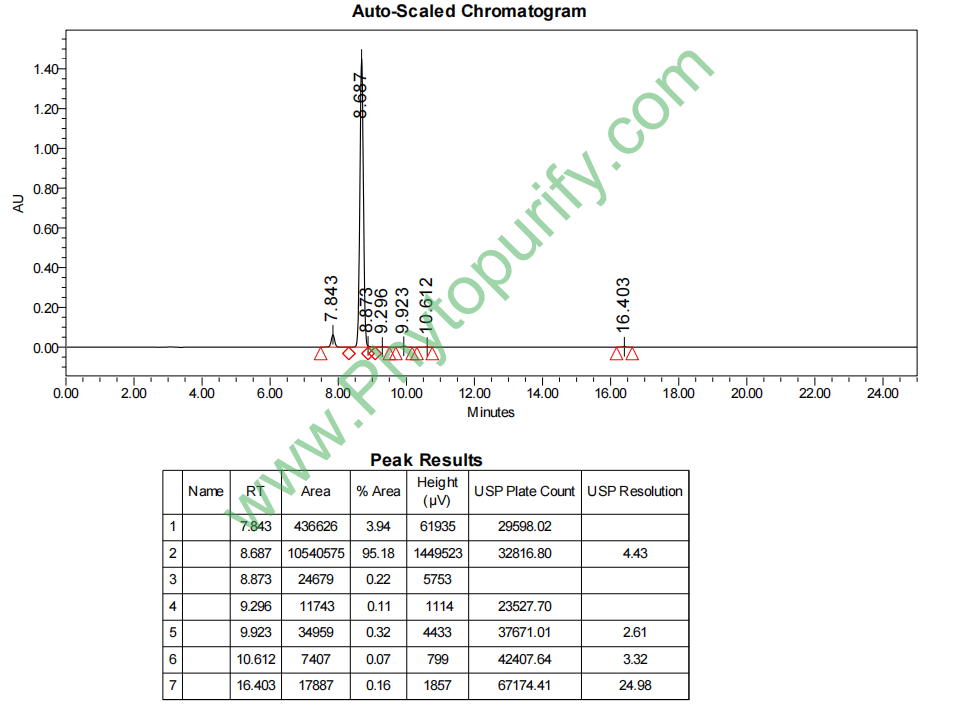
Purity: 95%~99%
Analysis Method: HPLC-DAD or/and HPLC-ELSD
Identification Method: Mass, NMR
Packing: Brown vial or HDPE plastic bottle
The product could be supplied from milligrams to grams. Inquire for bulk scale.
We provide solution to improve the water-solubility of compounds, thereby facilitating the variety of activity tests and clinic uses.
For Reference Standard and R&D, Not for Human Use Directly.
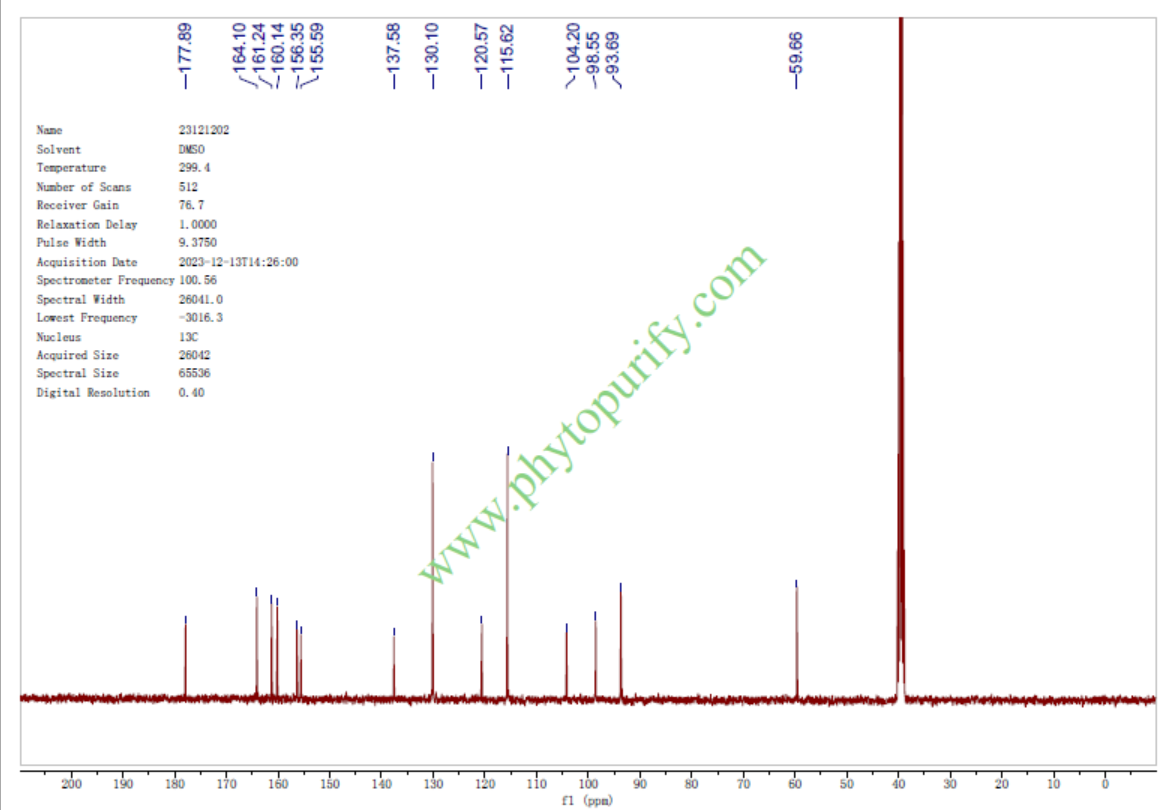
NMR of Isokaempferide
HPLC of Isokaempferide
Storage conditions:Short-term storage at 2~8℃, long-term storage at -20 ~ -80℃
100.1300
2.2439
1.9158
.1314
2.1428
24.2543
Low
89.5583
2.3273
Yes
No
Yes
No
Yes
No
0.6
Yes
No
Yes
No
Natural products have always been an important source of drug discovery and development, especially in addressing oxidative stress-related diseases. Plant derived antioxidant active ingredients have attracted much attention. Flavonoids, as one of the most widely distributed and structurally diverse secondary metabolites in nature, have become a hot topic in natural product pharmacology research due to their significant biological activities, especially antioxidant, anti-inflammatory, anti-tumor, and cardiovascular protective effects. Among numerous flavonoids, Isokaempferide, as a structurally unique flavonol derivative, is gradually demonstrating its value as a potential drug lead compound.
Isoquercetin, also known as 3,5,7-trihydroxy-4 '- methoxyflavone, is a naturally occurring O-methylated flavonol. This compound was initially isolated from the aboveground parts of the legume plant Genista ephedroids and subsequently found in various medicinal plants. From a chemical structure perspective, isokaempferol is a 4 ′ - O-methylated derivative of kaempferol, and this structural modification endows it with unique physicochemical properties and biological activity spectrum. Compared with the parent compound kaempferol, isokaempferol exhibits differences in lipid solubility, metabolic stability, and affinity for specific biological targets, giving it unique advantages in antioxidant, anti-inflammatory, and related disease interventions.
In recent years, with the in-depth understanding of the key role of oxidative stress in the occurrence and development of a variety of chronic diseases (such as neurodegenerative diseases, cardiovascular diseases, diabetes complications and cancer), it has become an important direction for drug research and development to find efficient and low toxic natural antioxidants. Due to its clear chemical structure, excellent antioxidant activity, and preliminary revealed molecular mechanism, Isokaempferol has attracted widespread attention from scholars at home and abroad. This article aims to systematically review the chemical structure, physicochemical properties, plant sources, extraction methods, pharmacological activity, mechanism of action, pharmacological evaluation, and clinical application prospects of isokaempferol, in order to provide comprehensive scientific basis for the in-depth research and development of this natural product.
Isokaempferide belongs to the flavonol subclass of flavonoids, and its basic parent nucleus is 2-phenylchromen-4-one structure. Specifically, its chemical structural characteristics are as follows: the C-5 and C-7 positions of the A ring each have a hydroxyl group (- OH), the C-3 position of the C ring has a hydroxyl group, and the C-4 'position of the B ring is replaced by a methoxy group (- OCH ∝). Therefore, its system is named 3,5,7-trihydroxy-4 '- methoxyflavone. This structure determines its molecular formula as C ₁₆ H ₁₂ O ₆, with a molecular weight of 300.2660 g/mol.
From the perspective of physical and chemical properties, isokaempferol exhibits typical characteristics of flavonol compounds. Its lipid water partition coefficient (LogP) is 2.2439, indicating that the compound has a certain degree of lipid solubility, which helps it penetrate biofilms but may also affect its solubility in aqueous environments. Its topological polar surface area (TPSA) is 100.1300 Å ², which is at a moderate level, suggesting that it may have some oral absorption potential, but may also be regulated by intestinal transporters. The water solubility parameter is 0.1314 mg/mL, indicating that isokaempferol has a low solubility in water, which to some extent limits its bioavailability and poses challenges for formulation development.
In terms of spectral characteristics, isokaempferol has characteristic absorption in the UV visible region. Typical flavonol compounds have two main absorption peaks at 240-280 nm (with II, A-ring benzoyl system) and 300-380 nm (with I, B-ring cinnamyl system). Due to the presence of the C-3 hydroxyl group, isokaempferol can form complexes with metal ions such as aluminum ions, resulting in a red shift in the absorption peak. This property is commonly used for its structural identification and quantitative analysis. In addition, characteristic absorption peaks of hydroxyl (~3400 cm ⁻¹), carbonyl (~1650 cm ⁻¹), and aromatic ring skeleton (~1600, 1500 cm ⁻¹) can be observed in its infrared spectrum. Nuclear magnetic resonance hydrogen spectroscopy (¹ H NMR) and carbon spectroscopy (¹ ³ C NMR) can provide detailed proton and carbon atom environmental information to confirm their structure, especially the chemical shifts of methoxy groups (δ H~3.8-3.9 ppm, δ C~55-56 ppm) and various phenolic hydroxyl groups.
Compared with the structurally similar compound kaempferol (4 ′ - OH), isokaempferol has reduced molecular polarity and increased lipid solubility due to methylation of 4 ′ - OH. This structural difference not only affects its physicochemical properties, such as solubility and LogP value, but also profoundly affects its interaction mode with biological targets, metabolic pathways, and overall pharmacokinetic behavior. For example, methylation typically enhances the metabolic stability of compounds, reduces first pass effects, prolongs in vivo half-life, but may also alter their binding ability to certain enzymes or receptors.
Isokaempferol was initially isolated and identified from the aboveground parts of the Fabaceae plant Genista ephedroids. However, with the deepening of plant chemistry research, it has been found that this compound is not limited to a single species, but is widely present in various plants, especially in some traditional medicinal plants where its content is relatively abundant.
In addition to Genista ephedroids, kaempferol has also been reported to exist in the following plants: Asteraceae plants such as Artemisia argyi and Gnaphalium affine; Ginger plants such as Curcuma longa; Rosaceae plants such as Rubus species; And some ferns and mosses. It is worth noting that there are significant differences in the content of kaempferol from different plant sources, which are influenced by various factors such as plant species, growth environment, harvest season, location, and extraction methods. For example, in the leaves and flowers of Artemisia annua, isokaempferol often exists in the form of glycosides or in the form of glycosides combined with sugars.
The method of extracting isokaempferol is mainly based on its physicochemical properties, namely moderate polarity and solubility in organic solvents. Traditional extraction methods include solvent extraction, impregnation, and percolation. The commonly used extraction solvents are methanol, ethanol, acetone, or their aqueous solutions. Due to the fact that kaempferol often binds to cell wall components or forms complexes with other compounds in plant cells, it is usually necessary to pre treat plant materials, such as drying, crushing, and using heating reflux or ultrasound assisted extraction to improve extraction efficiency. Research has shown that using a 70% -80% ethanol aqueous solution for heating reflux extraction can usually achieve higher extraction rates of total flavonoids and isokaempferol.
With the development of modern separation technology, more efficient and specific extraction methods have been applied to the preparation of kaempferol. For example:
1. Ultrasound assisted extraction (UAE)Utilizing the cavitation effect of ultrasound to destroy plant cell walls, accelerate solvent penetration and target component dissolution, it has the advantages of short extraction time, low solvent dosage, and low temperature, making it particularly suitable for the extraction of thermosensitive components.
2. Microwave assisted extraction (MAE)The selective heating of polar molecules (such as water) using microwave energy rapidly increases the temperature and pressure inside the cell, leading to cell rupture and promoting the release of active ingredients.
3. Enzyme Assisted Extraction (EAE)Using cellulase, pectinase and other enzymes to hydrolyze polysaccharides in plant cell walls, reducing mass transfer resistance and improving the extraction rate of flavonoids.
4. Supercritical fluid extraction (SFE)CO ₂ is commonly used as an extractant, and non-polar to moderately polar compounds can be selectively extracted by adjusting pressure and temperature. For isokaempferol, it may be necessary to add entrainers (such as ethanol) to increase its solubility.
The crude extract obtained after extraction usually contains various impurities and requires a series of separation and purification steps to obtain high-purity isokaempferol. Classic separation methods include:
- Liquid-liquid extraction Using different solvents such as petroleum ether, ethyl acetate, and n-butanol, the crude extract was subjected to fractional extraction to enrich isokaempferol in the moderately polar ethyl acetate or n-butanol fractions.
- Column chromatography method This is the most commonly used separation method. Common stationary phases include silica gel, polyamide, dextran gel (Sephadex LH-20) and ODS (C18) reversed silica gel. By gradient elution, isokaempferol can be effectively separated from other flavonoids such as kaempferol and quercetin.
- High performance liquid chromatography (HPLC)Especially preparative HPLC is the ultimate method for obtaining high-purity (>98%) isokaempferol monomers. Usually, C18 reverse phase chromatography column is used, with methanol water or acetonitrile water system as mobile phase, combined with UV detector for separation and collection.
The pharmacological activity research of Isokaempferol mainly focuses on its antioxidant effect, and extends to multiple fields such as anti-inflammatory, anti-tumor, neuroprotective, and cardiovascular protection.
Oxidative stress is a state in which the generation of reactive oxygen species (ROS) and reactive nitrogen species (RNS) in the body is imbalanced with the antioxidant defense system, and is closely related to the occurrence and development of various diseases. Isokaempferol has been proven to be an effective natural antioxidant. Its antioxidant mechanism mainly includes:
1. Directly eliminate free radicals The multiple phenolic hydroxyl groups (C-3, C-5, C-7) in the molecular structure of isoquercetin are excellent hydrogen atom donors, capable of directly neutralizing hydroxyl radicals (• OH), superoxide anions (O ₂⁻ •), peroxynitrite (ONOO ⁻), and DPPH radicals. Its clearance ability is closely related to the quantity and location of its phenolic hydroxyl groups. Research has shown that isokaempferol exhibits significant scavenging activity against DPPH and ABTS free radicals, with IC ₅₀ values typically lower or close to positive controls (such as vitamin C or Trolox).
2. Chelate transition metal ions The 3-hydroxy-4-keto and 5-hydroxy-4-keto structural units of isokaempferol are excellent metal ion chelating sites that can chelate transition metal ions such as Fe ² ⁺ and Cu ² ⁺, thereby inhibiting Fenton and Haber Weiss reactions and reducing the generation of highly active • OH.
3. Activate endogenous antioxidant enzyme system This is the key to the long-term and systematic antioxidant effect of Isokaempferol. It can upregulate the expression of a series of antioxidant enzymes, such as superoxide dismutase (SOD1, SOD2), catalase (CAT), glutathione peroxidase (GPX1), and heme oxygenase-1 (HMOX1), by regulating the nuclear factor E2 related factor 2 (Nrf2)/antioxidant response element (ARE) signaling pathway. These enzymes work together to form the main antioxidant defense line within the cell.
Oxidative stress and inflammatory response are intertwined and mutually causal. The antioxidant activity of isokaempferol also lays the foundation for its anti-inflammatory effect. Research has found that isokaempferol can inhibit the production of nitric oxide (NO) and prostaglandin E ₂ (PGE ₂) in macrophages stimulated by lipopolysaccharide (LPS), and downregulate the expression of inducible nitric oxide synthase (iNOS) and cyclooxygenase-2 (COX-2). Its anti-inflammatory mechanism is also related to the inhibition of the activation of nuclear factor kappa B (NF - κ B) and mitogen activated protein kinase (MAPK) signaling pathways, thereby reducing the release of pro-inflammatory cytokines such as tumor necrosis factor alpha (TNF - α), interleukin-1 β (IL-1 β), and interleukin-6 (IL-6).
Isokaempferol has shown anti proliferative and pro apoptotic activities in various cancer cell lines. For example, in breast cancer, liver cancer, colon cancer and melanoma cells, isokaempferol can induce cell cycle arrest (usually in the G ₂/M phase), and induce apoptosis through the mitochondrial pathway (activating caspase-9 and caspase-3) or death receptor pathway. In addition, it can also inhibit the migration and invasion ability of tumor cells, which may be related to its downregulation of the expression of matrix metalloproteinases (MMP1, MMP3). MMPs are key enzymes that degrade extracellular matrix, and their overexpression is closely related to tumor invasion and metastasis. The inhibitory effect of isokaempferol on MMP1 and MMP3 is an important manifestation of its anti-tumor metastasis potential.
The pharmacological activity of isokaempferol is the result of the synergistic effect of multiple targets and pathways. The core mechanism revolves around antioxidant stress, which affects multiple biological processes such as inflammation, cell proliferation, apoptosis, and metabolism.
Nrf2 is the main transcription factor that cells use to respond to oxidative stress and electrophilic substances. Under normal circumstances, Nrf2 binds to the inhibitory protein Keap1 in the cytoplasm and is in an inactive state. When stimulated by oxidative stress or electrophilic substances such as kaempferol, Nrf2 dissociates from Keap1, translocates into the nucleus, forms heterodimers with small Maf proteins, binds to the ARE sequence of the target gene promoter region, and initiates transcription of a series of protective genes.
Isokaempferol has been proven to be an effective activator of Nrf2. It may alter the conformation of Keap1 by modifying key cysteine residues on the Keap1 protein (such as Cys151, Cys273, Cys288), thereby releasing Nrf2. The activated Nrf2/ARE pathway upregulates the expression of various downstream target genes, including:
- antioxidant enzyme:SOD1(Cu/Zn-SOD)、SOD2(Mn-SOD)、CAT、GPX1、HMOX1。 These enzymes work together to remove superoxide anions, hydrogen peroxide, and organic peroxides.
- Phase II detoxifying enzyme Examples include NAD (P) H: quinone oxidoreductase 1 (NQO1), glutathione S-transferases (GSTs), UDP glucuronosyltransferases (UGTs). These enzymes promote the metabolism and elimination of harmful substances.
- Other protective proteins Such as thioredoxin (Trx), ferritin, etc.
In addition to indirectly regulating the enzyme system through the Nrf2 pathway, isokaempferol can also directly interact with certain enzymes or receptors.
The effect of isokaempferol is not a linear effect of a single target, but rather by activating the main control switch Nrf2 and directly inhibiting key enzymes such as TYR and MMPs, forming a multi-level protective network. For example, in skin cells, isokaempferol upregulates antioxidant enzymes such as HMOX1 and SOD by activating Nrf2, thereby resisting UV induced oxidative damage; On the other hand, it directly inhibits MMP1 and MMP3, reduces collagen degradation, and thus exerts anti photoaging effects. At the same time, its inhibition of TYR endows it with whitening effects. This multi-target synergistic mode of action gives isokaempferol unique advantages in intervening in complex diseases such as aging, cancer, and neurodegenerative diseases.
To push natural products from laboratory research to clinical applications, a systematic evaluation of their drug like and pharmacokinetic (ADME) properties is necessary.
According to Lipinski's "Rule of Five", the various parameters of isokaempferol basically meet the requirements of oral medication:
- molecular weight:300.2660 Da(< 500 Da)
- LogP:2.2439(< 5)
- Hbond donor: 3 (- OH group) (<5)
- Number of hydrogen bond acceptors: 6 (O atom) (<10)
In addition, its TPSA is 100.13 Å ², ranging from 20-140 Å ², indicating its good oral absorption potential. The Ames test result is 0.6, indicating a low risk of genetic toxicity. HERG inhibition is predicted as' no ', indicating a lower risk of causing QT interval prolongation and arrhythmia in the heart. These parameters collectively indicate that isokaempferol has a good pharmacological basis and is a promising candidate compound.
Although the prediction of pharmacological parameters is good, the actual pharmacokinetic behavior of isokaempferol still faces some challenges.
In view of the poor water solubility and strong first pass metabolism of isokaempferol, the following strategies can be adopted to improve its bioavailability:
- Formulation technology The use of modern formulation technologies such as nanoparticles, liposomes, cyclodextrin inclusion complexes, and solid dispersions can significantly improve the solubility and dissolution rate of isokaempferol, and may protect it from degradation by gastrointestinal enzymes.
- Structural modification Pre drug design of isokaempferol molecules, such as preparing phenolic hydroxyl groups into phosphate or amino acid ester prodrugs, can improve their water solubility and release the original drug through enzymatic interpretation in vivo.
- route of administration For indications that require local effects (such as skin whitening and anti-inflammatory), transdermal drug delivery systems can be used to avoid first pass effects. For systemic effects, non oral administration routes such as intravenous injection or nasal administration can be explored.
Based on the clear antioxidant, anti-inflammatory, anti-tumor, and enzyme inhibitory activities of isokaempferol, as well as its good pharmacological basis, its clinical application prospects in multiple disease fields are broad.
Oxidative stress is a core driving factor for aging and various chronic diseases. Isokaempferol, as an effective activator of Nrf2 and a direct free radical scavenger, has great potential in anti-aging and prevention of age-related diseases. For example, in the field of skin care, it can be added as an anti-aging (sun protection, repair) and whitening active ingredient to skincare products. In the field of health products, it can be used as a dietary supplement to enhance the body's antioxidant capacity, prevent cardiovascular and neurodegenerative diseases.
The anti-tumor activity of isokaempferol, especially its inhibitory effect on MMP1 and MMP3, gives it the potential to inhibit tumor invasion and metastasis. It can be used as an adjuvant drug for chemotherapy or radiotherapy to enhance efficacy and reduce toxic side effects (such as protecting normal tissues through antioxidant effects). However, its anti-tumor effect in vivo still needs to be validated through rigorous preclinical and clinical trials.
Given its anti-inflammatory activity, isokaempferol may have application value in the treatment of chronic inflammatory diseases such as arthritis, colitis, and dermatitis. Its local administration (such as topical cream or gel) for the treatment of skin inflammation, or oral use for the treatment of intestinal inflammation, is worth exploring.
Although its BBB penetration is low, it is still possible to deliver isokaempferol into the brain through nano formulations or nasal administration. Its protective effect in neurodegenerative disease models such as Alzheimer's disease and Parkinson's disease provides clues for the development of new neuroprotective agents.
As a naturally occurring methylated flavonol, isokaempferol exhibits great potential as a multifunctional drug lead compound due to its unique chemical structure and various biological activities, especially its potent antioxidant effect through activation of the Nrf2/ARE pathway, as well as direct regulation of key targets such as TYR and MMP1/3. Its good pharmaceutical properties and low toxicity risk have laid a solid foundation for its further development. However, poor water solubility and low bioavailability caused by first pass Xie Qiang are the main obstacles to its clinical application. Future research should focus on elucidating its mechanism of action, optimizing its pharmacokinetic properties, and overcoming its inherent deficiencies through advanced formulation techniques or structural modification strategies. With the continuous deepening of research, isokaempferol is expected to play an important role in multiple therapeutic fields such as antioxidant, anti-aging, anti-inflammatory, anti-tumor, and neuroprotection, and contribute to human health. The road from natural products to clinical drugs is full of challenges, but isokaempferol is undoubtedly a valuable molecule worthy of continuous attention and in-depth exploration.
