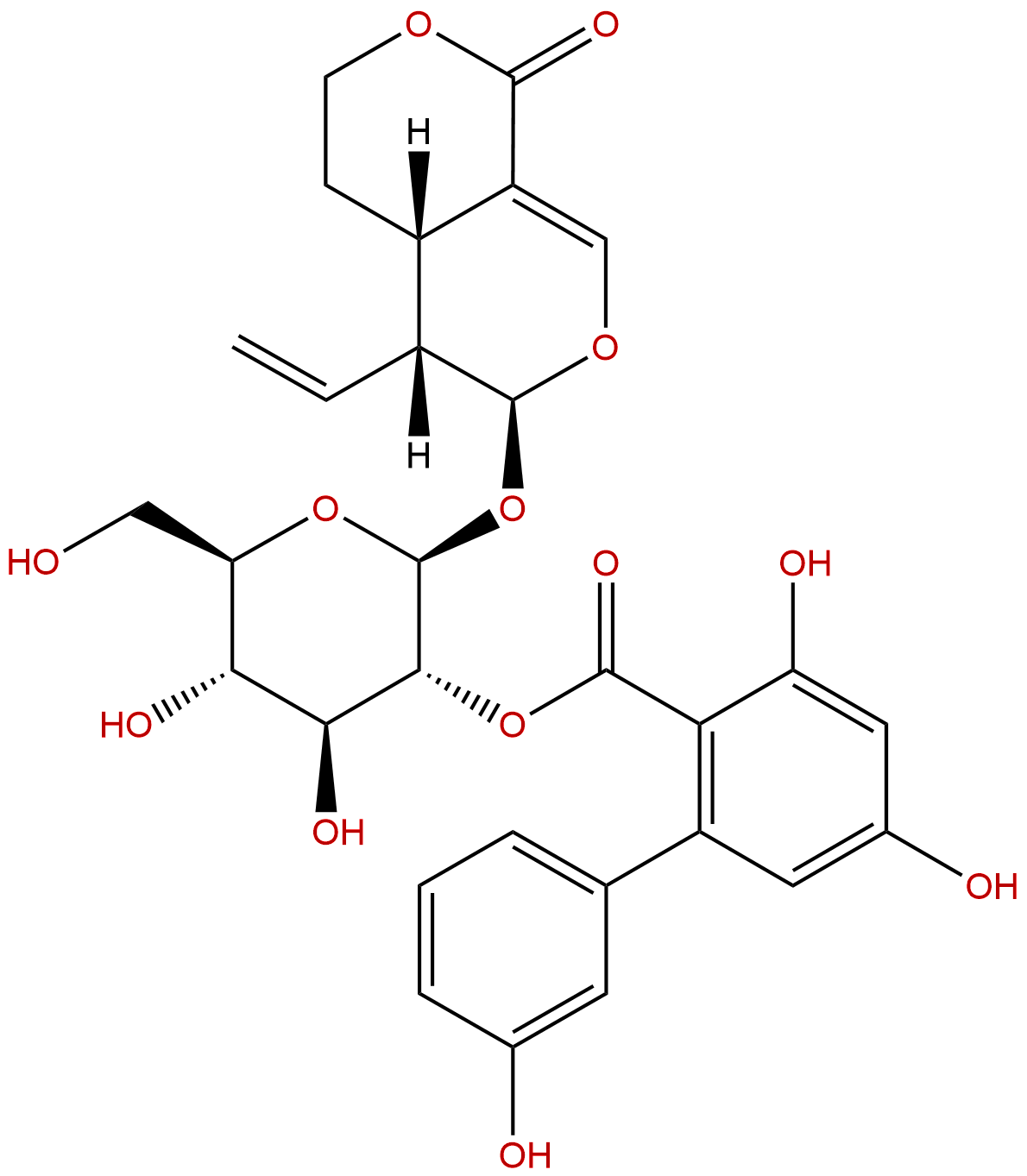


Product name: Amarogentin
Synonym name:
Catalogue No.: BP1603
Cas No.: 21018-84-8
Formula: C29H30O13
Mol Weight: 586.546
Botanical Source: Gentiana sp. and Swertia japonica
Physical Description: Powder
Type of Compound: Iridoids
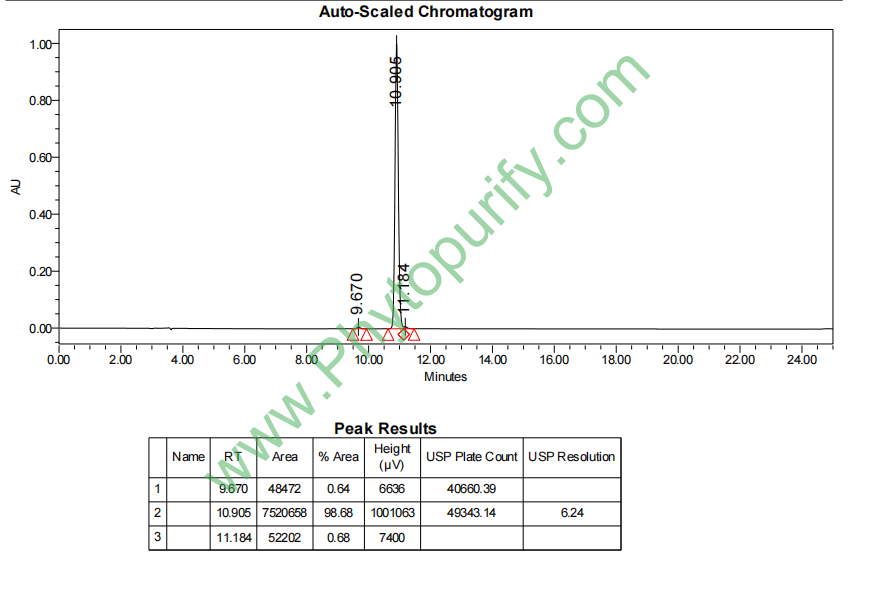
Purity: 95%~99%
Analysis Method: HPLC-DAD or/and HPLC-ELSD
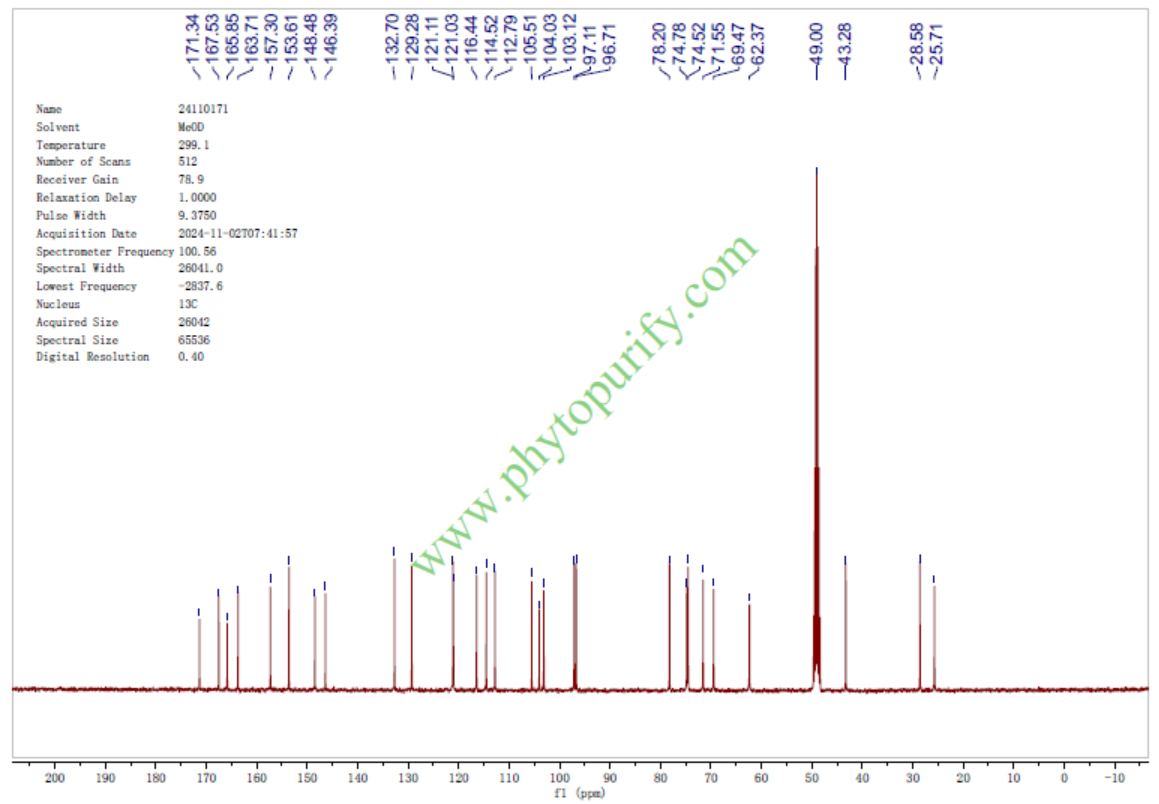
Identification Method: Mass, NMR
Packing: Brown vial or HDPE plastic bottle
The product could be supplied from milligrams to grams. Inquire for bulk scale.
We provide solution to improve the water-solubility of compounds, thereby facilitating the variety of activity tests and clinic uses.
For Reference Standard and R&D, Not for Human Use Directly.
HPLC of Amarogentin
NMR of Amarogentin
Storage conditions:Short-term storage at 2~8℃, long-term storage at -20 ~ -80℃
201.6700
1.2493
1.1698
1.6783
.5349
.2696
Low
84.7466
4.9081
No
No
No
No
Yes
No
0.0
Yes
Yes
Yes
Yes
In the treasure trove of natural products, cyclohexene ether terpenoid glycosides have always been a research hotspot in the field of drug discovery due to their unique chemical structures and extensive biological activities. Ku Long bile ester glycoside, also known as Ku Long glycoside, is one of the most representative members among them. As a highly efficient bitter ingredient isolated from plants of the genus Swertia and Gentiana in the family Gentianaceae, bitter gentian glycosides are not only one of the material bases for the "clearing heat, drying dampness, and relieving liver and gallbladder fire" effects in traditional herbal medicine, but also have attracted attention for their multiple biological activities demonstrated in modern pharmacological research. Its CAS number is 21018-84-8, and its molecular formula is C29H30O13. Early studies mainly focused on its strong bitter characteristics, but in the past two decades, with the progress of separation and purification technology and molecular biology research methods, the potential of gentiopicroside in anti-tumor, anti-inflammatory, antioxidant, anti diabetes, liver protection and immune regulation has been continuously revealed. Of particular note is that the molecular mechanism by which it exerts its effects through regulating key signaling pathways such as PI3K/Akt/mTOR, AMPK, STAT3, etc. has gradually become clear, laying a solid scientific foundation for its transformation from traditional medicinal plant components to modern candidate drugs. The purpose of this article is to systematically review the chemical properties, plant sources, pharmacological activities, mechanisms of action, and pharmacological research progress of bitter gentian glycosides, and to prospect their clinical application prospects, in order to provide comprehensive references for the deep development and utilization of this natural product.
Kulongdan glycoside is a typical cyclohexene ether terpenoid glycoside. Its chemical structure consists of a glycoside moiety and a sugar moiety. Glycosides are the backbone of cyclohexene ether terpenes, characterized by a cyclopentane pyran ring system that undergoes ring cleavage at specific positions, forming complex structures with highly oxidized states. Its sugar moiety is usually connected to one or more sugar molecules, and the sugar moiety of bitter gentian glycoside is glucose, which is linked to specific hydroxyl groups of the glycoside through glycosidic bonds. This unique split ring structure and glycosylation modification are the determining factors for its biological activity and physicochemical properties.
From the analysis of pharmacological parameters, the molecular weight of bitter gentiopicroside is 586.5460, which is a medium-sized molecule. The calculated lipid water partition coefficient is 1.2493, indicating that the molecule has a certain degree of lipophilicity, but is not highly lipophilic. Its topological polar surface area is as high as 201.67 Å ², mainly attributed to the presence of multiple polar functional groups such as hydroxyl, ester, and ether bonds in the molecule. High TPSA values are usually associated with poor cell membrane permeability. The water solubility parameter is 1.6783, indicating that it has a certain degree of solubility in water, but may be limited. Based on the comprehensive LogP and TPSA values, its membrane permeability may face challenges. In the preliminary safety screening, the compound did not show hERG potassium channel inhibitory activity (hERG inhibition: No), which reduces its potential risk of inducing QT interval prolongation and apical torsion type ventricular tachycardia. The Ames test result is 0.0, which preliminarily indicates that there is no mutagenicity under the test conditions used, providing early support for its safety. However, its blood-brain barrier permeability is predicted to be "low", which means it may have difficulty entering the central nervous system, which is a limitation for treating central nervous system diseases but may also reduce related side effects.
Bittergentian glycosides are mainly distributed in plants of the Gentianaceae family, especially in the roots, rhizomes, and whole plants of various species in the Swertia and Gentiana genera, where their content is relatively high. Common sources of plants include:
1. Swertia genus Such as Indian Swertia, Western Sichuan Swertia, Green Leaf Gallbladder, etc. This genus of plants is a rich source of bitter gentian glycosides, commonly used in traditional medicine to treat liver and gallbladder diseases and fever.
2. Gentiana genus Such as gentian, gentian, etc. These plants are the original plants of traditional Chinese medicines "Gentiana scabra" and "Gentiana macrophylla", and bitter gentiopicroside is one of the key components of their bitterness and medicinal efficacy.
Due to the relatively low content of bitter gentiopicroside in plants (usually less than 1% of dry weight) and its frequent coexistence with other structurally similar glycosides, its efficient extraction and purification are the difficulties and focuses of research. Traditional extraction methods include solvent extraction (commonly using methanol, ethanol, or water alcohol mixed solvents for reflux or ultrasound assisted extraction). In order to improve extraction efficiency and selectivity, modern technology has been widely applied in its preparation process:
* Column chromatography technology Silica gel column chromatography and macroporous adsorption resin (such as AB-8, D101) chromatography are the core methods for initial enrichment and purification. Different ratios of chloroform methanol or water ethanol gradient elution are often used.
* High performance liquid chromatography method Preparation type high-performance liquid chromatography is the final key step in obtaining high-purity bitter gentian glycoside monomers, usually using a reverse phase C18 chromatography column with methanol water or acetonitrile water system as the mobile phase.
* High-speed countercurrent chromatography As a liquid-liquid distribution chromatography technique that does not require solid support, HSCCC has unique advantages in separating isomers of natural products and has been successfully used to separate bitter gentian glycosides from complex plant extracts. It can effectively avoid irreversible adsorption and improve recovery rate.
Optimizing the extraction process (such as solvent ratio, temperature, time) and combining multiple chromatographic techniques is a feasible pathway for obtaining high-purity bitter gentian glycosides on a large scale.
A large number of pharmacological experiments in vitro and in vivo have confirmed that bitter gentian glycosides have broad and significant biological activities.
The multiple pharmacological effects of bitter gentiopicroside stem from its precise regulation of multiple key signaling pathways within cells. Its mechanism of action is complex and mainly involves the following core targets and pathways:
In summary, bitter gentiopicroside forms a synergistic pharmacological network through multi-target and multi pathway mechanisms, which is the molecular basis for its ability to simultaneously respond to complex diseases such as cancer, metabolic diseases, and chronic inflammation.
Despite the significant pharmacological activity of bitter gentiopicroside, its development from a lead compound to a drug still faces challenges in terms of drug properties.
Pharmacokinetic properties Current research suggests that the oral bioavailability of bitter gentian glycosides may be low. This is mainly limited by its large molecular weight, high polarity, and susceptibility to hydrolysis by gut microbiota and digestive enzymes as a glycoside compound. Animal pharmacokinetic studies suggest that its absorption rate after oral administration is slow, the blood drug concentration is low, and it is widely distributed in the body but eliminated quickly. The prototype drug and its metabolites are mainly excreted through the kidneys and bile. Its glycosidic bonds may be hydrolyzed by β - glucosidase and other enzymes in the body to generate aglycones, and the physicochemical properties and activities of aglycones may be different from those of the original glycoside, which increases the complexity of its in vivo processes.
Challenges and optimization strategies for drug development:
1. Solubility and permeability Moderate LogP value and high TPSA value result in it belonging to Class III (high solubility, low permeability) or Class IV (low solubility, low permeability) compounds in the biopharmaceutical classification system. Improving its oral absorption is the primary challenge.
2. Metabolic stability The enzymatic instability of glycosidic bonds is a key factor affecting their bioavailability.
3. Formulation improvement Adopting modern formulation technology is an effective way to enhance its pharmacological properties. For example:
* Nano delivery system Preparation of liposomes, nanoparticles, micelles, or solid lipid nanoparticles of bitter gentiopicroside can increase its solubility, protect it from enzymatic hydrolysis, and target tumor or inflammatory sites by enhancing permeability and retention effects.
* Prodrug strategy Chemical modification of the hydroxyl group in the glycosidic moiety to prepare a prodrug with higher lipid solubility, in order to improve its membrane permeability and convert it into an active prototype drug in vivo.
* Phospholipid complex Forming a complex with phospholipids can significantly improve their lipophilicity and promote transmembrane absorption.
4. Structural modification Reasonably modify the molecular structure of bitter gentiopicroside while retaining its pharmacophore, such as simplifying the structure, introducing stabilizing groups, or optimizing the sugar moiety, to balance its activity and pharmacokinetic properties.
The diversified pharmacological activities of bitter gentian glycosides have demonstrated broad application prospects in multiple therapeutic fields.
Future research should focus on the following directions:
* In depth mechanism exploration Using omics technologies (proteomics, metabolomics) and gene editing tools to more systematically and finely elucidate its functional network and direct targets of action.
* Pharmacokinetic optimization Strengthen its in vivo ADME research and vigorously develop new delivery systems to fundamentally solve the bottleneck problem of low bioavailability.
* Preclinical and clinical research Conduct standardized GLP toxicology evaluations to clarify the safety of long-term use. On this basis, design and promote early clinical trials to verify its effectiveness and safety in humans.
* Development of compound preparations Combining traditional Chinese medicine theory, explore the synergistic effects of bitter gentian glycoside and other active ingredients (such as other glycosides from the same plant), and develop modern Chinese medicine compound preparations with comprehensive therapeutic effects.
Kulongdan glycoside, as a terpenoid glycoside derived from traditional medicinal plants, is an outstanding example of modern natural product drug research. The research process from the initial bitter substances to the lead compounds that have been revealed to have multiple powerful pharmacological activities such as anti-tumor, anti-inflammatory, and metabolic regulation reflects a profound transformation from traditional experience to modern science. Although the inherent pharmaceutical challenges on the path towards clinical application, such as low oral bioavailability, cannot be ignored, this is also the driving force behind dosage form innovation and structural modification research. With the continuous deepening of understanding of its molecular mechanism of action and the in-depth application of modern pharmaceutical strategies such as nanotechnology and prodrug design, the enormous therapeutic potential of bitter gentiopicroside is expected to be gradually released. It is not only a valuable source for discovering new multi-target drugs, but also provides a unique chemical probe for understanding the regulation of complex disease networks. Continuous and in-depth research will undoubtedly promote the transition of bitter gentian glycosides from the laboratory to clinical practice, contributing a precious gift from the natural world to the cause of human health.
