


Synonym name:
Catalogue No.: BP0638
Cas No.: 20831-76-9
Formula: C16H20O9
Mol Weight: 356.327
Botanical Source: Widespread in the Gentianaceae, e.g. Swertia and Gentiana spp.
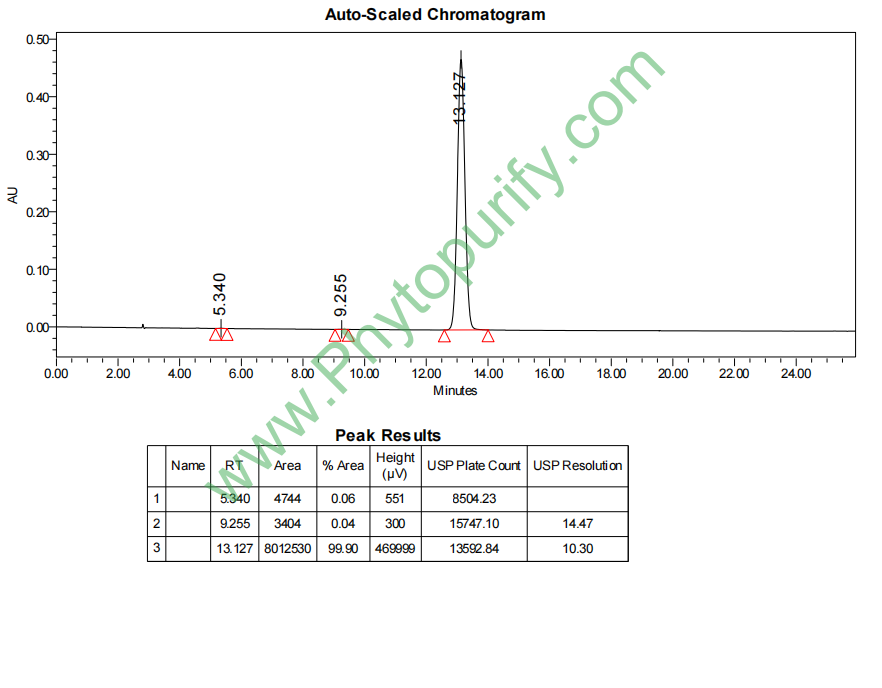
Purity: 95%~99%
Analysis Method: HPLC-DAD or/and HPLC-ELSD
Identification Method: Mass, NMR
Packing: Brown vial or HDPE plastic bottle
Can be supplied from milligrams to grams.
For Reference Standard and R&D, Not for Human Use Directly.
Inquire for bulk scale.
Description:
Gentiopicroside has been developed into a novel traditional Chinese drug named gentiopicroside injection, and it was approved for the treatment of acute jaundice and chronic active hepatitis by SFDA.Gentiopicroside has analgesic, smooth muscle relaxing, antibacterial, and free radical scavenging activities, it exerts anti-inflammatory effects on experimental acute colitis through attenuating the expression levels of TNF-α, IL-1β, IL-6, iNOS and COX-2.
References:
J Ethnopharmacol. 2015 Aug 22;172:100-7.
Gentiopicroside prevents interleukin-1 beta induced inflammation response in rat articular chondrocyte.
In traditional Chinese medicine, Gentiana macrophylla Pall have been prescribed for the treatment of pain and inflammatory conditions. In addition, it is a common Tibetan medicinal herb used for the treatment of tonsillitis, urticaria, and rheumatoid arthritis (RA), while the flowers of G. macrophylla Pall have been traditionally treated as an anti-inflammatory agent to clear heat in Mongolian medicine. The secoiridoid glycosides and their derivatives are the primary active components of G. macrophylla and have been demonstrated to be effective as anti-inflammatory agents.
METHODS AND RESULTS:
Solvent extraction and D101 macroporous resin columns were employed to concentratethe Gentiopicroside. Gentiopicroside cytotoxicity was assessed by 3-(4,5-Dimethylthiazol-2-yl)-2,5-diphenyltetrazolium bromide (MTT) assay; the toxicity of Gentiopicroside in chondrocytes was reconfirmed using Hoechst staining. Western blotting, reverse transcriptase-polymerase chain reaction (RT-PCR) and immunohistochemistry were utilized to explore the protective effects and mechanisms of Gentiopicroside prevents interleukin-1 beta induced inflammation response in rat articular chondrocyte. The MTT assay demonstrated that 50, 500, and 1,500 μg/mL of Gentiopicroside exhibited no significant toxicity to chondrocytes (P>0.05) after 24h. Using immunohistochemistry, ELISA, RT-PCR, Western blot method to explore the protective effect and mechanism of Gentiopicroside on chondrocytes induced by IL-1β. The results showed some pathways of IL-1β signal transduction were inhibited by Gentiopicroside in rat chondrocytes: p38, ERK and JNK. Meanwhile, Gentiopicroside showed inhibition in the IL-1β-induced release of MMPs while increasing Collagen type II expression.
CONCLUSIONS:
The current study demonstrated that Gentiopicroside exhibited a potent protective effect on IL-1β induced inflammation response in rat articular chondrocyte. Thus, Gentiopicroside could be a potential therapeutic strategy for treatment of OA.
Fitoterapia. 2003 Feb;74(1-2):151-4.
Bioactivity of gentiopicroside from the aerial parts of Centaurium erythraea.
Gentiopicroside (1), a secoiridoid glycoside isolated from the methanol extract of the aerial parts of Centaurium erythraea, has been assessed for antibacterial and free radical scavenging activities. General toxicity of 1 has also been determined by brine shrimp lethality bioassay.
Fitoterapia. 2015 Apr;102:127-33.
Effect of gentiopicroside on experimental acute pancreatitis induced by retrograde injection of sodium taurocholate into the biliopancreatic duct in rats.
Gentiopicroside (otherwise known as Gentiopicrin), one of the main active ingredients from the traditional Chinese herb medicine Gentiana manshurica Kitag, presents the effect of attenuating acute pancreatitis in rats.
METHODS AND RESULTS:
The experimental acute pancreatitis was made by retrograde injection of sodium taurocholate into the biliopancreatic duct in rats. Gentiopicroside was given orally and it markedly reduced the pancreatitis-evoked increase of serum amylase and lipase activity, decreased the pancreas mass/body mass index, tissue water content, TNF-α and IL-1β concentrations, and attenuated the histopathological changes and NF-κB p65 protein expression in pancreatic tissue.
CONCLUSIONS:
The results indicate that the function of Gentiopicroside on acute pancreatitis may be related to inhibiting the release of inflammatory mediators and NF-κB p65 protein expression.
Chinese Traditional & Herbal Drugs, 2003, 34(9):814-6
Studies on anti-inflammatory effect of gentiopicroside.
To study the anti-inflammatory effect of Gentiopicroside extracted from Radix Gentianae Marrophyllae.
METHODS AND RESULTS:
The models of auricular edema in mice induced by dimeth yl benzene, increased permeability of celiac blood capillary and body-twisting reaction induced by acetic acid, paw swelling induced by zymosan A, carrageenan a nd nystatin in rats or in mice were prepared. Then Gentiopicroside was given to the rats or mice by ig. Gentiopicroside inhibited th e auri cular edema, decreased the permeability of celiac blood capillary, reduced the p aw swelling induced by carrageenan and zymosan A, but not by nystation.
CONCLUSIONS:
Gentiopicroside extracted from Radix Gentianae Marrophyllae, exhibits obvious anti-inflammatory effects.
HPLC of Gentiopicrin
Storage conditions:Short-term storage at 2~8℃, long-term storage at -20 ~ -80℃
134.9100
-.9922
-.9922
34.1458
.5567
.4414
Low
35.6164
4.8108
Yes
Yes
No
No
Yes
No
0.9
Yes
Yes
Yes
Yes
Natural products, as an important treasure trove for drug discovery and development, play an irreplaceable role in the long history of human fight against diseases. Among them, iridoid compounds have attracted much attention due to their structural diversity and wide range of biological activities. Gentiopicrin, also known as Gentiopicroside, CAS number 20831-76-9, is a typical representative of iridoid glycosides, mainly derived from Gentianaceae plants such as Gentianaceae(Gentiana scabra Bunge)、 Gentiana macrophylla(Gentiana macrophylla Pall, etc. As the main bitter component of these traditional medicinal plants, gentiopicroside is not only the pharmacological substance basis, but also an important quality marker. Modern pharmacological research has gradually progressed from traditional efficacy descriptions such as "clearing heat and dampness, purging liver and gallbladder fire" to the precise molecular mechanism level. Numerous studies have shown that gentiopicroside exhibits excellent anti-inflammatory activity and involves multiple key signaling pathways and molecular targets, making it highly promising in the treatment of inflammation related diseases. This article aims to systematically review the chemical properties, plant sources, pharmacological activities of gentiopicroside, especially its multi-target mechanism of anti-inflammatory effect, and evaluate and prospect its pharmacological properties and clinical application prospects, in order to provide comprehensive scientific references for the deep development and transformation research of this natural product.
The chemical name of gentiopicroside is (5S, 6R, 8S, 9R, 10S) -6- (β - D-glucopyranosyl) -5,6,7,8,9,10-hexahydro-5,9-dihydroxy-8-methyl-1H, 5H-cyclopentano [c] pyran-1-one, with a molecular formula of C16H20O9 and a molecular weight of 356.3270. The core of its structure is a cyclohexene ether terpene parent nucleus of cyclopentanone pyranone, which is connected to a β - D-glucosyl group through a glycosidic bond at position C-1. This glycosidic structure is crucial for its water solubility and biological activity.
In terms of physical and chemical properties, gentiopicroside is a white or off white crystalline powder with an extremely bitter taste. Its calculated lipid water partition coefficient (LogP) is -0.9922, indicating its hydrophilicity. The topologically polar surface area (TPSA) is as high as 134.91 Å ², mainly attributed to the oxygen atoms on multiple hydroxyl and sugar groups in the molecule. Its water solubility data is 34.1458 mg/mL, confirming its good water solubility, which is beneficial for its development in aqueous formulations. However, higher polarity and TPSA also affect its transmembrane permeability, with a predicted "low" blood-brain barrier (BBB) permeability, indicating that it may have difficulty freely entering the central nervous system. In early safety screening, gentiopicroside showed no significant inhibitory effect on hERG potassium channels (hERG inhibition: No), indicating a low risk of cardiac toxicity. The Ames test result is 0.9 (usually considered negative if<1.5), indicating that there is no significant mutagenicity and providing positive data for its safety evaluation.
Gentiopicroside is a characteristic component and main active substance of Gentianaceae plants. In the traditional medical systems of China, Japan, and Europe, plants rich in gentiopicroside are widely used. Its main plant sources include:
1. gentian Longdan bitter glycoside is a core indicator for quality control of commonly used Chinese medicinal materials included in the Chinese Pharmacopoeia.
2. Large Leaf Gentian Similarly, it is an important traditional Chinese medicine used for rheumatism and rheumatism, and its content of gentiopicroside is also relatively high.
3. Swertia plants Like green leaf gallbladder(Swertia mileensis)Wait, it also contains abundant gentiopicroside.
Gentiopicroside mainly exists in the roots and rhizomes of plants. The extraction method has been continuously optimized with technological advancements
1. Traditional extraction method Water or different concentrations of ethanol (such as 30% -70%) are commonly used for heating reflux or immersion extraction. Ethanol concentration has a significant impact on extraction efficiency, and it is necessary to balance the polarity of gentiopicroside and the solubility of coexisting impurities.
2. Modern extraction techniques Including ultrasound assisted extraction, microwave-assisted extraction, and supercritical fluid extraction. These methods can significantly shorten extraction time, improve yield, and reduce solvent consumption. For example, ultrasound assisted extraction destroys plant cell walls through cavitation effect, which can more efficiently release target components.
3. Separation and purification The crude extract was subjected to column chromatography using macroporous adsorption resins (such as AB-8, D101), and its adsorption and molecular sieve effects were utilized to preliminarily enrich gentiopicroside. Further purification can be achieved through techniques such as silica gel column chromatography and preparative high-performance liquid chromatography to obtain high-purity monomers.
Gentiopicroside has a wide range of pharmacological activities, among which anti-inflammatory effects are the most prominent and profound. In addition, it also includes liver protection, analgesia, anti-tumor, and promotion of gastrointestinal motility.
The anti-inflammatory effect of gentiopicroside is not achieved through a single target, but through the synergistic action of multiple targets and pathways, forming a complex regulatory network. Based on the provided target information, its core mechanism can be summarized as follows:
In summary, gentiopicroside acts on key signaling nodes such as IKBKB, RELA, STAT3, CASP1, and regulates the expression of effector molecules such as TNF, IL-6, and NOS2, forming a multidimensional and networked anti-inflammatory system.
Although the in vitro activity of gentiopicroside is clear, its drug like and in vivo pharmacokinetic (PK) characteristics are the hurdles that it must overcome to enter clinical application.
The clinical application prospects of gentiopicroside are broad, but the path still needs further exploration.
Potential indications:
Development Challenges and Prospects:
As a natural iridoid glycoside with a long history of medicinal use, gentiopicroside has been fully validated by modern science for its powerful anti-inflammatory activity and clear multi-target mechanism of action. It exerts unique advantages in networked intervention of inflammatory diseases by regulating key signaling pathways such as NF - κ B, JAK/STAT, inflammasomes, and acting on multiple molecular targets ranging from IKBKB, STAT3 to TNF, IL-6, etc. Although it faces challenges such as poor oral absorption and low bioavailability in terms of drug development, this is precisely the direction that modern pharmacy and medicinal chemistry can focus on breaking through. With the continuous advancement of structural optimization, new drug delivery systems, and in-depth mechanism research, gentiopicroside is expected to transform from a traditional bitter ingredient into a modern drug or lead compound for the treatment of various inflammation related diseases such as inflammatory bowel disease and arthritis, providing a model for the innovative development of natural products.
