Introduction/Overview
Natural products have always been an important source of innovative drug discovery, among which sesquiterpene lactones have attracted much attention due to their structural diversity and significant biological activity. Granilin (CAS number: 40737-97-1) is a sesquiterpene lactone isolated from Asteraceae plants and first discovered in the flower buds of Carpesium triste. Early research has revealed its potential to kill bacteria and fungi, suggesting its application value in agriculture or anti infection fields. However, in recent years, with the deepening of research on tumor biology, large leafed coumarin has shown more remarkable anti-tumor activity, becoming an emerging hotspot in the study of natural product anti-tumor drugs. Its anti-tumor effect involves inducing apoptosis, inhibiting proliferation, invasion and metastasis, and interacts with multiple key tumor related targets such as MCL1, STAT3, HIF1A, etc. This article aims to systematically review the chemical properties, plant sources, pharmacological activities, molecular mechanisms of action, pharmacological characteristics, and clinical application prospects of Eucommia ulmoides lactone, in order to provide comprehensive scientific references for the in-depth research and development of this compound.
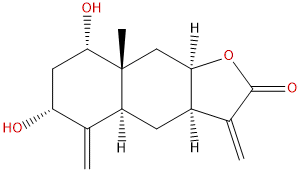
Chemical structure and physicochemical properties
The molecular formula of Eucommia ulmoides lactone is C15H20O4, with a molecular weight of 264.3210. Its core structure belongs to the guaiaceae type sesquiterpene lactone, characterized by a ten membered ring skeleton fused with an alpha, beta unsaturated gamma lactone ring. This α - methylene - γ - lactone structure is a common feature of many bioactive sesquiterpene lactones, usually associated with Michael addition reactions of nucleophiles, and is an important chemical basis for their cytotoxicity and protein regulation functions.
From the analysis of physical and chemical properties, the calculated lipid water partition coefficient (LogP) is 0.5192, indicating that the compound has moderate lipophilicity and is conducive to transmembrane transport. The topologically polar surface area (TPSA) is 66.76 Å ², which is relatively low and usually favorable for the transmembrane absorption of compounds. The water solubility parameter is 2.03 mg/L, indicating that it belongs to compounds that are slightly soluble to poorly soluble in water, which may require consideration of solubilization strategies in formulation development. It is worth noting that its blood-brain barrier permeability is predicted to be "high", indicating its potential application prospects in the treatment of central nervous system diseases, but caution should also be taken against possible neurotoxic risks. The key early warning indicators for drug efficacy show that the risk of hERG inhibition is "no", indicating a low potential risk of inducing QT interval prolongation in the heart; The Ames test result is 0.0, indicating that it has no direct genetic toxicity. These physicochemical and early safety property parameters together outline a lead compound with good potential for development.
Plant sources and extraction methods
The main source of macrolide is from the Carpesium genus in the Asteraceae family, especially the flower buds of Carpesium triste (commonly known as "Dark Flower Golden Digger Ear" in Chinese). The plants of the genus Tianmingjing are often used in Asian traditional medicine for anti-inflammatory, anthelmintic and treatment of certain infectious diseases, which provides ethnic pharmacological clues for the discovery of active ingredients from the plants of the genus.
Its extraction and separation usually follow the conventional process of natural product chemistry. Firstly, the dried plant material (such as flower buds) is crushed and subjected to cold soaking or heating reflux extraction with organic solvents (such as methanol, ethanol, or acetone). After concentration, the crude extract is obtained. Subsequently, the crude extract was subjected to preliminary fractionation using solvent partitioning methods (such as extraction with petroleum ether, ethyl acetate, and n-butanol in sequence), and it was found that macrolide was mainly enriched in the moderately polar ethyl acetate fraction. Further purification relies on various chromatographic techniques, including silica gel column chromatography (gradient elution with different ratios of petroleum ether ethyl acetate or chloroform methanol system), reverse phase column chromatography (such as C18 packing, methanol water system), and high-performance liquid chromatography (HPLC) preparation. Through nuclear magnetic resonance (NMR), mass spectrometry (MS), and comparison with literature data, its chemical structure was finally identified. Optimizing the extraction process, such as using ultrasound assisted extraction or microwave-assisted extraction, may help improve extraction efficiency. Given its significant biological activity, conducting cultivation research on this plant or exploring the acquisition of this compound through plant tissue culture, chemical synthesis, and biosynthetic pathways is crucial for ensuring its sustainable supply.
Pharmacological activity research
The pharmacological activity research of Eucommia ulmoides lactone has expanded from its initial antibacterial effect to a wider range of anti-tumor fields, and has shown multi-target and multi pathway characteristics.
1. Antibacterial activity:
As the initial biological activity report, Eucommia ulmoides lactone exhibited inhibitory activity against various plant pathogenic fungi and bacteria, which is consistent with its ecological defense function as a secondary metabolite of plants. Its α - methylene - γ - lactone structure may interfere with normal metabolism by irreversibly binding to enzymes or proteins containing thiol groups in microbial cells.
2. Antitumor activity:
This is the core focus of current research. A large number of in vitro studies have shown that eugenolide has broad-spectrum and significant proliferation inhibition and cytotoxicity effects on a variety of human tumor cell lines, including but not limited to breast cancer, liver cancer, lung cancer, colon cancer and leukemia cells. Its IC50 value is often in the micromolar or even nanomolar range, demonstrating strong in vitro activity.
* Inducing cell apoptosis: This compound can significantly induce programmed cell death in tumor cells, manifested as cell shrinkage, chromatin condensation, phosphatidylserine eversion, and activation of caspase family proteases (such as caspase-3, -9).
* Inhibition of cell proliferation and cycle arrest: It can interfere with the cell cycle process, often blocking cells in the G2/M or S phase, preventing them from entering mitosis, thereby inhibiting the unlimited proliferation of tumor cells.
* Anti invasion and anti metastasis: Research has shown that resveratrol from Eucommia ulmoides can downregulate the expression of protein hydrolases (such as MMP2) related to extracellular matrix degradation, thereby inhibiting the migration and invasion ability of tumor cells.
* Anti angiogenesis: By targeting hypoxia inducible factors such as HIF1A, it may inhibit the formation of neovascularization in tumor tissue and cut off the nutritional supply to the tumor.
Although there is relatively little research on anti-tumor effects in vivo, animal models (such as mouse transplant tumor models) have preliminarily confirmed that, within a certain dose range, large leaf coumarin can inhibit tumor growth and show a certain therapeutic window compared to certain chemotherapy drugs.
Mechanism of action and molecular targets
The anti-tumor effect of Eucommia ulmoides lactone is not achieved through a single pathway, but by intervening in multiple key nodes and signaling pathways in the occurrence and development of tumors. Existing research has preliminarily revealed its interactions with a series of important targets:
- Apoptosis regulatory targets (BCL2 family): It can downregulate the expression of anti apoptotic proteins Bcl-2 and MCL1, while possibly upregulating the expression of pro apoptotic proteins such as Bax, disrupting mitochondrial membrane potential and leading to the release of cytochrome C, thereby activating endogenous apoptotic pathways.
- Signal transduction and transcription activator 3 (STAT3): STAT3 is an important oncogenic transcription factor that is continuously activated in various tumors. Eucommia ulmoides lactone can inhibit the phosphorylation (activation) of STAT3, prevent its nuclear translocation and the transcription of downstream target genes (such as Cyclin D1, Survivin), thereby inhibiting cell proliferation, promoting apoptosis, and enhancing chemotherapy sensitivity.
- Matrix metalloproteinase-2 (MMP2): By inhibiting the expression or activity of MMP2, resveratrol effectively weakens the degradation ability of tumor cells towards the basement membrane and extracellular matrix, hindering their invasion and distant metastasis.
- Topoisomerase (TOP1/TOP2A): As a key enzyme in DNA replication and transcription, topoisomerase is a classic chemotherapy target. Research has shown that resveratrol from Eucommia ulmoides may cause DNA damage and replication fork breakdown, leading to cell death by interfering with the functions of TOP1 and TOP2A.
- Hypoxia inducible factor 1 alpha (HIF1 alpha): In the hypoxic microenvironment of tumors, HIF1 α stabilizes and activates, promoting angiogenesis and metabolic adaptation. This compound can promote the degradation of HIF1 α or inhibit its transcriptional activity, thereby exerting anti angiogenic and overcoming chemotherapy resistance effects.
- Extracellular signal regulated kinase (MAPK1/ERK): The MAPK/ERK pathway regulates cell growth and survival. Dalbergia lobata lactone may inhibit the overactivation of this pathway, thereby suppressing tumor cell proliferation.
- Estrogen receptor and aromatase (ESR1&CYP19A1): For hormone dependent tumors (such as breast cancer), eugenolide may block estrogen signaling pathway and inhibit tumor growth by antagonizing estrogen receptor alpha (ESR1) or inhibiting the activity of aromatase, a key enzyme for estrogen synthesis (CYP19A1).
These targets form a complex network, and macrolide, through the synergistic action of multiple targets, collectively leads to the death of tumor cells and the reversal of malignant phenotypes. However, further biochemical and structural biology research is needed to elucidate the precise molecular patterns that directly bind to these targets, as well as the cross-talk between various pathways.
Evaluation of drug properties and pharmacokinetics
Based on its physicochemical parameters and preliminary biological data, Eucommia ulmoides lactone has shown certain potential as a drug, but its comprehensive pharmacokinetic and toxicological characteristics still need to be systematically evaluated.
Pharmaceutical advantages:
1. The molecular weight is moderate (~264), the structure is relatively compact, and it conforms to the drug like rules.
2. Moderate LogP values and lower TPSA are beneficial for its cell permeability and oral absorption potential.
3. The absence of hERG inhibition and Ames mutagenicity alerts reduces the significant risk of early cardiac toxicity and genetic toxicity.
4. High blood-brain barrier permeability provides a unique opportunity for treating brain tumors or central nervous system related diseases.
Challenges and unknowns faced:
1. Poor water solubility: The water solubility of 2.03 mg/L is a major limiting factor for its oral bioavailability. In the future, improvements may need to be made through formulation technologies such as nanocrystals, liposomes, cyclodextrin inclusion complexes, or prodrug strategies.
2. Lack of pharmacokinetic data: At present, there are very few research reports on its absorption, distribution, metabolism, and excretion (ADME) process in the body. It is necessary to systematically study its oral bioavailability, plasma protein binding rate, tissue distribution characteristics, metabolic stability (especially CYP450 enzyme metabolism), and major metabolites.
3. Insufficient toxicology research: Although the in vitro Ames test was negative, a comprehensive assessment of subacute, chronic toxicity, reproductive toxicity, and neurotoxicity based on its high BBB permeability has not yet been conducted. The therapeutic index (the ratio of effective dose to toxic dose) needs to be determined in multiple animal models.
4. Structural decoration space: Its α - methylene - γ - lactone group is both a pharmacophore and may undergo non-specific reactions with thiol groups in normal tissues, leading to potential toxicity. Structural modification to reduce non selective toxicity while retaining activity is an important direction for future chemical optimization.
Clinical application prospects and prospects
As a natural lead compound with multi-target anti-tumor activity, Eucommia ulmoides lactone has broad clinical application prospects, but the road ahead is long.
Potential application directions:
1. Development of anti-tumor drugs: It is the most important development direction. It can be explored as a single drug for tumor types that are insensitive or resistant to existing chemotherapy, especially considering its ability to target resistance related targets such as STAT3 and HIF1 α. A more realistic strategy may be to combine it with existing standard chemotherapy drugs or targeted drugs to enhance efficacy, reduce dosage, and overcome drug resistance.
2. Treatment of central nervous system tumors: Its high BBB permeability gives it a natural advantage in the treatment of malignant brain tumors such as glioblastoma, and it is worth exploring as a priority.
3. Antibacterial/antifungal agents: Developed as a green pesticide in the agricultural field or as a component of local anti infective drugs in the medical field.
4. Chemical preventive agents: Based on its multi-target regulatory properties, investigate its role in cancer chemoprevention.
Future research prospects:
1. In depth mechanism research: Using chemical biology methods such as affinity chromatography probes and proteomics to identify their direct targets and create more accurate molecular action network diagrams.
2. Preclinical development of the system: Complete pharmacological (more in vivo models), pharmacokinetic, and toxicological evaluations that comply with preclinical research guidelines for new drugs, and clarify their safety window.
3. Structural optimization and synthesis of analogues: Conduct structure-activity relationship research and modify its structure through semi synthetic or fully synthetic methods, aiming to enhance activity, improve water solubility and pharmacokinetic properties, and reduce potential toxicity. Its core skeleton is a valuable template for discovering new active analogues.
4. Research on New Delivery Systems: To address the issue of poor water solubility, nano formulations and targeted delivery systems have been developed to improve tumor targeting and bioavailability.
5. Explore combination therapy strategies: Systematically screen the optimal combination scheme with other anti-tumor drugs in preclinical models, providing a basis for future clinical trial design.
Conclusion
Da Ye Mu Mu Xiang lactone is a natural sesquiterpene lactone with significant anti-tumor activity found in traditional medicinal plants. It exhibits multidimensional pharmacological effects in inhibiting tumor cell proliferation, inducing apoptosis, and resisting invasion and metastasis by intervening in multiple key tumor related targets such as MCL1, STAT3, MMP2, and HIF1 α. Although its physical and chemical properties such as water solubility pose certain challenges, its excellent drug like parameters, lack of early safety warnings, and unique high blood-brain barrier permeability make it an extremely attractive lead compound for anti-tumor drugs. The current research has laid a solid biological foundation for it, and future work should focus on in-depth molecular mechanism elucidation, systematic preclinical pharmacokinetics and safety evaluation, as well as optimizing its drug properties through medicinal chemistry and pharmacology methods. With the advancement of these studies, it is expected that Eucommia ulmoides lactone will move from the laboratory to clinical practice, providing new candidate drugs or treatment strategies for cancer treatment, once again confirming the immortal value of natural products in innovative drug discovery.