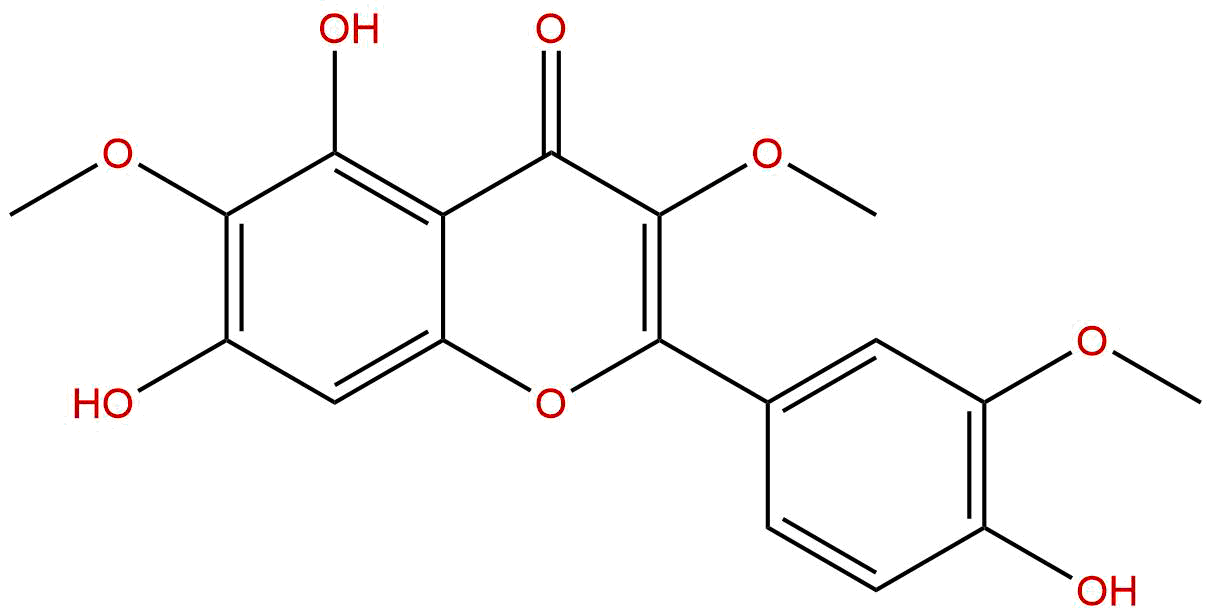


Product name: Jaceidin
Synonym name: Jaceidine;5,7,4'-Trihydroxy-3,6,3'-trimethoxyflavone
Catalogue No.: BP5434
Cas No.: 10173-01-0
Formula: C18H16O8
Mol Weight: 360.318
Botanical Source:
Type of Compound: Flavonoids
Purity: 95%~99%
Analysis Method: HPLC-DAD or/and HPLC-ELSD
Identification Method: Mass, NMR
Packing: Brown vial or HDPE plastic bottle
Storage: Store in a well closed container, protected from air and light. Put into refrigerate or freeze for long term storage.
Whenever possible, you should prepare and use solutions on the same day. However, if you need to make up stock solutions in advance, we recommend that you store the solution as aliquots in tightly sealed vials at -20℃. Generally, these will be useable for up to two weeks.
The product could be supplied from milligrams to grams
Inquire for bulk scale.
For Reference Standard and R&D, Not for Human Use Directly.
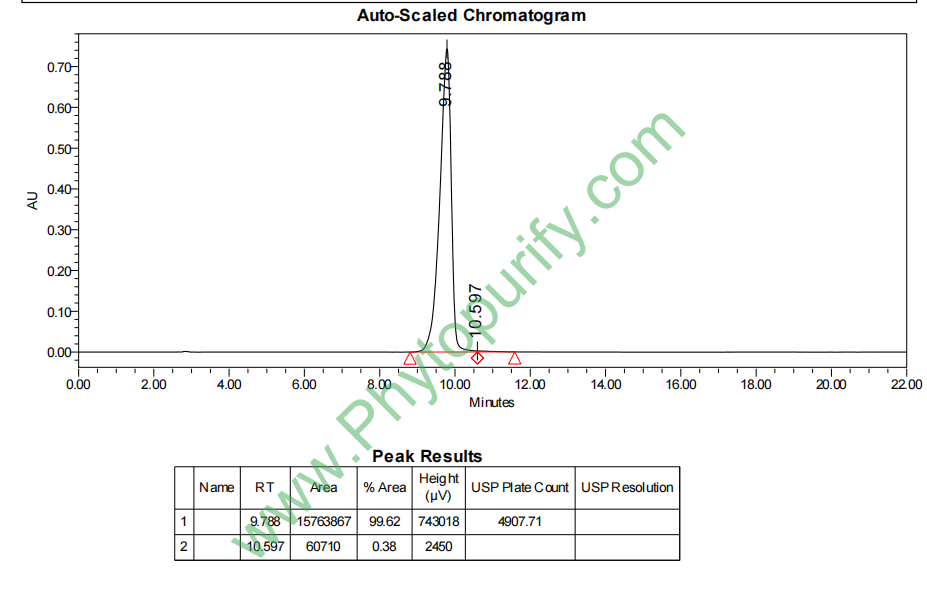
HPLC of Jaceidin
Storage conditions:Short-term storage at 2~8℃, long-term storage at -20 ~ -80℃
144.9700
2.4000
Low
No
No
No
Unknown
No
Unknown
Natural products, as an important source of drug discovery, play an irreplaceable role in the long history of human fight against diseases. From classic aspirin and paclitaxel to artemisinin in recent years, the abundant secondary metabolites in nature provide a continuous supply of lead compounds for new drug development. Among numerous natural products, flavonoids have attracted much attention due to their wide range of biological activities and relatively low toxicity. Jaceidin, a flavonoid compound with unique structural characteristics, has gradually entered the field of researchers in recent years due to its potential as an anti-tumor agent, especially as a vascular endothelial growth factor receptor (VEGFR) inhibitor.
Brown scaled cornflower flavonoids were initially isolated from plants of the genus cornflower in the Asteraceae family, and their name comes from their plant origin. Early research mainly focused on its role as a plant chemical taxonomic marker. However, with the deepening development of modern pharmacology and medicinal chemistry, researchers have found that this compound not only has classical antioxidant and anti-inflammatory activities, but also exhibits significant anti-tumor effects. What is particularly noteworthy is that it has been identified as a promising and effective lead molecule for VEGFR inhibitors. VEGFR is a key target for regulating tumor angiogenesis, and inhibiting this receptor can effectively block the nutrient supply and metastasis pathways of tumors. Therefore, VEGFR inhibitors occupy a central position in tumor targeted therapy. The emergence of flavonoids from the brown scaled cornflower provides a new chemical entity for the development of novel, low toxicity, and efficient VEGFR inhibitors.
This review aims to comprehensively review the research status of flavonoids in Lonicera japonica, starting from its chemical structure and physicochemical properties, systematically elaborating on its plant origin, extraction methods, pharmacological activity, and mechanism of action, and focusing on evaluating its medicinal properties and pharmacokinetic characteristics. Finally, it looks forward to its clinical application prospects. Through multidimensional and systematic analysis of the compound, we aim to provide reference for further in-depth research and development.
The chemical structure of flavonoids in brown scaled cornflower belongs to the typical flavonoid compound skeleton, which is composed of two benzene rings (A ring and B ring) connected by a three carbon chain (C ring). Its specific structural features are: there are multiple hydroxyl and methoxy substituents on the A ring, the B ring also has hydroxyl substituents, and the C ring is an unsaturated pyranone ring. This multi hydroxyl and multi methoxy substitution mode endows the molecule with unique chemical properties and biological activity. Accurate structural analysis typically relies on nuclear magnetic resonance spectroscopy (NMR) and high-resolution mass spectrometry (HRMS) techniques.
From the perspective of physical and chemical properties, the molecular weight of flavonoids in the brown scaled cornflower is 360.3100 Da, which is within the ideal range for small molecule drugs and is conducive to their binding with target proteins. Its lipid water partition coefficient (LogP) is 2.4000, indicating that the compound has moderate lipophilicity. It can dissolve in organic solvents and has a certain degree of water solubility, which is crucial for the oral absorption and in vivo distribution of the drug. The topologically polar surface area (TPSA) is 144.9700 Å ², which is relatively high and typically associated with good oral absorption and lower membrane permeability. The high TPSA value also explains its low blood-brain barrier penetration ability, which can to some extent avoid side effects on the central nervous system. This molecule has 8 hydrogen bond receptors, mainly derived from hydroxyl and carbonyl oxygen atoms. These sites can form critical hydrogen bond interactions with target proteins, which are the structural basis for its pharmacological activity.
In terms of stability, as a polyphenolic compound, flavonoids from the brown scaled cornflower may be unstable under alkaline conditions and are prone to oxidative degradation. Therefore, in the process of formulation development and storage, attention should be paid to pH value and antioxidant protection. Overall, the physicochemical properties of flavonoids from Lonicera japonica meet most of the requirements of Lipinski's Rule of Five and have the basic potential to become oral drugs. However, its high TPSA and potential metabolic instability are areas that need further optimization.
The flavonoids in the brown scaled cornflower mainly come from Asteraceae plants, especially the cornflower genus(Centaurea)Artemisia genus(Artemisia)A variety of plants. For example, in the brown scaled cornflower(Centaurea jacea), cornflower(Centaurea cyanus)And some types of mugwort(Artemisia It has been found in both spp. In addition, some plants in the Lamiaceae family, such as rosemary(Rosmarinus officinalis)There are also a few reports in the middle. Its content varies significantly in different plant tissues, usually higher in flowers and leaves than in stems and roots.
The choice of extraction method directly affects the yield and purity of flavonoids in brown scaled cornflower. Traditional extraction methods include solvent extraction, with commonly used solvents being methanol, ethanol, or their aqueous solutions. Due to the polarity of the compound, using a 70% -80% ethanol aqueous solution for reflux extraction or cold soaking extraction is a common strategy. To improve extraction efficiency, modern extraction techniques such as ultrasound assisted extraction and microwave-assisted extraction are widely used. The cavitation effect of ultrasound can destroy plant cell walls, accelerate solvent penetration, and thus achieve higher extraction rates in a shorter period of time. Microwave assisted extraction utilizes the rapid vibration of polar molecules in a microwave field to generate heat, promoting the dissolution of target components.
The crude extract after extraction usually contains a large amount of pigments, sugars, and other polar impurities, which need to be purified. Classic purification methods include liquid-liquid extraction (such as extraction with ethyl acetate or n-butanol), silica gel column chromatography, polyamide column chromatography, and high-performance liquid chromatography (HPLC) preparation. Among them, polyamide column chromatography has good selectivity for flavonoids and can effectively remove impurities such as chlorophyll. In recent years, high-speed countercurrent chromatography (HSCCC) has been successfully applied as a liquid-liquid distribution chromatography technique for the efficient separation and purification of flavonoids from Lonicera japonica due to its advantages of irreversible adsorption and high sample recovery rate. Ultimately, high-purity monomer compounds can be obtained through recrystallization or preparative HPLC for subsequent pharmacological activity studies.
The pharmacological activity research of flavonoids in brown scaled cornflower is currently a hot topic, with a wide spectrum of activities, especially outstanding in anti-tumor, anti-inflammatory, and antioxidant aspects.
Antitumor activity This is the pharmacological activity of flavonoids from the brown scaled cornflower that has received the most attention. A large number of in vitro cell experiments have shown that the compound has a significant proliferation inhibitory effect on a variety of human cancer cell lines, including breast cancer (MCF-7, MDA MB-231), lung cancer (A549), liver cancer (HepG2), colon cancer (HT-29) and melanoma (A375). Its mechanism of action involves multiple aspects: firstly, it can induce cell cycle arrest, usually blocking cells in the G2/M phase, thereby inhibiting the unlimited proliferation of tumor cells. Secondly, it can induce cell apoptosis through the mitochondrial pathway or death receptor pathway, manifested by activating Caspase-3 and Caspase-9, upregulating Bax protein expression, downregulating Bcl-2 protein expression, leading to loss of mitochondrial membrane potential and release of cytochrome c. In addition, the study also found that flavonoids from brown scaled cornflower can inhibit the migration and invasion ability of tumor cells, which may be related to their inhibition of matrix metalloproteinases (MMPs) activity.
Anti angiogenic activity The growth and metastasis of tumors depend on the formation of new blood vessels. Brown scaled cornflower flavonoids have been identified as an effective VEGFR inhibitor, which is one of the core mechanisms of their anti-tumor activity. It can directly bind to the ATP binding site of VEGFR-2, inhibit its autophosphorylation, and thus block the activation of downstream PI3K/Akt and MAPK/ERK signaling pathways. This not only inhibits the proliferation, migration, and lumen formation of endothelial cells, but also reduces the vascular density in the tumor microenvironment, cutting off the tumor's nutritional supply and achieving the effect of "starving" the tumor. This dual effect - directly killing tumor cells and inhibiting tumor angiogenesis - makes it a highly promising multi-target anti-tumor candidate molecule.
Anti inflammatory and antioxidant activity As a flavonoid compound, flavonoids from the brown scaled cornflower have classic antioxidant activity, which can effectively scavenge free radicals (such as DPPH ·, ABTS ⁺ ·), chelate metal ions, and enhance the activity of endogenous antioxidant enzymes (such as superoxide dismutase (SOD) and catalase (CAT)) in cells. In terms of anti-inflammatory effects, it can inhibit the production of nitric oxide (NO) and prostaglandin E2 (PGE2) in macrophages stimulated by lipopolysaccharide (LPS), and its mechanism is related to the inhibition of the expression of inducible nitric oxide synthase (iNOS) and cyclooxygenase-2 (COX-2). In addition, it can significantly reduce the levels of pro-inflammatory cytokines such as tumor necrosis factor - α (TNF - α), interleukin-6 (IL-6), and interleukin-1 β (IL-1 β). These anti-inflammatory and antioxidant activities may synergize with their anti-tumor effects, jointly exerting health protection effects.
The pharmacological activity of flavonoids in brown scaled cornflower stems from their interactions with multiple molecular targets. A deep understanding of its mechanism of action is of great significance for guiding structural optimization and clinical translation.
VEGFR-2 inhibition As mentioned earlier, VEGFR-2 is one of the most important direct targets of flavonoids in brown scaled cornflowers. Molecular docking and kinase activity experiments confirmed that the compound can competitively bind to the ATP binding pocket of VEGFR-2. Multiple hydroxyl and carbonyl groups in its structure can form hydrogen bonds with key amino acid residues in the kinase hinge region (such as Cys919, Glu917), while methoxy and benzene rings stabilize their binding conformation through hydrophobic interactions. This binding effectively prevents the binding of ATP to VEGFR-2, thereby inhibiting receptor phosphorylation and blocking the pro angiogenic signal transduction induced by VEGF.
Regulation of PI3K/Akt and MAPK/ERK pathways Inhibition of VEGFR-2 directly leads to the inactivation of two critical downstream survival pathways. The PI3K/Akt pathway is a core pathway that regulates cell survival, proliferation, and metabolism. Brown scaled cornflower flavonoids inhibit the phosphorylation of Akt, leading to a decrease in the activity of downstream effector molecules such as mTOR and GSK-3 β, thereby inducing cellular autophagy and apoptosis. Meanwhile, the MAPK/ERK pathway is mainly involved in cell proliferation and differentiation. This compound inhibits tumor cell proliferation by suppressing the phosphorylation of ERK1/2, blocking the transmission of growth signals to the nucleus. In addition, it may further enhance its anti-tumor and anti-inflammatory effects by inhibiting the NF - κ B signaling pathway, downregulating the expression of anti apoptotic proteins (such as Bcl xL, Survivor) and pro-inflammatory factors.
Other potential targets In addition to VEGFR-2, flavonoids from Lonicera japonica may also act on other targets. For example, it has been reported to inhibit the activity of topoisomerases I and II, interfere with DNA replication and transcription, which may be another mechanism of its direct cytotoxic effect. In addition, it may also affect energy metabolism and cellular autophagy by regulating intracellular redox balance and activating the AMPK signaling pathway. Given the multi-target nature of flavonoids, it is possible that flavonoids from Lonicera japonica may also be involved in direct or indirect regulation of cell cycle proteins (CDKs), apoptosis regulatory proteins (Bcl-2 family), and various kinases. This multi-target and multi pathway network regulation mode is a potential advantage for it to exert efficient anti-tumor activity and not easily develop drug resistance.
The evaluation of drug properties is a crucial step in pushing natural products from the laboratory to clinical applications. Brown scaled cornflower flavonoids have shown encouraging potential in medicinal development, but there are also some challenges.
Analysis of drug properties parameters According to the provided parameters, the molecular weight (360.31 Da) and LogP (2.40) of flavonoids in the brown scaled cornflower are both within the ideal range, in accordance with Lipinski's rule. Although TPSA (144.97 Å ²) is relatively high, it is still below the upper limit commonly considered for oral medications (140-200 Å ²), and high TPSA helps to improve water solubility and reduce toxicity. More importantly, the preliminary toxicity prediction results show that it has no hepatotoxicity, no cardiotoxicity, and does not inhibit hERG potassium channels, which greatly reduces its risk of causing fatal arrhythmias and liver damage, and is a major advantage of its drug development. The Ames test results are unknown, indicating the need for genetic toxicity assessment.
Pharmacokinetic characteristics Pharmacodynamics (PK) is the key to determining whether a drug can reach an effective concentration in the body. At present, there is relatively limited in vivo PK data on flavonoids in the brown scaled cornflower, but based on its physicochemical properties and research on similar compounds, some inferences can be made. Its good membrane permeability suggests that oral absorption may be better, but the presence of high TPSA and multiple hydroxyl groups may also lead to first pass metabolism in the intestine, such as glucuronidation and sulfation, thereby reducing bioavailability. Its LogP is 2.4, indicating that its distribution volume may be moderate, mainly distributed in organs with abundant blood and perfusion. Due to the low penetration of the blood-brain barrier, its distribution in the central nervous system is limited, which helps to avoid neurotoxicity. In terms of metabolism, flavonoids usually undergo binding reactions through phase II metabolic enzymes in the liver, such as UGTs and SULTs, to generate more water-soluble metabolites, which are then excreted from the body through bile or urine. Further research is needed on the metabolic pathways and activity of flavonoids in the brown scaled cornflower. The clearance half-life is the key factor determining the frequency of administration, and there is currently no clear data available.
Potential challenges and optimization strategies Despite the promising prospects for drug development, flavonoids from the brown scaled cornflower still face some challenges. The primary issue is that its oral bioavailability may be low, which needs to be improved through prodrug design (such as hydroxylation or phosphorylation) or novel drug delivery systems (such as liposomes, nanoparticles). Secondly, its metabolic stability needs to be improved, and metabolic sites can be blocked through structural modifications such as introducing fluorine atoms or methylating specific hydroxyl groups. In addition, although it has no hepatotoxicity or cardiotoxicity, its long-term safety still needs to be verified through systematic toxicological studies. Overall, flavonoids from Lonicera japonica are a highly promising lead molecule, and through rational drug chemical modification and formulation techniques, it is expected to develop clinical candidate drugs with excellent pharmacokinetic properties.
As a natural VEGFR inhibitor, flavonoids from the brown scaled cornflower have shown broad application prospects in the field of tumor therapy, but their transformation from laboratory to clinical is still full of opportunities and challenges.
Application Prospects:
1. Antitumor therapy As a VEGFR inhibitor, the most direct application of brown scaled cornflower flavonoids is for the treatment of solid tumors driven by the VEGF/VEGFR signaling pathway, such as non-small cell lung cancer, colorectal cancer, renal cell carcinoma, hepatocellular carcinoma, etc. Its multi-target properties (simultaneously inhibiting tumor cell proliferation and angiogenesis) may enable it to exert synergistic effects in monotherapy or combination chemotherapy, radiotherapy, immunotherapy, and may delay the development of drug resistance.
2. Anti angiogenic related diseases In addition to tumors, abnormal angiogenesis is also a key pathological feature of age-related macular degeneration (AMD), diabetes retinopathy, rheumatoid arthritis and other diseases. The oral bioavailability potential of flavonoids from the brown scaled cornflower gives it a significant advantage in treating chronic eye or inflammatory diseases compared to antibody drugs that require frequent intraocular injections, such as bevacizumab and ranibizumab.
3. Anti inflammatory and antioxidant applications Its inherent anti-inflammatory and antioxidant activities make it promising for development as a treatment for chronic inflammatory diseases such as inflammatory bowel disease and dermatitis, or as a dietary supplement for preventing cardiovascular diseases. However, as a drug development, its anti-tumor and anti angiogenic activities are its most core clinical value.
Future research directions:
1. Research on Structural Optimization and Structure Performance Relationship Conduct a systematic structure-activity relationship (SAR) study based on the eutectic structure or molecular simulation results of flavonoids from Lonicera japonica and VEGFR-2. By modifying the hydroxyl and methoxy groups on the A and B rings and introducing new functional groups, the aim is to enhance its selectivity and affinity for VEGFR-2, while improving its metabolic stability and oral bioavailability.
2. In depth pharmacokinetic and toxicological research Conduct comprehensive in vivo PK studies to clarify its absorption, distribution, metabolism, and excretion (ADME) characteristics in animals. Conduct systematic acute and chronic toxicological evaluations, particularly to validate their potential genetic toxicity (Ames test) and reproductive toxicity, in order to provide a safety basis for clinical trials.
3. Drug delivery system development Given its potential poor water solubility, developing efficient drug delivery systems is key to enhancing its clinical value. For example, encapsulating it in liposomes, polymer micelles, or albumin nanoparticles can not only improve its solubility and stability, but also achieve tumor targeted delivery and reduce systemic toxicity.
4. Exploration of Combination Medication Strategy In preclinical models, the system explores the combined effects of flavonoids from Lonicera japonica and existing chemotherapy drugs (such as paclitaxel and cisplatin), targeted drugs (such as EGFR inhibitors), or immune checkpoint inhibitors (such as PD-1/PD-L1 antibodies), in order to find the best synergistic treatment plan and elucidate its molecular mechanism.
5. Clinical translational research After completing sufficient preclinical research, it should be actively promoted to enter the clinical trial phase. Firstly, conduct Phase I clinical trials to evaluate its safety, tolerability, and pharmacokinetic characteristics in humans, and determine the maximum tolerated dose (MTD) and dose limiting toxicity (DLT). Subsequently, phase II clinical trials were conducted in specific tumor patients to preliminarily evaluate their anti-tumor efficacy.
Brown scaled cornflower flavonoids, as a natural flavonoid compound derived from Asteraceae plants, have become a new star in the field of natural product drug discovery due to their unique chemical structure and multifaceted pharmacological activities, especially their potential as VEGFR inhibitors. This article provides a systematic review of its chemical structure, physicochemical properties, plant origin, extraction methods, pharmacological activity, mechanism of action, and pharmacological evaluation. Research has confirmed that this compound not only directly inhibits tumor cell proliferation and induces apoptosis, but also inhibits tumor angiogenesis by blocking the VEGFR signaling pathway, demonstrating a multi-target and multi pathway anti-tumor mode of action.
Of particular concern is its preliminary pharmacological evaluation results, which are encouraging: moderate molecular weight, good lipid solubility, no hepatotoxicity or cardiotoxicity, and no inhibition of hERG channels. These characteristics make it a basic requirement for oral anti-tumor drugs. However, challenges such as low oral bioavailability and the need to improve metabolic stability cannot be ignored. Future research should focus on overcoming these bottlenecks through drug chemical modification and novel formulation technologies, and conduct in-depth studies on pharmacokinetics, toxicology, and combination therapy strategies.
In summary, flavonoids from the brown scaled cornflower are a highly valuable lead molecule, providing a new chemical entity for the development of novel, safe, and effective VEGFR targeted anti-tumor drugs. With the continuous deepening of research and the advancement of technology, we have reason to believe that this ancient natural product is expected to be transformed into modern drugs that benefit human health in the near future, playing an important role in tumor treatment and even the treatment of other angiogenesis related diseases.
