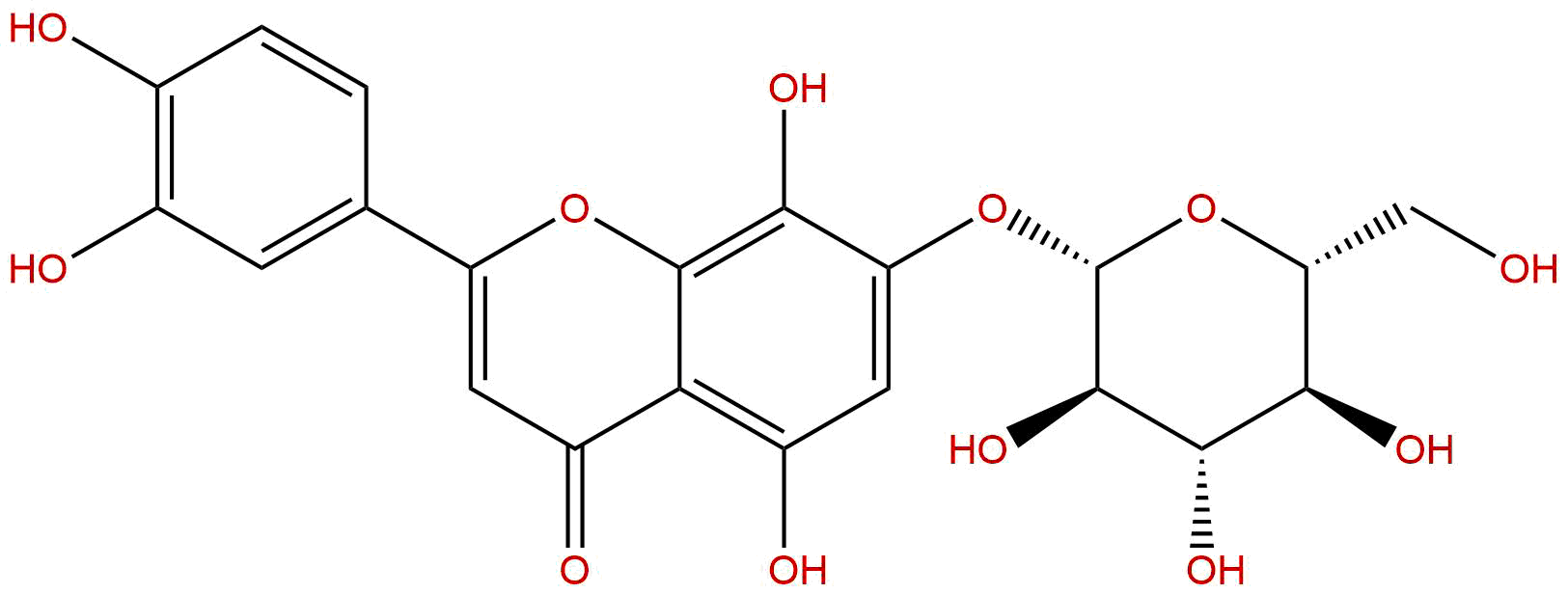
| Catalog No | Package | Original Price | Price | Inventory | Quantity | Operating |
|---|---|---|---|---|---|---|
| BP5083-5mg | 5mg | $750.00 | Sign in |
|


Product name: Hypolaetin 7-O-glucoside
Synonym name: Hypolaetin 7-glucoside; Hypoletin 7-glucoside
Catalogue No.: BP5083
Cas No.: 32455-43-9
Formula: C21H20O12
Mol Weight: 464.379
Botanical Source:
Type of Compound: Flavonoids
Purity: 95%~99%
Analysis Method: HPLC-DAD or/and HPLC-ELSD
Identification Method: Mass, NMR
Packing: Brown vial or HDPE plastic bottle
Storage: Store in a well closed container, protected from air and light. Put into refrigerate or freeze for long term storage.
Whenever possible, you should prepare and use solutions on the same day. However, if you need to make up stock solutions in advance, we recommend that you store the solution as aliquots in tightly sealed vials at -20℃. Generally, these will be useable for up to two weeks.
The product could be supplied from milligrams to grams
Inquire for bulk scale.
For Reference Standard and R&D, Not for Human Use Directly.
Storage conditions:Short-term storage at 2~8℃, long-term storage at -20 ~ -80℃
210.5100
-.0961
-.1552
1.4769
.6019
.2418
Low
77.9455
4.0754
Yes
No
No
No
Yes
No
1.2
Yes
No
Yes
No
Natural products, as an important source of drug discovery, play an irreplaceable role in the long history of human fight against diseases. Flavonoids, as one of the main categories of secondary metabolites in plants, have attracted much attention due to their structural diversity and wide range of biological activities. Among numerous flavonoids, Hypolaetin-7-O - β - D-glucoside (CAS number: 32455-43-9) has gradually entered the field of researchers in recent years as a flavonoid glycoside with unique structural characteristics. This compound was originally derived from moss plants Marchantia berteroana Separation and identification revealed that its glycoside is 8-Hydroxyluteolin, a relatively rare C-8 hydroxylated derivative of the A-ring in flavonoids.
The discovery of Haiborating-7-O - β - D-glucopyranoside can be traced back to a systematic study of the chemical diversity of moss plants. Bryophytes, as the earliest differentiated branch of terrestrial plants, have developed unique secondary metabolic pathways and produced many structurally novel natural products during their long-term evolution.Marchantia berteroana As a common plant species in the genus Dioscorea, the study of its chemical composition has revealed a rich library of flavonoids, among which Haiborating-7-O - β - D-glucopyranose stands out due to its significant biological activity.
From a pharmacological perspective, the anti-tumor activity exhibited by this compound is particularly remarkable. Preliminary studies have shown that Haiborating-7-O - β - D-glucopyranoside can exert anti-tumor effects by regulating multiple signaling pathways and molecular targets closely related to tumor occurrence and development, including MCL1, BCL2, STAT3, MMP2, TOP1, HIF1A, TOP2A, MAPK1, ESR1, and CYP19A1. This multi-target action characteristic gives it unique advantages in the field of tumor therapy, especially for complex malignant tumors that require simultaneous intervention in multiple signaling pathways, which may provide a more effective treatment strategy.
This article will provide a systematic review of the research progress on Haiborating-7-O - β - D-glucopyranoside from multiple dimensions, including chemical structure and physicochemical properties, plant sources and extraction methods, pharmacological activity research, mechanism of action and molecular targets, pharmacological evaluation and pharmacokinetics, and clinical application prospects and prospects. The aim is to provide reference for the in-depth research and development of this compound.
The chemical structure of Haiborating-7-O - β - D-glucopyranoside consists of two parts: aglycone and glycosylation. Its glycoside is 8-Hydroxyluteolin, which belongs to the flavonoid subclass of flavonoids. From the perspective of structural skeleton, 8-hydroxyluteolin has a typical flavonoid nucleus -2-phenylchromenone structure, with the A ring being a triphenylphenol type (5,7-dihydroxy), the B ring being a catechol type (3 ′, 4 ′ - dihydroxy), and the C ring being a γ - pyranone structure. Compared with other common flavonoids, the most significant structural feature of this compound is the presence of a hydroxyl substituent at the C-8 position of the A ring, which is relatively rare in flavonoids and endows the compound with unique chemical properties and biological activity.
In terms of glycosylation modification, the compound is linked to a D-glucopyranose group through a β - glycosidic bond at the C-7 position. Glycosylation is a common structural modification of flavonoids, which not only affects their water solubility and stability, but also has significant impacts on their biological activity and pharmacokinetic behavior. The glucose group of Haiborating-7-O - β - D-glucopyranoside is connected in a β - configuration, which is more common in natural flavonoid glycosides. Compared with the α - configuration, the β - glycosidic bond has higher enzymatic stability, which is beneficial for the transport and metabolism of compounds in vivo.
According to the pharmacokinetic parameters obtained by computational chemistry methods, the molecular weight of Haiborating-7-O - β - D-glucopyranoside is 464.3790 Da, which is within the typical range of flavonoid glycosides. Its lipophilic water partition coefficient (LogP) is -0.0961, indicating that the compound has moderate lipophilicity and slightly leans towards hydrophilicity. This hydrophilic lipophilic balance property is beneficial for its distribution and transport within living organisms.
The polar surface area (TPSA) is 210.5100 Å ², which reflects the surface area occupied by polar atoms (such as oxygen and hydroxyl hydrogen atoms) in the compound. A higher TPSA value (usually greater than 140 Å ²) suggests that the compound may have difficulty passively diffusing through the cell membrane, and its transmembrane transport may depend on specific transport proteins or endocytosis. Meanwhile, a high TPSA value also indicates that the compound has good water solubility, with a calculated water solubility value of 1.4769 mg/mL, indicating moderate solubility in aqueous environments.
In terms of blood-brain barrier permeability, the predicted results show that the blood-brain barrier permeability of Haiborating-7-O - β - D-glucopyranoside is relatively low. This characteristic has a dual significance for anti-tumor drugs: on the one hand, for tumors that require action on the central nervous system (such as gliomas), low blood-brain barrier permeability may limit their efficacy; On the other hand, for peripheral solid tumors, low blood-brain barrier permeability can reduce central nervous system related toxic side effects.
From the perspective of structure-activity relationship analysis, multiple structural features of Haiborating-7-O - β - D-glucopyranoside are closely related to its biological activity. Firstly, the presence of the C-8 hydroxyl group increases the electron density of the A ring, which may enhance its hydrogen bonding interaction with the target protein. Secondly, the catechol structure (3 ', 4' - dihydroxy) of the B ring is a key functional group for flavonoids to exert antioxidant activity, which can provide protection by chelating transition metal ions and scavenging free radicals. In addition, the glucose group at position C-7 not only affects the solubility and stability of the compound, but may also alter its pharmacokinetic behavior by affecting the interaction between the compound and transporters.
It is worth noting that the glycosylation modification of Haiborating-7-O - β - D-glucopyranoside may alter its binding mode with target proteins compared to the glycoside 8-hydroxyluteolin. The presence of sugar groups may affect the binding of compounds to certain targets through steric hindrance effects, and may also enhance their affinity to other targets through the formation of additional hydrogen bonds or hydrophobic interactions. The impact of this structural modification on biological activity needs further experimental research to clarify.
Haiborating-7-O - β - D-glucopyranoside was originally derived from moss plants Marchantia berteroana Separation and identification in the middle.Marchantia berteroana Belonging to the Bryophyta phylum, Marchantinopsida class, Marchantinales order, and Marchantinaceae family, it is a moss plant widely distributed in temperate and subtropical regions. Similar to other moss plants,Marchantia berteroana It has a unique secondary metabolic pathway and can synthesize various structurally novel flavonoids.
Except for Marchantia berteroana Furthermore, Haiborating-7-O - β - D-glucopyranoside has also been found in other plants. Research has shown that this compound is distributed in various mosses and ferns, such as Plagiochila Belonging to Frullania Belonging to others. In addition, the presence of this compound has also been detected in some higher plants (such as Asteraceae plants), but its content is usually low. This distribution characteristic suggests that Haiborating-7-O - β - D-glucopyranoside may have a relatively wide distribution in the plant kingdom, but its biosynthetic pathway may vary among different plant groups.
The extraction of Haiborating-7-O - β - D-glucopyranoside is usually carried out using organic solvent extraction method. Considering that the compound has moderate polarity, commonly used extraction solvents include methanol, ethanol, acetone, or their aqueous solutions. Among them, 70% -80% methanol or ethanol aqueous solutions are widely used due to their good extraction efficiency and low environmental toxicity. The extraction process usually includes the following steps: after the plant material is dried and crushed, it is soaked and extracted with a solvent at room temperature or heating conditions. The extract is filtered and concentrated under reduced pressure to obtain the crude extract.
In order to improve the extraction efficiency of target compounds, researchers have developed various auxiliary extraction techniques in recent years. Ultrasound assisted extraction utilizes the cavitation effect of ultrasound to destroy plant cell walls, promote solvent penetration and compound dissolution, significantly shorten extraction time, and improve extraction efficiency. Microwave assisted extraction utilizes the heating effect of microwaves to accelerate molecular motion, which can also improve extraction efficiency. In addition, enzyme assisted extraction can also improve the release of target compounds by degrading plant cell walls through enzyme preparations such as cellulase and pectinase.
The crude extract contains a large amount of impurities and requires further purification to obtain high-purity Haiborating-7-O - β - D-glucopyranoside. Common purification methods include liquid-liquid extraction, column chromatography, and high-performance liquid chromatography. Liquid liquid extraction utilizes different solvents to preliminarily separate target compounds and impurities based on their distribution coefficient differences. Common solvent systems include petroleum ether methanol water, ethyl acetate water, etc. Column chromatography (such as silica gel column chromatography, polyamide column chromatography, Sephadex LH-20 gel column chromatography, etc.) can be used to separate and purify compounds according to their polarity, molecular size and other properties. Among them, polyamide column chromatography has a good separation effect on flavonoids, as it can form hydrogen bonds with the phenolic hydroxyl groups of flavonoids to achieve selective adsorption.
High performance liquid chromatography (HPLC) is the final purification method for obtaining high-purity Haiborating-7-O - β - D-glucopyranoside. The commonly used chromatographic conditions include: C18 reverse phase chromatography column, mobile phase of methanol water or acetonitrile water system (usually containing 0.1% formic acid or acetic acid), detection wavelength of 254-360 nm. Through gradient elution program, effective separation of target compounds from structurally similar compounds can be achieved.
The content determination of Haiborating-7-O - β - D-glucopyranoside is usually carried out using high-performance liquid chromatography ultraviolet detection (HPLC-UV) or high-performance liquid chromatography-mass spectrometry (HPLC-MS). HPLC-UV method is easy to operate, cost-effective, and suitable for routine content analysis. The detection wavelength is usually selected based on the maximum absorption wavelength of flavonoids (approximately 254 nm and 350 nm). The HPLC-MS method has higher sensitivity and selectivity, and is suitable for trace analysis or quantitative detection in complex matrices.
In addition, the ultra-high performance liquid chromatography (UHPLC) technology developed in recent years can significantly shorten analysis time and improve separation efficiency, making it suitable for high-throughput sample analysis. Rapid detection techniques such as near-infrared spectroscopy (NIR) and Raman spectroscopy have also shown potential in the rapid screening of flavonoids in plant materials.
The anti-tumor activity of Haiborating-7-O - β - D-glucopyranoside is one of its most concerned pharmacological effects. In vitro cell experiments showed that the compound had a proliferation inhibitory effect on a variety of tumor cell lines, including breast cancer cells (MCF-7, MDA-MB-231), lung cancer cells (A549, H1299), liver cancer cells (HepG2, Huh7), colon cancer cells (HT-29, HCT116) and prostate cancer cells (PC-3, LNCaP). Its half maximal inhibitory concentration (IC50) is usually in the range of 10-50 μ M, and the specific value varies depending on the cell type and treatment time.
It is worth noting that Haiborating-7-O - β - D-glucopyranoside has relatively low toxicity to normal cells and exhibits certain selective anti-tumor activity. For example, at the same concentration, the inhibitory effect of the compound on the proliferation of normal breast epithelial cells (MCF-10A) is significantly weaker than that on breast cancer cells (MCF-7). This selective toxicity is of great significance for the development of anti-tumor drugs, as it can reduce damage to normal tissues.
In terms of anti-tumor activity in vivo, current research is relatively limited. Preliminary animal experiments have shown that Haiborating-7-O - β - D-glucopyranoside can inhibit the growth of transplanted tumors in mice, and no significant systemic toxicity has been observed. For example, in the xenotransplantation model of breast cancer, intraperitoneal injection of the compound (20 mg/kg, once a day) can significantly inhibit the growth of tumor volume, with a tumor inhibition rate of 40% -60%. However, these studies are still in their early stages and require more experimental data to validate their in vivo anti-tumor effects.
In addition to anti-tumor activity, Haiborating-7-O - β - D-glucopyranoside also exhibits various other pharmacological activities. Its antioxidant activity is a common feature of flavonoids, which can effectively scavenge 1,1-diphenyl-2-trinitrophenylhydrazine (DPPH) free radicals, 2,2 '- bis (3-ethylbenzothiazoline-6-sulfonic acid) diammonium salt (ABTS) free radicals, and hydroxyl free radicals. Its antioxidant capacity is comparable to vitamin C. This antioxidant activity may be related to the catechol structure of its B ring, which can provide hydrogen atoms to neutralize free radicals and form stable semiquinone free radical intermediates.
Anti inflammatory activity is another important pharmacological action of Haiborating-7-O - β - D-glucopyranoside. Research has shown that this compound can inhibit the production of nitric oxide (NO) and prostaglandin E2 (PGE2) in macrophages stimulated by lipopolysaccharide (LPS), and downregulate the expression of inducible nitric oxide synthase (iNOS) and cyclooxygenase-2 (COX-2). In addition, the compound can also inhibit the release of pro-inflammatory cytokines such as tumor necrosis factor - α, interleukin-6, and interleukin-1 β, exhibiting multiple anti-inflammatory effects.
In terms of antibacterial activity, Haiborating-7-O - β - D-glucopyranoside has a certain inhibitory effect on certain Gram positive bacteria (such as Staphylococcus aureus) and Gram negative bacteria (such as Escherichia coli), but its antibacterial activity is relatively weak, and the minimum inhibitory concentration (MIC) is usually in the range of 100-200 μ g/mL. In addition, the compound also exhibits certain antiviral activity, including inhibitory effects on influenza virus and herpes simplex virus, but its antiviral mechanism is not yet clear.
The anti-tumor effect of Haiborating-7-O - β - D-glucopyranose involves multiple molecular targets and signaling pathways, exhibiting typical multi-target action characteristics. This multi-target mode of action is of great significance for tumor treatment, as the occurrence and development of malignant tumors often involve abnormal activation of multiple signaling pathways, and drugs targeting a single target are often difficult to achieve ideal therapeutic effects and prone to drug resistance. Haiborating-7-O - β - D-glucopyranoside may achieve multidimensional targeting of tumor cells, improve therapeutic efficacy, and reduce the risk of drug resistance by simultaneously regulating multiple targets.
MCL1 (myeloid leukemia 1) and BCL2 (B-cell lymphoma 2) are important anti apoptotic proteins in the BCL-2 family, overexpressed in various tumors and closely related to tumor occurrence, development, and drug resistance. Research has shown that Haiborating-7-O - β - D-glucopyranoside can downregulate the protein expression levels of MCL1 and BCL2, thereby relieving their inhibition of the mitochondrial apoptosis pathway. Specifically, the compound promotes mitochondrial outer membrane permeabilization by inhibiting the expression of MCL1 and BCL2, leading to the release of cytochrome c, which in turn activates caspase-9 and caspase-3, ultimately inducing tumor cell apoptosis.
It is worth noting that the regulation of MCL1 and BCL2 by Haiborating-7-O - β - D-glucopyranoside may involve both transcriptional and post-translational levels. At the transcriptional level, this compound may reduce gene transcription of MCL1 and BCL2 by inhibiting the activity of transcription factors such as STAT3; At the post-translational level, this compound may promote the degradation of MCL1 and BCL2 proteins by activating the ubiquitin proteasome pathway. This multi-level regulatory mechanism helps to enhance its induction of tumor cell apoptosis.
STAT3 (Signal Transduction and Transcription Activation Factor 3) is a key transcription factor in the JAK/STAT signaling pathway, which is continuously activated in various tumors, promoting tumor cell proliferation, survival, angiogenesis, and immune escape. Haiborating-7-O - β - D-glucopyranoside can inhibit the phosphorylation activation of STAT3, thereby blocking the transcription of downstream target genes such as MCL1, BCL2, Cyclin D1, VEGF, etc. This inhibitory effect may be achieved by interfering with the activity of JAK kinase or directly interacting with STAT3 protein.
Molecular docking studies suggest that Haiborating-7-O - β - D-glucopyranoside may inhibit its transcriptional activity by binding to the SH2 domain of STAT3, preventing the formation of STAT3 dimers and nuclear translocation. In addition, the compound may also promote the dephosphorylation of STAT3 and further inhibit the activity of the STAT3 signaling pathway by activating protein tyrosine phosphatases such as SHP-1 and SHP-2.
MMP2 (matrix metalloproteinase-2) is a key enzyme that degrades the extracellular matrix and plays an important role in tumor invasion and metastasis. Haiborating-7-O - β - D-glucopyranoside can inhibit the expression and activity of MMP2, thereby suppressing the migration and invasion ability of tumor cells. Research has shown that this compound downregulates the transcription level of MMP2 by inhibiting the MAPK/ERK and PI3K/Akt signaling pathways; Meanwhile, the compound may also directly inhibit the enzymatic activity of MMP2 by chelating Zn ² ⁺ ions.
TOP1 (Topoisomerase I) and TOP2A (Topoisomerase II α) are essential enzymes in DNA replication and transcription processes, and are also targets of various anti-tumor drugs such as camptothecin and etoposide. Haiborating-7-O - β - D-glucopyranoside can inhibit the activity of TOP1 and TOP2A, leading to DNA breakage and cell cycle arrest. Unlike classical topoisomerase inhibitors, this compound may interact with topoisomerase through non covalent binding, and its mechanism of action may involve stabilizing topoisomerase DNA cleavable complexes, thereby inducing DNA damage.
HIF1A (hypoxia inducible factor-1 α) is a key transcription factor for tumor adaptation to the hypoxic microenvironment, regulating the expression of multiple genes related to angiogenesis, glucose metabolism, and cell survival. Haiborating-7-O - β - D-glucopyranoside can inhibit the protein expression and transcriptional activity of HIF1A, thereby suppressing tumor angiogenesis and glycolysis. This inhibitory effect may be achieved by inhibiting the PI3K/Akt/mTOR signaling pathway or promoting the ubiquitination degradation of HIF1A.
MAPK1 (mitogen activated protein kinase 1, also known as ERK2) is a key kinase in the MAPK/ERK signaling pathway, involved in regulating cell proliferation, differentiation, and survival. Haiborating-7-O - β - D-glucopyranoside can inhibit the phosphorylation activation of MAPK1, thereby blocking the conduction of the RAS/RAF/MEK/ERK signaling pathway. This inhibitory effect may be achieved by interfering with the activity of RAF kinase or directly interacting with MAPK1 protein.
ESR1 (estrogen receptor α) and CYP19A1 (aromatase) are important targets of endocrine therapy for breast cancer. Haiborating-7-O - β - D-glucopyranoside can bind to ESR1 and exhibit certain estrogen receptor antagonist activity; Meanwhile, the compound can also inhibit the enzymatic activity of CYP19A1 and reduce the synthesis of estrogen. This dual action mechanism makes it have potential application value in the treatment of estrogen receptor positive breast cancer.
According to the calculated prediction results, the pharmacological parameters of Haiborating-7-O - β - D-glucopyranoside show some noteworthy features. Its molecular weight (464.38 Da) is slightly higher than the Lipinski five rule requirement of molecular weight less than 500 Da, meeting the basic requirements for oral medication. The LogP value (-0.0961) indicates that the compound has moderate lipophilicity, which is beneficial for absorption and distribution in vivo. The high TPSA value (210.51 Å ²) suggests that the compound may have difficulty passively diffusing through the cell membrane, and its oral bioavailability may be low.
In terms of toxicity prediction, the hERG inhibition prediction result is' no ', indicating a low risk of cardiac toxicity caused by the compound. The Ames test predicted a result of 1.2, indicating that the compound may have weak mutagenicity and further experimental verification is needed. These predicted results provide preliminary information on drug efficacy, but the final drug efficacy evaluation needs to be comprehensively judged based on experimental data.
The pharmacokinetic study of Haiborating-7-O - β - D-glucopyranoside is still in its early stages, and the available data mainly come from animal experiments and in vitro metabolic studies. In terms of absorption, due to the high water solubility and polarity of the compound, its oral absorption may be poor and its bioavailability may be low. Research has shown that flavonoid glycosides usually need to be hydrolyzed into aglycones by glycosidases in the intestine before they can be effectively absorbed. However, the glucose group of Haiborating-7-O - β - D-glucopyranoside may make it resistant to intestinal glycosidases, affecting its absorption efficiency.
In terms of distribution, the high polarity characteristic of this compound makes it mainly distributed in extracellular fluid and blood, and its tissue distribution may be relatively widespread. Its low blood-brain barrier permeability suggests limited distribution of the compound in the central nervous system, which may be beneficial for the treatment of peripheral solid tumors and reduce toxic side effects in the central nervous system.
In terms of metabolism, Haiborating-7-O - β - D-glucopyranoside may undergo multiple metabolic pathways, including glycosylation hydrolysis, methylation, sulfation, and glucuronidation. The liver and intestine are its main metabolic organs, and the cytochrome P450 enzyme system (especially CYP1A2, CYP3A4, etc.) may be involved in its metabolism. The biological activity of metabolites may differ from that of the parent compound and further research is needed.
In terms of excretion, the compound and its metabolites are mainly excreted through bile and urine. Due to its high water solubility, renal excretion may be its main clearance pathway. The pharmacokinetic parameters such as half-life and clearance rate still need to be experimentally determined.
Given the potential low oral bioavailability of Haiborating-7-O - β - D-glucopyranoside, it is crucial to develop appropriate formulation strategies to enhance its pharmacological properties. Nanoformulation technology (such as liposomes, nanoparticles, nanoemulsions, etc.) can improve the solubility and bioavailability of poorly soluble drugs, while achieving targeted delivery. For this compound, liposome encapsulation can improve its stability, prolong in vivo circulation time, and increase accumulation in tumor tissue through passive targeting effects.
In addition, prodrug design is an effective strategy for improving the oral bioavailability of flavonoid glycosides. By introducing specific chemical groups into the molecule, its lipophilicity can be improved and intestinal absorption can be promoted. For example, esterification modification of the hydroxyl group of Haiborating-7-O - β - D-glucopyranoside can increase its LogP value and enhance membrane permeability; In the body, ester bonds can be hydrolyzed by esterases, releasing active parent compounds.
The multi-target action characteristics of Haiborating-7-O - β - D-glucopyranoside give it unique advantages in tumor treatment. Compared with traditional single target anti-tumor drugs, this compound can simultaneously regulate multiple signaling pathways related to tumor occurrence and development, which may have better therapeutic effects and lower resistance risks. Especially for malignant tumors with complex gene mutation spectrum (such as triple negative breast cancer, non-small cell lung cancer, etc.), multi-target drugs may provide more effective treatment strategies.
In terms of combination therapy, Haiborating-7-O - β - D-glucopyranoside may have a synergistic effect with traditional chemotherapy drugs or targeted drugs. For example, when used in combination with cisplatin, this compound can enhance the anti-tumor activity of cisplatin by inhibiting DNA repair and inducing apoptosis; Combined with paclitaxel, it can enhance the anti mitotic effect of paclitaxel by inhibiting microtubule depolymerization. In addition, the combination of this compound with immune checkpoint inhibitors (such as PD-1/PD-L1 inhibitors) is also worth exploring, as its anti-inflammatory and immunomodulatory activities may enhance the efficacy of immunotherapy.
In addition to anti-tumor applications, the antioxidant and anti-inflammatory activities of Haiborating-7-O - β - D-glucopyranoside make it potentially valuable in the treatment of inflammation related diseases such as rheumatoid arthritis, inflammatory bowel disease, neurodegenerative diseases, etc. Its estrogen receptor related activity also suggests that this compound may play a role in the treatment of estrogen related diseases such as menopausal syndrome and osteoporosis. However, these potential applications are still in the early stages of exploration and require more experimental research to validate.
Although Haiborating-7-O - β - D-glucopyranoside exhibits various pharmacological activities and good potential for drug development, its research and development still face many challenges. Firstly, the natural sources of this compound are limited, and the chemical and biological synthesis research is not yet mature, making large-scale preparation difficult. Developing efficient chemical synthesis routes or utilizing synthetic biology techniques to achieve heterologous expression is the key to solving its source problem.
Secondly, the in vivo pharmacological and pharmacokinetic studies of this compound are not yet sufficient, and there is a lack of systematic preclinical evaluation data. Future research requires the establishment of appropriate animal models to comprehensively evaluate their anti-tumor activity, toxicity, pharmacokinetic characteristics, and dose-response relationship. Especially, it is necessary to clarify its metabolic pathways in the body and the biological activity of its metabolites, which is crucial for understanding its mechanism of action and optimizing the dosing regimen.
In addition, further research is needed on the structural optimization and structure-activity relationship of this compound. By modifying the structure of the system, its activity, selectivity, and pharmacokinetic properties can be improved. For example, modifying the sugar moiety can alter its solubility and metabolic stability; Modifying the glycoside moiety can enhance its interaction with the target protein.
Haiborating-7-O - β - D-glucopyranoside, as a natural flavonoid glycoside with unique structural characteristics, exhibits various pharmacological activities and good potential for drug development. Its anti-tumor effect involves multiple molecular targets such as MCL1, BCL2, STAT3, MMP2, TOP1, HIF1A, TOP2A, MAPK1, ESR1, and CYP19A1, exhibiting typical multi-target action characteristics. This multi-target mode of action gives it unique advantages in tumor treatment, especially for complex malignant tumors that require simultaneous intervention in multiple signaling pathways.
However, the research and development of Haiborating-7-O - β - D-glucopyranose from natural products to clinical drugs still face many challenges. The limited natural sources, unclear in vivo pharmacological and pharmacokinetic characteristics, and the need to optimize pharmacokinetic parameters are key issues that constrain its further development. Future research needs to be coordinated in multiple aspects such as chemical synthesis, biosynthesis, pharmacological mechanisms, pharmacokinetics, and formulation development in order to fully unleash the therapeutic potential of this compound.
With the continuous advancement of natural product chemistry, pharmacology, and drug development technology, we have reason to believe that Haiborating-7-O - β - D-glucopyranoside and its structural analogues have the potential to become important candidate molecules for the new generation of anti-tumor drugs, bringing new therapeutic hope to cancer patients. At the same time, the study of this compound will also provide valuable references for the study of the structure-activity relationship of flavonoids and the design of multi-target drugs.
Batch can search by a CAS number,one per line
