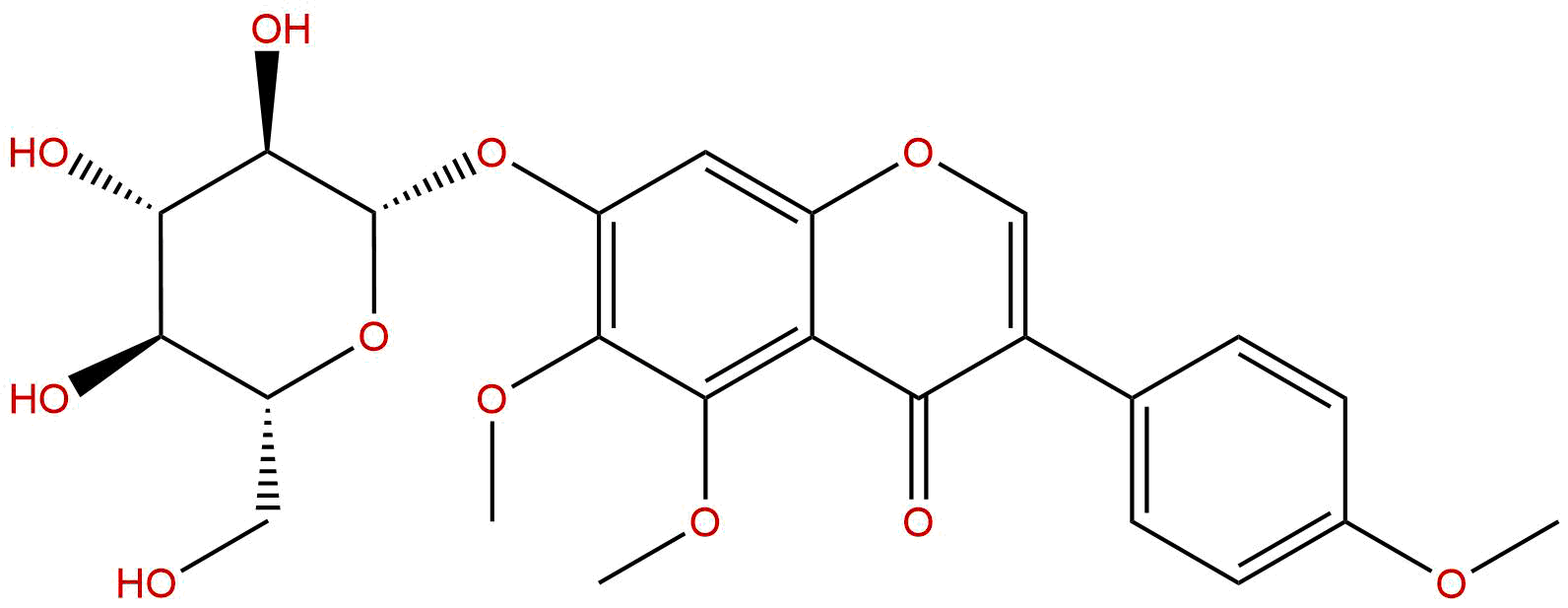


Product name: 5-Methoxyafrormosin 7-O-glucoside
Synonym name: 5,4'-Dimethoxyltectoridin
Catalogue No.: BP2257
Cas No.: 64656-92-4
Formula: C24H26O11
Mol Weight: 490.461
Botanical Source:
Type of Compound: Isoflavones
Purity: 95%~99%
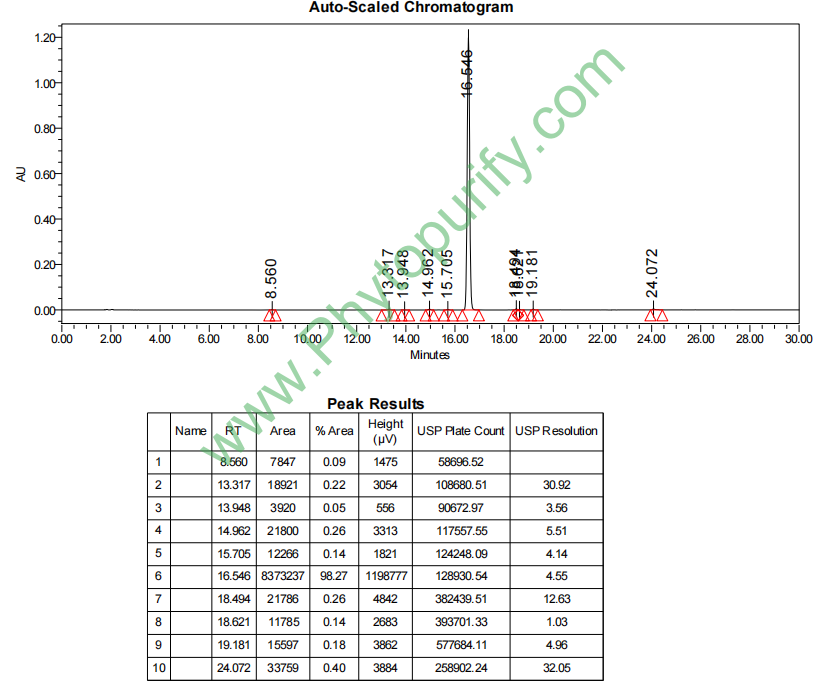
Analysis Method: HPLC-DAD or/and HPLC-ELSD
Identification Method: Mass, NMR
Packing: Brown vial or HDPE plastic bottle
Storage: Store in a well closed container, protected from air and light. Put into refrigerate or freeze for long term storage.
Whenever possible, you should prepare and use solutions on the same day. However, if you need to make up stock solutions in advance, we recommend that you store the solution as aliquots in tightly sealed vials at -20℃. Generally, these will be useable for up to two weeks.
The product could be supplied from milligrams to grams
Inquire for bulk scale.
For Reference Standard and R&D, Not for Human Use Directly.
HPLC of 5-Methoxyafrormosin 7-O-glucoside
Storage conditions:Short-term storage at 2~8℃, long-term storage at -20 ~ -80℃
157.2800
.6082
.6080
.4145
.5510
.9214
Low
79.7349
3.8588
Yes
No
No
No
Yes
No
0.9
Yes
No
No
Yes
Natural products, as an important source of drug discovery, play an indispensable role in the long history of human struggle against diseases. Flavonoids, as the most widely distributed class of secondary metabolites in nature, have attracted much attention due to their structural diversity and extensive biological activity. Among them, isoflavone compounds, especially those belonging to the Iris genus(Iris)The flavonoid glycosides rich in plants have become a research hotspot in recent years due to their unique pharmacological effects. Iridine-5,4 '- Dimethyl Ether (5-Methoxyafrormosin 7-O-glucoside), as a structurally specific isoflavone glycoside, is gradually showing great potential in the treatment of inflammatory diseases, especially colitis.
Colitis, especially ulcerative colitis (UC), is a chronic non-specific intestinal inflammatory disease with complex etiology and a prolonged and difficult to cure course. It is listed as one of the modern refractory diseases by the World Health Organization. The pathogenesis involves the interaction of multiple factors such as genetic susceptibility, dysbiosis of gut microbiota, dysfunction of intestinal mucosal barrier, and abnormal immune response. The commonly used therapeutic drugs in clinical practice, such as aminosalicylic acid preparations, glucocorticoids, and immunosuppressants, can partially control symptoms, but often come with significant side effects, drug resistance, and high recurrence rates after discontinuation. Therefore, searching for efficient and low toxicity new therapeutic molecules from natural products has become an important research direction in this field.
Iridine-5,4 '- dimethyl ether (hereinafter referred to as "the compound") stands out in this context. Its chemical structure is an oxygen glycoside formed by the 7-hydroxyl group of 5-methoxy-7-hydroxy-4 '- methoxyflavone and glucose. This unique substitution pattern endows it with physicochemical properties and biological activity that are different from other flavonoids. Preliminary pharmacological studies have revealed that the compound can regulate inflammation, oxidative stress, and cell apoptosis through multiple targets and pathways, demonstrating significant therapeutic effects in various colitis models. This article aims to systematically review the chemical structure, plant origin, pharmacological activity, mechanism of action, and pharmacological evaluation of this compound, in order to provide comprehensive scientific basis for the in-depth research and clinical translation of this natural product.
The chemical name of irisin-5,4 '- dimethyl ether is 5-methoxy-7- (β - D-glucopyranosyl) -4' - methoxyflavone, and its core skeleton is isoflavone, namely 3-phenylchromenone. Compared with classical isoflavones such as daidzein, this compound has a methoxy group (- OCH ∝) at the C-5 position of the A ring and the C-4 'position of the B ring, while a glucose group is connected to the C-7 position of the A ring through a glycosidic bond. This structural feature combines the lipophilicity of isoflavone glycosides with the hydrophilicity of glycosides.
From the perspective of physical and chemical properties, the molecular formula of this compound is C ₂∝ H ₂₄ O ₁₁, with a molecular weight of 490.4610 Da. Its lipid water partition coefficient LogP is 0.6082, indicating that the compound has moderate lipophilicity, which is beneficial for its penetration of cell membranes, but at the same time, it is limited by the sugar moiety, making its overall hydrophilicity strong. The topologically polar surface area (TPSA) is as high as 157.2800 Å ², which is much higher than the recommended upper limit of 140 Å ² for oral drugs, mainly due to the numerous hydroxyl and ether oxygen atoms in the molecule. A high TPSA value usually indicates that the compound is difficult to passively diffuse through the cell membrane, especially the blood-brain barrier. In fact, its blood-brain barrier penetration ability has been evaluated as' low ', which to some extent limits its application in central nervous system diseases, but it may be a favorable factor for treating peripheral tissue, especially local inflammation in the intestine, as it can reduce potential side effects on the central nervous system.
Water solubility is one of the key parameters affecting the oral bioavailability of drugs. The predicted water solubility value of this compound is 0.4145 mg/mL, which belongs to moderate solubility. Although the presence of sugar groups increases its water solubility, the methoxy and aromatic ring structures of the glycoside moiety still limit its solubility. In addition, the compound showed a negative result in the hERG (human ether-a-go-go related gene) potassium channel inhibition assay, indicating a low risk of causing QT interval prolongation and arrhythmia in the heart, which is a good safety signal. The Ames test result is 0.9, indicating that it does not have significant mutagenicity and has a low risk of genetic toxicity. These preliminary pharmacological parameters have laid a solid foundation for the further development of the compound.
Iridaceae -5,4 '- dimethyl ether is mainly derived from the genus Iridaceae in the Iridaceae family(Iris)Plants. There are over 300 species of Iris plants worldwide, widely distributed in the northern temperate regions. China is one of their distribution centers and has abundant germplasm resources. Various iris plants, such as the German iris(Iris germanica)Iris fragrans(Iris pallida)Yellow Acorus calamus(Iris pseudacorus)And the Sichuan Shegan, a specialty of our country(Iris tectorum)All of them have been reported to contain this compound. Among them, the dried rhizome of Sichuan Shegan (Shegan) is commonly used in traditional Chinese medicine for clearing heat, detoxifying, eliminating phlegm, and benefiting the throat. Its chemical composition is complex, and isoflavones are one of its main active ingredient groups.
The biosynthetic pathway of this compound in plants belongs to the phenylpropane metabolic pathway. Firstly, phenylalanine undergoes a series of enzymatic reactions to generate 4-coumaroyl CoA, which then binds with malonyl CoA and is catalyzed by chalcone synthase (CHS) to form chalcone, which is subsequently isomerized into an isoflavone backbone. Subsequently, through modification reactions such as hydroxylation, methylation, and glycosylation, irisin-5,4 '- dimethyl ether is ultimately formed. Among them, the methoxylation at positions C-5 and C-4 'is catalyzed by specific O-methyltransferases, while the glycosylation at position C-7 is completed by UDP glucosyltransferases.
In terms of extraction methods, traditional solvent extraction is still the main means of obtaining the compound. Due to the presence of both polar sugar groups and non-polar aromatic rings in its molecules, medium polarity solvents such as methanol, ethanol, or their aqueous solutions are usually used for extraction. For example, after crushing the dried iris rhizome, it is subjected to percolation or reflux extraction with 70% -95% ethanol at room temperature or heating conditions. The extract is then concentrated under reduced pressure to obtain the total extract. In order to improve extraction efficiency and selectivity, modern technologies such as ultrasound assisted extraction and microwave-assisted extraction have also been introduced in recent years.
Separation and purification are key steps in the study of this compound. Due to the complex composition of plant extracts, it is usually necessary to combine multiple chromatographic techniques. The classic process includes: liquid-liquid extraction of the total extract (such as extraction with petroleum ether, ethyl acetate and n-butanol in turn), preliminary separation of the n-butanol layer or ethyl acetate layer rich in isoflavone glycosides by silica gel column chromatography and Sephadex LH-20 gel column chromatography, and refining by preparative HPLC to obtain high-purity monomer compounds. During the separation process, the characteristic absorption of the compound under ultraviolet light (254 nm or 280 nm) was used for detection, and the structure was identified by combining mass spectrometry (MS) and nuclear magnetic resonance (NMR) spectroscopy techniques.
In recent years, research on the pharmacological activity of irisin-5,4 '- dimethyl ether has mainly focused on anti-inflammatory, antioxidant, and immune regulatory aspects, especially its protective effect in colitis models, which has attracted widespread attention.
1. Anti colitis activity
This is the most prominent pharmacological activity of the compound. Multiple in vivo studies have used chemically induced colitis animal models, such as the dextran sulfate sodium (DSS) - induced mouse colitis model, to evaluate its efficacy. The experimental results showed that oral or intraperitoneal injection of this compound can significantly reduce the disease activity index (DAI) of model mice, including symptoms such as weight loss, diarrhea, and rectal bleeding. Histopathological analysis showed that the compound can effectively improve the damage of colon mucosa, reduce inflammatory cell infiltration, protect crypt structure, and reduce the activity of myeloperoxidase (MPO) in colon tissue (MPO is a marker enzyme for neutrophil infiltration). These results strongly demonstrate the significant therapeutic effect of the compound on experimental colitis.
2. Anti inflammatory activity
The anti-inflammatory effect of this compound is the core of its anti colitis activity. At the cellular level, this compound can significantly inhibit the production of pro-inflammatory cytokines, including tumor necrosis factor - α (TNF - α), interleukin-1 β (IL-1 β), and interleukin-6 (IL-6), in macrophages (such as RAW264.7 cells) or colon epithelial cells (such as Caco-2 cells) stimulated by lipopolysaccharide (LPS). Meanwhile, it can also downregulate the expression of inducible nitric oxide synthase (iNOS) and cyclooxygenase-2 (COX-2), thereby reducing the production of inflammatory mediators such as nitric oxide (NO) and prostaglandin E ₂ (PGE ₂). This broad-spectrum anti-inflammatory effect suggests that it may act on upstream key nodes of the inflammatory signaling pathway.
3. Antioxidant activity
Oxidative stress plays a role in promoting the onset and progression of colitis. This compound exhibits excellent antioxidant capacity. In vitro chemical experiments, it can effectively scavenge DPPH free radicals and ABTS cationic free radicals, and has reducing power. In cell models, this compound can reduce the increase in reactive oxygen species (ROS) levels caused by oxidative stress inducers such as hydrogen peroxide (H2O2), and increase the activity of endogenous antioxidant enzymes such as superoxide dismutase (SOD), catalase (CAT), and glutathione peroxidase (GSH Px) in cells. This antioxidant effect helps protect intestinal epithelial cells from oxidative damage and maintain the integrity of the intestinal mucosal barrier.
4. Other potential activities
In addition to its anti colitis effect, preliminary studies also suggest that the compound may have other pharmacological activities. For example, there are reports that it may have a protective effect on non-alcoholic fatty liver disease (NAFLD) model mice by regulating lipid metabolism and anti-inflammatory effects. In addition, based on its isoflavone skeleton, it may also exhibit some estrogen like activity, but the specific effects and intensity still need further research.
The pharmacological activity of irisin-5,4 '- dimethyl ether does not originate from a single target, but rather forms a complex regulatory network by acting on multiple molecular targets and signaling pathways, thereby exerting its comprehensive therapeutic effect. According to existing research, its mechanism of action mainly involves the following aspects and is highly consistent with the target information you provided.
1. Regulating the TLR4/NF - κ B signaling pathway
Toll like receptor 4 (TLR4) is a key receptor that recognizes patterns of pathogen associated molecules such as LPS. Upon activation, it leads to the activation of nuclear factor kappa B (NF - κ B) through the downstream adaptor protein MyD88. Activated NF - κ B (composed of subunits such as RELA) enters the nucleus and initiates the transcription of a series of pro-inflammatory genes (such as TNF - α, IL-1 β, IL-6, COX-2). Research has shown that this compound can significantly inhibit LPS induced TLR4 expression and block its downstream signaling, thereby inhibiting the phosphorylation and degradation of I κ B α, preventing the nuclear translocation of RELA, and ultimately reducing the production of pro-inflammatory cytokines. Therefore,TLR4 and RELA It is the core target for the compound to exert anti-inflammatory effects.
2. Activate the NFE2L2/ARE antioxidant pathway
Nuclear factor E2 related factor 2 (NFE2L2, also known as Nrf2) is the main transcription factor for cells to combat oxidative stress and electrophilic substances. Under normal circumstances, NFE2L2 binds to Keap1 and is anchored in the cytoplasm. When stimulated by oxidative stress or electrophilic agents, NFE2L2 dissociates from Keap1, translocates into the nucleus, binds to antioxidant response elements (ARE), and initiates the expression of downstream antioxidant enzymes and phase II detoxifying enzymes (such as SOD, CAT, GSH Px, HO-1, NQO1). This compound has been shown to activate the NFE2L2 signaling pathway, promote nuclear translocation, and enhance the antioxidant defense ability of cells. This mechanism is directly related to its antioxidant activity,NFE2L2 It is its key target.
3. Regulating NLRP3 inflammasome and CASP1
NLRP3 inflammasome is an important component of the innate immune system, which recruits and cleaves pro-caspase-1 upon activation to form activated Caspase-1(CASP1). Activated CASP1 subsequently cleaves pro-IL-1 β and pro-IL-18, producing mature IL-1 β and IL-18, and inducing cell apoptosis. In colitis, abnormal activation of NLRP3 inflammasomes is a key link driving the amplification of the inflammatory cascade. Research has found that this compound can inhibit the assembly and activation of NLRP3 inflammasomes, reduce the activity of CASP1, thereby reducing the secretion of IL-1 β and exerting anti-inflammatory effects.
4. Regulating sphingolipid metabolism and FAAH
Sphingolipid metabolism plays an important role in inflammation and cellular signaling. Sphingosine kinase 1(SPHK1)Catalytic phosphorylation of sphingosine to sphingosine-1-phosphate (S1P), which is expressed through its receptor (e.g LPAR2 Note: S1P receptors intersect with lysophosphatidic acid receptors, but here LPAR2 may refer to S1P receptors or related receptors, which exert pro-inflammatory and pro proliferative effects. In addition, fatty acid amide hydrolase(FAAH)It is the main degrading enzyme of the endocannabinoid system, and its activity affects the levels of anti-inflammatory mediators such as arachidonic acid ethanolamine (AEA) in the body. This compound may alleviate inflammation by inhibiting SPHK1 activity and reducing S1P production; At the same time, it may also exert anti-inflammatory and analgesic effects by inhibiting FAAH activity, increasing AEA levels.SPHK1 and FAAH It is its potential target of action.
5. Other targets
This compound has also been found to regulate CES1 The activity of carboxylesterase 1 may affect its own metabolism or the metabolism of other drugs. In addition, it may activate the farnesol X receptor(NR1H4 FXR is used to regulate bile acid metabolism and intestinal homeostasis, which is of great significance for maintaining intestinal barrier function and inhibiting inflammation. Correct PRKCA The regulation of protein kinase C α may affect various processes such as cell proliferation, differentiation, and apoptosis.
In summary, irisin-5,4 '- dimethyl ether exerts a powerful therapeutic effect in colitis models by inhibiting the TLR4/NF - κ B and NLRP3/CASP1 pro-inflammatory pathways, activating the NFE2L2 antioxidant pathway, and regulating lipid signaling pathways such as SPHK1/S1P and FAAH/AEA, forming a multi-target and multi-level synergistic regulatory network.
The evaluation of drug properties and pharmacokinetic studies are crucial steps in promoting natural products from the laboratory to clinical applications. Based on the parameters you provided and existing literature, conduct a preliminary evaluation of the pharmacological properties of the compound.
1. Analysis of pharmacological parameters
2. Pharmacokinetic characteristics (prediction and preliminary study)
3. Challenges and strategies for drug development
The main challenge for the pharmacological development of this compound is poor oral absorption. To improve its bioavailability, the following strategies can be adopted:
- Prodrug design Modify the hydroxyl groups in the molecule, such as preparing phosphate esters, amino acid esters, or long-chain fatty acid esters, to improve their lipid solubility and intestinal permeability. After entering the body, these prodrugs are enzymatically hydrolyzed or hydrolyzed, releasing the original drug.
- Formulation optimization Using nanotechnology, such as liposomes, polymer nanoparticles, solid lipid nanoparticles, etc., to encapsulate the compound and improve its solubility and oral absorption.
- Structural modification On the basis of retaining the core pharmacophore, modify the sugar moiety or search for more active glycoside derivatives to simplify the structure and improve pharmacokinetic properties.
Iris-5,4 '- dimethyl ether, as a natural isoflavone glycoside derived from traditional Chinese medicine, has a very broad application prospect in the field of colitis treatment.
1. As a new candidate drug for anti colitis treatment
This compound works synergistically through multiple targets and pathways, while inhibiting inflammation, oxidative stress, and cell death. This comprehensive regulatory mode is highly consistent with the complex pathological mechanism of colitis. Compared to single target drugs, it may have the advantages of more comprehensive efficacy and less susceptibility to drug resistance. Its good preliminary safety (low hERG and Ames toxicity) also adds weight to its clinical application. In the future, if the problem of low oral bioavailability of this compound can be solved through medicinal chemistry and pharmacology, it is highly likely to develop into a new type of naturally derived colitis treatment drug.
2. Optimize the structure as a lead compound
The unique isoflavone skeleton and substitution mode of this compound provide rich structural modification space for medicinal chemists. By studying the structure-activity relationship (SAR) of the system, the effects of C-5, C-7, and C-4 'substituents on activity can be explored. For example, alternative sugar groups such as lactose and xylose can be attempted to replace glucose, or different alkyl and acyl groups can be used to modify hydroxyl groups in order to obtain derivatives with stronger activity and better pharmacokinetic properties.
3. Combination use with other drugs
Given the complexity of colitis treatment, combination therapy is the future trend. This compound can be used in combination with existing aminosalicylic acid preparations, immunosuppressants, or biologics to achieve synergistic effects and reduce side effects. For example, combining it with low-dose mesalazine may reduce the risk of nephrotoxicity while maintaining efficacy.
4. Research prospects
Despite the promising prospects, research on this compound is still in its early stages, and the following key scientific questions need to be addressed in the future:
- In depth pharmacokinetic research Systematic in vivo pharmacokinetic experiments are needed to clarify the entire process of absorption, distribution, metabolism, and excretion, especially the absolute bioavailability after oral administration.
- Comprehensive analysis of the mechanism of action Although multiple targets have been identified, the primary secondary relationships and synergistic mechanisms between these targets are still unclear. It is necessary to use techniques such as gene knockout animal models, proteomics, and metabolomics to construct a more complete molecular regulatory network.
- Long term toxicological evaluation Standardized long-term toxicity experiments (such as 28 day or 90 day repeated dose toxicity experiments) are required to evaluate their potential chronic toxicity and target organ toxicity.
- Interactions of gut microbiota As a glycoside, this compound is bound to interact with the gut microbiota. It is necessary to study how the microbiota metabolizes the compound and how the compound in turn regulates the composition and function of the microbiota, which is crucial for understanding its overall efficacy.
Iris-5,4 '- dimethyl ether, as a structurally unique natural isoflavone glycoside, has shown remarkable potential in the treatment of inflammatory diseases such as colitis due to its multi-target pharmacological mechanism. It effectively controls inflammation and oxidative stress by inhibiting the TLR4/NF - κ B and NLRP3/CASP1 inflammatory pathways, activating the NFE2L2 antioxidant pathway, and regulating sphingolipid metabolism. Although its low oral bioavailability is currently a major challenge, this obstacle is expected to be overcome through modern drug development strategies such as prodrug design and nanoformulation. In the future, with the in-depth analysis of its mechanism of action and optimization of its pharmacokinetic properties, irisin-5,4 '- dimethyl ether and its derivatives are expected to become a new generation of natural drugs for the treatment of colitis, bringing new hope to patients suffering from this disease. The discovery of modern medicine from traditional Chinese medicine, although challenging, also contains infinite possibilities, and irisin-5,4 '- dimethyl ether is a shining new star on this path.
