Introduction/Overview
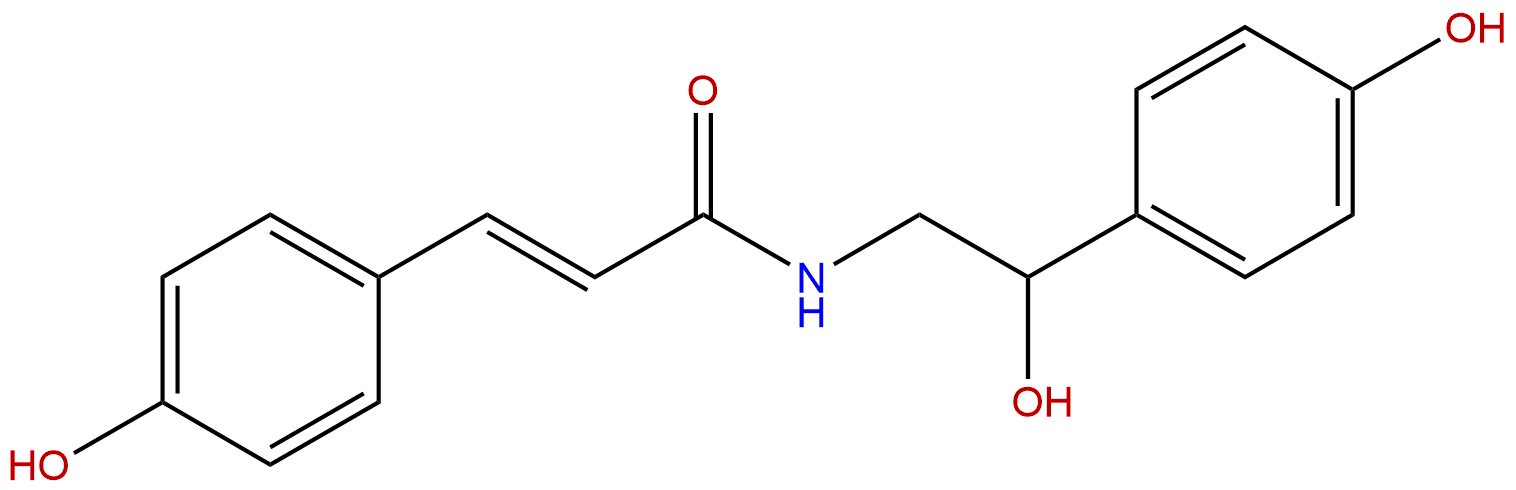
The fine regulation of energy metabolism homeostasis is one of the core topics of life science, and its imbalance is closely related to the occurrence and development of a series of metabolic diseases, such as obesity, type 2 diabetes, nonalcoholic fatty liver disease, etc. Therefore, the search for natural active molecules that can safely and effectively regulate energy metabolism has always been a hot topic in the field of drug development. Among numerous natural products, a class of phenolic amine compounds with unique structures has attracted much attention due to their potential metabolic regulatory activities. N-trans-p-Coumaroyl-deoxy (N-pCO) is a representative molecule among them. The CAS number of this compound is 66648-45-1. It is a conjugate formed by the amide bond between the biogenic monoamine demethylsimulin (Zhangyu amine) and the phenylpropanoid compound coumaric acid.
Norepinephrine plays multiple roles as a neurohormone, neuromodulator, and neurotransmitter in invertebrates, similar in function to norepinephrine in mammals. And coumaric acid is a hydroxycinnamic acid widely present in plants, with various biological activities such as antioxidant and anti-inflammatory. N-pCO ingeniously integrates these two types of active groups, making it possible to combine the receptor activation activity of amine substances with the antioxidant and signal regulatory potential of phenolic acid moieties. Early studies have revealed that N-pCO can stimulate cells transfected with human α 2-adrenergic receptors (α 2-ARs) and significantly affect key metabolic pathways such as glycogen breakdown, glycolysis, and gluconeogenesis, suggesting that it may play an important role in energy metabolism regulation. This article aims to systematically review the chemical properties, plant sources, pharmacological activities, mechanisms of action, and pharmacological properties of N-pCO, and to explore its potential as a lead compound for the treatment of metabolic diseases.
Chemical structure and physicochemical properties
The chemical structure of N-trans-p-changdouoyl-demethylsimulin clearly reflects its characteristics as a "hybrid molecule". Its molecular formula is C17H17NO4 and its molecular weight is 299.3260. The core structure consists of two parts: one is the skeleton of desmethylphenamine (p-hydroxyphenylethanolamine), which includes a benzene ring, an ethanolamine side chain, and a phenolic hydroxyl group; The other part is trans para coumaroyl (4-hydroxycinnamoyl), which contains a 4-hydroxyphenyl ring connected by an acrylic acid fragment. The two are covalently linked through an amide bond (- NH-CO -) formed between the amino group of demethylamine and the carboxyl group of p-coumaric acid.
This unique structure determines its key physicochemical properties. Firstly, the introduction of amide bonds significantly enhances the stability of the molecule, and its chemical properties are more stable compared to free norepinephrine. Secondly, there are phenolic hydroxyl groups (one on each benzene ring), alcohol hydroxyl groups (ethanolamine side chain), and amide bonds present simultaneously in the molecule, resulting in a theoretical topological polar surface area (TPSA) of 89.79 Å ², indicating that the molecule has a moderately high polarity. The calculated lipid water partition coefficient (LogP) is 1.4055, indicating that the compound has moderate lipophilicity and can penetrate cell membranes to some extent, but is not highly lipophilic. Its predicted water solubility is about 0.5225 mg/mL, belonging to the range of slightly soluble to soluble. These parameters collectively affect its bioavailability and distribution characteristics. It is worth noting that the predictive model shows a lower ability to cross the blood-brain barrier, mainly due to its molecular weight approaching 300 and containing multiple hydrogen bonds for receptors, limiting its free diffusion into the central nervous system, which may make its effect more inclined towards peripheral metabolic organs.
Plant sources and extraction methods
N-p-CO is not widely distributed in all plants, and it is currently reported to mainly exist in specific families and genera of plants, especially in some traditional medicinal plants. For example, it is Citrus genus The flowers, leaves, and fruit peels of Citrus plants have been detected, which is consistent with the abundant presence of its precursor substance, carmine, in citrus plants. In addition, in some Dendrobium genus Medicinal plants and parts of Dendrobium the composite family The presence of this compound or its analogues has also been found in plants. These plants are often used in traditional medicine for "clearing heat," "nourishing yin," or "regulating qi." Modern pharmacological research on them also focuses on anti-inflammatory, immune, and metabolic effects, suggesting that N-pCO may be one of the material bases for their effects.
The extraction and separation of N-pCO from plant materials usually follow the conventional process of natural product chemistry, but optimization is needed for its phenolic amine properties. The typical extraction process is as follows:
1. Extract Medium polarity solvents such as methanol, ethanol, or ethanol water mixed solvents are often used for extraction. These solvents can effectively dissolve N-pCO and its precursors and analogues. Ultrasound assisted extraction or heating reflux can improve extraction efficiency.
2. Coarse separation After vacuum concentration, the extract can be preliminarily purified using solvent partitioning method. For example, suspend the concentrate in water and extract it sequentially with petroleum ether, ethyl acetate, n-butanol, etc. N-pCO is mainly enriched in ethyl acetate or n-butanol due to its polarity and solubility.
3. Refined and purified Further purification is highly dependent on chromatographic techniques. Silica gel column chromatography is commonly used, with chloroform methanol or dichloromethane methanol gradient elution. Subsequently, fine separation was performed using reverse phase chromatography (such as C18 column, with methanol water or acetonitrile water as the mobile phase). Preparation based high-performance liquid chromatography (HPLC) is the final key step in obtaining high-purity N-pCO monomers, typically using a reverse phase column and monitoring the target peak with a UV detector (due to its benzene ring structure, strong absorption around 280-320 nm).
4. appraisal The purified compounds need to be structurally confirmed by spectroscopic methods such as nuclear magnetic resonance (NMR, including 1H NMR, 13C NMR, and 2D NMR), mass spectrometry (MS, especially high-resolution mass spectrometry HR-MS), and infrared spectroscopy (IR).
Pharmacological activity research
The pharmacological activity research of N-pCO is currently in its basic stage, but existing data has clearly outlined its role as a metabolic regulator, mainly focusing on energy metabolism related processes.
-
Regulatory effect on sugar metabolism This is the most significant characteristic activity of N-pCO. Research has shown that this compound can Promote glycogen breakdown Increase the release of glucose. At the same time, it can also Enhance glycolysis The process accelerates the utilization of glucose by cells to produce energy (ATP). In gluconeogenic organs such as the liver, N-pCO has also been found to be able to Stimulating gluconeogenesis Promote the conversion of non sugar substances (such as lactate and amino acids) into glucose. This seemingly contradictory effect (promoting both glucose production and utilization) may reflect its finely tuned regulatory function in different energy states of the body: promoting utilization when energy demand is high and promoting generation when energy reserves are insufficient.
-
The impact on energy consumption and heat generation In addition to sugar metabolism, N-pCO also has an impact on overall energy balance. The experiment shows that it can Increase oxygen uptake This is a direct indicator of accelerated cellular respiration and energy metabolism. More notably, its structural parent nucleus, norepinephrine, is known to stimulate thermogenesis in brown adipose tissue and beige adipose tissue by activating beta adrenergic receptors. Although direct evidence for N-pCO is still lacking, based on its structural activity relationship, it is highly likely to possess Promote fat breakdown and induce thermogenesis The potential to increase energy expenditure and combat obesity.
-
The impact on liver circulation A specific study found that N-pCO can increase Portal perfusion pressure The portal vein is the main blood vessel that delivers nutrient rich blood to the liver. Regulating portal blood flow and pressure may affect the nutrient uptake, metabolic flux, and overall function of the liver, linking the metabolic regulation of N-pCO to the hemodynamics of the liver, a core metabolic organ.
-
Receptor agonist activity Functional experiments have confirmed that N-pCO is effective inα 2-adrenergic receptors (α 2-ARs) Has a stimulating effect. Alpha 2-ARs belong to the G protein coupled receptor family, and their activation typically inhibits adenylate cyclase, reduces intracellular cAMP levels, and participates in regulating various physiological processes such as neurotransmitter release, vasoconstriction, and insulin secretion. The excitatory effect of N-pCO on α 2-ARs may be the molecular starting point for its regulation of partial effects such as gluconeogenesis and portal pressure.
Mechanism of action and molecular targets
The metabolic regulation of N-pCO originates from its interactions with multiple key molecular targets, which form a network that regulates energy metabolism.
-
Core target: Adrenergic receptors (ARs)
- α 2-adrenergic receptor (α 2-AR)As mentioned earlier, N-pCO is an agonist of α 2-AR. In the liver, α 2-AR activation may participate in regulating the expression of gluconeogenesis related genes and portal vascular tone through complex signaling pathways.
- β - adrenergic receptors (β - ARs)Given the similarity between its norepinephrine structural unit and β - AR agonists (such as isoproterenol), N-pCO is highly likely to also be involvedβ-ARs Excitants, especially ADRB1(β1-AR)、ADRB2(β2-AR) and ADRB3(β3-AR)This is the most classic way for it to regulate energy metabolism.
- ADRB2/ADRB3 activation In adipocytes (especially brown/beige adipose tissue) and skeletal muscle, activation of β 2/β 3-AR activates Gs protein, significantly increases intracellular cAMP levels, and subsequently activates protein kinase A (PKA). PKA phosphorylates and activates hormone sensitive lipase (HSL),Promote fat breakdown Release free fatty acids as heat generating substrates. At the same time, the PKA signal is also upregulated Uncoupling protein 1 (UCP1) Expression and activity.
- Activation of UCP1 UCP1 is located in the inner membrane of mitochondria, and its activation causes a "short circuit" in the proton gradient produced by the mitochondrial respiratory chain, releasing chemical energy in the form of thermal energy rather than synthesizing ATP. This is Non trembling thermogenesis The core mechanism is to increase energy consumption and combat obesity as key targets.
- ADRB1 activation In the heart, it mainly excites β 1-AR, increases heart rate and contractility, and overall enhances the body's metabolic rate.
-
Upstream regulatory factor: PPARGC1A (PGC-1 α)
PGC-1 α is the "master controller" of energy metabolism, positively regulated by the β - AR/cAMP/PKA signaling pathway. N-pCO may induce by activating β - AR PPARGC1A Expression and activation. Activated PGC-1 α synergistically regulates the transcription of a large number of genes related to mitochondrial biosynthesis, fatty acid oxidation, gluconeogenesis, and thermogenesis (such as UCP1), comprehensively reshaping the metabolic program of cells at the transcriptional level, enhancing oxidative metabolism and thermogenesis capabilities.
-
Integration mechanism model
Overall, the mechanism of action of N-pCO may be a multi-target, multi-level network: it excites throughα2-AR andβ-ARs Activate different second messenger signals (such as cAMP). On the one hand, the β - ARs signal dominates the peripheral metabolic organs (fat, muscle)Lipolysis, thermogenesis (via UCP1), and increased energy consumption And achieve long-term metabolic adaptation through PGC-1 α. On the other hand, α 2-AR signal may be regulated in liver and other organs Sugar metabolism balance and blood flow The coumarin moiety in its molecule may also contribute antioxidant Activity alleviates oxidative damage during metabolic stress and indirectly supports metabolic health. This "dual AR regulation" combined with antioxidant assistance makes N-pCO a unique metabolic regulatory molecule.
Evaluation of drug properties and pharmacokinetics
Based on computational predictions and its structural characteristics, a preliminary evaluation of the pharmacological properties of N-pCO is conducted
- drug-likeness Molecular weight 299.33 (<500), LogP 1.41 (ideal range 1-3), TPSA 89.79 (<140), It meets the basic requirements of Lipinski's "Five Rules" and other drug properties, indicating that it has good oral absorption potential.
- Absorption and distribution Moderate LogP and TPSA indicate that it may have a certain degree of intestinal absorption through passive diffusion. But its amide bond and phenolic hydroxyl group may become Enzymatic hydrolysis by digestive enzymes or gut microbiota The potential sites of [substance] lead to hydrolysis in the gastrointestinal tract into [substance] [substance] and [substance], which affects the bioavailability of the original drug. predicted Low blood-brain barrier permeability Reduce the risk of side effects in the central nervous system, and the effects may be concentrated in the periphery.
- Metabolism and excretion As a phenolic amine compound, it may be Catechin-O-methyltransferase (COMT) and Monoamine oxidase (MAO) The substrates of metabolic enzymes undergo phase I metabolism such as methylation and deamination in the liver and intestines. Its phenolic hydroxyl group is also prone to undergo II phase binding reactions (such as glucuronidation and sulfation). Metabolites are mainly excreted through the kidneys or bile.
- Preliminary Safety Prediction Calculate the prediction and display its impact on HERG potassium channel has no inhibition(hERG inhibition: No), which is an important positive indicator of cardiac safety, reduces the risk of inducing long QT syndrome and arrhythmia.The predicted value of Ames test is 0.0 It suggests that it may not be mutagenic and has a low risk of genetic toxicity. However, these are all computational predictions that need to be rigorously validated through in vitro and in vivo experiments.
- Main challenges:Metabolic stability Perhaps it is the key bottleneck for its successful drug development. The enzymatic stability of amide bonds in vivo and their sensitivity to COMT/MAO will directly determine their oral bioavailability and half-life. Future structural optimization may require consideration of modifying amide bonds or protecting phenolic hydroxyl groups to enhance metabolic stability.
Clinical application prospects and prospects
N-pCO, as a natural metabolic regulator, has shown broad application prospects in the prevention and treatment of various metabolic diseases, but also faces many challenges.
Potential application directions:
1. Obesity and metabolic syndrome By activating the β 3-AR/UCP1 pathway, brown fat activation and white fat beiging are promoted, increasing energy expenditure; Simultaneously promoting lipolysis and reducing fat accumulation. Its multi-target properties may result in more comprehensive metabolic improvements than single target drugs.
2. Type 2 diabetes Improving liver insulin sensitivity by regulating the balance between gluconeogenesis and glycolysis; Promote glucose utilization in muscles and fat; Its potential antioxidant effect helps to reduce oxidative stress and inflammation associated with diabetes.
3. Non alcoholic fatty liver disease (NAFLD/NASH)Promote hepatic fatty acid oxidation, inhibit lipid synthesis, and possibly improve hepatic lipid metabolism and fibrosis environment by regulating portal blood flow and antioxidant activity.
4. As a functional food or dietary supplement ingredient If its safety is fully confirmed, healthy products with auxiliary blood lipid and blood glucose regulation functions can be developed from plants rich in this compound, such as specific citrus varieties and dendrobium.
Challenges and future research directions:
1. In depth study on the mechanism of action At present, the mechanism research is still relatively preliminary. It is necessary to use gene knockout/knockdown techniques, selective receptor antagonists, etc. to clarify their selectivity, potency, and specific downstream signaling pathways for different AR subtypes in cell and animal models. Its regulation of transcription factors such as PGC-1 α needs to be confirmed at the molecular level.
2. Preclinical efficacy and safety evaluation of the system: It is necessary to systematically evaluate the efficacy, optimal dose and safety (acute toxicity, chronic toxicity, reproductive toxicity, etc.) of long-term administration in animal models such as obesity and diabetes. Pay special attention to its actual impact on the cardiovascular system (heart rate, blood pressure). Although hERG prediction is negative, β 1-AR activation may cause side effects such as palpitations.
3. Pharmacokinetic optimization To address the potential issue of poor metabolic stability, carry out Research on Structure Modification and Structure Activity Relationship For example, synthesizing amide bond isomers or analogues, methylating phenolic hydroxyl groups or forming prodrugs, in order to obtain derivatives with more stable metabolism, higher oral bioavailability, and better receptor selectivity.
4. Explore synergies As a natural product, N-pCO often coexists with other active ingredients. Studying its synergistic effects with other components in plants, such as flavonoids and alkaloids, may provide new ideas for the development of multi-component natural medicines.
Conclusion
N-trans-p-ocoumaroyl-demethylsimulin is a natural phenolic amine compound with a novel structure and unique mechanism. It cleverly combines the adrenergic receptor agonistic activity of norepinephrine with the antioxidant properties of coumaric acid. By acting on multiple targets such as α 2- and β - adrenergic receptors, it regulates a series of key metabolic processes such as glycogen breakdown, glycolysis, lipolysis, and thermogenesis, and may achieve long-term remodeling of the metabolic program through the upstream factor PGC-1 α. These characteristics make it show attractive potential in the intervention strategies of metabolic diseases such as obesity, diabetes, fatty liver, etc. Although it faces challenges such as metabolic stability in terms of drug properties, structural optimization through modern medicinal chemistry methods has the potential to develop it into a new type of metabolic regulator. In the future, by combining multidisciplinary methods such as computational simulation, chemical biology, and systems pharmacology, we will delve into the molecular network mechanisms and conduct systematic preclinical and clinical research. This will promote the natural molecule from the laboratory to clinical applications, providing new candidate drugs and strategies for the prevention and treatment of metabolic diseases.