Introduction/Overview
Nonalcoholic fatty liver disease (NAFLD) and its progressive form, nonalcoholic steatohepatitis (NASH), have become the most common chronic liver disease worldwide, closely related to the prevalence of obesity, type 2 diabetes and metabolic syndrome. Its pathological and physiological processes involve multiple factors such as excessive accumulation of liver lipids, insulin resistance, oxidative stress, and inflammatory response. Currently, there is a lack of recognized effective therapeutic drugs. In this context, the search for safe and effective natural active molecules that can intervene in key links of liver lipid metabolism has become an important direction in pharmacological research. Betaine hydrochloride (CAS: 590-46-5), as a natural quaternary ammonium alkaloid widely present in animals and plants, has attracted much attention for its unique "active methyl donor" function in regulating homocysteine metabolism and maintaining normal cellular methylation status. In recent years, a large number of preclinical and clinical studies have revealed that betaine hydrochloride has significant potential in improving liver lipid metabolism disorders, reducing liver steatosis and inflammation. Its mechanism of action is closely related to the regulation of key NAFLD targets such as steroid regulatory element binding protein 1 (SREBF1), peroxisome proliferator activated receptor alpha (PPARA), and carnitine palmitoyltransferase 1A (CPT1A). This article aims to systematically review the chemical properties and pharmacological activities of betaine hydrochloride, deeply analyze its multi-target mechanism of action against NAFLD, and comprehensively evaluate its pharmacological properties and clinical application prospects, in order to provide scientific basis for the deep development and utilization of this natural product.
Chemical structure and physicochemical properties
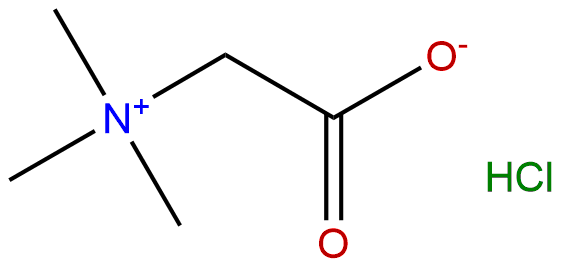
Betaine hydrochloride, chemical name trimethylglycine hydrochloride, molecular formula C5H11NO2 · HCl, molecular weight 117.1480. Its chemical structure is formed by the combination of three methyl groups (- CH3) and one nitrogen atom (N ⁺) to form a quaternary ammonium cation (trimethylglycine, also known as betaine) and a chloride ion (Cl ⁻) through an ionic bond. This structure gives it extremely strong polarity and hydrophilicity.
Based on its structure, betaine hydrochloride exhibits typical quaternary ammonium salt characteristics. Its lipid water partition coefficient (LogP) is -2.9472, indicating its high hydrophilicity and extremely low lipid solubility. The topological polar surface area (TPSA) is 40.1300 Å ², further confirming its good polarity. These properties determine its excellent water solubility, with experimental values reaching up to 54.8810 mg/mL, making it easy to dissolve and distribute in biological fluids. However, its high polarity and hydrophilicity also limit its ability to penetrate lipid bilayers, resulting in low blood-brain barrier (BBB) permeability, which to some extent limits its potential application in central nervous system diseases but also reduces the risk of central nervous system side effects. In terms of safety, betaine hydrochloride exhibits good characteristics. The hERG channel inhibition experiment results were negative, indicating a low risk of causing QT interval prolongation and apical torsion type ventricular tachycardia in the heart. The Ames test result is 0.9 (generally considered>1.5 as potential mutagenicity), indicating that it has no significant mutagenicity under standard testing conditions, providing preliminary support for its long-term safety.
Plant sources and extraction methods
Betaine is widely distributed in nature and is an important osmoregulatory substance and methyl donor in many organisms. Its name comes from Beta vulgaris, which was originally discovered in large quantities from sugar beet molasses. In addition to sugar beets, spinach, quinoa, wheat bran, shrimp, crabs and other animals and plants are abundant sources of betaine. In these organisms, betaine typically exists in free form rather than in hydrochloride form.
The industrial production of betaine hydrochloride mainly adopts chemical synthesis method due to its mature process, low cost, and high purity. The most commonly used method is to use chloroacetic acid and trimethylamine as raw materials, undergo nucleophilic substitution reaction in aqueous solution to generate betaine (trimethylglycine), and then undergo hydrochloric acid acidification, concentration, crystallization and other steps to obtain betaine hydrochloride. This process route is short, high yield, and suitable for large-scale production.
Extracting betaine from natural plants (which can be subsequently converted into hydrochloride) is also a feasible approach, but it is often used as a preparation method for high value-added products. Common extraction processes include: water or alcohol water solution extraction, utilizing the good water solubility of betaine to extract it from plant tissues; Ion exchange chromatography, utilizing the characteristic of betaine as a zwitterionic compound, selectively adsorbs and elutes through cation or anion exchange resins to achieve purification; And membrane separation technology, etc. Although the natural extraction method is more in line with the concept of "natural products", it is currently mainly used in research or specific high-end product fields due to limitations in raw material content, extraction efficiency, and cost. The large-scale commercialization is still mainly based on synthetic methods.
Pharmacological activity research
The pharmacological activity research of betaine hydrochloride, especially in the field of metabolic diseases, has accumulated rich evidence. Its core activity revolves around the "methyl donor" function and extends to multiple aspects such as liver protection and lipid metabolism regulation.
1. Liver protection and anti steatosis effects: This is the pharmacological activity of betaine hydrochloride that has received the most attention. Numerous animal model studies have confirmed that supplementing betaine hydrochloride can significantly reduce liver fat accumulation, ballooning, and inflammatory infiltration in high-fat diet, methionine choline deficiency (MCD) diet, or fructose induced NAFLD/NASH model mice or rats. Similar effects have also been observed in clinical studies. For example, a randomized controlled trial conducted in NAFLD patients found that after several months of treatment with oral betaine hydrochloride (usually at a dose of 2-4 grams per day), serum liver enzyme (ALT, AST) levels significantly decreased, liver fat content (evaluated by magnetic resonance spectroscopy or ultrasound) decreased, and insulin sensitivity improved.
2. Regulating lipid metabolism: Betaine hydrochloride can affect the lipid metabolism profile of the whole body and liver. It can reduce the levels of triglycerides (TG), total cholesterol (TC), and low-density lipoprotein cholesterol (LDL-C) in the serum of NAFLD model animals and patients, while possibly increasing high-density lipoprotein cholesterol (HDL-C). In the liver, it can inhibit de novo synthesis of fat and promote oxidation of fatty acids, thereby reversing lipid metabolism imbalance.
3. Reduce homocysteine levels: As a key methyl donor, betaine hydrochloride re methylates homocysteine (Hcy) to methionine through the betaine homocysteine methyltransferase (BHMT) pathway. Hyperhomocysteinemia is an independent risk factor for cardiovascular disease and NAFLD. Supplementing betaine hydrochloride can effectively reduce plasma Hcy concentration, which not only helps with cardiovascular protection, but also has a positive impact on liver metabolism by improving methylation status.
4. Antioxidant and anti-inflammatory effects: Betaine hydrochloride can enhance the antioxidant defense ability of the liver, increase glutathione (GSH) levels, reduce lipid peroxidation products such as malondialdehyde (MDA), and alleviate oxidative stress. Meanwhile, it can also inhibit the activation of inflammatory signaling pathways such as nuclear factor kappa B (NF - κ B), downregulate the expression of pro-inflammatory factors such as tumor necrosis factor - α (TNF - α) and interleukin-6 (IL-6), thereby alleviating liver inflammation.
5. Other activities: The study also suggests that betaine hydrochloride has gastric acid supplementation (as a source of hydrochloric acid), osmotic protection, and potential improvement in exercise performance, but these are not its main pharmacological basis in the treatment of NAFLD.
Mechanism of action and molecular targets
The effect of betaine hydrochloride on improving NAFLD is not through a single target, but through its core function as a methyl donor, affecting multiple interrelated metabolic pathways and key target molecules, forming a synergistic network.
Core mechanism: Provide active methyl groups and reshape methylation balance. Betaine hydrochloride dissociates from betaine in the body, which provides a methyl group for Hcy demethylation through the BHMT pathway, producing methionine. Methionine is further converted to S-adenosylmethionine (SAM), which is the most important universal methyl donor in the body and participates in the methylation modification of DNA, RNA, histones, phospholipids, and various proteins. In NAFLD state, SAM depletion and decreased methylation ability are often accompanied. Supplementing betaine hydrochloride can restore the SAM library, maintain normal methylation patterns, and regulate the stable expression of genes related to lipid metabolism and inflammatory response.
Key molecular targets and pathway regulation:
-
Inhibition of fat production: targeting SREBF1, FASN, ACC1. Sterol regulated element binding protein 1c (SREBF1c) is a key transcription factor that regulates the expression of genes related to fatty acid and triglyceride synthesis. Betaine hydrochloride may affect the methylation of the SREBF1c gene promoter region or inhibit its activity and expression through other signals such as AMPK activation by restoring normal methylation status. The downstream fatty acid synthase (FASN) and acetyl CoA carboxylase 1 (ACC1) are the rate limiting enzymes for de novo synthesis of fatty acids. Betaine hydrochloride can downregulate their expression and activity, thereby reducing the synthesis of new fatty acids in the liver.
-
Promote fatty acid beta oxidation: targeting PPARA and CPT1A. Peroxisome proliferator activated receptor alpha (PPARA) is a core nuclear receptor that regulates fatty acid oxidation genes. Betaine hydrochloride has been shown to activate the PPARA signaling pathway. Activated PPARA upregulates the expression of its target gene carnitine palmitoyltransferase 1A (CPT1A), which is the rate limiting step for long-chain fatty acids entering mitochondria for β - oxidation. Through this pathway, betaine hydrochloride accelerates the breakdown and consumption of fatty acids, reducing their deposition in the liver.
-
Effects on lipid transport and storage: targeting MTTP and PNPLA3. The microsomal triglyceride transfer protein (MTTP) is crucial for the assembly and secretion of very low-density lipoprotein (VLDL) and is a key protein for liver triglyceride output. Betaine hydrochloride may enhance hepatic lipid efflux by improving endoplasmic reticulum function or directly regulating MTTP activity. On the other hand, the I148M mutation in PNPLA3, also known as adiponutrin, is the strongest genetic risk factor for NAFLD/NASH. The abnormal function of this mutated protein leads to obstruction of lipid droplet breakdown in liver cells. Research has shown that betaine hydrochloride may indirectly alleviate the adverse effects of PNPLA3 mutations by affecting the localization or function of PNPLA3, or by improving the overall lipid metabolism environment.
-
Improving insulin sensitivity and anti-inflammatory effects: Betaine hydrochloride indirectly improves insulin signaling by reducing liver lipid content and reducing lipid toxicity. Its anti-inflammatory effect is related to inhibiting the NF - κ B pathway and reducing TNF - α, which may be partly due to its regulation of inflammatory gene expression through methylation.
In summary, betaine hydrochloride starts from the "methyl donor" and works synergistically through multiple targets and pathways to comprehensively regulate liver lipid metabolism from multiple levels, such as inhibiting synthesis, promoting oxidation, and enhancing output, supplemented by antioxidant and anti-inflammatory effects, effectively combating the pathological process of NAFLD.
Evaluation of drug properties and pharmacokinetics
Based on its physicochemical properties and safety data, betaine hydrochloride exhibits good potential for drug development.
Pharmacokinetic characteristics: After oral administration, betaine hydrochloride is rapidly absorbed in the upper small intestine through active transport and passive diffusion. After absorption, betaine (in cationic form) is widely distributed in various tissues throughout the body, including the liver, kidneys, etc. Due to its high water solubility and low LogP, its tissue distribution is mainly concentrated in extracellular fluid and hydrophilic chambers, which are not easily accumulated in adipose tissue and have low blood-brain barrier permeability. The metabolism of betaine in the body mainly involves two pathways: one is to participate in the methyl cycle through the BHMT pathway and be converted into dimethyl glycine; Secondly, slow oxidation or demethylation occurs in the liver and kidneys. Its elimination half-life is relatively short, mainly in the form of prototype or metabolite excreted through the kidneys and urine, with rapid clearance and no obvious risk of accumulation.
Analysis of advantages of drug properties:
1. High security: As an endogenous substance and food ingredient, betaine hydrochloride has extremely high safety. Long term clinical use and dietary supplement application history have confirmed its good tolerability. The negative hERG inhibition and Ames test provide important guarantees for its cardiovascular safety and genotoxicity safety. Common side effects are mild and mainly related to increased stomach acid, such as occasional stomach discomfort and acid reflux, which can be relieved by adjusting the dosage or taking with meals.
2. Suitable physical and chemical properties: The extremely high water solubility (>50 mg/mL) ensures its good oral bioavailability and the convenience of formulation development, and can be made into various dosage forms such as tablets, capsules, powders, etc.
3. Clear mechanism of action: Its core mechanism as a methyl donor and its regulatory effects on multiple targets such as SREBF1 and PPARA provide a reasonable pharmacological basis for the treatment of complex metabolic diseases such as NAFLD.
4. Low production cost: The mature chemical synthesis process makes its raw material cost low, which is conducive to large-scale production as a drug.
Drug Challenge:
1. Bioaccumulation and dose: Although it absorbs quickly, as a polar molecule, its transmembrane transport efficiency may be limited. To achieve effective liver pharmacological concentrations, higher oral doses (in grams) are usually required, which imposes certain requirements on formulation specifications and patient compliance.
2. Targeted: Its effect is systemic, and although it has significant benefits for the liver, how to further improve liver targeting and reduce the possible impact on gastric acid is the direction that can be optimized in the formulation process.
3. Clinical evidence level: Although there have been many positive clinical studies, large-scale, multicenter, and long-term Phase III clinical trial data still need to be enriched to ultimately confirm its efficacy and safety as a prescription drug for the treatment of NAFLD/NASH.
Clinical application prospects and prospects
Betaine hydrochloride has broad clinical application prospects in the treatment of NAFLD/NASH, and its development may show the following trends:
As an adjuvant therapy for NAFLD/NASH: Given that there are currently no FDA or NMPA approved drugs for the treatment of NASH, betaine hydrochloride, with its clear liver protective effects, good safety, and multi-target regulatory advantages, is expected to become an important adjuvant treatment option based on first-line lifestyle interventions (diet and exercise). Especially suitable for patients with hyperhomocysteinemia and mild to moderate fatty liver.
2. Development of combination therapy strategy: The pathogenesis of NAFLD/NASH is complex, and combination therapy is the mainstream direction for the future. Betaine hydrochloride can be used in combination with drugs with different mechanisms of action to produce synergistic effects. For example:
*Combined with insulin sensitizers such as pioglitazone, it can improve insulin resistance and regulate lipid metabolism simultaneously.
*Combined with antioxidant/anti-inflammatory drugs (such as silymarin and vitamin E) to enhance liver protection.
*Combined use with novel targeted drugs such as FXR agonists, ACC inhibitors, etc., may reduce the side effects or enhance the efficacy of the latter when used alone.
3. Formulation innovation and precise delivery: In order to overcome high-dose requirements and potential stomach irritation, future research may develop novel delivery systems. For example, enteric coated formulations can prevent gastric dissolution; A liver targeted delivery system based on nanotechnology or prodrug strategy can increase liver drug concentration, reduce systemic drug dosage, and improve treatment index.
4. Expand other indications: Based on its methyl donor and metabolic regulatory functions, the application value of betaine hydrochloride in cardiovascular disease (reducing Hcy), alcoholic liver disease, muscle metabolism and exercise medicine, and neurological diseases (such as certain methylation related diseases) is also worth further exploration.
5. In depth mechanism research and biomarker development: Future research needs to more accurately elucidate how betaine specifically regulates target genes such as SREBF1 and PPARA through epigenetic modifications such as DNA methylation and histone methylation. At the same time, search for biomarkers that can predict the response to betaine hydrochloride treatment (such as specific methylation profiles, gene polymorphisms, etc.) to achieve personalized and precise treatment.
Conclusion
Betaine hydrochloride, a natural and structurally simple quaternary ammonium salt compound, is showing significant value in the pharmacological treatment of NAFLD/NASH. Its core lies in serving as an efficient active methyl donor, by reshaping the methylation balance of the liver, and thereby regulating the key links of lipid metabolism through multiple targets and pathways - inhibiting SREBF1 mediated fat production, activating PPARA/CPT1A axis to promote fatty acid oxidation, enhancing MTTP involved lipid efflux, and synergistically exerting antioxidant and anti-inflammatory effects. Rich preclinical evidence and preliminary clinical trial results support its effectiveness in improving liver steatosis, inflammation, and fibrosis. Excellent physical and chemical properties, good safety, and low production costs constitute its outstanding pharmaceutical advantages. Although further optimization and enrichment are needed in terms of bioavailability, targeting, and high-level clinical evidence, betaine hydrochloride undoubtedly provides a safe, economical, and mechanistic candidate drug for addressing the increasingly severe NAFLD/NASH epidemic. Future research should focus on formulation innovation, exploration of combination therapy regimens, and precision medicine strategies based on epigenetics, in order to transform this ancient natural molecule into an important member of the modern arsenal for the treatment of metabolic liver disease, benefiting a wide range of patients.