Introduction/Overview
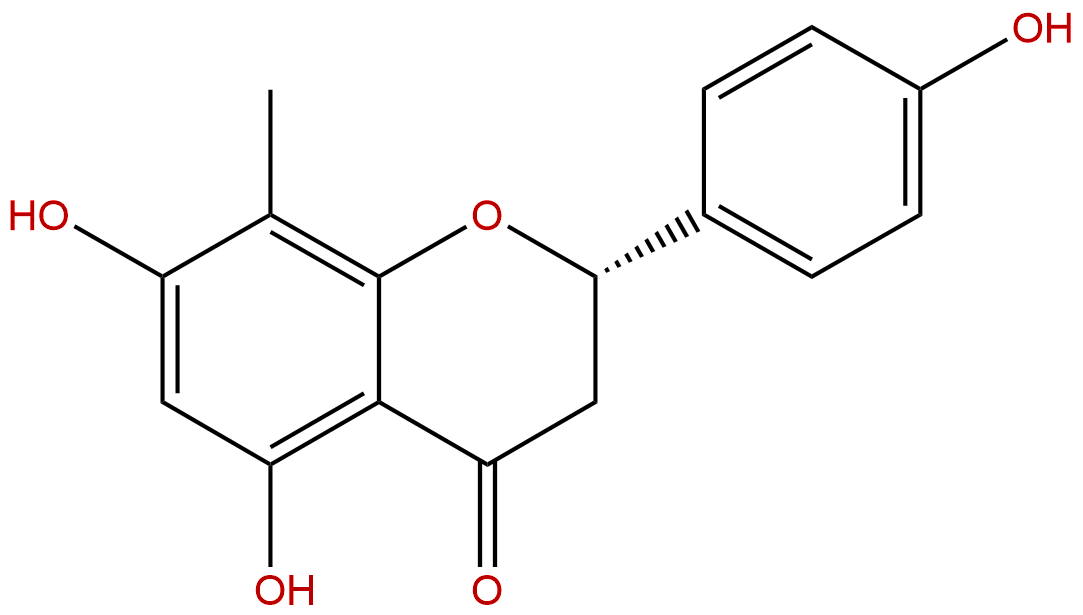
Natural products have always been an important treasure trove for innovative drug discovery, among which flavonoids have attracted much attention due to their wide range of biological activities. 5,7,4 '- trihydroxy-8-methylflavanone (CAS number: 916917-28-7), as a structurally unique methylated dihydroflavonoid, has emerged in the field of pharmacology research in recent years. Its structure is based on the classical flavonoid skeleton and introduces hydrogenation of the 8-methyl and C-ring, which may significantly affect its physicochemical properties, biological activity, and interaction with the target. Current research focuses on its potential to fight breast cancer. Preliminary evidence shows that it can play a multi pathway anti-tumor effect by regulating multiple key signal pathways and targets such as AMPK, STAT3, BCL2, etc. In addition, its pharmacological parameters such as good LogP value and no risk of hERG inhibition provide a favorable basis for its further development. This article aims to systematically review the chemical properties, plant sources, pharmacological activities, mechanisms of action, and medicinal properties of this compound, in order to provide comprehensive scientific references for in-depth research and potential drug development of this natural product.
Chemical structure and physicochemical properties
The molecular formula of 5,7,4 '- trihydroxy-8-methyldihydroflavone is C ₁₆ H ₁₄ O ₅, with a molecular weight of 286.2830. Its core structure is the dihydroflavonoid skeleton, where the C2-C3 positions of the C ring are single bonds (hydrogenated), resulting in a semi chair like conformation of the C ring. Compared with flavonoids with strong planarity, its three-dimensional structure may affect the binding mode with receptors. The structural feature is that there is one hydroxyl group at each of the 5th and 7th positions of the A ring, and one hydroxyl group at the 4 'position of the B ring, forming a typical antioxidant active group - the catechol structure (in the A ring). The most distinctive feature is the introduction of a methyl group (- CH3) at the 8th position of the A ring, which is relatively rare in natural flavonoids. This methylation modification may significantly alter the reactivity and bioavailability of the compound through steric hindrance or hydrophobic contributions.
From the analysis of physical and chemical properties, the calculated lipid water partition coefficient (LogP) is 2.5098, indicating that the compound has moderate lipophilicity and is conducive to transmembrane absorption. The topological polar surface area (TPSA) is 86.99 Å ², reflecting the polarity brought by its three hydroxyl groups. The predicted value of water solubility is relatively low (about 0.2435 mg/mL), indicating that it belongs to poorly soluble compounds, and solubilization strategies may need to be considered in formulation development. Taking into account its moderate molecular weight and LogP value within the ideal range (usually considered 1-3 to be optimal), this compound basically conforms to the Rule of Five and has the preliminary structural basis to become an oral candidate drug.
Plant sources and extraction methods
At present, there are relatively limited public reports on the exact plant sources of 5,7,4 '- trihydroxy-8-methyldihydroflavonoids in nature. Based on its structural characteristics as a methylated dihydroflavonoid, it is speculated that it may exist in certain Fabaceae, Asteraceae, or Lamiaceae plants, which are known to be abundant sources of flavonoids and dihydroflavonoids. Compounds with similar structures have been isolated and identified in the chemical composition research of some medicinal plants.
For the extraction and separation of flavonoids with moderate to high polarity, the following process is usually used:
1. Extract Methanol, ethanol, or acetone water mixed solvents are commonly used for cold soaking, reflux, or ultrasound assisted extraction of dried plant materials. Considering its high number of hydroxyl groups and certain polarity, the extraction efficiency of alcohol solvents with medium polarity is relatively high.
2. Rough classification The extract obtained by concentrating the extract can be subjected to gradient extraction using solvents such as petroleum ether, ethyl acetate, n-butanol, etc. This compound is expected to be mainly enriched in the ethyl acetate or n-butanol extraction sites due to its multiple hydroxyl groups.
3. Separation and purification: Column chromatography is often used for further purification, such as silica gel column chromatography, polyamide column chromatography or Sephadex LH-20 column chromatography. Combined with thin-layer chromatography (TLC) for tracking. Due to the presence of conjugated systems in its structure, it may exhibit characteristic fluorescence quenching or coloration under ultraviolet light (such as 254 nm or 365 nm), making it easier to monitor. High performance liquid chromatography (HPLC), especially preparative HPLC, is the final key step in obtaining high-purity monomers. C18 reverse phase chromatography columns are commonly used, with methanol water or acetonitrile water (pH adjusted with a small amount of formic acid or acetic acid) as the mobile phase for elution.
4. appraisal The structural identification of pure compounds relies on modern spectroscopic techniques, including nuclear magnetic resonance (¹ H NMR, ¹ ³ C NMR, 2D NMR), mass spectrometry (MS, HR-MS), and ultraviolet spectroscopy (UV).
Pharmacological activity research
The existing research data strongly suggest that the core pharmacological activities of 5,7,4 '- trihydroxy-8-methyldihydroflavone focus on anti-tumor, especially for breast cancer.
-
Anti breast cancer activity: The compound showed significant proliferation inhibitory activity on many human breast cancer cell lines (such as MCF-7, MDA-MB-231, etc.) in vitro. Its function is not limited to inducing cell cycle arrest (such as G1 phase or G2/M phase arrest), but can also effectively induce tumor cell apoptosis. Research has shown that its inhibitory efficacy may be superior to certain structurally similar flavonoids, suggesting that the introduction of an 8-methyl group may enhance their biological activity.
-
Multi target regulatory potential In addition to its direct cytotoxic effects, this compound also exhibits various regulatory functions
- Anti metastasis and invasion It can inhibit the migration and invasion of breast cancer cells by down regulating the expression of matrix metalloproteinase-2 (MMP2).
- Reverse multidrug resistance: It has a potential inhibitory effect on the common multidrug resistance proteins in breast cancer, such as P-glycoprotein (ABCB1) and breast cancer resistance protein (ABCG2), and may restore the sensitivity of drug resistant cells to chemotherapy drugs.
- Other potential activities The phenolic hydroxyl groups in its structure suggest that it may have antioxidant and anti-inflammatory activities. In addition, the potential association with tyrosinase (TYR) and microtubule associated protein tau (MAPT) suggests that they may also have research value in pigmentary or neurodegenerative diseases, but this requires further experimental confirmation.
Mechanism of action and molecular targets
The anti breast cancer mechanism of this compound is complex, involving the regulation of multiple key signal pathways and molecular targets, showing the characteristics of multi target action:
- Energy metabolism and apoptosis regulation Activation of AMP activated protein kinase (AMPK, encoded by PRKAA1) is one of its core mechanisms. AMPK is an energy sensor in cells, and its activation can inhibit synthetic metabolic pathways such as mammalian rapamycin target protein (mTOR), while upregulating pro apoptotic signals. This compound may activate AMPK directly or indirectly, leading to upregulation of downstream pro apoptotic protein expression and downregulation of anti apoptotic protein.
- Direct regulation of apoptosis pathway This compound can significantly downregulate the expression of B-cell lymphoma-2 (BCL2) protein. BCL2 is an important anti apoptotic protein, and its downregulation can disrupt mitochondrial membrane stability, promote cytochrome C release, activate the caspase cascade reaction, and ultimately lead to cell apoptosis.
- Inflammation and inhibition of survival signals Signal transducer and activator of transcription factor 3 (STAT3) is a key molecule that connects inflammation and tumors. This compound can inhibit the phosphorylation (activation) of STAT3, suppress its nuclear translocation and the transcription of downstream target genes (such as Cyclin D1, Survivor, BCL2, etc.), thereby inhibiting cell proliferation, promoting apoptosis, and weakening tumor immune escape.
- Hormone receptor regulation The potential regulatory effect on estrogen receptor beta (ESR2) deserves attention. Unlike ESR1, which promotes proliferation, ESR2 is often considered to have anti proliferative effects. This compound may act as a modulator to affect the activity of ESR2, thus playing a selective inhibitory role in hormone receptor positive breast cancer.
- Protein kinase C and cellular signaling Protein kinase C alpha (PRKCA) is a member of the PKC family and is involved in the complex regulation of cell proliferation, differentiation, and apoptosis. This compound may inhibit tumor growth by intervening in the activity of PRKCA, affecting downstream signaling pathways such as MAPK/ERK.
- Enzyme activity inhibition Inhibition of MMP2 directly weakens the ability of tumor cells to degrade extracellular matrix and undergo invasion and metastasis. The potential inhibition of tyrosinase (TYR) belongs to its potential expanded activity direction.
To sum up, 5,7,4 '- trihydroxy-8-methyldihydroflavone exerts its anti breast cancer effect from multiple levels, such as energy metabolism, apoptosis induction, signal transduction and metastasis inhibition, through synergistic action on the network composed of AMPK/STAT3/BCL2, etc.
Evaluation of drug properties and pharmacokinetics
Based on calculations and preliminary experimental data, a preliminary evaluation of the pharmacological properties of the compound is conducted
-
Absorption, distribution, metabolism, and excretion prediction:
- absorb Moderate LogP (2.51) is beneficial for its passive diffusion across biofilms, suggesting that it may have good intestinal absorption potential. But lower water solubility may be the main factor limiting its oral bioavailability.
- distribution It is predicted that its blood-brain barrier (BBB) permeability is low, mainly due to its high TPSA value (>80 Å ²) and the presence of multiple hydrogen bond donors/acceptors. This is not beneficial for treating central nervous system diseases, but for anti-tumor drugs that mainly act on peripheral organs such as the breast, it may help reduce central nervous system side effects.
- Metabolism As flavonoids, their metabolic pathways may include a wide range of II binding reactions (such as glucuronidation and sulfation), as well as oxidative metabolism by the liver cytochrome P450 enzyme system. The hydroxyl groups at positions 7 and 4 'are common binding reaction sites. The 8-methyl group may affect the metabolic rate of adjacent hydroxyl groups or provide new metabolic sites (oxidation to carboxylic acids).
- excretion Metabolites are mainly excreted through bile and urine.
-
Preliminary Safety Assessment:
- cardiotoxicity Predicting the absence of hERG potassium channel inhibitory activity is an important positive signal that reduces the potential risk of developing acquired long QT syndrome and leading to fatal arrhythmias.
- Genotoxicity The Ames test result is 0.6 (usually negative if the mutagenicity rate is less than 2.0), indicating that there is no direct mutagenicity, but further in vitro and in vivo genetic toxicity tests are needed to confirm.
- Other It is necessary to comprehensively evaluate the toxicity of liver, kidney and other organs through in vitro liver cell toxicity tests, in vivo acute and long-term toxicity tests.
-
Challenges and optimization directions in drug development:
- Main challenges Poor water solubility is the primary issue. In addition, flavonoids generally suffer from low oral bioavailability, mainly due to first pass metabolism and intestinal binding.
- Optimization Strategy Solubility and bioavailability can be improved through structural modifications (such as preparing prodrugs, introducing water-soluble groups) or developing novel drug delivery systems (such as nanocrystals, liposomes, solid dispersions, cyclodextrin inclusion complexes). Protecting or modifying its main metabolic sites (such as 4 '- OH) may also prolong its half-life in vivo.
Clinical application prospects and prospects
5,7,4 '- trihydroxy-8-methyldihydroflavone shows good potential as a candidate drug for anti breast cancer. Its clinical application prospects and future research directions are as follows:
-
As an anti breast cancer drug Its multi-target mechanism of action has theoretical advantages in overcoming tumor heterogeneity and drug resistance. Future research can explore:
- Monotherapy Validate its anti-tumor efficacy in an in vivo model and determine the optimal dosing regimen.
- combination therapy Combined with existing chemotherapy drugs (such as doxorubicin, paclitaxel) or targeted drugs, utilizing their potential to reverse multidrug resistance (inhibit ABCB1/ABCG2) and synergistically promote apoptosis, improving efficacy, reducing chemotherapy dosage and side effects.
- Targeting specific subtypes: To further study the sensitivity difference of different molecular types of breast cancer (such as Luminal type and triple negative breast cancer), so as to achieve accurate drug use.
-
Expand the field of treatment Based on its target of action, its application in other diseases can be explored
- Other cancers The targets such as AMPK, STAT3, and MMP2 that it acts on are equally critical in various cancers such as liver cancer, lung cancer, and colorectal cancer, and are worthy of further activity expansion research.
- Inflammatory diseases STAT3 is the core mediator of chronic inflammation, and its anti-inflammatory potential needs to be explored.
- Neurodegenerative diseases The association with MAPT suggests that it may have research value in tau protein diseases such as Alzheimer's disease.
-
Future research focus:
- In depth mechanism research Clarify whether it directly binds or indirectly regulates targets such as AMPK and STAT3; Using techniques such as molecular docking and surface plasmon resonance to search for direct targets.
- Comprehensive preclinical development The system has completed studies on pharmacodynamics (multiple tumor bearing animal models), pharmacokinetics (absolute bioavailability, tissue distribution, metabolite identification), and toxicology (acute toxicity, long-term toxicity, reproductive toxicity).
- Structural optimization and formulation research Conduct systematic structure-activity relationship research to optimize its solubility, metabolic stability, and oral bioavailability while maintaining its activity. At the same time, actively develop new injectable or oral formulations suitable for this insoluble compound.
Conclusion
5,7,4 '- trihydroxy-8-methyldihydroflavone is a natural dihydroflavone compound with novel structure and outstanding pharmacological activity. Current research evidence clearly outlines its strong potential to inhibit breast cancer cell proliferation, induce apoptosis, resist metastasis and reverse drug resistance by regulating multiple target networks such as AMPK/STAT3/BCL2. Its preliminary pharmacological parameters show certain development advantages, such as no hERG risk, but also face common challenges such as poor water solubility. There is still a long road to explore from natural products to candidate drugs. In the future, through in-depth molecular mechanism elucidation, systematic preclinical evaluation and reasonable pharmaceutical chemistry and pharmaceutics optimization, this compound is expected to be developed into a new multi target anti breast cancer drug, or provide a leading structure for the design and synthesis of more active analogues, and contribute its unique value in the field of natural product anti-cancer drug research and development.