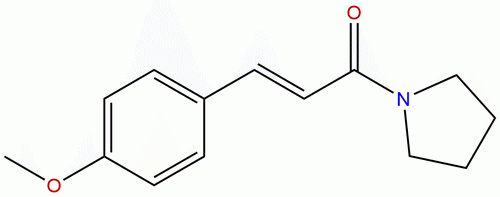


Product name: PiperlotineA
Synonym name: Piperlotine A
Catalogue No.: SBP03048
Cas No.: 389572-70-7
Formula: C14H17NO2
Mol Weight: 231.295
Botanical Source:
Physical Description:
Type of Compound: Alkaloids
Purity: 95%~99%
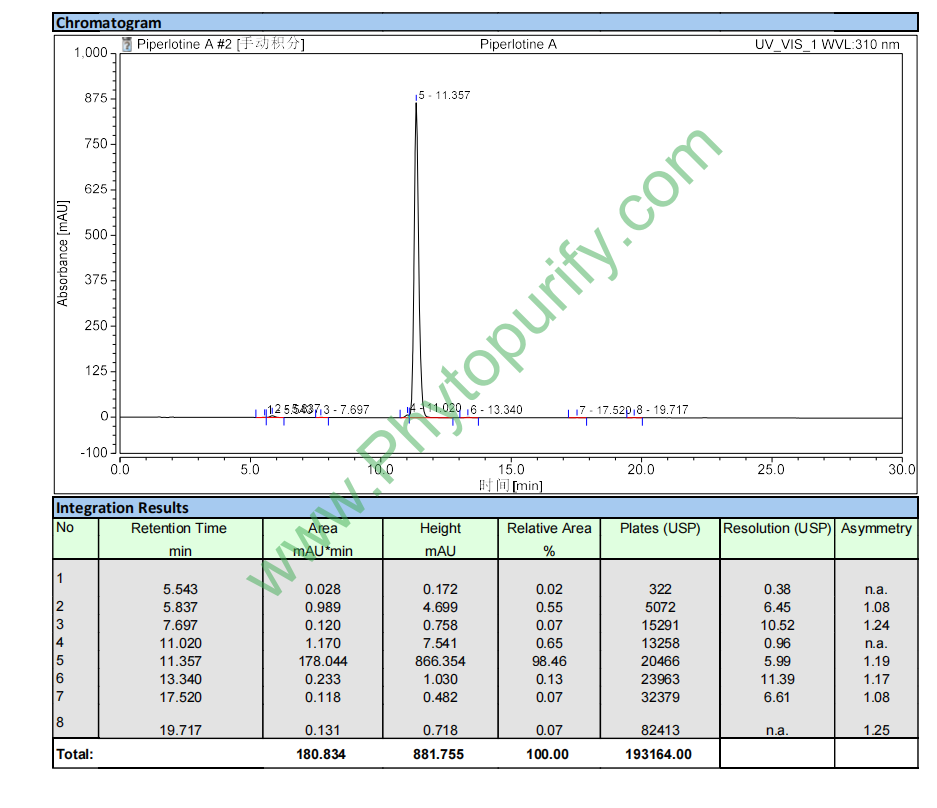
Analysis Method: HPLC-DAD or/and HPLC-ELSD
Identification Method: Mass, NMR
Packing: Brown vial or HDPE plastic bottle
The product could be supplied from milligrams to grams
Inquire for bulk scale.
For Reference Standard and R&D, Not for Human Use Directly.
HPLC of Piperlotine A
Storage conditions:Short-term storage at 2~8℃, long-term storage at -20 ~ -80℃
49.8000
2.4000
2.2000
Low
No
No
No
No
No
No
Natural products, as important resources for drug discovery, have attracted much attention due to their structural diversity and biological activity. Piper lotinum, as one of the Piperaceae plants, has long been used in traditional medicine and has various pharmacological effects. In recent years, a novel alkaloid, Piperlotine A, isolated from pepper, has attracted widespread attention due to its significant anti platelet aggregation effect. Platelet aggregation is a key link in the pathogenesis of many cardiovascular and cerebrovascular diseases, including atherosclerosis, coronary heart disease, ischemic stroke and venous thromboembolism. Inhibiting platelet activation and aggregation has become an important strategy to prevent and treat these diseases.
This article systematically reviews the chemical structure and physicochemical properties, plant sources and extraction methods, pharmacological activity and mechanism of action, pharmacological evaluation and pharmacokinetic characteristics of Piperlotine A. It focuses on exploring its potential application value in cardiovascular and cerebrovascular diseases, and looks forward to future research directions and clinical translation prospects, aiming to provide theoretical basis and research guidance for the in-depth development and clinical application of this natural product.
Piperlotine A (CAS number: 389572-70-7) is a natural product with a typical alkaloid skeleton, molecular formula C15H17NO2, and molecular weight 231.29. It contains an aromatic ring and a nitrogen-containing heterocyclic ring in its structure, exhibiting moderate lipid solubility (LogP=2.4) and good membrane permeability. The molecular surface area (TPSA) is 49.8 Å ² and the number of hydrogen bond acceptors is 3, indicating that it has a certain polarity and is conducive to binding with biological targets.
From the perspective of physical and chemical properties, Piperlotine A has a stable molecular structure, good chemical stability, and water solubility balance, making it suitable for drug development. Its blood-brain barrier penetration ability is relatively low (BBB low), indicating that its main target may be limited to the peripheral system, reducing the risk of central nervous system side effects. In addition, Piperlotine A showed low risk of liver toxicity, no cardiac toxicity, and hERG channel inhibition in in vitro toxicology evaluations. The Ames mutagenicity test was negative, demonstrating good safety characteristics.
Piperlotine A is mainly isolated from Piper lotinum. Lolo pepper is a perennial herbaceous plant in the pepper family, widely distributed in tropical and subtropical regions. This plant is traditionally used to treat symptoms such as rheumatic pain, indigestion, and circulatory disorders. Piperlotine A, as one of its main alkaloids, has significant biological activity despite its low content.
The extraction method usually uses dried whole or rhizomes of pepper, which are crushed and refluxed with ethanol or methanol for extraction. After concentration, impurities are removed using liquid-liquid distribution technology, and then separated and purified by column chromatography (silica gel or C18 reverse phase column). High performance liquid chromatography (HPLC) and mass spectrometry (MS) techniques are used for purity detection and structural confirmation. In recent years, supercritical CO2 extraction and microwave-assisted extraction techniques have also been applied to improve the extraction efficiency and purity of Piperlotine A.
The most significant pharmacological activity of Piperlotine A is its antiplatelet aggregation effect. Multiple in vitro experiments have shown that Piperlotine A can significantly inhibit platelet aggregation induced by various stimuli such as ADP, collagen, and platelet activating factor, with a dose-dependent effect. Its inhibitory effect is superior to some traditional antiplatelet drugs, and there is no significant cytotoxicity.
Piperlotine A is involved in regulating various pain related receptors and enzymes, including TRPV1, CNR1, OPRD1, PTGS1, TRPA1, PTGS2, SLC6A4, OPRM1, OPRK1, and DRD2. Animal experiments have shown that Piperlotine A exhibits good analgesic effects in both inflammatory and neuropathic pain models, suggesting that it may regulate pain signal transduction through multi-target synergistic effects.
Piperlotine A regulates the process of platelet activation and aggregation by acting on multiple targets such as platelet glycoprotein IIb/IIIa receptor (ITGA2B/ITGB3), platelet membrane glycoprotein Ib (GP1BA), platelet membrane glycoprotein VI (GP6), platelet phospholipase C (PLCB2), platelet activating factor receptor (PTAFR), platelet protein kinase C (PRKCA) and cyclooxygenase-1 (PTGS1), which can effectively prevent and reduce the pathological progress of atherosclerosis, coronary heart disease, ischemic stroke and venous thromboembolism.
In addition, Piperlotine A exhibits anti-inflammatory and antioxidant activity, which helps to slow down endothelial damage and inflammatory response, further exerting a protective effect on cardiovascular and cerebrovascular systems.
The pharmacological effects of Piperlotine A are mainly achieved through multi-target regulation of platelet function and pain signal transduction.
The platelet glycoprotein IIb/IIIa receptor (integrin α IIb β 3) is a key mediator of platelet aggregation. Piperlotine A inhibits the activity of this receptor, blocks the binding of fibrinogen to platelets, and inhibits platelet cross-linking and aggregation. In addition, Piperlotine A inhibits platelet membrane glycoprotein Ib (GP1BA) and membrane glycoprotein VI (GP6), reducing the response of platelets to collagen and platelet activating factors exposed to vascular injury.
Platelet phospholipase C (PLCB2) and protein kinase C (PRKCA) are key enzymes in platelet signal transduction. Piperlotine A reduces platelet activation by inhibiting their activity, blocking the release of calcium ions and downstream signaling cascades in platelets. The inflammatory response mediated by platelet activating factor receptor (PTAFR) and cyclooxygenase-1 (PTGS1) is also effectively inhibited by Piperlotine A, reducing the pro-inflammatory state of platelets.
Piperlotine A has regulatory effects on various pain related receptors. Its inhibition of TRPV1 and TRPA1 channels reduces the transmission of pain signals. The regulation of CNR1 (cannabinoid receptor 1) and multiple opioid receptors (OPRD1, OPRM1, OPRK1) enhances the efficacy of the endogenous analgesic system. The inhibition of PTGS1 and PTGS2 reduces the synthesis of prostaglandins and alleviates inflammatory pain. The regulation of SLC6A4 (serotonin transporter) and DRD2 (dopamine receptor D2) helps to regulate pain perception and emotional states in the central nervous system.
Piperlotine A exhibits ideal properties in the evaluation of drug properties. Its molecular weight is 231.29, in accordance with Lipinski's rule, with a LogP of 2.4, indicating moderate lipid solubility and facilitating oral absorption. The TPSA is 49.8 Å ², indicating good cell membrane permeability. The number of hydrogen bond receptors is 3, which is suitable for stable binding with protein targets.
Toxicological evaluation shows that Piperlotine A has low risk of hepatotoxicity, no cardiac toxicity or hERG channel inhibition, and negative Ames test, indicating high safety. Its blood-brain barrier penetration ability is low, reducing the possibility of central nervous system side effects.
In terms of pharmacokinetics, although specific data is still lacking, based on its physicochemical properties, it is expected that Piperlotine A has good oral bioavailability and is mainly distributed in blood and peripheral tissues. The metabolic pathway may involve the liver enzyme system, and the excretion pathway requires further research.
Piperlotine A, as a natural alkaloid with multi-target antiplatelet aggregation and analgesic activity, exhibits good pharmacological potential and safety, and has broad clinical application prospects.
In the field of prevention and treatment of cardiovascular and cerebrovascular diseases, Piperlotine A can be a new candidate molecule for antiplatelet drugs, especially for patients with atherosclerosis, coronary heart disease, ischemic stroke and venous thromboembolism. Its multi-target mechanism of action is expected to overcome the limitations of traditional antiplatelet drugs with a single target, reducing the risk of drug resistance and bleeding side effects.
In terms of analgesic treatment, Piperlotine A may become a novel non opioid analgesic by regulating multiple pain related receptors and enzymes, reducing opioid dependence and side effects.
Future research should focus on the in vivo pharmacokinetic characteristics, dose optimization, and long-term safety evaluation of Piperlotine A, combined with modern drug delivery technologies to improve its bioavailability and targeting. At the same time, preclinical animal models and clinical trials will be conducted to verify its efficacy and safety, laying the foundation for clinical translation.
In addition, the design and synthesis of derivatives based on the Piperlotine A structure, combined with computer-aided drug design, are expected to develop lead compounds with stronger activity and lower side effects, promoting their translation into clinical drugs.
Piperlotine A, as an important alkaloid in pepper, has shown great potential as a new type of cardiovascular and cerebrovascular disease and pain treatment drug due to its significant anti platelet aggregation and analgesic activity. Its multi-target mechanism of action and good pharmacokinetic parameters provide a solid foundation for its drug development. Although research on its in vivo metabolism and clinical applications is still in its early stages, as research deepens, Piperlotine A is expected to become a star compound in the field of natural product pharmacology, promoting the application and development of natural products in modern medicine. In the future, we should strengthen basic and translational research to promote its transition from laboratory to clinical practice, and contribute new treatment options to human health.
